Obama’s Libya Speech was Good – UPDATED with Media

Well done – reasonably clear and coherent, limited, nonimperial


Media Update: I spoke on a local radio show on the Libya intervention. Please go here to listen; the media player half-way down the page  (with the green label in Korean) plays back the interview. My comments begin around 14:00.


Call me a shill, but I am really warming up to Obama, at least on foreign policy most of the time. (He’s not yet serious about the debt though – but the neither is the GOP.) I thought this speech was an excellent example of a toned, measured foreign policy that fits US constraints (the huge debt, 2 other wars that no one likes, the rise of the rest) with US values (preventing massacres, trying to help others to democracy) and tries to embrace world opinion rather than strut. So well done.


1. There were no rousing calls to arms, American dominance, American exceptionalism, etc. This is probably the part the US right hated. They can’t forgive Obama for refusing to call America exceptional, and once again he showed yesterday that he really does see the US as part of a community of states, not someone standing above it as the most awesome place in world history with special privileges to tell others what to do. I don’t know why this angers Americans so much. Can’t we see that all this does is humiliate others and convince them that we are jerks? All you need to do is travel a little outside the US to see how much non-Americans find the discourse of American amazingness grating, insulting, pointlessly antagonizing. I see this all the time teaching Asians – who have their own long history they think makes them pretty great and unique too. What is wrong with talking to other as if we are normal and like them? Humility is a value too.

The US is just 3% of the world’s population. Lots of other countries – Iran, China, Russia, France, 19th C Britain and Germany – believe they are exceptional too. In an age of nationalism this is to be expected, but what is the actual value to all that, other encouraging people’s worst, most parochial chauvinistic attitudes about the country in which the were randomly born? This doesn’t mean the US can’t lead; I certainly agree that US dominance is reasonably benign (thank W that we even have to argue for that point though now). And the world is generally a better place for US leadership. But even the US makes mistakes – including really big ones like Iraq 2 or Dresden. So not posturing globally as the most awesome place, somehow entitled to special rules to intervene in other peoples business, strikes me as mature, adult, serious. As I have said before, if we want other to follow American leadership, we can’t do that by embarrassing or humiliating them that somehow America is uniquely positioned to overawe the planet. You don’t need to be a psychologist to know that will drive other people crazy. Besides, we don’t even have the resources or rep to talk like that anymore anyway. Bush and the Iraq told the whole world that American exceptionalism is just arrogance and hubris. It is in America’s interest to adjust to that and try follow the rules.

2. The speech explicitly defended saving countless lives in Benghazi. This was always the most important reason to go in – to prevent another Srebrenica. I can’t understand why the president and other western leaders aren’t getting HUGE credit for this. Once again, the West has prevented a mass slaughter (also in Bosnia and Kosovo – all Muslim populations it is worth noting too). Yes, we didn’t stop other slaughters, and we can’t do everything, but we did this, and it was good and right. This is real Western or American exceptionalism – we saved defenseless people from a madman. China wouldn’t have done that. I can think of few US uses of power of which Americans should be more proud. When people claim the US is a nasty, expansionist, torturing empire, we have counter-evidence now too. And the Germans should be downright embarrassed they abstained. I still have not read any convincing anti-intervention arguments on this issue.

3. Obama roughly fit US limited power to global expectations and rules. You hardly need to be a historian to know that US power is on the ropes at the moment. US debt is spinning out of control, the recession is brutal, the rise of the rest, especially China, limits our room to move. In such an environment, unilateralism’s costs go up, and Obama was right to state that very bluntly. Instead of Bush-style ‘mission accomplished’ machoismo, he said we are doing the best we can in a tough position, and that our reluctant hand was forced by the likelihood of a bloodbath. Isn’t that exactly the kind of leadership everyone wanted after 10 years of Bush and war and national exhaustion and division? How many people, in the US too, called for that for year as Iraq burned? This is why I don’t understand all the carping about Obama dithering or leading us into a quagmire. Doing the best we can in tough circumstances is a pretty good compromise response to a very hard issue. That is enough, at least for now, no?

4. A lot of the criticism strikes me as mean-spirited or trite. I like Krauthammer most of the time, but I thought calling this the ‘professor’s war,’ was just nasty – and not just because I am a professor supporting it (a fair riposte I suppose). I presume that means that trying to follow the UN rules, trying to go through international organizations like NATO, trying to build real coalitions of the willing, is some namby-bamby girlie man response to a war. Real men just kick a— with the 82nd Airborne, I suppose. But didn’t we learn from Bush that going from the gut is super-risky? How about the measured use of force that displays some contemplation of risk and reward? And isn’t it nice that we have some real allies this time around. Sure, they won’t do a lot of the heavy lifting, but compare Iraq 1 and 2. The first time through, the coalition of Bush 41 helped limit the cost and fallout of anti-Americanism. Lots of thinking and effort went into that. Then consider the course of Iraq 2.

Next, a lot of  the talk about quagmires and exit strategies seems awfully overheated to me this early in the game. As Kaplan notes, relax, we are just in the first week of this. It’s not Vietnam all over again, and the president made a strong commitment to avoid ground troops. So let’s cut him some slack to deal with a very hard issue. Conflict are never, ever clean – even the Iraq 1 blitzkrieg we all remember so fondly lead to a nasty semi-civil war in Iraq.

Finally, what’s up with this ridiculous ‘tough girls’ critique? How thoroughly irrelevant to anything, so just let Sjoberg walk you through how crude and practically insulting that is to the serious female advisors around Obama.

This flippancy, plus the general failure of realists to admit that Obama just saved, perhaps, 10,000 people, tells me that Obama more or less got it right. The best critique I have read of the ‘Obama Doctrine’ is here. The most serious problem going foward for any Obama Doctrine is the consistency problem. As one of my commenters has noted over the last few weeks, doesn’t the responsbility to protect (R2P) mean we should go to Ivory Coast next?

Turkey’s ‘Neo-Ottoman’ Rise? (1): Turkey’s Drift from the West

Wikistrat

Part 2 is here, and Part 3 will come shortly.


Regular readers will know that I participate as a partner-analyst with the geopolitical consulting firm Wikistrat. This month they rolled out a pretty cool scenario on Turkey’s rise, and what it means for the region. The particular focus is whether or not Turkey is pursuing an independent line from the West in the Middle East especially. It has, partially, bandwagoned with Iran and Syria in the last few years. It broke publicly and sharply with Israel after the flotilla debacle. The current ruling party (Justice and Development Party; AKP) is formally islamist (although not too much in practice). There is concern in the scenario that Turkey might pursue an populist, semi-islamist course, possibly even a neo-Ottoman posture toward the Middle East. Obviously this would create huge headaches for the West, especially Greece and Israel. In the last few weeks, Turkey has fought the NATO-imposition of the no fly zone over Libya.

The scenario set-up is worth a look; Wikistrat’s idea is to build a sort of Wikipedia of analysts all contributing to pages of game scenarios and editing each other. (If you think you can hack it, and you have some decent credentials, contact them. Good analysts are always in demand.) I didn’t quite get it at first, but now I like it more and more. It is a nifty collaborative idea but with way better quality than Wikipedia or wiki-Avatar. (Hah! yes, wiki-Avatar really exists; if you don’t know why Avatar is awful, read this.) Wikistrat follows the ‘Web 2.0’ idea, pioneered by Wikipedia, that more eyes looking at the same ideas/writing will find problems and new approaches. I find this clever and rich. But it runs totally counter to the closed scholarship/peer review model of a sole author, perhaps emailing colleagues before submitting a paper to a journal, where three more reviewers at most look at it. Wikistrat goes the opposite way and throws open your input to all and sundry. In passing, I think this will be a big challenge to traditional closed peer review in the future. And yes, I do get a small stipend if you sign up for the service through my website, but no I haven’t made a cent yet, so I am not trying to be a shill here. I genuinely think the analysis keeps getting better and better, despite my initial skepticism about the ‘wiki’ model – it’s so different than what I do normally in my writing. Anyway, judge for yourself, and note also their awesome list of topics to come: global air power projection, global sea power projection, water conflict, US missile defense – nice, especially for all you defense wonks out there.

Anyway, I just don’t buy it that Turkey is really going to wander far into some kind of islamist-populist mode a la Chavez or Ahmadinejad. I argued that eventually Turkey would return to the NATO-EU-US fold because the cost-benefit analysis is stacked toward it. But I took some serious criticism for arguing for continuity, so, following the wiki-bleg model, commenters here should give me some good ideas to help me save my reputation. Here is the first part of my write-up, starting from the scenario baseline of a ‘neo-Ottomanization’ of the Turkish government. The titles follow the Wikistrat layout.


Scenario Title: Continued Rise and “Shift back Westward”


Summary: Turkey’s rise continues as it shifts away from Iran, strengthening relations with US, Europe and Israel.


Scenario Outline: From Neo-Ottoman Back to Normality


The AKP overreaches by openly provoking the West or EU, perhaps on the Armenian massacre debate, or Israel’s behavior in the occupied territories. Vocal domestic opposition emerges – particularly from entrenched elite interests in business and the military, coupled with the educated, westernized Facebook generation watching Arab Spring on their laptops. Facing rising domestic anxiety over an increasingly overt break with the West, Prime Minister Erdogan goes for broke, publicly arguing that Turkey is a ME power whose ‘destiny’ lies with fellow Muslims and others pursuing ‘social justice’ in the region. Trips to Syria, Iran, Saudi Arabia, Central Asia, Russia, and China follow in the next years. Western leaders and westernized Turkish elements push back in the media; Western fora like the Community of Democracies and the European Parliament wonder out loud about Turkey’s commitment to democracy and human rights. US congressmen start complaining on Fox News. Turkey’s EU membership application is discreetly frozen. NATO becomes stand-offish. The IMF and World Bank start hedging Turkish loan proposals. Turkish stocks start sliding, as does the lira. Polarization akin to the red state-blue state in Turkey emerges, and the AKP loses the following election (possibly with hints of military blackmail). The succeeding government – corrupt, unpopular, unstable – mouths a mixture moderation and populist/semi-islamist rhetoric publicly for continuity’s sake, but bureaucratically tracks back toward western institutions.


Regional Implications


My scenario returns the region to the status quo ante (before the open flap with Israel particularly). The Turko-Israel relationship though will never be as close again. Iran and Syria will push back, deploying standard tropes of anti-Americanism and Muslim toadying to the West, but no listens much to that sort of boilerplate anymore. The real regional costs to Turkey will come from Al Jazeera, which will opine mercilessly on this for months, probably saying Turkey caved to Israel. Greece will be unhappy that its implicit competition has gotten worse again. The Cyprus stalemate will become a little easier. Arabs states, absorbed by Arab Spring and traditionally hesitant toward Turkish power, will say nothing much.

A Defense of Obama’s Limited Commitment to the Libyan Campaign

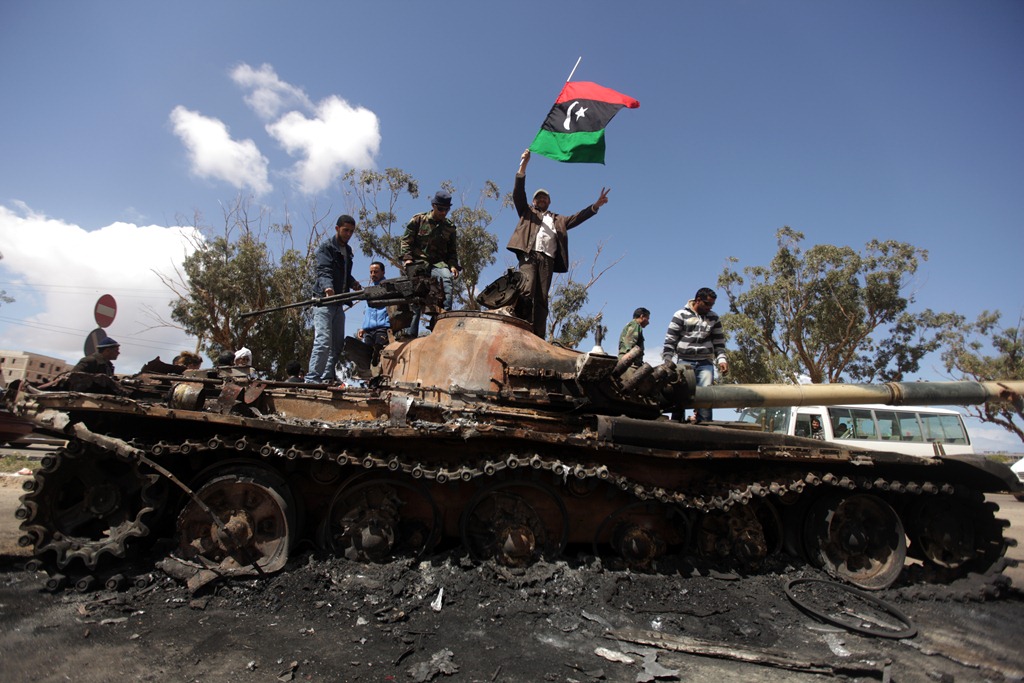
libyawar6

The debate over the extent of US involvement in Libya is heating up, and a predictable cluster of analysts are claiming that we a backing into serious endeavor with no clear strategy, with confused ethics, raising process above substance, etc. I say predictable, because it looks increasingly like the ‘usual suspects‘ of liberal internationalist hawks and neo-cons who helped gin up the war on terror (GWoT) that by almost any benchmark has gone pretty badly astray. The gist of seems to be that Obama is a ditherer so we are drifting through this. Republicans of course will hammer Obama for this.

This strikes me as somewhat unfair (even though all the links above are worth your time and most of the points are fair). So here is a case for the limited, we’re-not-quite-sure-what-we-are-doing, we-hope-the-allies-and-Arabs-will-do-more intervention we just started. (For an R2P defense, try this.)


1. The narrowing time window in Libya forced the West’s hand before a serious strategic discussion could be fleshed out. Ideally, we would have had something like Obama’s serious, months-long deliberation on Afghanistan in 2009. All the big voices could be heard – western militaries and parliaments especially. A public opinion debate in western media could have generated at least some basic consensus among elites and publics both within and across the coalition’s member states. But war of course does not wait for strategists and planners to hammer out all the details, or for long public debates. Just about any basic strategy course will tell you how much unpredictability conflict generates and how actors frequently have to ad-lib and flim-flam their way through these sorts of engagements. New events pop up out of nowhere (Arab Spring); wholly unforeseen consequences suddenly loom (like a Libyan bloodbath); previous ‘certainties’ evaporate as new actors, atrocities, resources, etc. enter the picture (who are the Libyan rebels anyway?). Sometimes, the pressure of time simply cannot be avoided. I argued last week that if Libya were to evolve into a Bosnian-style bloodbath, the West would have to intervene, and fairly quickly. Inevitably that means that the operation will be organized on the fly and be fairly sloppy. Yet the alternative was so much worse. So yes, this thing is a mess, but it’s not too bad so far – let’s be fair – and the alternative of Gadhafi’s Gestapo tactics in eastern Libya is downright chilling. To my mind, western leaders deserve genuine congratulations at this point for pulling together some kind of reasonably coordinated campaign that no one really wanted very fast that has achieved the stated goals of the UN Security Council resolution. That’s not bad at all actually…


2. The US use of force is increasingly de-coupled from anything but presidential decision, but constitutionally, democracies really needed to wait and ‘dither’ a little bit. Andrew Sullivan has made this point very well. The case for ‘dithering’ is actually a good one, because the democracies really should not change into war without some public debate and consultation. Anyone whose studied the evolution of US foreign policy since WWII knows the (and should worry about) the increasing presidentialization of US war-making authority. The US has not declared war since WWII. The US has fought Korea, Vietnam, Iraq 1 and 2, and Afghanistan without formal constitutional authority from Congress (Article 1, Section 8 of the US Constitution). No, this does not mean the US president is becoming a military dictator (read Chalmers Johnson if you think so), but it is unnerving and increasingly undemocratic. So I think Obama did the right thing, by American law, in waiting for a least little while so that their could be some debate in the Congress and US public on this. This would apply to France and Britain as well.


3. The US is overstretched. This should be so strikingly obvious to everyoneexcept neo-cons I suppose – that is a very good reason to dither and otherwise look for a light, low impact intervention before lots of grandiose rhetoric about Clausewitz and such. This is premature it seems to me. This is not yet a major national mobilization in the West for a huge war. Maybe we can move through this with minimal intervention. We don’t know, but why isn’t it worth a try? If have to really ramp up to pursue a Clausewitzian victory (win big through a massive military strike at the heart of the enemy and get the awful, unpredictable business of war over as fast as possible), we can. But remember that Clausewitz was writing for interstate war traditionally defined. He didn’t think too much about insurgencies or foreign interventions for limited political gains in a revolutionary situation. Clearly invading Libya (‘boots on the ground’) would be a major new commitment when we really can’t afford that, and the likelihood it would backfire is huge. In that sort of environment, bombing to stop atrocities is not such a bad compromise.


4. Kosovo is not such a bad model after all. In 1999, NATO bombed the Serbs into (something like) submission in Kosovo. We helped the Kosovo Liberation Army even the odds, and today Kosovo is not that bad. It’s not great, but at least there is no ethnic cleansing. The conflict had (some) multilateral legitimacy, and while it angered Russia, it did not provoke a new Cold War which a heavier footprint might have. This was organized by most under-appreciated general in recent US history – Wesley Clark (probably because he is a Democrat whom the GOP cannot lionize). If you haven’t read his book on his work in the Balkans, you should. It is the likely model for Libya, even if the GOP thinks it is wimpy, violates Clausewitzian rules, and cedes the initiative to the French and Arabs.


5. Iraq really should give everyone pause and does, very obviously, argue for caution and last-resort thinking, at least for now. Anyone even passably familiar with the US budget should know that US unipolarity is on the ropes. No, the US should not suffer from an Iraq or Vietnam syndrome. But the GWoT has become such a mess, that does anyone really think that US public opinion (not interventionist elites, mind you) want some huge commitment? Yes, Americans and the West want to stop horrific atrocities; the ‘CNN effect’ is real, and we should try where we can (Rwanda should have taught us that). But I can’t imagine that the US voter, who really wants to leave Afghanistan and Iraq, wants to hear about Clausewitz in Libya. We have to balance our desire to help with American exhaustion and reticence after a decade of war. Hence, Obama’s middling approach is actually a fair response to contradictory pressures, it seems to me.


If you consider all these factors – to go in early and hard against Gadhafi (when it would have helped the rebels most, and because America ‘leads’ not ‘dithers’) vs. to stay out altogether (because we have no idea what we are doing and have just thrown this together at the last minute) – I think Obama, Clinton, Sarkozy, and Cameron actually found a pretty good middle course that can basically be summarized as ‘bombing for human rights.’ Yes, that is confused, messy, hardly a rousing call to arms and patriotism, dithering, possibly oxymoronic, and so on. But it balances well all the contradictory pressures listed above, which must be awfully hard this late in the history of the GWoT and Arab Spring. So before we tear them apart on the op-ed pages, let’s at least give them a chance. We will continue to debate this as war goes on; we can change course if we really need to because of new circumstances; and the West (and even the Arab League!) should be proud of itself for having prevented an almost certain bloodbath. That seems like a pretty good record so far.

In Light of the Libyan Civil War, Give Mubarak his Due…

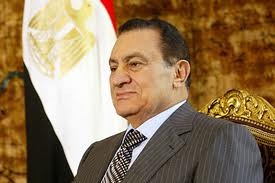
mubarak

No, I am not an authoritarian-sympathizer; I supported the drive to dump him as much as anyone. But the comparison of the Mubarak’s response to Arab Spring and Gadhafi’s is worth pondering. When push came to shove, Mubarak choose a vastly more civilized exit than most of his dictatorial ilk, and while he was clearly a nasty autocrat, he falls on the ‘gentle’ end of that spectrum. For a good article on how Mubarak ‘failed’ to learn the real Machiavellian prowess of staying in power from genuine sociopaths like Robert Mugabe, try here. For a list of the worst of the worst, against whom Mubarak scarcely compares, try here.

Consider the following points for why – within the awful world of dictators and psychotics ruling today – Mubarak was comparatively benign:

1. He didn’t shoot his own people. This strikes me as the most important distinction between the bad, and the truly worst. It is not clear yet if Mubarak did not order the Egyptian military to shoot the demonstrators, or if the army was so ordered, but didn’t do it. We will learn later. But even if he did, he clearly didn’t have his heart in it. The Egyptian military was on the streets for awhile, but didn’t do much. Regime thugs were also out there for a few days, but killed ‘only’ a few people by Gadhafi standards. The comparison with the many other dictators willing to butcher their own people en masse is striking. Consider China’s response to the Tiananmen Square protests in 1989, Gadhafi’s recent brutality, Syria’s 1982 Hama massacre, Zimbabwe’s Matabeleland repression in the early 1980s, Burma’s 1988 opposition massacre, North Korea’s disdain for the the 1990s famines that killed a million people, Iran’s 2008 repression, Saddam Hussein’s 1990s repression of the Kurds and Shiites, etc. Without excusing Mubarak’s police state, it appears that butchering huge numbers of his own people was a redline he would not cross. The strikes me as a fundamental moral distinction we should ‘credit’ him for.

2. He didn’t start a civil war. Again Mubarak had the sense, perhaps even ‘morality,’ to avoid plunging his country into a devastatingly destructive civil conflict. Gadhafi is the obvious comparison, but Idi Amin and Hussein went this route too, and Ceausescu and the Soviet 1991 coup plotters risked the same. Today Yemen and Bahrain seem to be sliding in this direction. By contrast, Mubarak did his national duty and resigned. For all his nastiness, he doesn’t seem like a total megalomaniac who believed the state exists solely to serve him. By contrast look at the ‘sun-king’ egomania of Gadhafi, Kim Jong Il, or J-B Bokassa, with their ridiculous titles and cults of personality. Mubarak at least knew that Egypt was larger than him and left; does anyone expect that from Bashar al-Assad? It could have been so much worse…

3. He didn’t trash the economy for (too much) personal enrichment and to keep power. Zakaria makes the point that Egypt has actually been growing for awhile. This too is opposite the usual line of the worst of the worst, like Mugabe, Mobutu, or Kim Jong Il. The genuinely extreme leaders with world historic pretentions of their own role – think Amin, Chavez, or Bokassa – almost always ended looting their own economies for extreme personal gain to justify their claims to be emperors, sun-kings, etc. Yes, Mubarak and his cronies lived it up; these guys usually do. But one need only look at North Korea or Burma to see how much worse it could have been. And in tolerating this growth, Mubarak also put into the Egyptian opposition’s hands the resources the fueled this year’s revolts. Credit him at least for not impoverishing the whole country simply as a strategy to retain power. Would you rather live in Zimbabwe or Egypt?

4. He didn’t eject the foreign media. Was anyone else struck by how western media figures like Anderson Cooper suddenly recast themselves as Danton or Robespierre after a few days in Egypt? I can’t say that Cooper ever expressed much interest in or knowledge about Egypt before, but a punch in the face by Mubarak thugs turned him into Lenin or the Tank-Man. Well none of that would have been possible without Mubarak’s tolerance for foreign media in country. He could have pulled a Latin American dictator trick and simply shot them. Or Mubarak might have tried to seal off the media permanently like NK. But again, this seems to have been a redline he would not cross, and it badly weakened his hand, especially overseas. The whole world could watch as Muburak’s writ crumbled; by contrast, CNN reporters in Libya are far fewer and wearing flak jackets.

5. He left when it was clear he could not stay. In line with points made above, Mubarak gave up when the options became intolerable. Gadhafi didn’t, and his historical reputation, already tarnished enough by autocracy and the sheer lunacy of his rule, is now forever ruined by his shedding of his own citizen’s blood. Whatever reputation Gadhafi might have claimed – first as an Arab-bloc leader, then later as an African leader, and recently by the rapprochement with the West after he surrendered his nuclear program – is now gone. Gadhafi is now just one more psychopath history will forget. If this sounds surreal, consider that Stalin still enjoys a reasonable reputation in Russia, and the South Koreans will still praise Park Chung-Hee, even though both are reviled globally as nasty dictators. But now, even this option is foreclosed to Gadhafi, where Mubarak might have a Park Chung-Hee-like chance of resuscitation later in Egyptian history books. At the end of Mubarak’s tenure and within the albeit awful moral framework of governance he created, he still did the right thing within that frame. Instead of a  Goetterdaemmerung, he gave up. Give him credit for that at least…

What the Japan Tsunami Tells Us about International Politics

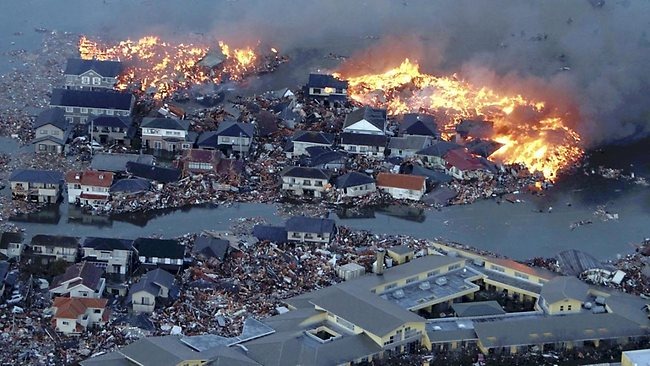
070803-japan-earthquake

For as awful as natural disasters are, they also act as lightning flashes to illuminate the hidden landscape of states’ weaknesses and capabilities. As ‘acts of god,’ natural disasters represent a uniquely blameless test of state seriousness and capacity (and of genuine international solidarity). Unlike man-made catastrophes such as 9/11 or Srebrenica,  this cannot be blame on foreign machinations, ignored/manipulated for political calculations, or otherwise geopolitically spun. Not even Koreans, who are arguably the people most alienated from the Japanese on the planet, are ‘happy’ about this or calling it retribution or anything like that.

So this earthquake was a major test of the response capacity of the Japanese state (and of the functioning of global governance on things like nuclear-oversight or disaster-relief assistance), and we can honestly say that Japan has performed remarkably well. The quake was an staggering 9.0 on a 10 point scale (the Richter scale), and news reports are calling this the worst quake in Japan’s history. Yet the death-toll is still under 5000. Despite the sadness of these deaths, we should recognize how astonishingly low that is and credit that directly to the seriousness and functionality of the Japanese state. Events like this cast into extreme clarity: the difference between the ‘First World’ and the rest; why, for all the talk about the ‘second world rising,’ places like South Asia, the Middle East, Africa, Latin America, and even China, have a such long way to go, and why they export, not import, people; and just how badly governed so much of the world really is, and how that dysfunction borders on criminal negligence when really serious disaster strikes. Remember how many people died in far less powerful events in Pakistan or Haiti recently.This is not meant to be OECD triumphalism, but yet another wake-up call regarding the atrocious government of far too many places. Japan should make Haitian and Pakistani elites hang their heads in shame.

Here are a few applaudable illustrations of truly serious, responsible government:

1. Japan called International Atomic Energy Agency immediately after the earthquake about its nuclear reactors. It has cooperated properly and publicly with IAEA. It has noted the problems in the media, while responding properly with cautions where necessary. This is what real governments, who actual govern rather than tyrannize, pilfer, or exploit, do. Imagine how Iran or NK, or maybe even China and India, – all hyper-nationalist, corrupt governments  with super-secret nuclear programs – would have responded. They would have told no one until the questions became unbearable. Conspiracy theories about outside intervention would have been floated. IAEA regulations would have been openly rejected as a pretext for western espionage, etc. The consequence would be a re-run of the post-Chernobyl hysteria, because no one knew the details or trusted the source. By contrast, Japan did its duty, and the world trusts them. Well done.

2 Japanese emergency responders got out there quickly. Within a few hours, bulldozers were already on scene. Just like the rapid New Zealand response a few weeks ago, this was a good demonstration of what political science calls state capacity. The Japanese state is not faux-structure on paperthat really exists to serve some megalomaniac ‘president-for-life’ like Gadhafi. It is highly modern, efficient, rational, focused entity that can fairly rapidly process information, redirect resources, and otherwise flexibly respond to shocks. Given the 9.0 Richter measure, I am amazed how rapidly and coherently Japan is responding. Had this happened in Cambodia or Mozambique, the entire state might have collapsed. Even the Americans really blew it on the far-less-catastrophic Hurricane Katrina. Again, well done.

3. The Japanese trained a lot for this and are a disciplined, serious, but not therefore terrorized, population. What most strikes me about the videos coming out of this is just how calm everyone seems. The CNN reporters in the first few hours seemed almost desperate to find scenes of hysteria – one guy saying on a cell-vid, ‘the building is going to collapse!’, got re-played again and again. By contrast, look at the American response to 2003 power outage in northeast; people treated it like the apocalypse. Or far worse, look at how the NK state has ‘disciplined’ its people to “arduously march” through its recurrent famines, or how the USSR militarized its entire population and economy to fight WWIII. If the Department of Homeland Security (DHS) in the US actually did its job, this is how Americans would respond to terror alerts, instead of neuroses about duck tape and safe rooms. Japan has just shown the US how intelligent grown-ups respond to real threats. We could only dream that DHS was so professional.

4. Japan didn’t blame this on God’s unhappiness about abortion, gays, or modern decadence; Mossad, the United States, China, Korea, etc, ad nauseaum. Again, try to imagine how NK would have responded: a US-SK-Jpn plot to control the earth’s crust!; or the Taliban: it’s Allah’s punishment for not beating our women harder; or Fox News: Jesus’ response to gays in the military. Don’t believe me? Jerry Falwell blamed US homosexuals for 9/11, or read this about how Israeli intelligence is responsible for shark attacks in Egypt – because, you know, Spielberg is a Jew and directed Jaws... Despite huge destruction, Japan’s response to the massive event has been serious, normal, and measured. Hear, hear.

5. Japan prepared for this by listening to scientists and experts and not just blowing the money on pork for reelection, or just conveniently forgetting about legislative hearings that demonstrated real threats. America is once again an instructive counter-example (*sigh*, wouldn’t it be nice if we could get this stuff right?). Post-Katrina, we all found out how much the New Orleans and Louisiana had been warned. Mayor Nagin was a balloon head with absolutely no idea what to do, despite governing a coastal city eight feet below sea-level (!) with known exposure to hurricanes – which is obviously why he got re-elected – wth!?, but then W got re-elected post-Iraq…  Anyway, then came heckuva-job-Brownie. Or how about the audits of DHS which show that homeland security money still follows legislative pork not appraised terror threats? This sort of stuff should tell you why the far less powerful Katrina Hurricane lead to the travesty at the Superdome, while Japan is pushing through with minimal panic. Serious people from a focused government spent big money on empirically demonstrated problems. I guess we forgot that in the war on terror.

Japan just showed how serious, professional, responsible, secular government can construct a real, responsive state apparatus that can help citizens in even very extreme circumstances and genuinely resolves serious collective action and public goods problems. Superb. Truly remarkable. In the midst of this tragedy, we should be in awe of the world-class response. This is a real ‘all-hazard’ response. The world – and especially DHS! – should take note.

If you want to donate to assist Japanese recovery, go here.

_________

WACK-JOB ADDENDUM: At least one nutter has come out to proclaim this the Lord’s vengeance for those heathen Shintoists. I’m sure somewhere Pat Robertson is unhappy that he missed this chance. Appalling.

If Libya Becomes Rwanda or Bosnia, We’ll Have to Intervene…

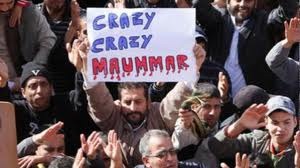
libya

Like most of you – from Robert Gates down to just about every Westerner with memories of Iraq (and who can forget?) – I am super-wary of intervening in Libya: yet another conflict in a Muslim land, more white Christians killing brown Muslims, more US overstretch, an obvious threat of mission creep, the Iraq-style possibility that Al-Qaeda will come to fight us there in the chaos, etc. It could easily become a quagmire, a nightmare, yet another Afghanistan, etc. And regular readers of this blog will know that I think the US is badly overstretched, probably needs to get out of the ME, desperately needs to balance its budget with some defense cuts, and more generally should play a less ‘imperial’ role in the world. My own hope, like just about everyone else, is that the Libyan rebels can pull this off on their own and that Gadhafi might realize his time is up like Mubarak or Ben Ali (Tunisia).

However, in the last few days it increasingly looks like Gadhafi might not only hang on, but win. We don’t know of course yet, but we need to start thinking about what to do, if anything, in the case of a Gadhafi victory. It seems very likely that if Gadhafi retakes the east, he will butcher his opponents en masse. I don’t want to go in there anymore than anyone else, but we could be looking at massacre of thousands, maybe even tens of thousands of people. Not only would the leadership elites – the Libyan National Council, the new town mayors and councils, the military and old regime guys who flipped, etc. – be wiped out brutally (imagine the torture, family killings, Gestapo tactics to come). But given that something like half the country has thrown in with the rebels, one can imagine a massive crackdown reaching deep into regular society. Think of bakers who gave their product away to support local rebels, or school principals who allowed their buildings to be used for meetings, or police officers who looked the other way as the revolt first gathered strength. Given the sheer nation-wide scale of the revolt, the post-Gadhafi victory purges could be downright ghastly – like Bosnia or Rwanda.

Yes, we have seen purges before – the PLA killed perhaps 5000 at Tiananmen Square, the Burmese junta killed perhaps 3000 in 1988, Mugabe did the same in Matabeleland in the early 80s – and did nothing. But Gadhafi could be on the verge of something yet more awful – plumbing the depths of brutality we associate with Milosevic or ‘Hutu Power’ in Rwanda. The revolt’s failure could generate extermination death-tolls we haven’t seen in 20 years anywhere. (And if you think it can’t get worse, I suppose we should be ‘grateful’ that Gadhafi is not Himmler or Pol Pot.)

My sense is then that we would just have to do something. Does anyone anywhere honestly defend the West’s realpolitik behavior toward Rwanda anymore – its too far away, would likely be a quagmire, we don’t know anything about the locals, we could be there forever? All this is true, but in the face of 800,000 dead, aren’t we ashamed? We feel no moral obligation? (If you still feel that way, go watch Hotel Rwanda again, followed by Schindler’s List, then get a morality transplant.) What is the point of NATO, Obama, human rights, etc. if we permit Rwanda, part 2? Why not just close the State Department, UN, etc. altogether?

The intellectual cover to intervene could be provided by the notion of “responsibility to protect” (R2P). And if the Chinese and Russians don’t like it, well, in the face of mass atrocities on this scale, then to h— with them. We went into Kosovo in 1999 on the basis of NATO, regardless of Sino-Russian callous, self-serving flim-flam about ‘non-interference.’ Not trying to stop butchery approaching genocidal levels, right on NATO’s doorstep no less, is a total moral abdication. This is beyond ‘realism;’ this will be an obvious, catastrophic moral failure that will rightfully haunt us all. This is a chance to stop a second Rwanda – probably the most awful event in human history since Pol Pot. I just can’t imagine that we should do nothing.

All this said, yes, we must limit our exposure. This is not Bushism – freeing the world from tyranny forever, democratic invasions, American empire, etc. This is a (very minimal) human rights-based argument in order to prevent the very worst. (This is hardly my area of expertise though; read this for a much better case.) My own sense is that the 1999 Kosovo air campaign (bombing without without ground forces) – which limited NATO exposure and helped the Kosovo Liberation Army even the odds – would be a preliminary model. Nor is this a call for immediate intervention. Maybe the rebels can still win, and it looks like we still have time to wait and see. The best outcome of all would be a rebel victory without NATO involvement. But if Gadhafi wins and a huge bloodbath ensues, we must do something…


Korean-German Unification Parallels (3): Differences & Conclusions

Flag-Pins-South-Korea-Germany

This is the last of a three part post elaborating the often-made parallel between German and Korean unification. Please start with part one and part two.

More Differences in the International Environment between German and Korean unifications:

c. China’s interest is much higher in NK than the USSR’s was in EG. NK borders China; EG was two time-zones away from Moscow. China’s interest in the terms of a final settlement are much more direct. Gorbachev was basically trying to sell EG for desperately needed cash; for China, Korea is a more existential issue. NK is a buffer between democratic SK, Japan, and the US. Hence, China is much more likely to stick its nose into Korean unity talks, and to push for its own terms. Those terms will probably include a ban on US forces north of the current DMZ, and possibly an exit of SK from the US alliance altogether, in exchange for Chinese acquiescence on unification: Korean ‘finlandisation’ (an outcome of which Japan might secretly approve too).

d. SK can’t buy unity from China as West Germany did from USSR. WG was an economic powerhouse by the 1980s – in the OECD and G-7, second biggest donor to the UN, etc. WG could simply  write a huge check to Moscow, and the USSR was so desperate that it took the money and abandoned Honecker. SK is simply not there. Yes, it’s in the OECD and G-20, but its still lists itself as a developing country at the WTO, and it is still decades away from German levels of affluence. Nor do the Chinese need the money. China will play a much harder game than the Soviets were able to 20 years ago.

e. SK has no supportive environment of allies or revolutions, like NATO and the Velvet Revolutions of 1989, which could add momentum to unification. Beyond the US, SK has no real allies. Russia is an unpredictable faux-‘partner’ at best. Because of all the bad history, the Japanese don’t really like the idea of a united, wealthy Korea which is growing faster than them, right on their doorstep. Taiwan is also a divided country, but it is in the NK/EG role as the smaller and weaker of the two. So there is nothing like a local NATO of friends to provide group moral cover for unification efforts, nor can there be any regional momentum for NK change, as the other revolutions like in Eastern Europe provided to East Germans in 1989/90. The are no nearby states similar to NK to catalyze NK change, unless one imagines Chinese democratization, which is a huge leap. As we see in the ME today, revolutions can synergize each other, but there is no region here to provide a wave to wash into NK. Koreans will have to do this themselves.

Conclusions:

Altogether this means that hurdles to and burdens of unification are much higher here:

 There are more NKs than EGs, and they are poorer as well.

There are fewer SKs than WGs, and they are poorer also.

SK’s state strength/capacity is lower than WG’s, while NK is a catastrophe by even EG standards.

So: fewer people with less money in a weaker system will support more people with less money from a worse system.

That domestic arithmetic is brutal, and if that weren’t bad enough, the international balance of forces is worse now than in 1989 too:

Today, the external patron (US) of the free Korean half is weakening, while the external patron of the communist half (China) is strengthening. The opposite was true of the US and WG, and the USSR and EG, in 1989.

Today’s northern patron (China) is trying to push further into the continent (Asia), while yesterday’s eastern patron (USSR) was looking for an exit (from central Europe).

There is no regional encouragement, revolutionary wave, democracy zeitgeist, or whatever to push this thing along in NE Asia.


The incentives for China to meddle – because of the greater importance of NK to China, than of EG to the USSR -, and the greater ease of   such meddling – because the US and SK today are weaker than the US and WG were then, while China is much stronger today than the USSR was then -, mean Chinese intervention is highly likely. It will try hard to structure any final settlement. A major policy question for SK is therefore likely to be, will it dump the US alliance if that is what’s necessary to get China out of the peninsula? Will SK exchange ‘finlandization’ for unity? I think the answer is, and should be, yes.

The only alternative I see to this is a unification process that goes so badly off the rails, is so destructive, disorganized, and chaotic, that China would want to stay out it from sheer concern to avoid a quagmire. In other words, the more chaotic the end-game turns out to be, the more likely it will be a Korean-only affair. This is unfortunate; no one wants Korean unity to be a Hurricane Katrina-style national meltdown that requires heavy western and Japanese support – which might not even be available. because of the accelerating sovereign debt crisis. But reunification chaos seems like the only way to keep the Chinese out, because the balance of forces I sketched in the post are so much worse for Korean today than they were for Germany in 1989/90.

Korean-German Unification Parallels (2): Differences

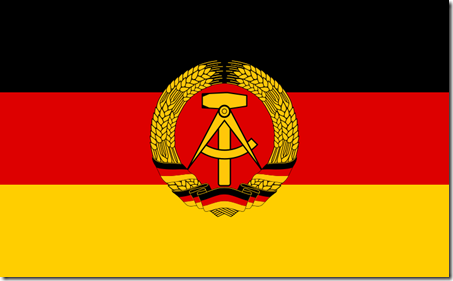
east_germany_flag_thumb1

old East German quip: what does GDR (German Democratic Republic) really mean? German District of Russia…


This is part two of a post exploring the similarities and differences of German unification (1989/90) with Korea’s probable future one. Part one explored the similarities of the two cases; Part three presents my conclusions. Here are the differences between these unifications:


Differences:

3.  Domestic

a. EG was much wealthier than NK is now. EG was the ‘leading’ economic performer of the east bloc. The USSR realized how central the German competition was to the overall Cold War competition, so EG was heavily subsidized. NK was never as important, because the cold war contest was never as stark in Asia as it was in Europe, so NK never got such big handouts. NK’s GDP/capita today is a crushing $1700; EG’s in 1989 was $10,000.

b. NK is not just a dictatorship; it is an Orwellian nightmare, more stalinist than even the Soviet Union or Albania ever were. East Germany was bad but never plumbed the depths of repression and madness like NK.  One of our faculty at my university works with NK defectors, and he notes how many of them have psychological trauma from life in NK. Fixing NK will not just be a huge pile of money; we know that. It is also going to require something akin to nation-wide psychiatric care for millions of mentally brutalized Winston Smiths. This will be an event unheard of in the annals of mental health; read here and here.

c. On just about every other benchmark conceivable, NK is worse off than EG: environmental management, infrastructure, labor productivity, health care, education, technology, etc, etc. The per person cost of Korean unification is likely to much higher, because NK is so much further behind in almost every way than EG was. Estimates of Korean unification could begin with these figures: in 20 years, WG has transferred $1.2 trillion euros to the roughly 16 million people of EG at the time of unification. Note than NK has more people (23 M) than east Germany, and those people are significantly poorer per person too ($10k vs 1.7k per capita). So that means the 1.2T euros figure is likely too low for the NK case. Note also that West Germany had around 60 M people in 1989; SK has 49 M today. WG’s 1989 GDP per capita was $25,000; in SK today, it is around $19,500. The arithmetic is punishing.

d. EG and Soviets did a good job deceiving the world that EG really was modern and advanced, just like the West. This is one reason why the WG government granted 1:1 currency convertibility to the GDR mark: almost everyone thought EG would have some reasonably competitive industries and sectors. Yet when WG finally got in there – when the West finally pulled the lid off –  almost everything was badly behind or unusable: the phone system had to be completely replaced, EG cars were a polluting environmental nightmare, laborers had no idea how to use computers or even basic office devices like photocopiers, infrastructure around the country still had World War II battle damage (that is no joke, I saw it), etc. So it’s likely that NK is much worse than we think it is. Even Bruce Cumings has admitted this. Yes, try to imagine that: NK, our customary endpoint of geopolitical awfulness, is probably hiding much worse than we know now. Once we see the NK gulags up close, I think we are going to see Nazi-style atrocities even the Taliban wouldn’t have tried.

e. SK is less politically prepared to carry the enormous stresses of unification – and not just the financial burden. The SK political system is flimsier than WG. Corruption is more regular; its parties are shallow and change names quickly; political unresponsiveness drives a street-protest culture and brawling in the National Assembly. For a state that came out of dictatorship less than a generation ago, SK is doing pretty well, but it clearly does not have the state capacity WG did in 1989, while it faces (points a & c above) a comparatively greater burden. Indeed, this is my greatest fear – the burdens of unification will simply overwhelm SK’s still maturing democracy and leave NK in some kind of semi-annexed limbo like the West Bank.

4. International

a. In 1989, the US was at peak of its postwar relative power. The USSR was in decline; China was still far off. This is the era of the ‘unipolar moment’ and the ‘end of history.’ Today the balance of forces is very different. The US is much weaker. Many think the US is in decline. All this makes it harder and harder for the US to support SK in any contest with China or NK over unification. It is likely that SK will have to do more of the work on its own, compared to the heavy intervention by the Bush 41 administration to support the WG position. The weakened American position means it will be easier for China to dictate its terms for unification (such as no US forces north of the current DMZ, or perhaps even no US forces at all).

b. In 1989, the USSR was a mess; today China is not. The GDR’s patron was imploding. It could no longer afford the contest with the US. The Soviet Union was trying to geopolitically retrench and to re-starts its moribund economy with perestroika and glasnost. The Soviets were getting desperate, and the east bloc – subsidized as it was – had become an albatross. Gorbachev was fumbling to control all the forces unleashed. China is the opposite. It is not overextended, but rather just beginning the international expansion that flows from its rising strength. It is feeling its oats and ready to give the US a run for its money in Asia at least. Tiananmen Square demonstrated a non-Gorbachevian willingness to roll out the tanks to maintain the one-party state, and there is no serious liberalizing force, in part because the Chinese population is being bought off with growth. So China is much more capable of carrying the NK albatross and ready to push its interests into Korea not pull out per Gorby.

Go to part three.

Korean-German Unification Parallels (1): Similarities

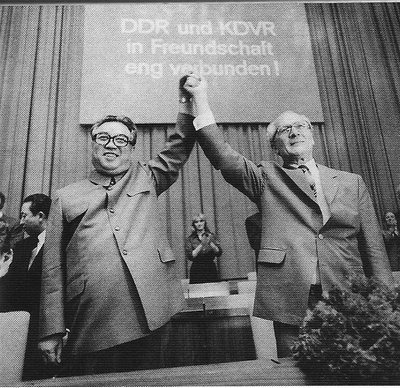
KIM_IL_SUNG_mit_HONECKER

Kim Il Sung and Erich Honecker: *sigh*, don’t you miss the golden days? —- no, me neither

(the placard reads: ‘GDR and DPRK tightly bound in friendship’ – for tyranny and poorly-made men’s wear)

Here is part two and part three.

Last week I ve participated in a scenario to map out possible futures of Kim Jong Il’s sudden death. My best guess is in my previous post – a military dictatorship with Kim III (Jong-Un) as a familial, yet much reduced, figurehead. But one idea that is always floating around in the background is that major regime junctures in the North might lead to break down and then unification. President Lee has taken recently to saying that SK should prepare for imminent unification, and one of my favorite NK experts thinks unification is likely in the next five years.  Does anyone else think this is likely, and why so (in the comments below, please)? I don’t see that actually.

Nevertheless, the most obvious parallel for trying to map Korean unification will work is the German case in 1989/90. I have written about this before, but the following compare and contrast is more complete. For Asian readers in search of a good walk-through of Germany’s experience with division, here is a good place to start.(FYI: I lived in Germany for 4 years in the early 90s and speak German. I recall debating this stuff a lot.)

Similarities  between the German and Korean divisions:

1. Domestic

a. Both nations were divided artificially. Both sides believe the ‘2 states, 1 people’ outcome is temporary. All 4 states face a permanent constitutional legitimacy crisis, because the obvious question is why these separated states exist at all. As such, all states divided by the Cold War were intensely competitive with the other. Outracing each other economically, militarily,  even at the Olympics, became central to proving who was the ‘real’ Korea, Germany, Vietnam, China, etc. Mutual coexistence is basically impossible; each has a limited time window to race the other into international legitimacy. As one or the other pulls away in global opinion – as it becomes ‘the’ Korea or ‘the’ Germany in places like airports or hotel signage, popular movies, CNN, etc. –  it will become ever harder to justify maintaining the division.

b. NK and EG (East Germany) are both communist with all the attendant problems of 20th century ‘real existing socialism.’ They are domestically illegitimate outside their own elites. Those elites are a corrupted ‘red bourgeoisie’ for whom regime ideology became a figleaf for oligarchy and luxury. Neither can produce anything close to the quality and quantity of goods necessary to keep their populations happy – populations further disenchanted by what they see on the other side. Both have a nasty secret police. They are both noticeably poorer than the westernized competitor, and this creates unending pressure on the government to change. All these factors create a disconsolate citizenry that would push out the regime if given the chance. Hence, any manner of internal democratization or liberalization would end the regime as we know it. In the end, both communist half-states had to seal off their borders to prevent exodus; they are national prisons.

c. Underperformance vis the westernized competitor slowly takes its toll internationally. The competitions led to hyper-militarization in the communist half, which only worsens the performance gap between both sides.  Perhaps the best marker of the communist failure after a few decades was that West Germany simply became Germany and South Korea just Korea. To indicate the communist half in everyday speech, one had to affix the directional adjective, the implication being that EG and NK were somehow dead-ends of history. By the 1980s, both NK and EG had effectively lost the race of point 1a above; SK and WG became Korea and Germany.

d. The westernized, ‘Free World’ half of the nation is a wealthy, functioning democracy that has otherwise joined the world – technologies, markets, and institutions (IMF, WTO, etc). This makes the communist half look even more like a basket case. Gradual but sustained wealth and demographic accumulation have dramatically altered the balance against the communist half. The free half also regularly receives communist refugees voting with their feet.


2. International

a. SK and WG are clearly supported by the US and its wealthy democratic allies. Both belong to American/democratic alliance system and enjoy the widespread moral legitimacy that comes from that. They are net contributors to their own defence, clearly outclassing the communist half strategically.

b. NK and EG are practically client states of a communist behemoth, on whom they are extremely dependent. The patron of both finds them troublesome and expensive. Both field an military based around obsolete WWII assumptions of massed infantry and armor formations. Neither can win a conflict with the other half; the economic gap compounds the military gap. The patron regularly debates the merits of cutting the client loose.

c. The neighborhood got used to the division and kinda likes it (especially Japan and France, although no one will say that publicly). There isn’t a lot of impetus from outsiders to end the split. Russia couldn’t care less if Korea unites. Like the French and British on Germany, the Japanese public will come around once they see it on TV. Once we see crying Koreans tearing down the barbwire fences of the DMZ, like we saw Germans hammering the Berlin Wall, no one will stand in its way. But until then, don’t expect anyone else to do much beyond pro forma boilerplate.

Go to part two.