Iran War: Will the US Ever Pivot to Asia? Sure Doesn’t Look Like It

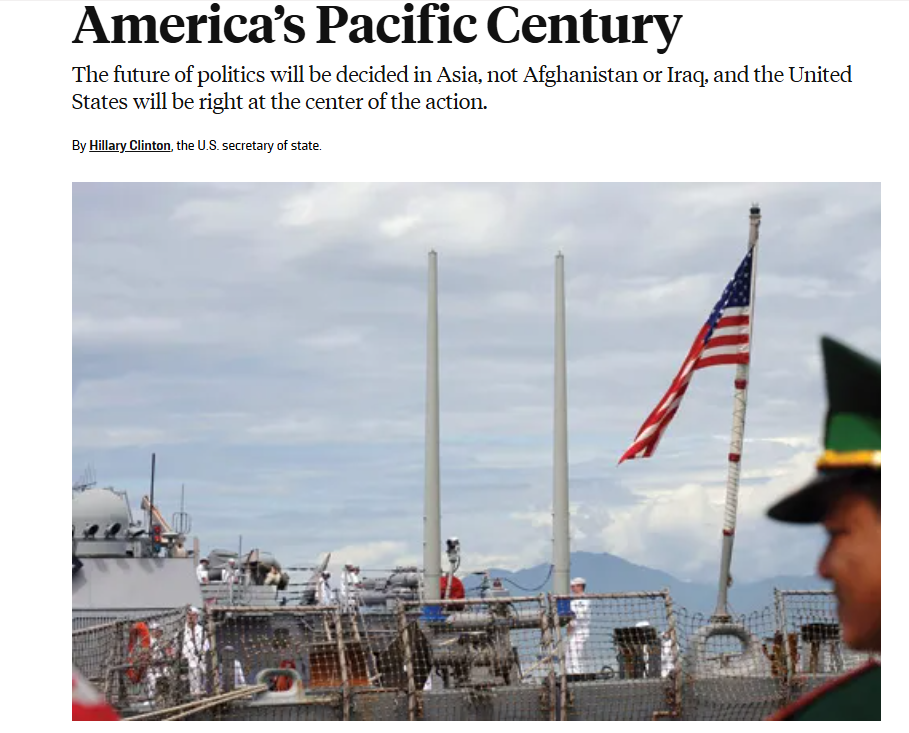
Hillary Clinton’s original, 2011 article in Foreign Policy announcing the pivot

I wrote a couple op-eds this week on this question of the ‘pivot’ in the wake of yet another US Mideast war – one at Channel News Asia, another at 1945. Here’s the basic argumeent:

  • the strategic case for the pivot to Asia (China) is stronger than ever
  • the Iran War is probably going to be bigger and longer than we thought
  • so we can’t pivot more to East Asia for while
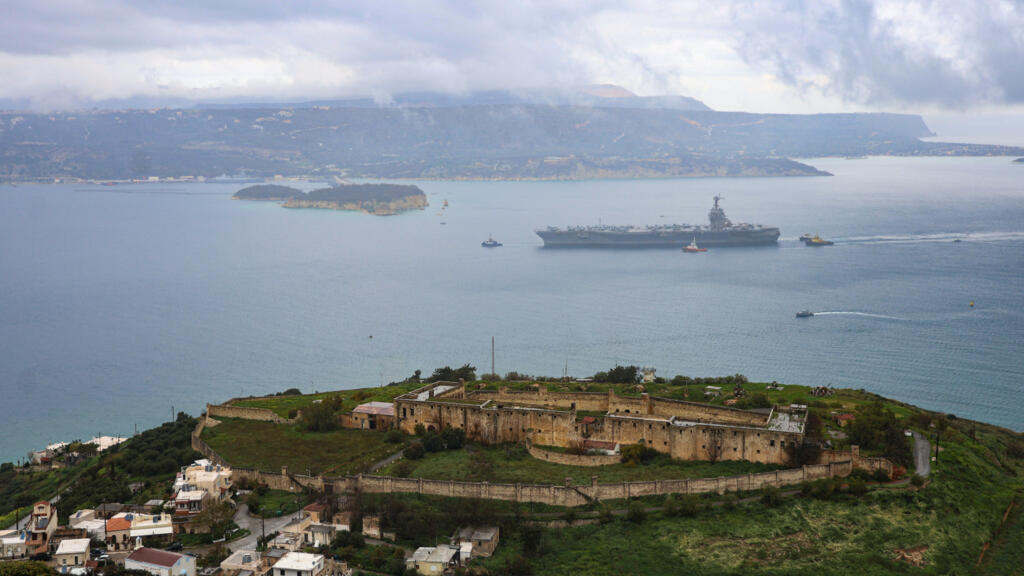
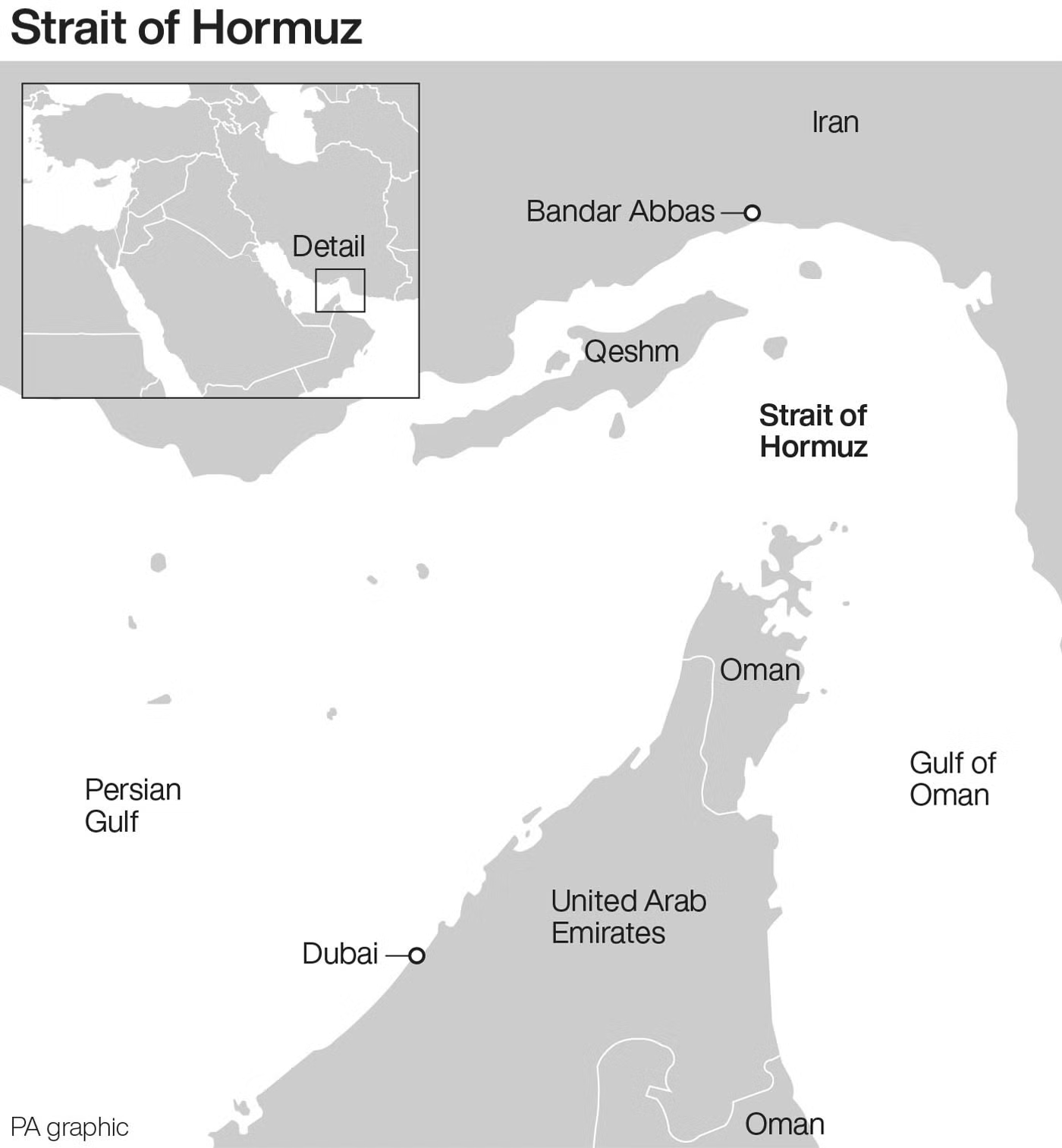
  • in fact, we are ‘de-pivoting’ – i.e., moving resources from East Asia to the Persian Gulf
  • a lot of Americans don’t want the US to pivot out of the Middle East for religious reasons
  • at least we are pivoting out of Europe. It’s long overdue that Europe do far more for its own defense and take the lead
  • Trump’s interest in Western Hemispheric hegemony will pull away resources better sent to East Asia
  • So the pivot is probably dead
  • So Japan and South Korea better start spending more on defense and cooperating more

I wrote an academic article on the pivot twelve years ago (here), where I argued that American Protestant fundamentalism is the big domestic reason the US can’t quit the Middle East for East Asia. 40+% of Americans believe that Israel plays a major role in the End Times and/or sees it as a Western, civilizational bulwark against Islam which they hate/fear. So you’ve got both eschatology and the ‘clash of civilzations’ motivating a deep, religious conservative commitment to America’s presence in the Middle East.

China does not move Americans like that. To most Americans, China is some place farway which makes cheap stuff you buy at Walmart. Does grandma care that much about Taiwan? Probably not. Yeah, the American foreign policy community is really worried about China, but the voters don’t care about foreign policy much, and the GOP detests America’s intellectual class. So nobody is listening to us. If they did, we wouldn’t be fighting Iran right now.

So here we are, in yet another Middle Eastern war with yet another president talking about regime change and fighting evil, with the pivot pushed off into the future yet again.

The Trump Doctrine: Rogue State Elite Replacement

Delcy Rodríguez, the new, sorta pro-American despot of Venezuela

I put up some thoughts on Trump ending the war in Iran at 1945 magazine. We’re moving toward putting a pro-US stooge in the place of now-deceased Iranian leader Khamenei so that we can withdraw quickly. It seems like this is what Trump wants – basically a replay of the Venezuelan drive-by decapitation we did in early January.

The idea, as Steven Taylor similarly notes, is to replace the anti-American elite of a rogue state, through swift, surprising violence, with a new, pro-Amerincan despot while the rest of the regime is left intact. That way, there is no messy nation-building, reconstruction, democratization, and so on. Trump pretty obviously doesn’t care about democracy, and the US public opposes LDC nation-building. So just bumping off a leadership we dislike and replacing it with a stooge seems pretty easy by comparison. We swing a troublesome state into our column by replacing its elites, not its regime.

At 1945, I call this emergent method ‘rogue state elite replacement‘ – in contradistinction to regime change, democratization, tranition, and so on.

Here, at last, we have a ‘Trump Doctrine’ (or Method), and it fits Trump perfectly. It ignores democracy, development, international law, and so on for raw, short-term American interest from individial gangster leaders Trump can bully for pay-offs. Get rid of anti-American leaders; put in pro-American leaders; put the screws to them; get the hell out: ‘He may be a son of a b*tch, but he’s our son of b*tch.’

If Trump can get this to work in Iran, as it seems to be working in Venezuela, I figure Cuba is next on the hit list.

Iran War: Trump Goes Full Neocon in the Biggest Gamble of His Presidency

I posted my first thoughts on the Iran war over at 1945; please go there. But my short take is that this thing is going to require a ground war to do right. And Trump seemed to admit that when he told Iranians to rise up in his first war speech on Saturday.

By now everyone knows that airpower isn’t enough for regime change. Robert Pape has banging away at that all week. So you need some force on the ground to actually snatch power from those who have it now.

The obvious choice is the Iranian dissident movement. But they were crushed in January. Indeed, thatwas the time to launch this operation. We could have targeted strikes to help the protestors, destroying security forces and their weapons to give the revolt on the streets a fighting chance. But Trump had moved the needed naval assets to the Carribean so that he could kidnap Maduro. So we missed our chance.

Maybe we will get lucky, and whatever is left of the resistance will hit the streets again to fight on the ground as we pound Iran from the air. But the risk is obvious; the resistance is weakened because of the January massacre; and Trump cannot make credible commitments (to support them). Who knows if he will actually support an uprising. He sold out the democratic opposition in Venezuela to get a ‘deal’ with Maduro’s regime successor. I’d bet he would sell out any Iranian uprising to get a deal with Khamenei’s successor.

So if we want regime change, we have to go in on the ground. Trump likely won’t do that. So instead of regime change, we are getting elite replacement: some vaguely pro-American, or at least less fanatical islamist, ruler in the place of Khamenei.

Given that we did this in Venezuela and will probably do it in Cuba soon, a ‘Trump Doctrine’ is emerging: knock off anti-American elites in rogue states, put in a stooge who will do what we till him/her, and then get out. So we are back to ‘he is a son of a b****, but he’s our son of a b****.’

Who Will Control North Korean Nuclear Weapons in a Conflict?

North Korea is building tactical nuclear weapons – for use on the battlefield – and that raises tricky command-and-control problems for actually using them in combat. I put some thoughts on this at 1945 magazine.

Basically, if Kim Jong Un wants to use nukes as a warfighting tool, then he has to let his battlefield commanders have authority to use them. He must delegate release authority. But North Korea is a monolithic autocracy, and there’s no way Kim wants to share power over the something as symbolic as its nukes. That NK has produced almost nothing else of note in decades besides nukes makes assertive control over them even more political salient.

Assertive control is fine if Kim wants a stable balance of terror with the Americans based on mutually assured destruction. But if he intends to ‘conventionalize’ nukes to be used like artillery on the battlefield – which makes sense given how unbalanced the conventional contest with SK and the US is – then he has to delgate to local commanders with better information. Kim himself with be trapped in the fog of war once a conflict starts and won’t be able to use nukes dynamically and responsively.

I am not sure anyone can figure out how Kim can square this circle. Try 1945 for the full argument.

Trump is Incentivizing Allied Nuclearization

EfIfPIeXoAA41Hz

Trump’s threats against US allies and partners encourage them to consider nuclear weapons. This strikes me as painfully obvious, even though we keep saying we don’t want allies to nuke up. I just wrote about this at 1945 magazine. Please got there for the full argument.

Post-Greenland, I don’t know why US allies would trust us. For two months, we were openly discussing the possibility of using force against a long-standing partner. It is hard to over-emphasize how crazy and self-defeating that it is. Trump has threatened Canada, Mexico, and Panama. When MAGA got drunk on US power right after we kidnapped Maduro, I saw Jesse Waters on Fox say we take Bermuda.

We seem to expect that even as we break the rules of the liberal community of states, other liberal states will not. We get to tariff and bully our allies, and they are just supposed to take it smiling.

That can work for a little while. US allies are asymmetrically dependent on US security guarantees and market access. They are vulnerable to our bullying, because they never thought we would bully them.

But they won’t put up with that forever. Late last year, pre-Greenland, my friend Paul Poast and I argued in Foreign Affairs that US allies would eventually defect. If anything, events suggest our analysis was too easy on Trump. Neither of us expected that the US would actually openly menace an ally.

But here we are. If you are a US ally today, it is hard now to believe as I say on Twitter that the US would fight for you, and impossible to believe we would use nuclear weapons for you. In fact, we might attack you instead. So it makes sense to consider your own coverage, because they American nuclear umbrella is gone.

I argued this a year ago for South Korea – that it should nuke. If anything, the ensuing year has made that argument even stronger.

A North Korean SSBN is an Advertent Escalation Risk

images (1)What might bring us (the US, South Korea, Japan) to deliberately attack North Korea? Are there triggers for deliberate (advertent) escalation, on top of the traditional, nuclear age fears of accidental (inadvertent) escalation? The following is from my essay on this for 1945 magazine and Twitter thread.

To me it seems like the most likely trigger for us to deliberately bomb NK is NK building a nuclear missile-carrying submarine (an SSBN). An SSBN would significantly improve the ‘survivability’ of NK nuclear missiles, which is problematic for us two reasons:

1. A more survivable force would reduce the ability of the allies to disarm NK by force if necessary in a crisis, because it is much harder to find missiles undersea than on land. The land constraint on NK missiles is particularly tough for them, bc NK is small in size, too poor to build a lot of roads, and is fill with mountains and forests.

2. If NK’s nuclear force was more assured and survivable, NK might take greater conventional risks in its provocations of SK, per the logic of the stability-instability paradox. NK has long history of shenanigans along the SK border. One of these spinning out of control has always been the big inadvertent escalation risk in Korea. That will worsen once they have an SSBN fleet.

Given that the US has long sought ‘damage limitation’ in its nuclear affairs – that is, America persistently rejects mutually assured destruction (MAD) as acceptable and inescapable – it is foreseeable that the US would see bombing a NK SSBN under construction as an acceptable risk to keep NK from attaining a MAD relationship with the US.

We claim close to bombing NK in 2017/18 because they were on the cusp of an ICBM which could reach the US mainland, and we have repeatedly intervened in Iran to halt its nuclear progress. So bombing NK to block the advent of MAD is not fantastical. Of all the possibilities for deliberate, chosen escalation with NK, I think this is the most likely.

If Trump Takes Greenland, the US would Struggle to Project Power into the Middle East – My Latest for ‘1945’ Magazine

ImageSo Trump has decided not to take Greenland by force. He announced that today at Davos. This is great news. It was becoming pretty apparent that a military move might:

spark a stock market meltdown

– be met by force (even if we would win)

– break NATO

– lead to massive European Union counter-sanctions

– spark yet another impeachment effort against Trump

– provoke a civil-military crisis in the US (because the US military might not follow attack orders on the belief that they are illegal, because NATO’s 1949 Washington Treaty is signed and ratified and, therefore, US law).

But there is another possible cost which I saw little discussed: the loss of US bases in Europe in the wake a NATO’s implosion, and the consequent loss of US power projection into the Middle East. I develop this idea here, in my weekly column for 1945 web-magazine.

Here is my core claim:

[Expulsion of the US military from Europe in the wake of NATO’s rupture] will dramatically reduce America’s ability to project power into Europe, Africa, and the Middle East. The US has dozens of bases in Europe. These are its largest in the world outside of the US mainland. They enable the US to project force throughout the western Eurasia and North Africa; they provide the massive logistic tail needed for modern military operations. Particularly, US airbases and friendly ports permit the maintenance and support required by modern, hi-tech air and sea platforms. As one former US commander in Europe put it, “a large-scale withdrawal would make US power projection slower, costlier, and less effective.”

MAGA might argue that the US does not need to project power into Europe or Africa…But Trump’s coalition does care – quite intensely – about US power projection into the Middle East. Trump’s staunchest supporters are evangelical Christians. For them, US alignment with Israel is a core national security priority, as is the ability to strike Muslim states perceived as anti-American. European logistical hubs help substantially with that. US bases in Middle East tend to be smaller and more politically controversial with their hosts than those in Europe.

I also point out that MAGA might not even have grasped this problem. Americans have become so accustomed to US global dominance – it’s 81 years now since we emerged on top after WWII – that I think we just take it for granted. We just don’t get that we need allies and partners to project into far away places like the Persian Gulf. MAGA certainly doesn’t get that at all. Their relentless belligerence strongly suggests they think the US can do almost anything without losing allies. That is incorrect.

My Latest for Foreign Affairs: It’s a Only a Matter of Time before US Allies Hedge America, even if the Democrats Win in 2028

Trump plan exploit US alliesI wrote a short essay for Foreign Affairs, with my friend Paul Poast of the University of Chicago, on Trump’s treatment of US allies. This is follow-up on a longer article we wrote in 2022 for FA. (And the great pic for this post comes from this article, which is a good read.)

Our argument in 2022 was that US allies were willing to absorb a lot more US abuse – under Trump – than people expected. In 2022, there was a lot of talk about how Biden ‘must’ reassure US allies after years of Trumpian mistreatment. And while I normatively agreed with the sentiment, it was clearly empirically wrong. The US did not need to apologize or anything like that, because US allies had proven willing to debase themselves before Trump rather than hedge America.

So when FA asked me and Paul to provide an update, we were surprised at how correct our argument still was. Trump I was abusive to allies, and nothing happened; Trump II was turning out to be even worse, and still nothing was happening. If anything, US allies were proving yet again that they were willing to embarrass themselves with obsequious flattery to keep the US on-side. Why they tolerate American abuse is a good question. Learned helplessness – decades living cozily under the US security blanket – has to be a big part of it.

On the other hand though, this can’t go on forever. Paul and I estimate that over the next ten years, US allies will, at last, hedge. Under Trump I, hoping that Trump’s successor would be a normal, liberal internationalist Democrat – as Biden was – made sense as strategy. But now, under Trump II, US allies need to grasp that the American Right has structurally changed. Trump is not a fluke; Trumpism, complete with its disdain for US allies and sympathy for dictators, is US conservatism now.

This means that whenever the GOP holds the presidency over the next several decades, the US will not be a credible alliance partner. Even if reliable Democrats are also elected occasionally, intermittent Trumpist control of the presidency still makes the US too unreliable as a partner for its alliances to be credible commitments. In short, you can trust us much anymore, even if we occasionally elect normal presidents. And this unreliability will motivate hedging and drift as US allies finally realize – after a decade of purposefully pretending otherwise – that Trump has changed US foreign policy for the medium-term.

The full essay follows the jump:

Continue reading

My Latest for Foreign Policy, Un-Paywalled: Israel’s Air Campaign against Iran is Exactly why N Korea Built Nukes and won’t Give Them Up

ec0ac160-4929-11f0-bbaa-4bc03e0665b7This is the un-paywalled version of an essay I wrote for Foreign Policy on Monday.

Israel’s preventive disarming strike on Iran last month is a model of what the US and South Korea would do to North Korea – either as a ‘bloody nose’ strike, or in the opening days of a second Korean war. Deterring that from happening is why North Korea built nuclear weapons.

And now that we have helped Israel in the attack – after reneging on our 2015 deal with Iran – North Korea will never denuclearize. That is the very obvious lesson for NK to draw from Israel’s war of choice. This is the core point I make in my FP essay. In fact, NK probably won’t even negotiate arms control with us now. Instead Pyongyang will likely build up even more – convinced that if Iran, Iraq, and Libya had nukes, they never would have been attacked by Western power, which is almost certainly true.

The repeated use of Western power against non-nuclear rogue states – Iran, Iraq, Libya, Syria, Serbia, and, sort of, Cuba & Venezuela – signals to illiberal and anti-western countries that nuking up is your best defense. That we broke our word to Libya in 2011 and, especially, Iran in 2018 reinforces that signal.

Trump particularly deserves blame here. Kaddafi was already in trouble in 2011 when Obama reneged on 2003 nuclear deal, and Kaddafi was promising an enormous bloodbath in Benghazi if we did not intervene. By contrast, the Iran deal of 2015 was working when Trump pulled out of it for no substantive reason. (He did it to please the GWoT hawks and End Times-craving evangelicals in his coalition.) That sent a huge signal to anti-western countries everywhere: the US will not negotiate with you in good faith on nukes; secretly sprinting for nukes is the best way to get security.

No one learned this lesson better than NK. For decades Pyongyang disbelieved our security assurances and pushed relentlessly for nukes. Nukes, as I write in the FP essay, are a ‘unique shield.’ Nothing can replace their deterrent power – certainly not a deal with the US which MAGA will just dump when it is convenient. So now, we should prepare for a world where other nuclear-curious rogues sprint for NWs too.

The full essay follows the jump:

Continue reading

My Take in Foreign Affairs on S Korea’s Constitutional Crisis: A Super-Presidency + Deep Polarization = Temptation to Rule by Decree

downloadI wrote a short essay for Foreign Affairs this month on South Korea’s ongoing political turmoil. My co-author is Suh Jae-Kwon; we are both in the political science department here at Pusan National University. Here is the essay page at FA. Unfortunately it is pay-walled, so you can find our text below the jump instead.

My basic take is that President Yoon Seok-Yeol wildly over-reacted to divided government, which is when the executive branch is controlled by one party and the legislative branch is controlled by another. Divided government is very common in presidential systems. And it constantly tempts presidents to rule by decree, executive order, fiat, and so on. In this, I am pretty clearly following Juan Linz who famously noted these problems in presidentialism.

A few other variables specific to South Korea make Linz’ basic framework even worse here:

1. Yoon is a political neophyte who didn’t understand that divided government is a normal democratic condition, not a constitutional emergency. A more seasoned politician who had risen through more typical processes – running in lots of other races (losing some, winning some), grooming party relationships – would have known divided government is just how democracy is. If Yoon had been an MP or a mayor for a decade first, he would have seen that being harassed by the opposition is normal and doesn’t remotely justify martial law. In fact, why didn’t his advisors tell him this?

2. SK’s super-presidency makes divided government problems even worse. SK pretty clearly has an ‘imperial presidency.’ This routinely makes the opposition hysterical. They fear getting steamrolled, which is what happened to the conservative opposition under the previous, progressive President Moon Jae-In. (Moon just ignored the legislature and ran a controversial foreign policy with a couple of his friends out of his office.) So the party out of power engages in all kinds of wild opposition behavior. Under Moon, conservatives claimed he was a NK asset; under Yoon, progressives derailed normal governance with endless, excessive investigations of everything. All this then tempts the president to just ignore the legislature and do whatever he wants – which is what Moon did. Yoon just went a step further.

3. SK’s domestic polarization is really intense, making the zero-sum contest for the over-powered presidency even more zero-sum and bitter. Typically this gets blamed on the right, and it is true that the far-right in SK is filled with radical Protestant fundamentalists and crazy conspiracy theories (on YouTube especially). The hard right here is convinced that the left is secretly aligned with North Korea, and that it stole the 2024 parliamentary election. Pro-Yoon protestors even wave around ‘stop the steal’ signs. So it sure looks like the SK far-right is turning into the type of far-right party we often see in the West. Indeed, I genuinely wonder if Yoon got his semi-coup idea from watching other elected authoritarians – Trump, Modi, Netanyahu, Erdogan – undermine their democracies and thinking he could do the same here. (This radicalization of the SK right here is a great research topic, btw.)

But the SK left is also pretty unhinged, which doesn’t get nearly the attention in English-language media and scholarship which it should. The left’s guerilla campaign against Yoon’s government last year was an appallingly malicious effort to halt basic governance in SK with the hope that voters would blame Yoon for the ensuing gridlock. Similarly, its investigations of Yoon’s wife were excessive, salacious, and grossly inappropriate. The left was openly gleeful about how much that hurt Yoon personally. None of this justifies Yoon’s semi-coup – Yoon should be impeached – but some Yoon’s grievance in his martial law declaration were accurate.

More broadly, the SK left regularly manipulates painful episodes in Korean political history for partisan gain. It struggles to admit basic facts about NK – that its human rights record is appalling, that it is governed like the mafia, that it would almost certainly use nuclear weapons against SK – and about Japan – that it is a genuine liberal democracy, that it is morally preferably to NK and China, that it has apologized many times for its imperialism. The left’s party leader has blamed Ukraine for the war and said SK should not participate in a conflict over Taiwan. Its original impeachment indictment of Yoon even included this foreign policy moral equivalence in its text. This is exactly the kind of amoral transactionalism we associate with Trump.

Anyway, the left will win the post-impeachment election, as it should. At least it is committed to constitutionalism. The full FA essay follows the jump:

Continue reading