My ‘Newsweek Japan’ Cover Story on the Agenda for Korea’s Next Prez

Newsweek cover 2

Newsweek Japan asked me for a long-form essay on the challenges facing the new Korean president-elect for its December 26, 2012 issue (cover story to the left). Here is the link in Japanese, but I thought it would be useful to publish the original, untranslated version as well. (If you actually want the Japanese language version, email me for it please.)

The essay was actually written up before the outcome (a Park Geun-Hye victory) was known, but the argument still applies. In brief, I argue that Korea is drifting leftward. The young in Korea want chaebol reform and less political elitism at home, and abroad they want a foreign policy both less hawkish on North Korea and less influenced by the United States. In fact, if Korea weren’t aging so extremely fast, this agenda would have won. But Korea’s demography is now so skewed that ‘missing’ youth voters due to Korea’s super-low birthrate probably cost Moon Jae-In the election. (Not surprisingly, the Korean news is already reporting on youth action against against free bus fair for the elderly, because they ‘stole’ the election.) Nevertheless, the generational split is real, and the right would be foolish to govern against future voters’ wishes in the name of aging voters who will naturally pass away. Hence my prediction that Park will govern as a centrist not a conservative.

Regular readers of this blog will see themes I have emphasized before. This was intended for their print edition, so there are no hyperlinks included in the text. Here we go:

“On December 19, South Korea will have its sixth democratic election since the end of military rule in 1987. The main candidates are Park Geun-Hye of the conservative New Frontier Party and Moon Jae-In of the liberal Democratic United Party. Park is expected to win, as Moon has run a poorly organized campaign and the Korean left has split. Ahn Chul-Soo, a popular reformist liberal candidate, dropped out late in the race and only weakly endorsed Moon, while a far-left party, the Unified Progressives, has stayed in the race. All this will fragment the left’s vote, likely throwing the election to Park.

Continue reading

My ‘Foreign Affairs’ Piece on the Korean Election – Longer, Fuller Version

Election pics 008

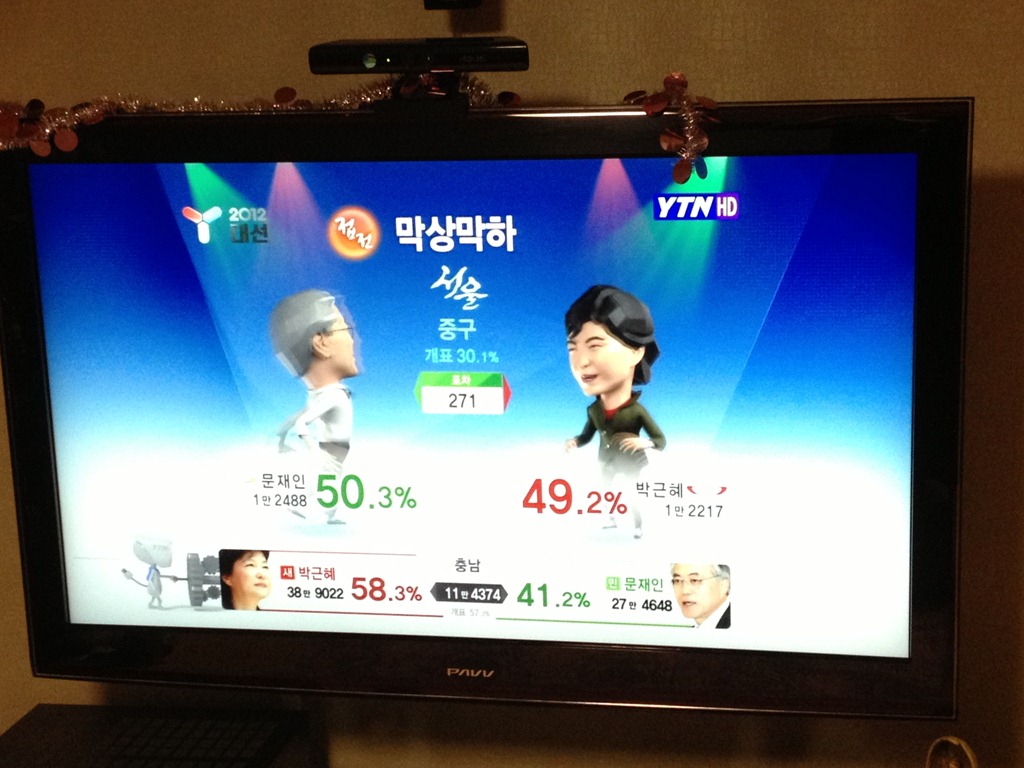
This pic is from the TV election coverage on the Korean version of CNN. That would be the two main candidates (the liberal Moon Jae-In on the left, and conservative Park Geun-Hye, who won, on the right) as dancing electronic cartoon avatars. Yes, they do look like boogying Nintendo Miis, and yes, they are the most bizarre, hysterical election graphics I have ever seen. Who says political science is boring?

So Foreign Affairs solicited me for a ‘snapshot’ essay on the Korean election. Here is the link, but I also thought it might be useful to post my first draft which is fuller:

“South Korea’s next presidential election will occur on December 19. The main candidates are Park Geun-Hye of the conservative New Frontier (Sae Nuri) party and Moon Jae-In of the liberal Democratic United Party (DUP). A third, unaffiliated liberal candidate, Ahn Chul-Soo, dropped out in late November. Ahn had no clear party identification, which was part of his attraction, although he was broadly center-left. A former hi-tech entrepreneur and professor, he was popular with the young who feel alienated by the closed, oligarchic character of Korean politics and for much of the year, he outpolled Moon. Because he and Moon were splitting the anti-Park liberal vote, they tried to merge their campaigns. But Ahn’s hasty, somewhat bitter withdrawal speech implied that old-style, backroom politics by the DUP had pushed him out. Post-withdrawal polls showed Park picked up around one-fifth of Ahn voters, a very strong showing.

Continue reading

5 Fox News Myths about the Fiscal Cliff – and no more ‘Cliff’ Metaphors either, please! stop!

11-30-12-stewart-sg-cropped-proto-custom_2

Does anyone else find Fox News strangely appealing to watch? For some reason I watch it all the time. As ideology that is inadvertently entertaining, interwoven with a veneer of ‘news,’ it’s a freaky, terrifying wonder to behold. It is vastly more interesting – maybe because it’s akin to experiencing an alternate reality –  than it’s-so-bland-what’s-the-point-anymore CNN. Watching Fox is like watching yourself becoming dumber, all while being shamelessly entertained by gorgeous teleprompter-readers and militant American nationalism. It’s like the news + ‘Call of Duty’ + ‘Baywatch.’

As a news station it is, of course, preposterous. Its presentations are astonishingly partisan. Even after 15 years, I am amazed at what Hannity, O’Reilly, etc. can get away with (try here or here in just the last few weeks). It does very little investigative/reportorial work itself. It generally repackages what other outlets have produced or presents lengthy ‘Crossfire’-style opinionating, which is not really journalism. And it’s Michael Bay-style presentations, particularly its graphics and swooping necklines, make the news look like an action movie, not like, you know, the news.

Continue reading

My ‘Newsweek Japan’ Cover Story on Korea’s Economy: De-Concentration Needed

NewsweekNewsweek Japan asked me for a long-form essay on Korea’s economy for its December 5, 2012 issue (cover story to the left). Here is the link in Japanese, but I thought it would be useful to publish the original, untranslated version as well. (If you actually want the Japanese language version, email me for it please.)

The essay broadly argues that Korea needs to move beyond ‘developmentalism’ toward economic liberalism, as a lot of Asia does in my opinion. Regular readers of this blog will see themes I have emphasized before. This was intended for their print edition, so there are no hyperlinks included in the text. Here we go:

“As Korea’s presidential election moves into the home stretch, the local economic discussion is sharpening. Inequality, demographic collapse, massive concentration of economic weight in a few mega-conglomerates, weak consumer purchasing power, growing trade friction over intellectual property rights, and a chronically under-powered small- and medium-enterprise sector (SME) are among the major problems this outwardly very successful economy must confront. Unfortunately, none of the major candidates are pushing the deep reform needed to fix these underlying issues. As with China’s leadership transition, things seem so good at the moment that elites are wary of rocking the boat; as with the recent American election, tough choices will likely once again be kicked down the road. In Korea’s case, that means moving away from its ‘developmentalist’ growth model before encountering troubles similar to Japan’s.

Continue reading

Economist 2012 Conference on Korea: Foreign Ownership in Korea

970x224_v2%20NEW%20date

Each year in September, the Economist holds a conference on the Korea economy (a part of its Bellwether series on Asian economies). They invite me to come, and then I try to write up my thoughts on it in the JoongAng Daily as an op-ed. Each year, unfortunately, we seem to argue about the same things – a proper, untweaked float of the won, and the openness of the Korean economy to foreign products and owners. Here are my thoughts from 2010 and 2011. I was so busy in the last few months on this site with the US election and other stuff, that I didn’t get a chance to reprint the JAI op-ed. But I like it, so here is the link, and here is the text itself:

“Last week the Economist magazine held its annual conference on Korea’s economy. This series is rapidly becoming the most important regular discussion in Korea for Korea’s foreign investors. Last year in these pages, I was critical of the Korean speakers’ response to foreign concerns. This year was an improvement. The finance minister particularly fielded a tough question about foreign investors’ rights in Korea in the wake of the Lone Star debacle. To his credit, he admitted what many already know from that case – that the Korean public is deeply ambivalent about substantial foreign profit-taking and ownership of major Korean assets.

Continue reading

Samsung, Apple, and Intellectual Property in Korea – UPDATE: Saenuri drops Reform of Chaebol Corporate Governance *sigh*

Korea-Russia-440x293

UPDATE: This story couldn’t be more perfectly timed for argument I make in this post. (H/t to Zach Keck.) This one sentence captures a lot of what is wrong with the political economy in Korea: “Compelling conglomerates to unwind their intricate cross shareholdings would ‘expose companies to hostile foreign takeovers,’ Park Geun Hye told reporters.”

Wow. So globalization is for ‘foreigners’ but not for us. We should be allowed to capture 20% of the US or EU auto market, but we don’t want anything like GM buying Daewoo or Lonestar-KEB ever again on our own turf. Foreigners should be excluded from Korea’s biggest firms, even though those firms are hugely dependent on foreign sales and Korea’s growth generally is dependent on foreigners’ willingness to run near-permanent trade deficits with Korea. Talk about biting the hand that feeds you. The sheer selfishness and xenophobia of that line is shocking. And I don’t believe for a second that that is really Park’s own belief. She used to support greater reform, and Korean conservatives are the most neoliberal element in Korean life (President Lee pushed through the FTAs, e.g.). That sentiment almost certainly reflects pressure from the chaebol families on the hoped-for winner to back-off the ‘economic democratization’ rhetoric. So if you ever wonder why foreigners think Korea is mercantilist or where the ‘Korea discount’ comes from, here you go.

—————————–

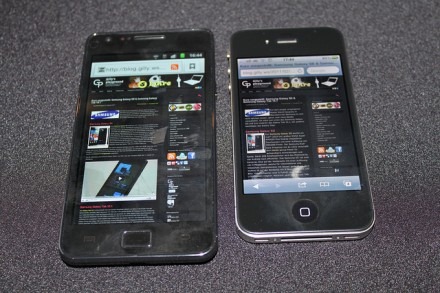
It’s been a few months since the nasty Apple-Samsung battle led to a record lawsuit victory over Samsung in California. The Korean national response was downright vitriolic, but hopefully tempers have cooled enough that some reflections on how Korea can avoid this kind of stuff in the future are useful. I am displeased to say that Korean media turned down the following op-ed, but happy to note that The Diplomat was interested and posted this on Friday. The point of the media is not to flatter and tell us what we want to hear (see: the US media in 2002 on Iraq) but to challenges us to think beyond our prejudices. I am once again grateful to Zachary Keck, the assistant editor at the The Diplomat, for his interest in my work. So here we go:

“The bruising Apple-Samsung fight raises major intellectual property rights (IPR) issues that Korea and Asian economies generally are ill-prepared for. Unless the concerns raised by the Samsung-Apple scrap are resolved, Korea should expect regular trade friction with major partners and regular accusations of copying and cheating. As wealthy countries, including now Korea, move away from manufacturing and further into services and information, the need for innovative Korean firms will only grow. Neither Korea’s corporate structure – dominated by mega-oligopolies with strong disincentives to innovate – nor education system – overwhelmed by rote learning and plagiarism – position Korea well for the future.

Continue reading

Why I Voted for Barack Obama Today

Amazing how the Simpsons is still pretty funny after 25 years…


In the interest of full disclosure, I thought I’d list the reasons why I voted the way I did. I know conservative media regularly accuse professors of politicizing the classroom, but an honest discussion of why one chooses the way one did can also be useful exercise of citizenship. (See Drezner for an example of what I was thinking of.) So with that goal, not demagoguery, in mind, here we go:

1. The Tea Party Scares Me

This is easily the most important reason for me. Regular readers of this blog will know that I vote in the Republican primary and write regularly about the Republican party, but almost never about the Democrats. (Even in Korea where I live, my sympathies are with the conservatives.) I don’t see myself as a Democrat. I see myself as a moderate Republican, like Andrew Sullivan or (less so) David Frum. Unfortunately, the Tea Party has made the GOP very inhospitable for moderates.

Given Romney’s propensity to blow with the ideological wind rather than stake a claim somewhere, I think it is likely he’ll get bullied by the hard right once in office. Following Kornacki, my problem with Romney is not his ideology – because I don’t know what that is – but the party from which he stems, run, as it is, by increasingly radical, Christianist, southern right-wingers. I find it simply impossible to vote for a party so contemptuous of science, so willing to violate church-state distinctions, so committed to a heavily armed citizenry, so obsessed with regulating sex, so strutting and belligerent toward the rest of the world, so unwilling to compromise on taxes to close the deficit, etc. Hint to the RNC: the rest of the country is not Dixie; please stop dragging us down this road. This southernization of the GOP in the last 20 years has made it harder and harder for me to vote for national Republicans, even though I vote for them a lot in Ohio. Not surprisingly, I find Andrew Sullivan’s conservatism quite congenial.

Continue reading

Five Election-Explaining Clichés I really don’t want to hear this Tuesday

imagesCA14TN02
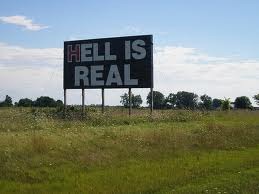
On Interstate 71, south of Columbus; Ohio’s most famous sign

So it’s election time, which means CNN, etc. will be filled with pundits with only the vaguest credentials – never any PhDs Sad smile – telling you why the outcome inevitably had to be such-and-such. (Retrodiction is so insufferably smug.) And they’ll explain it as if these tired clichés are real insights and not the same flim-flam they pedal every November.

So let me predict the future: here are the five worst clichés you’ll hear Tuesday – the lamest, most recycled, simplistic, and least analytically useful (because they’re so flexible they can explain almost any outcome).

Save yourself hours of Donna Brazile and David Gergen right now; just roll these out at Thanksgiving dinner to impress the relatives:

1. Ohio, or the white, blue-collar voter theory of everything

Every four years the media runs the same easy, generic storyline about my state (Economist 2004, 2008, 2012; FT) that goes something like this: ‘these grizzled veterans of America’s economic dislocation cleave to their guns and religion but increasingly live in suburbs and see their kids work in tech plants outside Columbus or Dayton. The large urban populations of Cleveland and Cincinnati are balanced by the church-going rural voters in the god’s country of southeastern Appalachia…’ Yawn. And it goes on like that for pages. Most of these articles make sure to cite the above picture. And yes, that sign is for real; I’ve seen it. It’s on the same road that leads to the Creation Museum (no joke either – I’ve been there), but thankfully that’s over the river in Kentucky. I guess they go to the dentist even less often than we do.

The thing is, we get all this attention for 3-4 months before every election – but then nothing afterwards. So how much can they can take us seriously as a swing state? In 2004, Rove drove up GOP turnout with the Defense of Marriage Act ballot issue and terrorism. In 2008, Clinton and Obama told us they were going to amend NAFTA and reduce illegal immigration to save our jobs. This year, Romney and Obama promise to defend us against China. If you’re keeping score, that means there should be no homosexual Mexican terrorists driving NAFTA-certified trucks on Chinese tires around Ohio. Ah yes, Ohio, that clichéd, right-wing blue-collar paradise!

Continue reading

3rd Presidential Debate, Foreigner Version: If you’re not an American, you’re Mentally Ill or something

Warning! The lyrics are explicit – but the movie is hysterical


Did anyone else find the third presidential debate just appallingly narcissistic and self-congratulatory? Good lord. Good thing America is around to show you bubble-headed foreigners the way to freedom. I could run through all the offensive, ‘America-is-tasked-with-upholding-the-mantle-of-liberty’ patronizing condescension, but why bother? (Nexon does a nice job here.) I told my students to watch it, and in retrospect, maybe I shouldn’t have. It was so embarrassing, and in class this week I kept trying to explain why we talk down to the rest of the world like this while my students rolled their eyes in disgust.

I keep saying this – running around the world telling people how exceptional and bound-to-lead we are is a great way to alienate the planet and convince them of exactly the opposite – to not to follow us. We’d have a much easier time with the world if we could back off the blustery, Fox News nationalism and actually speak maturely. But Americans couldn’t give a damn about the rest of the world, no matter how much we posture about our world historic role to lead it. Our ODA totals are disgrace for a coutnry as wealthy as we are. We don’t learn languages much. The only time we worry about casualties in the war on terror is when they are own; our clear disinterest for all the collateral damage we have done since 9/11 speak volumes to the rest of the planet.

So instead, here is the debate foreigners heard:

Continue reading

North Korea as ‘Kim-Land’: My Op-Ed on NK in the JoongAng Daily

JoongAng Ilbo

Yesterday, the JoongAng Daily printed an column by me about my trip to NK. Here is the link and column is reprinted after the jump. This condenses my earlier thoughts on my trip and adds some political analysis.

In passing, I should say that I find the JA the best newspaper in Korea – and no, not just because they publish my stuff every couple months (although that helps) Smile.

For readers who don’t know the Korean media scene, the JA is like the Economist in Korea – centrist, neoliberal, intelligently hawkish on foreign policy, sane on social issues. This is why I send my stuff to them. The biggest newspaper in Korea by circulation is to the right, the Chosun Ilbo. The third big paper is to the left, Hankyoreh. I find the Chosun ok, but sometimes it can sound like Fox News, and I dislike its obsessive, Korea’s-status-in-the-world-is-rising!!! nationalism. But the far-too-soft-on-Pyongyang Hankyoreh I frequently find downright disturbing, as it comfortably trafficks in the worst conspiracy theories like poisoned US beef in Korea or a cover-up of the Cheonan sinking. So if you are researching Korea, stick to the JA first, and then CI.

(So yes, my politics are broadly center-right, even though I seem to criticize the US GOP relentlessly on this site. One thing I like about SK is that its conservatives are in fact conservative, not radical, as the Tea Party made the Republicans. Generally speaking, I find the SK right to be responsible and moderate most of the time. That’s so refreshing. Don’t you miss having sane conservatives back home?)

Ok, here’s the op-ed:

Continue reading