Trump is Incentivizing Allied Nuclearization

EfIfPIeXoAA41Hz

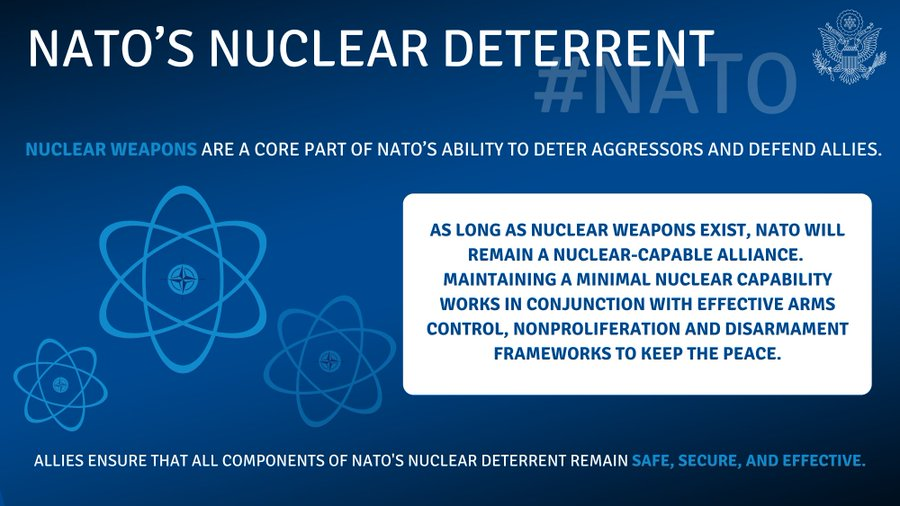
Trump’s threats against US allies and partners encourage them to consider nuclear weapons. This strikes me as painfully obvious, even though we keep saying we don’t want allies to nuke up. I just wrote about this at 1945 magazine. Please got there for the full argument.

Post-Greenland, I don’t know why US allies would trust us. For two months, we were openly discussing the possibility of using force against a long-standing partner. It is hard to over-emphasize how crazy and self-defeating that it is. Trump has threatened Canada, Mexico, and Panama. When MAGA got drunk on US power right after we kidnapped Maduro, I saw Jesse Waters on Fox say we take Bermuda.

We seem to expect that even as we break the rules of the liberal community of states, other liberal states will not. We get to tariff and bully our allies, and they are just supposed to take it smiling.

That can work for a little while. US allies are asymmetrically dependent on US security guarantees and market access. They are vulnerable to our bullying, because they never thought we would bully them.

But they won’t put up with that forever. Late last year, pre-Greenland, my friend Paul Poast and I argued in Foreign Affairs that US allies would eventually defect. If anything, events suggest our analysis was too easy on Trump. Neither of us expected that the US would actually openly menace an ally.

But here we are. If you are a US ally today, it is hard now to believe as I say on Twitter that the US would fight for you, and impossible to believe we would use nuclear weapons for you. In fact, we might attack you instead. So it makes sense to consider your own coverage, because they American nuclear umbrella is gone.

I argued this a year ago for South Korea – that it should nuke. If anything, the ensuing year has made that argument even stronger.

Would a Chinese Cut-Off of North Korea Bring It Down?

This is a re-posting of something I wrote for the Lowy Institute here. Basically, I was trying to think of what might either bring North Korea down, or otherwise force it to change substantially. Usually at this point, people say something like, a war, or an internal revolt. But a war would be so disastrous, that it is worth looking at other possibilities. And an internal popular revolt seems really unlikely. In 71 years, North Korea has never had one.

In the movies, like Avatar, the people rise up and overthrow their oppressors. In reality, authoritarian regimes almost always collapse when the regime’s internal groups turn on each other. Regime splits, possibly catalyzed by popular protest, can force dictatorships to change or even collapse. In Egypt in 2011, the regime split after Mubarak failed to quell the revolt with his thugs and then flirted with using the army. They brass balked, and Mubarak began to lose internal support.

But if there won’t be popular revolt in North Korea, how to set the regime’s factions against one another? Well, how about going after their cash? The military and police who keep the Kim regime afloat pay a pretty high price for that. They are globally isolated, hated by the countrymen, and will be remembered in Korean history as thugs. What is the compensation? The great lifestyle of the gangster racket Pyongyang runs – the HDTVs, booze, women, foreign cars, and so on. All of that depends on a) foreign cash, and b) a foreign pipeline. China is required for both. Shut that gate, and the pie of foreign goodies suddenly starts to dry up. That might get them them tearing at each other.

The full essay follows the jump:

Continue reading

Why did Kim Jong-Un Suddenly Bail on his Moscow Trip? B/c NK’s ‘Policy Process’ is more like a Factional Mosh-Pit

Putin, Chinese President Xi Jinping watch the parade in Moscow.

You don’t see Kim Jong Un in there do you?

This is a re-post of an essay I wrote for the Lowy Institute a few weeks ago on why Kim Jong UN of North Korea suddenly decided not to go to Moscow.

Everyone wants to know why Kim Jong-Un decided, out of the blue, not to got to Moscow for the WWII Victory Day celebration despite months of it being talked up. So here’s my theory – North Korea policy process isn’t a process at all. It’s more like a mosh-pit of competing interest groups and factions trying to control major decisions like this. So randomness, like sudden cancellation of this visit or the UN Secretary-General visit this week, is just built-in. Even if North Korea wanted to be less erratic and more predictable, it probably couldn’t be, because of the way it is governed.

The rest of the argument follows the jump.

Continue reading