The Weird, Drifting, On-Again-Off-Again US-Iran War

News of a possible deal with Iran just broke, but the ‘deal’ is so ill-defined, that I am not sure we are still fighting them or what. If the MoU floating around is real, then this is a near-capitulation by the Trump administration. That is why I am skeptical this is actually the final deal. Did Trump really agree to this? How can he possibly defend it? (By blaming it on Vance apparently.)

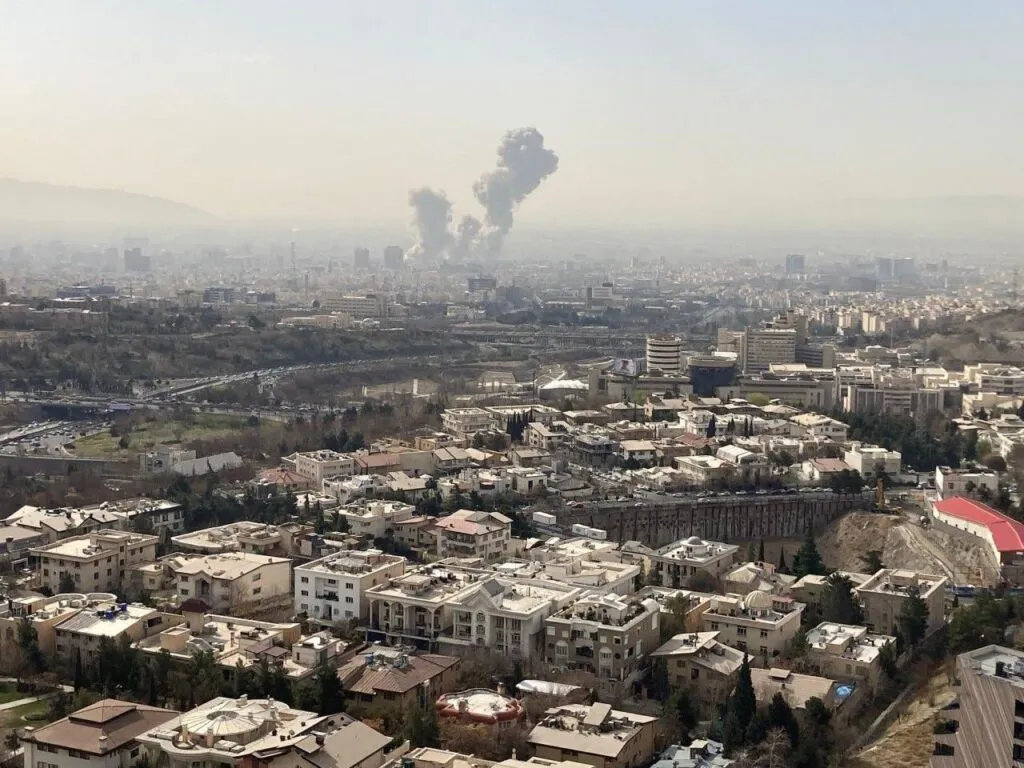
Anyway, I put up some thoughts a few days ago at the National Security Journal on this weird, drifting semi-war the US has been fighting with Iran since Trump called off the strikes two months ago:

Trump now faces a choice – either to take full possession of a war he started and make his best effort to win, or fade away and accept a default Iranian victory. Because Trump wants neither of these outcomes, the war is now in a weird limbo phase. Trump does not want to risk a ground invasion to achieve a decisive victory – because it could easily become a quagmire repeat of the 2003 Iraq War. But he also does not want to withdraw and accept Iranian control of the Strait of Hormuz and retention of its nuclear program. That outcome would be worse than President Barack Obama’s Iran deal, and Trump would be criticized mercilessly for that, which he seems to be aware of.

Weird as it sounds, Trump got bored with the war. He even said so himself. He got high on the easy victory in Venezuela back in January and thought he could pull of another drive-by regime-change. But then Iran outfought the US by closing the Strait, withstanding the airstrikes well, and getting in some solid counter-hits on the US and its allies. So Iran is a good spot for the coming negotiations:

The two big concessions Tehran will likely seek are tolls on Hormuz traffic and retention of its nuclear program in some form. Trump can probably get some movement from Iran on support for its proxies. Iran will need to concede on that anyway to avoid indefinite war with Israel over Hezbollah in Lebanon. But on Hormuz and nukes, Iran will likely be implacable.

Iran fought its way into control of the Strait of Hormuz and would be foolish to give it up. That is a huge strategic victory. Indeed, this is why so many analysts argue that Trump has lost the war despite the devastation the US bombing wrought. Iran can extract rents from Strait traffic by doing nothing more than not threatening transiting tankers. So long as the world is dependent on carbon exports from the Gulf, this is an easy source of money.

Similarly, two waves of US-Israeli strikes on Iran in a year have illustrated the value of nuclear weapons. If Iran had had them, the US and Israel would not have attacked. Trump will not pry that from the Iranians at this point without actually invading the country. How Trump will end this is unclear. I bet he will pay – a lot if necessary – to get some flexibility on the nukes and Hormuz.

Please read the rest here.

Iran War: Sometimes It is Just Cheaper to Lose and Get Out

We lost in Iran. No, we weren’t militarily defeated, but we did lost the larger political contest the fighting reflected. This post re-ups an essay I wrote to that effect at the National Security Journal.

Iran has left the contest stronger than it entered, mostly notably in taking positive control of the Strait of Hormuz. This threat was always lurking in the background of the US-Iran stand-off, but Iran has actually done it in this conflict – learned how to do it, how its neighbors will respond, how faraway oil importers will respond, and so on. The war is ‘proof of concept’ that Iran can control, in fact, control the strait without excessive punishment.

As I have argued for awhile, Trump’s only option to really win – to compel Iran to capitulate and accept harsh American terms – is a ground invasion to remove the clerical regime in Tehran. I do believe the US could do this, and there is an internal resistance which might help us and take-over after a US victory.

But it’s also probable that the war takes months, if not a year, with large casualties. It could also easily turn into a quagmire like Afghanistan and Iraq did.

Which brings us back to my post’s title – sometime it is just cheaper to lose and go home. I think that is the case here. Trump wanted a major victory from a limited war, did not get it, and now does not know what to do. He will try blockading the strait for awhile, but Iran has proven it can wait out the US and absorb its punishment. Trump, meanwhile, faces high gas prices, a low approval rating, and an election in the fall. Trump can’t wait; Iran can

The best option now is to just take the loss and negotiate some kind of embarrassing peace which puts some restraints on Iran’s nuclear program and keeps the tolls reasonably low. That is probably the best the US can get at this point.

Most importantly, is the larger strategic lesson of yet ANOTHER failed US war in the Middle East is that we should – FINALLY – leave the region. We’re overstretched there. China is far more important. Israeli security can be still be vouchsafed with a smaller US commitment. After 35 years trying to police the Middle East’s political and theological divides, it is time to admit that we cannot do that and get out. That is what I argue in the NSJ piece too.

A US Blockade of the Gulf of Oman is a Desperation Move to Avoid Invading Iran

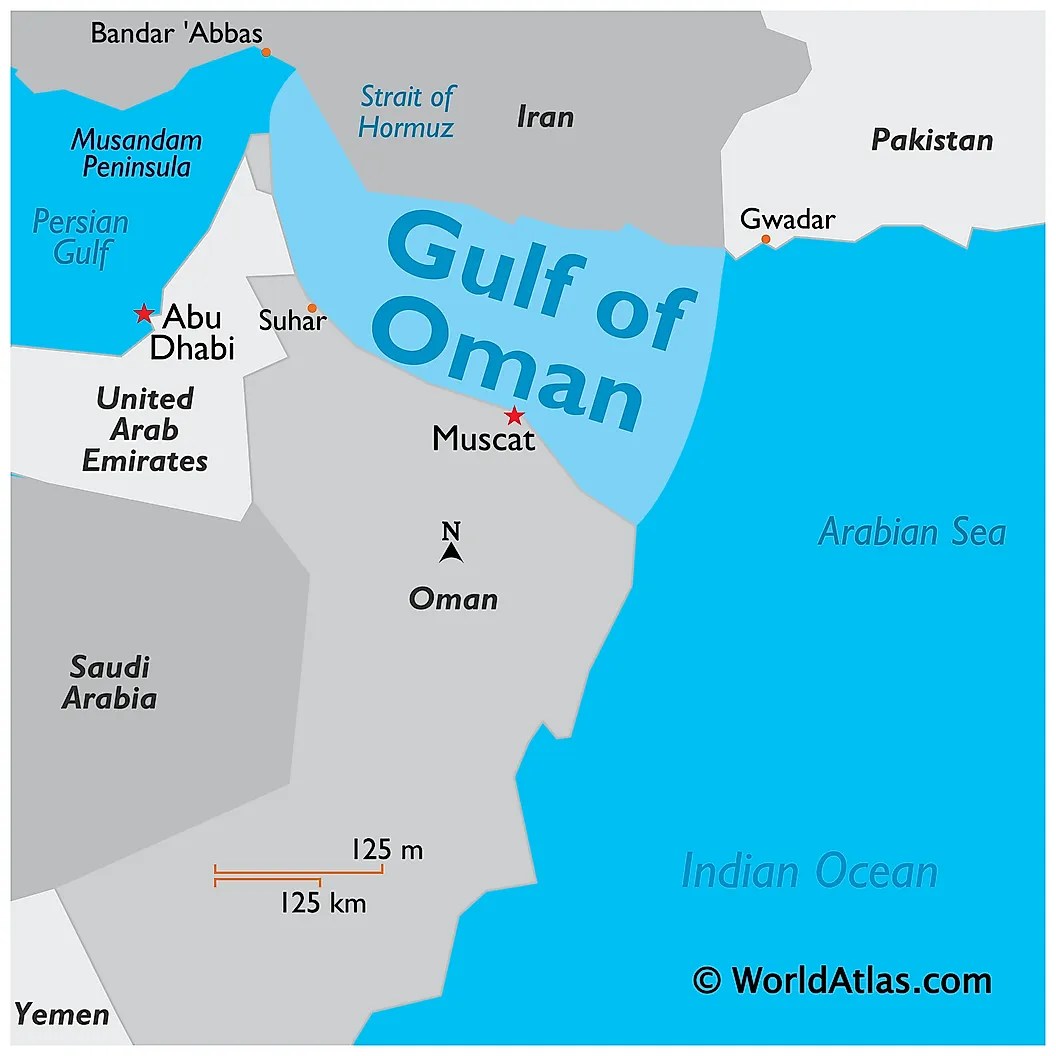
The US Blockade of Iran’s Strait of Hormz’ Blockade will Occur in the Gulf of Oman

So Trump is now going to ‘blockade a blockade’? Seriously? Does anyone think that is going to work? I don’t think so is what I wrote at 1945 this week. Please go there for my full argument.

I am not sure Trump even knows how this blockade will work. I guess this idea is that what little traffic does come through the Strait of Hormuz will now be blocked into the Gulf of Oman by the US Navy waiting in front of the India Ocean. Won’t this just lead to exploding gas prices, again? Shortages of helium and fertilizer, again? The stock market crashing, again?

I guess Trump could cut deals with individual countries or even individual ships to let them through our blockade line. That’s the kind of grift Trump excels at. But that is exactly what the Iranians are doing – imposing tolls. We are decrying that as a violation of free navigation. So we can’t do that without looking absurd and hypocritical.

And the questions keep coming: What happens if a country tries to run the blockade? Do we shoot at it? What if it is a big country like China or India? Are we going to imprison their crews? What if it is friendly country? How long would the US Navy have to stay on station to enforce this blockade? Stuff like embargoes and sanctions take a long time to generate big effects, so I could see us staying there for months. Do we have the infrastructure regionally to sustain all that? Isn’t the US Navy already overstretched?

I see this as Trump trying to find some off-ramp which lets him declare victory without invading Iran. The idea is that the US blockade will cause huge global pain which the world will blame on Iran, and that will force Tehran to the table.

I doubt this will work. Iran cares about ideology a lot, and facing down the Great Satan, as they have over the last 6 weeks, is worth the pain. Besides, the whole world already blames Trump for this conflict as an unncessary war of choice. They are more likely to blame this newest American belligerence on Trump yet again.

In the end, Trump can’t win – re-open the strait, definitively denuclearize Iran, and change the regime – without invading on the ground to definitively defeat Iran. I have been arguing that since this war started (here, here, here), and I still think that claim is correct. Airpower, and now seapower, are not enough. So this blockade is yet another desperation manuever to avoid an invasion but not embarassingly TACO.

Iran: I Thought Trump would Try a Limited Ground Assault Rather than TACO

El Vaquero tacos, the best tacos in Columbus, Ohio (where I live in the US)

I am pretty surprised Trump just capitaulated in Iran this week. Wow. I figured the embarrassment of losing a war would be too much for him and that he would escalate at least to a limited ground invasion on the Iranian side of the strait of Hormuz before throwing in the towel.

That’s what I wrote about in 1945 this week. I figured a limited incursion would not stay limited. We would almost certainly get sucked in deeper, because the Iranians would attack any enclaves we took, which would require us to go further into the country to suppress those attacks. Mission creep loomed. Small missions growing into big ones supplemented by escalating airpower sounds an awful lot like Vietnam.

That post got overaken by events, but I still think its analysis of a ground war is correct. Lots of other analysts were saying the same thing. So I would like to think that all that pushback helped dissuage Trump.

Trump will declare victory, but this was obviously not one. We came off clownish, reckless, and ultimately dangerous, which is pretty much the defintion of Trumpian foreign policy. The Iranian clerical regime is still in power. It knows now that it can close the strait at will and demand cash. Its nuclear material is still in-country, and it will likely sprint for nukes once the war is truly over. The only way to really prevent Iran from dominating the strait and going for nukes was a ground invasion to insure regime change. That likely would have been a disaster on the scale of Vietnam.

So we should be happy that Trump did not make the mistake LBJ did in 1965 and which Bush made in 2003. But a limited error which does not spiral into a larger error is still an error. And that’s what this war was.

Iran War: Can We Open Hormuz or Denuclearize Iran Without a Ground War? Probably Not

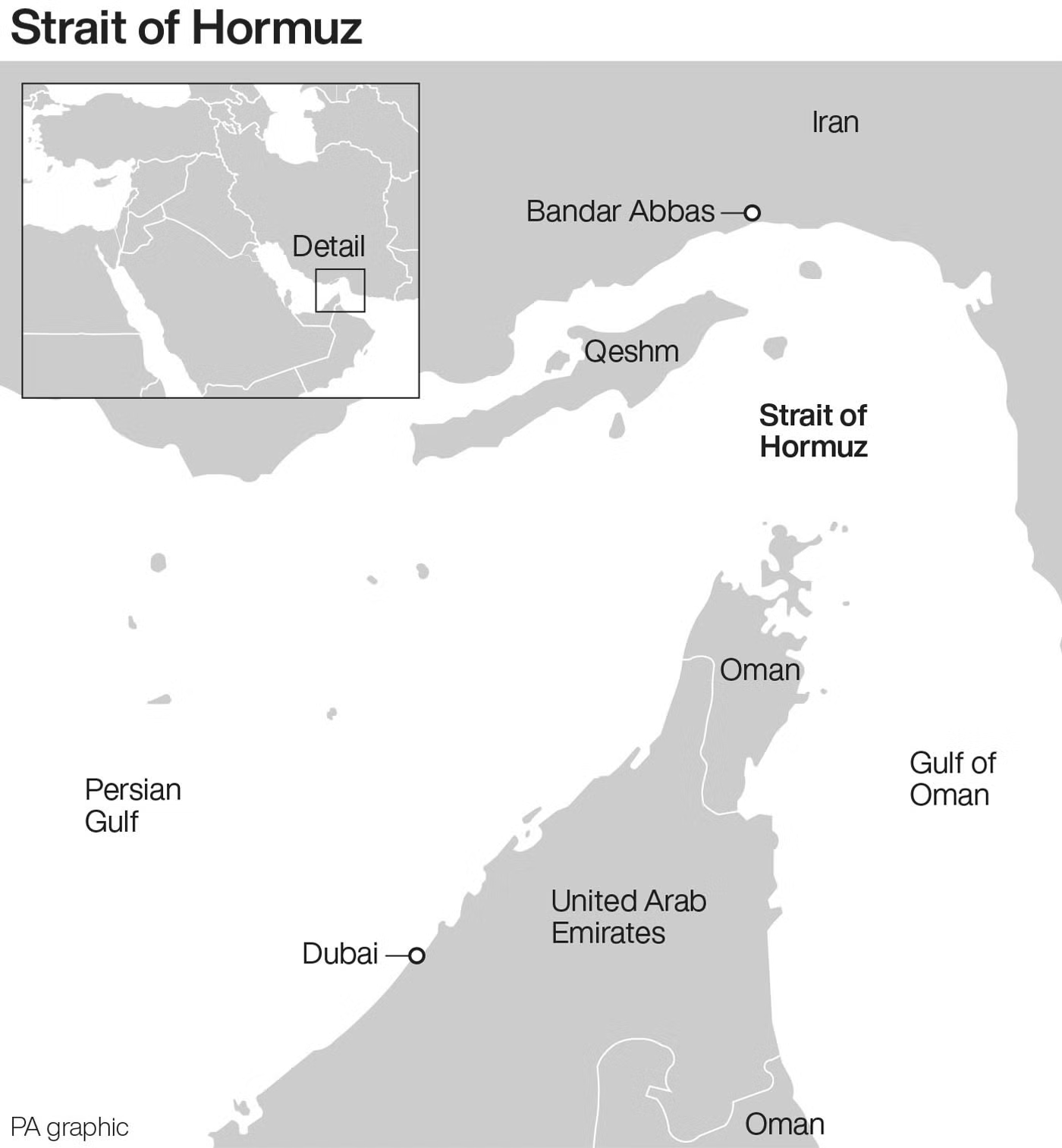
The Strait of Hormuz, including Qeshm which the US probably has to neutralize

I increasingly don’t think that Trump can win this war without going in on the ground. I wrote this up at 1945 magazine this week. Specifically:

1. Opening Hormuz will probably require at least taking a strip of coast on the strait’s Iranian side. Qeshm island is emerging as a key, heavily-fortified location from which Iran threatens Hormuz shipping. So we are now bombing along the Iranian side of the strait to destroy the capabilities which frighten off shipping.

But the Iranians have been preparing for this for decades. They’re dug in. There seems to be a general consensus that we can’t bomb our way into getting the strait opened. So US ground troops are probably necessary to dislodge Iranian coastal power projection. But once you actually land troops – especially if they land on the coast and not just strait islands – the potential for mission creep and an escalating ground war is obvious.

2. If the Iranian clerical regime surives the war, it will sprint for a nuke. They won’t trust negotiations with the US or Israel again for a long time. They will see North Korea as the model: once you have a nuke, you are in a position of strength to bargain, plus you won’t get bombed. The war will strengthen the hardliners who want a nuke for protection.

So now, the only way to keep Iran from getting a nuke is to push the current regime out of power. Ideally, the air strikes would open a window for a domestic revolution to push out the clerics – which might have been possible in January when the dissident movement was on the streets fighting. But they were crushed violently, and there’s been no uprising since we started bomnbing.

Thus the US has to go in, on the ground. Bombing alone won’t provoke regime change. The Iranian people don’t look like they are gonna do it. If the clerics survive, they’re definitely going for a nuke. So the only way to stop that is regime-change which requires a ground war, and we are the only force capable of doing that.

* And yes, I am aware of current idea that we can use special forces to snatch Iran’s nuclear program. That strikes me as unbelievably dangerous. Those facilities will be guarded by Iran’s best troops, and there is no element of surprise to such an operation now, because it’s all over the media. I’d guess that such an operation would fail.

** Yes, Trump could just withdraw and drop the whole thing. He could ‘TACO,’ which markets still seem to expect. I doubt this, primarily for psychological reasons, as I have been arguing on Twitter for a week now. Trump can’t admit defeat. He can’t process it. He will almost certainly escalate to at least a limited ground incursion, and there are no Congressional checks-and-balances to stop him.

The Trump Doctrine: Rogue State Elite Replacement

Delcy Rodríguez, the new, sorta pro-American despot of Venezuela

I put up some thoughts on Trump ending the war in Iran at 1945 magazine. We’re moving toward putting a pro-US stooge in the place of now-deceased Iranian leader Khamenei so that we can withdraw quickly. It seems like this is what Trump wants – basically a replay of the Venezuelan drive-by decapitation we did in early January.

The idea, as Steven Taylor similarly notes, is to replace the anti-American elite of a rogue state, through swift, surprising violence, with a new, pro-Amerincan despot while the rest of the regime is left intact. That way, there is no messy nation-building, reconstruction, democratization, and so on. Trump pretty obviously doesn’t care about democracy, and the US public opposes LDC nation-building. So just bumping off a leadership we dislike and replacing it with a stooge seems pretty easy by comparison. We swing a troublesome state into our column by replacing its elites, not its regime.

At 1945, I call this emergent method ‘rogue state elite replacement‘ – in contradistinction to regime change, democratization, tranition, and so on.

Here, at last, we have a ‘Trump Doctrine’ (or Method), and it fits Trump perfectly. It ignores democracy, development, international law, and so on for raw, short-term American interest from individial gangster leaders Trump can bully for pay-offs. Get rid of anti-American leaders; put in pro-American leaders; put the screws to them; get the hell out: ‘He may be a son of a b*tch, but he’s our son of b*tch.’

If Trump can get this to work in Iran, as it seems to be working in Venezuela, I figure Cuba is next on the hit list.

Iran War: Trump Goes Full Neocon in the Biggest Gamble of His Presidency

I posted my first thoughts on the Iran war over at 1945; please go there. But my short take is that this thing is going to require a ground war to do right. And Trump seemed to admit that when he told Iranians to rise up in his first war speech on Saturday.

By now everyone knows that airpower isn’t enough for regime change. Robert Pape has banging away at that all week. So you need some force on the ground to actually snatch power from those who have it now.

The obvious choice is the Iranian dissident movement. But they were crushed in January. Indeed, thatwas the time to launch this operation. We could have targeted strikes to help the protestors, destroying security forces and their weapons to give the revolt on the streets a fighting chance. But Trump had moved the needed naval assets to the Carribean so that he could kidnap Maduro. So we missed our chance.

Maybe we will get lucky, and whatever is left of the resistance will hit the streets again to fight on the ground as we pound Iran from the air. But the risk is obvious; the resistance is weakened because of the January massacre; and Trump cannot make credible commitments (to support them). Who knows if he will actually support an uprising. He sold out the democratic opposition in Venezuela to get a ‘deal’ with Maduro’s regime successor. I’d bet he would sell out any Iranian uprising to get a deal with Khamenei’s successor.

So if we want regime change, we have to go in on the ground. Trump likely won’t do that. So instead of regime change, we are getting elite replacement: some vaguely pro-American, or at least less fanatical islamist, ruler in the place of Khamenei.

Given that we did this in Venezuela and will probably do it in Cuba soon, a ‘Trump Doctrine’ is emerging: knock off anti-American elites in rogue states, put in a stooge who will do what we till him/her, and then get out. So we are back to ‘he is a son of a b****, but he’s our son of a b****.’

Trump is Incentivizing Allied Nuclearization

EfIfPIeXoAA41Hz

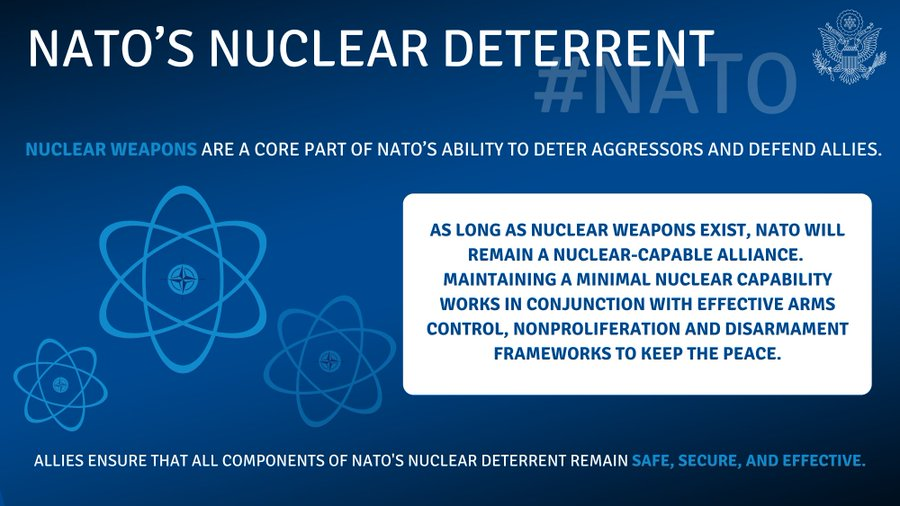
Trump’s threats against US allies and partners encourage them to consider nuclear weapons. This strikes me as painfully obvious, even though we keep saying we don’t want allies to nuke up. I just wrote about this at 1945 magazine. Please got there for the full argument.

Post-Greenland, I don’t know why US allies would trust us. For two months, we were openly discussing the possibility of using force against a long-standing partner. It is hard to over-emphasize how crazy and self-defeating that it is. Trump has threatened Canada, Mexico, and Panama. When MAGA got drunk on US power right after we kidnapped Maduro, I saw Jesse Waters on Fox say we take Bermuda.

We seem to expect that even as we break the rules of the liberal community of states, other liberal states will not. We get to tariff and bully our allies, and they are just supposed to take it smiling.

That can work for a little while. US allies are asymmetrically dependent on US security guarantees and market access. They are vulnerable to our bullying, because they never thought we would bully them.

But they won’t put up with that forever. Late last year, pre-Greenland, my friend Paul Poast and I argued in Foreign Affairs that US allies would eventually defect. If anything, events suggest our analysis was too easy on Trump. Neither of us expected that the US would actually openly menace an ally.

But here we are. If you are a US ally today, it is hard now to believe as I say on Twitter that the US would fight for you, and impossible to believe we would use nuclear weapons for you. In fact, we might attack you instead. So it makes sense to consider your own coverage, because they American nuclear umbrella is gone.

I argued this a year ago for South Korea – that it should nuke. If anything, the ensuing year has made that argument even stronger.

If Trump Takes Greenland, the US would Struggle to Project Power into the Middle East – My Latest for ‘1945’ Magazine

ImageSo Trump has decided not to take Greenland by force. He announced that today at Davos. This is great news. It was becoming pretty apparent that a military move might:

spark a stock market meltdown

– be met by force (even if we would win)

– break NATO

– lead to massive European Union counter-sanctions

– spark yet another impeachment effort against Trump

– provoke a civil-military crisis in the US (because the US military might not follow attack orders on the belief that they are illegal, because NATO’s 1949 Washington Treaty is signed and ratified and, therefore, US law).

But there is another possible cost which I saw little discussed: the loss of US bases in Europe in the wake a NATO’s implosion, and the consequent loss of US power projection into the Middle East. I develop this idea here, in my weekly column for 1945 web-magazine.

Here is my core claim:

[Expulsion of the US military from Europe in the wake of NATO’s rupture] will dramatically reduce America’s ability to project power into Europe, Africa, and the Middle East. The US has dozens of bases in Europe. These are its largest in the world outside of the US mainland. They enable the US to project force throughout the western Eurasia and North Africa; they provide the massive logistic tail needed for modern military operations. Particularly, US airbases and friendly ports permit the maintenance and support required by modern, hi-tech air and sea platforms. As one former US commander in Europe put it, “a large-scale withdrawal would make US power projection slower, costlier, and less effective.”

MAGA might argue that the US does not need to project power into Europe or Africa…But Trump’s coalition does care – quite intensely – about US power projection into the Middle East. Trump’s staunchest supporters are evangelical Christians. For them, US alignment with Israel is a core national security priority, as is the ability to strike Muslim states perceived as anti-American. European logistical hubs help substantially with that. US bases in Middle East tend to be smaller and more politically controversial with their hosts than those in Europe.

I also point out that MAGA might not even have grasped this problem. Americans have become so accustomed to US global dominance – it’s 81 years now since we emerged on top after WWII – that I think we just take it for granted. We just don’t get that we need allies and partners to project into far away places like the Persian Gulf. MAGA certainly doesn’t get that at all. Their relentless belligerence strongly suggests they think the US can do almost anything without losing allies. That is incorrect.

No, Donald Trump is Not a Realist or China Hawk; He’s Too Ill-Disciplined for That: The Full Version of My Trump Essay for Foreign Policy

AP-putin-trump-handshake-g20-jef-170710_16x9_1600Trump is too lazy, ill-disciplined, and venal to be the ‘thinker’ or strategist realist and China-first hawks keep trying to make him out to be. This post is the longer and pre-edited version of an essay I just wrote for Foreign Policy magazine.

In fact, I am amazed anyone thinks Trump has the discipline to do this. Are you not watching the same Trump – erratic, confused, chaotic – the rest of us are? Trump is far more likely to simply sell US foreign policy to the highest bidder if he becomes president. He loves money and adulation. The Chinese and the Russians are more than happy to throw that at him to get him to bend on their interests.

We keep hearing that Trump will prioritize China and Taiwan over Europe and Ukraine, but listen to what he says about Taiwan and China. He doesn’t sound a realist at all. He dislikes Taiwan for protectionist and free-riding reasons, and he clearly admires Xi Jinping’s autocracy.

The best predictor for Trump’s second term is what he did in the first term, and that was a confused mess. He dislikes Ukraine – and will surrender it to Russia – because Zelenskyy wouldn’t help him cheat in the 2020, not because of a strategic re-prioritization toward Asia.

Maybe realists will get their wished-for realignment or re-prioritization out of Trump’s staff. Perhaps Elbridge Colby will push that through. But it’s hard to imagine a major foreign policy realignment without POTUS’ consent, if not participation. And Trump just isn’t focused enough. Worse, Trump has a tendency to staff himself with clowns. Your more likely to get incompetence out of a Trump second term than anything.

The full, unedited FP essay is below the jump. Continue reading