Jason Bourne Goes to Iraq: Iraq War Film Debate, part 3 – “Green Zone”


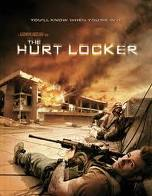
I have written on Iraq war film before. Here are parts 1 and 2 on the The Hurt Locker.

The Green Zone (GZ) got 54% on rottentomatoes. I would give it an 80%.

This is an awkward film to review because its political content is serious, yet it wraps that in action-movie panache. It’s a war film (serious) that awkwardly treats violence like an action film (fun, exciting), so you’re morally not quite sure what to think. The message, that there was a fair amount of Bush administration shadiness in the 2003 run-up, is accurate. Anyone who has followed the war will absolutely relish the sequence at the swimming pool of the private military contractor in a bikini carrying a machine gun. Hah! I laughed out loud at that one, while the Koreans looked bewildered at me. Unfortunately, there’s too much ‘Jason Bourne goes to Iraq’ excitement to take the message all that seriously.

1. Usually war film reaches for a ‘message’ by portraying violence as tragic and dehumanizing to all involved. I can’t think of a serious war film that portrays war as fun; only idiot portraits of war, like 300, do that. No viewer wants to think he is ‘enjoying’ morally meaningful violence (as opposed to video game/300 violence). It is morally necessary for the viewer to not enjoy the on-screen violence, because that would trivialize the political message and generate huge internal conflict in the viewer. If the viewer gets a rush from the on-screen action, the moral effect is more like a cool video-game sequence from your favorite shooter. So in Apocalypse Now or Platoon, the action sequences are never a video game-style rush to watch. Instead they are framed, with somber music frequently, to make the viewer reflect seriously, and presumably agree with the directors that the Vietnam war was an error.

2. By contrast, action movies that want you to enjoy the frenzy and violence must make the bad guys ridiculous. It is too challenging to show morally realistic (i.e., mixed, not all bad) bad guys suffering from extreme violence. The only way the viewer is morally permitted to enjoy extreme on-screen violence is with cartoonishly evil guys. Good guys dishing out brutal just desserts need really bad Bad Guys. Think about Lord of the Rings or Starship Troopers. Aragorn is astonishingly brutal (beheadings and such), but he is still the hero, because those orc-things are clownishly over-the-top bad guys. (This, btw, is why the LotR films are so empty of real meaning and hence wildly overrated.)

3. This tension is one of the reasons why Black Hawk Down (BHD) is so controversial and so morally flawed. It reaches for seriousness, but then provides an exhilarating action thrill ride for two relentless hours. The film’s replay value is not as a portrait of the BHD event, but as a gripping, visceral action film. So it’s a real war film that people like because for its action movie content. Ugh. Because of course all those Somalis are real people whom our military killed in large numbers. We shouldn’t enjoy watching them get mowed down, but we do. (Student after student has asked me about that films for more than a decade now.) This is a growing problem in the video game industry too.

4. GZ suffers from the same problem. It tries to have it both ways. The movie reaches for depth with a serious political message, but then gives you action sequences that are so exciting and exhilarating to watch, that you aren’t quite sure what to make of it. How can you oppose the Iraq War if Jason Bourne Matt Damon is so gripping to watch?

5. GZ is morally superior to BHD though, because BHD director Ridley Scott clearly took a perverse joy in showing the extreme violence of the story. He was obviously making an action movie, which morally reduces the awfulness of the actual BHD event. My sense of Greengrass (GZ director) is that he included the ‘Jason Bourne goes to Iraq’ sequences to ensure that viewers would come to his film. I.e., the action sequences are the hook to get the viewers to hear the Damon-Greengrass message that the Bush administration rooked us into Iraq.

6. Conservatives have predictably panned the film as Hollywood ideology, and Damon has now made two left-critical takes on the GWoT (the other being Syriana). To which I would only say that such a take on the war is way overdue. The war is still on, so Hollywood probably terrified of being seen as ‘not supporting the troops’ if it were to make films questioning our presence. Hence, most Iraq films have been unwilling to address the central political issues. The overrated Hurt Locker ducked politics altogether, and other Iraq films like Stop-Loss or Lions for Lambs don’t actually get into the central political question: how did we get there on such false premises? The only film yet to dig somewhat is Oliver Stone’s W – where Bush is shown telling Blair that the war is on regardless what the UN does. But Stone’s reputation today is too far gone, especially with conservatives, for his work to establish real credibility. So I welcome GZ, even if it isn’t really close to the best US war film.

7. I can’t imagine that anyone today, knowing what they know now, would still counsel the war. (This is not to say that that the 2003 decision was wrong given 2003 information; only that with 2010 information, it is hard to endorse the 2003 decision.) So it is important that our film – which is a far more widely shared social media than books or journalism – begin to investigate the war’s origins. In the same way that our best war film has looked back at Vietnam and told us difficult things we don’t like to think about US power, the GZ will hopefully start the process on Iraq. To all those conservatives who love to hate Hollywood on the Iraq war, remember that self-criticism is a central American political value too.

‘Hurt Locker’ Backlash, Part 2: A Response to Rodger Payne

image_mini

The Duck of Minerva is one of the better international relations theory (IR) blog out there. You should read it if you don’t already. Its name is a riff on Hegel’s famous comment that the “owl of Minerva” only flies at night; i.e., wisdom only comes in hindsight, or more specifically that philosophy can only understand an age or civilization as it passes away. I don’t quite get the joke behind the title ‘duck of minerva,’ but whatever – it’s quality IR blogging.

Rodger Payne had a post two days ago on the continuing IR back-and-forth over The Hurt Locker (HL). Payne links to the relevant other IR posts on the film, including my own. Payne notes that I and others have found many problems with the film’s much-celebrated ‘realism.’ My own sense is that the lead character, Staff Sergeant William James, probably would have gotten himself or his associates killed a lot earlier through his overt recklesness. That, and the bizarrely out-of-place and unbelievable desert-sniper sequence, do a lot to reduce the film’s credibility as a portrait of the Iraq War. Michael Kamber summarizes.

Payne counters that, while Kamber and I are correct, that’s beside the point.  HL’s strength as an IR film is as a metaphor for US foreign policy more generally since the end of the Cold War, and especially in the Middle East. Money quotes:

The U.S. too has a long and mostly successful military record — and it too has been incredibly lucky. Like James, the U.S. returned to Iraq after a successful first effort in 1990-91… To its critics, the U.S. too is a reckless showboat, willing to take incredible risks with other peoples’ lives, even as it claims to be “saving” them.

In political debates, Americans focus on U.S. forces, casualties, and experiences. Few consider the implications for Iraqis and the wider Middle East… The FUBAR narrative works pretty well to explain the actual U.S. experience in Iraq. The lead character’s addiction to war, recklessness, luck, inexplicable behavior, and need to “save the day” reflect an unsavory, but nonetheless viable, portrayal of American identity.

1. Ok. I don’t really disagree with any of that, but I think it is a reach, a generous overreading that sorta lets the film off the hook. Is Bigelow really giving us the arc of the erratic, poorly-planned Operation Iraqi Freedom in the story of one soldier? Do we really think Bigelow had something this profound in mind? Francis Ford Coppola did when he made Apocalypse Now. He went to Cannes and famously said “We had access to too much money, too much equipment, and little by little we went insane.” That’s going for the big view. But Bigelow’s schtick has been that this is the first realistic film portrait of the Iraq, and that is how it has been received. The problem, as I argue, and Payne admits, is that it’s not that. I certainly agree that the US use of force has drifted toward recklessness since the end of the Cold War, and Payne is dead-on that US audiences love cowboy-style swaggering heroes, but the film is so pointedly apolitical, that it is hard to see James’ swagger as America’s. Maybe, but I just don’t see that in the film itself…

2. Given the film’s ‘reality problem,’ in round 1 I suggested that one alternative is to read the film as a memoir of battlefield stress for the US warfighter in the GWoT. The film goes out of its way to suggest that James is motivated by the narcotic effect of combat, so I think this better fits the small-scale of the film than Payne’s ‘big think’ approach. The problem with my interpretation is that Bigelow unfortunately does not develop this much beyond the initial thought. So we see James at home, bored with his alienated ex-wife. This is supposed to suggest that James misses the thrill-ride (!) of Iraq. But lots of us have had relationships and family lives that go bad, so this was rather weak. Much more convincing would have been imagery of James as an addictive personality. Scenes showing him struggling with drugs or alcohol would have really shoved the ‘psychology’ interpretation of HL forward, because you could see James substituting one thrill (Iraq) for another (booze, perhaps). Instead, Bigelow lets herself wander into a series of unconnected vignettes, like the sniper story, while the audience waits and waits for a theme to hold it all together.

3. HL’s rise is function of ‘intelligence guilt’ over the success of Avatar, plus the American desire to finally have a good GWoT film, not its inherent quality. It is fascinating how this film has grown from an indie joint into a Best Pic taker, and now faces a growing pushback from foreign policy types.

Initially almost nobody saw HL. It grossed a measly $12.7M. Avatar made more than that just here in Korea; its global total is now a staggering $2.2+B. HL was neither in theaters nor DVD here; I had to import it. So if it can’t make it to the world’s 13th biggest economy, did anyone see it beyond the US, Canada and Western Europe? Do we have any idea what Arabs/Iraqis particularly thought of it? Audience attendance is no great mark of quality, but still, without the critical buzz of the last two months generating an anti-Avatar Best Pic vibe, we wouldn’t even be talking about this film. Remember that it was originally released in Italy in October 2008, and for the next 14 months, almost no one saw it. Christopher Orr summarizes.

We all knew that Avatar was shallow, but we swooned for its astonishing GCI, arguably the biggest visual leap since Star Wars. But when the hangover hit in the month before the Oscars, the Academy needed something to suggest we weren’t so fluffy. Nobody wanted Cameron to take two Best Pics for childish stories wrapped in pretty colors. So, given 2009’s poor Best Picture choices, HL became the default anti-Avatar. Call it penance for giving the 1997 Best Pic to Cameron’s Titanic instead of the far more deserving LA Confidential; snubbing the King of the World this time buffs the Academy’s credibility. So HL rolled through the awards season, culminating in the Oscar that will insure it shows up on lots of IR syllabi in the future.

But now that the film is on our radar, the serious critical work is coming in, and the verdict, as this thread, indicates, is a lot more mixed. The irony is that a good Iraq pic does already exist – Generation Kill. Where is that much better, more accurate portrait in this whole debate?

The ‘Hurt Locker’ Should Not Be Best Picture

untitled

I have seen The Hurt Locker twice on blu-ray. For part 2 of the Hurt Locker debate, try here.

The Hurt Locker got 97% on RottenTomatoes.com, and it has a acquired an indie, anti-Avatar panache for this weekend’s Oscars. But honestly, I don’t really think it is that good. Instead, I think its elevation tells you more about our general desire to find a good GWoT movie after so many bad ones, and the need to balance out the Avatar behemoth. We all know that Avatar is fairly shallow, but we were so wowed by the FX that we secretly saw it more than once. So Hurt Locker is our ‘smart film’ penance. But I just don’t buy it that is some amazing war film, as the hype says:

1. In the history of war films, it is hardly as good as titans like Apocalypse Now or Platoon. Hurt Locker is more in that mid-range quality area of films like Casualties of War or We Were Soldiers. Vietnam, tragically, brought out the best in US war film, probably because we lost. Defeat ‘permitted’ or opened the moral door to investigate all kinds of issues about battlefield conduct that just don’t show up in the usual celebratory, ‘America-is-awesome’ war film. Your standard issue western or WWII film portrays the US as the hero without a hint of irony; ever noticed that there is still no movie about the 1945 Dresden bombing raid? You learn nothing you didn’t learn in the self-congratulatory US history book you read in grammar school. By contrast, most Vietnam films struggle with moral questions of how and why the US is fighting. Hurt Locker explicitly ducks this avenue, and therefore is not as intellectually rich as the best US war film, certainly not to the level of best picture. If Apocalypse Now, Saving Private Ryan, or Full Metal Jacket can’t take best picture, then the only reason Hurt Locker might get the nod is because the competition this year is so weak.

2. The Hurt Locker doesn’t really tell you much about the Iraq War. In fact, a lot of knowledge is assumed – IEDs, the Green Zone, the term ‘haji,’ the playing cards with Saddam’s lieutenants on them. So again, it strikes me as strange that this is supposed to be the best Iraq movie out there. You don’t actually learn that much about Iraq. As Vikash Yadav points out, the Iraqis are just the ‘other’ floating around in the background. And frequently, you don’t even know where the protagonists are. The long sequence in the desert with the enemy sniper was gripping but was fairly inexplicable – what were they doing by themselves in some random patch of desert? Brian Mockenhaupt makes this point well too. As a portrayal of the Iraq war, it has some fairly obvious flaws – why doesn’t the showboating lead character get reprimanded?, why don’t they just call in an air strike during the sniper stand-off if they are really trapped there for 6 hours?, what is with the lead character running around off-base in the middle of the night, etc? I would rank Generation Kill as the best portrayal of the Iraq War yet. (The obvious response is the Generation Kill is 8 hours; the Hurt Locker is 2. So Generation Kill can do a lot more and show you a lot more. Agreed; but still, I found 2 hours of Generation Kill much more convincing than the 2 hours of Hurt Locker.)

3. Another take is to suggest that the film is really about the psychology of the warfighter. Some get scared; some just muddle through; others love it. This is more convincing; the literature on battlefield stress suggests people react in all sorts of unpredictable, frequently lunatic ways when they are subject to military violence. So it is entirely possible that characters with a semi-death wish like the film’s protagonist would pop-up. But its also hard to believe the highly professionalized, highly bureaucratic US Army would not weed out such types fairly quickly. Certainly in the film, the lead character fairly quickly becomes a danger to himself and those around him. So is the film really about the possibility of  combat as a narcotic? That seems more likely and is psychologically richer. War films rarely risk showing warriors enjoying war, so Bigelow deserves props for that gutsy angle. But this psychological aspect is never properly developed; the main character is simply reckless and remains so, as well  as lucky, throughout.

4. One critical angle I reject is Yadav’s assertion that the film is orientalist, because the Arabs are portrayed as vague and shady. You could reverse this and say that the film is trying to capture the war from the American soldier’s point of view, especially if you accept that the film is not really about Iraq, but about the contemporary US warfighter. The average GI there clearly doesn’t speak Arabic or know the culture, so I actually  found the ‘othering’ of the Iraqis a powerful narrative device. It shows you the cultural isolation, fear, and easy possibility of misperception by the Americans there. It is an reflexive response to read this as just racism; I think Bigelow is a better director than that. Similarly, Yadav argues that  ‘portrayals’ of women and others could have been better, but this is easily dismissed. You can only do so much in 2 hours, and it is a constant intellectual failure of identity politics that any minority or out-groups must always be ‘portrayed’ well in the western media. For example, you might just as well make the same critique of US officers in the film – they only have a few minutes and don’t come off too well, but no one would seriously suggest the film is a group slur on the US officer corps.

5. As has been widely noted, GWoT movies have generally been poor (Stop-Loss, Body of Lies), jingoistic (Stealth), or ridiculous (Avatar, as Cameron’s self-described analogy). Hurt Locker feels far more believable than any other film to date, although top-notch still goes to Generation Kill. The notion of war as a drug is an creative one in the war film genre (although Ernst Juenger first showed us this problem in his classic Storm of Steel). And if you take the film as a battlefield stress-response memoir, than many criticisms, such as orientalism, fade easily. As a film, it is certainly worthy of your time, but I think the only reason it is a Best Pic nom is, because 2009 was a fairly weak year. If District 9 can be a Best Picture candidate, then the bar is pretty low. (D9 was good, very fun, and smart for an action movie, but really, best picture?)

Hurt Locker may get the tap, because the Academy blew it the last time James Cameron released a super-epic. The vastly superior LA Confidential got trounced by Titanic in the 1998 awards. This is one of the worst Academy decisions in my lifetime, and clearly not one that stands the test of time. The irony is that this time, unlike last time, Cameron probably deserves it. The competition this year is far weaker than LA Confidential, and Avatar is much more seminal because of its revolutionary effects. For all its glitz, Titanic’s FX were still conventional, and the story was even more mind-numbingly childish than Avatar. This time, the story is better, but the 3D FX are a massive step forward, arguably justifying the Best Picture award, especially given the weak competition. If an LA Confidential or There Will be Blood were around this year, I think the calculus might be different. But Hurt Locker is just not strong enough to overcome the major visual breakthrough Avatar’s 3D represents. (For my Avatar review, go here.)

Iraqi Lessons We Should Have Learned in Vietnam? Nope… Korea!!

The conventional wisdom on our 2004-2007 failures in Iraq is that we did not learn the lessons of Vietnam about counterinsurgency (COIN). The Army, under officers like Colin Powell, reconstructed itself after the humiliation of Vietnam to fight big wars (i.e., against the USSR), not small wars (messy third world ‘brushfires’). The Army would simply not be structured to fight COIN – precisely to create a bureaucratic-structural block on the use of the Army in such situations. By willfully not developing COIN, the military could prevent the POTUS from seriously considering it. Instead such duties would be given to local allies – hence the US support for the Contras and UNITA in the 1980s, and the disastrous ‘Black Hawk Down’ incident of the 90s. The logic was captured in the famous ‘Powell Doctrine’: 1. a clearly defined objective for any war, 2. use of overwhelming force, and 3. a clear exit strategy.

The obvious problem is that this binds (blackmails?) the White House to fight only the kinds of wars that ‘fit’ the Army’s posture. But of course, that inverts reality. The Army does not tell the world, ‘give us the wars we are prepared and prefer to fight.’ Instead, the messy, complicated world throws all kinds of crises at the US, and its military should at least try to plan and prepare for various foreseeable scenarios. The Army can’t command that wars the country fights only be in a certain shape it prefers. What happens if there is a war we need to fight that doesn’t fight the Powell Doctrine? We can’t just ignore that national security imperative can we? Well, we did, and this is why SecDef Rumsfeld was bureaucratically cornered to admit that ‘you go to war with the army you have, not the army you want.’ The military was purposefully not structured to fight the COINs that emerged in Iraq and Afghanistan, and so things were a mess in Iraq until Petraeus forced COIN through the ‘Powell-ized’ Pentagon bureaucracy. Here is the unlearned lesson of Vietnam. Instead of learning from Vietnam how to do COIN better, we decided to learn not to do it all. That was a huge and costly error.

But then as I was a writing a paper on Korean foreign policy, I stumbled onto this gem, by a US general who served in the Korea War, about the hasty, unplanned, overzealous US involvement in Korea. It is truly disturbing to read just how many errors we made then that the Bush people made again 50 years later. So if you thought Vietnam was the lesson we didn’t learn for the GWoT, add Korea to your list. Just be sure to read the article. Substitute ‘Iraq’ for ‘Korea,’ and its list of problems is astonishingly, depressingly familiar.

Money quotes (practically the whole article is a money quote for the GWoT):

“[The Korean War] begun with an air of excessive expectation based upon estimates which were inspired by wishful optimism.”

“From first to last the failure to budget the expenses of the Korean War, as if keeping them from sight would make the experience less painful, has been symptomatic of a national ailment.”

“In the first summer, we plunged on a sure thing, though the axiom has it that in war nothing is sure. We said we did it because there was no alternative to precipitate action; the future of collective security was at stake, and aggression left unchecked would soon ring the world with fire.”

“But no move toward even partial mobilization accompanied it. The reserves were not called. An ammunition build-up was not programmed, though in some types the stocks were nil. For three months thereafter the Defense Secretary continued to hack at our fighting resources. Relations between State and the Pentagon remained as cold as if they represented opposite sides in a war.”

“The original planners mistakenly calculated that they were dealing with a gook army and an essentially craven people who would collapse as soon as mobile men and modern weapons blew a hot breath their way. But the play didn’t follow the lines as written.”

“Strategy was then at its wishful best; it was wishing out of existence a Red Chinese Army which was already over the border.”

“The war could be properly described as a tactical stalemate. We had the power and they had the push and the people. For two years the situation remained in equipoise mainly because we were motorized and had a tremendous advantage in air and artillery.”

“United States, which was the major power holding the command seat, accepted a drawn war as inevitable simply out of unwillingness to raise a sufficient infantry. An additional four solid divisions—meaning approximately 60,000 men—might have made all the difference.”

“The deliberate political design by which two Administrations treated the Korean War as if it were an insoluble military problem served to achieve one major object. It confused the American public and, confusing it, dulled its memory.”

“The initial [US] forces had been kept too long and pushed too hard; not to have afforded them relief would have been inexcusable. But rotation, as it came in full flower under the seeming promise of a quick truce, was a glorified game of musical chairs… Rotation is also a killer of men rather than a saver. There are never enough experienced men to fill the rugged assignments and let the new hands break in gradually.”

“The new hope which came to bloom…was that by building a still stronger ROK Army we would shortly find an easy exit from our Korean venture. The history of this effort, and in particular the tardiness of the decision, shows conclusively that it was inspired by dreams of liquidating our commitments.”

“Yet the Army of the United States did not so much as send one headquarters battery to Korea to initiate a training establishment for ROK artillerymen.”

“To attempt to make a backward nation catch up with the present, while assisting in the revitalizing of its economy, is quite a reversal of the normal processes of history.”

“Since South Korea is, for the time being, invalided and dependent on us largely for military supply and what is needed to keep life in a now surplus population, we more or less vaguely see that for some years ahead we shall have to fill the vacuum, serving as backer, banker, and supplier. Either that or South Korea, left a hopeless derelict, will be salvaged by Communist neighbors.”

“Korea is a strategically profitless area for the United States, of no use as a defensive base, a springboard to nowhere, a sinkhole for our military power. We don’t belong there.”

Some of these insights I disagree with; some are accurate. But what must strike any reader is how easily they can be transferred to the GwoT. Last week argued that we should give McChrystal a chance in Afghanistan, because presumably US planners can learn from Vietnam, the USSR in Afghanistan, and Iraq how to fight a better COIN. Then I read this article, and it really drew me up short. We seem to make the same mistakes again and again – Korea, Vietnam, Afghanistan, Iraq. Maybe Stephen Walt and Christopher Layne are right, and we should stay out of these sorts of wars, because we muck them up so bad. This article really shook my confidence.

Movie Review: Terminator Salvation, or What John Connor Learned in Iraq

This is how franchises die. What a let down. In my review of T3, I said you would pumped for T4. I was wrong. This beast is heading into the sequelitis of the Matrix, Robocop or (old) Star Trek. What a shame. For a run-down of the ‘plot,’ try here. You don’t really need to see T1-3, as this one doesn’t use the backstory too much. Its basically an action movie, with none of the heart or interesting themes of the earlier ones.

I have always been a fan of the Terminator series as action movies. The first one was pretty clever. It had an offbeat time-travel idea (not the usual Star Trek time-travel silliness, once again on display this summer), and it smartly capitalized on the angst of the 80s about computers and war (Wargames), and postapolcalyptic life (Mad Max). The second one is probably the most intelligent action movie ever (granted, that’s not saying a lot), and continues to be the base of the popularity that eventually catapulted Schwarzenegger to the governorship of California. Even the third one was pretty good. Unfortunately this one walks away from most of the nifty and fun stuff of the series; its basically a mish-mash of every war war movie you’ve seen and videogame you played. A few thoughts:

1. On the up side, the action is pretty intense and serious. There is a grit and edginess to the shoot-outs that feels more battle-realistic than the first trilogy. It was also a nice touch that Linda Hamilton returned at least to provide the voice of John’s mother. I was always disappointed at how lamely her cool character was dispensed with in T3. I also thought the idea of putting the resistance HQ in a sub was a pretty intelligent move that flowed well from the narrative, but it prompts the obvious question (discussed below) about how the resistance to machines was able to get and maintain such fancy equipment when the whole planet was nuked. Finally, I didn’t mind that the film was set in the Skynet future. At some point the franchise had to catch up with that conflict, so I didn’t miss the time-travelling terminators that were becoming pretty repetitive by T3.

2. The acting is passable, and the sets are solid. Nothing looks ‘stagey.’ Thankfully too the CGI is good, although the Blu-ray release will be the real test of that. But wth has happened to C Bale? He was fantastic in American Psycho. The scene were has almost has a heart attack over another yuppie’s superior business card is hysterical. In T4, he basically yells all the time. And what’s up with a bald H B Carter showing up in a Terminator movie? That just didn’t work for me at all.

3. But the bad is, well, pretty bad.

a. the action scenes are so loud (as is the ear-splitting soundtrack) that they overwhelm the narrative. The story of T1 and T2 particularly were pretty compelling, and the action flowed from pretty well from narrative demand. That’s not the case here.

b. The movie pulls from all sorts of war films and video games. So, it doesn’t feel too original, and you aren’t really surprised much. The postwar future looks like – well you already know – Mad Max. The Road Warrior is a great film, and its influence just rolls on and on, even 30 years later. Battle scenes with Huey helicopters are straight from Vietnam pictures. The machines created slithery ‘hydrobots’ ripped straight from, of all possible sources, the videogame Resistance 2. The tall robot that attacks the resistance at the gas station could be a transformer. The penetration of Skynet central at the end feels like a videogame ending when you have to go after the big boss character to end the story.

c. I found the level of sophisticated military hardware and deployment wholly unconvincing after the awfulness of a nuclear exchange. The combat scenes frequently felt like a video game version of the Iraq war. So much of the hardware is taken directly from the contemporary US military that we see regularly on TV in Iraq: body armor, grenade launchers, M-60s, M-16s, A-10s, radar, rocket launchers, humvees. In the first film, the resistance is running around in basements with funky ray-guns. In this one, they have enormous above-ground installations that can support helicopters, subs, and aircraft. So its pretty much the US military versus the machines, and we’ve seen that already in Transformers. Wouldn’t the machines go after such facilities? And how could you possibly maintain such elaborate hardware in the postnuclear future? Where does the fuel come from, the spare parts, the dozens of mechanics necessary to keep the hi-tech, logistics-heavy US military in the field? And someone should tell the director that last Huey was built in 1976 and the last A-10 in 1986. It is unlikely these aging platforms would survive into 2018, through a nuclear war, and still be serviceable.

d. maybe I am too hard about the sophisticated technology, so here is some miscellaneous silliness:

i. The hot fighter pilot babe (how come they’re always super hot, btw?) falls in love with a cyborg after about 2 days. Nobody but reality TV show contestants fall in love in 2 days, and wth falls in love with a robot?! To quote the greatest line from the underappreciated comedy of Robocop 2: ‘ I don’t know anyone who wants to be a robot.’

ii. Two nuclear explosions occur in the film which the main character survives. In both, helicopters are close enough to feel the blast wave. Depending on the yield of course, you might survive the blast, but then there’s fallout too. Too unrealistic.

iii. At the end, John Connor gets a heart transplant in open air from that cyborg. Even more ridiculous, Connor had recently restarted that cyborg heart with – I am not lying – jumper cables. Hah! I am sure its ready for transplant.

iv. Why does Skynet have offices and hallways if it is a robot AI?

e. Finally, the director succumbed the easy patriotism of US action movies. In first two, the resistance was planet-wide and looked futuristic. In the third film, Schwarzenegger needed to get elected to the CA governorship, so suddenly the US military was at the heart of the resistance. And in this fourth installment, its basically the US military versus the Transformers. US military hardware now dominates the resistance; gone are the ray-guns. The resistance leaders are all Americans and the action all takes place in CA. The difference is subtle but clear. James Cameron (the director of the first two) was never a nationalist, but I guess now, after 6 years of the Iraq war, T4 had to look this way for an American audience. Too bad.

Did Wolfowitz really just say that?!

In a WSJ op-ed, Paul Wolfowitz wrote, that when Obama speaks in Cairo, “the president should make clear that the U.S. does not believe that democracy can be imposed by force.”

I find this stunning. Wolfowitz is the primary intellectual architect of George Bush’s endorsement of “regime change” through “pre-emption.” He has argued since a famous leaked memo in 1992 that the US should actively try to maintain unipolar dominance as a foreign policy goal.

This is a remarkable turnabout, and once again Wolfowitz reminds us of SecDef McNamara. After the Vietnam War, McNamara sought penance through the presidency of the World Bank, and lately now by advocating the total abolition of nuclear weapons. And Wolfowitz seems to sliding along the same way. He too was prez of the Bank, and now seems to also be be turning against the use of state power. Post-Iraq, he seems chastened – abandoning tough-minded neo-conservatism to say we should not impose democracy by force after all.

Is this a real conversion? Has he really drawn the lesson, presumably from Iraq, that democracy cannot be imposed by force? He would not be the first neoconservative or hawkish liberal internationalist (basically the same thing) to turn away from the war. Fukuyama’s apologia is the most eloquent of these so far.

Beyond astonishment at Wolfowitz’ volte face, I must say I am little disappointed. Wolfowitz was the best thinker, within the government, behind the neoconservative critique of the Middle East that, despite Iraq, I continue to find persuasive. The intellectual architecture behind the Iraq war was not an oil grab, US imperialism, or the workings of the military-industrial complex. Instead, the neo-con idea was that politics in the Middle East was frozen in time (1967), locked into a toxic, self-reinforcing cycle of easy, corrupting oil money, islamist and arabist ideology, predatory elites, corporatist economic stagnation, and dictatorship. This is essentially correct. Hence the Iraq war was necessary to break this immobilism. Only an external lightning or hammer strike could crack this terrorism- and jihadism-spawning stasis.

The disastrous course of the Iraq war does not invalidate this logic. Yes, the Bushies clearly underestimated how much work regime change would require. But that is a process argument. We badly prosecuted the necessary external strike. But process failure does not undermine the logic of the neo-con argument. To this day, I still find it persuasive, hence my deep ambivalence about the Iraq war, even as it was flying off the rails. That Wolfowitz would surrender this persuasive argument is disappointing; I would like to see a coherent, contrasting ‘liberal realist’ analysis of the Middle East’s problems. We are all chastened by Iraq, but the toxic, interlocking pathologies that brought the ME to this point were well analyzed by the neo-cons. We have to give them that.

Is It Cheaper for the US to Lose in Iraq/Afghanistan?: Costs and Benefits of Hegemonic Retrenchment

This was originally written in the fall of 2007, but it applies to Afghanistan today as well.

Douglas MacArthur famously suggested, ‘there is no substitute for victory.’ War involves high costs, and victory is to redeem those costs. In rationalist terms, war should pay. Victory implies that payoff, and states should invest in success to achieve it. The benefits need not be material, such as territory or resources; they may be ideological, ideational, or in prestige. Hegemons and great powers particularly place great stock in victory because of perceived credibility and stature threats.

But the populist logic of MacArthur’s statement misses the shifting ground of costs and benefits in wartime. Sunk costs in lives and treasure expand; perceived benefits may wither; perceived costs to defeat may decline. In the history of US foreign policy, the rise and closure of the Vietnam War illustrates these shifting sands of costs and benefits. The domestic costs of lives lost, money spent, inflation, and domestic unrest rose dramatically. The benefits of victory became increasingly ethereal; South Vietnam was clearly a weak ally with little to offer for increasing high American costs. Conversely, the costs of defeat sank as US foreign policy makers realized that Vietnam’s loss would not in fact knock over many dominoes. Australia, Indonesia, and Japan would not ‘finlandize.’ The USSR’s experience in Afghanistan is similar. At some point, it simply is cheaper to lose.

Now apply this model to the current Iraq War. The cost-benefit analysis is (probably) turning against US involvement:

1. The costs of victory are skyrocketing. Estimates of the war range from one to two trillion dollars. Claims of a ‘broken’ army feed fears of imperial overstretch. A steady stream of American casualties from an unwanted nation-building mission has deeply divided and soured American public opinion. America’s global reputation and legitimacy are at record lows.

2. The benefits of victory are increasingly insubstantial. Iraq is back in OPEC. Maliki and the Iraqi religious leadership are no accommodating more of Israel than other regional states. No MWD were found. Iraq will likely be a failed/quasi-state, hardly a reliable or durable ally in the war on terror. Long-term US bases there would be controversial and attacked constantly.

3. The costs of defeat are lower than the US leadership believes. None of Iraq’s neighbors wants Iraq to become an Qaeda sanctuary; it is unlikely to be another Afghanistan. Small cross-border raids with drones and gunships (as in Somalia or Pakistan) will be possible should al Qaeda persist. The US has no clear national interest in the outcome of the Sunni-Shia civil war. Regardless of the outcome, the regional American alliance network will not likely change. Where else can the gulf emirs, Israel, Egypt, etc. realistically go for support beyond the US?

Yet hegemonic states figure in credibility as a cost particular to their status. US prestige concerns likely lengthened the Vietnam war by several years through the Nixon administration, as Soviet fears prolonged the Afghan conflict through the Gorbachev presidency. Both Nixon and Gorbachev promised to end the war but took years to do so. The current Iraq War again suggests that the hegemons will carry punishing cost/benefit equations for prestige. The question I propose to investigate is at what point do the non-prestige costs overwhelm hoped-for, yet hard to calculate, credibility gain.