Soldiers Shooting at Airplanes: Yet Another Reason to Decentralize Korea

seoul-incheon-airport

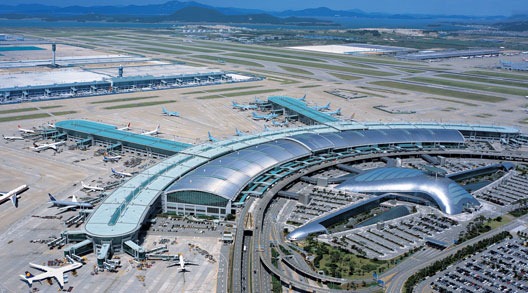
I was just about to leave town for the summer when this incident occurred. In June, two Korean marines fired on a civilian airliner coming in to land at Incheon international airport (pictured above). Much of the commentary has focused on the heightened levels of tension because of last year’s incidents (the sinking of the Cheonan and the shelling of Yeonpyeong Island). And certainly, the ‘enhanced readiness’ and ‘proactive deterrence’ sought by the new minister of defense add (with obvious justification to be sure) to the tension. While clearly SK should defend itself, I was wary last year of the new guidelines because of precisely this possibility. Everyone is edgy, so incidents like this aren’t unexpected.

Yet no one has brought up the obvious fact that is hugely dangerous for civilian airliners to be regularly landing and taking off less than 50 miles from the demilitarized zone to begin with. I argued this point at some length last year. My concern was and remains that SK is far too centralized (a problem in itself) on a hugely vulnerable region right on the border with NK. 55% of the SK population lives within 50 miles of the DMZ, most obviously the massive northwestern agglomeration of people living in Seoul, its surrounding Kyeonggi province, plus the city of Incheon.

Note further that this problem is worsening, not improving. Seoul continues to grow, while Incheon, a new, hyper-modern ‘model’ city is exploding in size too. To boot, the new (and supercool and efficient) Incheon airport is now one of the busiest and largest in Asia. On the downside, Korea’s second city, Busan, which is already a paltry 3 million (Seoul is 20+ M), is shrinking. A friend who works in US Forces in Korea, and who interfaces regularly with the Korea military, tells me that the Korean military is increasing closing (naval) installations in the south (near Busan), because no one is willing live down here anymore. Just about all of my students tell me they want to move up to Seoul, the center of the universe.

So I will ask once again, why does the ROK government continue to worsen SK’s strategic position by permitting this wildly lop-sided regional development? You could say that this is simply the outcome of consumer choice – ie, SKs all want to live in Seoul. That is true, but the government could obviously do a lot to discourage that. Remember that this is SK – ground-zero for state-led capitalism, ‘administrative guidance,’ and all that. SKs are accustomed to the government ‘directing’ or “nudging” (in American/Obama era parlance) national life far more than westerners. SK efforts to incentive extra-Seoul demographic accumulation would hardly been seen as a government tyranny or something like that. And besides, the reason – security against NK – is very defensible. This wouldn’t be like uprooting a neighborhood to build a strip mall or something. This wouldn’t be District Six in Capetown.

If you lived next to North Korea (North Korea!), would you really want these sorts of demographic-regional patterns? Even if you drop all the other (very good) arguments about regional equity, sustainable living patterns, the informal discrimination against the rest of Korea doomed to the ‘provinces,’ etc, there is an obvious national safety argument to unwind Seoul-centricity. Yet this is never discussed, even after incidents like this shooting. I don’t get it…

————————

OTHER POST-SUMMER THOUGHTS

1. The S&P downgrade of US debt was both meaningful yet ludicrous. Meaningful in that it put a point on something everyone already knew anyway – the US political process is so gridlocked and its political culture so acrimonious, that it calls into question the ability of the USG to meet future obligations. But it was simultaneously inaccurate, because the very next day, the market rushed into US Treasuries as the safest global asset. Interest on the benchmark US debt issue – the 10-year Treasury bond – is near record lows, around 2.5%.

In fact, I find this astonishing. For a decade, budget hawks (me included) thought the US was borrowing far more than it could ever pay back to cover the Bush tax cuts, the GWoT, and Medicare Part D. I find the interpretation that the western welfare state is in crisis, to be persuasive. I never thought the US would be able to just borrow and borrow and borrow like this. It is astonishing just how willing foreigners are to buy American debt. For all the chaos, no other asset is even close to the reliability of the T-bill, so maybe Cheney was right – we can just borrow forever… (how terrifying) … which leads to me next thought:

2. It is probably time for another stimulus. Increasingly it looks like the economy never climbed out of the 2008 implosion. The fear of the double-dip looks pretty warranted, but it is more likely to be understood as the long tail of the Great Recession rather than as a separate event. And increasingly I think Krugman is right that we should use the continuing super-low interest rates on US debt to fund another stimulus. I find the GOP/WSJ argument that the first stimulus didn’t work to absolutely fatuous. No less than the IMF has found that the stimulus prevented US unemployment from reaching 15-20%. The standard Keynesian prescription is that when consumer spending contracts, followed by investment spending, government is the only collective or ‘public goods’ actor that can step in countercyclically. And I don’t see much evidence that this doesn’t apply here, just as it applied and worked pretty well 3 years ago.

It should painfully obvious after the stockmarket roller coaster of two weeks ago, that uncertainty is worse than usual; government focus would probably help, especially given the policy-process meltdown of the debt-ceiling fight. But the DOW numbers increasingly strike me as frothy and casino-like rather than genuinely indicative. CNBC can cash in on the drama of wild ups and downs, but I think Yglesias (following Krugman) is increasingly correct – the real issue is growth and unemployment. And I don’t see the correlation between debt reduction and (job) growth (much-touted in the GOP Iowa debate). Speaking of…

3. The GOP Iowa debate was terrifying. Among other ideas raised were: to return to the gold standard (Ron Paul), to criminalize abortion for rape-victims (Santorum), to never raise the debt ceiling (Bachmann), to cut the highest US tax rate to 25% (Cain), and that the EPA runs a “reign of terror” over US business (Huntsman). Wow. Really? Who let these people of out the asylum? Is the GOP really this conservative? Is this even conservatism anymore, because it increasingly looks to me like nihilism of a sort. Do Republican primary voters (FULL DISCLOSURE: me included) really believe it when Perry says God is calling him to run for prez? None of this tea-party reactionary delusion actually reflects the reality of modern, cosmopolitan democratic governance enmeshed in the global economy. As always, I can only think that this sort of stuff convinces the rest of the world that we are bonkers and unfit to lead to lead the international community. Don’t believe me? Try to figure out how you explain this to non-Americans. Why aren’t the GOP candidates talking about stuff like this, a far more realistic and worrisome scenario of American power? Only Huntsman even came close, so if he survives to the Ohio primary, I guess I’ll vote for him. If anything, I left the debate thinking of Thomas Frank’s book, which I read this summer: the surreality of the GOP primary speaks to extraordinary insularity of rural America and the almost purposive resentment of the modernity in contemporary US conservatism. Creepy…

______

This and this are the best short-form articles you didn’t read this summer. And then of course, there’s this, by an expat busted for pot who turned his jail-term into local Korean celebrity – bizarre, but the article is dead-on.

Erratum Notification for Korea Times Readers: I am not a US Imperialist

IMG_4560

On the editorial page of today’s Korea Times, a significant misprint of my writing occurred.

The editorial, “Implication of US Budget Deficit for Korean Security,” reads: “Although America should be globocop, America’s finances force the obvious question of whether it can.” It should have read: “Even if one believes America should be globocop, America’s finances force the obvious question of whether it can.” Due to this and other editorial issues, I have asked the editors to remove the electronic version and to print an erratum retraction tomorrow.

Readers interested in the original argument can refer to the original blog-post on which the op-ed was based – here.

Sorry for the misunderstanding. Thank you for visiting my website.

2 pm UPDATE: The editorial has since been republished in its correct form.

Unleash the ‘Animal Spirits’ of Korea’s Small & Medium Enterprises

chaebol

The Financial Times had an important story over the weekend decrying the emergence of a two-tiered economy in Korea, and it is getting some play in Korea. Koreans are loathe to admit this (don’t criticize the team to foreigners), but any outsider can see this almost immediately here, and just about every non-Korean social scientist I know in-country agrees that this is a huge problem.

By two-tiered I mean the enormous concentration of market power and political access concentrated in the largest 200 hundred or so Korean companies, while small and medium enterprises (SMEs) struggle to find credit, and Korean households pile up debt (now at 150% of income). Non-Koreans will recognize such brands as Samsung, Hyundai, or LG, but others include widely visible names in Korea like SK or Posco. Like Japan’s infamous keiretsu, Korean mega-companies often sprawl into many different sectors, building cross-sectoral conglomerates (the Korean word is chaebol). SK, e.g., owns a telecom service, gas station chain, and real estate distributor. The chaebol have become so massive, that they enjoy many distinctly unearned, oligopolistic benefits of size.

1. They are ‘too big to fail.’ Chaebol in trouble can usually go to the government for help, as many did in the Asian Financial Crisis (AFC). In the 1997 IMF bailout of Korea, the big IMF condition was breaking the chaebol into smaller, more competitive, less openly oligopolistic firms. The chaebol have fought this ever since, often using bribery and political connections, to re-scale the commanding heights. Even Korea’s ‘reformist’ administrations – Kim Dae Jung and Roh Moo Hyun (1997-2007) – got tarred with scandal for taking bags of cash from Korea’s biggest companies. By contrast, Korea’s small and medium enterprises have no such informal political safety net. Anyone walking down the same street in Korea for more than a year or two can see the dramatic merry-go-round of small businesses here. Korea is filled with mom-and-pop stores just one or two bad months away from bankruptcy.

2. Size means political influence. It should surprise absolutely no one that the sheer bulk of the chaebol gives them inordinate, collusive political influence. The most obvious mark of this is the pardons extended to top chaebol officials convicted of a crime. More important is the informal pressure of the government on Korean banks to loan to the biggest firms at generous rates. The not only encourages recklessness at the top, it squeezes Korea’s SME’s at the bottom. Perhaps most scandalous of all, the chaebol were able to terrify the Korean state and taxpayer into picking up the bill of the Korean AFC. The Korean AFC was not caused by reckless sovereign or household borrowing. It was the chaebol, who then, mirabile dictu, dumped their debt onto the state, which ultimately forced the government to approach the IMF. Koreans traditionally blame the IMF for the crisis, but it was in fact, because the Korean state, terrified of the consequences, ‘generously’ nationalized the debt of Korea’s corporate sector. In truth, I suspect the Korean government was bullied by the wealthiest corporate heads in 1997 talking about what will happen to Korea if the government doesn’t give them the money immediately – a shakedown.

3. Cross-sectoral holdings allow a firm to leverage success in one sector for success in another. Even within a sector, Korea is often oligopolistic. The telecom industry is dominated by just two providers (SK and KT – a duopoly), resulting in exorbitantly expensive IT/long distance rates. These sorts of oligopolistic effects are well-known. Yet worse is the regular invasion of wholly unrelated sectors, in which the market power of one sector is used to push into other. The best know example of this to westerners is Microsoft. For more than a decade, MS used its power in operating systems (Windows) and office software (MS Office) as leverage to crush rivals in other areas where MS was weaker – browsers (Netscape), instant messaging (ICQ), media players (WinAmp), etc. In Korea, it is vastly more predatory and oligopolistic, as the chaebol often expand into areas wildly unconnected to each other, a practice that can only be explained by extraordinarily weak anti-trust enforcement, regulatory ‘looking away,’ and the political connections to give an unstated veneer of approval. Even Adam Smith rejected excessive concentration (monopolies, duopolies, oligopolies), and I can think of not credible market explanation whereby SK is the country’s biggest telco, real estate holder and gas station chain simultaneously. These outcomes are so blatantly political and ridiculous, that I am amazed Korea sees so little populism.

But corruption, scale, and political influence can’t be the only reason. Korea could elect genuine progressives to push through deconcentration. Even the Reagan administration broke up AT&T, right? And here is perhaps the most insidious element of the chaebol – they have convinced Koreans, a) that they are the flag-bearer toward the rest of the world, and b) that if they went through bankruptcy that Korea’s economy would implode.

a) Corporatized nationalism. Korea is a small place, bullied often by its neighbors, with a language no one learns, a culture that’s not easily distinguishable from China or Japan, and a nuclear lunatic running half the country. But as anyone living here for about 5 minutes can tell you, they are intensely nationalistic and absolutely determined that the rest of the world know who they are. That is why Yuna Kim is a legend here – not because she is a good skater, but because she brings the world’s attention to Korea. The chaebol have masterfully exploited that absolutely desperate craving for attention.

When the EU FTA was up for debate, the government ran commercials on TV showing smiling white people in European locales using Korean goods – helpfully pointed out as from Samsung, LG, etc. In trains, airports, bus terminals, on the government TV networks, etc, one sees an endless stream of government promotional commercials and videos showing dynamic-looking Korean businessmen talking up this or that Korean export product to someone who looks like a foreigner (i.e., a white guy in a suit). The Korean news gives you a regular diet of chaebol agit-prop, as the ups-and-downs of Samsung, SK, LG, Kia, etc are reported religiously. And the dream job of just about every Korean student I’ve ever had is to be a jet-setting corporate executive for Samsung. Koreans have routed their nationalism through their MNCs, and the chaebol take advantage of this to blackmail the state when necessary – particularly soft loans from the government.

b) Korea is Korea, Inc. is chaebol-land. Almost as bad is the widespread belief in Korea that if the chaebol are threatened, then somehow Korea will collapse. I see this all the time in conversations here. Despite all the above arguments for anti-trust action, my interlocutors inevitably retrench to fear – what would Korea look like if Posco went bankrupt? That Korean demand for the products Posco used to make would persist and therefore encourage new market entrants seems to arcane. That start-ups are often more efficient and more innovative (Facebook vs Microsoft) suggests even more unnerving change. That shaking up markets usually reduces consumer prices by forcing established winners to work harder is irrelevant: Koreans are ready to pay higher prices at home if that it what is required for Korea, Inc. to carry the Korean flag abroad. In the end, Korea must have national champions – not because they are champions, but because they are national. If Korea is a divided country of minor global importance (ie, no one cares about us politically), then we must have, economically, megacompanies to broadcast our national awesomeness. In the end, if Korea must be Korea, Inc. in order to get globally noticed, then its ok to be chaebol-land.

If this is depressing, there are obvious answers that do not require the government to forcibly to delimit some areas for the SMEs and some for chaebol, nor to beg the chaebol to be nice. And these would bring Korea into greater compliance with OECD norms and best practices on corporate governance:

1. Halt easy credit for the chaebol, while creating a pool of such capital for small business, modeled on the US Small Business Administration. The Korean SME sector is the most dynamic economic force in the country, taking huge risks to build neighborhood-enriching corner shops. This is far gutsier than mega-companies with lots of government buddies producing variants on the same product every year. The Korean Jeff Bezos or Mark Zuckerberg is out there, but I guarantee he is not a mid-level salary-man at Samsung. The government needs to unleash the ‘animal spirits’ of Koreans; access to bank credit on an equal playing field is the obvious place to start.

2. Enforce anti-trust law. Oligopolies create so many negative effects that even the conservative Reagan administration broke up AT&T and achieved a 70% reduction in long-distance rates. There is no possible economic justification for consumer-punishing cross-sectoral conglomerates. Western regulators would long ago have forced chaebol spin-offs. More firms means more competition, more innovation, and lower prices.

3. Stop sterilizing the won’s appreciation. ‘Fine-tuning’ is a laughable euphemism for forcing depreciation at the behest of chaebol exporters. It creates obvious costs – 5000 won for an import beer at HomePlus – for consumers. Korea’s inflation rate is now 4.2%; an easy way to return purchasing power to Korean consumers would be for the currency to rise.

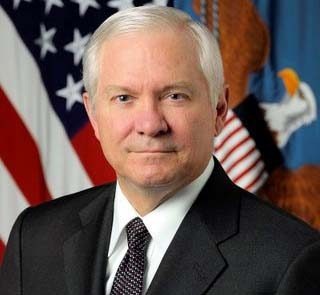
Robert Gates’ Final Speech on US Defense Cuts

robert-gates2

The Secretary of Defense is on his way out. To my mind, Gates was excellent, although, as Walt notes, coming after Donald Rumsfeld could make anyone look good. Gates, more than any SecDef since the end of the Cold War, has pushed the real ‘transformation’ of DoD – toward restraint and limits.

Readers will recall Secretary Rumsfeld’s original use of that term meant a smaller, lighter force that could intervene rapidly and globally to force local decisions on America’s terms. Afghanistan 2001 originally seemed like a model of this, but the bog-down of the war on terrorism has frozen the ‘revolution in military affairs.’ Rather it is Gates who has pushed the real change – nudging the US, specifically Beltway think-tank elites like Brookings or the American Enterprise Institute, to realize that the US can no longer afford the expansive globocop role we have become accustomed to in the ‘unipolar moment.’ Besides Walt, Fred Kaplan has been excellent on this.

Whoever comes after Gates will have a difficult time continuing this. There is a strong predilection in the Pentagon and on Capitol Hill for defense spending. It looks patriotic and exciting. Cutting it can be easily demagogued as ‘imperiling our national defense in an era of terrorism’ or something like that. Pentagon weapons procurement is notorious for placing bits and pieces of defense production in as many congressional districts as possible. This gives everyone a an economic and ‘patriotic’ stake in voting yet more cash to DoD. And the Navy and Air Force are genuinely terrified of a much-reduced role if the future use of American force becomes mini-interventions like Libya or (what was supposed to) Afghanistan. Watch for those parts of the force to hype the China threat (although I do think China containment, with a US supporting role, is probably inevitable).

Finally, it is simply undeniable that Americans sorta like ‘empire.’ We like the fact that we can go anywhere in the world and command a level of respect, because we are citizens of the ‘indispensible nation.’ Everyone uses the dollar and pays attention to the intricacies of our politics. (In Africa last summer, I got questioned regularly on Obama). No, I’m not saying we are the European caricature of global-strutting imperialist. But you only need to watch American film (or worse, video games) to see how attractive the idea of a big, bad-a—US is to Americans. We love the narrative of American exceptionalism; remember that George W Bush said ‘God has a special mission for America,’ and he got re-elected despite the Iraq War. You don’t have to be Noam Chomsky to think this; just live outside the US for a few years to see how ‘the rest’ think about us.

So Gates’ value, in the end, was seeing that the US simply cannot afford the neocon-liberal hawk synthesis in which the US use of force is a regular response to global problems. Even if you think America should be globobcop, America’s finances force the obvious question of whether we can. Historians regularly tell us that rising debt and long foreign wars are the death-knell of empires. Cut we must, or face a truly devastating melt-down at some point. It will take time for Americans to digest this reality, and Gates, with his huge personal prestige, started this process.

I say that quite aware that I supported NATO force against Gaddafi. (I would defend that position by noting that I argued for a super-light air intervention to stop a massacre. Beyond that, Libyans must achieve ‘regime change’ on their own.) I also say this with some trepidation, because part of me does think that unipolarity backed by US force, has made the world safer and the global economy function more easily. I worry too what a ‘post-American’ world will look like, especially if authoritarian China plays a much bigger role. While no fan of ‘empire,’ I will agree that this is unnerving.

But the larger concern of overstretch is now so apparent that Gates’ retrenchment position can either be, a) a choice now, in which we slowly retrench in order to better accommodate America’s fiscal mess and do so in a professional, ‘graceful’ manner, or b) forced on us later, when when we are genuinely broke because we continue to borrow $1-2 trillion dollars a year. Even America can’t do that forever, and cuts are coming whether we want them or not.

The Korean case has really forced my thinking about this, because Korea’s security is obviously dependent on a US commitment. Any war here will be bloody and expensive, far worse than the US post-Cold War wars in the Middle East. Americans are genuinely nervous about getting chain-ganged into a long conflict here. China, which holds around 1/4 of all US T-bills, would have an obvious incentive to stop buying if US Forces in Korea were suddenly marching toward the Yalu. And I can think of few uses of US force more noble than helping a democracy against the world’s last, worst stalinist tyranny. But that shouldn’t blind us to the obvious. Gates himself said, “any future defense secretary who advises the president to again send a big American land army into Asia or into the Middle East or Africa should ‘have his head examined.’” That should be a wake-up call.

Hence I have argued repeatedly here, especially for Korean readers, that Korea needs to be far more aggressive in preparing its own defense and imaging an East Asian alliance structure beyond simply a US guarantee. Korea should finally end the tiresome, endless Dokdo dispute with Japan, so that real joint decision-making on vastly greater issues like NK or China’s rise can begin. Korea should be looking further afield to other Asian democracies like India, Australia, and the Philippines. These are no substitute for the US of course, and the US isn’t simply going to leave tomorrow or next year. But the US will have to be further and further ‘over the horizon’ in the medium-term, barring some major turn-around of the US fiscus. Korea has the money and talent to fill in this gap, but first the recognition of US limits, pushed by no less than the US secretary of defense, needs to sink in – not just in Seoul, but in the whole US establishment in Korea, and in the Beltway think-tank industrial complex. I hope I am wrong…

The US Drawdown & National Debt Debate: AfPak, Korea, etc

Afghanistan rocket

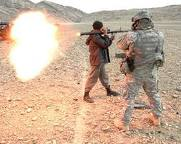
I’ve been thinking a lot recently about the scale of US commitments and how to reduce them so as to not bankrupt the US in the medium-term. I have gotten a fair amount of criticism that I don’t know what I am talking about, US warfighters are superlative, US forces in various places like Korea or Afghanistan augment US national security, pull-outs jeopardize our credibility, etc. Ok. I am learning like the rest of us on this. I agree that US commitments are sticky, and I have little doubt that US servicemen are professional enough to win conflicts in places like Korea and AfPak (Afghanistan & Pakistan), so long as we have the resources to stay.

Further, I will admit that a ‘post-American’ world is a little unnerving. I say this not as an American who likes ‘empire’ (I don’t), but more generally because I still do think, even post-Iraq, that US involvement generally makes the world a better place. The dollar and US engagement help keep the world economy open, and US force can sometimes be the last line against truly awful acts that shame the conscience. This is why I supported the Libya intervention, and this is why I hope the US can keep forces in Korea. A retrenched, bankrupted, and sullen America worries more than just Americans. To clarify to my critics, my concern is whether the US can support allies around the world, not if it should. I don’t want US Forces in Korea (USFK) to leave any more than anyone else. I can think of few more valuable uses of US force than to help defend a democracy against the last worst stalinist despotism on earth. I just wonder whether we can afford it.

I think we need to be a lot more honest about the huge defense cuts that will be required to balance the US budget. The US deficit ($1.5 trillion) is a staggering 10% of GDP and 35% of the budget; publicly-debt ($9T) is at 60% of US GDP ($15T); and the integrated national security budget (DoD, Veterans, relevant parts of Homeland Security and Energy) exceeds $1T. You hardly need to be an economist to think that this is unsustainable and smacks of imperial overstretch. For an expert run-down on the US budget mess, try here.

This gap could of course be filled with tax increases, but a central GOP policy commitment since roughly the Ford administration has been ‘no new taxes.’ Unless this changes dramatically – and the recent Ryan budget proposal showed no GOP movement on tax increases – this means that most of the $1.5T hole must be filled with spending cuts. My own sense is that allowing the Bush 2001 and 2003 tax cuts to sunset, as is current statute, plus tax reform and a carbon tax, could in fact generate a lot of new revenue at tolerable and intelligent levels of pain. This would reduce some of the pressure to cut defense (and all other US government programming). But without such new taxes, the $1.5T hole calls for huge cuts, and the axe would inevitably land on defense too, including US bases and commitments overseas.

I am genuinely agnostic on whether this is a good idea. Part of me thinks that wealthy US allies, especially Japan and Germany, free-ride. They should spend more so that we can spend less. But others have retorted that encouraging wealthy Asian allies like Korea and Japan to spend more could trigger an arms race in Asia that might also go nuclear. Barnett has a nice post on how Asian elites are aware of this and worry about a weak US. (On the other hand, there is not actually a lot of empirical evidence that denuclearization brings peace.)

In response to my commenters at Busan Haps on a US withdrawal from Korea, I wrote:

“America’s economic problems will likely compel the rebalancing all of you are thinking about. Importantly, even if the US wanted to stay and provide ‘extended deterrence’ as we have for 60 years, the dollars are not there for it.

Whether or not we should go is a different question. My sense is that Korea does actually try harder than many US allies. Korea spends 2.7% of GDP on defense. Germany and Japan spend around just 1%. The US spends close to 6%. But like Germany and Japan, Korea is now wealthy enough to spend a lot more. This raises the free-riding question you all worry about.

If Korea really wants USFK to stay no matter what, then the most likely way is for Korea to pay for ALL of the expense of USFK here. Right Korea and the US split the bill roughly so far as I can tell.

But I find great resistance to this thinking. My sense is that within the Beltway, there is strong elite consensus for the US remain committed around the world. ‘Empire’ seems to be a knack or a habit Americans have grown into. We like being a globally present superpower but are increasingly unable to afford it and unwilling to pay the taxes for it.

The question then is what do we do now? Cut entitlements (Medicare, Medicaid, Social Security) to make room for defense? Do we raise taxes enormously for all these things? Are do we retrench from our global posture so we spend less money?

Finally, there is a model for retrenchment. Britain slowly retreated from its empire in the 1950s and 60s. In some places it went very badly – South Asia and southern Africa especially. But this slowly brought British commitments back into line with British resources. The alternative for the US is to change nothing and risk an imperial crack-up – something like the USSR in 1989 or Austro-Hungary in 1914. That is my worry.”

Here are two good recent articles from the Wall Street Journal by Leslie Gelb and Max Boot on whether or not we can drawdown from Afghanistan and Pakistan (AfPak) post-bin Laden. I lean toward Gelb, but I think Boot makes some good points. Particularly, Boot notes that a US presence in Afghanistan made it possible to get OBL, because US forces were proximate. But Boot still sidesteps the debt issue. Both Beinart and the US JSC chairman call the debt the biggest threat to US national security. I am inclined to agree…

Why Nuclear Deterrence Doesn’t Matter that Much in Korea

nuclear-explosion

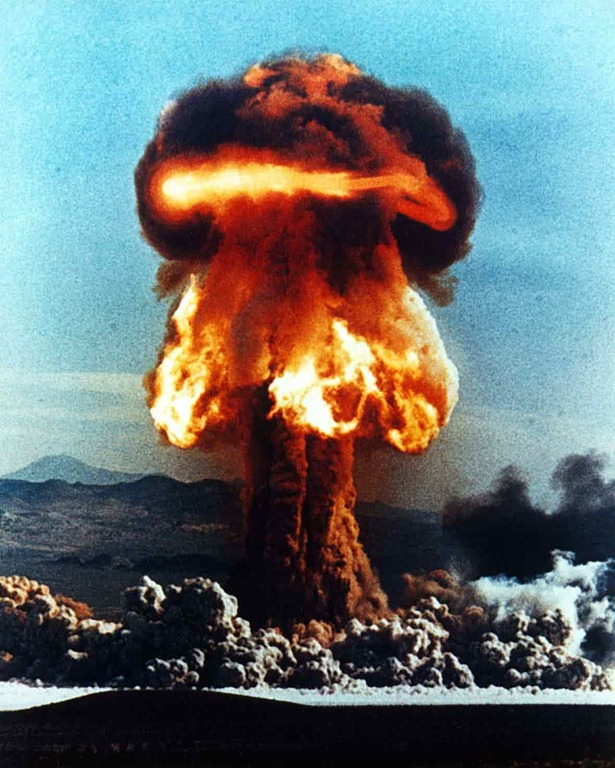
Last week we had a good speaker at PNU on US extended deterrence in Korea. Much of the discussion focused on nuclear weapons. NK has them obviously, and speculation on NK capabilities is endless. So not surprisingly, SKs are increasingly thinking that they should have them too. While it seems straight-forward to say the North has them, therefore the South should have them too, I think this is inaccurate– and not because America doesn’t want SK to have nukes. Koreans bristle at this, as many states in the world do, because they feel that the Non-Proliferation Treaty (NPT) constitutes nuclear discrimination: the haves (including the US) get to keep their nukes while the have-nots stay de-nuclear on the vague promise that the haves will build down to zero. Needless to say, the NPT haves have done little on this, leading to regular cries of hypocrisy (although Obama seems to genuinely want ‘global zero’). So last decade, India openly decried this logic and went nuclear despite the nuclear haves’ resistance.

But nuclear weapons for SK would not actually serve SK security much regarding NK, because any nuclear use by NK on SK would immediately trigger a SK invasion of the North. It is hard to imagine SK absorbing a nuclear strike without this finally forcing Seoul’s hand to invade NK and end the long stalemate. A nuclear strike would be so devastating that no other possible retaliation – airstikes, port-mining, more sanctions, etc – would be countenanced. An invasion is practically a 100% probability in response to a NK first-strike on the south. While the initial reason for the retaliation would be to suppress NK nuclear capabilities and force regime change, in reality it would quickly to turn into a war of national unification – a second Korean war to finally close the rift. Every analyst I’ve ever heard or read thinks that SK would win such a war – even without US, Japanese, or UN help. It would be a harder slog alone of course, but it is still quite likely.

So, after the SK victory, SK would then be stuck rebuilding NK, including cleaning-up blast zones in the NK from the US or South’s own nuclear strikes. As such, SK is unlikely to ever launch in the first place. There is no point in creating mass devastation one must fix a short time later. More formally stated, a SK second-strike is irrelevant, because a NK first-strike would change SK’s preferences toward from defense and deterrence to irredentism. A NK first-strike would end SK hesitation and confusion on NK and push it openly toward intra-Korean ‘imperialism,’ i.e., irredentism and unity.

Note the difference between N and SK, and the US and USSR. Neither the US nor the USSR had any compunction about nuking each other’s homeland, because neither expected to bear the clean-up costs. The same might be argued for the Indo-Pakistani nuclear competition today. But Korea is different. SK would not nuke NK in response to a first-strike and then just walk away. A NK first-strike – given the special ‘divided nation’ status of the peninsula – would push SK into the long-awaited, much-speculated-upon Second Korean War. And this time there would be a pretty clear winner who would then have to pay for all the reconstruction. So it would be better to have, say, 5 blast-zones in the south, than another 5 in the north too.

The only possible alternative I can see to this is SK nuclear use on the North if SK was actually losing the unification war. If NK launched a first-strike that devastated multiple SK cities and threw the military into disarray, then SK might consider a ‘counter-force’ nuclear strike on the NK People’s Army in order to slow them down and buy the Southern military time to re-organize and win the war. NATO considered similar such counter-force strikes during the Cold War. If the Red Army was rolling through Western Europe on the way to victory, NATO reserved the right to ‘first-use’ against military assets to stem the Soviet tide. But even these strikes would be very limited in Korea – likely low-yield battlefield nuclear weapons. The idea of nuking NK cities – ‘counter-value’ city-busting – is likely off the table due to the massive reconstruction costs that Seoul would have to carry for such strikes a short time later.

Beyond that SK nuclear weapons might be construed against China, Russia, and Japan – the first two of whom are nuclear. De Gaulle famously said French nukes pointed ‘360 degrees.’ And the initial aim of the French nuclear program was as much Germany as the Soviet Union. After three German invasions in 70 years, the French military wanted the ultimate guarantee of French sovereignty that nuclear weapons would give. SK might think the same way regarding Japan, the former colonizer (a surprising number of Koreans still think Japan has imperial designs on Korea). And of course, SK lives next the Chinese goliath. Should the US alliance with Korea crumble, SK might seek nukes to hedge China.

But little of this is discussed in the Korean media, where most of the nuclear discussion focuses on NK. But I just can’t see SK actually nuking NK.

US Alliance Commitment to Korea in the Age of Austerity: Big Cuts Loom

csis

So this week my university hosted a forum on the Korean-American alliance with Ralph Cossa and others from the Center for Strategic and International Studies. CSIS is the kind of center that anyone reading this blog would find useful, and Cossa is a great Asia hand. (For starters, try his chapter in this.)

The forum was informative, but too much of it passed what seems to me the growing mismatch between US alliance commitments around the world and US capabilities to meet them, what Paul Kennedy famously called ‘imperial overstretch.’ Most of the speakers reaffirmed the US commitment in direct, unambiguous terms – an expected response given NK’s exceptionally bad behavior last year. But to my mind analysts need to be more forthright admitting the great trouble the US will likely have defending Korea.

I have written on this before; consider the following data points of US ‘partial abandonment’ of SK:

1. US Forces in Korea (USFK) are now just 28,500 servicemen, the smallest number they have been in the history of the force. A large minority, so far as I can tell, are air and naval staff, not infantry. In short, the ground war – the hard, brutal slog of 1950-53 – will be born mostly by the SK army this time.

2. US tactical nuclear weapons were removed from Korea 20 years ago, after the Cold War. Given NK’s nuclear program, ROK elites have been hinting for the last few years that they might like to see them come back or at least discuss it. The US has rejected this.

3. The Combined Forces Command (CFC) is still scheduled to be abolished. CFC places wartime authority in Korea over both US and Korean forces in the hands of a US general. This is widely viewed in Korea as a signal of US commitment to SK defense. Originally it was to be abolished in 2012. Abolition has been moved to 2015, because of recent NK behavior, but CFC is still scheduled to go. The Koreans too have made noises about retaining this, but the US has held firm that it too will go.

4. US public opinion surveys from the Chicago Council of Global Affairs (2008, 2010) only find the 40-45% of American actually want to fight in SK if a war comes: “Americans also show an inclination to take a hands-off approach to confrontations between North and South Korea.” This should not surprise anyone, given the American exhaustion from the war on terror. Consider the Libya intervention (which I supported, to be transparent). This was mostly an inside-the-Beltway affairs (the ‘professor’s war’); US public opinion support for it is tepid. As a result, US involvement is very light. Obama is badly constrained by huge US public reticence to fight yet another big war – which is most certainly what a Korean conflict would be. Libya is far more likely to be the US model in Korea should another war break-out here, rather than a re-run of what happened 60 years ago.

5. USFK is being relocated away from the demilitarized zone to a city south of Seoul – Pyeongtaek. This strikes me as a critical data point, and one that Koreans most definitely worry about. Seoul is the obvious target in any serious war, so USFK’s placement between the KPA (NK People’s Army) and our ally’s capital signaled strong American commitment to SK, both reassuring SK and deterring NK. USFK, even when it was larger, was never enough to stop the 1.2 million-man KPA on the ground. Its role was basically a symbolic trip-wire. That is by stationing US forces in the likely combat zone, any combat would immediately pull in US soldiers, and likely result in battlefield casualties as well. Any US fatalities would have a catalytic effect on US public opinion regarding participation in an otherwise unwanted war. Emotionally provocative images of dead American servicemen would enrage America pubic opinion and so reinforce the US commitment to fight. The trip-wire ensured that the US would be ‘chain-ganged’ into any war in a ‘country far away about which we know little.’ People find this morally objectionable – and it is  – but that does not make it inaccurate.  Indeed NATO did the same during the Cold War. Multinational units were stationed along the West German border with East Germany and Czechoslovakia. If the Red Army crossed the line, initial casualties would be spread around the alliance in order to insure that all allies would have skin in the game. This would help ensure that allies in NATO’s backyard would stick to their commitment to fight. While I doubt that USFK planners are so callous as to open reason this way, it is clearly the case that US forces south of Seoul reduce American exposure, eliminate the immediate trip-wire/chain-gang effect, and give the White House ‘wiggle room’ it did not have before.

6. But even if all of the above were irrelevant, the real elephant in the room that casts doubt on all US alliance commitments (not just Korea) is the crushing national deficit and debt. The US is now borrowing $1.5 trillion per annum. This is the largest peacetime borrowing in US history (and only matched once – in WWII). It represents a staggering 10% of GDP. America’s publicly-held debt is now $9 trillion. These budget constraints will place major limits on any US use of force in the future. Again, the current Libya campaign should be seen as a model for what US war in the age of austerity will look like – hesitation, buck-passing to allies and international organizations, ‘leading from behind,’ no ‘boots on the ground,’ cost-efficient airpower, etc. The only way to close that massive $1.5T gap is to either cut spending or raise taxes (or inflate it away, I suppose – but who wants a re-run of the 1970s?). So long as the GOP remains firmly opposed to tax hikes, then spending must be cut. And no really believes $1.5T in cuts can be found without huge defense cuts. Social Security, Medicare, Medicaid (together: SS/M/M), Defense, plus interest on the debt, compose 80% of the budget. Interest payments cannot be cut obviously; we can’t just unilaterally stiff $9T of bondholders. Nor is there much saving to be found in the remaining 20% of ‘discretionary spending.’ That leaves just the ‘big four,’ as the Simpson-Bowles deficit reduction commission called them: Defense and SS/M/M. This is an absolutely classic example of the guns-vs-butter trade off. We can have a big defense budget or big entitlements (SS, Medicare, Medicaid), but we can’t have both. Consider that the entire US national security budget (Defense, Veterans Affairs, and the relevant parts of the Homeland Security and Energy Departments) costs about $1T. That means you could cut all US national security spending and still not balance the budget. Indeed, half a trillion dollars in deficit spending would still be left over. Just 5 or 6 years ago, when the Bush administration was running 4-500 billion dollar budget deficits, people fretted that such numbers were enormous. Now that would be progress. This budgetary mathematic all but mandates major US retrenchment, unless Americans are willing to dramatically lessen their entitlement expectations to make room for defense. And to no one’s surprise except the hawks I suppose, Americans do actually favor major defense cuts in order to save SS/M/M. Americans, if they must choose, want checks for grandma more than they want aircraft carriers. This is why Michael Mullen, the US Joint Chiefs of Staff Chairman, argued recently that the US budget deficit is now the single biggest threat to US national security. And the Sustainable Defense Task Force, organized by several members of Congress, does in fact recommend US cuts in Korea. (Read Kaplan at Slate.com for superb analysis on the approaching critical mass regarding defense spending.) The likelihood of major cuts in places where American really don’t want to be (Iraq, Afghanistan, Pakistan, Libya) and places American believe can afford their own defense (Western Europe, Japan, Korea) means that it is very likely that US forces will not be in these places in, say, 10-15 years. The money just isn’t there anymore…

In short, America’s accelerating sovereign debt crisis, much reduced force structure in Korea, and low public opinion support for more interventions, badly constrain our ability to meet our alliance commitments here, and many other places. This doesn’t mean we should get out; this is no personal endorsement one way or the other. But it does mean that probability of major US assistance on which Korea has built its security for two generations is diminishing fast. We need to be honest about that. Call it the end of empire, retrenchment, imperial overstretch, whatever; but US allies need to recognize this. The days of free-riding are just about over.

Korean-German Unification Parallels (3): Differences & Conclusions

Flag-Pins-South-Korea-Germany

This is the last of a three part post elaborating the often-made parallel between German and Korean unification. Please start with part one and part two.

More Differences in the International Environment between German and Korean unifications:

c. China’s interest is much higher in NK than the USSR’s was in EG. NK borders China; EG was two time-zones away from Moscow. China’s interest in the terms of a final settlement are much more direct. Gorbachev was basically trying to sell EG for desperately needed cash; for China, Korea is a more existential issue. NK is a buffer between democratic SK, Japan, and the US. Hence, China is much more likely to stick its nose into Korean unity talks, and to push for its own terms. Those terms will probably include a ban on US forces north of the current DMZ, and possibly an exit of SK from the US alliance altogether, in exchange for Chinese acquiescence on unification: Korean ‘finlandisation’ (an outcome of which Japan might secretly approve too).

d. SK can’t buy unity from China as West Germany did from USSR. WG was an economic powerhouse by the 1980s – in the OECD and G-7, second biggest donor to the UN, etc. WG could simply  write a huge check to Moscow, and the USSR was so desperate that it took the money and abandoned Honecker. SK is simply not there. Yes, it’s in the OECD and G-20, but its still lists itself as a developing country at the WTO, and it is still decades away from German levels of affluence. Nor do the Chinese need the money. China will play a much harder game than the Soviets were able to 20 years ago.

e. SK has no supportive environment of allies or revolutions, like NATO and the Velvet Revolutions of 1989, which could add momentum to unification. Beyond the US, SK has no real allies. Russia is an unpredictable faux-‘partner’ at best. Because of all the bad history, the Japanese don’t really like the idea of a united, wealthy Korea which is growing faster than them, right on their doorstep. Taiwan is also a divided country, but it is in the NK/EG role as the smaller and weaker of the two. So there is nothing like a local NATO of friends to provide group moral cover for unification efforts, nor can there be any regional momentum for NK change, as the other revolutions like in Eastern Europe provided to East Germans in 1989/90. The are no nearby states similar to NK to catalyze NK change, unless one imagines Chinese democratization, which is a huge leap. As we see in the ME today, revolutions can synergize each other, but there is no region here to provide a wave to wash into NK. Koreans will have to do this themselves.

Conclusions:

Altogether this means that hurdles to and burdens of unification are much higher here:

 There are more NKs than EGs, and they are poorer as well.

There are fewer SKs than WGs, and they are poorer also.

SK’s state strength/capacity is lower than WG’s, while NK is a catastrophe by even EG standards.

So: fewer people with less money in a weaker system will support more people with less money from a worse system.

That domestic arithmetic is brutal, and if that weren’t bad enough, the international balance of forces is worse now than in 1989 too:

Today, the external patron (US) of the free Korean half is weakening, while the external patron of the communist half (China) is strengthening. The opposite was true of the US and WG, and the USSR and EG, in 1989.

Today’s northern patron (China) is trying to push further into the continent (Asia), while yesterday’s eastern patron (USSR) was looking for an exit (from central Europe).

There is no regional encouragement, revolutionary wave, democracy zeitgeist, or whatever to push this thing along in NE Asia.


The incentives for China to meddle – because of the greater importance of NK to China, than of EG to the USSR -, and the greater ease of   such meddling – because the US and SK today are weaker than the US and WG were then, while China is much stronger today than the USSR was then -, mean Chinese intervention is highly likely. It will try hard to structure any final settlement. A major policy question for SK is therefore likely to be, will it dump the US alliance if that is what’s necessary to get China out of the peninsula? Will SK exchange ‘finlandization’ for unity? I think the answer is, and should be, yes.

The only alternative I see to this is a unification process that goes so badly off the rails, is so destructive, disorganized, and chaotic, that China would want to stay out it from sheer concern to avoid a quagmire. In other words, the more chaotic the end-game turns out to be, the more likely it will be a Korean-only affair. This is unfortunate; no one wants Korean unity to be a Hurricane Katrina-style national meltdown that requires heavy western and Japanese support – which might not even be available. because of the accelerating sovereign debt crisis. But reunification chaos seems like the only way to keep the Chinese out, because the balance of forces I sketched in the post are so much worse for Korean today than they were for Germany in 1989/90.

Korean-German Unification Parallels (2): Differences

east_germany_flag_thumb1

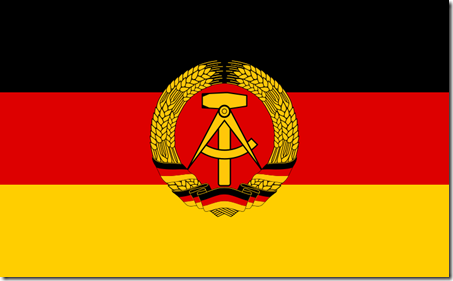
old East German quip: what does GDR (German Democratic Republic) really mean? German District of Russia…


This is part two of a post exploring the similarities and differences of German unification (1989/90) with Korea’s probable future one. Part one explored the similarities of the two cases; Part three presents my conclusions. Here are the differences between these unifications:


Differences:

3.  Domestic

a. EG was much wealthier than NK is now. EG was the ‘leading’ economic performer of the east bloc. The USSR realized how central the German competition was to the overall Cold War competition, so EG was heavily subsidized. NK was never as important, because the cold war contest was never as stark in Asia as it was in Europe, so NK never got such big handouts. NK’s GDP/capita today is a crushing $1700; EG’s in 1989 was $10,000.

b. NK is not just a dictatorship; it is an Orwellian nightmare, more stalinist than even the Soviet Union or Albania ever were. East Germany was bad but never plumbed the depths of repression and madness like NK.  One of our faculty at my university works with NK defectors, and he notes how many of them have psychological trauma from life in NK. Fixing NK will not just be a huge pile of money; we know that. It is also going to require something akin to nation-wide psychiatric care for millions of mentally brutalized Winston Smiths. This will be an event unheard of in the annals of mental health; read here and here.

c. On just about every other benchmark conceivable, NK is worse off than EG: environmental management, infrastructure, labor productivity, health care, education, technology, etc, etc. The per person cost of Korean unification is likely to much higher, because NK is so much further behind in almost every way than EG was. Estimates of Korean unification could begin with these figures: in 20 years, WG has transferred $1.2 trillion euros to the roughly 16 million people of EG at the time of unification. Note than NK has more people (23 M) than east Germany, and those people are significantly poorer per person too ($10k vs 1.7k per capita). So that means the 1.2T euros figure is likely too low for the NK case. Note also that West Germany had around 60 M people in 1989; SK has 49 M today. WG’s 1989 GDP per capita was $25,000; in SK today, it is around $19,500. The arithmetic is punishing.

d. EG and Soviets did a good job deceiving the world that EG really was modern and advanced, just like the West. This is one reason why the WG government granted 1:1 currency convertibility to the GDR mark: almost everyone thought EG would have some reasonably competitive industries and sectors. Yet when WG finally got in there – when the West finally pulled the lid off –  almost everything was badly behind or unusable: the phone system had to be completely replaced, EG cars were a polluting environmental nightmare, laborers had no idea how to use computers or even basic office devices like photocopiers, infrastructure around the country still had World War II battle damage (that is no joke, I saw it), etc. So it’s likely that NK is much worse than we think it is. Even Bruce Cumings has admitted this. Yes, try to imagine that: NK, our customary endpoint of geopolitical awfulness, is probably hiding much worse than we know now. Once we see the NK gulags up close, I think we are going to see Nazi-style atrocities even the Taliban wouldn’t have tried.

e. SK is less politically prepared to carry the enormous stresses of unification – and not just the financial burden. The SK political system is flimsier than WG. Corruption is more regular; its parties are shallow and change names quickly; political unresponsiveness drives a street-protest culture and brawling in the National Assembly. For a state that came out of dictatorship less than a generation ago, SK is doing pretty well, but it clearly does not have the state capacity WG did in 1989, while it faces (points a & c above) a comparatively greater burden. Indeed, this is my greatest fear – the burdens of unification will simply overwhelm SK’s still maturing democracy and leave NK in some kind of semi-annexed limbo like the West Bank.

4. International

a. In 1989, the US was at peak of its postwar relative power. The USSR was in decline; China was still far off. This is the era of the ‘unipolar moment’ and the ‘end of history.’ Today the balance of forces is very different. The US is much weaker. Many think the US is in decline. All this makes it harder and harder for the US to support SK in any contest with China or NK over unification. It is likely that SK will have to do more of the work on its own, compared to the heavy intervention by the Bush 41 administration to support the WG position. The weakened American position means it will be easier for China to dictate its terms for unification (such as no US forces north of the current DMZ, or perhaps even no US forces at all).

b. In 1989, the USSR was a mess; today China is not. The GDR’s patron was imploding. It could no longer afford the contest with the US. The Soviet Union was trying to geopolitically retrench and to re-starts its moribund economy with perestroika and glasnost. The Soviets were getting desperate, and the east bloc – subsidized as it was – had become an albatross. Gorbachev was fumbling to control all the forces unleashed. China is the opposite. It is not overextended, but rather just beginning the international expansion that flows from its rising strength. It is feeling its oats and ready to give the US a run for its money in Asia at least. Tiananmen Square demonstrated a non-Gorbachevian willingness to roll out the tanks to maintain the one-party state, and there is no serious liberalizing force, in part because the Chinese population is being bought off with growth. So China is much more capable of carrying the NK albatross and ready to push its interests into Korea not pull out per Gorby.

Go to part three.

Korean-German Unification Parallels (1): Similarities

KIM_IL_SUNG_mit_HONECKER

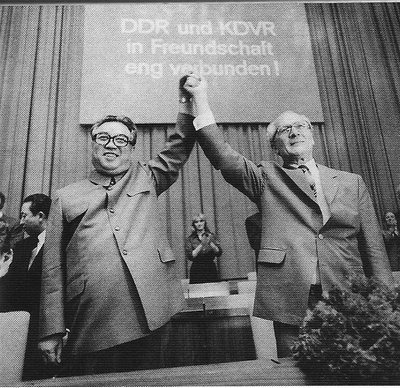
Kim Il Sung and Erich Honecker: *sigh*, don’t you miss the golden days? —- no, me neither

(the placard reads: ‘GDR and DPRK tightly bound in friendship’ – for tyranny and poorly-made men’s wear)

Here is part two and part three.

Last week I ve participated in a scenario to map out possible futures of Kim Jong Il’s sudden death. My best guess is in my previous post – a military dictatorship with Kim III (Jong-Un) as a familial, yet much reduced, figurehead. But one idea that is always floating around in the background is that major regime junctures in the North might lead to break down and then unification. President Lee has taken recently to saying that SK should prepare for imminent unification, and one of my favorite NK experts thinks unification is likely in the next five years.  Does anyone else think this is likely, and why so (in the comments below, please)? I don’t see that actually.

Nevertheless, the most obvious parallel for trying to map Korean unification will work is the German case in 1989/90. I have written about this before, but the following compare and contrast is more complete. For Asian readers in search of a good walk-through of Germany’s experience with division, here is a good place to start.(FYI: I lived in Germany for 4 years in the early 90s and speak German. I recall debating this stuff a lot.)

Similarities  between the German and Korean divisions:

1. Domestic

a. Both nations were divided artificially. Both sides believe the ‘2 states, 1 people’ outcome is temporary. All 4 states face a permanent constitutional legitimacy crisis, because the obvious question is why these separated states exist at all. As such, all states divided by the Cold War were intensely competitive with the other. Outracing each other economically, militarily,  even at the Olympics, became central to proving who was the ‘real’ Korea, Germany, Vietnam, China, etc. Mutual coexistence is basically impossible; each has a limited time window to race the other into international legitimacy. As one or the other pulls away in global opinion – as it becomes ‘the’ Korea or ‘the’ Germany in places like airports or hotel signage, popular movies, CNN, etc. –  it will become ever harder to justify maintaining the division.

b. NK and EG (East Germany) are both communist with all the attendant problems of 20th century ‘real existing socialism.’ They are domestically illegitimate outside their own elites. Those elites are a corrupted ‘red bourgeoisie’ for whom regime ideology became a figleaf for oligarchy and luxury. Neither can produce anything close to the quality and quantity of goods necessary to keep their populations happy – populations further disenchanted by what they see on the other side. Both have a nasty secret police. They are both noticeably poorer than the westernized competitor, and this creates unending pressure on the government to change. All these factors create a disconsolate citizenry that would push out the regime if given the chance. Hence, any manner of internal democratization or liberalization would end the regime as we know it. In the end, both communist half-states had to seal off their borders to prevent exodus; they are national prisons.

c. Underperformance vis the westernized competitor slowly takes its toll internationally. The competitions led to hyper-militarization in the communist half, which only worsens the performance gap between both sides.  Perhaps the best marker of the communist failure after a few decades was that West Germany simply became Germany and South Korea just Korea. To indicate the communist half in everyday speech, one had to affix the directional adjective, the implication being that EG and NK were somehow dead-ends of history. By the 1980s, both NK and EG had effectively lost the race of point 1a above; SK and WG became Korea and Germany.

d. The westernized, ‘Free World’ half of the nation is a wealthy, functioning democracy that has otherwise joined the world – technologies, markets, and institutions (IMF, WTO, etc). This makes the communist half look even more like a basket case. Gradual but sustained wealth and demographic accumulation have dramatically altered the balance against the communist half. The free half also regularly receives communist refugees voting with their feet.


2. International

a. SK and WG are clearly supported by the US and its wealthy democratic allies. Both belong to American/democratic alliance system and enjoy the widespread moral legitimacy that comes from that. They are net contributors to their own defence, clearly outclassing the communist half strategically.

b. NK and EG are practically client states of a communist behemoth, on whom they are extremely dependent. The patron of both finds them troublesome and expensive. Both field an military based around obsolete WWII assumptions of massed infantry and armor formations. Neither can win a conflict with the other half; the economic gap compounds the military gap. The patron regularly debates the merits of cutting the client loose.

c. The neighborhood got used to the division and kinda likes it (especially Japan and France, although no one will say that publicly). There isn’t a lot of impetus from outsiders to end the split. Russia couldn’t care less if Korea unites. Like the French and British on Germany, the Japanese public will come around once they see it on TV. Once we see crying Koreans tearing down the barbwire fences of the DMZ, like we saw Germans hammering the Berlin Wall, no one will stand in its way. But until then, don’t expect anyone else to do much beyond pro forma boilerplate.

Go to part two.