The ‘Missilization’ of Conflict in Northeast Asia

2016.4.12号(4/ 5発売)

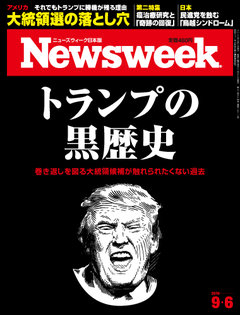
Earlier this month, I wrote a short op-ed for Newsweek Japan (issue cover to the left) on missiles and conflict Northeast Asia. I reprint that essay below in its English original.

My editor first wanted me to write something on North Korea’s latest tests. But everyone writes about that, and all the talk of missiles and missile defense up here got me thinking about the larger issue that drones, missiles, and other cheap air platforms increasingly look to me like the wave of the future.

Today’s (failed) North Korean missile test just reinforces the argument of this essay –  that any future conflict out here will involve a lot more unmanned airpower than people think. So yes, the big US bases out here are important, and politicians will continue to extol ‘the troops’ in order to get re-elected. But swarming drones, missiles, robot planes, and so on, guided by space-based C2ISR, is probably a lot cheaper and effective. (Read this on how much unconventional airpower would be involved in a conflict with China, and this on ‘swarming.’) The full essay follows the jump.

Part IV of Me and Van Jackson Debating South Korea’s Role in the South China Sea: N Korea Comes First

Kim Jong Un

This is a cross-post of an essay originally written for the Lowy Institute this week, available here.

This essay is the last round of a 2-month long debate between me and Van Jackson of Georgetown. Van wrote at the Diplomat; I wrote at the Interpreter. Here is part 1 (Van), part 2 (me), and part 3 (Van again). Van is a friend and way smarter than me. You should read his stuff.

Basically, I argue that if South Korea gets involved in the South China Sea flap, opposing China, then China will resume its relationship with North Korea. Right now that relationship is the coldest it has ever been. That is awesome. We really, really want this. The day China cuts off North Korea is the day the countdown to North Korea’s implosion begins.

Van argues South Korea could help get better Chinese behavior in the South China Sea. Mathematically, that is true; every little bit helps. But that help is small and the gains of a Sino-North Korean split are huge. Even if that split won’t happen soon, there is no way North Korea will collapse without it. So we have to do everything we can to groom Beijing’s alienation from Pyongyang. SK keeping quiet on the SCS, even when it agrees with the anti-Chinese coalition down there, is a necessary, albeit minor, cost.

Anyway, it’s a good debate. Judge for yourself after the jump.

Separating China from North Korea is Worth South Korea’s Silence on the South China Sea

South China Sea

I got this map from here. Very useful. The article below was originally published at the Lowy Institute last week, here.

In short, I don’t mind too much that the Koreans aren’t engaged on the South China Sea freedom of navigation dispute, because keeping their mouths shut and schmoozing the Chinese is necessary to get China to finally cut North Korea loose, which in turn is the only way North Korea will ever collapse. This is why I have never thought much of the criticisms that President Park Geun-Hye is a ‘sinophile.’ If you were South Korea, you would be too. If you lived next to giant China, and they were permanently bailing out your mortal enemy, then sucking up to them (within limits) is a good idea. I am not a big fan of PGH, but she has really gotten the Beijing-Pyongyang nexus right that her predecessors did not. Let her keep flattering Xi Jinping.

So you say that SK is a US ally and they’re getting a free-ride on the US, and therefore they should be involved in the SCS. Fair enough, but think a few steps further out. Getting China to dump Pyongyang is way more valuable than a little more weight on the scales in the SCS. SK can’t add much there, but openly throwing in with the US and Japan on the SCS would push Beijing back to Pyongyang when PGH’s schmoozing and flattering of Xi Jinping has done so much to push them apart. That’s hugely valuable.

Remember that NK will not collapse until China cuts it off, and that NK’s collapse is vastly more valuable to everyone – US included – than one more minor voice in the SCS flap.

The full essay follows the jump.

Modernization has Revolutionized Korean Grand Strategy

In the summer 2015, I went off to Columbia for a strategy training seminar called the ‘Summer Workshop on the Analysis of Military Operations and Strategy.’ It was pretty great. You should apply for it, here.

It got me thinking about Korean grand strategy, which I have written about before. I still think the primary geopolitical dilemma for Korea is that it is a middle power surrounded by three great powers. That really sucks, and may be unique in world politics to be bordered by three great powers while being a small/middle power yourself. Most encircled powers only face two large states so directly adjacent to them. Even Germany, while encircled, was never so overmatched by neighbors, because it too was a great power. But Korea has three large states right on top it. That’s very tough.

But the power ratios are changing. In the last 50 years South Korea has grown very fast, while in the last 20-30 years, Russia and Japan have stagnated. That still doesn’t mean Korea is a great power, but the gap is much narrower. So for the first time in its history, Korea is not a regional geopolitical football. That’s actually a pretty great national achievement.

This is the focus of this essay (after the jump), originally written for The Diplomat.