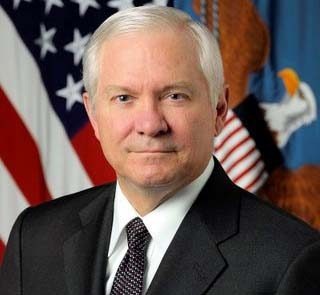
Robert Gates’ Final Speech on US Defense Cuts

robert-gates2

The Secretary of Defense is on his way out. To my mind, Gates was excellent, although, as Walt notes, coming after Donald Rumsfeld could make anyone look good. Gates, more than any SecDef since the end of the Cold War, has pushed the real ‘transformation’ of DoD – toward restraint and limits.

Readers will recall Secretary Rumsfeld’s original use of that term meant a smaller, lighter force that could intervene rapidly and globally to force local decisions on America’s terms. Afghanistan 2001 originally seemed like a model of this, but the bog-down of the war on terrorism has frozen the ‘revolution in military affairs.’ Rather it is Gates who has pushed the real change – nudging the US, specifically Beltway think-tank elites like Brookings or the American Enterprise Institute, to realize that the US can no longer afford the expansive globocop role we have become accustomed to in the ‘unipolar moment.’ Besides Walt, Fred Kaplan has been excellent on this.

Whoever comes after Gates will have a difficult time continuing this. There is a strong predilection in the Pentagon and on Capitol Hill for defense spending. It looks patriotic and exciting. Cutting it can be easily demagogued as ‘imperiling our national defense in an era of terrorism’ or something like that. Pentagon weapons procurement is notorious for placing bits and pieces of defense production in as many congressional districts as possible. This gives everyone a an economic and ‘patriotic’ stake in voting yet more cash to DoD. And the Navy and Air Force are genuinely terrified of a much-reduced role if the future use of American force becomes mini-interventions like Libya or (what was supposed to) Afghanistan. Watch for those parts of the force to hype the China threat (although I do think China containment, with a US supporting role, is probably inevitable).

Finally, it is simply undeniable that Americans sorta like ‘empire.’ We like the fact that we can go anywhere in the world and command a level of respect, because we are citizens of the ‘indispensible nation.’ Everyone uses the dollar and pays attention to the intricacies of our politics. (In Africa last summer, I got questioned regularly on Obama). No, I’m not saying we are the European caricature of global-strutting imperialist. But you only need to watch American film (or worse, video games) to see how attractive the idea of a big, bad-a—US is to Americans. We love the narrative of American exceptionalism; remember that George W Bush said ‘God has a special mission for America,’ and he got re-elected despite the Iraq War. You don’t have to be Noam Chomsky to think this; just live outside the US for a few years to see how ‘the rest’ think about us.

So Gates’ value, in the end, was seeing that the US simply cannot afford the neocon-liberal hawk synthesis in which the US use of force is a regular response to global problems. Even if you think America should be globobcop, America’s finances force the obvious question of whether we can. Historians regularly tell us that rising debt and long foreign wars are the death-knell of empires. Cut we must, or face a truly devastating melt-down at some point. It will take time for Americans to digest this reality, and Gates, with his huge personal prestige, started this process.

I say that quite aware that I supported NATO force against Gaddafi. (I would defend that position by noting that I argued for a super-light air intervention to stop a massacre. Beyond that, Libyans must achieve ‘regime change’ on their own.) I also say this with some trepidation, because part of me does think that unipolarity backed by US force, has made the world safer and the global economy function more easily. I worry too what a ‘post-American’ world will look like, especially if authoritarian China plays a much bigger role. While no fan of ‘empire,’ I will agree that this is unnerving.

But the larger concern of overstretch is now so apparent that Gates’ retrenchment position can either be, a) a choice now, in which we slowly retrench in order to better accommodate America’s fiscal mess and do so in a professional, ‘graceful’ manner, or b) forced on us later, when when we are genuinely broke because we continue to borrow $1-2 trillion dollars a year. Even America can’t do that forever, and cuts are coming whether we want them or not.

The Korean case has really forced my thinking about this, because Korea’s security is obviously dependent on a US commitment. Any war here will be bloody and expensive, far worse than the US post-Cold War wars in the Middle East. Americans are genuinely nervous about getting chain-ganged into a long conflict here. China, which holds around 1/4 of all US T-bills, would have an obvious incentive to stop buying if US Forces in Korea were suddenly marching toward the Yalu. And I can think of few uses of US force more noble than helping a democracy against the world’s last, worst stalinist tyranny. But that shouldn’t blind us to the obvious. Gates himself said, “any future defense secretary who advises the president to again send a big American land army into Asia or into the Middle East or Africa should ‘have his head examined.’” That should be a wake-up call.

Hence I have argued repeatedly here, especially for Korean readers, that Korea needs to be far more aggressive in preparing its own defense and imaging an East Asian alliance structure beyond simply a US guarantee. Korea should finally end the tiresome, endless Dokdo dispute with Japan, so that real joint decision-making on vastly greater issues like NK or China’s rise can begin. Korea should be looking further afield to other Asian democracies like India, Australia, and the Philippines. These are no substitute for the US of course, and the US isn’t simply going to leave tomorrow or next year. But the US will have to be further and further ‘over the horizon’ in the medium-term, barring some major turn-around of the US fiscus. Korea has the money and talent to fill in this gap, but first the recognition of US limits, pushed by no less than the US secretary of defense, needs to sink in – not just in Seoul, but in the whole US establishment in Korea, and in the Beltway think-tank industrial complex. I hope I am wrong…

Some Media on the US Retrenchment Debate

retrenched

I have been writing at lot here on the growing likelihood that the US will be forced to pull back from its many commitments. So on May 16, I published an op-ed on the issue in the Korea Times. It captures most of my major points. Any comments would be appreciated.

I also thought this blog-post from Walt captured the retrenchment problem pretty well.

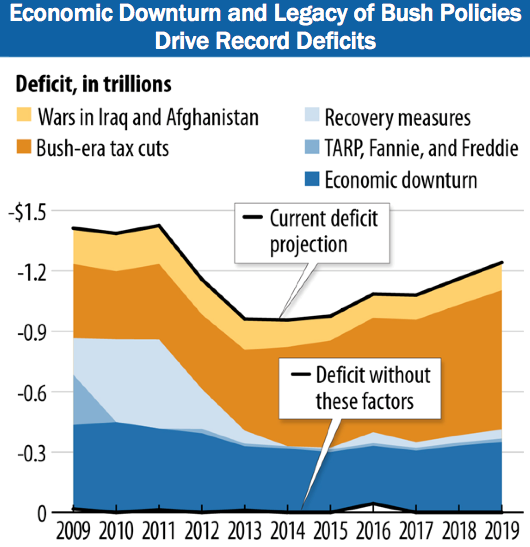
Finally, the graph below gives you a nice breakdown of the current $1.5T deficit. It comes from here:

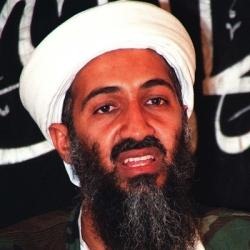
Thoughts on Bin Laden’s Death: Can/Should We Wrap the ‘GWoT’?

obl%203

Amid the flood of commentary, I would recommend this and this.

It’s hard not to be thrilled at this moment. I am not especially nationalistic, but Osama bin Laden (OBL) was doubtless an enemy of liberal democracy, a homicide, and virulently anti-American. Like Obama said, the world is a better place without him, and certainly America, the West, and liberals everywhere are safer. If there is a liberal democratic ‘end of history,’ this was a step on that path. So here a few thoughts:

1. Did we assassinate him? Did we intend to kill him, or just capture him? When I  first saw the CNN story, a by-line in the scroll at the bottom of the screen quoted an unnamed spokesmen saying the goal was to kill him, not capture him. If he really was unarmed, was this then an execution, a murder (!)? What if he had put his hands up? Would the US government or Obama be liable (!)? Honestly, these are just academic question though. No one really wants to ask them, Arabs and Muslims included, and probably not even the Pakistanis. Everyone, Middle Easterners included, is just glad he’s gone. As Walt notes (last link), the rules of engagement on the raid were probably pretty loose, because no one really wanted him captured. Ideally, that would have been best and most humane, but his capture would open up so many problems, that practically, killing him was the most attractive option. If we had him, what would we do with him? Send him to Guantanamo? Torture him? (Imagine how the pro-waterboarding crowd would have responded.) Do we send him to NYC for a trial, or a military tribunal? If he did get a trial, imagine the OJ-style feeding frenzy and his use of it as a platform to capture global attention once again. Given how much trouble we have had structuring a legal architecture for the global war on terror (GWoT), even after 10 years of conflict, the legal issues would have bedeviled the country for years. In fact, if we would have tortured him the way we tortured Khalid Sheik Mohammed (waterboarded 183 times in one month), and then executed him (like Timothy McVeigh), it may in fact have been more humane to kill him during the raid.

2. If we did assassinate him, then can/should we do the same to Gadaffi? I find it ironic that at the same time we killed OBL in a targeted strike, NATO argued that it was not purposefully targeting Gaddafi. It seems very likely that Gaddaffi’s death would end the Libyan war at a stroke, saving countless lives. Assassinations however are a violation of US law.

3. Is it right/wrong to be ‘happy’ that OBL is dead? It feels terribly macabre to wish for someone else’ death, and notably, both Obama and Secretary used the oblique ‘brought him to justice’ in order to avoid saying something like ‘we are glad we shot him in the head.’ (Go here for that ‘Rot in Hell!’ headline.) But OBL is one of those figures like Hitler or Pol Pot who have such a history of unrepentant and continuing awfulness that the moral calculus likely changes. If OBL were the prodigal son and legitimately changed his ways, perhaps we should feel differently. But even after 9/11, he didn’t stop. At some point, even the most Christian/Buddhist/pacifist/Amish/liberal whatever could agree that ethics would be served by his death. Because he so obviously planned to keep on killing on a huge scale, killing him undoubtedly saves lives. This alters the moral discussion, I think. My Korean students and friends seemed a little unnerved that I was pleased. But I mentioned the obvious parallel of Kim Jong Il. He too is one of the figures with such an awful and continuing record that just about everyone believes Korea will be a better place without him. And indeed, SK has flirted in the past with trying to kill his (equally awful) father. When unification comes, if there is war or large-scale violence, it is hard to imagine the SK government wouldn’t also be thinking it would just be easier if Kim and his top cronies die in a firefight. (More likely though is a Mussolini/Ceausescu-style ending where is he is lynched by enrage locals.)

4. Was Pakistan sheltering OBL? Did we connive with western-leaning elements of Pakistan against islamist-leaning ISI elements? No one wants to say this, but it seems increasingly unlikely that OBL survived in a reasonably comfortable home (not in the cave we all thought) in the middle of the country without substantial informal tolerance. Others know far better than me on this point, but this is yet another marker that we should probably be slowly getting out of South Asia.

5. How important is this? W famously said he doesn’t worry to much about OBL anymore. That was probably the right attitude actually, although W was pilloried by the Democrats for saying so. OBL was isolated – the house in Pakistan had no phones or internet to prevent tracking, and his communication with the world went through just a few couriers. So he really was not in operational command of anything anymore. Has the jihad and GWoT moved on? Probably, as Bush said. So yes, OBL’s death was a necessary conclusion to the long post-9/11 story. But it doesn’t actually change too much in the larger GWoT; if anything, maybe we can take it as an opportunity to declare victory and get out of South Asia (see below).

6. Congrats to the US intel services for a job well-done. I haven’t always been too congratulatory of the US conduct of the GWoT, but this was clearly a big breakthrough that richly deserves praise, as does Obama. The headlines about US power are that we are in decline, and that is true, relatively. We are wildly overstretched and need to start coming home. But this is an important marker that we can still be effectively, coherent and focused, in contradistinction to our image from Iraq. This was clearly planned and efforted for many months with lots of details thought out in advance. After the mess we made in Iraq and Afghanistan, this was a good demonstration of the way we can struggle against terrorism without a GWoT. Success doesn’t require massive invasions and the inevitable blunt tactics that come with them. I hope this stands as a future model of US force, along with our moderate efforts in Libya, and not more Iraqs and Afghanistans.

7. What is the Muslim world’s view? I saw Feisal Abdul Rauf (the guy who wants to build the World Trade Center mosque) on CNN. I was disappointed that he couldn’t seem to admit on TV that OBL was bad for solely killing Americans or non-Muslims. He had to say ‘we’ (Muslims) also suffered at his hands. This is true and makes it political easier to ‘sell’ in the Middle East. But he still should have said that OBL deserved justice solely for 9/11 on its own terms. Given that he has proclaimed the WTC mosque to serve ‘inter-faith outreach’ and all that, his automatic tribal instincts at such an important moment disappoint.

8. Will this finally push apart the Taliban and al Qaeda? Can this help us get out of South Asia? Yglesias suggests we can ‘declare victory in the GWoT’ and start to wind down? I am mixed on this. We really need to, but it is not yet clear how much this will set back al Qaeda. Is Zawahiri, who is just as homicidal and fanatical, going to step in keep al Q rolling along? But it does make sense to pivot from a war-fighting to a management strategy at some point. (By management, I mean seeing terrorism like a ‘regular’ social problem akin to crime, piracy, or drugs – limiting the massive use of resources and force, because ‘victory’ is impossible without doing more harm than good.) We will never kill all terrorists globally. That would be far too difficult, would turn into US global imperialism for decades, will bankrupt the country, and destroy our liberal values. As Lithwick notes, the unending GWoT is perverting our sense of justice and liberal values (torture, warrantless wiretaps, indefinite detentions, and so so). As the Framers and republicans everywhere since Cicero have noted, unending war is terrible for democracy and liberalism. So maybe this is the long-needed juncture so that we can finally move on.

US Alliance Commitment to Korea in the Age of Austerity: Big Cuts Loom

csis

So this week my university hosted a forum on the Korean-American alliance with Ralph Cossa and others from the Center for Strategic and International Studies. CSIS is the kind of center that anyone reading this blog would find useful, and Cossa is a great Asia hand. (For starters, try his chapter in this.)

The forum was informative, but too much of it passed what seems to me the growing mismatch between US alliance commitments around the world and US capabilities to meet them, what Paul Kennedy famously called ‘imperial overstretch.’ Most of the speakers reaffirmed the US commitment in direct, unambiguous terms – an expected response given NK’s exceptionally bad behavior last year. But to my mind analysts need to be more forthright admitting the great trouble the US will likely have defending Korea.

I have written on this before; consider the following data points of US ‘partial abandonment’ of SK:

1. US Forces in Korea (USFK) are now just 28,500 servicemen, the smallest number they have been in the history of the force. A large minority, so far as I can tell, are air and naval staff, not infantry. In short, the ground war – the hard, brutal slog of 1950-53 – will be born mostly by the SK army this time.

2. US tactical nuclear weapons were removed from Korea 20 years ago, after the Cold War. Given NK’s nuclear program, ROK elites have been hinting for the last few years that they might like to see them come back or at least discuss it. The US has rejected this.

3. The Combined Forces Command (CFC) is still scheduled to be abolished. CFC places wartime authority in Korea over both US and Korean forces in the hands of a US general. This is widely viewed in Korea as a signal of US commitment to SK defense. Originally it was to be abolished in 2012. Abolition has been moved to 2015, because of recent NK behavior, but CFC is still scheduled to go. The Koreans too have made noises about retaining this, but the US has held firm that it too will go.

4. US public opinion surveys from the Chicago Council of Global Affairs (2008, 2010) only find the 40-45% of American actually want to fight in SK if a war comes: “Americans also show an inclination to take a hands-off approach to confrontations between North and South Korea.” This should not surprise anyone, given the American exhaustion from the war on terror. Consider the Libya intervention (which I supported, to be transparent). This was mostly an inside-the-Beltway affairs (the ‘professor’s war’); US public opinion support for it is tepid. As a result, US involvement is very light. Obama is badly constrained by huge US public reticence to fight yet another big war – which is most certainly what a Korean conflict would be. Libya is far more likely to be the US model in Korea should another war break-out here, rather than a re-run of what happened 60 years ago.

5. USFK is being relocated away from the demilitarized zone to a city south of Seoul – Pyeongtaek. This strikes me as a critical data point, and one that Koreans most definitely worry about. Seoul is the obvious target in any serious war, so USFK’s placement between the KPA (NK People’s Army) and our ally’s capital signaled strong American commitment to SK, both reassuring SK and deterring NK. USFK, even when it was larger, was never enough to stop the 1.2 million-man KPA on the ground. Its role was basically a symbolic trip-wire. That is by stationing US forces in the likely combat zone, any combat would immediately pull in US soldiers, and likely result in battlefield casualties as well. Any US fatalities would have a catalytic effect on US public opinion regarding participation in an otherwise unwanted war. Emotionally provocative images of dead American servicemen would enrage America pubic opinion and so reinforce the US commitment to fight. The trip-wire ensured that the US would be ‘chain-ganged’ into any war in a ‘country far away about which we know little.’ People find this morally objectionable – and it is  – but that does not make it inaccurate.  Indeed NATO did the same during the Cold War. Multinational units were stationed along the West German border with East Germany and Czechoslovakia. If the Red Army crossed the line, initial casualties would be spread around the alliance in order to insure that all allies would have skin in the game. This would help ensure that allies in NATO’s backyard would stick to their commitment to fight. While I doubt that USFK planners are so callous as to open reason this way, it is clearly the case that US forces south of Seoul reduce American exposure, eliminate the immediate trip-wire/chain-gang effect, and give the White House ‘wiggle room’ it did not have before.

6. But even if all of the above were irrelevant, the real elephant in the room that casts doubt on all US alliance commitments (not just Korea) is the crushing national deficit and debt. The US is now borrowing $1.5 trillion per annum. This is the largest peacetime borrowing in US history (and only matched once – in WWII). It represents a staggering 10% of GDP. America’s publicly-held debt is now $9 trillion. These budget constraints will place major limits on any US use of force in the future. Again, the current Libya campaign should be seen as a model for what US war in the age of austerity will look like – hesitation, buck-passing to allies and international organizations, ‘leading from behind,’ no ‘boots on the ground,’ cost-efficient airpower, etc. The only way to close that massive $1.5T gap is to either cut spending or raise taxes (or inflate it away, I suppose – but who wants a re-run of the 1970s?). So long as the GOP remains firmly opposed to tax hikes, then spending must be cut. And no really believes $1.5T in cuts can be found without huge defense cuts. Social Security, Medicare, Medicaid (together: SS/M/M), Defense, plus interest on the debt, compose 80% of the budget. Interest payments cannot be cut obviously; we can’t just unilaterally stiff $9T of bondholders. Nor is there much saving to be found in the remaining 20% of ‘discretionary spending.’ That leaves just the ‘big four,’ as the Simpson-Bowles deficit reduction commission called them: Defense and SS/M/M. This is an absolutely classic example of the guns-vs-butter trade off. We can have a big defense budget or big entitlements (SS, Medicare, Medicaid), but we can’t have both. Consider that the entire US national security budget (Defense, Veterans Affairs, and the relevant parts of the Homeland Security and Energy Departments) costs about $1T. That means you could cut all US national security spending and still not balance the budget. Indeed, half a trillion dollars in deficit spending would still be left over. Just 5 or 6 years ago, when the Bush administration was running 4-500 billion dollar budget deficits, people fretted that such numbers were enormous. Now that would be progress. This budgetary mathematic all but mandates major US retrenchment, unless Americans are willing to dramatically lessen their entitlement expectations to make room for defense. And to no one’s surprise except the hawks I suppose, Americans do actually favor major defense cuts in order to save SS/M/M. Americans, if they must choose, want checks for grandma more than they want aircraft carriers. This is why Michael Mullen, the US Joint Chiefs of Staff Chairman, argued recently that the US budget deficit is now the single biggest threat to US national security. And the Sustainable Defense Task Force, organized by several members of Congress, does in fact recommend US cuts in Korea. (Read Kaplan at Slate.com for superb analysis on the approaching critical mass regarding defense spending.) The likelihood of major cuts in places where American really don’t want to be (Iraq, Afghanistan, Pakistan, Libya) and places American believe can afford their own defense (Western Europe, Japan, Korea) means that it is very likely that US forces will not be in these places in, say, 10-15 years. The money just isn’t there anymore…

In short, America’s accelerating sovereign debt crisis, much reduced force structure in Korea, and low public opinion support for more interventions, badly constrain our ability to meet our alliance commitments here, and many other places. This doesn’t mean we should get out; this is no personal endorsement one way or the other. But it does mean that probability of major US assistance on which Korea has built its security for two generations is diminishing fast. We need to be honest about that. Call it the end of empire, retrenchment, imperial overstretch, whatever; but US allies need to recognize this. The days of free-riding are just about over.

There’s No NATO ‘Crisis’: Muddling Through Libya is Good Enough

NATO Flag


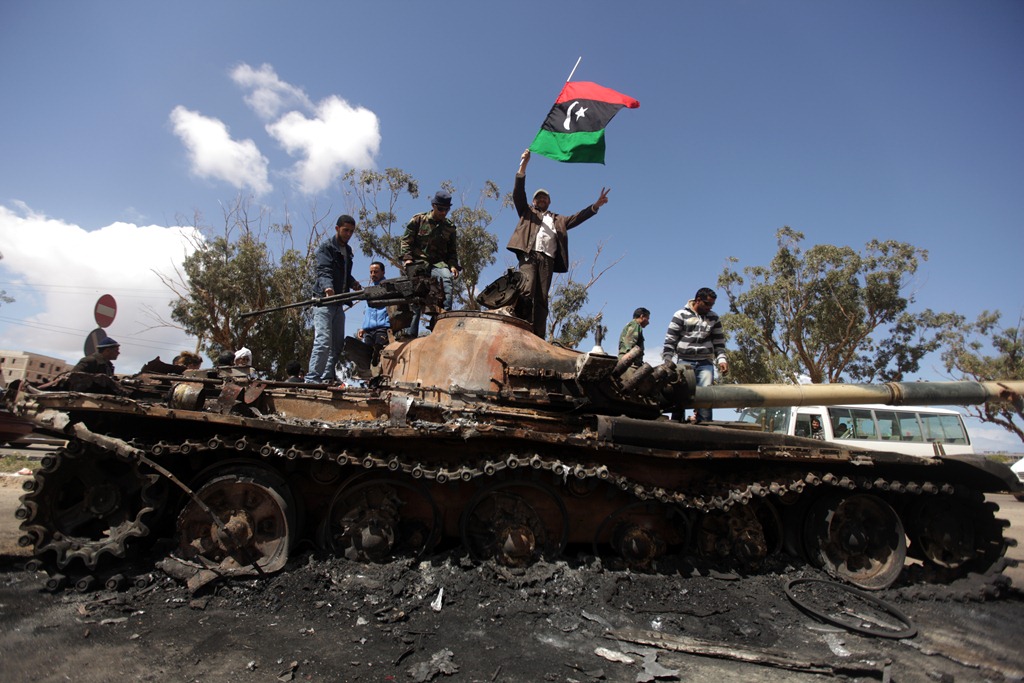
Besides the much-needed debate on the limits of the responsibility to protect (R2P), the Libyan mess has also provoked some good discussion of what NATO is supposed to do now, 20 years after the Cold War. It is a good question actually. Western publics are so accustomed to it, we just don’t even consider it much (such public opinion inertia is one reason it is still around). Conversely, the Chinese, and Russians especially, continue to suspect it as a ‘bloc’ that might somehow be used for future containment of them. Here and here are good articles Libya as a NATO-breaking event – a distinct possibility, especially if there is a push to extend NATO intervention into other Arab Spring revolts. Here and here are two defenses, that still struggle to define NATO’s military role.

My own sense is that NATO would be better off just openly admitting that it is now western military club for the general promotion of democracy and liberalism when its members feel so compelled. It is basically that ‘league of democracies’ idea, the formal proposal of which failed a few years ago. I understand that this is terribly messy, and it sounds pretty open-ended. But like the evolution of the R2P concept, just because it is open-ended, doesn’t mean the alliance needs to act on every possible scenario. We are learning how this works; there is no rush. Like the evolution of R2P, a more general mission for NATO would allow the members to pick-and-choose where interest, values, capabilities. Such ‘selective action’ is well-shown in the current Libya operation.

Yes, the Cold War brought a level of clarity to world politics that we all, disturbingly, seem to miss. But trying to force NATO into old boxes – ie, looking for a Soviet-style threat that brings ‘mission clarity’ or ‘threat definition’ is a fool’s errand by now. We really ought to know that 20 years after the Wall fell, and god help us if we place China into the Soviet ‘enemy box.’ As I argued earlier, the mess of crises of the future will be mostly ‘third world brushfires’ that like Somalia, Kosovo, or Rwanda. This should hardly be news to anyone who has followed the emergence of COIN in US military thinking in the last decade.

Such third world crises  require different force postures among NATO allies, yes, but they are hardly a reason to dissolve or disdain NATO. The most obvious evidence for this is George W Bush’s dismissal of NATO assistance in Afghanistan and Iraq. Bush thought NATO too encumbering, sluggish, and political for the rapid action he sought. But then both operations went south, and the US has tried repeatedly to pull NATO in.

Anyone who follows NATO knows the endless ‘out-of-area’ discussion discussion: should NATO go out of its European area into places like Afghanistan? I have no definitive answer – probably, but selectively. But far more important is that NATO is working this out, albeit slowly. This is why I don’t understand the pundit contempt for NATO ‘dithering.’ What is the alternative? Do neo-cons, eg., really want the US do all this stuff alone, again? Didn’t we learn that hard lesson in the last decade? And to those who think NATO is just irrelevant, should we simply close it? NATO is the closest thing we have to a club of democracies. As such, it carries enormous moral weight in world politics, beyond the simple aggregate of its military capabilities (which are, to be sure, atrophying). Yes, NATO bickers incessantly, but any show of unanimity from organizations like the Shanghai Cooperation Organization or ASEAN is almost certainly farcical and repressed – a representation of solely elite, frequently dictatorial, views. By contrast, NATO, because it is democratic, signals far more credibly. So while it takes awhile for NATO to get its act together (dithering), it is vastly more meaningful when it does – even if partially, as in Libya. And NATO ‘interoperability’ reduces the coordination costs among the democracies. Finally, its existence is minimally costly. Members can still free-lance as the US did in Iraq and France just did in Ivory Coast. NATO does provide room for ‘coalitions of the willing.’

In sum, the costs of NATO are low – some meetings and a lot of hassle. But the benefits are high – a credible, somewhat united democratic voice in global affairs with enormous moral prestige, a functionally meaningful and capable alliance (unlike the ‘alliances’ between China and NK, or Russia and Belarus that look more like gangs than real alliances), and retained national room to maneuver.

So why complain about NATO so much? It is muddling through pretty well it seems to me. It is stumbling toward a new role to project democratic force on a selective basis. A more R2P focused NATO will re-assure China and Russia that they are not the alliance’ targets (even if they will call R2P ‘human rights imperialism’). What great benefit does anyone in the West (not just the US, but anyone) get if we close NATO?

The real problem with NATO is not the endlessly harped-on issue of its mission: I really can’t read anymore of these sorts of articles with variants of the title ‘the future of NATO.’ It should be blindingly obvious that in a messy post-Cold War, post-colonial world, NATO’s mission focus will correspondingly be unclear (beyond basic member security). But so is the mission of the UN, ASEAN, and maybe even the EU (!), so this is not uncommon in generalist, big-theme international organizations. The real issue is member capabilities – specifically the precipitous decline of the European democracies to project power independently of huge US intervention. The well-known ‘free-rider problem’ debilitates the alliance no matter what its mission. This is a problem in Asia too (although the SKs try harder than Japan, to be fair.) The real issue for NATO is not its irrelevance – in world of ‘brushfires,’ it will still have relevance as Libya just showed – it is the willingness of members to provide resources.

“Homefront” Video Game: ‘I Pledge Allegiance to Kim Jong-Eun’ – Hah!

Yes, it’s ‘Red Dawn’ all over again, only yet more ridiculous


What blog from Korea on security issues would be complete without some discussion of Homefront, the new video game from THQ on a North Korean invasion of the United States. H/t to Koehler for catching this hysterical vid. Unfortunately THQ has not released the game Korea – why not? South Koreans are stridently anti-communist and terrified of the North. I can imagine this game selling truckloads here… Oh well.

The debate is heating up on this, so here is my contribution, limited albeit by my inability to get the game here.

1. The game is hyped as written by the writer of Red Dawn, John Milius. Milius also co-wrote Apocalypse Now, which he originally intended to end with a massive race war in which Colonel Kurtz (Brando) was to have lines like ‘isn’t it great to be a white man in the jungle with a gun?’. (Don’t believe me? Go watch Hearts of Darkness, the documentary on the making of Apocalypse Now to see Milius and director Francis Ford Coppola discussing this, as well as Milius’ creepy Wehrmacht fetish. Coppola openly [thankfully!] rejects the notion of some macho white fascist ending.)

Milius is exactly the sort of rightie that IR types love loathe in public, but secretly we get a total laugh out of wack-job entertainment like this. This is what world politics looks like in the fetid mind of a cold warrior NRA member who reads too many histories of World War II, Hitler, and Waffen-SS. In Red Dawn, the USSR invades the US on the ground by crossing the Bering Strait (!), because you know how well developed Arctic sea lanes are for moving millions of soldiers and huge amounts of supplies. Further, the intense cold weather of Alaska and the Yukon, plus the heights of the Rocky Mountains, plus the minimal road-network and infrastructure of the Pacific Northwest are clearly no hindrance to a massive armored invasion. Hah! If that is not enough glorious paranoia for you, Cuba and Nicaragua invade the US from Mexico added by Hispanic illegal immigrants who acted as saboteurs. (Yes, it is that ridiculous.) Finally, the US rebels against Soviet occupation include the captain of the football team, whose gets his arms from friends who are NRA members, and the nerdy school president turns out to be a commie traitor. So, yes, that jock who used to bully you in high school was actually a patriot ready to defend America and football, while the dorks who did their homework were wimpy red sell-outs. Ah, the ideology, the wild delusions of right-wing paranoia, and closet admiration for the Wehrmacht. You gotta love it… if it weren’t so d— frightening. The film so completely captures 80s right-wing themes and paranoias, I know lots of IR professors who actually teach it.

2. I can only imagine the even more insane script for Homefront. Here is the official trailer:

Did you know that North Korea’s navy can sail across the Pacific to amphibiously assault the US? Me neither…

This is so thoroughly ridiculous, it hardly bears comment (just read Foster-Carter). I would only add two observations:

a. Movies and games like this tell the world the US is genuinely obsessed with war and militarism. Yes, it is just a game, but US film and videogame producers make lots of this sort of stuff that endlessly celebrates American power and a—kicking; just in the last few years: 24, Transformers 1 & 2, Terminator 4, Call of Duty. You wonder why people think we are a nasty, militaristic empire, well this is a pretty obvious place to start. Even our pop culture is suffused with this sort of military posturing and machismo. Just this year we have a Red Dawn remake coming, the Marine Corps recruiting vid Battle: Los Angeles, and yet another Transformers epic. Yes, the world is dangerous; yes, we have to defend ourselves; I love explosions and aliens as much as any male movie viewer; and I guess this is the sort of entertainment we get after ten years of the war on terror; but Hollywood is practically an adjunct of the military-industrial complex. How about a more nuanced portrait of force?

b. It is very noticeable how so many of these films and games take place on US soil – terrorists infiltrators, foreign invasions, alien landings (don’t miss Chuck Norris’ uber-cheese Invasion USA). The reason should be pretty obvious – if the Americans are defending their home, then all the moral problems of the use of US force disappear and the heroes can be as vicious as they want without worrying about the moral consequences. All the real-world agonizing about how American force sometimes kills the innocent (however unintended) in foreign places where maybe we should not be (Afghanistan, Iraq, Pakistan, Libya), falls away.

So the righties like Milius or Michael Bay who come up with this stuff can show Americans as heroes, even though they are mercilessly mowing down the bad guys. Want to execute Geneva Convention-certified POWs (Red Dawn)? Sure, it’s ok, because “we live here.” Want to blow the head-off a defeated, wounded enemy (Transformers 2)? No big deal; they’re ‘evil.’ What to perform a vivisection (!) on a wounded opponent (Battle: Los Angeles)? Sure; this isn’t Abu Ghraib (though did anyone else think that in watching B:LA?); these alien SOBs invaded America, so do whatever you want. There are no namby-pamby liberal college professors and NGO activists around to moan that we kill too many civilians, seek imperial domination, war for oil, blah, blah, blah. Instead the dialogue can recite macho, posturing cliches about never giving up, defending our homes, and a—-kicking victory. This is the no-holds-barred, no-moral-errors-admissable, American-wars-are-always-right image of US force that neo-cons and Fox News so desperately want to legitimate. Placing these events on US soil opens the door for behavior we should find grossly illegitimate – and do when we do it in far away places. But in an invasion, the American defenders occupy the (easy) moral high ground, and therefore we can reveal in militarism and killing without moral anxiety. It’s all so callous and grotesque as to be morally outrageous, and it panders to the worst ‘Jacksonian,’ US-force-as-conflict-resolver instinct in US democracy, but then we live in the Fox News, post-torture era.

My Expatriate Tax Day Horror Story: Expats Can’t E-File! Hah! – 2011 UPDATE

Internal-Revenue-Service--28477

Writing about Libya so much can be depressing (although if you haven’t read this yet, you really need to). So here is a bit of humor for a change. In 2.5 years of blooging, this re-posted entry below has proven to be one of my most read links. So on this tax day, when you are suffering from repeated robo-rejections from the hideous, dysfunctional, infuriating IRS e-submission system, I sympathize. The ‘error codes’ absolutely make my blood boil. They’re a perfect instance of eveything we hate in government – haughty, soulless, uninformative, disinterested, time-consuming – it’s like a federal, e-version of going to the DMV. Here is a brief 2011 update (I still couldn’t e-file myself):

a. I think I know how the IRS will fill the massive US budget hole – taxing foreign spouses! Hah! What a great gimmick! Yes, Uncle Sam is so rapacious and desperate for cash now that my wife, with no US address, income, citizenship, property, or assets of any kind, still needs to file a 1040. Can you imagine being a foreigner and reading the 1040, much less the guidebook for it, and understanding your obligations when you sign it? That’s just laughably surreal. Most Americans can’t make heads or tails of it. Good lord….Ridiculous.

b. Despite falling under the foreign earned income tax exclusion and having no US accounts, income, etc., I still couldn’t figure out the form tangle and had to fall back yet again on a tax-preparer, even though I am not supposed to even pay US taxes(!). Such a simple process failure just screams tax reform, which both Obama and Ryan thankfully seem to support. Paying $200 a third party in order to not pay the first party has ‘disintermediation’ wirtten all over it.

——–    REPOSTED FROM TAX DAY 2010  —————

Most people loathe the Internal Revenue Service (IRS) for the wrong reason. We all need to pay taxes. Taxes are, as the IRS’ building declares, the price of civilization. And that’s true. If you like roads, bridges, ports, military security…basically any public good you can think of, then we need the IRS.

The real reasons you should resent the IRS are actually reasons to loathe Congress. Recall that Congress makes the tax law. Those reasons are:

1. Philosophical: Democratic theory demands that laws be understandable and hence ‘follow-able’ by the general public. You know the speed limit, because you see the road signs and you passed a driving test that insures you can read the road signs. Even if you break minor laws – jay-walking, e.g. – you still know that you are cheating and that you are culpable. The problem with the IRS/tax code is that it is NOT understandable. In fact the tax code is so indecipherable that a staggering 89%  of Americans must hire a third party to do it for them. So the tax code fails a basic democracy test: can the general populace know and follow the law as ‘regular Joe’ citizens? Clearly not.

2. Pragmatic: The IRS is absolutely awful at the implementation of the tax code. The forms are long, abstruse, and unreadable. Look at the length of just the directions book for the basic 1040 form. 175 pages! Wth is gonna read all that lawyer-y, jargon-y c—? Well, no one of course. So 9 out of 10 of us pay a transaction fee to have someone else obey the law on our behalf.

Ah, but you say, ‘Kelly, you don’t live in the US, you have no fancy stock portfolio, and you have a low paying academic job (hah!), so doing your taxes can’t be that hard for you.’ *Sigh* You’d think so, but even expats must get a tax attorney. I don’t know one American in Korea who does his taxes himself. Imagine that: how awful is the tax code when I still can’t do my taxes myself, despite a foreign residence and no US income at all?!

Below is the cut-and-paste of the IRS’ soulless-robotic rejection of my effort at e-filing. Note ‘error codes’ – a nice faceless government term sure to enrage the tea-partiers even more – 0022 and 0016. Hah! How can I provide a US state and zip, when I don’t live in the US! LOL.

Think about that. The most obvious constituency to efile  – expatriates – can’t, because the IRS computer program refuses to accept foreign addresses on the 1040. And yes, even my tax attorney in the US couldn’t make it work. She had to email me the return, which I then had to snail-mail back to the IRS in the US. :))

On top of that, I could not use the EZ forms. I had to use the complete ones…

You gotta love the government. If you ran a business this way, you’d have been eliminated long ago.

Dear Free File Taxpayer: #2

The IRS has rejected your federal return. This means that your return has not been filed.

Here’s the reason for the rejection:

Error Code 0010: This is a general reject condition relating to the data that is in the Form and Field indicated.

Error Code 0022: The state abbreviation is invalid. The state abbreviation must meet these conditions to be valid: the state abbreviation must be consistent with the standard state abbreviations issued by the Post Office; and the state abbreviation cannot be blank, it must be entered.

Error Code 0016: The ZIP code is invalid. The ZIP code must meet these conditions to be valid: must be within the valid range for that state; cannot end with ’00’ with the exception of 20500 (the White House ZIP code); must be in this format ‘nnnnn-nnnn’ or ‘nnnnn’; and the ZIP code cannot be blank, it must be entered.

Error Code 0457: On Form 2555, the total of max. housing and foreign earned income exclusions (Line 43) from all Forms 2555 must equal housing/foreign earned income exclusion amount on the Other Income Statement (Line 21) multiplied by negative 1 (x-1).

Error Code 0463: On Form 2555 or 2555EZ, Taxpayer foreign street address and city must be completed. Country Code must have an entry with a country code.

Next steps:

Sign into your Free File return at www.freefilefillableforms.com/FFA/FreeFileForms.htm to fix this problem and e-file again, or print the return to file by mail.

You can get more information about handling rejected returns in the FAQs found at https://www.freefilefillableforms.com/FFA/FAQ.htm)

To track your return status, go to https://www.freefilefillableforms.com/FFA/CheckStatus.htm

This email was generated from an automatic system, which is not monitored for responses.

Obama’s Libya Speech was Good – UPDATED with Media

Well done – reasonably clear and coherent, limited, nonimperial


Media Update: I spoke on a local radio show on the Libya intervention. Please go here to listen; the media player half-way down the page  (with the green label in Korean) plays back the interview. My comments begin around 14:00.


Call me a shill, but I am really warming up to Obama, at least on foreign policy most of the time. (He’s not yet serious about the debt though – but the neither is the GOP.) I thought this speech was an excellent example of a toned, measured foreign policy that fits US constraints (the huge debt, 2 other wars that no one likes, the rise of the rest) with US values (preventing massacres, trying to help others to democracy) and tries to embrace world opinion rather than strut. So well done.


1. There were no rousing calls to arms, American dominance, American exceptionalism, etc. This is probably the part the US right hated. They can’t forgive Obama for refusing to call America exceptional, and once again he showed yesterday that he really does see the US as part of a community of states, not someone standing above it as the most awesome place in world history with special privileges to tell others what to do. I don’t know why this angers Americans so much. Can’t we see that all this does is humiliate others and convince them that we are jerks? All you need to do is travel a little outside the US to see how much non-Americans find the discourse of American amazingness grating, insulting, pointlessly antagonizing. I see this all the time teaching Asians – who have their own long history they think makes them pretty great and unique too. What is wrong with talking to other as if we are normal and like them? Humility is a value too.

The US is just 3% of the world’s population. Lots of other countries – Iran, China, Russia, France, 19th C Britain and Germany – believe they are exceptional too. In an age of nationalism this is to be expected, but what is the actual value to all that, other encouraging people’s worst, most parochial chauvinistic attitudes about the country in which the were randomly born? This doesn’t mean the US can’t lead; I certainly agree that US dominance is reasonably benign (thank W that we even have to argue for that point though now). And the world is generally a better place for US leadership. But even the US makes mistakes – including really big ones like Iraq 2 or Dresden. So not posturing globally as the most awesome place, somehow entitled to special rules to intervene in other peoples business, strikes me as mature, adult, serious. As I have said before, if we want other to follow American leadership, we can’t do that by embarrassing or humiliating them that somehow America is uniquely positioned to overawe the planet. You don’t need to be a psychologist to know that will drive other people crazy. Besides, we don’t even have the resources or rep to talk like that anymore anyway. Bush and the Iraq told the whole world that American exceptionalism is just arrogance and hubris. It is in America’s interest to adjust to that and try follow the rules.

2. The speech explicitly defended saving countless lives in Benghazi. This was always the most important reason to go in – to prevent another Srebrenica. I can’t understand why the president and other western leaders aren’t getting HUGE credit for this. Once again, the West has prevented a mass slaughter (also in Bosnia and Kosovo – all Muslim populations it is worth noting too). Yes, we didn’t stop other slaughters, and we can’t do everything, but we did this, and it was good and right. This is real Western or American exceptionalism – we saved defenseless people from a madman. China wouldn’t have done that. I can think of few US uses of power of which Americans should be more proud. When people claim the US is a nasty, expansionist, torturing empire, we have counter-evidence now too. And the Germans should be downright embarrassed they abstained. I still have not read any convincing anti-intervention arguments on this issue.

3. Obama roughly fit US limited power to global expectations and rules. You hardly need to be a historian to know that US power is on the ropes at the moment. US debt is spinning out of control, the recession is brutal, the rise of the rest, especially China, limits our room to move. In such an environment, unilateralism’s costs go up, and Obama was right to state that very bluntly. Instead of Bush-style ‘mission accomplished’ machoismo, he said we are doing the best we can in a tough position, and that our reluctant hand was forced by the likelihood of a bloodbath. Isn’t that exactly the kind of leadership everyone wanted after 10 years of Bush and war and national exhaustion and division? How many people, in the US too, called for that for year as Iraq burned? This is why I don’t understand all the carping about Obama dithering or leading us into a quagmire. Doing the best we can in tough circumstances is a pretty good compromise response to a very hard issue. That is enough, at least for now, no?

4. A lot of the criticism strikes me as mean-spirited or trite. I like Krauthammer most of the time, but I thought calling this the ‘professor’s war,’ was just nasty – and not just because I am a professor supporting it (a fair riposte I suppose). I presume that means that trying to follow the UN rules, trying to go through international organizations like NATO, trying to build real coalitions of the willing, is some namby-bamby girlie man response to a war. Real men just kick a— with the 82nd Airborne, I suppose. But didn’t we learn from Bush that going from the gut is super-risky? How about the measured use of force that displays some contemplation of risk and reward? And isn’t it nice that we have some real allies this time around. Sure, they won’t do a lot of the heavy lifting, but compare Iraq 1 and 2. The first time through, the coalition of Bush 41 helped limit the cost and fallout of anti-Americanism. Lots of thinking and effort went into that. Then consider the course of Iraq 2.

Next, a lot of  the talk about quagmires and exit strategies seems awfully overheated to me this early in the game. As Kaplan notes, relax, we are just in the first week of this. It’s not Vietnam all over again, and the president made a strong commitment to avoid ground troops. So let’s cut him some slack to deal with a very hard issue. Conflict are never, ever clean – even the Iraq 1 blitzkrieg we all remember so fondly lead to a nasty semi-civil war in Iraq.

Finally, what’s up with this ridiculous ‘tough girls’ critique? How thoroughly irrelevant to anything, so just let Sjoberg walk you through how crude and practically insulting that is to the serious female advisors around Obama.

This flippancy, plus the general failure of realists to admit that Obama just saved, perhaps, 10,000 people, tells me that Obama more or less got it right. The best critique I have read of the ‘Obama Doctrine’ is here. The most serious problem going foward for any Obama Doctrine is the consistency problem. As one of my commenters has noted over the last few weeks, doesn’t the responsbility to protect (R2P) mean we should go to Ivory Coast next?

A Defense of Obama’s Limited Commitment to the Libyan Campaign

libyawar6

The debate over the extent of US involvement in Libya is heating up, and a predictable cluster of analysts are claiming that we a backing into serious endeavor with no clear strategy, with confused ethics, raising process above substance, etc. I say predictable, because it looks increasingly like the ‘usual suspects‘ of liberal internationalist hawks and neo-cons who helped gin up the war on terror (GWoT) that by almost any benchmark has gone pretty badly astray. The gist of seems to be that Obama is a ditherer so we are drifting through this. Republicans of course will hammer Obama for this.

This strikes me as somewhat unfair (even though all the links above are worth your time and most of the points are fair). So here is a case for the limited, we’re-not-quite-sure-what-we-are-doing, we-hope-the-allies-and-Arabs-will-do-more intervention we just started. (For an R2P defense, try this.)


1. The narrowing time window in Libya forced the West’s hand before a serious strategic discussion could be fleshed out. Ideally, we would have had something like Obama’s serious, months-long deliberation on Afghanistan in 2009. All the big voices could be heard – western militaries and parliaments especially. A public opinion debate in western media could have generated at least some basic consensus among elites and publics both within and across the coalition’s member states. But war of course does not wait for strategists and planners to hammer out all the details, or for long public debates. Just about any basic strategy course will tell you how much unpredictability conflict generates and how actors frequently have to ad-lib and flim-flam their way through these sorts of engagements. New events pop up out of nowhere (Arab Spring); wholly unforeseen consequences suddenly loom (like a Libyan bloodbath); previous ‘certainties’ evaporate as new actors, atrocities, resources, etc. enter the picture (who are the Libyan rebels anyway?). Sometimes, the pressure of time simply cannot be avoided. I argued last week that if Libya were to evolve into a Bosnian-style bloodbath, the West would have to intervene, and fairly quickly. Inevitably that means that the operation will be organized on the fly and be fairly sloppy. Yet the alternative was so much worse. So yes, this thing is a mess, but it’s not too bad so far – let’s be fair – and the alternative of Gadhafi’s Gestapo tactics in eastern Libya is downright chilling. To my mind, western leaders deserve genuine congratulations at this point for pulling together some kind of reasonably coordinated campaign that no one really wanted very fast that has achieved the stated goals of the UN Security Council resolution. That’s not bad at all actually…


2. The US use of force is increasingly de-coupled from anything but presidential decision, but constitutionally, democracies really needed to wait and ‘dither’ a little bit. Andrew Sullivan has made this point very well. The case for ‘dithering’ is actually a good one, because the democracies really should not change into war without some public debate and consultation. Anyone whose studied the evolution of US foreign policy since WWII knows the (and should worry about) the increasing presidentialization of US war-making authority. The US has not declared war since WWII. The US has fought Korea, Vietnam, Iraq 1 and 2, and Afghanistan without formal constitutional authority from Congress (Article 1, Section 8 of the US Constitution). No, this does not mean the US president is becoming a military dictator (read Chalmers Johnson if you think so), but it is unnerving and increasingly undemocratic. So I think Obama did the right thing, by American law, in waiting for a least little while so that their could be some debate in the Congress and US public on this. This would apply to France and Britain as well.


3. The US is overstretched. This should be so strikingly obvious to everyoneexcept neo-cons I suppose – that is a very good reason to dither and otherwise look for a light, low impact intervention before lots of grandiose rhetoric about Clausewitz and such. This is premature it seems to me. This is not yet a major national mobilization in the West for a huge war. Maybe we can move through this with minimal intervention. We don’t know, but why isn’t it worth a try? If have to really ramp up to pursue a Clausewitzian victory (win big through a massive military strike at the heart of the enemy and get the awful, unpredictable business of war over as fast as possible), we can. But remember that Clausewitz was writing for interstate war traditionally defined. He didn’t think too much about insurgencies or foreign interventions for limited political gains in a revolutionary situation. Clearly invading Libya (‘boots on the ground’) would be a major new commitment when we really can’t afford that, and the likelihood it would backfire is huge. In that sort of environment, bombing to stop atrocities is not such a bad compromise.


4. Kosovo is not such a bad model after all. In 1999, NATO bombed the Serbs into (something like) submission in Kosovo. We helped the Kosovo Liberation Army even the odds, and today Kosovo is not that bad. It’s not great, but at least there is no ethnic cleansing. The conflict had (some) multilateral legitimacy, and while it angered Russia, it did not provoke a new Cold War which a heavier footprint might have. This was organized by most under-appreciated general in recent US history – Wesley Clark (probably because he is a Democrat whom the GOP cannot lionize). If you haven’t read his book on his work in the Balkans, you should. It is the likely model for Libya, even if the GOP thinks it is wimpy, violates Clausewitzian rules, and cedes the initiative to the French and Arabs.


5. Iraq really should give everyone pause and does, very obviously, argue for caution and last-resort thinking, at least for now. Anyone even passably familiar with the US budget should know that US unipolarity is on the ropes. No, the US should not suffer from an Iraq or Vietnam syndrome. But the GWoT has become such a mess, that does anyone really think that US public opinion (not interventionist elites, mind you) want some huge commitment? Yes, Americans and the West want to stop horrific atrocities; the ‘CNN effect’ is real, and we should try where we can (Rwanda should have taught us that). But I can’t imagine that the US voter, who really wants to leave Afghanistan and Iraq, wants to hear about Clausewitz in Libya. We have to balance our desire to help with American exhaustion and reticence after a decade of war. Hence, Obama’s middling approach is actually a fair response to contradictory pressures, it seems to me.


If you consider all these factors – to go in early and hard against Gadhafi (when it would have helped the rebels most, and because America ‘leads’ not ‘dithers’) vs. to stay out altogether (because we have no idea what we are doing and have just thrown this together at the last minute) – I think Obama, Clinton, Sarkozy, and Cameron actually found a pretty good middle course that can basically be summarized as ‘bombing for human rights.’ Yes, that is confused, messy, hardly a rousing call to arms and patriotism, dithering, possibly oxymoronic, and so on. But it balances well all the contradictory pressures listed above, which must be awfully hard this late in the history of the GWoT and Arab Spring. So before we tear them apart on the op-ed pages, let’s at least give them a chance. We will continue to debate this as war goes on; we can change course if we really need to because of new circumstances; and the West (and even the Arab League!) should be proud of itself for having prevented an almost certain bloodbath. That seems like a pretty good record so far.

Korean-German Unification Parallels (3): Differences & Conclusions

Flag-Pins-South-Korea-Germany

This is the last of a three part post elaborating the often-made parallel between German and Korean unification. Please start with part one and part two.

More Differences in the International Environment between German and Korean unifications:

c. China’s interest is much higher in NK than the USSR’s was in EG. NK borders China; EG was two time-zones away from Moscow. China’s interest in the terms of a final settlement are much more direct. Gorbachev was basically trying to sell EG for desperately needed cash; for China, Korea is a more existential issue. NK is a buffer between democratic SK, Japan, and the US. Hence, China is much more likely to stick its nose into Korean unity talks, and to push for its own terms. Those terms will probably include a ban on US forces north of the current DMZ, and possibly an exit of SK from the US alliance altogether, in exchange for Chinese acquiescence on unification: Korean ‘finlandisation’ (an outcome of which Japan might secretly approve too).

d. SK can’t buy unity from China as West Germany did from USSR. WG was an economic powerhouse by the 1980s – in the OECD and G-7, second biggest donor to the UN, etc. WG could simply  write a huge check to Moscow, and the USSR was so desperate that it took the money and abandoned Honecker. SK is simply not there. Yes, it’s in the OECD and G-20, but its still lists itself as a developing country at the WTO, and it is still decades away from German levels of affluence. Nor do the Chinese need the money. China will play a much harder game than the Soviets were able to 20 years ago.

e. SK has no supportive environment of allies or revolutions, like NATO and the Velvet Revolutions of 1989, which could add momentum to unification. Beyond the US, SK has no real allies. Russia is an unpredictable faux-‘partner’ at best. Because of all the bad history, the Japanese don’t really like the idea of a united, wealthy Korea which is growing faster than them, right on their doorstep. Taiwan is also a divided country, but it is in the NK/EG role as the smaller and weaker of the two. So there is nothing like a local NATO of friends to provide group moral cover for unification efforts, nor can there be any regional momentum for NK change, as the other revolutions like in Eastern Europe provided to East Germans in 1989/90. The are no nearby states similar to NK to catalyze NK change, unless one imagines Chinese democratization, which is a huge leap. As we see in the ME today, revolutions can synergize each other, but there is no region here to provide a wave to wash into NK. Koreans will have to do this themselves.

Conclusions:

Altogether this means that hurdles to and burdens of unification are much higher here:

 There are more NKs than EGs, and they are poorer as well.

There are fewer SKs than WGs, and they are poorer also.

SK’s state strength/capacity is lower than WG’s, while NK is a catastrophe by even EG standards.

So: fewer people with less money in a weaker system will support more people with less money from a worse system.

That domestic arithmetic is brutal, and if that weren’t bad enough, the international balance of forces is worse now than in 1989 too:

Today, the external patron (US) of the free Korean half is weakening, while the external patron of the communist half (China) is strengthening. The opposite was true of the US and WG, and the USSR and EG, in 1989.

Today’s northern patron (China) is trying to push further into the continent (Asia), while yesterday’s eastern patron (USSR) was looking for an exit (from central Europe).

There is no regional encouragement, revolutionary wave, democracy zeitgeist, or whatever to push this thing along in NE Asia.


The incentives for China to meddle – because of the greater importance of NK to China, than of EG to the USSR -, and the greater ease of   such meddling – because the US and SK today are weaker than the US and WG were then, while China is much stronger today than the USSR was then -, mean Chinese intervention is highly likely. It will try hard to structure any final settlement. A major policy question for SK is therefore likely to be, will it dump the US alliance if that is what’s necessary to get China out of the peninsula? Will SK exchange ‘finlandization’ for unity? I think the answer is, and should be, yes.

The only alternative I see to this is a unification process that goes so badly off the rails, is so destructive, disorganized, and chaotic, that China would want to stay out it from sheer concern to avoid a quagmire. In other words, the more chaotic the end-game turns out to be, the more likely it will be a Korean-only affair. This is unfortunate; no one wants Korean unity to be a Hurricane Katrina-style national meltdown that requires heavy western and Japanese support – which might not even be available. because of the accelerating sovereign debt crisis. But reunification chaos seems like the only way to keep the Chinese out, because the balance of forces I sketched in the post are so much worse for Korean today than they were for Germany in 1989/90.