

The following essay is the English language original of an essay I wrote for Newsweek Japan this month on the ruling (North) Korean Workers’ Party congress.
The argument I make is that the congress was an effort to revive the party in order to roll back the military. Songun may have kept Kim Jong Il from getting overthrown after the end of the Cold War, death of Kim Il Sung, and end of Soviet subsidies all cast into doubt the ability of North Korea to survive, but the cost was horrific. The military bankrupted the country as it pilfered, and when the famine hit in the late 1990s, there were resources for the regular population, and China had not yet fully stepped into the Soviet role of subsidizer-in-chief. The result was 10% of the population died.
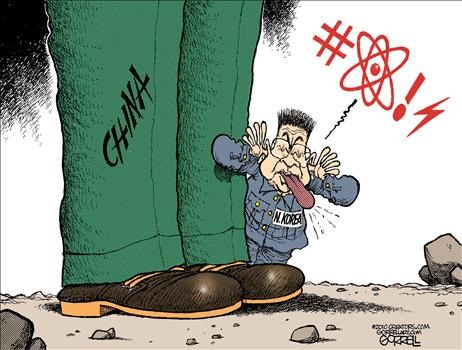
Kim Jong Un couldn’t give a damn about his people, but he must know that military rent-seeking along the lines of songun means North Korea is either permanently dependent on China, with all the constraints on sovereignty that entails, or is permanently on the verge of famine, with all the risk of civil unrest that entails. The only way out is some internal growth, which means limiting the military’s rapacious appetite for the state budget and agricultural production. Hence, bringing back the party. It’s the only possible institutional counterweight to prevent NK from becoming a de facto military oligarchy.
That’s may big-picture interpretation of the congress. Tell me why I am wrong in the comments. The full essay follows the jump.




 Robert E Kelly