Trump Post-Mortem: My 5 Take-Aways from Trump’s Surprise Victory

1129-thumb-240xauto

This is the English-language version of an article I just published with Newsweek Japan on Trump’s victory. I know there have been a million of these sorts of diagnostic analyses since he won, so this will be my only one. I will get back to East Asia politics next week.

I guess what worries me the most is how Trump toyed with proto-fascist themes, even if he himself doesn’t believe any of it. As I write in the main essay below: “He flirted heavily with race nationalism, illiberalism (attacking the media; winking to the alt-right), anti-democracy (refusal to recognize defeat; insisting the election system is ‘rigged’), and a cult of personality. That is awfully close to a fascist package.” Trump has now demonstrated that there is a constituency for hard-right strong man politics in the US. He ran as an openly misogynistic, racist, cultish candidate, and millions of Americans just didn’t care and voted for him anyway. This is the most important, and terrifying, revelation of the last 18 months. 

No, I am not in hysterics that America is about to collapse. We’ve survived a lot worse in 230 years. I am pretty sure we can survive the Trump administration. He and his family will be epically corrupt, but that won’t bring down the Constitution. There is far too much hyperventilating on the left right now.

But if Trump, or more likely Steven Bannon, can put his stamp on the GOP, the American political landscape will change forever. The Reaganite GOP is disappearing, and in its place will rise a National Front-like nationalist-populist party if Bannon has his way. The US has never seen a blood-and-soil European rightist party. We may look back on Trump as a right-wing turning point even greater than the Goldwater or Reagan presidential campaigns.

The full essay follows the jump.
Continue reading

The South Korean Presidential Scandal Unique for its Sheer Weirdness

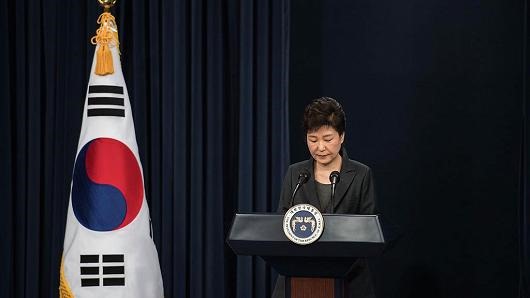
104083872-GettyImages-620941792.530x298

This post is a local re-post of an article I wrote for The Diplomat earlier this month on the the Korean presidential scandal.

Honestly, the whole thing is so bizarre that I am at a loss for words. And the more information comes out, the weird it becomes. The only analogy I can think of for the extraordinary influence Choi Soon-Sil had over Park Geun Hye is Rasputin. I know that seems pretty extreme, but the more you read about it, the more that’s what it sounds like. Choi may have influenced areas as wide as Park’s North Korea policy and her wardrobe. There are even rumors that Choi’s gigilo was on the gravy train too. Yes, really; it’s that weird.

Anyway, Park’s presidency is now over, even if she manages to hang onto the office. She will get nothing ever again from the legislature. She will retain some authority of foreign and defense policy, but even that will be hemmed in. If she does anything controversial, she’ll be hammered for it. So good thing THAAD went through before this all exploded.

Can’t say I have a lot of sympathy for PGH. She ruled as an aloof aristocrat, and she treated the Korean media terribly. I think that’s why there is so little sympathy out there. If she had remembered she was a democratic president instead of a monarch, she might have had a reservoir of public good will to draw on. Alas, a lot Koreans think this is her come-uppance.

My full treatment of the scandal comes after the jump.

Continue reading

Who I Voted for and Why, II: Clinton, bc Trump is Grossly Unqualified

Image result for cleon greek

Cleon, demagogue of Athens during the Peloponnesian War and the archetype of democratic demagogue feared by conservatives like Thucydides, Plato, and Aristotle.

The following essay is a re-print of an op-ed I just wrote for the Lowy Institute’s Interpreter blogline.

Conservatives who plan to vote for Trump might want to consider for a moment just how much Trump violates the basic principles capital-C Conservatism cherishes: order; paced, digestible change; caution/pragmatism;  stability and moderation in leadership; robust institutions. It is hard to imagine Burke, Buckley, Kirk, Disraeli, and other Conservatives reading Trump as anything other than the type of demagogue political philosophy has long warned can be spawned by democracies in tumult. Just go read Thucydides if you don’t believe me.

I say this one inclined to such Conservatism. I worked for the GOP on/off throughout the 1990s. I am hardly a liberal, even if I am an academic. But if you can’t see the demagogic potential in Trump – the likelihood that he’ll use the law to pursue his enemies or enrich his family; his demonization of out-groups; his belligerent, apocalyptic tone – then you just haven’t been paying attention. Trump just proved that there is a potential for something like authoritarian, maybe even fascist, politics in the US, and that should scare the hell out of all of us.

Continue reading

Who I Voted for & Why, I: Clinton, bc Trump is a Threat to US Democracy

1108-thumb-240xauto

In the interest of ‘pundit accountability,’ I will post my thoughts about the upcoming US presidential election this week. It is a pretty open-and-shut affair this year. As Foreign Policy put it in an unprecedented presidential endorsement: “A Donald Trump presidency is among the greatest threats facing America, and the Republican standard-bearer is the worst major-party candidate for the job in U.S. history.” Yup.

The following op-ed is the English language re-print of my anti-Trump essay for today’s issue of Newsweek Japan. I’d like to thank my editor at Newsweek for allowing me to wander out of my area of northeast Asia to write about the US election. Normally, I wouldn’t do this, but this is not a normal election. Donald Trump represents an unparalleled threat to US democracy. He must be defeated, and I hope this op-ed helps that outcome in however small a way.

Finally, I don’t write this as partisan hackery. I am a registered Republican and have been my whole life. I worked for a Republican congressman, voted against Bill Clinton twice, gave money to a GOP candidate as late as 2002. I even interned for John Boehner way back in college. My ballot this year was split as I voted Republican in some Ohio races. I suppose I could have voted for Rubio. But not Trump. My god. He’s a terror. He’s not really a Republican as we thought of them at all until recently; he’s more like Marine Le Pen than anyone we know from the tradition of American politics. You think Nixon’s abuse of power was bad, just wait till Trump gets his hands on the Justice Department. 

The essay is after the jump.

If Trumpian Duterte Really Bandwagons with China, It won’t End Well

1101-thumb-240xauto

This is the English-language version of a story I just wrote for Newsweek Japan on Philippine President Duterte’s strange new flirtation with China.

The big question I suppose is whether Duterte actually follows through. He has already shown himself to be a ‘trumpian’ nutball character, talking about killing millions of drug-dealers and users while praising Hitler. Previous associates have claimed him to be erratic and difficult. Sound familiar?

And just as I figure Trump would not follow through on his outlandish promises, like stealing Iraq’s oil, or retrenching from Asia, because it would be too hard – fighting all the interest groups in Washington, Congress, DoD, and so on – so I figure Duterte may just be spouting off. When he collides with the reality that no one in Asia trusts China, that his own people don’t want to give up Scarborough Shoal, this his own military is terrified of cutting links with the US to line up with China, I imagine his ‘pivot’ to China will be hard to pull off.

But let’s say he does take the Phils out of the US Asian alliance network. It wouldn’t surprise me at all if he comes to rue that decision. China has no allies; it has purely transactional relationships with places like N Korea, Pakistan, or Myanmar. Beijing would screw them over in a heartbeat if it was in its strategic interests. So I have little doubt that Beijing will come knocking again in the future, asking Manila to surrender all claims to the Spratlys too, or to ‘permit’ China to operate in its airspace. If you think a state run as a nasty authoritarian oligarchy at home, is suddenly going to be a liberal abroad, disappointment is coming.

The full essay follows the jump.

Continue reading

The THAAD Debate is now Wildly Overwrought and Exaggerated

clip_image002

This a local re-posting of an essay I just wrote this week for The National Interest here. That pic is mine, taken next to the US embassy in Seoul.

Basically, I’m amazed at how unhinged the THAAD (Terminal High Altitude Area Defense) missile defense debate has become in South Korea. The South Korea left is really digging in its heels and turning this into a huge issue. ‘Activists’ have shaven their head and and thrown eggs at officials supporting deployment. Opposition lawmakers even went to Beijing, which strongly opposes the deployment, to ‘apologize.’ The National Assembly, now with a leftist majority, wants a vote on THAAD, and this might even become a presidential election year.

I honestly don’t understand this at all. All THAAD does is raise South Korea’s missile defense roof by about 100 kms. That’s it. SK already has lower tier missile defense, and THAAD’s radar adds nothing that the US doesn’t already have (contrary to China’s assertions, which the Chinese know but won’t admit). Yet the South Korea left and China (cynically) are treating this like the apocalypse, as some massive re-orientation of the northeast Asian strategic landscape. It’s not.

This is not intended to seem partisan. I actually agree with the SK left on a lot of domestic issues, such as better regulation of the chaebol, press freedom, protests rights, the SK right’s creepy mccarthyism. But on North Korea, I just don’t get the SK left at all, and running off to China over THAAD looked like craven appeasement of a bully. Appalling flunkeyism.

Anyway, read after the jump about why THAAD only buys SK a little more time to figure out to response to NK missilization. It’s hardly a revolution.

US Election and Northeast Asia: Clinton’s Status Quo vs. the Great Orange Unknown

Image result for debate

This re-posts an essay I published today at the Lowy Institute. I tried to sketch a few possible futures for northeast Asia with these two candidates.

Basically it seems to me that Clinton is offering the status quo, which is intuitively attractive to Asian elites, while Trump offers who-knows-what. It is fairly established then that Asia’s democracies want Clinton to win, while its non-democracies want Trump, although honestly, I wonder if the Chinese might be having second thought given how much Trump seems to be itching for a trade war.

Trump is the interesting variable here, and his trade policies are the big unknown. Unraveling America’s alliances out here would be really hard. I doubt Trump has the stamina, focus, and attention to bureaucratic detail to tackle that. But on trade, he would enjoy a lot more sympathy, and he could really change (ie, wreak havoc) on US trade relations with Asia is he wants.

I’m just scratching the surface in this short essay. If you really want a deep dive, go to the Peterson Institute for International Economics’ blog on North Korea, which has provided a lot of such coverage in greater detail than I provide here. Go to the bottom of this post for extended commentary from Stephen Haggard and Marcus Noland.

My essay follow the jump.

Continue reading

Trump and Northeast Asian Nuclearization: Not as a Terrible an Idea as You’ve Heard

Image result for nuclear weapons northeast asiaThis is a re-post of something I wrote for the Lowy Institute earlier this month. The original is here.

So yes, Donald Trump is awful. He is a threat to American democracy, an vain narcissist, doesn’t know anything about nuclear weapons or national security, and so on. I know what you’re thinking, so I will say that I mailed-in my absentee ballot today, and I voted for Hillary Clinton.

That does not necessarily impugn all of his ideas however. And when he says that Japan and South Korea might pursue their own nuclear weapons, I have never understood the hysteria that greets this notion. That Trump says it, and that he might not really even understand what he’s saying, does not automatically mean it is wrong.

The debate over SK and Japanese nuclearization is a lot more variegated that we normally hear from mostly ‘liberal international order’ analysts who dominate Washington thinking on foreign policy. The essay below makes several claims, but the strongest to my mind is that a northeast Asian nuclear arms race is already underway; SK and Japan are just not participating in it – which does not mean it is not happening. It is true that they need not to some extent, because they are covered by American extended deterrence, which gives them ‘shadow nuclear weapons’ I suppose.

But the costs of them going nuclear are not that high anymore. Russia and North Korea have both substantially elevated the role of nuclear weapons in their grand strategies in the last two decades. China might start counter-building, but what is China doing for Japan or South Korea that it earns the privilege of them staying non-nuclear? Specifically, if China won’t rein in NK, the case for SK and Japanese nuclear restraint diminishes.

The full essay follows the jump.

Continue reading

Is Obama’s Second Term the Highlight of the Pivot to Asia?

0920-thumb-240xauto

The following is a re-up of an essay I published this week with Newsweek Japan. I was thinking about Obama’s attendance at both the G-20 and ASEAN this month. Those trips really do reflect his commitment to the pivot to Asia – probably as much out of conviction as out of a desire to escape the sink-hole of the Middle East.

But as readers of this website know, I am rather skeptical that the pivot actually grips the median American voter. Sure, elites love it, especially realists. It has all the trappings of geopolitical excitement think-tankers and IR types love. But regular Americans care way more about other regions first – when they even consider foreign policy, which the rarely do when they vote. Europe and increasingly Latin America will always have a powerful ethnic pull, because most Americans have roots there, while the Middle East bewitches the American evangelicals who are obsessed with Islam and Israel. China, even though it is vastly more important, isn’t actually as pressing to voters except as a trade issue.

This is not to say that I don’t support the pivot. I do. Very much. But if you look at Trump and Clinton’s foreign policy utterances, they basically cleave to the pre-pivot norm: the obsession with the Middle East, Islam, terrorism, while Asia is basically a trade-cheater. Hillary has turned against her own creation, TPP, while Trump sounds like he’d spark a trade-war with China, and maybe even Japan.

So if you’re an Asia hand, enjoy your moment in Obama’s sun. Next year, we’ll back to warring in the Middle East.

The full essay follows the jump.

Continue reading

Don’t Fear Trumpism too Much, East Asia – You’re Already Governed by It

A98C826C-499C-4C5C-9523-01EE6B656210_w987_r1_s

The following is a local re-up of an essay I wrote for The National Interest recently. That essay was edited. The original is below, and I think it is better.  

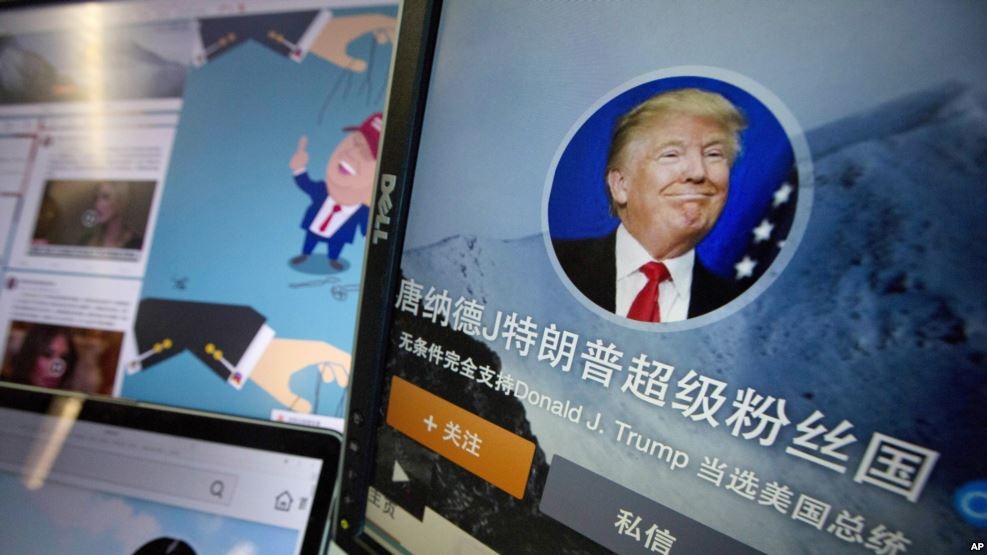
The text in the picture is Chinese and reads: “Donald J. Trump super fan nation, Full and unconditional support for Donald J. Trump to be elected U.S. president.”

That Trump has sympathizers out here makes sense – even though he bashes the region all the time – because he obviously got a lot of his political ideas from East Asia: Mercantilism, race nationalism, hostility to immigration, huge distrust of Islam, oligopolistic mega-corporations dominated by interlocking family and crony networks, soft authoritarianism, manipulating the state to benefit politically-connected insiders, golf – that’s Trumpism. But it’s also the de facto governing ideology of contemporary Sinic-Confucian East Asia.

I remained convinced that Trump learned about East Asia primarily through the ‘declinist’ school of the 1980s. The popularized version of that argument was Michael Crichton’s 1992 novel Rising Sun. Given that this is Trump we are talking about though, he probably just watched the movie instead. This is why he talks about Japan so much.

What just amazes me is that Trump simultaneously has a 35-year history attacking the East Asian (mostly Japanese) nationalist-developmentalist model while pretty much proposing to bring it to the United States now if he gets elected. Trump is basically acting like what he thinks Japanese businessmen acted like in 1985 – just with an extra thick layer of idiocy and know-nothingness on top . Why does no one else see this? So if you are Japanese, maybe you can be proud in a weird way (lol): Trump thinks he’s you, just turning the tables.

The full essay follows the jump.

Continue reading