My Expatriate Tax Day Horror Story: Expats Can’t E-File! Hah! – 2011 UPDATE

Internal-Revenue-Service--28477

Writing about Libya so much can be depressing (although if you haven’t read this yet, you really need to). So here is a bit of humor for a change. In 2.5 years of blooging, this re-posted entry below has proven to be one of my most read links. So on this tax day, when you are suffering from repeated robo-rejections from the hideous, dysfunctional, infuriating IRS e-submission system, I sympathize. The ‘error codes’ absolutely make my blood boil. They’re a perfect instance of eveything we hate in government – haughty, soulless, uninformative, disinterested, time-consuming – it’s like a federal, e-version of going to the DMV. Here is a brief 2011 update (I still couldn’t e-file myself):

a. I think I know how the IRS will fill the massive US budget hole – taxing foreign spouses! Hah! What a great gimmick! Yes, Uncle Sam is so rapacious and desperate for cash now that my wife, with no US address, income, citizenship, property, or assets of any kind, still needs to file a 1040. Can you imagine being a foreigner and reading the 1040, much less the guidebook for it, and understanding your obligations when you sign it? That’s just laughably surreal. Most Americans can’t make heads or tails of it. Good lord….Ridiculous.

b. Despite falling under the foreign earned income tax exclusion and having no US accounts, income, etc., I still couldn’t figure out the form tangle and had to fall back yet again on a tax-preparer, even though I am not supposed to even pay US taxes(!). Such a simple process failure just screams tax reform, which both Obama and Ryan thankfully seem to support. Paying $200 a third party in order to not pay the first party has ‘disintermediation’ wirtten all over it.

——–    REPOSTED FROM TAX DAY 2010  —————

Most people loathe the Internal Revenue Service (IRS) for the wrong reason. We all need to pay taxes. Taxes are, as the IRS’ building declares, the price of civilization. And that’s true. If you like roads, bridges, ports, military security…basically any public good you can think of, then we need the IRS.

The real reasons you should resent the IRS are actually reasons to loathe Congress. Recall that Congress makes the tax law. Those reasons are:

1. Philosophical: Democratic theory demands that laws be understandable and hence ‘follow-able’ by the general public. You know the speed limit, because you see the road signs and you passed a driving test that insures you can read the road signs. Even if you break minor laws – jay-walking, e.g. – you still know that you are cheating and that you are culpable. The problem with the IRS/tax code is that it is NOT understandable. In fact the tax code is so indecipherable that a staggering 89%  of Americans must hire a third party to do it for them. So the tax code fails a basic democracy test: can the general populace know and follow the law as ‘regular Joe’ citizens? Clearly not.

2. Pragmatic: The IRS is absolutely awful at the implementation of the tax code. The forms are long, abstruse, and unreadable. Look at the length of just the directions book for the basic 1040 form. 175 pages! Wth is gonna read all that lawyer-y, jargon-y c—? Well, no one of course. So 9 out of 10 of us pay a transaction fee to have someone else obey the law on our behalf.

Ah, but you say, ‘Kelly, you don’t live in the US, you have no fancy stock portfolio, and you have a low paying academic job (hah!), so doing your taxes can’t be that hard for you.’ *Sigh* You’d think so, but even expats must get a tax attorney. I don’t know one American in Korea who does his taxes himself. Imagine that: how awful is the tax code when I still can’t do my taxes myself, despite a foreign residence and no US income at all?!

Below is the cut-and-paste of the IRS’ soulless-robotic rejection of my effort at e-filing. Note ‘error codes’ – a nice faceless government term sure to enrage the tea-partiers even more – 0022 and 0016. Hah! How can I provide a US state and zip, when I don’t live in the US! LOL.

Think about that. The most obvious constituency to efile  – expatriates – can’t, because the IRS computer program refuses to accept foreign addresses on the 1040. And yes, even my tax attorney in the US couldn’t make it work. She had to email me the return, which I then had to snail-mail back to the IRS in the US. :))

On top of that, I could not use the EZ forms. I had to use the complete ones…

You gotta love the government. If you ran a business this way, you’d have been eliminated long ago.

Dear Free File Taxpayer: #2

The IRS has rejected your federal return. This means that your return has not been filed.

Here’s the reason for the rejection:

Error Code 0010: This is a general reject condition relating to the data that is in the Form and Field indicated.

Error Code 0022: The state abbreviation is invalid. The state abbreviation must meet these conditions to be valid: the state abbreviation must be consistent with the standard state abbreviations issued by the Post Office; and the state abbreviation cannot be blank, it must be entered.

Error Code 0016: The ZIP code is invalid. The ZIP code must meet these conditions to be valid: must be within the valid range for that state; cannot end with ’00’ with the exception of 20500 (the White House ZIP code); must be in this format ‘nnnnn-nnnn’ or ‘nnnnn’; and the ZIP code cannot be blank, it must be entered.

Error Code 0457: On Form 2555, the total of max. housing and foreign earned income exclusions (Line 43) from all Forms 2555 must equal housing/foreign earned income exclusion amount on the Other Income Statement (Line 21) multiplied by negative 1 (x-1).

Error Code 0463: On Form 2555 or 2555EZ, Taxpayer foreign street address and city must be completed. Country Code must have an entry with a country code.

Next steps:

Sign into your Free File return at www.freefilefillableforms.com/FFA/FreeFileForms.htm to fix this problem and e-file again, or print the return to file by mail.

You can get more information about handling rejected returns in the FAQs found at https://www.freefilefillableforms.com/FFA/FAQ.htm)

To track your return status, go to https://www.freefilefillableforms.com/FFA/CheckStatus.htm

This email was generated from an automatic system, which is not monitored for responses.

More on the Benghazi Massacre Counterfactual; Syria; plus some Media


So this is a bits and pieces post.

1. Benghazi:

In the last few weeks, the issue of whether a massacre would have happened in Benghazi has a emerged as a major empirical divide between those who counseled intervention in Libya and those who did not. My own sense is that a massacre was a likely possibility, so I reluctantly supported intervention. My earlier thoughts on this are here, here, and here. Here is a very good review of the reasons, and here are Walt’s thoughts that the purported massacre was a bogus rationale.

The last link is Walt’s latest rejoinder. I still am not convinced. As I argued on Sunday, it is a mistake to suggest that Gaddafi’s behavior in the other towns is an indicator – the bloodbath will come after he wins, not while the war is raging (it is a diversion of critical resources). Also, I think Walt’s figure on Benghazi’s population (650k) is low. That city is now swollen with battlefield refugees, and by voting with their feet to go to Benghazi, not Tripoli, they have signaled their sympathy for the rebels. It is hardly a stretch to suggest that many of these people would be targeted for revenge killings. Finally, 650k is still quite a sizeable number. Most of Libya’s cities and towns are a lot smaller.

Walt does make the important point that we must think about just how many people must die or be threatened to meet an R2P threshold (dicsussed below for the Syrian case too). I admit I don’t really know the right answer to that one; that is an awfully uncomfortable moral proposition – albeit one that R2P advocates must answer somehow. My own sense is that Benghazi would not have been Rwanda, but Srebrenica. So Walt is probably right that there would not have been 100k dead and that such numbers were scare tactics. Maybe figures like that were used by human rights groups to morally bully western decision-makers into intervention. But still, Srebrenica was pretty god-awful. It’s very hard to figure this one out…

2. Syria:

Besides this blog, I write for another service now running a scenario on Arab Spring in Syria. As with my commenters on my Libya posts here, I have been pressed about applying the Libyan logic to the brewing Syrian mess. Here are my thoughts:

Without a UN mandate and local Arab endorsement (ideally from the Arab League) – as was the case in Libya – a Libyan-style western intervention option would be widely viewed as re-run of the Iraq War. The Libyan intervention decision was already fraught enough – both Germany and Turkey in NATO opposed it. Only the growing evidence of a looming bloodbath in Benghazi forced the West’s hand in Libya. To run that scenario again, and so soon, would likely split NATO yet again (as it was over Iraq 2 and Libya), and the Chinese and Russians, and the other BRICS too, would howl in protest.The only possible way an unsought NATO intervention might occur is if Israel were seriously considering intervening, which might spark a local war with Iran involved as well. NATO would then preempt that. Beyond that, an unrequested NATO intervention would alienate the planet, split NATO , and dump yet another Arab/Mulsim nation-building problem on the hands of the West, complete with Iranian meddling and all the disastrous, thoroughly foreseeable consequences that would flow from all that.

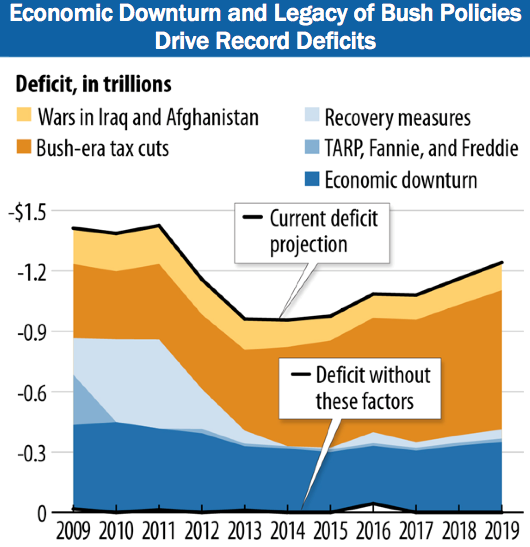
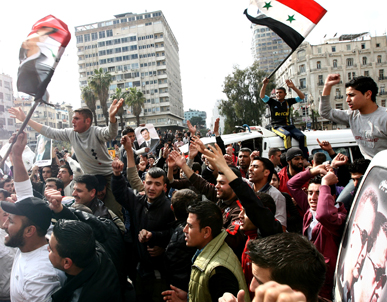
Abstaining from taking action, and waiting for an international call for action is almost certainly the right way to proceed, at this point. Everyone knows the US/West is dramatically overextended now, with huge budget deficits and debt, with a ‘neo-imperial’ reputation (rightly or wrongly) tarnished by the Iraq War. This means intervention can only be a last ditch measure, as it was in Benghazi to stop what look liked an impending massacre akin to Srebrenica. If the current Assad crackdown devolves into a major civil conflict in which thousands face annihilation, as they did in the 1982 Hama massacre, non-intervention will have to be re-evaluated. But the ‘responsbility to protect’ (R2P) threshold must stay somewhat high (Walt’s point above), otherwise the West could get chain-ganged into multiple human rights intervnetions that will increasingly look to Arab audiences like neo-imperialism. Libya was different because the Arab League, and UN, provided local moral cover, as did the clear warning alarms from human rights NGOs about a possible slaughter. I doubt that will happen again, and the Libyan intervention also is not going too well. So unless genuinely brutal suppression is verifiably imminent, intervention carries huge risk to be avoided. As I have argued before, the West can’t do everything, which leaves one in the uncomfortable position of helping the Libyans more than the Syrians, because the Libyans moved first. That feels terribly inadequate, I agree. Nothing about this Arab Spring is getting any easier…

3. Some Media:

A shortened, more professionalized version of my essay on the comparison of German and Korean unifcation was posted by the East Asia Forum here. The East Asia Forum is a good site on Asia-Pacific politics and economics; like Foreign Policy, it mixes scholarship and policy thinking into short, digestible presentations. I wholeheartedly recommend the site to readers of this blog.

Also, I spoke on a local radio station on Korea-Japan relations – what a tangle. Please go here if you are interested. Scroll down the page and click on the big green button with Korean lettering. My comments begin around 16:15.

Can We Please Stop Denying that We Prevented a Massacre in Benghazi?


The backlash to the Libyan intervention has begun, and to be sure, it is a controversial mess. My own support was lukewarm; like the president, I felt my hand was forced by the likelihood that Qaddafi would butcher thousands of people had he taken Benghazi two weeks ago. I feel like the president gave a good-enough rationale for the intervention, and western governments are trying hard to avoid getting pulled into an Iraq-style nation-building mess. I realize that ‘good-enough’ feels like an awful cop-out when it comes to war, but the world is pretty d— messy, and the acrimony of the debate tells me that no one really knows what we should do (let’s all at least admit that). Applying Clausewitzian-Powell Doctrine benchmarks – overwhelming force for a quick victory and a quick, clear exit – fits poorly on the emerging tangle of developing world crises where the issue is not a huge, militarized threat to western security (the Nazis or USSR), but a mix of mass humanitarian slaughter (Rwanda), terrorism (Afghanistan), piracy (Somalia), ethnic cleansing (Balkans), criminal takeovers (parts of Mexico and Columbia), etc. The problem, as Kaplan notes, is the semi-anarchic level of governance in much of the developing world, a problem Barnett tagged years ago as the ‘integrating the gap.’ As I argued last week, imposing Clausewitzian standards on intervention in such conflicts means that we will, then, almost never intervene – as we did not in Rwanda or Darfur.

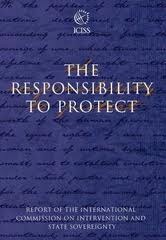
This strikes me as an analytically clear benchmark for US intervention or not; often tagged as ‘realism,’ it is best associated in international relations theory with Walt and Layne. The problem is that, as critics of realism have argued since Mencian criticisms of Sun Tzu more than two millennia ago, it feels so very cold and heartless. Realists have fought this charge for years. In the end, not intervening in Kosovo, Darfur, Bosnia, Rwanda, Libya, etc. means that many people may die (or , in fact, have died), and this pulls on the heartstrings of anyone who thinks that the world should be a less brutal place and that if help is possible, there is a moral case to, if not always intervene, at least debate it and possibly do something. All this is captured in the debate over the responsibility to protect (R2P) that has exploded over the Libyan war.

It seems to me therefore that non-interventionists must defend a position that includes mass butchery as a likely outcome, yet still argue that we should not go in. For obvious reasons, no one really wants to say that in print. In fact the only serious figure I know of to unequivocally state, after the fact, that we still should not have gone into Rwanda, despite all the carnage, is John Bolton. So it strikes me that the current effort to downplay the likelihood of a massacre in Benghazi is driven more by the desire of non-interventionists to avoid the moral posture of having to admit that thousands of bodies, rapes, dead children, torture would nonetheless be ‘ok;’ as Stewart says in the clip on above Bolton, “When someone says would you have stopped the genocide, just say yes, just say yes!” I would still like to hear that case made more vigorously from the non-interventionists; it is analytically required to support the non-interventionist position, and to duck it by disputing the possibility is an analytical and moral dodge.

So consider the following on Benghazi, which I believe forces this issue:

 1. Qaddafi is a known brutal tyrant, with similarly brutal ‘buddies’ like Robert Mugabe (Zimbabwe), (now deceased) Hafez al Assad (Syria), and Omar el Bashir (Sudan) – all guilty of their own mass slaughters. It seems likely that moving in such circles, which comes at a high price of international respectability, means you don’t care too much about how many of your people will hang. It’s par for the course for these guys. I don’t think anyone disputes the reasonable possibility that Qaddafi would do what his buddy tyrants have also done in similar situations.

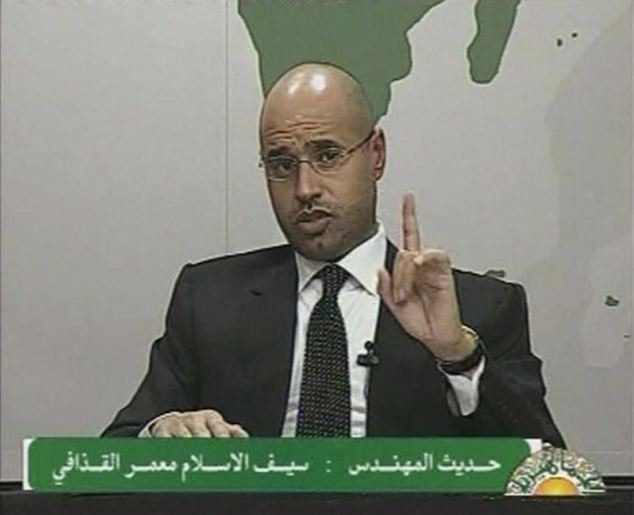
2. He and his family went on TV and said they intended a slaughter. His son Saif said there would be ‘rivers of blood in the streets.’ Qaddafi spoke of hunting the rebels ‘like rats, alley by alley.’ The Qaddafis’ various media spokesmen talked in similarly harsh, if less openly explosive ways too. To be sure, they may have been lying. Leaders lie all the time. Non-interventionists argue that this sort of talk was meant to deter other Libyans from joining the rebellion. Perhaps, but the rebellion had already started when Qaddafi started these terrifying ravings. As Pape notes, something like 75% of the country had already risen up against him, so there really wasn’t anyone left to deter. The whole country had already lined up on one side or the other.

Mead calls Qaddafi the ‘Great Loon,’ so maybe he is just too bonkers to know what he is saying. But Post says Qaddafi is more rational than we think. If so, then Gaddafi surely knew that talking like that would attract global attention immediately, and certainly Saif, who lived and was educated extensively in the West (complete with a PhD from the London School of Economics), knew that ‘rivers of blood’ would dramatically raise the likelihood of a western intervention. Despite these obvious ‘audience costs’ in the West (the ‘CNN effect’), they said this stuff anyway. That tells me they meant it.

3. I don’t buy the idea that because Qaddafi forces didn’t engage in mass slaughters in other re-captured cities, that suggests they would not have done so in Benghazi. First, the cities between Tripoli and Beghazi aren’t really ‘cities’ at all. There are only about 6 million people in Libya total, with half of them in just Benghazi and Tripoli. The rest of Libya’s ‘cities’ are more like towns, with Misrata, e.g., having only around 300 k. Further, the civil war has emptied much of the middle coastal strip between Tripoli and Benghazi. Those with rebel sympathies have been moving east for weeks. That means Benghazi is swollen with regime opponents, while the coastal middle towns are emptying. In short, the regime’s greatest opponents are concentrated in Libya’s second city, so the Qaddafi forces’ behavior in small, almost empty places like Brega (15.k) or Ras Lanuf (12.5 k) don’t indicate well what Gaddafi’s behavior in a large, rebel-swollen metropolis like Benghazi would have been.

Second, the towns aren’t really ‘captured.’ The civil war has see-sawed back and forth regularly for weeks now. I recall hearing one CCN reporter saying Ajdabiya has exchanged hand 6 times in as many weeks. The point being, that even as Qaddafi retakes places, his people don’t really have time to ‘hunt them like rats.’ Even mass slaughters take some planning, and his fighters are better needed to keep pushing east. Again, the critical difference would have been the fall of Benghazi. Because that is the ‘capital’ of the resistance, its fall would have likely ended the revolt. Qaddafi would then have the time and political order necessary to begin the re-consolidation of his position. That would be the time to launch his own version of the Hama massacre – after he has won and taken the rebel base.

For another view on why massacre was likley and how that forced action, read this excellent piece.

I may be wrong, and I open to counter-arguments. And of course, we will never know. This is counterfactual reasoning at its most controversial. But the likelihood of a massacre seemed pretty high, at least reasonably high enough to cross the R2P threshold. We stood aside during some truly horrifying atrocities in Rwanda, Bosnia, and Darfur, and our sense of shame plays a major role in this intervention. Non-interventionists need to address that straight-on, and not duck it by disputing the counterfactual itself. It would take extraordinary (and, honestly, rather disturbing) sang-froid to argue that doing nothing in the midst of butchery is the right thing to do.

Turkey’s ‘neo-Ottoman’ Rise (3): Why I am Wrong…

turkish flag

This is the continuation of a Wikistrat (where I consult a bit) game scenario on Turkey’s economic and possibly military rise. Readers are counseled to start with parts one and two.

The following are responses to criticism, mostly that I didn’t flesh out the reasons why Turkey is likely to hold broadly western course:

1. Turkey’s rise unbalances the region more than I admit, and I don’t muster enough evidence.

My sense is that Turkey’s growth is pretty good, but I don’t see any particular reason that it should be labeled stratospheric or ‘neo-Ottoman’ or something like that. By the standards of a dysfunctional region – Greece, Iran, Syria, Egypt – it is great. But compared to the old and new cores, or even other middle powers, it is a middle power. Even compared to tiny Israel, Turkey is probably a generation behind in state-development, the translation of economic power into military capability, functional political parties, trustworthy courts, and the many other attributes of thick, cohesive, functional state-ness. The CIA lists Turkey’s growth in 2008 at 0.7%; 2009 at (negative) -4.7%; and 2010 at 7.3%. The IMF’s numbers are 2010: 7.8%; 2011: 3.6%. I don’t see that as revolutionary, nor justifying big rhetoric. However, if the argument is more limited, that Turkey will play a greater role in the Middle East and central Asia, I agree. The big losers will be Greece (further unbalanced competition), Israel (yet another headache) and Egypt and Iran (lost prestige as potential regional leaders).

Turkey faces tough structural constraints that do not really mark it out from other second-world risers. No talks about major Brazilian or South African shockwaves, so why is Turkey’s fairly standard modernization-developmentalist growth arc that much different? I am open-minded about this. My thinking is hardly set. I guess I am just not convinced yet.

Finally, my sense is that the tectonic plates of international politics move terribly slowly. Hence I note the stability of Turkey’s foreign policy. Really deep shifts take a long time, like East Asia’s rise, so I am not convinced that a decade or so of choppy albeit healthy growth, coupled pushy, semi-Islamist rhetoric is enough.

2. “The demographic growth in Turkey is all in populations less likely to be EU/West friendly, i.e, the eastern, more rural hinterlands. What’s Turkey’s motivation?”

I think the motivation is primarily economic. A significant turn from the West would reduce critical inward foreign direct investment flows and tourism dollars, and damage links that military and business cherish (easier visa rules; access to Wall Street, western universities, and the international financial institutions; etc.). Turkish elites are aware of this. Like most late, second world developers, Turkey needs continued access to old (West) & new (East Asia) Core dollars, markets, and technologies. This is why I originally said ‘neo-Ottoman’ rhetoric might be more justified in 20 years. For a comparison, look at Indonesia or Malaysia. They too have populations that rankle at Western dominance, want more international stature and maneuvering room, and have populist, entrepreneurial, Islamist politicians. But these tendencies have been held in check by the huge economic incentive of continuing, decent relations with OECD states. I see this in Turkey too – hence my list of institutions and relationships Turkey has retained.

Populism may work for electoral reasons, but does Turkey want to become Venezuela? Perhaps the the AKP (Justice and Welfare Party) really wants to push in this direction, but resistance from the revenue-generating (western and westernized) parts of the country would be strong. This is the counter to the eastern demographic growth you mention. Perhaps this is why Huntington referred to Turkey years ago as a ‘torn’ country. I did not think so much about the demographic evolution though. Point taken.

A second motive is national security. If Turkey drifts from the West, to whom will it go – Iran and Syria? If so, it faces balancing and isolation by some combination of Israel, the US and the EU, and possible exclusion from NATO and the WTO. I suppose Russia is a possible patron/ally/friend, but what does Russia gain? The reset is important for Russia, as well as WTO entry, and, most importantly, being perceived as a great power by the West. Siding with a semi-islamized, somewhat unpredictable ‘new Turkey’ might be useful to poke the West in the eye – certainly a Putin proclivity – but how much does it advance Russia’s great power pretension? Not much I think, but I admit this question requires more research. Next, Turkey might reach to Central Asia – hence the neo-Ottoman moniker I think. But again, how much is there to gain? Those regimes are terribly poor, with weak state apparatuses, and repressions that have alienated investors. The cost-benefit analysis of the ‘stans vs the core is quite one-sided IMO.

The best chances for a real turn would be some kind of alignment with the Shanghai Cooperation Organization (SCO) against the West. This would effectively split the new core, between China and the Asian democratic periphery. In so far as China has propped up some nasty regimes for the last decade or so, a genuinely independent Turkish line that alienated the old core could still find some succor with Sino-Russian assistance. This SCO strategy strikes me as far more viable than reaching out to local ME nasties like Iran or Syria. I will admit that I haven’t thought through this likelihood, but the SCO doesn’t seem so much like a club or alliance, but just a gang united by ‘anti-hegmonism.’ I am not sure if it represents a coherent enough alternative. But this too requires more scenario thinking.

Finally, I would say that my argument flows directly from Barnett’s general core-gap analysis. I believe it fits rather well actually. Late developers’ future is with the core. The gap represents what they are leaving behind, and what they so very often, so desperately don’t want to be perceived as in the eyes of global public opinion – backward, third-world, irrelevant. Maintaining those newly emergent links to the core – its money, trade, professionalism, geopolitical clout, and general seriousness – weighs heavily in the cost-benefit analysis and motivates important domestic actors – youth, business, military – who will resist populism.

BONUS: Here is the Wall Street Journal on ‘neo-Ottomanism,’ including Erdogan’s appalling refusal to support a no fly-zone over Libya.

Turkey’s ‘neo-Ottoman’ Rise (2): Late Developers Need Inward FDI

hagia_sophia_1

This is the continuation of a game scenario on Turkey’s economic and possibly military rise. Readers are counseled to start with part one. Part three will be in three days. In part one, I argued that Turkey will not pursue a populist-neo-Ottoman course in the Middle East, despite the recent trouble from its islamic leaning leadership:

Global Implications of a Turkish Climb-down from neo-Ottomanism


The EU and NATO will breathe a sigh of relief they don’t have to countenance yet another Muslim-ME headache. Most importantly Turkey’s return to the fold will reduce the explosion of criticism it had recently faced from American supporters of Israel. China will ignore the whole thing and move on; no one else in the new core (East Asia’s wealthy states) either will pay much attention, except for a few business groups. Triumphalist western analysts and neo-cons will over-read this, albeit with some justification, as a part of the general democratization trend in the post-Arab Spring ME.

Opportunities


The biggest opportunity will be the restoration of market confidence in Turkey by foreign investors. Risk analyses of Turkey will reduce the downside political risks. Indeed, this the single biggest reason – the likely reason IMO – for a Turkish return to the fold. A populist-islamist turn will incentive a flight to quality out of Turkey, reducing the inward foreign direct investment (IFDI) flows and tourism dollars it so desperately needs to continue its rise. In this way, Turkey is caught. Its population may wish to pursue a more independent, perhaps even Islamist course, but the costs of access to (especially old, western) Core money is large. As Iran and Venezuela are showing – and conversely Indonesia and Malaysia – one can’t be too populist and anti-western, while keeping FDI. You can’t have both (especially without oil to sell). These are pretty incompatible, would push Turkey back toward the IMF and World Bank for financing, and generally slow its rise.

Probability Turkey will not Become an Ottoman/Islamic version of Venezuela

High. 

Turkey is a middle power. For all the ‘second world rising’ hype, Turkey has the same problems and needs of other similar states – South Africa, Brazil, Indonesia, etc. It faces major corruption and infrastructure problems at home. It has few if any globally recognizable brands. It has a military whose relationship to power is cryptic. It has only a mildly competitive workforce. It won’t continue to grow without continuing inward FDI flows. It must trade, and this requires stability and professionalism. It is surrounded by other middle powers whose red flags will go up immediately at expressions like ‘neo-Ottoman’ or ‘Islamic Republic.’ It has a history of imperialism (the old Empire) and atrocity-denial (the Armenians) that will make others wary and push them to balance should recklessness prevail. Arabs won’t bandwagon to aggressive Turkish power, and its geographic encirclement makes counter-balancing by the neighborhood easy. It has no serious allies outside the West. Its burgeoning middle class is nervous about Islamic politics. Iran and Syria are hardly geopolitical winners representing the future in a world of globalization, iPads, dollars, and East Asia. Ottoman-Islamic bluster can’t overcome these serious structural constraints on its rise.

Given all this, it is fairly unlikely to go its own way. It simply doesn’t have the strength to genuinely break with the old (West) or new (East Asia) cores by openly tilting towards Islamism, Iran, or some other other Middle Eastern ‘special path.’ It may sympathize with the Palestinians and be miffed at US and EU behavior, but those are fairly common traits in the Muslim world. In order to keep the critical IFDI and tourism flowing, to keep the relationships alive that allow its students, military, and businesses to interact with the rest of the world, and to prevent open balancing by Israel, the EU, or the US against it, Turkey won’t wander far. If China, vastly more powerful and influential, won’t balance the wealth and military capability of the democracies, then an independent Turkish line would face yet greater hurdles.

Talk is cheap, and mild hedging is easy. Praising Islam and damning Israel are easy rhetorical strategies for elites seeking reelection, especially since Turkey can’t do much. Talking to Iran raises its local prestige a bit, sure. But so far Turkey had done nothing meaningful to chart an independent course: it’s still in the WTO, hasn’t left NATO, cooperated somewhat on Iraq, hasn’t instituted capital controls or other big mercantilist policy, hasn’t withdrawn its application for EU membership, hasn’t built a formal alliance with Iran or Syria, etc.

Its rise complicates life for the US and the EU a little in the Middle East, but not much. Turkish unhappiness is not sui generis; it is more an outcome of typical regional resentment over the Iraq War and US support for Israel. This simulation‘s worst fears (another scenario pathway is entitled “Shift Eastward”)will be serious in 20 years should Turkey continue to grow and the West continue to slip. But for now, ‘neo-Ottoman’ is pretention and hubris, not reality.

Obama’s Libya Speech was Good – UPDATED with Media

Well done – reasonably clear and coherent, limited, nonimperial


Media Update: I spoke on a local radio show on the Libya intervention. Please go here to listen; the media player half-way down the page  (with the green label in Korean) plays back the interview. My comments begin around 14:00.


Call me a shill, but I am really warming up to Obama, at least on foreign policy most of the time. (He’s not yet serious about the debt though – but the neither is the GOP.) I thought this speech was an excellent example of a toned, measured foreign policy that fits US constraints (the huge debt, 2 other wars that no one likes, the rise of the rest) with US values (preventing massacres, trying to help others to democracy) and tries to embrace world opinion rather than strut. So well done.


1. There were no rousing calls to arms, American dominance, American exceptionalism, etc. This is probably the part the US right hated. They can’t forgive Obama for refusing to call America exceptional, and once again he showed yesterday that he really does see the US as part of a community of states, not someone standing above it as the most awesome place in world history with special privileges to tell others what to do. I don’t know why this angers Americans so much. Can’t we see that all this does is humiliate others and convince them that we are jerks? All you need to do is travel a little outside the US to see how much non-Americans find the discourse of American amazingness grating, insulting, pointlessly antagonizing. I see this all the time teaching Asians – who have their own long history they think makes them pretty great and unique too. What is wrong with talking to other as if we are normal and like them? Humility is a value too.

The US is just 3% of the world’s population. Lots of other countries – Iran, China, Russia, France, 19th C Britain and Germany – believe they are exceptional too. In an age of nationalism this is to be expected, but what is the actual value to all that, other encouraging people’s worst, most parochial chauvinistic attitudes about the country in which the were randomly born? This doesn’t mean the US can’t lead; I certainly agree that US dominance is reasonably benign (thank W that we even have to argue for that point though now). And the world is generally a better place for US leadership. But even the US makes mistakes – including really big ones like Iraq 2 or Dresden. So not posturing globally as the most awesome place, somehow entitled to special rules to intervene in other peoples business, strikes me as mature, adult, serious. As I have said before, if we want other to follow American leadership, we can’t do that by embarrassing or humiliating them that somehow America is uniquely positioned to overawe the planet. You don’t need to be a psychologist to know that will drive other people crazy. Besides, we don’t even have the resources or rep to talk like that anymore anyway. Bush and the Iraq told the whole world that American exceptionalism is just arrogance and hubris. It is in America’s interest to adjust to that and try follow the rules.

2. The speech explicitly defended saving countless lives in Benghazi. This was always the most important reason to go in – to prevent another Srebrenica. I can’t understand why the president and other western leaders aren’t getting HUGE credit for this. Once again, the West has prevented a mass slaughter (also in Bosnia and Kosovo – all Muslim populations it is worth noting too). Yes, we didn’t stop other slaughters, and we can’t do everything, but we did this, and it was good and right. This is real Western or American exceptionalism – we saved defenseless people from a madman. China wouldn’t have done that. I can think of few US uses of power of which Americans should be more proud. When people claim the US is a nasty, expansionist, torturing empire, we have counter-evidence now too. And the Germans should be downright embarrassed they abstained. I still have not read any convincing anti-intervention arguments on this issue.

3. Obama roughly fit US limited power to global expectations and rules. You hardly need to be a historian to know that US power is on the ropes at the moment. US debt is spinning out of control, the recession is brutal, the rise of the rest, especially China, limits our room to move. In such an environment, unilateralism’s costs go up, and Obama was right to state that very bluntly. Instead of Bush-style ‘mission accomplished’ machoismo, he said we are doing the best we can in a tough position, and that our reluctant hand was forced by the likelihood of a bloodbath. Isn’t that exactly the kind of leadership everyone wanted after 10 years of Bush and war and national exhaustion and division? How many people, in the US too, called for that for year as Iraq burned? This is why I don’t understand all the carping about Obama dithering or leading us into a quagmire. Doing the best we can in tough circumstances is a pretty good compromise response to a very hard issue. That is enough, at least for now, no?

4. A lot of the criticism strikes me as mean-spirited or trite. I like Krauthammer most of the time, but I thought calling this the ‘professor’s war,’ was just nasty – and not just because I am a professor supporting it (a fair riposte I suppose). I presume that means that trying to follow the UN rules, trying to go through international organizations like NATO, trying to build real coalitions of the willing, is some namby-bamby girlie man response to a war. Real men just kick a— with the 82nd Airborne, I suppose. But didn’t we learn from Bush that going from the gut is super-risky? How about the measured use of force that displays some contemplation of risk and reward? And isn’t it nice that we have some real allies this time around. Sure, they won’t do a lot of the heavy lifting, but compare Iraq 1 and 2. The first time through, the coalition of Bush 41 helped limit the cost and fallout of anti-Americanism. Lots of thinking and effort went into that. Then consider the course of Iraq 2.

Next, a lot of  the talk about quagmires and exit strategies seems awfully overheated to me this early in the game. As Kaplan notes, relax, we are just in the first week of this. It’s not Vietnam all over again, and the president made a strong commitment to avoid ground troops. So let’s cut him some slack to deal with a very hard issue. Conflict are never, ever clean – even the Iraq 1 blitzkrieg we all remember so fondly lead to a nasty semi-civil war in Iraq.

Finally, what’s up with this ridiculous ‘tough girls’ critique? How thoroughly irrelevant to anything, so just let Sjoberg walk you through how crude and practically insulting that is to the serious female advisors around Obama.

This flippancy, plus the general failure of realists to admit that Obama just saved, perhaps, 10,000 people, tells me that Obama more or less got it right. The best critique I have read of the ‘Obama Doctrine’ is here. The most serious problem going foward for any Obama Doctrine is the consistency problem. As one of my commenters has noted over the last few weeks, doesn’t the responsbility to protect (R2P) mean we should go to Ivory Coast next?

Turkey’s ‘Neo-Ottoman’ Rise? (1): Turkey’s Drift from the West

Wikistrat

Part 2 is here, and Part 3 will come shortly.


Regular readers will know that I participate as a partner-analyst with the geopolitical consulting firm Wikistrat. This month they rolled out a pretty cool scenario on Turkey’s rise, and what it means for the region. The particular focus is whether or not Turkey is pursuing an independent line from the West in the Middle East especially. It has, partially, bandwagoned with Iran and Syria in the last few years. It broke publicly and sharply with Israel after the flotilla debacle. The current ruling party (Justice and Development Party; AKP) is formally islamist (although not too much in practice). There is concern in the scenario that Turkey might pursue an populist, semi-islamist course, possibly even a neo-Ottoman posture toward the Middle East. Obviously this would create huge headaches for the West, especially Greece and Israel. In the last few weeks, Turkey has fought the NATO-imposition of the no fly zone over Libya.

The scenario set-up is worth a look; Wikistrat’s idea is to build a sort of Wikipedia of analysts all contributing to pages of game scenarios and editing each other. (If you think you can hack it, and you have some decent credentials, contact them. Good analysts are always in demand.) I didn’t quite get it at first, but now I like it more and more. It is a nifty collaborative idea but with way better quality than Wikipedia or wiki-Avatar. (Hah! yes, wiki-Avatar really exists; if you don’t know why Avatar is awful, read this.) Wikistrat follows the ‘Web 2.0’ idea, pioneered by Wikipedia, that more eyes looking at the same ideas/writing will find problems and new approaches. I find this clever and rich. But it runs totally counter to the closed scholarship/peer review model of a sole author, perhaps emailing colleagues before submitting a paper to a journal, where three more reviewers at most look at it. Wikistrat goes the opposite way and throws open your input to all and sundry. In passing, I think this will be a big challenge to traditional closed peer review in the future. And yes, I do get a small stipend if you sign up for the service through my website, but no I haven’t made a cent yet, so I am not trying to be a shill here. I genuinely think the analysis keeps getting better and better, despite my initial skepticism about the ‘wiki’ model – it’s so different than what I do normally in my writing. Anyway, judge for yourself, and note also their awesome list of topics to come: global air power projection, global sea power projection, water conflict, US missile defense – nice, especially for all you defense wonks out there.

Anyway, I just don’t buy it that Turkey is really going to wander far into some kind of islamist-populist mode a la Chavez or Ahmadinejad. I argued that eventually Turkey would return to the NATO-EU-US fold because the cost-benefit analysis is stacked toward it. But I took some serious criticism for arguing for continuity, so, following the wiki-bleg model, commenters here should give me some good ideas to help me save my reputation. Here is the first part of my write-up, starting from the scenario baseline of a ‘neo-Ottomanization’ of the Turkish government. The titles follow the Wikistrat layout.


Scenario Title: Continued Rise and “Shift back Westward”


Summary: Turkey’s rise continues as it shifts away from Iran, strengthening relations with US, Europe and Israel.


Scenario Outline: From Neo-Ottoman Back to Normality


The AKP overreaches by openly provoking the West or EU, perhaps on the Armenian massacre debate, or Israel’s behavior in the occupied territories. Vocal domestic opposition emerges – particularly from entrenched elite interests in business and the military, coupled with the educated, westernized Facebook generation watching Arab Spring on their laptops. Facing rising domestic anxiety over an increasingly overt break with the West, Prime Minister Erdogan goes for broke, publicly arguing that Turkey is a ME power whose ‘destiny’ lies with fellow Muslims and others pursuing ‘social justice’ in the region. Trips to Syria, Iran, Saudi Arabia, Central Asia, Russia, and China follow in the next years. Western leaders and westernized Turkish elements push back in the media; Western fora like the Community of Democracies and the European Parliament wonder out loud about Turkey’s commitment to democracy and human rights. US congressmen start complaining on Fox News. Turkey’s EU membership application is discreetly frozen. NATO becomes stand-offish. The IMF and World Bank start hedging Turkish loan proposals. Turkish stocks start sliding, as does the lira. Polarization akin to the red state-blue state in Turkey emerges, and the AKP loses the following election (possibly with hints of military blackmail). The succeeding government – corrupt, unpopular, unstable – mouths a mixture moderation and populist/semi-islamist rhetoric publicly for continuity’s sake, but bureaucratically tracks back toward western institutions.


Regional Implications


My scenario returns the region to the status quo ante (before the open flap with Israel particularly). The Turko-Israel relationship though will never be as close again. Iran and Syria will push back, deploying standard tropes of anti-Americanism and Muslim toadying to the West, but no listens much to that sort of boilerplate anymore. The real regional costs to Turkey will come from Al Jazeera, which will opine mercilessly on this for months, probably saying Turkey caved to Israel. Greece will be unhappy that its implicit competition has gotten worse again. The Cyprus stalemate will become a little easier. Arabs states, absorbed by Arab Spring and traditionally hesitant toward Turkish power, will say nothing much.

A Defense of Obama’s Limited Commitment to the Libyan Campaign

libyawar6

The debate over the extent of US involvement in Libya is heating up, and a predictable cluster of analysts are claiming that we a backing into serious endeavor with no clear strategy, with confused ethics, raising process above substance, etc. I say predictable, because it looks increasingly like the ‘usual suspects‘ of liberal internationalist hawks and neo-cons who helped gin up the war on terror (GWoT) that by almost any benchmark has gone pretty badly astray. The gist of seems to be that Obama is a ditherer so we are drifting through this. Republicans of course will hammer Obama for this.

This strikes me as somewhat unfair (even though all the links above are worth your time and most of the points are fair). So here is a case for the limited, we’re-not-quite-sure-what-we-are-doing, we-hope-the-allies-and-Arabs-will-do-more intervention we just started. (For an R2P defense, try this.)


1. The narrowing time window in Libya forced the West’s hand before a serious strategic discussion could be fleshed out. Ideally, we would have had something like Obama’s serious, months-long deliberation on Afghanistan in 2009. All the big voices could be heard – western militaries and parliaments especially. A public opinion debate in western media could have generated at least some basic consensus among elites and publics both within and across the coalition’s member states. But war of course does not wait for strategists and planners to hammer out all the details, or for long public debates. Just about any basic strategy course will tell you how much unpredictability conflict generates and how actors frequently have to ad-lib and flim-flam their way through these sorts of engagements. New events pop up out of nowhere (Arab Spring); wholly unforeseen consequences suddenly loom (like a Libyan bloodbath); previous ‘certainties’ evaporate as new actors, atrocities, resources, etc. enter the picture (who are the Libyan rebels anyway?). Sometimes, the pressure of time simply cannot be avoided. I argued last week that if Libya were to evolve into a Bosnian-style bloodbath, the West would have to intervene, and fairly quickly. Inevitably that means that the operation will be organized on the fly and be fairly sloppy. Yet the alternative was so much worse. So yes, this thing is a mess, but it’s not too bad so far – let’s be fair – and the alternative of Gadhafi’s Gestapo tactics in eastern Libya is downright chilling. To my mind, western leaders deserve genuine congratulations at this point for pulling together some kind of reasonably coordinated campaign that no one really wanted very fast that has achieved the stated goals of the UN Security Council resolution. That’s not bad at all actually…


2. The US use of force is increasingly de-coupled from anything but presidential decision, but constitutionally, democracies really needed to wait and ‘dither’ a little bit. Andrew Sullivan has made this point very well. The case for ‘dithering’ is actually a good one, because the democracies really should not change into war without some public debate and consultation. Anyone whose studied the evolution of US foreign policy since WWII knows the (and should worry about) the increasing presidentialization of US war-making authority. The US has not declared war since WWII. The US has fought Korea, Vietnam, Iraq 1 and 2, and Afghanistan without formal constitutional authority from Congress (Article 1, Section 8 of the US Constitution). No, this does not mean the US president is becoming a military dictator (read Chalmers Johnson if you think so), but it is unnerving and increasingly undemocratic. So I think Obama did the right thing, by American law, in waiting for a least little while so that their could be some debate in the Congress and US public on this. This would apply to France and Britain as well.


3. The US is overstretched. This should be so strikingly obvious to everyoneexcept neo-cons I suppose – that is a very good reason to dither and otherwise look for a light, low impact intervention before lots of grandiose rhetoric about Clausewitz and such. This is premature it seems to me. This is not yet a major national mobilization in the West for a huge war. Maybe we can move through this with minimal intervention. We don’t know, but why isn’t it worth a try? If have to really ramp up to pursue a Clausewitzian victory (win big through a massive military strike at the heart of the enemy and get the awful, unpredictable business of war over as fast as possible), we can. But remember that Clausewitz was writing for interstate war traditionally defined. He didn’t think too much about insurgencies or foreign interventions for limited political gains in a revolutionary situation. Clearly invading Libya (‘boots on the ground’) would be a major new commitment when we really can’t afford that, and the likelihood it would backfire is huge. In that sort of environment, bombing to stop atrocities is not such a bad compromise.


4. Kosovo is not such a bad model after all. In 1999, NATO bombed the Serbs into (something like) submission in Kosovo. We helped the Kosovo Liberation Army even the odds, and today Kosovo is not that bad. It’s not great, but at least there is no ethnic cleansing. The conflict had (some) multilateral legitimacy, and while it angered Russia, it did not provoke a new Cold War which a heavier footprint might have. This was organized by most under-appreciated general in recent US history – Wesley Clark (probably because he is a Democrat whom the GOP cannot lionize). If you haven’t read his book on his work in the Balkans, you should. It is the likely model for Libya, even if the GOP thinks it is wimpy, violates Clausewitzian rules, and cedes the initiative to the French and Arabs.


5. Iraq really should give everyone pause and does, very obviously, argue for caution and last-resort thinking, at least for now. Anyone even passably familiar with the US budget should know that US unipolarity is on the ropes. No, the US should not suffer from an Iraq or Vietnam syndrome. But the GWoT has become such a mess, that does anyone really think that US public opinion (not interventionist elites, mind you) want some huge commitment? Yes, Americans and the West want to stop horrific atrocities; the ‘CNN effect’ is real, and we should try where we can (Rwanda should have taught us that). But I can’t imagine that the US voter, who really wants to leave Afghanistan and Iraq, wants to hear about Clausewitz in Libya. We have to balance our desire to help with American exhaustion and reticence after a decade of war. Hence, Obama’s middling approach is actually a fair response to contradictory pressures, it seems to me.


If you consider all these factors – to go in early and hard against Gadhafi (when it would have helped the rebels most, and because America ‘leads’ not ‘dithers’) vs. to stay out altogether (because we have no idea what we are doing and have just thrown this together at the last minute) – I think Obama, Clinton, Sarkozy, and Cameron actually found a pretty good middle course that can basically be summarized as ‘bombing for human rights.’ Yes, that is confused, messy, hardly a rousing call to arms and patriotism, dithering, possibly oxymoronic, and so on. But it balances well all the contradictory pressures listed above, which must be awfully hard this late in the history of the GWoT and Arab Spring. So before we tear them apart on the op-ed pages, let’s at least give them a chance. We will continue to debate this as war goes on; we can change course if we really need to because of new circumstances; and the West (and even the Arab League!) should be proud of itself for having prevented an almost certain bloodbath. That seems like a pretty good record so far.

In Light of the Libyan Civil War, Give Mubarak his Due…

mubarak

No, I am not an authoritarian-sympathizer; I supported the drive to dump him as much as anyone. But the comparison of the Mubarak’s response to Arab Spring and Gadhafi’s is worth pondering. When push came to shove, Mubarak choose a vastly more civilized exit than most of his dictatorial ilk, and while he was clearly a nasty autocrat, he falls on the ‘gentle’ end of that spectrum. For a good article on how Mubarak ‘failed’ to learn the real Machiavellian prowess of staying in power from genuine sociopaths like Robert Mugabe, try here. For a list of the worst of the worst, against whom Mubarak scarcely compares, try here.

Consider the following points for why – within the awful world of dictators and psychotics ruling today – Mubarak was comparatively benign:

1. He didn’t shoot his own people. This strikes me as the most important distinction between the bad, and the truly worst. It is not clear yet if Mubarak did not order the Egyptian military to shoot the demonstrators, or if the army was so ordered, but didn’t do it. We will learn later. But even if he did, he clearly didn’t have his heart in it. The Egyptian military was on the streets for awhile, but didn’t do much. Regime thugs were also out there for a few days, but killed ‘only’ a few people by Gadhafi standards. The comparison with the many other dictators willing to butcher their own people en masse is striking. Consider China’s response to the Tiananmen Square protests in 1989, Gadhafi’s recent brutality, Syria’s 1982 Hama massacre, Zimbabwe’s Matabeleland repression in the early 1980s, Burma’s 1988 opposition massacre, North Korea’s disdain for the the 1990s famines that killed a million people, Iran’s 2008 repression, Saddam Hussein’s 1990s repression of the Kurds and Shiites, etc. Without excusing Mubarak’s police state, it appears that butchering huge numbers of his own people was a redline he would not cross. The strikes me as a fundamental moral distinction we should ‘credit’ him for.

2. He didn’t start a civil war. Again Mubarak had the sense, perhaps even ‘morality,’ to avoid plunging his country into a devastatingly destructive civil conflict. Gadhafi is the obvious comparison, but Idi Amin and Hussein went this route too, and Ceausescu and the Soviet 1991 coup plotters risked the same. Today Yemen and Bahrain seem to be sliding in this direction. By contrast, Mubarak did his national duty and resigned. For all his nastiness, he doesn’t seem like a total megalomaniac who believed the state exists solely to serve him. By contrast look at the ‘sun-king’ egomania of Gadhafi, Kim Jong Il, or J-B Bokassa, with their ridiculous titles and cults of personality. Mubarak at least knew that Egypt was larger than him and left; does anyone expect that from Bashar al-Assad? It could have been so much worse…

3. He didn’t trash the economy for (too much) personal enrichment and to keep power. Zakaria makes the point that Egypt has actually been growing for awhile. This too is opposite the usual line of the worst of the worst, like Mugabe, Mobutu, or Kim Jong Il. The genuinely extreme leaders with world historic pretentions of their own role – think Amin, Chavez, or Bokassa – almost always ended looting their own economies for extreme personal gain to justify their claims to be emperors, sun-kings, etc. Yes, Mubarak and his cronies lived it up; these guys usually do. But one need only look at North Korea or Burma to see how much worse it could have been. And in tolerating this growth, Mubarak also put into the Egyptian opposition’s hands the resources the fueled this year’s revolts. Credit him at least for not impoverishing the whole country simply as a strategy to retain power. Would you rather live in Zimbabwe or Egypt?

4. He didn’t eject the foreign media. Was anyone else struck by how western media figures like Anderson Cooper suddenly recast themselves as Danton or Robespierre after a few days in Egypt? I can’t say that Cooper ever expressed much interest in or knowledge about Egypt before, but a punch in the face by Mubarak thugs turned him into Lenin or the Tank-Man. Well none of that would have been possible without Mubarak’s tolerance for foreign media in country. He could have pulled a Latin American dictator trick and simply shot them. Or Mubarak might have tried to seal off the media permanently like NK. But again, this seems to have been a redline he would not cross, and it badly weakened his hand, especially overseas. The whole world could watch as Muburak’s writ crumbled; by contrast, CNN reporters in Libya are far fewer and wearing flak jackets.

5. He left when it was clear he could not stay. In line with points made above, Mubarak gave up when the options became intolerable. Gadhafi didn’t, and his historical reputation, already tarnished enough by autocracy and the sheer lunacy of his rule, is now forever ruined by his shedding of his own citizen’s blood. Whatever reputation Gadhafi might have claimed – first as an Arab-bloc leader, then later as an African leader, and recently by the rapprochement with the West after he surrendered his nuclear program – is now gone. Gadhafi is now just one more psychopath history will forget. If this sounds surreal, consider that Stalin still enjoys a reasonable reputation in Russia, and the South Koreans will still praise Park Chung-Hee, even though both are reviled globally as nasty dictators. But now, even this option is foreclosed to Gadhafi, where Mubarak might have a Park Chung-Hee-like chance of resuscitation later in Egyptian history books. At the end of Mubarak’s tenure and within the albeit awful moral framework of governance he created, he still did the right thing within that frame. Instead of a  Goetterdaemmerung, he gave up. Give him credit for that at least…

What the Japan Tsunami Tells Us about International Politics

070803-japan-earthquake

For as awful as natural disasters are, they also act as lightning flashes to illuminate the hidden landscape of states’ weaknesses and capabilities. As ‘acts of god,’ natural disasters represent a uniquely blameless test of state seriousness and capacity (and of genuine international solidarity). Unlike man-made catastrophes such as 9/11 or Srebrenica,  this cannot be blame on foreign machinations, ignored/manipulated for political calculations, or otherwise geopolitically spun. Not even Koreans, who are arguably the people most alienated from the Japanese on the planet, are ‘happy’ about this or calling it retribution or anything like that.

So this earthquake was a major test of the response capacity of the Japanese state (and of the functioning of global governance on things like nuclear-oversight or disaster-relief assistance), and we can honestly say that Japan has performed remarkably well. The quake was an staggering 9.0 on a 10 point scale (the Richter scale), and news reports are calling this the worst quake in Japan’s history. Yet the death-toll is still under 5000. Despite the sadness of these deaths, we should recognize how astonishingly low that is and credit that directly to the seriousness and functionality of the Japanese state. Events like this cast into extreme clarity: the difference between the ‘First World’ and the rest; why, for all the talk about the ‘second world rising,’ places like South Asia, the Middle East, Africa, Latin America, and even China, have a such long way to go, and why they export, not import, people; and just how badly governed so much of the world really is, and how that dysfunction borders on criminal negligence when really serious disaster strikes. Remember how many people died in far less powerful events in Pakistan or Haiti recently.This is not meant to be OECD triumphalism, but yet another wake-up call regarding the atrocious government of far too many places. Japan should make Haitian and Pakistani elites hang their heads in shame.

Here are a few applaudable illustrations of truly serious, responsible government:

1. Japan called International Atomic Energy Agency immediately after the earthquake about its nuclear reactors. It has cooperated properly and publicly with IAEA. It has noted the problems in the media, while responding properly with cautions where necessary. This is what real governments, who actual govern rather than tyrannize, pilfer, or exploit, do. Imagine how Iran or NK, or maybe even China and India, – all hyper-nationalist, corrupt governments  with super-secret nuclear programs – would have responded. They would have told no one until the questions became unbearable. Conspiracy theories about outside intervention would have been floated. IAEA regulations would have been openly rejected as a pretext for western espionage, etc. The consequence would be a re-run of the post-Chernobyl hysteria, because no one knew the details or trusted the source. By contrast, Japan did its duty, and the world trusts them. Well done.

2 Japanese emergency responders got out there quickly. Within a few hours, bulldozers were already on scene. Just like the rapid New Zealand response a few weeks ago, this was a good demonstration of what political science calls state capacity. The Japanese state is not faux-structure on paperthat really exists to serve some megalomaniac ‘president-for-life’ like Gadhafi. It is highly modern, efficient, rational, focused entity that can fairly rapidly process information, redirect resources, and otherwise flexibly respond to shocks. Given the 9.0 Richter measure, I am amazed how rapidly and coherently Japan is responding. Had this happened in Cambodia or Mozambique, the entire state might have collapsed. Even the Americans really blew it on the far-less-catastrophic Hurricane Katrina. Again, well done.

3. The Japanese trained a lot for this and are a disciplined, serious, but not therefore terrorized, population. What most strikes me about the videos coming out of this is just how calm everyone seems. The CNN reporters in the first few hours seemed almost desperate to find scenes of hysteria – one guy saying on a cell-vid, ‘the building is going to collapse!’, got re-played again and again. By contrast, look at the American response to 2003 power outage in northeast; people treated it like the apocalypse. Or far worse, look at how the NK state has ‘disciplined’ its people to “arduously march” through its recurrent famines, or how the USSR militarized its entire population and economy to fight WWIII. If the Department of Homeland Security (DHS) in the US actually did its job, this is how Americans would respond to terror alerts, instead of neuroses about duck tape and safe rooms. Japan has just shown the US how intelligent grown-ups respond to real threats. We could only dream that DHS was so professional.

4. Japan didn’t blame this on God’s unhappiness about abortion, gays, or modern decadence; Mossad, the United States, China, Korea, etc, ad nauseaum. Again, try to imagine how NK would have responded: a US-SK-Jpn plot to control the earth’s crust!; or the Taliban: it’s Allah’s punishment for not beating our women harder; or Fox News: Jesus’ response to gays in the military. Don’t believe me? Jerry Falwell blamed US homosexuals for 9/11, or read this about how Israeli intelligence is responsible for shark attacks in Egypt – because, you know, Spielberg is a Jew and directed Jaws... Despite huge destruction, Japan’s response to the massive event has been serious, normal, and measured. Hear, hear.

5. Japan prepared for this by listening to scientists and experts and not just blowing the money on pork for reelection, or just conveniently forgetting about legislative hearings that demonstrated real threats. America is once again an instructive counter-example (*sigh*, wouldn’t it be nice if we could get this stuff right?). Post-Katrina, we all found out how much the New Orleans and Louisiana had been warned. Mayor Nagin was a balloon head with absolutely no idea what to do, despite governing a coastal city eight feet below sea-level (!) with known exposure to hurricanes – which is obviously why he got re-elected – wth!?, but then W got re-elected post-Iraq…  Anyway, then came heckuva-job-Brownie. Or how about the audits of DHS which show that homeland security money still follows legislative pork not appraised terror threats? This sort of stuff should tell you why the far less powerful Katrina Hurricane lead to the travesty at the Superdome, while Japan is pushing through with minimal panic. Serious people from a focused government spent big money on empirically demonstrated problems. I guess we forgot that in the war on terror.

Japan just showed how serious, professional, responsible, secular government can construct a real, responsive state apparatus that can help citizens in even very extreme circumstances and genuinely resolves serious collective action and public goods problems. Superb. Truly remarkable. In the midst of this tragedy, we should be in awe of the world-class response. This is a real ‘all-hazard’ response. The world – and especially DHS! – should take note.

If you want to donate to assist Japanese recovery, go here.

_________

WACK-JOB ADDENDUM: At least one nutter has come out to proclaim this the Lord’s vengeance for those heathen Shintoists. I’m sure somewhere Pat Robertson is unhappy that he missed this chance. Appalling.