If Libya Becomes Rwanda or Bosnia, We’ll Have to Intervene…

libya

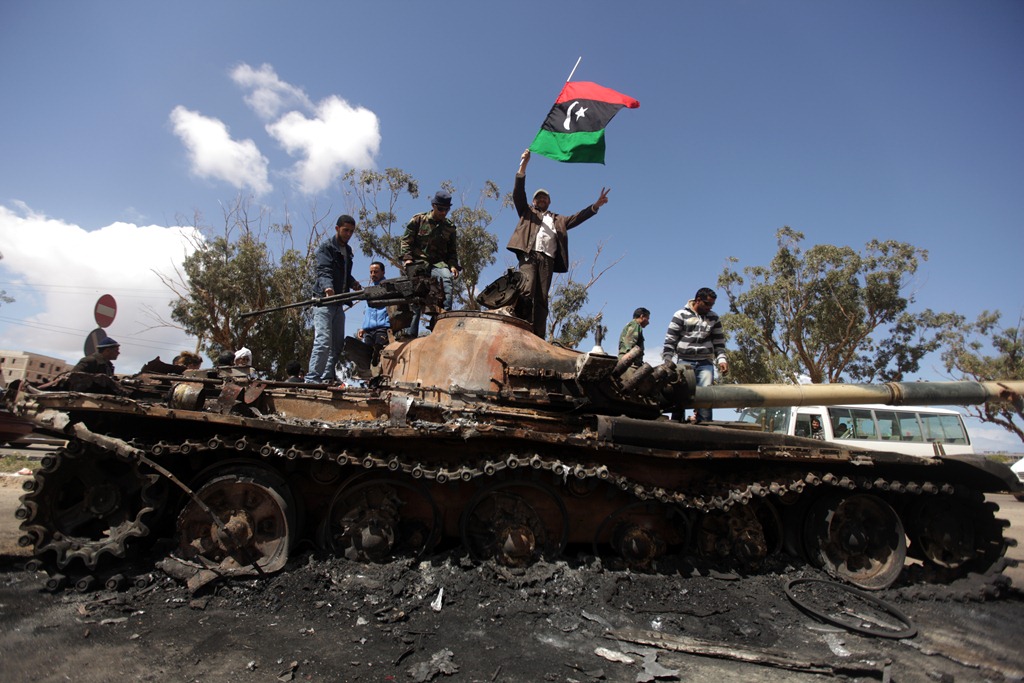
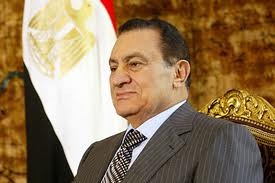
Like most of you – from Robert Gates down to just about every Westerner with memories of Iraq (and who can forget?) – I am super-wary of intervening in Libya: yet another conflict in a Muslim land, more white Christians killing brown Muslims, more US overstretch, an obvious threat of mission creep, the Iraq-style possibility that Al-Qaeda will come to fight us there in the chaos, etc. It could easily become a quagmire, a nightmare, yet another Afghanistan, etc. And regular readers of this blog will know that I think the US is badly overstretched, probably needs to get out of the ME, desperately needs to balance its budget with some defense cuts, and more generally should play a less ‘imperial’ role in the world. My own hope, like just about everyone else, is that the Libyan rebels can pull this off on their own and that Gadhafi might realize his time is up like Mubarak or Ben Ali (Tunisia).

However, in the last few days it increasingly looks like Gadhafi might not only hang on, but win. We don’t know of course yet, but we need to start thinking about what to do, if anything, in the case of a Gadhafi victory. It seems very likely that if Gadhafi retakes the east, he will butcher his opponents en masse. I don’t want to go in there anymore than anyone else, but we could be looking at massacre of thousands, maybe even tens of thousands of people. Not only would the leadership elites – the Libyan National Council, the new town mayors and councils, the military and old regime guys who flipped, etc. – be wiped out brutally (imagine the torture, family killings, Gestapo tactics to come). But given that something like half the country has thrown in with the rebels, one can imagine a massive crackdown reaching deep into regular society. Think of bakers who gave their product away to support local rebels, or school principals who allowed their buildings to be used for meetings, or police officers who looked the other way as the revolt first gathered strength. Given the sheer nation-wide scale of the revolt, the post-Gadhafi victory purges could be downright ghastly – like Bosnia or Rwanda.

Yes, we have seen purges before – the PLA killed perhaps 5000 at Tiananmen Square, the Burmese junta killed perhaps 3000 in 1988, Mugabe did the same in Matabeleland in the early 80s – and did nothing. But Gadhafi could be on the verge of something yet more awful – plumbing the depths of brutality we associate with Milosevic or ‘Hutu Power’ in Rwanda. The revolt’s failure could generate extermination death-tolls we haven’t seen in 20 years anywhere. (And if you think it can’t get worse, I suppose we should be ‘grateful’ that Gadhafi is not Himmler or Pol Pot.)

My sense is then that we would just have to do something. Does anyone anywhere honestly defend the West’s realpolitik behavior toward Rwanda anymore – its too far away, would likely be a quagmire, we don’t know anything about the locals, we could be there forever? All this is true, but in the face of 800,000 dead, aren’t we ashamed? We feel no moral obligation? (If you still feel that way, go watch Hotel Rwanda again, followed by Schindler’s List, then get a morality transplant.) What is the point of NATO, Obama, human rights, etc. if we permit Rwanda, part 2? Why not just close the State Department, UN, etc. altogether?

The intellectual cover to intervene could be provided by the notion of “responsibility to protect” (R2P). And if the Chinese and Russians don’t like it, well, in the face of mass atrocities on this scale, then to h— with them. We went into Kosovo in 1999 on the basis of NATO, regardless of Sino-Russian callous, self-serving flim-flam about ‘non-interference.’ Not trying to stop butchery approaching genocidal levels, right on NATO’s doorstep no less, is a total moral abdication. This is beyond ‘realism;’ this will be an obvious, catastrophic moral failure that will rightfully haunt us all. This is a chance to stop a second Rwanda – probably the most awful event in human history since Pol Pot. I just can’t imagine that we should do nothing.

All this said, yes, we must limit our exposure. This is not Bushism – freeing the world from tyranny forever, democratic invasions, American empire, etc. This is a (very minimal) human rights-based argument in order to prevent the very worst. (This is hardly my area of expertise though; read this for a much better case.) My own sense is that the 1999 Kosovo air campaign (bombing without without ground forces) – which limited NATO exposure and helped the Kosovo Liberation Army even the odds – would be a preliminary model. Nor is this a call for immediate intervention. Maybe the rebels can still win, and it looks like we still have time to wait and see. The best outcome of all would be a rebel victory without NATO involvement. But if Gadhafi wins and a huge bloodbath ensues, we must do something…


Korean-German Unification Parallels (3): Differences & Conclusions

Flag-Pins-South-Korea-Germany

This is the last of a three part post elaborating the often-made parallel between German and Korean unification. Please start with part one and part two.

More Differences in the International Environment between German and Korean unifications:

c. China’s interest is much higher in NK than the USSR’s was in EG. NK borders China; EG was two time-zones away from Moscow. China’s interest in the terms of a final settlement are much more direct. Gorbachev was basically trying to sell EG for desperately needed cash; for China, Korea is a more existential issue. NK is a buffer between democratic SK, Japan, and the US. Hence, China is much more likely to stick its nose into Korean unity talks, and to push for its own terms. Those terms will probably include a ban on US forces north of the current DMZ, and possibly an exit of SK from the US alliance altogether, in exchange for Chinese acquiescence on unification: Korean ‘finlandisation’ (an outcome of which Japan might secretly approve too).

d. SK can’t buy unity from China as West Germany did from USSR. WG was an economic powerhouse by the 1980s – in the OECD and G-7, second biggest donor to the UN, etc. WG could simply  write a huge check to Moscow, and the USSR was so desperate that it took the money and abandoned Honecker. SK is simply not there. Yes, it’s in the OECD and G-20, but its still lists itself as a developing country at the WTO, and it is still decades away from German levels of affluence. Nor do the Chinese need the money. China will play a much harder game than the Soviets were able to 20 years ago.

e. SK has no supportive environment of allies or revolutions, like NATO and the Velvet Revolutions of 1989, which could add momentum to unification. Beyond the US, SK has no real allies. Russia is an unpredictable faux-‘partner’ at best. Because of all the bad history, the Japanese don’t really like the idea of a united, wealthy Korea which is growing faster than them, right on their doorstep. Taiwan is also a divided country, but it is in the NK/EG role as the smaller and weaker of the two. So there is nothing like a local NATO of friends to provide group moral cover for unification efforts, nor can there be any regional momentum for NK change, as the other revolutions like in Eastern Europe provided to East Germans in 1989/90. The are no nearby states similar to NK to catalyze NK change, unless one imagines Chinese democratization, which is a huge leap. As we see in the ME today, revolutions can synergize each other, but there is no region here to provide a wave to wash into NK. Koreans will have to do this themselves.

Conclusions:

Altogether this means that hurdles to and burdens of unification are much higher here:

 There are more NKs than EGs, and they are poorer as well.

There are fewer SKs than WGs, and they are poorer also.

SK’s state strength/capacity is lower than WG’s, while NK is a catastrophe by even EG standards.

So: fewer people with less money in a weaker system will support more people with less money from a worse system.

That domestic arithmetic is brutal, and if that weren’t bad enough, the international balance of forces is worse now than in 1989 too:

Today, the external patron (US) of the free Korean half is weakening, while the external patron of the communist half (China) is strengthening. The opposite was true of the US and WG, and the USSR and EG, in 1989.

Today’s northern patron (China) is trying to push further into the continent (Asia), while yesterday’s eastern patron (USSR) was looking for an exit (from central Europe).

There is no regional encouragement, revolutionary wave, democracy zeitgeist, or whatever to push this thing along in NE Asia.


The incentives for China to meddle – because of the greater importance of NK to China, than of EG to the USSR -, and the greater ease of   such meddling – because the US and SK today are weaker than the US and WG were then, while China is much stronger today than the USSR was then -, mean Chinese intervention is highly likely. It will try hard to structure any final settlement. A major policy question for SK is therefore likely to be, will it dump the US alliance if that is what’s necessary to get China out of the peninsula? Will SK exchange ‘finlandization’ for unity? I think the answer is, and should be, yes.

The only alternative I see to this is a unification process that goes so badly off the rails, is so destructive, disorganized, and chaotic, that China would want to stay out it from sheer concern to avoid a quagmire. In other words, the more chaotic the end-game turns out to be, the more likely it will be a Korean-only affair. This is unfortunate; no one wants Korean unity to be a Hurricane Katrina-style national meltdown that requires heavy western and Japanese support – which might not even be available. because of the accelerating sovereign debt crisis. But reunification chaos seems like the only way to keep the Chinese out, because the balance of forces I sketched in the post are so much worse for Korean today than they were for Germany in 1989/90.

Korean-German Unification Parallels (2): Differences

east_germany_flag_thumb1

old East German quip: what does GDR (German Democratic Republic) really mean? German District of Russia…


This is part two of a post exploring the similarities and differences of German unification (1989/90) with Korea’s probable future one. Part one explored the similarities of the two cases; Part three presents my conclusions. Here are the differences between these unifications:


Differences:

3.  Domestic

a. EG was much wealthier than NK is now. EG was the ‘leading’ economic performer of the east bloc. The USSR realized how central the German competition was to the overall Cold War competition, so EG was heavily subsidized. NK was never as important, because the cold war contest was never as stark in Asia as it was in Europe, so NK never got such big handouts. NK’s GDP/capita today is a crushing $1700; EG’s in 1989 was $10,000.

b. NK is not just a dictatorship; it is an Orwellian nightmare, more stalinist than even the Soviet Union or Albania ever were. East Germany was bad but never plumbed the depths of repression and madness like NK.  One of our faculty at my university works with NK defectors, and he notes how many of them have psychological trauma from life in NK. Fixing NK will not just be a huge pile of money; we know that. It is also going to require something akin to nation-wide psychiatric care for millions of mentally brutalized Winston Smiths. This will be an event unheard of in the annals of mental health; read here and here.

c. On just about every other benchmark conceivable, NK is worse off than EG: environmental management, infrastructure, labor productivity, health care, education, technology, etc, etc. The per person cost of Korean unification is likely to much higher, because NK is so much further behind in almost every way than EG was. Estimates of Korean unification could begin with these figures: in 20 years, WG has transferred $1.2 trillion euros to the roughly 16 million people of EG at the time of unification. Note than NK has more people (23 M) than east Germany, and those people are significantly poorer per person too ($10k vs 1.7k per capita). So that means the 1.2T euros figure is likely too low for the NK case. Note also that West Germany had around 60 M people in 1989; SK has 49 M today. WG’s 1989 GDP per capita was $25,000; in SK today, it is around $19,500. The arithmetic is punishing.

d. EG and Soviets did a good job deceiving the world that EG really was modern and advanced, just like the West. This is one reason why the WG government granted 1:1 currency convertibility to the GDR mark: almost everyone thought EG would have some reasonably competitive industries and sectors. Yet when WG finally got in there – when the West finally pulled the lid off –  almost everything was badly behind or unusable: the phone system had to be completely replaced, EG cars were a polluting environmental nightmare, laborers had no idea how to use computers or even basic office devices like photocopiers, infrastructure around the country still had World War II battle damage (that is no joke, I saw it), etc. So it’s likely that NK is much worse than we think it is. Even Bruce Cumings has admitted this. Yes, try to imagine that: NK, our customary endpoint of geopolitical awfulness, is probably hiding much worse than we know now. Once we see the NK gulags up close, I think we are going to see Nazi-style atrocities even the Taliban wouldn’t have tried.

e. SK is less politically prepared to carry the enormous stresses of unification – and not just the financial burden. The SK political system is flimsier than WG. Corruption is more regular; its parties are shallow and change names quickly; political unresponsiveness drives a street-protest culture and brawling in the National Assembly. For a state that came out of dictatorship less than a generation ago, SK is doing pretty well, but it clearly does not have the state capacity WG did in 1989, while it faces (points a & c above) a comparatively greater burden. Indeed, this is my greatest fear – the burdens of unification will simply overwhelm SK’s still maturing democracy and leave NK in some kind of semi-annexed limbo like the West Bank.

4. International

a. In 1989, the US was at peak of its postwar relative power. The USSR was in decline; China was still far off. This is the era of the ‘unipolar moment’ and the ‘end of history.’ Today the balance of forces is very different. The US is much weaker. Many think the US is in decline. All this makes it harder and harder for the US to support SK in any contest with China or NK over unification. It is likely that SK will have to do more of the work on its own, compared to the heavy intervention by the Bush 41 administration to support the WG position. The weakened American position means it will be easier for China to dictate its terms for unification (such as no US forces north of the current DMZ, or perhaps even no US forces at all).

b. In 1989, the USSR was a mess; today China is not. The GDR’s patron was imploding. It could no longer afford the contest with the US. The Soviet Union was trying to geopolitically retrench and to re-starts its moribund economy with perestroika and glasnost. The Soviets were getting desperate, and the east bloc – subsidized as it was – had become an albatross. Gorbachev was fumbling to control all the forces unleashed. China is the opposite. It is not overextended, but rather just beginning the international expansion that flows from its rising strength. It is feeling its oats and ready to give the US a run for its money in Asia at least. Tiananmen Square demonstrated a non-Gorbachevian willingness to roll out the tanks to maintain the one-party state, and there is no serious liberalizing force, in part because the Chinese population is being bought off with growth. So China is much more capable of carrying the NK albatross and ready to push its interests into Korea not pull out per Gorby.

Go to part three.

Korean-German Unification Parallels (1): Similarities

KIM_IL_SUNG_mit_HONECKER

Kim Il Sung and Erich Honecker: *sigh*, don’t you miss the golden days? —- no, me neither

(the placard reads: ‘GDR and DPRK tightly bound in friendship’ – for tyranny and poorly-made men’s wear)

Here is part two and part three.

Last week I ve participated in a scenario to map out possible futures of Kim Jong Il’s sudden death. My best guess is in my previous post – a military dictatorship with Kim III (Jong-Un) as a familial, yet much reduced, figurehead. But one idea that is always floating around in the background is that major regime junctures in the North might lead to break down and then unification. President Lee has taken recently to saying that SK should prepare for imminent unification, and one of my favorite NK experts thinks unification is likely in the next five years.  Does anyone else think this is likely, and why so (in the comments below, please)? I don’t see that actually.

Nevertheless, the most obvious parallel for trying to map Korean unification will work is the German case in 1989/90. I have written about this before, but the following compare and contrast is more complete. For Asian readers in search of a good walk-through of Germany’s experience with division, here is a good place to start.(FYI: I lived in Germany for 4 years in the early 90s and speak German. I recall debating this stuff a lot.)

Similarities  between the German and Korean divisions:

1. Domestic

a. Both nations were divided artificially. Both sides believe the ‘2 states, 1 people’ outcome is temporary. All 4 states face a permanent constitutional legitimacy crisis, because the obvious question is why these separated states exist at all. As such, all states divided by the Cold War were intensely competitive with the other. Outracing each other economically, militarily,  even at the Olympics, became central to proving who was the ‘real’ Korea, Germany, Vietnam, China, etc. Mutual coexistence is basically impossible; each has a limited time window to race the other into international legitimacy. As one or the other pulls away in global opinion – as it becomes ‘the’ Korea or ‘the’ Germany in places like airports or hotel signage, popular movies, CNN, etc. –  it will become ever harder to justify maintaining the division.

b. NK and EG (East Germany) are both communist with all the attendant problems of 20th century ‘real existing socialism.’ They are domestically illegitimate outside their own elites. Those elites are a corrupted ‘red bourgeoisie’ for whom regime ideology became a figleaf for oligarchy and luxury. Neither can produce anything close to the quality and quantity of goods necessary to keep their populations happy – populations further disenchanted by what they see on the other side. Both have a nasty secret police. They are both noticeably poorer than the westernized competitor, and this creates unending pressure on the government to change. All these factors create a disconsolate citizenry that would push out the regime if given the chance. Hence, any manner of internal democratization or liberalization would end the regime as we know it. In the end, both communist half-states had to seal off their borders to prevent exodus; they are national prisons.

c. Underperformance vis the westernized competitor slowly takes its toll internationally. The competitions led to hyper-militarization in the communist half, which only worsens the performance gap between both sides.  Perhaps the best marker of the communist failure after a few decades was that West Germany simply became Germany and South Korea just Korea. To indicate the communist half in everyday speech, one had to affix the directional adjective, the implication being that EG and NK were somehow dead-ends of history. By the 1980s, both NK and EG had effectively lost the race of point 1a above; SK and WG became Korea and Germany.

d. The westernized, ‘Free World’ half of the nation is a wealthy, functioning democracy that has otherwise joined the world – technologies, markets, and institutions (IMF, WTO, etc). This makes the communist half look even more like a basket case. Gradual but sustained wealth and demographic accumulation have dramatically altered the balance against the communist half. The free half also regularly receives communist refugees voting with their feet.


2. International

a. SK and WG are clearly supported by the US and its wealthy democratic allies. Both belong to American/democratic alliance system and enjoy the widespread moral legitimacy that comes from that. They are net contributors to their own defence, clearly outclassing the communist half strategically.

b. NK and EG are practically client states of a communist behemoth, on whom they are extremely dependent. The patron of both finds them troublesome and expensive. Both field an military based around obsolete WWII assumptions of massed infantry and armor formations. Neither can win a conflict with the other half; the economic gap compounds the military gap. The patron regularly debates the merits of cutting the client loose.

c. The neighborhood got used to the division and kinda likes it (especially Japan and France, although no one will say that publicly). There isn’t a lot of impetus from outsiders to end the split. Russia couldn’t care less if Korea unites. Like the French and British on Germany, the Japanese public will come around once they see it on TV. Once we see crying Koreans tearing down the barbwire fences of the DMZ, like we saw Germans hammering the Berlin Wall, no one will stand in its way. But until then, don’t expect anyone else to do much beyond pro forma boilerplate.

Go to part two.

Gaming Out NK’s post-Jong Il Future (2): A Likely Military Dictatorship

north-korean-military-backs-succession-of-kim-jong-un

On-the-spot guidance, because the Dear Leader is apparently a baking expert also…

Part one is here.

So in the last week, Wikistrat, a consulting service I work with, ran a scenario to game out a sudden death of Kim Jong-Il. (The website set-up for this is kinda cool; take a look.) I have written a lot about this stuff before (here, here, here), but this useful exercise forced me to go on record about what I think will happen. Given Kim Jong-Il’s poor health and absolute centrality to the regime, his rapid passing would certainly provoke a systemic crisis. Some of the other scenario-gamers were even predicting war, internal dissolution, or foreign invasion! So here is my counterfactual run-through on what would happen if Kim Jong-Il died abruptly:

(the helpful underlined topic headers come from Wikistrat)

Summary

Kim Jong-Un will ascend to the throne, but he will increasingly be a figurehead for a military happy to retain its privileges and avoid South Korean courts.

Scenario Outline

Kim Jong-Un will likely rise into his father’s shoes, but there will be a great deal of jockeying behind the scenes. The son doesn’t have the regime connections of his father, nor the charisma and legacy of his grandfather. So he is likely to be more ceremonial than real, yet this is valuable in itself to the regime’s most important actors: the Kim family and the military. Jong-Un provides a face to the public that maintains the Kim family aura central to DPRK legitimacy. If NK simply becomes yet another dictatorship like Syria or Burma, then what is the point of a separate NK anymore? So a Kim III is a valuable fig eaf; he will not be eliminated; the regime will neither fall nor implode.

The real consequence of Jong-Il’s death will be increasing factionalization in the NK elite. The current system is a messy balance of competing interests including party, state, industry, the police state apparatus, the military – much like the USSR in the 70s. Sitting on top of this fragile balancing act is the extended, decadent Kim family. Jong-Il had the ability to balance these subnational competitors; Jong-Un does not; he’s too inexperience and too unknown in the relevant circles. Expect post-Jong-Il Korea to look like China late in Mao’s life or the USSR in the 80s: disintegrated, erratic, badly factionalized, with frequent subnational capture of national policy, unable to forge a coherent general will because of incessant twilight infighting.

Regional Implications

NK will become yet harder for the neighbors to manage. Factionalization will generate inexplicable foreign policy behaviors that suit domestic actors while undermining further the coherence of the NK state. While this may accelerate eventual collapse, it also means more unprovoked outbursts like the Yeonpyeong shelling last year. China’s delicate position between N and SK will become yet harder. But for SK and Japan, it will be more of the same.

Global Implications

The new, more militarized regime will probably be more willing to bargain. Nuclear weapons have been Jong-Il’s signature achievement in an otherwise disastrous tenure; he cannot surrender them without undermining his legitimacy. This is why all the denuclearization talks go nowhere. With more generals and fewer Kims afterward though, it is more likely that the KPA (Korean People’s Army) will deal. Militaries tend to be a little less paranoid than long-standing dictators…

Opportunities

None that I can think of…

Risks

The earliest years of the transition will be the scariest. The new pecking order among the Kims, party officials, and the KPA will have to be worked out through nasty infighting, including likely purges. So the risks emanating from NK will initially get worse. The noveau regime is likely to pull some stunt in order to grab global attention, build domestic legitimacy (at least among the relevant Pyongyang elites), and shake down SK and Japan for yet more cash. But once the regime settles into its new SOP, its more militarized character will likely restrain the dangerous hijinks associated with past Kim family megalomania.

Probability

70%

I think a civil war is highly unlikely. While the elite will skirmish for rank in the new system, none of the power-brokers wants to risk state implosion. SK still has the death penalty. Post-unification courts will hang much of the top leadership. These guys don’t want to go out like Mussolini or Ceausescu. They like the highly luxurious lifestyle, and they are terrified of a ‘truth and reconciliation’ process post-unification.

Business as usual is unlikely because NK, like Mao’s China, is highly personalized around the two Kims. Yet the next Kim hardly has the weight of his predecessors, leaving a huge hole in the middle. Jockeying to fill that gap seems inevitable. If NK is effectively a ‘Kim-state’ built around a cult of personality, then when that personality dies, crisis and change is inevitable. Both the USSR and China changed dramatically when their god-leaders, Stalin and Mao, passed. It seems likely NK will evolve.

NK will not implode. We’ve been predicting this for years: after the Cold War ended (1990), after Kim Il Sung died (1994), after the famines (1998), after the Axis of Evil speech (2001), etc. It doesn’t happen. NK has turned out to be a lot more durable than anyone expected, probably because it is willing to tolerate barbaric levels of repression. This year, the Egyptian military ultimately proved unwilling to shoot its own people; the KPA has no such compunction. The big question that no one can answer now, is, will the next Kim be so thoroughly harsh as his predecessors; the regime in its current form depends on it.

Gaming Out NK’s post-Jong Il Future (1): Counterfactual North Korea?

KIM-JONGIL

Kim Jong Il as Nietszchean Superman: Now you know who was Casper David Friedrich’s Wanderer

 Part 2 is here.

Regular readers will know that I joined the geopolitical consulting firm Wikistrat as a part-time analyst and blogger. They set up a big simulation this week based on fall-out from a sudden demise of NK leader Kim Jong Il. I think this is a great question and a timely one. This post is to solicit your input for my write-up in that scenario.

Jong-Il turned 70 this week. Most people think he had a stroke in 2008, and defectors have painted a picture of him as hard-drinking and -partying when he was younger. There is lots of speculation that he may have kidney or liver problems. Hence Kim’s death is imminent, and we need to start planning for it, because it will almost certainly be disruptive.

Any system as personalized as the DPRK will struggle when that person passes.However, it is not clear to me whether a protracted death process or a sudden one would be worse for NK. If Kim’s death is a protracted decline, like Brezhnev’s as leader of USSR, NK could slide for years into a grey  zone of factional stasis and drift, unable to make domestic choices or conduct foreign policy. The sort of political immobilism and stagnation that characterized the early 80s of the east bloc could leave Pyongyang inchoate, a fairly scary thought given NK nuke and missile programs that could easily be proliferated away in an environment of state decay.  Conversely, a rapid death, per this Wikistrat scenario, opens the possibility of sharp internal conflict, because the next Kim (Jong-Un) has not yet been properly groomed and trained. Jong-Il had 15 years to learn the ropes; his son will have at best a few years. A quick death would likely expose the many institutional, familial, and factional fault-lines that Jong-Il papers over.

Gaming out these sorts of ‘what if’ scenarios like this is what we call a counterfactual in social science: a thought experiment in which a small, important, and plausible historical change is made in order to reveal new facts. E.g., what if the Cuban Missile Crisis had provoked a nuclear war? Would the Europeans have held their NATO alliance commitment to the US as the missiles were flying over their heads? What would have happened to nonwhite emancipation in the Western Hemisphere if the South had won the American Civil War? This exercise on Kim’s death fits the counterfactual requirements quite well. Here is a bit of method to inform structure this scenario and any comments on a post-Kim NK:

1. Plausibility. A lot of counterfactuals in movies and airport thrillers are so implausible as to be ridiculous. It is reasonable to speculate about a North America after a Southern civil war victory. For the first two years, the South did remarkably well, and a few times it was really close. By contrast, I just finished reading the ridiculous DaVinci Code. It is all but impossible to imagine the Church keeping some super-conspiracy for 2000 years that would turn everything in Christianity upside down. In short, the variable being changed has to be credibly mutable. A counterfactual that posits a German victory in WWI is genuine heuristic device, because it was pretty close and so all the mechanisms to explain and learn from that would-be outcome are in place. By contrast, Dan Brown’s work is so far out that it taught us almost nothing about the Catholicism. Kim’s well-known poor health makes this plausible.

2. Small events. Counterfactuals become more and more ridiculous the more they must change. The best counterfactuals change as little as possible. Hence, counterfactuals usually change discrete events or policy choices by agents who could clearly have changed their mind. Counterfactuals that would undue massive structural characteristics like the discovery of agriculture or gunpowder are all but useless. This is why counterfactuals so frequently focus on the outcome of certain battles and assassinations: the battle could have gone the other way; the assassin might have missed. Probably the most famous to American readers is Oliver Stone’s JFK, which claims if Kennedy hadn’t been shot, the US would have pulled out of Vietnam. This logic is especially applicable to NK. In such cults of personality, the small decisions by all-powerful leaders have huge consequences. Had Hitler died in 1944 assassination attempt, Europe would be quite different. In the same way, when Kim Jong Il dies, an era will end in NK.

3. These small changes must still be important. The world is filled with data that vary, but most of it is irrelevant. It makes no difference if Napoleon liked tea or coffee. Counterfactuals must identify variables that are discrete and limited in scope (point 2), plausibly changeable (point 1), and yet still of major importance. If John Wilkes Booth had missed, what would Reconstruction have looked like? No one cares about his choice of boots, but his target practice played a catastrophic role in American history.

Gaming out Kim’s passing meets all these criterion. Kim’s sudden death is quite plausible, and his eventual death completely predictable. It is a small event – not for him of course – but it requires no re-imagining of the DPRK regime or its history. Finally, Kim’s lifestyle choices are in fact critical; one fear back in the 1990s was that an possibly alcoholic/drug-abusing Kim Jong Il would achieve nuclear power and start pushing buttons in a haze. No one cares if Kim would prefer opera to film, but his health is central. As morbid as it is to say it, it is almost certain that the sooner he passes, the happier NK will be.

My comments following these criteria will go up on Monday. Any previous feedback would be much appreciated.

Apocalypse in Asia (2): Yet Another Idiot Video Portrayal of Academia…

No one in academia talks this way to undergraduates…


In this website’s continuing tradition of reducing difficult issues to ridiculous YouTube videos (here, here, here ), the above is a nice follow-up to my previous post on teaching the Apocalypse in Asia. Didn’t you know that American academics regularly berate their students’ beliefs, plot against Christians on campus, and openly criticize students’ parents to their faces? Enjoy the above for the ideology, but maybe the director should sit in on an actual class sometime…

Back in the 1990s, I worked for moderate Republicans and donated to GOP candidates; my 1996 vote for Bob Dole for president is still the most heartfelt vote I ever cast. So I still get the occasional right-wing email, and none better than this recent one pitching the movie above:

Fellow Patriot–

I wanted to forward this message about The Genesis Code, the conservative movie of the year! It deals with some important conservative issues that deserve to be discussed: the intersection of faith and science, the right to life, and discrimination against people of faith in American higher education.

When paleontology student Kerry Wells is told by an academic advisor that she’ll need to choose between her faith and her career in academia, she begins a search for truth that will touch the hearts and minds of everyone around her.

Despite the fact that university studies are purported to be a marketplace of intellectual diversity, Kerry’s constant inquiries in class and involvement in Christian campus ministry lead the faculty to consider her unfit for a life of science. Can her determination and academic talents overcome the department’s prejudice against religion?

For the actual website, try here. To be fair, I have not yet seen the film.

For Asian readers, I post this stuff once in awhile just so you have a sense of where the bizarre US stuff you see in the news comes from. I get lots of questions out here like, wth Palin is about, what is up with loopy Tea party, why do Americans think Obama is Hitler, etc. I have warned before that the American Right’s extreme reaction to Obama’s election is delegitimizing America’s global leadership. Why would anyone follow the US when 1 in 3 Americans think Obama is a Kenyan imposter or something? Not only is all the paranoia unnerving in itself, but it has real foreign policy consequences – namely that the rest of the world – which US conservatives claim we lead – thinks we are batty. The above vid is yet another demonstration of the kind of creationist idiocy that Asian science institutions simply would not tolerate.

I also feel compelled to note the unbelievably ridiculous portrait of academia yet again on display in film. That Chinese professor ad (plus Dr. Strangelove, Wargames, and Fail Safe) got people thinking we are fascists; network TV shows show us regularly sleeping with our students; Indiana Jones and Michael Crichton make us into skilled gunmen and adventurers; Bret Easton Ellis thinks we’re lazy druggies (also sleeping with our students); Michael Bay apparently thinks we can rant out authoritarian sexual innuendo without students/faculty noticing or caring;  the Social Network treats us as behind-the-curve prigs; in Animal House, we’re tedious ballonheads; Tom Clancy turns us into lefty traitors; and of course the absent-minded professor is a stock character across media. In the Christian apocalyptica genre, we are written in as postmodern stalinists responsible for tyrannizing our conservative students (while secreting pining to sleep with them presumably) and de-Christianizing America.

Yet none of this even close to accurate; I am still waiting for a movie with professors who actually look and talk like what I know. I’ve been in academia for more than decade and my father’s been in it for 40 years, and I can’t think of one good movie that actually shows what professors really do and how we really interact with our students. Sure, individual professors do dumb things, but I challenge anyone to find quantitative data to support the classical stereotypes listed above, much less the Christian right view that university is some kind of liberal concentration camp. The portrayal of the professor in the media is so routinely inaccurate, I feel compelled to say something, especially to the Christian righties who are convinced we’re tenured atheists stripping patriotism and faith from students. To see what we really do, in all its boring, nerdy scholasticism, take a look at the sort of dry, Tylenol-PM-in-print articles that fill the Chronicle of Higher Education.

The vast majority of our time is spent in fairly mundane office work – meetings, grading, research. Most of the professors I have known take this stuff reasonably seriously, and come to work on time and dressed properly to do their jobs with no more or less level of commitment than other knowledge workers. Yet almost no movie portrayals of academia actually show this; the most realistic portrait of higher education I have seen in the last few years in a film was in Knowing. I have never known a colleague who slept with a student or schemed against them, lost his a glasses on his forehead, got in wild adventures in the field, or fought ideological wars against student groups. The latter can get you in a lot of trouble, as students have grievance recourses the above vid clearly doesn’t show.

Very rarely do we get students coming to our office to simply to talk about ideas and life and what not; the Kerry character described in the third quoted paragraph is extremely rare. Far more common student behavior, and real issues that universities grapple with, are illustrated here or here. When students do come to see us, it is usually some need or grievance: grades (why did I get an F even though I never bought the book?), attendance (can I get the last 4 weeks of classnotes?), recommendation letters (how can I get into Yale on 2.5 GPA?). And we certainly don’t get into personal criticisms and harsh career counseling like in the vid above. The professor’s behavior is shockingly unprofessional, and I dare the director to find real evidence that this is common.

My point is that, yes, we are usually secularist, not Christian, and cosmopolitan, not nationalist. But students almost never come to our classes to fight for God and nation against us. Their needs and concerns are far more banal and everyday. Far more of our interaction with students is coaching them through hard material (I know you loathe the book, but Wikipedia is not really a substitute), trying to professionalize them (you can’t just cut class for a week or two and expect a bailout), begging and pleading with them to read (cliff notes are a high school gimmick you have to give up now), encouraging them to study and not just party away the four years (even though we did that too). It’s a lot more about management, mentoring and helping than about ideology. And if students raise their hand to discuss God and evolution, our response is to rejoice that students want to participate on a meaningful, exciting topic, not to stomp on them like some KGB of atheists.

So please, before yet another insulting, idiot, ideological, or conspiratorial portrayal of academia, someone make a movie that actually looks like college. That would be a real ‘revelation’…

Is Ban Ki-Moon the Antichrist? Teaching End-Times UN Hatred in Asia

duncanlong131

In teaching the UN this week, we discussed the issue of purposeful American defunding of the UN since the 1980s and the rocky US-UN relationship since the 1970s. For a good review of the ‘this-wordly’ issues go here. But then, inevitably, one must discuss the ‘theological’ complaints of US Christians. Something like 30-40% of Americans have had a born-again experience, in which Jesus purportedly intervenes personally in their life, former President Bush being the most prominent example. Koreans already find this to be pretty bizarre.  But then when you have to explain that lots of these people also believe the book of Revelation is a real prediction of future history (ie, Armageddon), then they just find it ridiculous. I tried as best I could to present it objectively, but I was genuinely embarrassed for the US to look so foolish. Most of my students were laughing out loud by the time I got to the end of the presentation. The same thing happened when I tried explain the Tea Party and those protestors with signs of Obama as Hitler. I don’t think American conservatives, who love the discourse of American exceptionalism, realize how much damage this kind of stuff does to foreigners’ impression of our ability and legitimacy to lead.

I struggled a bit on the details. In my Catholic grade school, we never read Revelations. The Church seemed to find it an embarrassment, and we spent most of our time on the Evangelists’ books. Most of my experience has come from watching the three Left Behind films (which I watched explicitly to get a handle on this material, although their unintentionally campiness is pretty hysterical). In that trilogy the UN Secretary-General (S-G) is the Antichrist. Speaking with a goofy pseudo-Transylvanian accent, he provokes a global war that inevitably includes an invasion of Israel. He assassinates people with impunity on the floor of the UN Security Council, and a shady Arab henchman organizes a global currency. The Rapture is there too of course (although not the fact that God would be thereby responsible for all the deaths from plane crashes due to raptured pilots). The demonic S-G, a slick Euro-bad guy, seduces the hot blonde  and builds a global tyranny from the UN, complete with a new unitarian-style religion. The American heroes have macho names like Buck and Steele. (Grrr!)

But all this strikes me as more American than Christian. First, it is Americans who have come up with this stuff, and I never met a European or Asian Christian who even knew about the Rapture and end-times wars, much less believed it. Second, it seems conveniently American that the US plays such a central role in these future histories, and that the UN, already disliked in the US, is the enemy yet again. Third, the movie bad guy looks and talks like the stock, ‘slick Euro’ character, whom Americans love to hate (like Alan Rickman in Die Hard). To be fair, I haven’t read the Left Behind novels though.

Teaching can be a great profession, and moments like this are real classics you will always remember in your career  (like the time I had a student ask me what OBL’s economic plan was for the caliphate after he re-united it). ‘Intercultural confusion’ would be the political correct expression, but honestly, the students just found it idiotic. Most East Asians come from a Buddhist-Confucian background (even the Christians, because Christianity is still pretty recent here). So most of my students had no context at all; indeed, for Americans who find this End-Times stuff ‘normal,’ nothing shows you just how absolutely absurd it is like trying to explain it to uninitiated foreigners. You want to convince Asians we aren’t fit to lead? Just let them watch Sarah Palin for awhile and then give a screening of Left Behind. Try explaining that it isn’t all anti-science, superstitious conspiracy theories. It’s just laughably implausible when taught as a straight ‘theory.’

First I had to lay the groundwork about the splintering of American Protestantism, because this eschatology is not mainline. Most Koreans are Catholics or Methodists. Korean Protestantism looks more like Europe than the US. Mega-churches built around one preacher don’t really exist. But they are coming. Indeed, one downside of the major US influence in Korea, because of the long alliance and commercial ties, is that US variants of charismatic-evangelical Protestant are coming, with an even greater stress on proselytization than in the US. Here, fundamentalists will stand at train stations and walk through subway cars holding big red crosses yelling (yes, yelling, not really preaching). Most Koreans resent them, so once I started discussing the details of evangelical end-times theology, my students were rolling their eyes immediately. That a Korean is the current UN S-G only raises their level of amazement and incredulity even faster. By the time I wrapped up, I was practically laughing myself – something I could never do in a US classroom, because there were always students who believed this stuff.

For all its absurdity, I do think teachers of IR should at least know the outlines of fundamentalist Protestant eschatology. It motivates UN hatred in the US far more than is acknowledged, and American ‘Christian Zionists’ – for whom Israel plays a role in the end-times wars – are far more important supporters of Israel than American Jews. This is a good IR article waiting to be written. I know of no serious investigation of the end-times version of world politics, despite its wide influence in the US electorate.

NB: I am just about positive that I will be ‘left behind,’ but thankfully the Tea Party is telling me how to  stock up for it

Joining the Wikistrat Family


I am happy to announce today that I am partnering with the international politics and economics consulting firm Wikistrat. Wikistrat provides geopolitical analysis, some of it at cost, but it is a good site for readers of this blog. Its foci and temperament are close to mine, so I am pleased to be an affiliate. I encourage you to take a look. Readers will find it more digestible and less theoretical than my writing here, as it is meant for policy-makers and corporate clients (i.e., regular people). So, mercifully, it is not formal IR theory. I will join the Wikistrat family of blogs and analysts that includes most notably Thomas Barnett.

Close readers will note that I cite Barnett probably around once a month here and that he is on my blogroll. I find him an excellent analyst especially of globalization, the US military, and China. His book The Pentagon’s New Map is an well-known interpretation the relationship between globalization and conflict after the Cold War. It has enough IR theory to satisfy the academic in you, while enough policy-relevance that laymen could read it too. Very nice. It was one of those books, like the The End of History or the World is Flat, that caught the zeitgeist well and gets cited all the time (including critically). I can comfortably recommend that book to to any reader of this website. I taught it in class, and the ‘core-gap’ map has become pretty famous.

Barnett is also a big China guy, so readers of this website will find his work and the material of the site generally useful. I am more worried about China’s rise than Barnett, who is most definitely of the ‘peaceful rise’ school. To mind the peaceful risers had a rough year last year, but Barnett is dead-on that the US air force and navy are almost certainly hyping the China threat for institutional-financial reasons, i.e., the Army and the Marines are carrying the costs of the GWoT, which means that the Navy and Air Force should carry the brunt of the coming US defense cuts. In any case, Asian security readers should be tuned into Barnett through Wikistrat.

FULL DISCLOSURE: Besides being a Wikistrat blog affiliate, I am a partner analyst as well, so this is a relationship I believe in. It should be said though that I do receive a small commission if readers click through on the Wikistrat advertisement on this website and then sign-up for its for-pay services. However, there is NO editorial control exerted. The Wiki folks are professional and committed enough to respect and solicit independent input.

Egyptian Revolution (2): The Egyptian Army’s Moral Superiority to China

imagesFor

For part 1 of my thoughts on the Egyptian revolution, go here.

4. China shot its own people; Egypt has not. Much of the analysis has focused on possible parallels with Iran 1979. But another more recent parallel, especially relevant to this website, is Tiananmen Square 1989. In their moment of crisis, the Chinese turned their guns on themselves, and the PLA (People’s Liberation Army) will be forever stained by the blood of its own citizens en masse. This strikes me as major moment in the evolution of dictatorships. All dictatorships suffer from legitimacy problems, of course, but none want to openly rely on naked force. Militaries are usually the hidden albeit central prop in dictatorships, but they don’t actually want to do the dirty work themselves. That is for the paramilitary thugs and secret police. No officer wants to think the primary enemy of the a state’s military is its own people, not some foreign enemy. Their dignitary and right to rule is based on the whole idea that thy are defending the people, not massacring them; in fact this is the myth of 1952 Free Officers coup in Egypt itself. Hence the call by a dictator in dire straits to shoot the citizenry is a rubicon for any army that cannot be uncrossed. In 1989, the eastern European militaries balked; in China, the PLA did not. My sense is that the social costs to the PLA were lower though, because China is so big. The CCP purposefully brought in rural PLA units for whom Beijing was like another planet. But in small countries like Poland 1989 or Egypt today, army repression in the capital would immediately be felt and transmitted everywhere. So hear, hear to the Egyptian military (I can’t believe I just wrote that sentence). For all its corruption, despotism, and insulation, it still did the right thing when the chips were down. Did anyone imagine even a month ago that we’d be speaking of the moral superiority of the Egyptian military to the PLA?

5. Beyond this evident parallel to Beijing 1989, this is whole things isn’t really that relevant out here. The news media coverage has been thin. The current El Nina cold snap in Northeast Asia has gotten more press time regionally than that Egypt. Not surprisingly the Chinese haven’t discussed Egypt much, but I am disappointed the the Korean and Japanese press seems so disinterested. Initial Korean media coverage focused on the possible loss of ME export markets (groan). From this I would draw two conclusions. First, for all the talk about a flat world, cultural hurdles still matter a lot. The parties caught up in the war on terror (the West, Israel, the Arab/Muslim ME) are riveted by this, but East Asian’s just aren’t, sadly. My experience in East Asia is that locals don’t really care much about the developing world. It’s far away, the languages and religions seem unintelligible, and the societies look backward, especially to East Asians obsessed with development. East Asians worry a lot about the US, and some about Europe, but there is tremendous ignorance of places like Latin America or Africa. Second, I think this disinterest is as much political as it is cultural. Newly wealthy places like Korea or China demonstrate their earned, rightful place in the OECD through an almost purposeful disdain for the third world. Koreans love to demonstrate how worldly they are by spending a year in the US or West; I’ve never met a student or teacher who thought a year a in developing country would be vastly more interesting. (It is.) So Barnett’s ‘new core’ flaunts its new status by forgetting its roots in the third world: disinterest as a mark of superiority.

6. A comment about the commentary: Frank Rich is right that far too few people have any idea what to say on Egypt because so much of the commentary is really about the US (or Israel). This Amero-centrism is why so many are saying the US should do this or that: the working assumption is that that US guides the world and can easily direct events. This is no longer true, so the mountain of US, rather than Egypt, -focused commentary creates unrealistic expectations that we can direct this thing.

Rich also makes the excellent observation that if Americans could actually watch al Jazeera, they might actually learn something about Egypt itself. Instead the mainstream commentary has revealed the embarrassingly nativist ignorance of much of the punditocracy on anything beyond US borders. In general I was very pleased to see how well academics requited themselves in the blogosphere on this; I think especially Walt, Mead, Cole and the Duck of Minerva have been super.

But if you read the op-ed pages, you got recycled banality and the usual suspects: Friedman gave you his typical, ‘this-is-a-defining-moment-in-the-ME’ schtick; Bush neocons desperate for rehabilitation strove to take credit and somehow blame Obama for…what exactly?; Palin blithered; Parker told us that the big story was really about the US media and Cohen that it was about Israel; Colbert King forgot the rest of the world exists; and Beck, well, you already know – just watch the loopy video from part 1. Score yet another point for blogging.

Without the informed blogging voices of people who actually know something about Egypt and revolutions, you really wouldn’t learn much about the events at all. You’d have just gotten an endless series of stories from a royalist, uncosmopolitan press in which Washington was the real story, because that’s all the pundits know how to talk aboutDouthat, for example – and whom I think is a pretty good writer usually – clearly had nothing to say, so he just gave up and wrote about Obama yet again under the guise of Egypt. How easy; this is how the press for a nation of untraveled monolinguists infatuated with their own power evolves. Its all about us. By contrast, here is an example of a non-expert, trained in traditional Washington self-obsession, who nonetheless tried. 

__________________________

ADDENDA:

The Japan Security Watch (JSW) blog of the New Pacific Institute has taken to cross-posting some of my stuff.  JSW is a good review of Japan, and a nice a compliment to my over-focus on Korea and China. They do on a lot on the nuts-and-bolts of hardware and deployment. Mil-Tech junkies on Asia will love it. JSW and I are working on some cooperation in the future. I want to thank them and commend readers to take a look at their good website.

BusanHaps, the big expat newspaper for Busan, SK, has also reposted some of my stuff. I want to thank them too and commend their site. Busan readers almost certainly know it already, but non-local readers will find it a good window on the way expats live here.

Finally, I want to point out that a published version of my remarks on North Korean shelling of Yeonpyeong Island is now available here (RINSA 15) from the Korean National Defense University (KNDU). If you really want to get into the details of SK defense against N, KNDU is the place to go. I want to thank them for soliciting me and thank readers for all the helpful comments that went into the final product.