Guest Post – Tom Nichols: “Bob Kelly was Wrong (and Right) about the Iraq War”

imagesCAI6BD5TI am happy to invite my friend Tom Nichols to guest-post about the continuing Iraq War debate. Tom responded so substantially to my original post series on the war (one, two, three), that I invited him to provide a longer write-up. Tom is a professor of National Security Affairs at the U.S. Naval War College and an adjunct professor in the Harvard Extension School. His blog can be found here, his twitter here. His opinions of course are his own, so whenever he says I’m wrong, you probably shouldn’t listen… REK
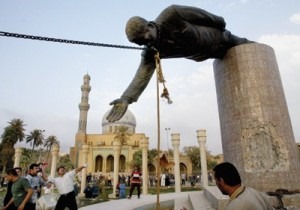
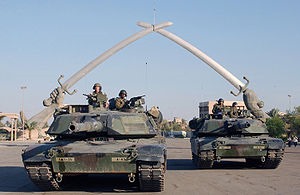
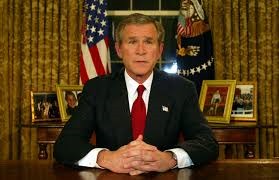
I’ve been reading Bob’s thoughts – cogent as always – on the 10th anniversary of Iraq. I reject Bob’s exploration of the “culpability” of the IR field for providing any kind of intellectual infrastructure for the war, mostly because I don’t think anyone in Washington, then or now, listens to us, and for good reason. Joe Nye long ago lamented that lack of influence elsewhere, and others agree (by “others” I mean “me”). So I won’t rehearse it here.

Bob and I sort of agree that the outcome of the war doesn’t say much about the prescience of at least some of the war’s opponents: there were people whose default position was almost any exercise of U.S. power is likely to be bad, and they don’t get points for being right by accident.

Continue reading

Iraq 10 Years Later (3): Why the Neocon Theory behind the War Failed

gulf_war_poster1

Here are part one and two of this post.

The arguments below expand on my second recent JoongAng Daily op-ed on the Iraq war.

My first post on the Iraq War asked if academic IR had any responsibility to slow the march to war.

The second tried to formulate what the   neoconservative theory of the war was, because many of us, in retrospect of a conflict gone so badly, desperately want to un-remember that there really was a logic to the war, that it was at least somewhat intellectually defensible, and that a lot of us believed it. We may want to retroactively exculpate ourselves by suggesting it was just W the cowboy acting ridiculous, or a neocon hijacking of the policy process, or Halliburton oil imperialism, and all the other reasons so popular on the left. And some of that is true of course.

But it ducks the crucial point that the war was popular until it flew wildly off-the-rails, which in turn revealed the staggering incompetence of the Bush administration to act on the neocon logic the country had embraced by March 2003. In short, I argued that the Iraq invasion was not about WMD, preemption, or democracy, although that rationale was played up in the wake of the failure to find WMD. The real neocon goal was to scare the daylights out of the Arabs and their elites by punching one of their worst regimes in the face, thereby showing what was coming to rest of the region unless it cleaned up its act, i.e., crack down on salafism and liberalize so as to defuse the cultural extremism that lead to 9/11. (Read Ajami saying in January 2003 that the war is ‘to modernize the Arabs;’ that’s about as a good a pre-war summary of this logic as you’ll get.)

So what went wrong?

Continue reading

Iraq 10 Years Later (2): What was the Neocon Theory behind the War?

Learn-About-the-Iraq-War-300x210

This post is in three parts; here are one and three. I published a laymen version of the following arguments (part two) in my recent JoongAng Daily op-ed.

My first thoughts on the war’s ten year anniversary are here. There I asked if there was any defensible theory behind the war, anything that might explain what why we launched the war, because weapons of mass destruction were not really the reason. Paul Wolfowitz notoriously admitted they were just a pretext to rally the country behind the invasion. And it wasn’t really about pre-emption either; Iraq was hardly a looming military threat in 2003. So here’s my guess of the real neoconservative logic. I should say up front, I do not endorse this rationale. I’m just trying to lay it out what I think neocons were saying to each other in 2002:

The Iraq invasion was to serve two purposes. 1) It was to be a demonstration strike against the Arabs. Gulf anti-western pathologies lead to 9/11, so the Iraq invasion was a warning to Arabs, and Muslims generally, to never to attack the US like that again. As Cheney put it in the film W, ‘don’t ever f— with us again.’ 2) It was to be a hammer strike to break the frozen, horribly dysfunctional Arab political status quo which generated those pathologies; this would force the region toward democracy it would never attain on its own. This thinking was summarized in the widely used expression at the time, ‘drain the swamp.’

A lot of people will (and did) accuse the neocons of orientalism, racism, and US hegemonic arrogance. Nevertheless I’ve always thought this neocon argument was somewhat convincing to most Americans, especially the GOP. I’ve always thought it was the horribly botched execution of the war (‘fiasco’), not the idea itself of ‘draining the swamp,’ that cost the invasion American public opinion support. I also don’t think the neocon argument was ever properly made to the US public, probably because it sounds both orientalist and hubristic. This is not the sort of argument the Bush administration could make out loud; WMD was much easier to sell and far more direct, as Wolfowitz noted. But I think if you read neocons like Kristol, Krauthammer, Gerecht, or Podhoretz, as well as high profile area experts like Thomas Friedman, Fareed Zakaria, or Bernard Lewis, or the right-wing thinks-tanks that supported the war (AEI, Heritage, Foundation for Defense of Democracies), this is what you heard. (For example: this, this, this, this, or this). I once participated in the FDDs’ terrorism fellowship program, and this was pretty much the line we got.

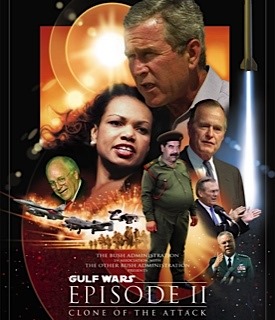
So you may not like the argument, but at least there is one. The war cannot just be dismissed as US imperialism, an oil grab, or a PNAC/neocon cabal, which I think was too often the default position on the left, especially in Europe, during the war. Opponents should rebut this and not just stick to deriding W the swaggering cowboy, fun as that may be.

Continue reading

Iraq 10 Years Later (1): How Culpable is Academic International Relations?

300px-UStanks_baghdad_2003

This post is in three parts. Here are two and three.

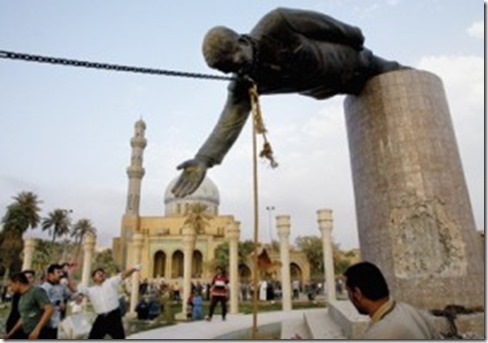
I’ve been thinking a lot about the war this month. I’ll be teaching it in the next few weeks at school because of the decade anniversary (March 20). To my mind, it is the most important geopolitical event, for the US, possibly the planet, since the USSR’s collapse. It also pre-occupies me to this day, because I initially supported it, and didn’t really turn against it until 2008/09. I had students who told me, late in the war, that I was the only instructor they knew who still supported the invasion. Finally, I gave in, and accepted the by-then conventional wisdom that the war was a ‘fiasco.’ I will argue in my next post in a few days, that there was in fact an at least minimally defensible argument for the war, but the execution of it was so awful, disorganized, mismanaged, and incompetent, that any moral justification was lost in the sea of blood and torture we unleashed.

The whole episode became just shameful, and regularly teaching and conferencing with non-Americans these last few years has made this so painfully clear. My students particularly are just bewildered to the point of incredulity. Again and again, the basic thought behind the questions is, ‘what the hell happened to you people? 9/11 made you lose your minds there?’ *sigh* (NB: when Asians ask me about guns in the US, the ‘what the hell is wrong with you people?’ bafflement is the same.)

Hence, the post title purposefully implies that the invasion was a bad idea. But to be fair, that should be the first question: what, if any, arguments at this point can be mustered to defend the war? IR should try to answer this seriously, because I’m all but positive that the journalistic debate will be not be driven by the state of Iraq or US foreign policy today, but by the high personal reputational costs faced by so many pundits supportive of the war. It would not surprise me at all if folks like the Kagans, Krauthammer, or Thomas Friedman miraculously found that the war was worth it after all. McNamara-style mea culpas only happen at the end of a career (so I give Sullivan and Fukuyama credit for theirs on Iraq). But academic international relations (IR) should be more honest than that.

Continue reading

‘Rodman-gate’: Can ‘Useful Idiots’ please Stop Shilling for North Korea?

rodman nk

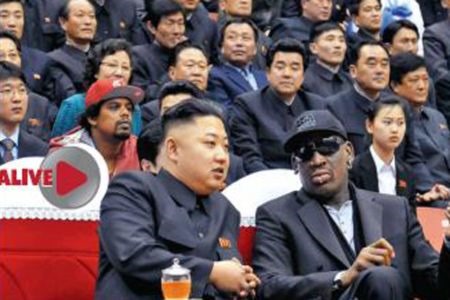
Studying North Korea inevitably means people ask me pretty outlandish stuff. People have asked, if the North really believes long hair is bad for socialism, if that goiter on Kim Il Sung’s neck made him crazy, if Kim Jong Il’s platform shoes meant that he liked disco, and if North Korean women are good looking because a food shortage would mean everyone is slim. (I presume that last one is a reaction to obesity epidemic in the US.) So I tried to avoid this latest outbreak of Norko bizarreness with Rodman. But people keep asking me, so here a few thoughts to the effect that: no one should shill for NK – ever.

Call it yet another chapter in the history of clueless foreigners getting lost in and manipulated by North Korea – what Lenin used to call ‘useful idiots,’ knaves from the West who defended the Soviet experiment, blissfully ignorant of the camps. Who knows what to make of that utterly weird photograph of Rodman in bling and Kim Jong Un dressed like Mao. There are so many contradictions in there, it’s not even worth unpacking.

Continue reading