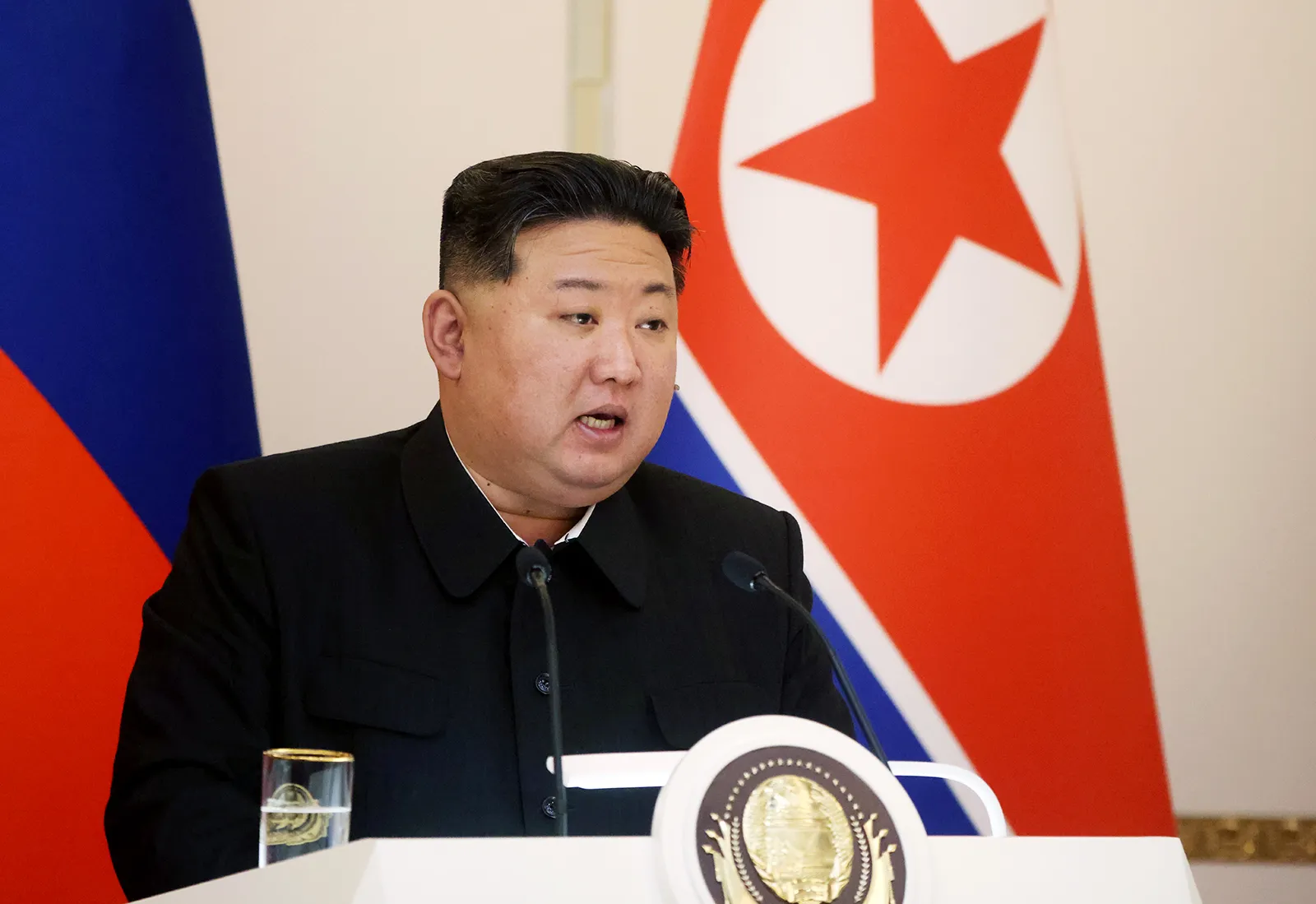
Who Will Control North Korean Nuclear Weapons in a Conflict?

North Korea is building tactical nuclear weapons – for use on the battlefield – and that raises tricky command-and-control problems for actually using them in combat. I put some thoughts on this at 1945 magazine.

Basically, if Kim Jong Un wants to use nukes as a warfighting tool, then he has to let his battlefield commanders have authority to use them. He must delegate release authority. But North Korea is a monolithic autocracy, and there’s no way Kim wants to share power over the something as symbolic as its nukes. That NK has produced almost nothing else of note in decades besides nukes makes assertive control over them even more political salient.

Assertive control is fine if Kim wants a stable balance of terror with the Americans based on mutually assured destruction. But if he intends to ‘conventionalize’ nukes to be used like artillery on the battlefield – which makes sense given how unbalanced the conventional contest with SK and the US is – then he has to delgate to local commanders with better information. Kim himself with be trapped in the fog of war once a conflict starts and won’t be able to use nukes dynamically and responsively.

I am not sure anyone can figure out how Kim can square this circle. Try 1945 for the full argument.
Trump is Incentivizing Allied Nuclearization

EfIfPIeXoAA41Hz

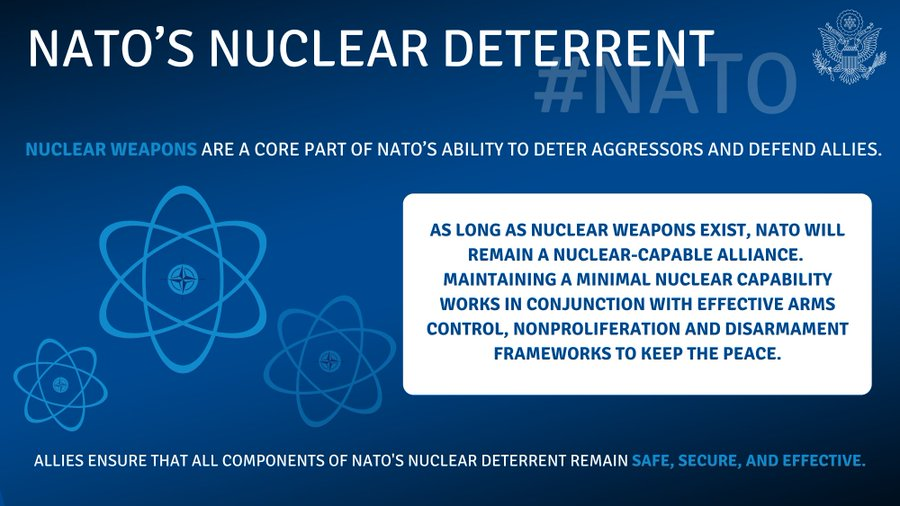
Trump’s threats against US allies and partners encourage them to consider nuclear weapons. This strikes me as painfully obvious, even though we keep saying we don’t want allies to nuke up. I just wrote about this at 1945 magazine. Please got there for the full argument.

Post-Greenland, I don’t know why US allies would trust us. For two months, we were openly discussing the possibility of using force against a long-standing partner. It is hard to over-emphasize how crazy and self-defeating that it is. Trump has threatened Canada, Mexico, and Panama. When MAGA got drunk on US power right after we kidnapped Maduro, I saw Jesse Waters on Fox say we take Bermuda.

We seem to expect that even as we break the rules of the liberal community of states, other liberal states will not. We get to tariff and bully our allies, and they are just supposed to take it smiling.

That can work for a little while. US allies are asymmetrically dependent on US security guarantees and market access. They are vulnerable to our bullying, because they never thought we would bully them.

But they won’t put up with that forever. Late last year, pre-Greenland, my friend Paul Poast and I argued in Foreign Affairs that US allies would eventually defect. If anything, events suggest our analysis was too easy on Trump. Neither of us expected that the US would actually openly menace an ally.

But here we are. If you are a US ally today, it is hard now to believe as I say on Twitter that the US would fight for you, and impossible to believe we would use nuclear weapons for you. In fact, we might attack you instead. So it makes sense to consider your own coverage, because they American nuclear umbrella is gone.

I argued this a year ago for South Korea – that it should nuke. If anything, the ensuing year has made that argument even stronger.

A North Korean SSBN is an Advertent Escalation Risk

images (1)What might bring us (the US, South Korea, Japan) to deliberately attack North Korea? Are there triggers for deliberate (advertent) escalation, on top of the traditional, nuclear age fears of accidental (inadvertent) escalation? The following is from my essay on this for 1945 magazine and Twitter thread.

To me it seems like the most likely trigger for us to deliberately bomb NK is NK building a nuclear missile-carrying submarine (an SSBN). An SSBN would significantly improve the ‘survivability’ of NK nuclear missiles, which is problematic for us two reasons:

1. A more survivable force would reduce the ability of the allies to disarm NK by force if necessary in a crisis, because it is much harder to find missiles undersea than on land. The land constraint on NK missiles is particularly tough for them, bc NK is small in size, too poor to build a lot of roads, and is fill with mountains and forests.

2. If NK’s nuclear force was more assured and survivable, NK might take greater conventional risks in its provocations of SK, per the logic of the stability-instability paradox. NK has long history of shenanigans along the SK border. One of these spinning out of control has always been the big inadvertent escalation risk in Korea. That will worsen once they have an SSBN fleet.

Given that the US has long sought ‘damage limitation’ in its nuclear affairs – that is, America persistently rejects mutually assured destruction (MAD) as acceptable and inescapable – it is foreseeable that the US would see bombing a NK SSBN under construction as an acceptable risk to keep NK from attaining a MAD relationship with the US.

We claim close to bombing NK in 2017/18 because they were on the cusp of an ICBM which could reach the US mainland, and we have repeatedly intervened in Iran to halt its nuclear progress. So bombing NK to block the advent of MAD is not fantastical. Of all the possibilities for deliberate, chosen escalation with NK, I think this is the most likely.