Robert Gates’ Final Speech on US Defense Cuts

robert-gates2

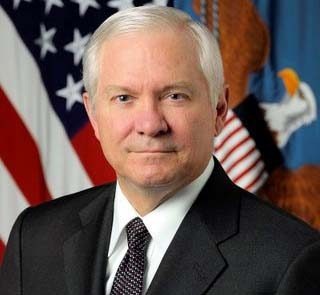
The Secretary of Defense is on his way out. To my mind, Gates was excellent, although, as Walt notes, coming after Donald Rumsfeld could make anyone look good. Gates, more than any SecDef since the end of the Cold War, has pushed the real ‘transformation’ of DoD – toward restraint and limits.

Readers will recall Secretary Rumsfeld’s original use of that term meant a smaller, lighter force that could intervene rapidly and globally to force local decisions on America’s terms. Afghanistan 2001 originally seemed like a model of this, but the bog-down of the war on terrorism has frozen the ‘revolution in military affairs.’ Rather it is Gates who has pushed the real change – nudging the US, specifically Beltway think-tank elites like Brookings or the American Enterprise Institute, to realize that the US can no longer afford the expansive globocop role we have become accustomed to in the ‘unipolar moment.’ Besides Walt, Fred Kaplan has been excellent on this.

Whoever comes after Gates will have a difficult time continuing this. There is a strong predilection in the Pentagon and on Capitol Hill for defense spending. It looks patriotic and exciting. Cutting it can be easily demagogued as ‘imperiling our national defense in an era of terrorism’ or something like that. Pentagon weapons procurement is notorious for placing bits and pieces of defense production in as many congressional districts as possible. This gives everyone a an economic and ‘patriotic’ stake in voting yet more cash to DoD. And the Navy and Air Force are genuinely terrified of a much-reduced role if the future use of American force becomes mini-interventions like Libya or (what was supposed to) Afghanistan. Watch for those parts of the force to hype the China threat (although I do think China containment, with a US supporting role, is probably inevitable).

Finally, it is simply undeniable that Americans sorta like ‘empire.’ We like the fact that we can go anywhere in the world and command a level of respect, because we are citizens of the ‘indispensible nation.’ Everyone uses the dollar and pays attention to the intricacies of our politics. (In Africa last summer, I got questioned regularly on Obama). No, I’m not saying we are the European caricature of global-strutting imperialist. But you only need to watch American film (or worse, video games) to see how attractive the idea of a big, bad-a—US is to Americans. We love the narrative of American exceptionalism; remember that George W Bush said ‘God has a special mission for America,’ and he got re-elected despite the Iraq War. You don’t have to be Noam Chomsky to think this; just live outside the US for a few years to see how ‘the rest’ think about us.

So Gates’ value, in the end, was seeing that the US simply cannot afford the neocon-liberal hawk synthesis in which the US use of force is a regular response to global problems. Even if you think America should be globobcop, America’s finances force the obvious question of whether we can. Historians regularly tell us that rising debt and long foreign wars are the death-knell of empires. Cut we must, or face a truly devastating melt-down at some point. It will take time for Americans to digest this reality, and Gates, with his huge personal prestige, started this process.

I say that quite aware that I supported NATO force against Gaddafi. (I would defend that position by noting that I argued for a super-light air intervention to stop a massacre. Beyond that, Libyans must achieve ‘regime change’ on their own.) I also say this with some trepidation, because part of me does think that unipolarity backed by US force, has made the world safer and the global economy function more easily. I worry too what a ‘post-American’ world will look like, especially if authoritarian China plays a much bigger role. While no fan of ‘empire,’ I will agree that this is unnerving.

But the larger concern of overstretch is now so apparent that Gates’ retrenchment position can either be, a) a choice now, in which we slowly retrench in order to better accommodate America’s fiscal mess and do so in a professional, ‘graceful’ manner, or b) forced on us later, when when we are genuinely broke because we continue to borrow $1-2 trillion dollars a year. Even America can’t do that forever, and cuts are coming whether we want them or not.

The Korean case has really forced my thinking about this, because Korea’s security is obviously dependent on a US commitment. Any war here will be bloody and expensive, far worse than the US post-Cold War wars in the Middle East. Americans are genuinely nervous about getting chain-ganged into a long conflict here. China, which holds around 1/4 of all US T-bills, would have an obvious incentive to stop buying if US Forces in Korea were suddenly marching toward the Yalu. And I can think of few uses of US force more noble than helping a democracy against the world’s last, worst stalinist tyranny. But that shouldn’t blind us to the obvious. Gates himself said, “any future defense secretary who advises the president to again send a big American land army into Asia or into the Middle East or Africa should ‘have his head examined.’” That should be a wake-up call.

Hence I have argued repeatedly here, especially for Korean readers, that Korea needs to be far more aggressive in preparing its own defense and imaging an East Asian alliance structure beyond simply a US guarantee. Korea should finally end the tiresome, endless Dokdo dispute with Japan, so that real joint decision-making on vastly greater issues like NK or China’s rise can begin. Korea should be looking further afield to other Asian democracies like India, Australia, and the Philippines. These are no substitute for the US of course, and the US isn’t simply going to leave tomorrow or next year. But the US will have to be further and further ‘over the horizon’ in the medium-term, barring some major turn-around of the US fiscus. Korea has the money and talent to fill in this gap, but first the recognition of US limits, pushed by no less than the US secretary of defense, needs to sink in – not just in Seoul, but in the whole US establishment in Korea, and in the Beltway think-tank industrial complex. I hope I am wrong…

Does it Make Humanitarian Sense to Let Libyans Fight it Out Alone?

libya-war

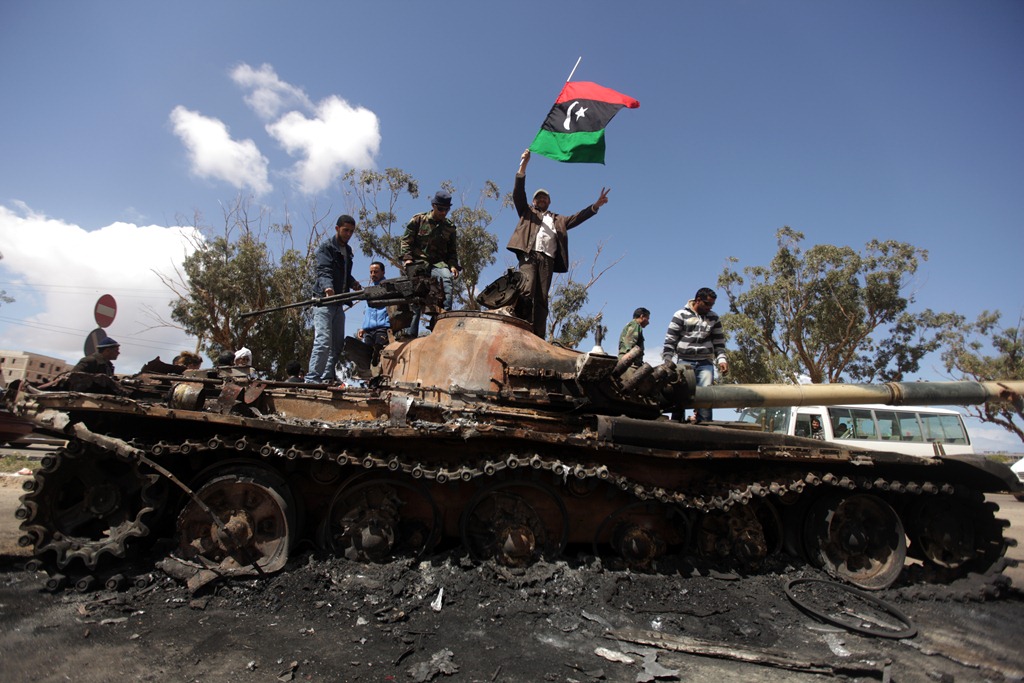
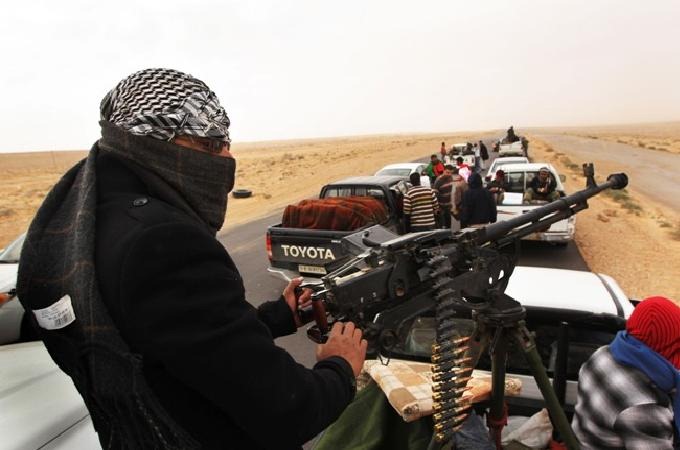
Regular readers know that I supported the Libyan intervention primarily on humanitarian grounds. For my writing on Libya, please try here and here. My big concern was that the fall of Benghazi might initiate a massacre like Srebrenica. If a limited intervention could forestall that, I think it was justifiable. To critics who said this was duplicitous, because we did not intervene in Ivory Coast or Syria, my response was that Libya moved first (its problems were presented earlier), which matters in a world of scarce resources with limited knowledge of the future. Also, Libya was proximate to NATO making it that much easier and so more morally compelling. This is hardly an air-tight case; Libyan lives are no more ontologically valuable than Syrian or Ivorian. But there are limits to what outsiders can do; and I thought Libya pretty well met the nexus of limited western capabilities – badly restricted by American military overstretch and degraded European militaries – and the clear humanitarian imperative raised when Gaddafi and sons started ranting about ‘rivers of blood’ and ‘hunting the rebels like rats, alley by alley.’ Non-interventionists retort that a massacre was not actually likely, but I disagree with that assessment.

A much stronger argument raised by non-interventionists directly challenges the humanitarian rationale. This argues that civil wars that stalemate, as Libya’s has now, actually produce more death and destruction over time than quick, definitive endings. I don’t have any particularly good cite on this, but generally I find that Max Hastings at the Financial Times, Stephen Walt at Foreign Policy, and various authors at the National Interest have leaned in this direction on Libya. In passing, I should say that I find all these authors to raise excellent points. Their analysis is worth your time and vastly more professional and serious than the partisan and uniformed commentary coming from Congress and the GOP presidential field. If you want to know why Libya is a mistake, read Walt or Hastings; don’t waste your time with FoxNews or Newt Gingrich.

So if the Libyan civil war drags on for years, with hundreds of thousands killed, does that mean it would have been better for Gaddafi to win early, and ‘only’ kill ten thousand? This strikes me as quite strong (and humane, albeit macabre) logic. Here are three possible responses:

1. Any comparative body counts (yes, it is that ghoulish to say so, but this is what murderous thugs force on us) must account for all the violence Gaddafi would also inflict on Libyans in the wake of his victory and restoration of the old order. In other words, it is not enough to say that Gaddafi would kill fewer than the civil war would, therefore his victory is better, because Gaddafi would end up killing many more in the future, presumably, in order to re-bolster his police state. These future murders and persecutions must be included with the casualties of a Benghazi massacre on the interventionist side of the ledger.

2. At the time of intervention (mid-March), it was not possible to seriously predict that the civil war would drag on. Indeed, even now, no one really knows how long this will go. Gaddafi could fold at any time; defections keep happening; the rebels do seem to be, slowly, clawing back. Even Walt agrees that Gaddafi is probably on his way out. This lowers the probability of a much higher body count from a civil war, because we don’t really know how long it will, in fact, last. On the hand, the probability was pretty high that a Gaddafi victory in Benghazi would lead to a massacre.

In the end, the only way to definitively know is post-hoc, which means we must estimate at the pre-hoc time of decision. We can only say if the intervention was humanitarianly beneficial after the war ends. If it does take 5 years and 250,000 dead, we will then look back in 5 years and concur that it was an error. If it ends next week, we won’t. By way of example, look at our thinking on Iraq 2. In 2003, the Bush people promised a blitzkreig like Desert Storm. We were to be liberators with a quick ‘mission accomplished’ and home by Christmas. Like many, I (foolishly) believed this narrative also and supported the Iraq War. In retrospect, this was a terrible error for which I feel ashamed and for which students regularly criticize me, but I (and many others) only knew that clearly by, say, 2005/06. (How Bush can still say he would do it all over again is just beyond me.)

Like so many, I thought the Bush people had actually planned something for Iraq after the victory, especially given that it was a war of choice with lots of time to plan and think. And indeed, if Iraq 2 had gone as Iraq 1, Bush 2 would be hailed as one of America’s great presidents. Unfortunately, decisions can’t be made with full information at the time, and looming massacre in Benghazi forced a rapid decision on Obama. This is the real distinction between Obama’s Libya forced intervention decision and Bush’s Iraq war of choice. Obama had little time to prepare, and so inevitably the operation is clunky and rushed; Bush, by contrast, had months of time to plan Iraq and its aftermath (plus the years spent on the Future of Iraq Project) and clearly didn’t do it. This is why I reject Walt’s comparisons of the Libyan war to Iraq 2.

So Obama had to make the best choice at the time and with time pressing dramatically. And while it is true that Iraq should have served as a cautionary against charging in, it is also true that Bosnia and Rwanda should have served as a cautionary against doing nothing and that Kosovo presented a possible model for how NATO airpower could help tip the local balance. The analysis, because it must be predictive, is messy and imprecise, and if Libya becomes Iraq 2, we will all be chastened as we were after Iraq 2 turned into a bloodbath. But remember that we were also all chastened after Rwanda also turned into a bloodbath. We felt ashamed we did nothing and promised to try harder the next time. This is that next time.

3. Finally, I am not sure how much I buy it that quickly resolved civil wars are in fact for the best. This post was motivated by this story at the Economist on the end of the Tamil insurgency in Sri Lanka. Sri Lanka is a good parallel with Libya, because it was a civil war that dragged on endlessly, killing thousands over decades and regularly debilitating Sri Lanka’s ability to develop and normalize. I think this is why everyone looked away as the Singhalese army basically wiped out the Tamils with inevitable end-massacre. Everyone just wanted it to end, and this seemed like the final closure the world wanted on an awful, endless problem that know one really knew how to resolve. One victor, completely triumphant and imposing a peace that might eventually mature, seemed better than years and years further of more of the awful same. James Fearon’s work on civil wars suggests this too: the best way to end them is a definitive victory by one side or the other. The American civil war would be a case in point, and definitive end of secession was clearly behind Lincoln’s tacit endorsement of Sherman’s scorched earth policy in the South. The Singhalese provided such an end in Sri Lanka, and NATO intervention probably stopped this outcome in Libya.

But note also the extraordinary cost the Economist notes of the Singhalese victory. Does anyone really feel comfortable advocating that? If tens of thousands of guaranteed Libyan deaths prevent possible hundreds of thousands of future Libyan deaths, how does one possibly morally choose among those alternatives? Who wants to say to the residents of Benghazi (or the Tamils), you must die for the ‘greater good’ of society? There are examples of fragile peace between the sides of a civil conflict (Bosnia today, or Cyprus) that manage to avoid the ‘eliminationist’ logic that one side needs to win in order to finally stop the killing. And who wants to make such an awful, unbelievably cold-blooded decision? Who could sleep at night endorsing this? Bill Clinton cannot.

Some Media on the US Retrenchment Debate

retrenched

I have been writing at lot here on the growing likelihood that the US will be forced to pull back from its many commitments. So on May 16, I published an op-ed on the issue in the Korea Times. It captures most of my major points. Any comments would be appreciated.

I also thought this blog-post from Walt captured the retrenchment problem pretty well.

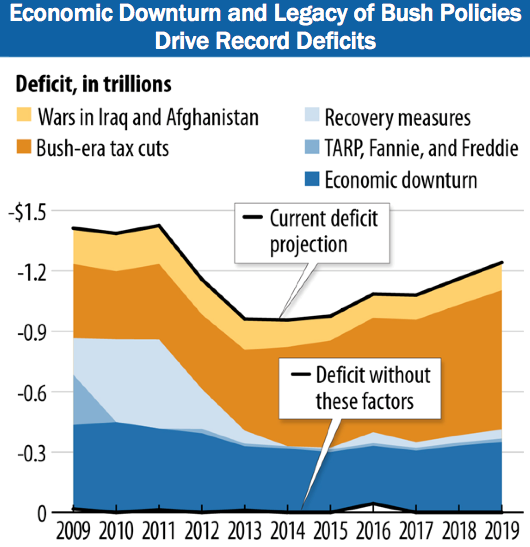
Finally, the graph below gives you a nice breakdown of the current $1.5T deficit. It comes from here:

US Alliance Commitment to Korea in the Age of Austerity: Big Cuts Loom

csis

So this week my university hosted a forum on the Korean-American alliance with Ralph Cossa and others from the Center for Strategic and International Studies. CSIS is the kind of center that anyone reading this blog would find useful, and Cossa is a great Asia hand. (For starters, try his chapter in this.)

The forum was informative, but too much of it passed what seems to me the growing mismatch between US alliance commitments around the world and US capabilities to meet them, what Paul Kennedy famously called ‘imperial overstretch.’ Most of the speakers reaffirmed the US commitment in direct, unambiguous terms – an expected response given NK’s exceptionally bad behavior last year. But to my mind analysts need to be more forthright admitting the great trouble the US will likely have defending Korea.

I have written on this before; consider the following data points of US ‘partial abandonment’ of SK:

1. US Forces in Korea (USFK) are now just 28,500 servicemen, the smallest number they have been in the history of the force. A large minority, so far as I can tell, are air and naval staff, not infantry. In short, the ground war – the hard, brutal slog of 1950-53 – will be born mostly by the SK army this time.

2. US tactical nuclear weapons were removed from Korea 20 years ago, after the Cold War. Given NK’s nuclear program, ROK elites have been hinting for the last few years that they might like to see them come back or at least discuss it. The US has rejected this.

3. The Combined Forces Command (CFC) is still scheduled to be abolished. CFC places wartime authority in Korea over both US and Korean forces in the hands of a US general. This is widely viewed in Korea as a signal of US commitment to SK defense. Originally it was to be abolished in 2012. Abolition has been moved to 2015, because of recent NK behavior, but CFC is still scheduled to go. The Koreans too have made noises about retaining this, but the US has held firm that it too will go.

4. US public opinion surveys from the Chicago Council of Global Affairs (2008, 2010) only find the 40-45% of American actually want to fight in SK if a war comes: “Americans also show an inclination to take a hands-off approach to confrontations between North and South Korea.” This should not surprise anyone, given the American exhaustion from the war on terror. Consider the Libya intervention (which I supported, to be transparent). This was mostly an inside-the-Beltway affairs (the ‘professor’s war’); US public opinion support for it is tepid. As a result, US involvement is very light. Obama is badly constrained by huge US public reticence to fight yet another big war – which is most certainly what a Korean conflict would be. Libya is far more likely to be the US model in Korea should another war break-out here, rather than a re-run of what happened 60 years ago.

5. USFK is being relocated away from the demilitarized zone to a city south of Seoul – Pyeongtaek. This strikes me as a critical data point, and one that Koreans most definitely worry about. Seoul is the obvious target in any serious war, so USFK’s placement between the KPA (NK People’s Army) and our ally’s capital signaled strong American commitment to SK, both reassuring SK and deterring NK. USFK, even when it was larger, was never enough to stop the 1.2 million-man KPA on the ground. Its role was basically a symbolic trip-wire. That is by stationing US forces in the likely combat zone, any combat would immediately pull in US soldiers, and likely result in battlefield casualties as well. Any US fatalities would have a catalytic effect on US public opinion regarding participation in an otherwise unwanted war. Emotionally provocative images of dead American servicemen would enrage America pubic opinion and so reinforce the US commitment to fight. The trip-wire ensured that the US would be ‘chain-ganged’ into any war in a ‘country far away about which we know little.’ People find this morally objectionable – and it is  – but that does not make it inaccurate.  Indeed NATO did the same during the Cold War. Multinational units were stationed along the West German border with East Germany and Czechoslovakia. If the Red Army crossed the line, initial casualties would be spread around the alliance in order to insure that all allies would have skin in the game. This would help ensure that allies in NATO’s backyard would stick to their commitment to fight. While I doubt that USFK planners are so callous as to open reason this way, it is clearly the case that US forces south of Seoul reduce American exposure, eliminate the immediate trip-wire/chain-gang effect, and give the White House ‘wiggle room’ it did not have before.

6. But even if all of the above were irrelevant, the real elephant in the room that casts doubt on all US alliance commitments (not just Korea) is the crushing national deficit and debt. The US is now borrowing $1.5 trillion per annum. This is the largest peacetime borrowing in US history (and only matched once – in WWII). It represents a staggering 10% of GDP. America’s publicly-held debt is now $9 trillion. These budget constraints will place major limits on any US use of force in the future. Again, the current Libya campaign should be seen as a model for what US war in the age of austerity will look like – hesitation, buck-passing to allies and international organizations, ‘leading from behind,’ no ‘boots on the ground,’ cost-efficient airpower, etc. The only way to close that massive $1.5T gap is to either cut spending or raise taxes (or inflate it away, I suppose – but who wants a re-run of the 1970s?). So long as the GOP remains firmly opposed to tax hikes, then spending must be cut. And no really believes $1.5T in cuts can be found without huge defense cuts. Social Security, Medicare, Medicaid (together: SS/M/M), Defense, plus interest on the debt, compose 80% of the budget. Interest payments cannot be cut obviously; we can’t just unilaterally stiff $9T of bondholders. Nor is there much saving to be found in the remaining 20% of ‘discretionary spending.’ That leaves just the ‘big four,’ as the Simpson-Bowles deficit reduction commission called them: Defense and SS/M/M. This is an absolutely classic example of the guns-vs-butter trade off. We can have a big defense budget or big entitlements (SS, Medicare, Medicaid), but we can’t have both. Consider that the entire US national security budget (Defense, Veterans Affairs, and the relevant parts of the Homeland Security and Energy Departments) costs about $1T. That means you could cut all US national security spending and still not balance the budget. Indeed, half a trillion dollars in deficit spending would still be left over. Just 5 or 6 years ago, when the Bush administration was running 4-500 billion dollar budget deficits, people fretted that such numbers were enormous. Now that would be progress. This budgetary mathematic all but mandates major US retrenchment, unless Americans are willing to dramatically lessen their entitlement expectations to make room for defense. And to no one’s surprise except the hawks I suppose, Americans do actually favor major defense cuts in order to save SS/M/M. Americans, if they must choose, want checks for grandma more than they want aircraft carriers. This is why Michael Mullen, the US Joint Chiefs of Staff Chairman, argued recently that the US budget deficit is now the single biggest threat to US national security. And the Sustainable Defense Task Force, organized by several members of Congress, does in fact recommend US cuts in Korea. (Read Kaplan at Slate.com for superb analysis on the approaching critical mass regarding defense spending.) The likelihood of major cuts in places where American really don’t want to be (Iraq, Afghanistan, Pakistan, Libya) and places American believe can afford their own defense (Western Europe, Japan, Korea) means that it is very likely that US forces will not be in these places in, say, 10-15 years. The money just isn’t there anymore…

In short, America’s accelerating sovereign debt crisis, much reduced force structure in Korea, and low public opinion support for more interventions, badly constrain our ability to meet our alliance commitments here, and many other places. This doesn’t mean we should get out; this is no personal endorsement one way or the other. But it does mean that probability of major US assistance on which Korea has built its security for two generations is diminishing fast. We need to be honest about that. Call it the end of empire, retrenchment, imperial overstretch, whatever; but US allies need to recognize this. The days of free-riding are just about over.

Obama’s Libya Speech was Good – UPDATED with Media

Well done – reasonably clear and coherent, limited, nonimperial


Media Update: I spoke on a local radio show on the Libya intervention. Please go here to listen; the media player half-way down the page  (with the green label in Korean) plays back the interview. My comments begin around 14:00.


Call me a shill, but I am really warming up to Obama, at least on foreign policy most of the time. (He’s not yet serious about the debt though – but the neither is the GOP.) I thought this speech was an excellent example of a toned, measured foreign policy that fits US constraints (the huge debt, 2 other wars that no one likes, the rise of the rest) with US values (preventing massacres, trying to help others to democracy) and tries to embrace world opinion rather than strut. So well done.


1. There were no rousing calls to arms, American dominance, American exceptionalism, etc. This is probably the part the US right hated. They can’t forgive Obama for refusing to call America exceptional, and once again he showed yesterday that he really does see the US as part of a community of states, not someone standing above it as the most awesome place in world history with special privileges to tell others what to do. I don’t know why this angers Americans so much. Can’t we see that all this does is humiliate others and convince them that we are jerks? All you need to do is travel a little outside the US to see how much non-Americans find the discourse of American amazingness grating, insulting, pointlessly antagonizing. I see this all the time teaching Asians – who have their own long history they think makes them pretty great and unique too. What is wrong with talking to other as if we are normal and like them? Humility is a value too.

The US is just 3% of the world’s population. Lots of other countries – Iran, China, Russia, France, 19th C Britain and Germany – believe they are exceptional too. In an age of nationalism this is to be expected, but what is the actual value to all that, other encouraging people’s worst, most parochial chauvinistic attitudes about the country in which the were randomly born? This doesn’t mean the US can’t lead; I certainly agree that US dominance is reasonably benign (thank W that we even have to argue for that point though now). And the world is generally a better place for US leadership. But even the US makes mistakes – including really big ones like Iraq 2 or Dresden. So not posturing globally as the most awesome place, somehow entitled to special rules to intervene in other peoples business, strikes me as mature, adult, serious. As I have said before, if we want other to follow American leadership, we can’t do that by embarrassing or humiliating them that somehow America is uniquely positioned to overawe the planet. You don’t need to be a psychologist to know that will drive other people crazy. Besides, we don’t even have the resources or rep to talk like that anymore anyway. Bush and the Iraq told the whole world that American exceptionalism is just arrogance and hubris. It is in America’s interest to adjust to that and try follow the rules.

2. The speech explicitly defended saving countless lives in Benghazi. This was always the most important reason to go in – to prevent another Srebrenica. I can’t understand why the president and other western leaders aren’t getting HUGE credit for this. Once again, the West has prevented a mass slaughter (also in Bosnia and Kosovo – all Muslim populations it is worth noting too). Yes, we didn’t stop other slaughters, and we can’t do everything, but we did this, and it was good and right. This is real Western or American exceptionalism – we saved defenseless people from a madman. China wouldn’t have done that. I can think of few US uses of power of which Americans should be more proud. When people claim the US is a nasty, expansionist, torturing empire, we have counter-evidence now too. And the Germans should be downright embarrassed they abstained. I still have not read any convincing anti-intervention arguments on this issue.

3. Obama roughly fit US limited power to global expectations and rules. You hardly need to be a historian to know that US power is on the ropes at the moment. US debt is spinning out of control, the recession is brutal, the rise of the rest, especially China, limits our room to move. In such an environment, unilateralism’s costs go up, and Obama was right to state that very bluntly. Instead of Bush-style ‘mission accomplished’ machoismo, he said we are doing the best we can in a tough position, and that our reluctant hand was forced by the likelihood of a bloodbath. Isn’t that exactly the kind of leadership everyone wanted after 10 years of Bush and war and national exhaustion and division? How many people, in the US too, called for that for year as Iraq burned? This is why I don’t understand all the carping about Obama dithering or leading us into a quagmire. Doing the best we can in tough circumstances is a pretty good compromise response to a very hard issue. That is enough, at least for now, no?

4. A lot of the criticism strikes me as mean-spirited or trite. I like Krauthammer most of the time, but I thought calling this the ‘professor’s war,’ was just nasty – and not just because I am a professor supporting it (a fair riposte I suppose). I presume that means that trying to follow the UN rules, trying to go through international organizations like NATO, trying to build real coalitions of the willing, is some namby-bamby girlie man response to a war. Real men just kick a— with the 82nd Airborne, I suppose. But didn’t we learn from Bush that going from the gut is super-risky? How about the measured use of force that displays some contemplation of risk and reward? And isn’t it nice that we have some real allies this time around. Sure, they won’t do a lot of the heavy lifting, but compare Iraq 1 and 2. The first time through, the coalition of Bush 41 helped limit the cost and fallout of anti-Americanism. Lots of thinking and effort went into that. Then consider the course of Iraq 2.

Next, a lot of  the talk about quagmires and exit strategies seems awfully overheated to me this early in the game. As Kaplan notes, relax, we are just in the first week of this. It’s not Vietnam all over again, and the president made a strong commitment to avoid ground troops. So let’s cut him some slack to deal with a very hard issue. Conflict are never, ever clean – even the Iraq 1 blitzkrieg we all remember so fondly lead to a nasty semi-civil war in Iraq.

Finally, what’s up with this ridiculous ‘tough girls’ critique? How thoroughly irrelevant to anything, so just let Sjoberg walk you through how crude and practically insulting that is to the serious female advisors around Obama.

This flippancy, plus the general failure of realists to admit that Obama just saved, perhaps, 10,000 people, tells me that Obama more or less got it right. The best critique I have read of the ‘Obama Doctrine’ is here. The most serious problem going foward for any Obama Doctrine is the consistency problem. As one of my commenters has noted over the last few weeks, doesn’t the responsbility to protect (R2P) mean we should go to Ivory Coast next?

Turkey’s ‘Neo-Ottoman’ Rise? (1): Turkey’s Drift from the West

Wikistrat

Part 2 is here, and Part 3 will come shortly.


Regular readers will know that I participate as a partner-analyst with the geopolitical consulting firm Wikistrat. This month they rolled out a pretty cool scenario on Turkey’s rise, and what it means for the region. The particular focus is whether or not Turkey is pursuing an independent line from the West in the Middle East especially. It has, partially, bandwagoned with Iran and Syria in the last few years. It broke publicly and sharply with Israel after the flotilla debacle. The current ruling party (Justice and Development Party; AKP) is formally islamist (although not too much in practice). There is concern in the scenario that Turkey might pursue an populist, semi-islamist course, possibly even a neo-Ottoman posture toward the Middle East. Obviously this would create huge headaches for the West, especially Greece and Israel. In the last few weeks, Turkey has fought the NATO-imposition of the no fly zone over Libya.

The scenario set-up is worth a look; Wikistrat’s idea is to build a sort of Wikipedia of analysts all contributing to pages of game scenarios and editing each other. (If you think you can hack it, and you have some decent credentials, contact them. Good analysts are always in demand.) I didn’t quite get it at first, but now I like it more and more. It is a nifty collaborative idea but with way better quality than Wikipedia or wiki-Avatar. (Hah! yes, wiki-Avatar really exists; if you don’t know why Avatar is awful, read this.) Wikistrat follows the ‘Web 2.0’ idea, pioneered by Wikipedia, that more eyes looking at the same ideas/writing will find problems and new approaches. I find this clever and rich. But it runs totally counter to the closed scholarship/peer review model of a sole author, perhaps emailing colleagues before submitting a paper to a journal, where three more reviewers at most look at it. Wikistrat goes the opposite way and throws open your input to all and sundry. In passing, I think this will be a big challenge to traditional closed peer review in the future. And yes, I do get a small stipend if you sign up for the service through my website, but no I haven’t made a cent yet, so I am not trying to be a shill here. I genuinely think the analysis keeps getting better and better, despite my initial skepticism about the ‘wiki’ model – it’s so different than what I do normally in my writing. Anyway, judge for yourself, and note also their awesome list of topics to come: global air power projection, global sea power projection, water conflict, US missile defense – nice, especially for all you defense wonks out there.

Anyway, I just don’t buy it that Turkey is really going to wander far into some kind of islamist-populist mode a la Chavez or Ahmadinejad. I argued that eventually Turkey would return to the NATO-EU-US fold because the cost-benefit analysis is stacked toward it. But I took some serious criticism for arguing for continuity, so, following the wiki-bleg model, commenters here should give me some good ideas to help me save my reputation. Here is the first part of my write-up, starting from the scenario baseline of a ‘neo-Ottomanization’ of the Turkish government. The titles follow the Wikistrat layout.


Scenario Title: Continued Rise and “Shift back Westward”


Summary: Turkey’s rise continues as it shifts away from Iran, strengthening relations with US, Europe and Israel.


Scenario Outline: From Neo-Ottoman Back to Normality


The AKP overreaches by openly provoking the West or EU, perhaps on the Armenian massacre debate, or Israel’s behavior in the occupied territories. Vocal domestic opposition emerges – particularly from entrenched elite interests in business and the military, coupled with the educated, westernized Facebook generation watching Arab Spring on their laptops. Facing rising domestic anxiety over an increasingly overt break with the West, Prime Minister Erdogan goes for broke, publicly arguing that Turkey is a ME power whose ‘destiny’ lies with fellow Muslims and others pursuing ‘social justice’ in the region. Trips to Syria, Iran, Saudi Arabia, Central Asia, Russia, and China follow in the next years. Western leaders and westernized Turkish elements push back in the media; Western fora like the Community of Democracies and the European Parliament wonder out loud about Turkey’s commitment to democracy and human rights. US congressmen start complaining on Fox News. Turkey’s EU membership application is discreetly frozen. NATO becomes stand-offish. The IMF and World Bank start hedging Turkish loan proposals. Turkish stocks start sliding, as does the lira. Polarization akin to the red state-blue state in Turkey emerges, and the AKP loses the following election (possibly with hints of military blackmail). The succeeding government – corrupt, unpopular, unstable – mouths a mixture moderation and populist/semi-islamist rhetoric publicly for continuity’s sake, but bureaucratically tracks back toward western institutions.


Regional Implications


My scenario returns the region to the status quo ante (before the open flap with Israel particularly). The Turko-Israel relationship though will never be as close again. Iran and Syria will push back, deploying standard tropes of anti-Americanism and Muslim toadying to the West, but no listens much to that sort of boilerplate anymore. The real regional costs to Turkey will come from Al Jazeera, which will opine mercilessly on this for months, probably saying Turkey caved to Israel. Greece will be unhappy that its implicit competition has gotten worse again. The Cyprus stalemate will become a little easier. Arabs states, absorbed by Arab Spring and traditionally hesitant toward Turkish power, will say nothing much.

A Defense of Obama’s Limited Commitment to the Libyan Campaign

libyawar6

The debate over the extent of US involvement in Libya is heating up, and a predictable cluster of analysts are claiming that we a backing into serious endeavor with no clear strategy, with confused ethics, raising process above substance, etc. I say predictable, because it looks increasingly like the ‘usual suspects‘ of liberal internationalist hawks and neo-cons who helped gin up the war on terror (GWoT) that by almost any benchmark has gone pretty badly astray. The gist of seems to be that Obama is a ditherer so we are drifting through this. Republicans of course will hammer Obama for this.

This strikes me as somewhat unfair (even though all the links above are worth your time and most of the points are fair). So here is a case for the limited, we’re-not-quite-sure-what-we-are-doing, we-hope-the-allies-and-Arabs-will-do-more intervention we just started. (For an R2P defense, try this.)


1. The narrowing time window in Libya forced the West’s hand before a serious strategic discussion could be fleshed out. Ideally, we would have had something like Obama’s serious, months-long deliberation on Afghanistan in 2009. All the big voices could be heard – western militaries and parliaments especially. A public opinion debate in western media could have generated at least some basic consensus among elites and publics both within and across the coalition’s member states. But war of course does not wait for strategists and planners to hammer out all the details, or for long public debates. Just about any basic strategy course will tell you how much unpredictability conflict generates and how actors frequently have to ad-lib and flim-flam their way through these sorts of engagements. New events pop up out of nowhere (Arab Spring); wholly unforeseen consequences suddenly loom (like a Libyan bloodbath); previous ‘certainties’ evaporate as new actors, atrocities, resources, etc. enter the picture (who are the Libyan rebels anyway?). Sometimes, the pressure of time simply cannot be avoided. I argued last week that if Libya were to evolve into a Bosnian-style bloodbath, the West would have to intervene, and fairly quickly. Inevitably that means that the operation will be organized on the fly and be fairly sloppy. Yet the alternative was so much worse. So yes, this thing is a mess, but it’s not too bad so far – let’s be fair – and the alternative of Gadhafi’s Gestapo tactics in eastern Libya is downright chilling. To my mind, western leaders deserve genuine congratulations at this point for pulling together some kind of reasonably coordinated campaign that no one really wanted very fast that has achieved the stated goals of the UN Security Council resolution. That’s not bad at all actually…


2. The US use of force is increasingly de-coupled from anything but presidential decision, but constitutionally, democracies really needed to wait and ‘dither’ a little bit. Andrew Sullivan has made this point very well. The case for ‘dithering’ is actually a good one, because the democracies really should not change into war without some public debate and consultation. Anyone whose studied the evolution of US foreign policy since WWII knows the (and should worry about) the increasing presidentialization of US war-making authority. The US has not declared war since WWII. The US has fought Korea, Vietnam, Iraq 1 and 2, and Afghanistan without formal constitutional authority from Congress (Article 1, Section 8 of the US Constitution). No, this does not mean the US president is becoming a military dictator (read Chalmers Johnson if you think so), but it is unnerving and increasingly undemocratic. So I think Obama did the right thing, by American law, in waiting for a least little while so that their could be some debate in the Congress and US public on this. This would apply to France and Britain as well.


3. The US is overstretched. This should be so strikingly obvious to everyoneexcept neo-cons I suppose – that is a very good reason to dither and otherwise look for a light, low impact intervention before lots of grandiose rhetoric about Clausewitz and such. This is premature it seems to me. This is not yet a major national mobilization in the West for a huge war. Maybe we can move through this with minimal intervention. We don’t know, but why isn’t it worth a try? If have to really ramp up to pursue a Clausewitzian victory (win big through a massive military strike at the heart of the enemy and get the awful, unpredictable business of war over as fast as possible), we can. But remember that Clausewitz was writing for interstate war traditionally defined. He didn’t think too much about insurgencies or foreign interventions for limited political gains in a revolutionary situation. Clearly invading Libya (‘boots on the ground’) would be a major new commitment when we really can’t afford that, and the likelihood it would backfire is huge. In that sort of environment, bombing to stop atrocities is not such a bad compromise.


4. Kosovo is not such a bad model after all. In 1999, NATO bombed the Serbs into (something like) submission in Kosovo. We helped the Kosovo Liberation Army even the odds, and today Kosovo is not that bad. It’s not great, but at least there is no ethnic cleansing. The conflict had (some) multilateral legitimacy, and while it angered Russia, it did not provoke a new Cold War which a heavier footprint might have. This was organized by most under-appreciated general in recent US history – Wesley Clark (probably because he is a Democrat whom the GOP cannot lionize). If you haven’t read his book on his work in the Balkans, you should. It is the likely model for Libya, even if the GOP thinks it is wimpy, violates Clausewitzian rules, and cedes the initiative to the French and Arabs.


5. Iraq really should give everyone pause and does, very obviously, argue for caution and last-resort thinking, at least for now. Anyone even passably familiar with the US budget should know that US unipolarity is on the ropes. No, the US should not suffer from an Iraq or Vietnam syndrome. But the GWoT has become such a mess, that does anyone really think that US public opinion (not interventionist elites, mind you) want some huge commitment? Yes, Americans and the West want to stop horrific atrocities; the ‘CNN effect’ is real, and we should try where we can (Rwanda should have taught us that). But I can’t imagine that the US voter, who really wants to leave Afghanistan and Iraq, wants to hear about Clausewitz in Libya. We have to balance our desire to help with American exhaustion and reticence after a decade of war. Hence, Obama’s middling approach is actually a fair response to contradictory pressures, it seems to me.


If you consider all these factors – to go in early and hard against Gadhafi (when it would have helped the rebels most, and because America ‘leads’ not ‘dithers’) vs. to stay out altogether (because we have no idea what we are doing and have just thrown this together at the last minute) – I think Obama, Clinton, Sarkozy, and Cameron actually found a pretty good middle course that can basically be summarized as ‘bombing for human rights.’ Yes, that is confused, messy, hardly a rousing call to arms and patriotism, dithering, possibly oxymoronic, and so on. But it balances well all the contradictory pressures listed above, which must be awfully hard this late in the history of the GWoT and Arab Spring. So before we tear them apart on the op-ed pages, let’s at least give them a chance. We will continue to debate this as war goes on; we can change course if we really need to because of new circumstances; and the West (and even the Arab League!) should be proud of itself for having prevented an almost certain bloodbath. That seems like a pretty good record so far.

2010 Asia Predictions: How did I do?

new-year-image


Last year in January, I made  some predictions on Asian security. It is always useful to look back at how one did. I did ok, but one might criticize me  that I predicted too many things would not happen. That predicts the lack of change, which is easier than predicting proactive change. That is true.

But prediction is one of the great goals of the social sciences. Indeed it is our hardest chore, and no matter how much we read, data we collect, or theories we propound, we still don’t seem to do much better than the ‘random walk’ theory. Depressing, but nonetheless worth the effort. So here is a quick review of my record. (For a nice collection of the worst world politics predictions from 2010, try here; thankfully none of mine are as eye-rollingly bad as them.) Here is a nice run-down from CFR on the big (East) Asia events of 2010. Note the differences from mine below.

My review of my 2010 Korea predictions will go up on Thursday. Here are my 2010 Asia predictions in retrospect:

1. There will be some kind of power-sharing deal in Iran before the end of the year.

X!

I really blew this one. My sense 12 months ago was that Iran was really slipping toward some sort of genuinely systemic crisis. Not primarily because of the street demonstrations. Those are relatively easy for dictatorships to contain with nasty head-crackings. In the movies (Avatar), the people overthrow the powerful, but in reality it is usually other powerful who overthrow the powerful. That is, elites usually depose other elites in dictatorships. And that is what I thought we saw in late 2009: the emergence of real splits inside the regime’s elites. Particularly, I thought that the clerics’ growing hesitation on Ahmadinejad’s policy of confrontation with the West might lead to a real cleavage requiring some kind of accommodation. Note that I did not predict a revolution or major change in the regime’s Islamist character. No one really expected that. But I did think that Ahmadinejad needed the clerics for legitimacy in what is still an overtly theocratic state. Looking back, I am fairly impressed at his ability to maneuver these domestic difficult waters, while nonetheless continuing to bluff the West. Yet perhaps the external bluff is the key to that internal success. Perhaps the nuke program insulates him against clerical unhappiness. He can appeal to a Persian populist nationalism with the nuclear issue, which allows him to ideologically outflank the clerics. If this is so, then Ahmadinejad is more enduring then we anticipate.

2. Israel will not bomb Iran.

This is a negative prediction, so it was a little easier. But still, given how much noise Netanyahu and the Israel lobby in the US make on this issue, including regular veiled threats to take matters into their own hands, I do think this deserves some credit. Also, the Wikileaks revelations that Sunni Arab states might look that other way on a bombing add further weight to my prediction’s riskiness. Netanyahu is playing a tough negotiating game with the US, but this one was probably a bridge too far, although I bet the righties in his cabinet are unhappy. Still, Israel really needs the US, and that need will deepen the more it becomes apparent that the Israeli right is the primary force blocking an Israeli accommodation with the rest of the Middle East. And without US approval, unlikely on Obama’s watch, I still think the cost-benefit calculus tilts against an Israeli strike. That said, a strike is more likely this year, because the Iranian nuclear program keeps rolling along and Iran (point 1 above) has not softened.

3. Japan will disappoint everyone in Asia by doing more of the same – more moral confusion over WWII guilt and wasteful government spending that does nothing meaningful to reverse its decline.

This is another negative prediction, and seems like an easy one too, because it just predicts more of the same from a country that has been doing that for 20 years. But placed the context of the DPJ’s (pseudo-)revolutionary election victory of late 2009, it still seemed like a mildly risky prediction at the time. Recall that the DPJ came in saying it would change so much – fixing the ever-sliding economy, improving Japan’s relations with its neighbors, edging away from the US, etc. All that turned out for naught. Some of this was because China seemed to flip out in 2010 (a big positive prediction I really missed – X!). China’s 2010 behavior pushed Japan back toward the US in a way the DPJ probably wanted to avoid. But on the other issues, Japan still strikes me as stuck in a terrible historical funk. It can’t seem to get beyond the fact that the glory days of its developmentalist economy (1960s-80s) are over, and that more Asian-style state intervention now just means more debt. Nor can it seem to figure out, despite the DPJ talk, that the rest of Asia is genuinely freaked out by Japan and pays attention to every change in Japan’s defense policy or utterance by defense officials. Worse, every time some disgruntled righty in Japan say the old empire wasn’t so bad after all, the neighbors go into paroxysms on incipient Japanese re-militarization. My own experience with Japanese students tells me that Japanese are just blind to this (although Japanese academics do seem aware). So my sense was that for all the DPJ talk, there was no real popular interest in a Willy Brandt-style ostpolitik on the history issues. Nor does that seem to have changed in the last year.

4. North Korea won’t change at all.

X! – It got worse!

Who would have thought that the worst state in the world could plumb the depths yet further? Somehow the loopy Corleones of Korea – the Kim family gangster-state – became ever more unhinged and dangerous. My original prediction was aimed at those who thought that Kim Jong Il’s trips to China and China’s growing ‘investment’ in NK might somehow hail a Chinese-style liberalization, at least of the economy a little. To be fair, no one expected NK to morph into a ‘normal,’ somewhat well-behaved dictatorship like Syria or Burma. But there was a mild hope that NK, finally, under the weight of economic collapse and the pressure to show results for the 2010 65th anniversary of the state’s founding, might open a little. I thought that was far-fetched, so in that sense, my prediction was right. But more importantly, I missed that NK would actually go the other way. Instead of possible better behavior, NK went overboard – provoking three major crisis – the Cheonan, the new uranium plant, and Yeonpyeong– in just 7 months. Wow. Wth is going up on there?!

5. The US drawdown from Iraq will be softened, hedged and qualified to be a lot smaller than Obama seemed to promise.

✔/X

This one seems mixed but broadly accurate. It was a gutsier positive prediction, but the evidence is not definitive. I was genuinely surprised when the last brigades rolled out, but then, there are still 50k US troops in Iraq (more than in Korea or Japan, btw). Now that Iraq is off the front pages, and with Obama’s speech that it is all over, no one pays attention much. But we are still running around performing what really should be called combat operations, and Americans are still dying. And in Afghanistan, the Obama people are now openly moving the goal posts from 2011 to 2014 now. While I didn’t predict that, it does fit into my general sense that Obama can’t really end the GWoT quickly as he hinted during the campaign. Instead, it seems likely that it will slowly splutter out.

The North Korean Shelling

Here is the frightening video if you haven’t seen it yet…


So much for the quiet week on blogging because of Thanksgiving. Yesterday NK started shelling Yeonpyeong Island in the Yellow Sea (what Koreans call the West Sea). It’s all over the news of course, but here is a good place to start, particularly on the possibility of a hawkish SK response. Here is a write-up from a more left-leaning Korean newspaper. For a good IR theory take on this, try here. I spoke yesterday on the BBC World Service “Newshour” program about this. Here is the link. My comments begin at 10:10 and conclude at 17:45 (this is ‘chapter 1’ of the listed choices). Here is the podcast (please refer to the download entitled “North and South Korea Exchange Fire 23 Nov 10”).

Here are my thoughts (fuller than my BBC remarks). All the links below connect to my previous posts on NK. Please see them for greater detail which this post summarizes:

1. I am surprised that this has evoked so much concern given that the Cheonan cruiser sinking in March was worse (46 deaths then vs 3 this time). The Cheonan sinking very clearly would entail many deaths, whereas yesterday’s artillery strike was less certain to do that. To my mind, NK is more culpable in the spring than this time, but the rhetoric is more belligerent from the ROKG this time than last. Even though fewer died, this might be explained by a ‘straw that breaks the camel’s back’ logic: SK has just had a enough of these sorts of out-of-the-blue strikes (point 3 below), and this time they are going to hit back regardless of the costs. This incident is also somewhat different from past provocations, because it openly is targeting South land territory, and the North Koreans knew that. The other Yellow Sea skirmishes were on the water. Also, there were civilians on the island – and only one firetruck – so it looks perhaps more egregious than attacking a warship. (Although the Cheonan sinking was wholly undeclared and the Yellow Sea islands have been disputed for a long time, so I still find the greater outrage this time confusing.)

2. NK is almost certainly miffed and unhappy at all the global press SK got for the G-20. This is a way to hit back and play the spoiler of SK’s afterglow. NK did something similar in in 1987, when it blew up KAL 858 in order to discourage SK from holding the 1988 Olympics. In both cases, SK regarded the event as a global coming out. In 1998, the Olympics showed that a previously poor underdeveloped country torn apart by war had bounced back through an astonishing economic miracle (2 decades of double-digit GDP growth) and was wealthy and stable enough to hold a major international event. The contrast with brutalized, still poor NK was obvious.  In 2010, the G-20 was also regarded in SK as a major coming out for Korea as a big economic player inside the elite G-20. And now, NK is even poorer and worse off than in 1988. The comparison is pretty stark. So my kremlinological guess is that NK is once again showing its displeasure and that it is still a major force on the peninsula.

3. NK has a history of these sorts of provocations against SK. These sorts of things are practically ritualistic now. While these things are disruptive (to say the least), they are not actually unpredictable. In fact, they follow a pretty established pattern of NK brinksmanship though asymmetric outlashings at SK from time to time. These strikes show the North’s unhappiness at something in the South (like the G-20 last week) or to bolster the CV of NK insiders (like Kim Jong-un today) jockeying for influence inside a fairly corrupt regime with pretty murky rules and shallow institutions. Just in the last 12 months, North Korea sank the SK Cheonan cruiser in the Yellow Sea (March 26, 2010) and fought a naval skirmish in the same area (November 10, 2009). There were also skirmishes in the same area in 1999 and 2002. So this stuff is pretty common actually.

4. This probably won’t escalate, because the South Koreans have little appetite for war against NK. The sinking of the Cheonan was a far worse provocation (46 sailors died), but the SK military did nothing, because most South Koreans just want to forget about NK. They don’t want their wealthy comfortable democracy trashed in a war with a ruler they consider a quack. So South Koreans just put up with this stuff. Their tolerance for NK pain is quite high, because the costs of war and reunification are frightening. Also, South Korea’s hands are badly tied by the extreme exposure of SK population centers to NK retaliation. 50% of the SK population lives within in 50 miles of the DMZ, and NK has stationed thousands, perhaps 10-20,000, canon and rockets with striking distance of those cities for the purpose of holding SK hostage. So NK can act out all these provocations with little fear of retaliation. It is just too risky for the South to hit back.

5. Finally, the Kim family transition in the North itself generates huge uncertainty. These kinds of strikes demonstrate the NK military’s relevance to all involved – not just in the South, but also China, whom they don’t want to dominate them, and to the leader-to-be, Kim Jong-un. This sort of thing reminds him who is boss in the regime, or at least, who is a competitor for power.

The Tea-Partiers and US Foreign Policy, post-2010 election

tea-party-signs

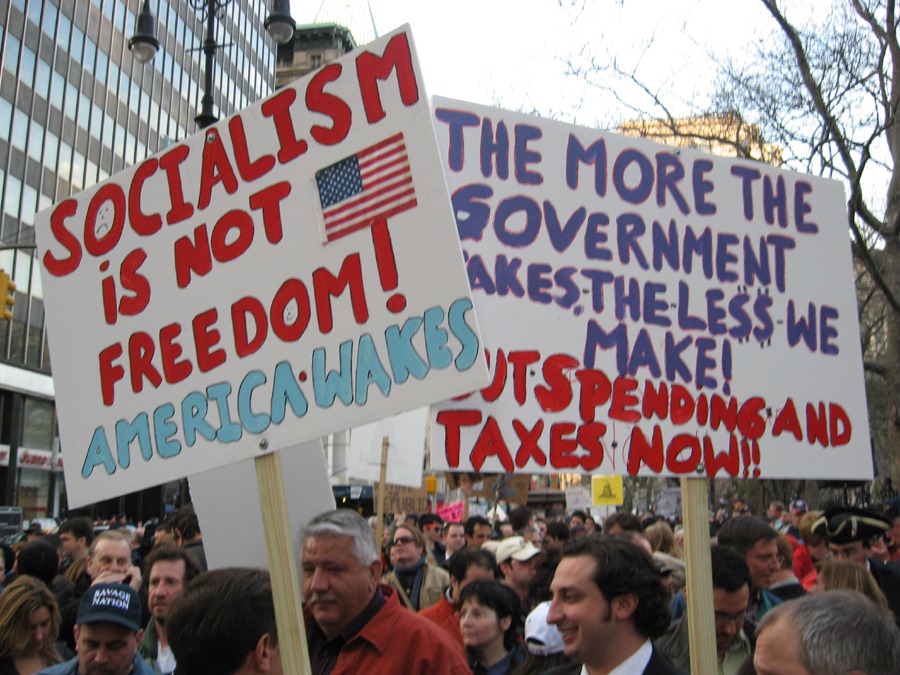
So Obama took the ‘thumpin’’ that W got back in 2006. I find this unfortunate generally, because I believe the GOP is still unreconstructed from the dark days of George W Bush. Yes, the Democrats are protectionists tied to rapacious public sector unions, but the anti-science, jingoistic GOP is worse. I worked for the GOP on-off throughout the 1990s and cast a heartfelt vote for Bob Dole. But when Bush said Jesus was his favorite political philosopher in 2000, he lost my vote, and things went downhill fast – Iraq, torture, ‘big government conservatism’ (ie, debt), Katrina, Rumsfeld, etc. Yet astonishingly, the GOP learned nothing in the wilderness and got even worse after W – which still confounds me – with the rise of Sarah Palin. She and the Fox News set of Hannity and such strike me as astonishingly unserious; I recall reading that McCain’s people had to explain to Palin why there are two Koreas! With their capacious, uncompromising rhetoric of freedom or American power and awesomeness, I just can’t image them actually doing the hard, compromising business of government.

So on their big day of triumph, that is my ultimate question about the Tea Partiers – American exceptionalists in the extreme – about foreign policy. Consider:

1. Tea Partiers worry about debt, but nothing bloats out government like defense. The combined budget for national security is around $1 trillion, if one includes intelligence, veterans affairs, some relevant homeland security spending, and the Department of Energy’s control of US nukes with the traditional DoD budget. I just saw Rand Paul on CNN. In his acceptance speech he talked about freedom from socialism and crushing debt, but as Andrew Sullivan identified months ago about the movement generally, Paul did not mention what he will cut. And none of them seem prepared to say that Defense really needs to go on a big diet, unless you want to start cutting Medicare/Medicaid/Social Security.

Defense plus M/M/SS are 80%+ of the budget, so something’s got to give. Is the Tea Party ready to chop defense as the Brits just finally admitted was necessary? I don’t see this, given how super-nationalist the Tea Partiers are. Their rallies were filled with endless paeans to the uniformed soldier. But Americans love M/M/SS entitlements too; no one wants grandma to lose her check either, regardless of their feelings about ‘socialism.’ I would love to see a serious debate inside the GOP, like just happened among Britain’s Tories this fall, on how to square guns-and-butter. That the Tea Party simply will not go into the details and grit on this is why I just don’t believe they’re serious. (Try here for ideas on DoD’s needed diet.)  Obama may a ‘socialist’ to them, but I don’t see them proposing what parts of the government to close to save the money. Even WR Mead admits this about the movement.

2. What do the Tea Partiers say about the rise of Asia and the BRICs? Phillip Stephens really nails this, IMO. Obama has tried to push the US to adjust to a world where US power is imperiled by overstretch (from huge debt and two wars) and simultaneously confronted by the ‘rise of the rest,’ ie, the growing wealth and social mobilization of much of the former third world. I don’t mean just China and India either. Lots of places are closing the gap with the US as they get wealthier. Smaller countries too like Turkey, Indonesia, S Korea, South Africa, etc. are all getting wealthier and so more capable of resisting US pressure, forging deals and agreements beyond the US, etc. As I’ve said before, this not the end of American power – only intra-US foolishness like the Iraq War and the debt can do that. But the social and economic modernization of much of the planet through globalization does slowly reduce the US room to maneuver. Hence we have the G-20 now.

Yet I see no recognition of this in the Tea Party, only endlessly repeated neocon/theocon narcissism about America as the greatest country on earth. I really do wish American conservatives would travel more to grasp that they are limits, that God is not an American, that foreigners find this sort of rhetoric deeply insulting, etc. This partly what I meant about the Tea Party simply not being serious. The Tea Parties, so far as I heard and read their stuff, are militant in insisting on Henry Luce-style US exceptionalism. This may make good politics against Obama the non-citizen Muslim, but in the real world, it is is poor training for the serious trade-offs the US faces in a crowded, ‘post-Atlantic’ world, where the US fractions of global GDP and global population are in decline and many foreigners don’t trust us after W.

Shallow, narcissistic talk about how awesome the US is, how it is the greatest force for freedom in the world, or the most amazing place in history is not actually real geopolitical analysis at all. It does nothing to prepare the US electorate for challenges like the Chinese juggernaut, a looming defeat in Afghanistan, a NATO unable and unwilling to fight with the US much at all anymore, climate change, etc. The irony of course is that earlier Republicans did in fact talk seriously about foreign policy. Nixon, Kissinger, Scowcroft, Bush 1 – all spoke realistically about America’s reach. This is exactly what the US needs now given the debt and dysfunction of the GWoT. Hence I like Obama’s more restrained style, such as the Cairo speech. But neoconservatism seems to have replaced realism as the dominant foreign policy ideology of the GOP, and too much of it is easily politicized fantasy to stroke the American ego about our ‘special role.’