Competing Maps of Eurasia: Mackinder vs Barnett & the US Asian ‘Shift’

mackindersworldCore Gap

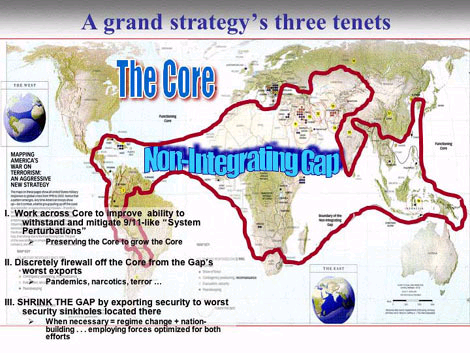
Mackinder’s famous map is on the left; Barnett’s is on the right. Here is Mackinder’s famous article; here is Barnett’s book.

It is a slow fall for Asian stuff. China is behaving better; Japan and SK are quiet; NK always seems like its building a new military installation somewhere, but it’s fairly quiet too. If you missed KJI’s birthday though, click here. The big recent new is the US decision to ‘shift’ toward Asia and the placement of US forces in Australia. Last year, I predicted that the US would lead a containment ring around China (yes, I realize that that is not a very gutsy ‘prediction’ at this point in the game). I see this as the first step. So here are some big geopolitics thoughts on the US shift, because I was re-reading Mackinder for work.

Halford Mackinder practically founded the field of geopolitics single-handedly with his famous article and the above map. It became the informal basis of US strategy in WWII and to certain extent, justified Cold War containment: keeping the Soviets penned into Northeast Eurasia. So it’s easy to roll this over to China. Mackinder’s map privileges land power. Mackinder thought the center of Eurasia constituted the ‘heartland’ that would be the pivot of global dominance. (China could arguably be a part of that, as it is far more populous than Siberia.) His famous quote was: Who rules East Europe commands the Heartland; Who rules the Heartland commands the World Island; Who rules the World Island commands the World.” Generations of German, Russian/Soviet, and (to a much lesser extent) American cold war strategists, took this as established wisdom. And indeed, I argue similarly in my Geopolitics article. The US is safe behind two big oceans, so long as no one controls all of Eurasia. If Napoleon, Hitler or Stalin had managed to control that whole stretch though, then a transoceanic invasion of the US might actually be possible. (Inter alia, it was Mackinder who coined that term ‘Eurasia.’) Probably the most famous exposition of the heartland theory’s importance for the US was from Frank Capra (yes, the guy who made It’s a Wonderful Life.)

Barnett comes more from the traditional American school privileging seapower, best known from the work of A T Mahan. Mahan thought (and Teddy Roosevelt agreed) that a powerful US navy was a the shield of the nation against the chaos of Eurasia. There is no need to get into long wars about the heartland; off-shore balancing is possible. The long US naval tradition is why the heartland school was never as dominant in the US as in Eurasia. Even though the US invented the nuke and has fought a land war in Asia for a decade now, the US is still firstly a naval power. I also think Barnett’s map reflects the American infatuation with technology and capitalism. Mackinder’s image is very traditional or realist: big states with big industries build big armies to conquer big spaces. This is a recipe every land strategist from Sun Tzu to Clausewitz could love. Barnett goes around all that to re-write geopolitics politically not militarily. In post-industrial economies, the control of land isn’t so important anymore (people’s brains are a lot more important than their manual labor in the fields of Ukraine). The critical divide is then between those states that function and those that do not. The functioning ones join globalization, get rich in the process, and then can use their wealth to set the rules. The nonfunctioning ones can’t grasp the benefits of globalization, generate all sorts of asymmetric problems, and are therefore the locus of military conflict. Policing failing states as spaces is more important the conquest of strategic territory. In Barnett’s world, Iraq, Somalia, Afghanistan, etc. are the threats of the future; in Mackinder’s China should start bullying central Asia and maybe Russia soon.

Has Barnett’s vision of Eurasia divided into functioning and failed states replaced Mackinder’s land-power realism? It seems to me that this is a good test of whether or not globalization is really changing a lot. If China and Russia become status quo powers, then yes.  Then the only big issues will be integrating the periphery and rogues into the world economy. In this environment, salafism and other ‘remnants of war’ becomes the biggest challenger (headache really) to the US. But Russia, and especially China, pursue major changes in the land order in Asia, then score one for the realists. And America’s decision to base in Australia now too says Obama is leaning against Barnett-Mahan offshore balancing, toward forward deterrence of Asia domination.

I would add to other factors to this macro-musing:

1. A strong test of these competing maps is Chinese and Russian behavior if US power weakens. Radical Islamists, driven by the fear of God, will assault the West regardless of the chances of victory. So in that sense, Barnett will always be correct. But Russia and China are more rational. If US unipolarity holds, they are not likely to challenge the US, so then we’ll never know if the Russians and Chinese have changed because of globalization or were just deterred. But if the US declines, if military power genuinely disperses, and multipolarity emerges, then look for a challenge. As Beinart notes, “Offshore balancing, by contrast, reemerges when the money and bravado have run out.”

2. Global warming will raise the importance of the Heartland. In 1943, Mackinder noted the importance of the river basins in the Heartland. Fortunately for the West, those that flowed into the Arctic were blocked mostly be ice. Russian/Soviet naval power was forced to the fringes – Vladivostok, Leningrad, Odessa. If the Arctic truly meets permanently, perennial land power Russia will immediately become a sea power too. This would be an unprecedented shift, as geographic obstacles like the Arctic ice pack have generally been understood to be permanent, immovable features of geopolitics.

 

5 (Bad) Options for Dealing w/ NK (2): China & Bribery don’t Work either

3610146150_76b6755939


Part 1 is here.

I spoke at the Korean Institute of Defense Analysis last week. This is an expansion of my remarks. In part 1, I argued that the first option, negotiation, would fail. Here are three others that I don’t think have lead anywhere either.

2. Wait for Change/Muddling Through: This is the default position, as NK is so erratic, it is hard to build a ‘grand strategy’ to deal with it. Call this permanent crisis management. This is attractive, because it doesn’t require a huge Southern defense budget; the Americans are here and will help SK deterrence. It also appeals to our sense that NK is living on borrowed time. If there is one idea I hear at just about every conference I’ve been to in Asia, it’s that NK can’t last. If SK can just hang-on, then eventually NK will go away. I see two problems: First, NK doesn’t seem to be going away no matter how many experts and economists tell us they are on their last legs. Indeed, NK confounds us all by surviving, somehow, no matter what happens. It’s astonishing actually. Second, insofar as NK is an unbelievable brutal regime, simply waiting for change raises the moral issue of the fate of North Koreans. North Korea is beyond your run-of-the-mill dictatorship; its 1984. It allowed some 1 million of its own people to starve to death in the 1990s, and it runs the worst gulag system on the planet. Insofar as ‘traditional’ dictatorships allow regular people to survive if they keep their heads down, the moral compulsion on outsiders to end that regime is low. But when a regime actively brutalizes its own people, the R2P principle kicks in. I wonder if all this raises moral culpability among the liberal states in the 6 parties? Given just how bad NK really is, do we have a moral responsibility to try to accelerate its demise? Is mutual coexistence defensible with a regime this bad?

3. China: This was the great hope of the last decade, but it seems to be going nowhere. The liberal states of the 6 parties are played for gain by NK less and less; they have learned to not get gimmicked and played off against each other. This has driven NK, in desperation, to China, as its last benefactor. (Russia is neither wealthy nor interested enough to care.) So for awhile in the 2000s, there was talk about the ‘way to Pyongyang runs through Beijing.’ And this would be true, if China used its leverage, and one read of the NK nuclear program is that it prevents the total clientelization of NK by China. But they just aren’t helping. Indeed, the Chinese decision to continually subsidize NK led me to call them ‘liars’ on unification two years ago. Maybe that was an overreaction, but their non-response to both the Cheonan and the Yeonpyeong last year was a terrible failure of global citizenship. NK is ground-zero for all that talk of China being a ‘responsible stakeholder.’ Reining NK is vastly more important the China’s currency gimmicks or even the South Chia sea flap. If there is any one thing the world wants from China, it’s help in bringing the NKs to, if not change internally, at least behave with a modicum of normality externally. My own thinking on China has softened since I’ve lived here. I have had enough ‘track II’-style relations with Chinese scholars and students to see that there is a lot of worry about NK, an awareness that the world is really watching China on this issue, and a general sense that Chinese global prestige is damaged every time it looks like NK is the maniac pitbull whose owner won’t control it. But perhaps old ways die hard, or the PLA is the one really calling the shots on the NK issue. I can certainly understand that China does not want an American-allied, nationalist, larger ROK on its border. Whatever the reason, this is not working; China is not disciplining NK (or maybe it can’t and we have over-estimated it). Sure, we should keep talking to Beijing about this, but like the negotiating strategy, it is time to be realistic that this probably won’t work.

4. Sunshine Policy Bribery: Contrary to SK hawks, I thought this was actually a good idea back in the 90s. By 1997/98, it was pretty clear that NK was going to survive the end of the Cold War and its internal famines. Waiting for NK to collapse feels like waiting for Godot, so just about anything that might work is worth a try at this point. Given that the goal is NK change, not ideological purity, I see no reason we should criticize Presidents Kim or Roh as dupes of NK or something like that. They tried. A pragmatic decision to see if another approach would work was absolutely worth it at the time. It’s unhelpful right-wing ideology to say that we should never talk to NK or that they are part of the ‘axis of evil.’ What we really need is change, and a pragmatic decision to reach out was certainly defensible. It should also be admitted though, that it didn’t work. We know now that both President Kim (1997-2002) and Roh (2002-07) were bitterly disappointed that NK did not respond. Kim Jong Il even needed to be personally bribed in order to come to the inter-Korean summit. In the language of game theory, the Sunshine Policy could be read as persistent, unreciprocated cooperation, even as the other player defects and defects, in order to see if the other player can eventually be brought around. The failure of player B (NK in this case) to respond tells us very important information: at least until the current Kim passes, it is very unlikely that unreciprocated cooperation will work. It was worth a college try; indeed, it was a heroic, noble effort (Kim won the 2000 Nobel Peace Prize). But it also failed almost completely, and I entirely understand why the SK electorate turned against it and took the current hardliner as president. It is unlikely to be tried again, at least while Kim Jong Il is alive.

Part 3 will go up on Monday.

5 (Bad) Options for Dealing with NK (1): Don’t Expect Much from Talks – UPDATE: Today’s Talks flopped again

crest-north-korea-dd-kids-shirts_design

Nov. 2 UPDATE: Not that anyone expected any different, but read this on the latest negotiation stalemate. Is anyone really surprised at this point? This just bolsters my point in this post that negotiation is just not working  – not that we shouldn’t try, but expectations should be very, very low.

—————————————–

So off I went last Thursday for yet another conference on how to deal with NK. Honestly, this like a cottage industry here. I spend so much time on NK, it amazes me. If unification ever happens, it is going to bankrupt thousands of academics and think-tankers around the world…

Nonetheless, this was another excellent conference from the Korean Institute for Defense Analysis (KIDA). KIDA is fairly hawkish, especially on NK – I got some raised eyebrows when I argued that the Sunshine Policy was worth the effort – but honestly, it is hard not to be at this point. NK misbehavior, its rejection of the most basic international norms (man-made famines, gulags, violent provocations against the South, drug running, insurance fraud, counterfeiting), are so severe, that there aren’t too many options left. KIDA also publishes the very good Korean Journal of Defense Analysis, which you should probably read if Asian security is your area.

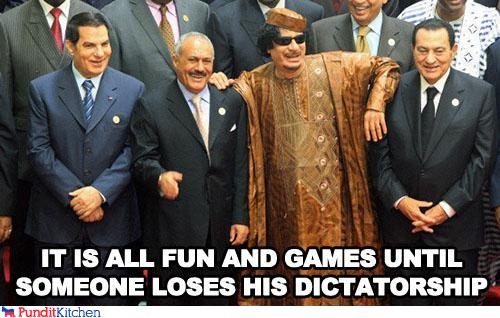
The conference concerned “Denuclearization and a Peace Community on the Korea Peninsula.” The papers were excellent. I commented on two regarding denuclearization in the run-up to the 2012 nuclear security summit in Seoul. I imagine that the global attention focused on Korea for denuclearization next year helped push the idea behind this conference. Park Geun-hee’s article (she is the front-runner now for the Korean presidency next year) in Foreign Affairs leans in this direction too, but honestly, I am really skeptical NK will change at all, especially after Arab Spring. Over the summer, I argued that NK is likely to go the other way in response to Arab Spring – repress yet more harshly and never, ever give up its nukes. One can only imagine how the footage of Gaddafi being roughed up and then lynched affects despots like Kim Jong Il or Robert Mugabe. One year, you are giving an address to the UN, and the next year you are gunned down in a ditch like some street punk, and all you’ve ‘built’ (Korean socialism, or the ‘Great Socialist People’s Libyan Arab Jamahiriya’) is washed away in a flash. The lesson is never lighten up – ever.

In fact, there was a noticeable gap between the Korean presenters and the foreigners (me, Andrei Lankov, Bredan Howe, Christoph Bluth, Hideshi Takesada). All five of us argued that negotiations would go nowhere, that NK would use them to play for time, capture global attention, and blackmail for aid. Lankov called the Six Party Talks a ‘soap opera,’ and Howe noted that without its nukes, NK would be ‘Turkmenistan without the oil.’ Bluth gave a nice run-down of all the times NK has cheated since the denuclearization talks started – in and out of the Non-Proliferation Treaty, cheating on the Agreed Framework, not reciprocating at all during the Sunshine Policy period, violating two of the Six Party joint statements, and then of course, last year’s sinking of the Cheonan and shelling on Yeonpyeong island. Takesada even argued that NK is building ICBMs (!) for the purpose of blackmailing the US in order to achieve unification on its own terms. (Btw, if anyone can verify that last claim, please let me know. That seems pretty extreme, and its important not to read NK, dangerous as it is, in too ideological a fashion. Let’s not make the ‘Iraq-has-WMD’ mistake again.)

The Korean conferees were all far more confident (hopeful?) that negotiation will work. I am not quite sure what to make of that insider-outsider split. Is it because South Koreans see North Koreans are ‘ethnic brothers’ who speak their language, literally, and therefore can be pulled into a deal? Is it because they are vested, as Korean nationals, here in a way that we are not and so therefore overread bargaining even though they may know better? I don’t know, but the non-Koreans were all terribly skeptical.

So here are the options that I laid out, as I see them (comments welcome):

1. Negotiation: This was the point of the conference, and the papers explaining the evolution of a ‘peace community’ on the peninsula were excellent in their detail. IF North Korea comes around and deals in good faith, then there are clear road maps for building down. And I have the strong sense that S Koreans really, really want this. Last year made South Koreans pretty nervous, and no one wants their country to be an armed camp, especially since SK just escaped military dictatorship in the last generation. I think SK would like to be more ‘normal’ with regular participation in the global economy as a regular country, not endlessly hamstrung by NK shenanigans. This is what President Lee’s ‘Global Korea’ campaign is all about – to show that Korea is a global player, not some half-country locked into the Korean ghetto by a mad uncle in the attic. The problem is that the NK just doesn’t negotiate following the pacta sunt servanda principle, so I argued that the best the liberal states of the Six Parties (Japan, SK, US) could hope for it small improvements like a bit more monitoring here or a few more family reunions there. But this is small stuff. Still, at least if N and SK are talking, then are not shooting. That is progress I guess…

Here is part two.

Syria Sanctions failed b/c of R2P Overreach in Libya – get out Nato

In the last 6 weeks, I warned that if NATO kept the operation in Libya rolling, it would tarnish the responsibility to protect doctrine (R2P). R2P says external military force can be used to prevent massive human rights abuses, like Srebrenica or Rwanda. In Libya, an R2P intervention was justified, because Gaddafi and his sons talked about ‘rivers of blood in the streets’ and hunting the rebels ‘like rats, allay by alley.’

But after the fall of Tripoli, it was clear that Gaddafi was not longer a massive human rights threat in Libya. The National Transition Council clearly no longer needed NATO assistance. The NATO mission was no longer necessary in what is now a fairly traditional civil war. A focused, limited, and coherent R2P doctrine is the best antidote to the ‘its an internal affair’ siren song used by oppressive states like China or Sudan to prevent outside scrutiny of their illiberalism. Here was an intellectually defensible wedge against using ‘sovereignty’ as all-purpose excuse to brutalize your own people.

Hence, keeping the NATO mission going past necessity was a sure way to tell everyone that R2P is just another name for “regime change,” Bushism, neoconservatism, etc. R2P would lose its focus and look yet again like western imperialism to non-western states.

And that is what we got this week when the UN Security Council voted against sanctions on Syria. The BRICS explicitly noted that Libya’s R2P vote turned into regime change, and that they didn’t vote for that or want that. The more we stay in Libya, the less it looks like R2P and the more it looks like Iraq-light.

No wonder no one trusts us. Despite all of our angst and hand-wringing about Iraq, as soon as we won another war, our neocon, ‘inside every g—, there is an American struggling to get out (video above)’ instinct came roaring back. But all the western victory laps do is undercut R2P as real human rights-protecting mechanism because no one will vote for it in the future, now that they’ve seen Libya. Another opportunity for better global governance squandered by neocon arrogance…

Some Media on the 9/11 Anniversary and Libya

bc92d_520cb8b4-e80d-4da7-bb0d-017f06888204

1. This week I wrote on an op-ed for the local Korean affiliate of the International Herald Tribune. It is based on my two 9/11 posts from last week.

Re-reading it today makes me wonder if I was too tough in calling Afghanistan a ‘quagmire.’ But honestly I don’t think that is an exaggeration anymore. Does anyone really believe we are winning there anymore? I find this as frustrating as anyone else; is there no way to ‘win’ (no, I don’t know what that means either) that wouldn’t keep us there for decades and cost more trillions we don’t have? I just don’t see it anymore, even though I supported the original invasion. Similarly this the most high-profile platform in which I state that I think Iraq 2 was an error. I supported that too until recently, but we killed so many people and disrupted so many lives, for such modest improvement in Iraqi governance, that I just can’t find a way to defend it anymore.

2. I also spoke about Libya on Pusan’s English language radio station, 90.5 FM. (Go here and click on no. 117, for September 5, 2011 show.) Those comments are based on these blog posts. In the last two weeks, I still don’t understand why NATO is staying in Libya anymore. I argued both in print and on the radio that the only way to keep R2P as a legitimate humanitarian intervention doctrine is for the interveners to get out of the way as soon as they are no longer needed to prevent the massacres that brought about the intervention calls to begin with. If the interveners (in this case, NATO) stay in beyond necessity (as is clearly so in Libya now), then R2P increasingly becomes a gimmick for externally-imposed regime change. That casts the R2P debate back into the terms broached by the Iraq invasion – R2P will be read as human right imperialism, American empire, neocolonialism, etc. Please don’t do this!

Libya is an important opportunity to demonstrate the R2P is a limited, non-western intervention doctrine that can hold non-western support, because its based in human rights lessons learned in the Balkans, Rwanda, and Darfur. NATO needs to get out immediately to keep it that way. If we stay in there taking victory laps, Russia, China, and India will never go along with this again. GET OUT NOW.

9/11 a Decade later (2): Flirting with Empire

map_3

Part 1 of this post is here.

Terrorism is the weapon of the weak; terrifying your enemies is a lot less satisfying than actually defeating them. If OBL had an army, no doubt he would have invaded NYC. But terrorists have limited force, so much of their impact depends on how the target responds. Hence, in my previous 9/11 post I argued that the largest change came not from 9/11’s actual material impact, but from the US over-response. The most obvious elements of that would be the freedom-eroding homeland security clampdown, the badly misguided Iraq War, and the catastrophic budgetary consequences of a ‘military,’ rather than law-enforcement response to 9/11. Why GWoT (global war on terror) defenders and Bush partisans are so proud of that last claim strikes me as bizarre given the growing consensus that the GWoT has really lost it way and became much too expensive.

1. The idea that ‘9/11 changed everything’ was a self-fulfilling prophecy made so by America’s (specifically the Bush administration’s) reaction to it. It didn’t need to be this way. Ten year’s out now from 9/11 it should be apparent to everyone how little 9/11 actually changed, except for the changes that we wrought. The mantra ‘9/11 changed everything’ morphed into a blank check. It started as a defensible justification for an assertive foreign policy – on terror, in central Asia – plus better border control (long needed anyway because of out-of-control illegal immigration). But increasingly it turned into a fig leaf for something akin to a barracks state at home and semi-imperialism abroad – the Patriot Act, warrantless wiretaps, rendition, torture, indefinite detention, the Iraq War, exotic and probably illegal drone warfare, spiraling national security spending, etc.

Remember too that in the wake of 9/11 we were told relentlessly how vulnerable we were and how we should expect a progression of attacks against the US. No matter what you think of Michael Moore, he captures well the paranoia and wild over-speculation of this period in Fahrenheit 9/11. My favorite in the film is the Fox News report on pen-bombs. Did we really believe that sort of stuff in 2002ff? I remember teaching international security courses in those years with students writing endless papers about terrorist attacks on dams, bridges, ports, airports, even theme parks. I was at OSU, and we actually debated in class the economic impact on Ohio of barbed wire and armed guard patrols at King’s Island and Cedar Point. One student wrote that we should use nuclear weapons in Iraq; another that we should put SAMs on top of the Sears Tower in Chicago. I remember the students and I gaming out how easy it would be for a few terrorists to attack a shopping mall, based on the Columbine school assault and Sang-Hui Cho’s Virginia Tech massacre. My syllabi from that time describe terrorism as the ‘central national security threat to the US for a generation’ and approvingly cite Rumsfeld’s moniker, ‘the long war.’

Yet none of this happened. There was no wave of attacks. Muslim-Americans did not turn out to be a fifth column as loopy righties like Frank Gaffney or Rod Parsley insisted. For all the vulnerabilities – the easy-to-penetrate border with Mexico, the obese security guards at your local stadium, the hundreds of power plants with minimal security, the terrifying scenarios of 24 or Die Hard 4 – nothing like 9/11, no mega-terror, happened again. Yes, the Bush crowd will argue that that is because of the counter-measures put in place by the Bush administration, but there is no empirical evidence to support that statement and much missing evidence that demolishes it. Specifically, as I argued in the last post, 6M Americans live overseas – soft targets in expat clubs and bars all over the world that are easy targets of opportunity. Yet nothing happened to them. Nor have we yet seen any meaningful, independent study on serious plots foiled by DHS to actually verify that we needed the Iraq War, the Patriot Act, torture, Guantanamo, etc, in order to achieve reasonable security. Perfect security is impossible, and do we really want to try to torture our way to the ‘one percent doctrine’? As early as 2006, we knew this was overblown.

But the bureaucratic incentives for threat inflation are obvious. No one wants to say we can let our guard down, and then have the next attack happen on her watch. So we get one report after another about how we need to harden this or that part of American life; in the end we look likea garrison state. Here is a nice example of how even when a report finds little to worry about, the authors can still encourage more ‘vigilance,’ more money, and more hysteria. Does it even matter anymore to remind people once again that you are more likely to get hit by lightning than die in a terrorist incident?

2. The GWoT turned out to be a spectacular error that probably didn’t do much a far narrower and less hysterical counter-terror (CT) effort could have done. Fairly quickly it turned into a global counterinsurgency that CT advocates have bemoaned ever since as far too expensive, intrusive, and corroding of the US military. As the Atlantic notes, a lot of the martial, ‘kill-em-all,’ Jack Bauer posturing of the early GWoT days not only didn’t work, but in fact backfired.  I agree with the conventional wisdom that Afghanistan was a war of necessity, and Iraq a war of choice. Early I supported both, but it is pretty obvious now that Iraq was not worth it. Far too many people died – mostly Iraqis who’d made no choice to be put in the firing line – to justify the modest improvements in Iraqi governance. On top of that, the US military got badly run-down, America’s global image cratered, and the country went bankrupt.

There is no doubt that Iraq is a better place, but the US forced this on Iraq (unlike in Libya), and we did so in such an inept way (‘fiasco’) that our staggering mis-execution of the whole operation invalidates the arguably defensible principle behind the war. That is, the basic neo-con idea that the Middle East needed a hammer strike to break up the horrible nexus of authoritarianism, religious medievalism, terrorism, oil corruption and social alienation that gave birth to 9/11 is actually a good argument. It may be true, and certainly looked that way ten years ago, long before Arab Spring. So I don’t buy any of this ‘neo-con cabal, they did it for Israel’ schtick. This was supposed to be a demonstration strike against the Arabs to warn them that their local pathologies were morphing into global problems and would no longer be tolerated by the West.

But the execution of that hammer strike in the heart of a dysfunctional ME was so awful, so catastrophically badly managed, that it invalidated the whole premise by suggesting the US is simply incapable of acting properly on that otherwise arguable neo-con logic. And the rhetoric surrounding it, particularly the wild hype of WMD ‘mushroom clouds’ and then Bush’s grandiosely frightening second inaugural, made the US look like a liar and then a revisionist imperialist. This is why I supported the Iraq war until around 2007/08, at which point it became painfully obvious that we had no idea what we were doing there – despite the good arguments for the war – and that hundreds of thousands of innocent Iraqis were paying their price of our incompetence. (This is yet another reason why my support of the Libya R2P operation has never endorsed ground forces; it’s just not something we can do.) On of all that, we were morphing into a semi-empire under the globalist pressure of neoconservatism, so a vote for Obama became a necessity.

3. Finally, the GWoT has become ridiculously, astonishingly expensive. This sounds callous, of course. As we remember 9/11, we feel that we should do anything we can to kick these people in the head, and I am as glad as anyone that OBL is dead. But of course there are opportunity costs; there must be. That is how scarce resources, i.e. everyday life, work. The GWoT has contributed substantially to the US budget crisis, which will, connecting the relevant dots in the GOP’s preferred language, leave us ‘less safe’ in the future because we can’t spend the money we may need on security later on. Stiglitz has famously argued that the Iraq conflict will total around $3T when it’s all over. Worse, the Bush administration borrowed to pay for it, and actually cut taxes just as the GWoT’s costs began to spiral. This is inexcusable, and has substantially accelerated the global power shift from the US to China, because it is China that funds much of the US’ debt. By 2020, I guess most Americans will regret that we ever launched the GWoT and chose a ‘military’ path, instead of learning from Britain’s CT struggle with the IRA or Israel’s (earlier) quiet ‘sub-war’ response to Arab terror. It didn’t have to be this way…

Here is part one if you missed it.

9/11 a Decade Later (1): The Apocalypse that Wasn’t…

wtc-plane

Part two of this post is here.

The 9/11 anniversary commentary will be endless, so here are a few I thought were good.

First, a few thoughts on what to avoid:

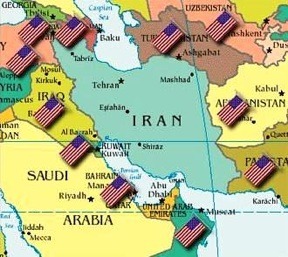
I am increasingly suspicious of stuff from the mainstream foreign affairs crowd: Council on Foreign Relations, CSIS, Brookings, and (especially) the conservative think-tank set. They are so Washington, predictable, and establishmentarian (because the all want gigs in the next administration of their choice), that you already know what you will read: no suggestion that the 20-year US massive presence in the Gulf infuriates Muslims and Arabs and helped catalyze 9/11; laundry lists of expensive ideas for the US to ‘do more in the region’ rather than to let locals be themselves; little hint that America’s relations with Muslims would improve dramatically if we were more even-handed on the Palestinians; no suggestion that America might have been better off doing much, much less in response to 9/11; full endorsement of the liberal internationalist-neocon position that 9/11 is a once-in-a-generation justification for continuing America’s massive globocop presence after the Cold War; minimal criticism of the massive Bush national security state overkill in response; shameless exploitation of 9/11 to prevent reductions in America’s gargantuan national security budget, etc. Stick with Foreign Policy, the American Review, the Atlantic, Slate or the New Republic (sometimes) for views that at least challenge the status quo and don’t just recycle what Thomas Friedman, David Brooks, and the rest of the DC pundit class will tell you.

Next, avoid the emotional manipulative 9/11 retrospectives. This may sound callous – it was an awful day for everyone, and a truly horrible day for some. But far too often since 9/11, politicians, especially W, played to our emotions from that day, and used and manipulated them to support policy we would almost certainly not have agreed to otherwise, and which we will regret with shame in the future. Here’s the Wall Street Journal telling you that ‘Old Glory’ waved on 9/11 (you’re a patriot and love America, right?), and that’s why they called it the Patriot Act. But then the ACLU and Democrats sabotaged the GWoT, cause they hated W over the Florida recount. So the American left, completely out of power from 2000 to 2006, nonetheless made us ‘less safe’ – for a personal vendetta no less. This is Rovism, wrapped in the flag, but still manipulative and hardball. Further, I have little doubt that, just as we look back today in shame at the incarceration of Japanese-Americans during WWII, we will do the same in 20-30 years when look at how we tortured people in the GWoT. Don’t let torture’s defenders – Yoo, Cheney, Thiessen – emotionally roll you by telling you they stopped the next 9/11 and more grieving widows by ‘legalizing’ waterboarding, ‘walling,’ and generally beating the s— out of people in the name of ‘America.’ Keep your wits (and it ain’t true anyway).

In line with this resistance to inevitable grandstanding, posturing, and macho heroics, my own sense is that 9/11’s importance is wildly over-exaggerated – perhaps because I live in Asia, and I increasingly see the Chinese challenge looming for decades to come. But know this – as just about any American living in Asia can tell you – the Chinese sure are happy that we got lost in the Middle East for a decade.

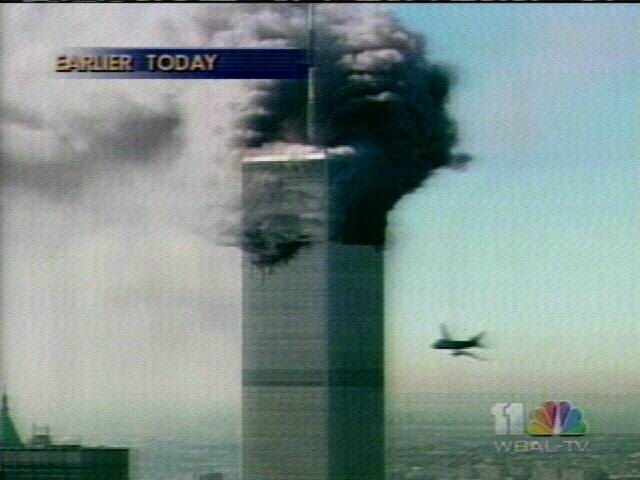
There are a million possible ‘lessons’ from 9/11, but the big one is actually a non-lesson – 9/11 actually changed very little (beyond the changes we made for ourselves, like Iraq and torture). As early as 2006, we were starting to realize just how much we had over-hyped 9/11. The tectonic plates of international relations change slowly. Al Qaeda could not in fact dent unipolarity. (China can, but that is another story.) The stock market didn’t crash. The US military didn’t suddenly collapse. The actual material loss on 9/11 was ‘only’ about $100B out of a $12T economy, and 2700 people from a citizenry of 300M+. (I don’t intend to sound cold; every life is ontologically unique and valuable. But from a national point of view, these numbers are small. Recall that almost 38,000 Americans died in car accidents in 2001.) 9/11 did not unravel NATO or US alliances. US GDP in the proximate quarters continued to expand. China and Russia did not suddenly become nice or nasty. Bin Laden’s much hoped-for Islamic revolution did not occur (one goal of the attack was to spark a global Muslim revolution with al Qaeda in a leninist ‘vanguard party’ role). The much-predicted ‘wave’ of terrorist attacks and plots against the US did not occur, at home or abroad. (Bush defenders will say this is because Bush improved US security at home, but what about the roughly 6M Americans living outside the US? If there really was a global Islamist conspiracy to kill us, there’d be kidnappings and assassinations of US businessmen, students, and tourists all over Eurasia. It never happened.) In the end, well over 99% of the population went to work the next day; unipolarity rolled on.

In short, from a national power perspective, 9/11 is more like Hurricane Katrina – an awful yet manageable one-time disaster – than Hiroshima – a city-breaking catastrophe that promised to be the first in a pattern leading to national collapse. 9/11 was a sucker-punch – a cheap shot al Qaeda managed to slip in because the US wasn’t paying attention (even though the CIA warned Rice and Bush a month earlier). 9/11 did not galvanize the Muslim world, nor provoke a fiery revolt. And given even reasonable homeland security measures (far less draconian than what we choose), repeat attacks at that magnitude are unlikely. In the end, the real reason 9/11 is seared into everyone’s mind is not its catalyst effect toward a global war or clash of civilizations – it is because it was a surprise attack, and because it targeted civilians.

That we permitted that one-shot sucker-punch to drive into us hysterics, to capture our dark imagination, zealous vengeance, and righteous fury is where 9/11 really changed things. American psychology – perhaps insulated too long from the world by US power and distance from Eurasia’s problems – is what changed, not the world.

Continue to part two.

Libya Lessons (2): NATO is No Longer Necessary – Get Out Now

66857-demonstrators-protest-against-libyas-muammar-gaddafi-outside-the-libya

Part one of this post is here. Here are a few more lessons to draw:

6. The International Criminal Court (ICC) is, unfortunately, encouraging dictators to dig in instead of scram. The ICC is classic liberal internationalism -a multilateral forum crafted mainly by the liberal democracies for the purpose of spreading international law and taming the ‘anarchy’ of international relations. It looks like a great idea, and indeed the US reticence to it is based on rather specious claims that US soldiers might somehow get hauled before it despite the myriad protections to prevent that from happening. (The real US concern is any constraint on war-making by the Pentagon, and the US obsession with its ‘exceptionalism.’) I support the ICC and wish the US would join.

That said, it is pretty clear that ICC indictments against Gaddafi and sons encouraged them to stay and fight, because flight was impossible. If they can’t flee to a safe haven – because the ICC makes it a sanctionable offense for any state to harbor them – then they have no choice but to stay and slug it out to the bitter end. And indeed, there is a nice rest home for Afro-Middle Eastern despots – autocratic Saudi Arabia. The Saudi took in Idi Amin in 1980 and Zine al-Abidine Ben Ali in 2011. Gaddafi would make a nice addition; perhaps he and Ali could reminisce about the good old days, like in some John Hughes movie for dictators. But once the indictments came down, the Gaddafis had nowhere to go, even though they were sending pretty clear signals for awhile that they would exchange an exit for abdication and an end to the conflict.

It seems to met that getting these guys out of power is the most important priority. The ICC, paradoxically, gets in the way. Remember that for awhile there it looked like Gaddafi might win or split the country. No one expected Tripoli to fall so easily. I think it would be a much better outcome to offer these guys just about anything they want to scram. Usually all they want is their family out with them, some cash to keep on with the good life, and immunity from prosecution. That strikes me as a pretty good bargain, even if if thwarts justice. And it is a good precedent for trying to get other autocratic nasties, like the Mugabe and Kim cliques in Zimbabwe and NK, out the way as well without a huge bloodbath.

7. The American president needs to start declaring war again. Libya has all but set in stone the awful, dictatorship-looking, and very unconstitutional practice that the US president can war with minimal Congressional intervention or even approval. The president’s shenanigans around the War Powers Act were disgraceful. Obama made a good case for the war in March and April, and it would have been a good exercise in national deliberation on US warmaking after Iraq to have had a big national and Congressional debate. Instead, Obama – a constitutional lawyer no less! – took the low road; isn’t this one of the reasons we voted for him, and against the Bushist, I-can-do-whatever-I-want GOP?

8. Get NATO out as soon as possible, i.e., right now. The NATO mission, against high odds and great (and deserved) skepticism, helped. Don’t push your luck, and keep the mission as absolutely minimal as necessary. Once Tripoli fell last week, NATO should have withdrawn immediately. The NTC clearly no longer needs NATO assistance. Gaddafi is finished, not matter what his nut-ball sons say on TV. To keep NATO on-mission when it isn’t necessary anymore, only stokes the anger of countries, especially China and Russia, that dislike R2P already. If NATO keeps staying involved, it will indeed look like R2P means ‘regime change’ and not the protection of human rights. NATO’s desire to stay in the game is understandable: this is a nice win for NATO after a decade of GWoT confusion and transatlantic tension, and Libya’s course clearly impacts the southern tier of the NATO states. But those benefits are more than outweighed by the need for limits: the West is broke now, so it should set a precedent of restrained intervention, even when things are going well. Nor do we want anything like Iraq – where the US/West gets pulled deeply into domestic reconstruction by hanging around. The best way to prevent the mission creep everyone worried about in this operation is to end as soon as possible (i.e. in this case, when the NTC would no longer be wiped out in a bloodbath without NATO) and we have clearly reached that point now.

____________

NB: On an unrelated note, you should probably read this, from the foremost proponent of the ‘China threat’ school.

NB2: Last week I argued that the US needs another stimuls. US conservatives and the whole GOP field oppose this. But on Monday the yield on US Treasuries dropped below 2%! That hasn’t happened since the 40s. If that doesn’t tell you the USG should spend, because no else will – i.e., people are so desperate to save, they will even take just 1.98% interest on their savings – then nothing will. But I have no doubt the GOP will trash Obama’s jobs initiative today with no hesitantation. It’s going from bad to worse.

Libya Lessons (1): Don’t Gloat, but Liberal Interventionism did Work

Part 2 of this post will come on Thursday.

There is a lot of commentary, of course, on the war. I think, this, this, and this are a good start. Here are my own thoughts:

1. Can Libya be rolled in with Kosovo 1999, Afghanistan 2001, and France’ recent intervention in Ivory Coast into a winning model for future western interventions in the severe conflict zones? Somalia 1993 is not necessarily a counter-case, because the US went there to distribute aid (ie, nation-build), not to actually intervene militarily with a defined outcome for ‘victory.’

2. NATO pulled itself back from the post-GWoT brink, especially concerning Europe. Libya helps counter-act the growing belief that the Europeans don’t want to fight anymore. But it’s very obvious that Libya – minor country of just 7 million people – pushed NATO coordination to the brink. I remain a supporter of NATO, because it pools liberal democratic force, but Libya was a bullet dodged as much as a success. NATO should not be gloating or cheering, but rather thanking the gods that it all didn’t go horribly wrong.

3. The emergence of NATO a la carte is now entrenched. Some allies simply decided they didn’t want to be involved in Libya – Turkey and Germany specifically. But to avoid an alliance-wide crisis, they didn’t stand in the way either. So NATO countries, including the US (‘leading from behind’, the early shift in command to NATO), dipped in and out, more or less as dictated by their domestic politics. This was presaged by the many conditions placed on the operation of national forces in NATO’s Afghanistan operation in the last decade. Together, this could portend a major, new, de facto (although never admitted) modality in NATO’s use of force. On the one hand, it opens the possibility that other non-NATO members could cooperate more easily (if Germany can drop out, why not invite Mexico or SK in for a mission or two?). But most importantly, a la carte modalities effectively erode the collective security guarantee of Article 5 (that all the NATO members will fight as a unit if any is attacked). So the Eastern Europeans should be pretty terrified right now – maybe Germany or Spain will slack if Russia starts bulllying the Baltics.

4. This should not be a cause for neo-con gloating, or otherwise lead to a renewal of Bush, democratic imperialism, American empire talk, and the rest. The arguments against the campaign were very strong and the reason why most proponents argued for a limited intervention – a thumb on the scale to help the rebels, not an invasion cloaked in overwrought ‘freedom agenda’ rhetoric. My support for the intervention was narrow. NATO was to prevent a bloodbath, but otherwise let the rebels do it themselves. That would encourage local ownership of the results, prevent another Mideast quagmire for western forces, and limit the West’s moral culpability if it all went horribly wrong (as it may still). The obvious comparison is of course Iraq, where we are far more responsible for all the death and chaos of the 2000s. Intellectual defenders of the intervention should realize that we got fairly lucky in Libya, even as we did help shape the course. So hubris is foolish. On the other hand, opponents who discounted the closeness of Libya to NATO (making intervention easier), the close attention to limits (so keeping the intervention cheaper and less bloody for the West), and moral value of Gaddafi’s ouster (the rationale to begin with), really should recognize this. Walt ducks this by saying he never doubted the outcome once the US got involved, even though he argued earlier that we shouldn’t get involved, and the National Interest really should apologize to Samatha Power for its mean-spirited May/June 2011 cover.

5. Keep refining R2P. If Libya had gone wrong, it would have killed liberal interventionism. The West is running out of money for this sort of things, and its publics don’t like it either. The ‘rest’ worry that it is imperialism, and even non-western democracies like India, Japan, and S Korea, quietly reject or won’t sacrifice seriously for R2P. R2P Critics insists on taking an all-or-nothing attitude toward these sorts of operations – that any intervention will become a quagmire like Iraq, so we shouldn’t do it. But to be fair, Libya actually worked out pretty well. The limits on western intervention were maintained; ‘mission creep’ did not happen. The right guys won the war with minimal western assistance. The whole world didn’t have an Iraq-style freak-out over US imperialism. That’s not bad at all for R2P to my mind. But we should be open to the possibility that most R2P operations won’t go as well, but that isn’t a reason for not trying. R2P is so messy and hard, that we should be prepared to accept some level of failure.

Think You Can Do Grand Strategy in Asia? (It’s Really Hard Actually…)


Regular readers will know that I part-time consult for a geopolitical consulting firm called Wikistrat, and this competition is a cool idea, especially for the IR types who likely read a blog like this. Graduate students especially should sign up for it. (And if you think you can hack it as an analyst, and you have some decent credentials, contact them. Good analysts are always in demand.)

It’s great practice for big thinking, as if you’re Clausewitz or Spykman or something, but always remember the well-know adage: “Amateurs talk about strategy, professionals talk about logistics.” Before you argue that China should fix Africa or the US should fix the Middle East, remember to figure out how to pay for it, and to plan your way to that outcome (i.e., avoid America’s mistakes in Iraq). For my own version of US grand strategy in Asia, read this.

I will be a supporting judge in the competition too, so please bring your good ideas so that I can repackage them as my own. Anyway, give it a spin; the blurb is below:

“Wikistrat is gearing up for an exciting International Grand Strategy Competition.

Select teams representing leading academic institutions from around the world are invited to participate in the first ever wiki-based grand strategy competition. Managed by Dr. Thomas PM Barnett, this competition will provide participants with the opportunity to test their skills with global counterparts and network within that community. Participants can demonstrate their capacity for strategic thought to agencies, institutions and firms seeking to recruit up-and-coming analytic talent.

We are currently reviewing applications by groups representing top Universities and Think Tanks worldwide. There are still open spots available for this exciting event.

To nominate a team, or to see if you institute has been invited, contact us HERE.

Participation is free, and winner team will get a $10,000 prize.

Some of the issues we will cover in the Competition include (Download the full PDF OUTLINE):

1. Global Energy Security

2. Global Economic “Rebalancing” Process

3. Salafi Jihadist Terrorism

4. Inevitable Sino-American Special Relationship

5. Southwest Asia Nuclear Proliferation

Some of the Scenarios explored will include:

1. Major Biological Terror Attack

2. “2.0 Revolutions” in Arab World

3. + Additional Surprise Shocks”