Why don’t Korea & Japan Align?

Flag-Pins-Japan-South-Korea

For awhile I was collecting links and such to make an argument about Korea and Japan working together on big issues like China and NK, or finally clinching the much-discussed but little worked-on FTA. Both the realist and the liberal in me wanted to see two liberal democracies working together in a tough environment with similar structural threats. Initially I had written: “This may be the biggest news of the year if it actualizes: Japan is apparently considering real defense cooperation with SK. If you follow East Asian security, this is a revolution. Try here, here and here.” But this is sorta cheating on social science, right? Looking around for any scrap of data to support an outcome we like, even though it isn’t really happening?

Well, I give up. Instead of more normative, but ultimately speculative, essays on why East Asian states should align, found an Asian Union or Community, build a local alternate to the IMF, forge a common currency, take ASEM seriously, etc., I think we should start asking why Asian states cooperate so badly. (My short answer: they’re too nationalist.)

My students bring integration up all the time. Until the euro crisis got really bad, students used to tell me all the time that Asia needs an EU or coordination against the (much-loathed) IMF. And I’ve read lots of term-papers on this. But the more I look at the most important Asian international organization (IO), ASEAN, the more it just doesn’t impress me no matter how much hype it gets (which is a lot out here at the conferences and in business advertising in the media). ASEAN is around 60% of the age of the EU and has done maybe 20% of the integration/cooperation the EU has. I argued in ISR a few years ago that lots of IOs aren’t actually about integration at all, but rather the joint self-defense of weak and/or authoritarian elites (Organization for African Unity, Gulf Cooperation Council, Shanghai Cooperation Organization). But that still doesn’t explain why Korea and Japan are so distant. And now for work, I’m revisiting Walt’s Origins of Alliances. Balance of threat feels pretty persuasive too, but I think it would struggle with the Korea-Japan case, as would the democratic peace.

Continue reading

Japan’s Defense Future (2): Actions and Initiatives

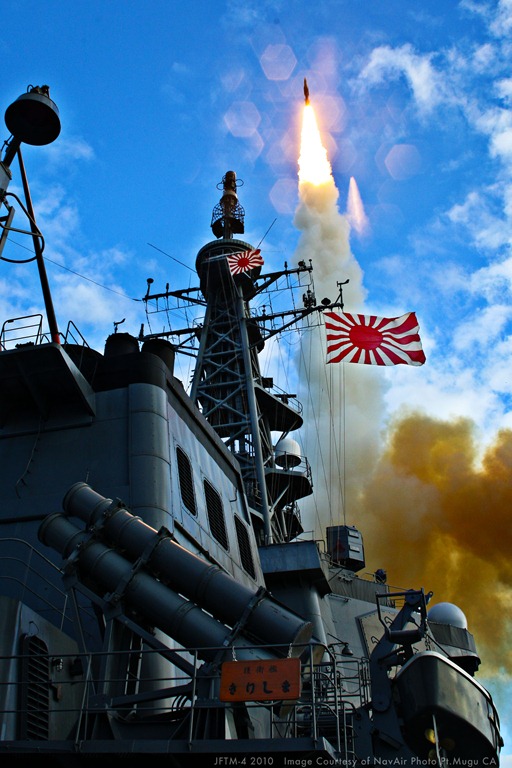
101029-N-XXXXX-004

I am out of town this week, so here is a good guest post on Japan’s grand strategy troubles from a friend at the excellent Japan Security Watch. Part one is here.


Japan’s security situation is ripe for change. There are a number of initiatives Tokyo can take to strengthen its strategic situation without markedly increasing defense spending, or reciprocating the belligerency of neighboring states.

– Greater cooperation with South Korea and the United States. The three powers share interest in areas such as counterproliferation, ballistic missile defense, protection of the sea lanes, and anti-piracy in the Gulf of Aden. Direct, one-on-one cooperation by Japan with South Korea may not be feasible at this time, but both sides may be amenable to cooperating under an initiative led by the United States. In the area of Ballistic Missile Defense, all three powers are essentially threatened by the same nuclear-armed states, so it follows all might benefit from cooperation on ballistic missile defense. While Japan already has an effective ballistic missile defense, cooperation with other countries means access to shared assets and capabilities. An organization based on the North American Air Defense Command could be established to command and control regional BMD assets to provide a common response to threats.

– Evolve an Anti-Access/Area Denial (A2AD) capability. Japan’s Self Defense Forces are highly specialized and effective in preventing an adversary from establishing air superiority over Japan, successfully executing a BMD attack, closing Japan’s sea lanes, or invading Japan outright. But in order for Chinese naval forces to sortie into the Northwestern Pacific, they must transit areas close to Japanese territory. The ability to close off China’s access to the Northwestern Pacific with mines, small missile-armed craft, and submarines would go a long way towards curbing Chinese belligerence without resorting to a conventional weapons arms race.

– Increase the ability to project so-called “soft power”. Japan should commission one or more hospital ships with the ability to rapidly send medical and humanitarian expertise overseas. These ships could be sent throughout the Pacific Rim, even into the Indian Ocean and the coast of Africa, to provide humanitarian relief and assistance. Such ships would go a long way towards cooling anti-Japanese enmity in many parts of Asia. To avoid the appearance of being part of a more expeditionary Japanese military, these ships could be placed under command of the Japan Coast Guard, which is under the jurisdiction of the the Ministry of Transportation. In addition, the Ground Self Defense Forces, which have a prodigious number of engineers, could transfer some to the Ministry of Transportation as well, to create an organization capable of doing everything from building roads in remote areas to reopening airports and port facilities after a natural disaster.

– Drop the arms export ban. There is nothing intrinsically wrong in selling arms to responsible governments, and selling arms abroad to such governments could bring in much-needed revenue. The export ban is generally not seen by the outside world as a credible way to decrease the number of conflicts worldwide. (In comparison Sweden, which is one of the biggest arms exporters in the world, is generally seen as a country that promotes peace in useful ways that have nothing to do with arms sales.)

– Joint weapons development and procurement with other countries. The spiraling cost of weapons development, as well the relatively small number of per-unit weapons purchases by the Self-Defense Forces is making weapons procurement extremely expensive. Also, although Japan has a reputation for being a high-tech nation, it does lag behind other nations in the development of certain technologies, the most critical of which being fighter development. Japan could, for example, pair with the United States, Sweden, or France to undertake fighter development, all of which are friendly countries with advanced fighter industries.

Although Japan has had a longstanding tradition of building weapons domestically, it may be time for it to simply give up certain industrial bases in the interests of cost-efficiency. Japan could, for example, purchase amphibious vessels from France, and small arms from Germany. These are just examples, but they’re examples of areas where Japanese industry is either not up to world standard or would require a significant investment to begin production. Buying off-the-shelf in some areas would allow Japan to increase investment in other, vital areas.

– Generate the ability to pre-emptively destroy existential threats. If Japan were under threat of an imminent ballistic missile attack from North Korea, the lack of offensive weapons in Japan’s inventory means it could not strike first and destroy the threat even if it wanted to. Japan’s sole strategy would be to use its’ BMD defenses to absorb the attack, and then either wait until North Korea were out of missiles or convince the United States to retaliate. Either response would be entirely out of the hands of Japan. When diplomacy has failed, Japan must have the ability to destroy threats to its existence, particularly when those involved weapons of mass destruction

– The deeper Japan’s relationships with other countries, the safer it is. The next step for Japan is joint operations with other countries. Japan’s best bet for the future is to burrow into relationships with key allies as deeply as possible, and strive for maximum interoperability. Although the United States and Japan have enjoyed a bilateral defense relationship for fifty years, joint commands between the two have been unheard of. As an example, Raymond Pritchett at the naval security blog Information Dissemination has proposed putting Japanese fighter squadrons on American aircraft carriers.

– The redefining of Japanese security policy as able to accept collective self-defense, and a pledge to defend America would give Japan the more equal alliance with the United States that the new DPJ-led government proclaims it wants, but Japan seems averse to taking the step. Nevertheless, the inherent unfairness of Japan’s stance on collective security is obvious to all and must eventually change.

Altogether, the implementation of these suggestions would not only increase Japan’s security position, they would also help bring it, in international relations terms, into the realm of modern nations. A Japan that can project hard and soft power at will, act preemptively against threats, actively defend other countries, and is fully integrated with its allies is a Japan that has all the functions of a modern state.


Kyle Mizokami is a founder and editor of Japan Security Watch, a blog devoted to Japanese security issues. He also writes for the defense and conflict blog War Is Boring.

Japan’s Defense Future (1): A Security Environment in Flux

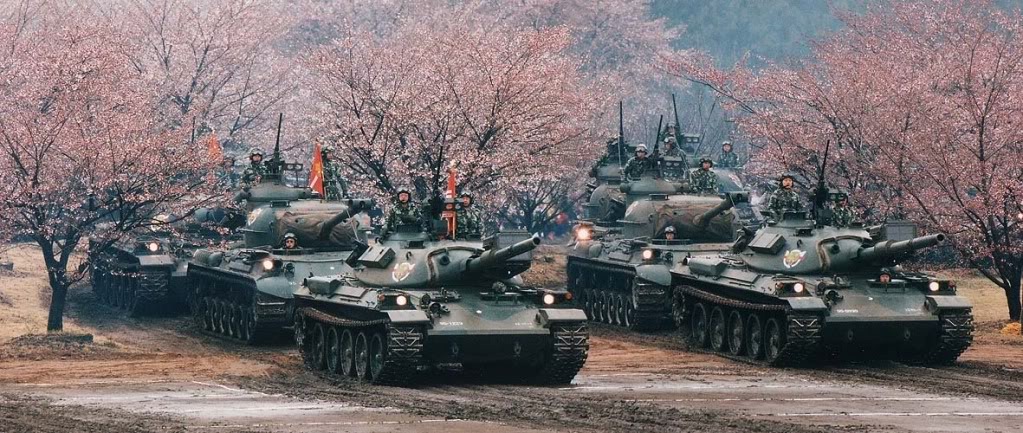
Jpn Tanks & Cherry Blossoms

I am out of town this week, so here is a good guest post on Japan’s grand strategy troubles from a friend at the excellent Japan Security Watch. Part two is here.

The end of the Cold War marked the beginning of a brief period of unparalleled security for Japan. The collapse of the Soviet Union, coupled with the U.S. – Japan alliance, made the 1990s probably the safest ten years in Japan’s history. However, a number of new potential threats, including a nuclear-armed North Korea, a muscular China, and threats to energy security have spelled a reversal of fortune for Japan that promises to make the early twenty first century radically different than previous decades.

Against these challenges and threats, Japan is fast approaching the need to make several critical defense-related decisions. Japan must re-prioritize its defense spending to effectively deter rising challenges without a substantial increase in the defense budget. Japan must also alter its existing defense policy, which remains rooted in the logic and of the Cold War. Here are challenges preoccupying Japanese policymakers.

– A greater array of threats. Japan faces a more diverse array of external threats than ever before. During the Cold War, the Soviet Union’s main threat to Japan lay in its ability to blockade the Home Islands and conduct a landing on Hokkaido. That threat is gone, but a new palette of new threats have replaced it, from the prospect of North Korean nuclear weapons, to various disputes with China, and even international terrorism.

Increased belligerency from neighbors. After a relatively quiet previous two decades, China and Russia have become increasingly belligerent in their relations with Japan over the last year. China has begun asserting itself near the disputed Senkaku islands, sometimes aggressively, and went all-out to secure the release of a Chinese fishing boat captain detained when his fishing boat rammed a Japan Coast Guard vessel. Russia has re-emphasized its claim to the disputed Northern Territories, going so far as using the dispute over their ownership to justify purchasing large amphibious vessels.

– China now spends three times as much on defense as Japan. China’s defense spending over the past ten years has increased at an average of 15% a year. Japan, on the other hand, has kept defense spending flat. (Japan has a self-imposed 1% of GDP spending cap on defense, and currently that number is actually at something like .88% ) A prudent Japan can only look at that upward trajectory of Chinese spending and conclude that, with American power parceled out worldwide and Chinese power concentrated less than 1,000 miles from Japan, Japan also has to increase spending. The question is whether or not Japan will be wise enough to resist being dragged into arms races that count plane vs. plane and ship vs. ship.

– Doing away with the arms export ban. The arms export ban is based on the “3 Principles” laid out by Prime Minister Einsaku Sato in the mid-1960s: 1. no selling to the communist bloc, 2.) no selling to countries under UN arms embargo, and 3.) no countries involved in or likely to be involved in armed conflicts. While theoretically this only excluded a minority of countries, the arms ban was understood to apply to all countries with the exception of the United States.

Although it would be deeply unpopular with Japanese citizens, the ban appears set to weaken. The immediate cause of this is joint weapons development undertaken with the United States, which the U.S. will then seek to export to third parties. Farther out, there are other reasons: Japanese defense contractors are forbidding from selling their wares abroad, and the relatively modest size of the Self Defense Forces, coupled with the growing cost of modern weapons, ensures high prices for the government and low profits for the contractors. Exporting weapons that the government buys would allow all parties to take advantage of economies of scale. Finally, the insatiable global market for arms may not be something that Japan, which is known as a quality exporter and that could use another market to compete in, cannot ignore forever.

– A lack of “punch” in the Self Defense Forces. The SDF, true to its goal of being a purely defensive force, deliberately does not own such things as aircraft carriers, bombers, and cruise missiles. The lack of offensive capability in the Self Defense Forces means that, without American intervention, any country picking a fight with Japan would not have to worry about losing but instead merely not winning. Japan lacks the ability to carry the fight to an enemy’s homeland and actually win a war. Japan is also incapable of acting preemptively — for example, destroying a North Korean missile on the launch pad that is aimed at Japan. The immense destructive power of nuclear weapons, paired with missile delivery systems, raises the consequences of inaction even higher.

Japan is incapable of standing alone in Asia. Whether some people in Japan like it or not, Japan is stuck with America as its key ally. Russia is unpleasant and uncooperative. Korea is divided and Korean nationalism will preclude any serious cooperation with Japan for the foreseeable future. In the latest iteration of the Pacific power triumvirate, Japan can stand with China or the United States against the other, but there are ideological and historical reasons that prevent Japan from siding with China. There is also a great deal of utility in aligning with other old adversaries, including Australia, Indonesia, Vietnam, and India.

– Japan needs to recognize it has the right to collective self-defense. One component of the U.S. – Japan alliance that some observers don’t realize is that while the U.S. is explicitly obliged to defend Japan, Japan is under no obligation to reciprocate. Japan currently interprets its constitution as expressly prohibiting “collective self defense”. However, to enter into more mature, mutually beneficial security relationships with other countries, Japan is going to have to accept responsibility for the defense of other countries. America’s alliance with Japan was a unique deal borne out of the Cold War, and no other nation will pledge to defend Japan without reciprocation

Kyle Mizokami is a founder and editor of Japan Security Watch, a blog devoted to Japanese security issues. He also writes for the defense and conflict blog War Is Boring.

The US Drawdown & National Debt Debate: AfPak, Korea, etc

Afghanistan rocket

I’ve been thinking a lot recently about the scale of US commitments and how to reduce them so as to not bankrupt the US in the medium-term. I have gotten a fair amount of criticism that I don’t know what I am talking about, US warfighters are superlative, US forces in various places like Korea or Afghanistan augment US national security, pull-outs jeopardize our credibility, etc. Ok. I am learning like the rest of us on this. I agree that US commitments are sticky, and I have little doubt that US servicemen are professional enough to win conflicts in places like Korea and AfPak (Afghanistan & Pakistan), so long as we have the resources to stay.

Further, I will admit that a ‘post-American’ world is a little unnerving. I say this not as an American who likes ‘empire’ (I don’t), but more generally because I still do think, even post-Iraq, that US involvement generally makes the world a better place. The dollar and US engagement help keep the world economy open, and US force can sometimes be the last line against truly awful acts that shame the conscience. This is why I supported the Libya intervention, and this is why I hope the US can keep forces in Korea. A retrenched, bankrupted, and sullen America worries more than just Americans. To clarify to my critics, my concern is whether the US can support allies around the world, not if it should. I don’t want US Forces in Korea (USFK) to leave any more than anyone else. I can think of few more valuable uses of US force than to help defend a democracy against the last worst stalinist despotism on earth. I just wonder whether we can afford it.

I think we need to be a lot more honest about the huge defense cuts that will be required to balance the US budget. The US deficit ($1.5 trillion) is a staggering 10% of GDP and 35% of the budget; publicly-debt ($9T) is at 60% of US GDP ($15T); and the integrated national security budget (DoD, Veterans, relevant parts of Homeland Security and Energy) exceeds $1T. You hardly need to be an economist to think that this is unsustainable and smacks of imperial overstretch. For an expert run-down on the US budget mess, try here.

This gap could of course be filled with tax increases, but a central GOP policy commitment since roughly the Ford administration has been ‘no new taxes.’ Unless this changes dramatically – and the recent Ryan budget proposal showed no GOP movement on tax increases – this means that most of the $1.5T hole must be filled with spending cuts. My own sense is that allowing the Bush 2001 and 2003 tax cuts to sunset, as is current statute, plus tax reform and a carbon tax, could in fact generate a lot of new revenue at tolerable and intelligent levels of pain. This would reduce some of the pressure to cut defense (and all other US government programming). But without such new taxes, the $1.5T hole calls for huge cuts, and the axe would inevitably land on defense too, including US bases and commitments overseas.

I am genuinely agnostic on whether this is a good idea. Part of me thinks that wealthy US allies, especially Japan and Germany, free-ride. They should spend more so that we can spend less. But others have retorted that encouraging wealthy Asian allies like Korea and Japan to spend more could trigger an arms race in Asia that might also go nuclear. Barnett has a nice post on how Asian elites are aware of this and worry about a weak US. (On the other hand, there is not actually a lot of empirical evidence that denuclearization brings peace.)

In response to my commenters at Busan Haps on a US withdrawal from Korea, I wrote:

“America’s economic problems will likely compel the rebalancing all of you are thinking about. Importantly, even if the US wanted to stay and provide ‘extended deterrence’ as we have for 60 years, the dollars are not there for it.

Whether or not we should go is a different question. My sense is that Korea does actually try harder than many US allies. Korea spends 2.7% of GDP on defense. Germany and Japan spend around just 1%. The US spends close to 6%. But like Germany and Japan, Korea is now wealthy enough to spend a lot more. This raises the free-riding question you all worry about.

If Korea really wants USFK to stay no matter what, then the most likely way is for Korea to pay for ALL of the expense of USFK here. Right Korea and the US split the bill roughly so far as I can tell.

But I find great resistance to this thinking. My sense is that within the Beltway, there is strong elite consensus for the US remain committed around the world. ‘Empire’ seems to be a knack or a habit Americans have grown into. We like being a globally present superpower but are increasingly unable to afford it and unwilling to pay the taxes for it.

The question then is what do we do now? Cut entitlements (Medicare, Medicaid, Social Security) to make room for defense? Do we raise taxes enormously for all these things? Are do we retrench from our global posture so we spend less money?

Finally, there is a model for retrenchment. Britain slowly retreated from its empire in the 1950s and 60s. In some places it went very badly – South Asia and southern Africa especially. But this slowly brought British commitments back into line with British resources. The alternative for the US is to change nothing and risk an imperial crack-up – something like the USSR in 1989 or Austro-Hungary in 1914. That is my worry.”

Here are two good recent articles from the Wall Street Journal by Leslie Gelb and Max Boot on whether or not we can drawdown from Afghanistan and Pakistan (AfPak) post-bin Laden. I lean toward Gelb, but I think Boot makes some good points. Particularly, Boot notes that a US presence in Afghanistan made it possible to get OBL, because US forces were proximate. But Boot still sidesteps the debt issue. Both Beinart and the US JSC chairman call the debt the biggest threat to US national security. I am inclined to agree…

What the Japan Tsunami Tells Us about International Politics

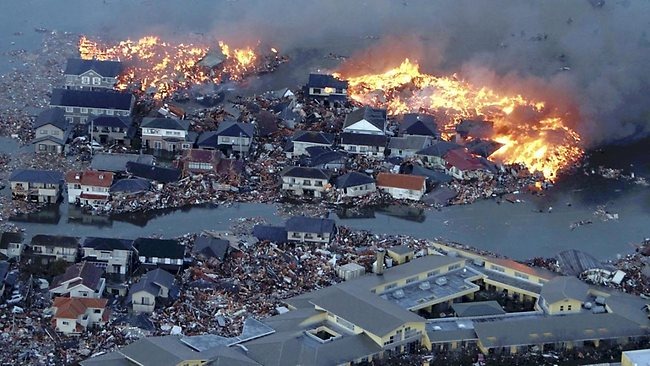
070803-japan-earthquake

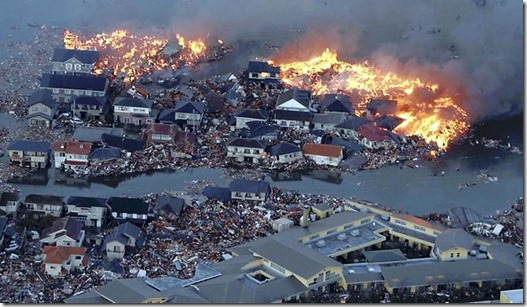
For as awful as natural disasters are, they also act as lightning flashes to illuminate the hidden landscape of states’ weaknesses and capabilities. As ‘acts of god,’ natural disasters represent a uniquely blameless test of state seriousness and capacity (and of genuine international solidarity). Unlike man-made catastrophes such as 9/11 or Srebrenica,  this cannot be blame on foreign machinations, ignored/manipulated for political calculations, or otherwise geopolitically spun. Not even Koreans, who are arguably the people most alienated from the Japanese on the planet, are ‘happy’ about this or calling it retribution or anything like that.

So this earthquake was a major test of the response capacity of the Japanese state (and of the functioning of global governance on things like nuclear-oversight or disaster-relief assistance), and we can honestly say that Japan has performed remarkably well. The quake was an staggering 9.0 on a 10 point scale (the Richter scale), and news reports are calling this the worst quake in Japan’s history. Yet the death-toll is still under 5000. Despite the sadness of these deaths, we should recognize how astonishingly low that is and credit that directly to the seriousness and functionality of the Japanese state. Events like this cast into extreme clarity: the difference between the ‘First World’ and the rest; why, for all the talk about the ‘second world rising,’ places like South Asia, the Middle East, Africa, Latin America, and even China, have a such long way to go, and why they export, not import, people; and just how badly governed so much of the world really is, and how that dysfunction borders on criminal negligence when really serious disaster strikes. Remember how many people died in far less powerful events in Pakistan or Haiti recently.This is not meant to be OECD triumphalism, but yet another wake-up call regarding the atrocious government of far too many places. Japan should make Haitian and Pakistani elites hang their heads in shame.

Here are a few applaudable illustrations of truly serious, responsible government:

1. Japan called International Atomic Energy Agency immediately after the earthquake about its nuclear reactors. It has cooperated properly and publicly with IAEA. It has noted the problems in the media, while responding properly with cautions where necessary. This is what real governments, who actual govern rather than tyrannize, pilfer, or exploit, do. Imagine how Iran or NK, or maybe even China and India, – all hyper-nationalist, corrupt governments  with super-secret nuclear programs – would have responded. They would have told no one until the questions became unbearable. Conspiracy theories about outside intervention would have been floated. IAEA regulations would have been openly rejected as a pretext for western espionage, etc. The consequence would be a re-run of the post-Chernobyl hysteria, because no one knew the details or trusted the source. By contrast, Japan did its duty, and the world trusts them. Well done.

2 Japanese emergency responders got out there quickly. Within a few hours, bulldozers were already on scene. Just like the rapid New Zealand response a few weeks ago, this was a good demonstration of what political science calls state capacity. The Japanese state is not faux-structure on paperthat really exists to serve some megalomaniac ‘president-for-life’ like Gadhafi. It is highly modern, efficient, rational, focused entity that can fairly rapidly process information, redirect resources, and otherwise flexibly respond to shocks. Given the 9.0 Richter measure, I am amazed how rapidly and coherently Japan is responding. Had this happened in Cambodia or Mozambique, the entire state might have collapsed. Even the Americans really blew it on the far-less-catastrophic Hurricane Katrina. Again, well done.

3. The Japanese trained a lot for this and are a disciplined, serious, but not therefore terrorized, population. What most strikes me about the videos coming out of this is just how calm everyone seems. The CNN reporters in the first few hours seemed almost desperate to find scenes of hysteria – one guy saying on a cell-vid, ‘the building is going to collapse!’, got re-played again and again. By contrast, look at the American response to 2003 power outage in northeast; people treated it like the apocalypse. Or far worse, look at how the NK state has ‘disciplined’ its people to “arduously march” through its recurrent famines, or how the USSR militarized its entire population and economy to fight WWIII. If the Department of Homeland Security (DHS) in the US actually did its job, this is how Americans would respond to terror alerts, instead of neuroses about duck tape and safe rooms. Japan has just shown the US how intelligent grown-ups respond to real threats. We could only dream that DHS was so professional.

4. Japan didn’t blame this on God’s unhappiness about abortion, gays, or modern decadence; Mossad, the United States, China, Korea, etc, ad nauseaum. Again, try to imagine how NK would have responded: a US-SK-Jpn plot to control the earth’s crust!; or the Taliban: it’s Allah’s punishment for not beating our women harder; or Fox News: Jesus’ response to gays in the military. Don’t believe me? Jerry Falwell blamed US homosexuals for 9/11, or read this about how Israeli intelligence is responsible for shark attacks in Egypt – because, you know, Spielberg is a Jew and directed Jaws... Despite huge destruction, Japan’s response to the massive event has been serious, normal, and measured. Hear, hear.

5. Japan prepared for this by listening to scientists and experts and not just blowing the money on pork for reelection, or just conveniently forgetting about legislative hearings that demonstrated real threats. America is once again an instructive counter-example (*sigh*, wouldn’t it be nice if we could get this stuff right?). Post-Katrina, we all found out how much the New Orleans and Louisiana had been warned. Mayor Nagin was a balloon head with absolutely no idea what to do, despite governing a coastal city eight feet below sea-level (!) with known exposure to hurricanes – which is obviously why he got re-elected – wth!?, but then W got re-elected post-Iraq…  Anyway, then came heckuva-job-Brownie. Or how about the audits of DHS which show that homeland security money still follows legislative pork not appraised terror threats? This sort of stuff should tell you why the far less powerful Katrina Hurricane lead to the travesty at the Superdome, while Japan is pushing through with minimal panic. Serious people from a focused government spent big money on empirically demonstrated problems. I guess we forgot that in the war on terror.

Japan just showed how serious, professional, responsible, secular government can construct a real, responsive state apparatus that can help citizens in even very extreme circumstances and genuinely resolves serious collective action and public goods problems. Superb. Truly remarkable. In the midst of this tragedy, we should be in awe of the world-class response. This is a real ‘all-hazard’ response. The world – and especially DHS! – should take note.

If you want to donate to assist Japanese recovery, go here.

_________

WACK-JOB ADDENDUM: At least one nutter has come out to proclaim this the Lord’s vengeance for those heathen Shintoists. I’m sure somewhere Pat Robertson is unhappy that he missed this chance. Appalling.

Korean-German Unification Parallels (3): Differences & Conclusions

Flag-Pins-South-Korea-Germany

This is the last of a three part post elaborating the often-made parallel between German and Korean unification. Please start with part one and part two.

More Differences in the International Environment between German and Korean unifications:

c. China’s interest is much higher in NK than the USSR’s was in EG. NK borders China; EG was two time-zones away from Moscow. China’s interest in the terms of a final settlement are much more direct. Gorbachev was basically trying to sell EG for desperately needed cash; for China, Korea is a more existential issue. NK is a buffer between democratic SK, Japan, and the US. Hence, China is much more likely to stick its nose into Korean unity talks, and to push for its own terms. Those terms will probably include a ban on US forces north of the current DMZ, and possibly an exit of SK from the US alliance altogether, in exchange for Chinese acquiescence on unification: Korean ‘finlandisation’ (an outcome of which Japan might secretly approve too).

d. SK can’t buy unity from China as West Germany did from USSR. WG was an economic powerhouse by the 1980s – in the OECD and G-7, second biggest donor to the UN, etc. WG could simply  write a huge check to Moscow, and the USSR was so desperate that it took the money and abandoned Honecker. SK is simply not there. Yes, it’s in the OECD and G-20, but its still lists itself as a developing country at the WTO, and it is still decades away from German levels of affluence. Nor do the Chinese need the money. China will play a much harder game than the Soviets were able to 20 years ago.

e. SK has no supportive environment of allies or revolutions, like NATO and the Velvet Revolutions of 1989, which could add momentum to unification. Beyond the US, SK has no real allies. Russia is an unpredictable faux-‘partner’ at best. Because of all the bad history, the Japanese don’t really like the idea of a united, wealthy Korea which is growing faster than them, right on their doorstep. Taiwan is also a divided country, but it is in the NK/EG role as the smaller and weaker of the two. So there is nothing like a local NATO of friends to provide group moral cover for unification efforts, nor can there be any regional momentum for NK change, as the other revolutions like in Eastern Europe provided to East Germans in 1989/90. The are no nearby states similar to NK to catalyze NK change, unless one imagines Chinese democratization, which is a huge leap. As we see in the ME today, revolutions can synergize each other, but there is no region here to provide a wave to wash into NK. Koreans will have to do this themselves.

Conclusions:

Altogether this means that hurdles to and burdens of unification are much higher here:

 There are more NKs than EGs, and they are poorer as well.

There are fewer SKs than WGs, and they are poorer also.

SK’s state strength/capacity is lower than WG’s, while NK is a catastrophe by even EG standards.

So: fewer people with less money in a weaker system will support more people with less money from a worse system.

That domestic arithmetic is brutal, and if that weren’t bad enough, the international balance of forces is worse now than in 1989 too:

Today, the external patron (US) of the free Korean half is weakening, while the external patron of the communist half (China) is strengthening. The opposite was true of the US and WG, and the USSR and EG, in 1989.

Today’s northern patron (China) is trying to push further into the continent (Asia), while yesterday’s eastern patron (USSR) was looking for an exit (from central Europe).

There is no regional encouragement, revolutionary wave, democracy zeitgeist, or whatever to push this thing along in NE Asia.


The incentives for China to meddle – because of the greater importance of NK to China, than of EG to the USSR -, and the greater ease of   such meddling – because the US and SK today are weaker than the US and WG were then, while China is much stronger today than the USSR was then -, mean Chinese intervention is highly likely. It will try hard to structure any final settlement. A major policy question for SK is therefore likely to be, will it dump the US alliance if that is what’s necessary to get China out of the peninsula? Will SK exchange ‘finlandization’ for unity? I think the answer is, and should be, yes.

The only alternative I see to this is a unification process that goes so badly off the rails, is so destructive, disorganized, and chaotic, that China would want to stay out it from sheer concern to avoid a quagmire. In other words, the more chaotic the end-game turns out to be, the more likely it will be a Korean-only affair. This is unfortunate; no one wants Korean unity to be a Hurricane Katrina-style national meltdown that requires heavy western and Japanese support – which might not even be available. because of the accelerating sovereign debt crisis. But reunification chaos seems like the only way to keep the Chinese out, because the balance of forces I sketched in the post are so much worse for Korean today than they were for Germany in 1989/90.

2011 Asia Predictions (1): East Asia

Watch this if you haven’t seen it yet. It’s pretty scary.


Last year, I put up 2010 predictions for Asia and Korea. Last week, I evaluated those predictions. This week come my 2011 predictions. It’s a fun exercise, if only to see how bad you blow it 12 months from now…

1. China will back off.

Why: It has been widely noted that China seemed to suddenly get aggressive last year. They got to bullying about the South China Sea, and their behavior over the island conflict with Japan seemed extreme to almost everybody. (The video above comes from a Japanese YouTube contributor; I tried to find one that is less ideologically questionable, but generally, there is agreement now that the Chinese fisherman purposefully rammed the Japanese coast guard, per the vid above. It is worth noting that Chinese fishermen also do the same thing to the SK coastguard – only the Koreans don’t make such a big deal out of it.) But my sense is still that the Chinese aren’t foolish enough to provoke real local balancing against them – at least not yet while they are still comparatively weak. China has invested a lot over the last few decades to prevent this possibility.While I do think medium-term balancing against China is likely, I also think the Chinese think about this a lot and want to avoid it as long as possible. Events like the video above tell me that China has a big bureaucracy with multiple factions struggling to control foreign policy in a system where the chain of command is blurry and civilian control is disputed – common problems in dictatorships . My guess is last year’s belligerence was a mix of free-lancing by tougher elements to prove a point but not a conscious strategy shift toward provocation. China’s not really the ‘responsible stakeholder’ we want it to be, but I don’t think they are openly reckless suddenly either. They are likely to pull back this year toward conciliation – at least until they are stronger.

2. North Korea won’t pull any big stunts this year.

Why: Last year NK pulled some of its most foolish, dangerous tricks in years. And it got what it wanted. The whole world is once again paying attention to its noxious tin-pot dictatorship. China gave it cover, twice!, and more cash. It once again made SK look weak, vulnerable, and confused, right after the nice G-20 raised SK’s global profile. (What better way to play the spoiler of an event that made Korea look modern and normal?) Intelligent western analysts went on record saying stupid things that sound awfully close to appeasement. SK caved and once again called for the 6 Party Talks; this opens the door, yet again, for the North to play the other 5 parties off each other for gain. Not bad for a broke, dysfunctional gangster-state. So there isn’t much more to be gotten from raising the temperature further, and the costs for them are rising. The DPRK doesn’t really want to provoke a war, and SK attitudes seem to be hardening on responses. NK gimmicked its way into most of what it wants, so I anticipate calm for a while – at least until some other regime crisis (famine, currency collapse, Kim Jong-Il’s death) pushes another KPA outburst for attention and money.

3. Nothing much interesting will happen in South Korea or Japan

Why: Korea seems pretty pleased with itself as it is and should be. Inflation, unemployment, debt, deficit, tax rates, and poverty are all low. (If you are a Westerner and that sentence makes you gasp in envy, it should. Korea’s macroeconomics are miraculous). It has little reason for any major domestic shifts, while in foreign affairs it is increasingly a status quo power. That means that while it is de jure, in the constitution, committed to ending the intra-Korean stalemate, de facto, the SK population doesn’t really want to sacrifice too much for that goal anymore. They just want to be a rich trading state and for NK to go away. So expect more of the same muddling along on the NK issue, crisis-by-crisis. There are no big reasons for Korea to do anything really new this year (notwithstanding that external events might force something of course.) Japan is the opposite; it desperately needs to change. But it can’t, because its population is terrified of confronting the enormity of its troubles, and its corrupted political class is trapped in decades of merry-go-round immobilism. I see no willingness to address the spiraling debt, the overprotected sectors like retail, ag, or construction, the history and territory issues with the neighbors, or broken political system. Hugging the US alliance tight allows these issues to be pushed off indefinitely, and I see nothing to suggest Japan will finally grow-up this year. Stasis, functional and dysfunctional respectively, will be the rule on both sides of the Korea Strait in 2011.

2010 Korea Predictions: How did I do ?

I couldn’t find a good vid for this post, so here is fun Korea video clip instead…


Last year in January, I made  some predictions about Korea in 2010. It is always useful to look back at how one did. Prediction is very hard, but it is the gold standard of the social sciences. Ultimately, prediction lies behind our claims to expertise.

I also made general Asia predictions for 2010. Here is 2011 my write-up on them. I think I did better on Korea specifically than Asia generally.

So here we go:

1. Korea will grow well, having sloughed off the Great Recession with little trouble.

I got this one right. Korea grew about 6% in 2010, and its future projections are quite good. Korea’s exports rolled along – 10 straight months of trade surpluses in 2010 (which isn’t good globally of course, but is good locally). Unemployment and inflation are below 4%. No big banks blew up or otherwise had scandals in 2010; no chaebol presidents got busted for corruption. Capital reserve requirements are good here, and the banks are far less leveraged than western banks. In fact, when I read about all the trouble of the US economy, it sometimes seems like a different world. There is very little indication in Korea’s aggregate numbers – job-loss, exports, poverty, growth, the stock market (KOSPI), etc – that suggest the crisis even happened here. Even NK’s crazier-than-usual antics of last year didn’t bring gloom or capital flight. Well done! Koreas seem to loathe their president, Lee Myung-Bak, but actually I think he deserves huge credit for this. He maneuvered Korea through an economic environment that brutalized many other economies, and he even managed to ram through the US and EU trade deals last year. That’s quite a record – along with keeping Korea’s budget balanced, maintaining those good numbers discussed above, and deterring NK. (NB: the SK left is correct to note that the way Lee pushes through legislation is perilously anti-democratic. His policies are pretty good, but his mildly autocratic tendencies are disturbing.)

2. The Korea-US free trade deal won’t go through.

X

I got this one wrong, but only partially. The deal was signed in December 2010 (my prediction almost made it!). But it must still be ratified by both legislatures. Conservatives control the Korean National Assembly, so Lee can probably push through the FTA. The new Republicans in Congress should also help Obama get ratification on his side. My thinking last year was that Congressional Democrats would block this, particularly under the weight of the US auto unions. Korean cars are good, and US cars still face high, if informal, cultural prejudice here. Further, Lee and Korea wanted the deal more than the US, because Korea is more a ‘trading state’ than the US is. Korea is far more trade-dependent than the US. So I anticipated more US hesitation (which is what happened).

But no one expected both the Cheonan sinking and the Yeonpyeong shelling. This raised the need for Obama and the US to signal commitment to SK against Northern aggression. Obama may also have realized that the incoming Republicans of 2011 would make it much easier to get this through. So once the GOP won the 2010 midterms, Obama could accept the FTA. In short, Obama is probably smart enough to know why trade is good, only he couldn’t get it through a more Democratic Congress. While he certainly didn’t want the GOP to win big in 2010, he opportunistically took what he could get in the new environment. The shift to the GOP made it easier, and NK’s behavior made it more necessary.

[In passing, I find that the average Korean is more pro-trade than the average American. Koreans seems far more aware of the importance of trade, probably because they are small. Small states have high ‘comparative disadvantage’ costs when they don’t trade, so the effects of trade are more immediate here. By contrast American students generally seem surprised when they learn how much the US actually imports and exports. I’ve always thought the biggest hurdles to this deal were on the US side, even though the biggest changes will occur in Korea.]

3. North Korea won’t change a bit.

X! – It got worse!

Who would have thought that the worst state in the world could plumb the depths yet further? Somehow the loopy Corleones of Korea – the Kim family gangster-state – became ever more unhinged and dangerous. My original prediction was aimed at those who thought that Kim Jong Il’s trips to China and China’s growing ‘investment’ in NK might somehow hail a Chinese-style liberalization, at least of the economy a little. To be fair, no one expected NK to morph into a ‘normal,’ somewhat well-behaved dictatorship like Syria or Burma. But there was a mild hope that NK, finally, under the weight of economic collapse and the pressure to show results for the 2010 65th anniversary of the (North) Korean Worker’s Party, might open a little. I thought that was far-fetched, so in that sense, my prediction was right. But more importantly, I missed that NK would actually go the other way. Instead of possible better behavior, NK went overboard – provoking two major crisis – the Cheonan and Yeonpyeong – in just 7 months. Wow. Wth is going up on there?!

4. Japan won’t really come around on Korea.

This wasn’t really a Korea prediction, but it is an issue Koreans care about very deeply. This is a negative prediction, and seems like an easy one too, because it just predicts more of the same from a country trapped in stasis. But placed the context of the DPJ’s (pseudo-)revolutionary election victory of late 2009, it still seemed like a somewhat risky prediction at the time. Recall that the DPJ came in saying it would change so much – fixing the ever-sliding economy, improving Japan’s relations with its neighbors, edging away from the US, etc. All that turned out for naught. Some of this was because China seemed to flip out in 2010. China’s 2010 behavior pushed Japan back toward the US in a way the DPJ probably wanted to avoid. But on the other issues, Japan still strikes me as stuck in a terrible historical funk. It can’t seem to get beyond the fact that the glory days of its developmentalist economy (1960s-80s) are over, and that more Asian-style state intervention now just means more debt. Nor can it seem to figure out, despite the DPJ talk, that the rest of Asia is genuinely freaked out by Japan and pays attention to every change in Japan’s defense policy and utterance by defense officials. Worse, every time some disgruntled righty in Japan say the old empire wasn’t so bad after all, the neighbors go into paroxysms on incipient Japanese re-militarization. My own experience with Japanese students tells me that Japanese are just blind to this (although Japanese academics do seem aware). So my sense was that for all the DPJ chatter, there was no real popular interest in a Willy Brandt-style ostpolitik on the history issues. Nor does that seem to have changed in the last year.

My 2011 predictions will follow next week.

2010 Asia Predictions: How did I do?

new-year-image


Last year in January, I made  some predictions on Asian security. It is always useful to look back at how one did. I did ok, but one might criticize me  that I predicted too many things would not happen. That predicts the lack of change, which is easier than predicting proactive change. That is true.

But prediction is one of the great goals of the social sciences. Indeed it is our hardest chore, and no matter how much we read, data we collect, or theories we propound, we still don’t seem to do much better than the ‘random walk’ theory. Depressing, but nonetheless worth the effort. So here is a quick review of my record. (For a nice collection of the worst world politics predictions from 2010, try here; thankfully none of mine are as eye-rollingly bad as them.) Here is a nice run-down from CFR on the big (East) Asia events of 2010. Note the differences from mine below.

My review of my 2010 Korea predictions will go up on Thursday. Here are my 2010 Asia predictions in retrospect:

1. There will be some kind of power-sharing deal in Iran before the end of the year.

X!

I really blew this one. My sense 12 months ago was that Iran was really slipping toward some sort of genuinely systemic crisis. Not primarily because of the street demonstrations. Those are relatively easy for dictatorships to contain with nasty head-crackings. In the movies (Avatar), the people overthrow the powerful, but in reality it is usually other powerful who overthrow the powerful. That is, elites usually depose other elites in dictatorships. And that is what I thought we saw in late 2009: the emergence of real splits inside the regime’s elites. Particularly, I thought that the clerics’ growing hesitation on Ahmadinejad’s policy of confrontation with the West might lead to a real cleavage requiring some kind of accommodation. Note that I did not predict a revolution or major change in the regime’s Islamist character. No one really expected that. But I did think that Ahmadinejad needed the clerics for legitimacy in what is still an overtly theocratic state. Looking back, I am fairly impressed at his ability to maneuver these domestic difficult waters, while nonetheless continuing to bluff the West. Yet perhaps the external bluff is the key to that internal success. Perhaps the nuke program insulates him against clerical unhappiness. He can appeal to a Persian populist nationalism with the nuclear issue, which allows him to ideologically outflank the clerics. If this is so, then Ahmadinejad is more enduring then we anticipate.

2. Israel will not bomb Iran.

This is a negative prediction, so it was a little easier. But still, given how much noise Netanyahu and the Israel lobby in the US make on this issue, including regular veiled threats to take matters into their own hands, I do think this deserves some credit. Also, the Wikileaks revelations that Sunni Arab states might look that other way on a bombing add further weight to my prediction’s riskiness. Netanyahu is playing a tough negotiating game with the US, but this one was probably a bridge too far, although I bet the righties in his cabinet are unhappy. Still, Israel really needs the US, and that need will deepen the more it becomes apparent that the Israeli right is the primary force blocking an Israeli accommodation with the rest of the Middle East. And without US approval, unlikely on Obama’s watch, I still think the cost-benefit calculus tilts against an Israeli strike. That said, a strike is more likely this year, because the Iranian nuclear program keeps rolling along and Iran (point 1 above) has not softened.

3. Japan will disappoint everyone in Asia by doing more of the same – more moral confusion over WWII guilt and wasteful government spending that does nothing meaningful to reverse its decline.

This is another negative prediction, and seems like an easy one too, because it just predicts more of the same from a country that has been doing that for 20 years. But placed the context of the DPJ’s (pseudo-)revolutionary election victory of late 2009, it still seemed like a mildly risky prediction at the time. Recall that the DPJ came in saying it would change so much – fixing the ever-sliding economy, improving Japan’s relations with its neighbors, edging away from the US, etc. All that turned out for naught. Some of this was because China seemed to flip out in 2010 (a big positive prediction I really missed – X!). China’s 2010 behavior pushed Japan back toward the US in a way the DPJ probably wanted to avoid. But on the other issues, Japan still strikes me as stuck in a terrible historical funk. It can’t seem to get beyond the fact that the glory days of its developmentalist economy (1960s-80s) are over, and that more Asian-style state intervention now just means more debt. Nor can it seem to figure out, despite the DPJ talk, that the rest of Asia is genuinely freaked out by Japan and pays attention to every change in Japan’s defense policy or utterance by defense officials. Worse, every time some disgruntled righty in Japan say the old empire wasn’t so bad after all, the neighbors go into paroxysms on incipient Japanese re-militarization. My own experience with Japanese students tells me that Japanese are just blind to this (although Japanese academics do seem aware). So my sense was that for all the DPJ talk, there was no real popular interest in a Willy Brandt-style ostpolitik on the history issues. Nor does that seem to have changed in the last year.

4. North Korea won’t change at all.

X! – It got worse!

Who would have thought that the worst state in the world could plumb the depths yet further? Somehow the loopy Corleones of Korea – the Kim family gangster-state – became ever more unhinged and dangerous. My original prediction was aimed at those who thought that Kim Jong Il’s trips to China and China’s growing ‘investment’ in NK might somehow hail a Chinese-style liberalization, at least of the economy a little. To be fair, no one expected NK to morph into a ‘normal,’ somewhat well-behaved dictatorship like Syria or Burma. But there was a mild hope that NK, finally, under the weight of economic collapse and the pressure to show results for the 2010 65th anniversary of the state’s founding, might open a little. I thought that was far-fetched, so in that sense, my prediction was right. But more importantly, I missed that NK would actually go the other way. Instead of possible better behavior, NK went overboard – provoking three major crisis – the Cheonan, the new uranium plant, and Yeonpyeong– in just 7 months. Wow. Wth is going up on there?!

5. The US drawdown from Iraq will be softened, hedged and qualified to be a lot smaller than Obama seemed to promise.

✔/X

This one seems mixed but broadly accurate. It was a gutsier positive prediction, but the evidence is not definitive. I was genuinely surprised when the last brigades rolled out, but then, there are still 50k US troops in Iraq (more than in Korea or Japan, btw). Now that Iraq is off the front pages, and with Obama’s speech that it is all over, no one pays attention much. But we are still running around performing what really should be called combat operations, and Americans are still dying. And in Afghanistan, the Obama people are now openly moving the goal posts from 2011 to 2014 now. While I didn’t predict that, it does fit into my general sense that Obama can’t really end the GWoT quickly as he hinted during the campaign. Instead, it seems likely that it will slowly splutter out.

Japan is an EU Country Trapped in Asia

japan_us_flag

The Council of Foreign Relations blog, Asia Unbound, is quite good. If you don’t read it, you probably should before you read my stuff. To be sure, CFR is establishment; indeed, it is the very definition of the foreign policy establishment in the US. So it is not exactly the font of challenging new ideas. But still, they are linked into power in way that lonely academic bloggers will never be. And this week’s bit on Japan really got me thinking about how Japan is basically stuck with the American alliance indefinitely, whether they like it or not.

Recall a year ago when the LDP got whipped in the election, that there was lots of talk about how Hatoyama was going to create distance between Japan and the US, how this was a new dawn in the relationship, how the Japanese left would be so much more prickly with the US than the old boys network of the LDP. I was fairly skeptical of this at the time, and I think the recent flap with China over the islands has done a lot to confirm that skepticism.

Japan really has nowhere else to go but the US. It is stuck with us, primarily because it is geographically fixed in a neighborhood where it has no friends. And this opens all sorts of room for the US to push and bully Japan, which leads to regular Japanese outbursts that Japan needs to be independent of the US. (For the most famous, read this.) In fact, Japan is like a post-modern EU country in the wrong place. It should be comfortably ensconced in a post-national intergovernmental framework like the EU, where it could promptly forget about history and defense spending, and worry about how to care for its rapidly aging population – like Germany is morphing into ‘Greater Switzerland.’ But it’s not. Instead, Japan is trapped in modernist-nationalist-historical Asia, surrounded by states that don’t trust it and who want a lot from it that it doesn’t really want to give (historical apologies, imports, engagement, development aid, territorial compromises).

Consider that Japan, like China or Russia, has no friends or allies (save the US), and lots of semi-hostile neighbors:

Russia: Neither side has much interest in the other. There is an island dispute that has blocked normalization for decades. And, of course, Russia has been an erratic partner for just about everyone, not just Japan, since the end of the Cold War. So there is nothing to gain there.

Korea: There is also an island dispute with South Korea, over which even North Korea (!) has supported the SK position. NK kidnapped Japanese citizens in the 70s, and this has remained a permanent fixture in Japanese politics. For the North, Japan is high-up on the hit list; the North has launched missiles over it. Relations with the South are possibly even worse. S Koreans are intensely japanophic. The island dispute (Dokdo) rouses extraordinary passions here. Finally, of course, both Koreas are furious with Japan over its invasion and colonization from 1910-1945 and feel that Japan has never properly apologized.  Given how much S Korea and Japan share – democracy, concern over China’s rise, a US alliance, fear of NK, Confucian-Buddhist culture – they should should be natural allies, but Koreans will tell you with a straight face that Japan wants to invade it again. So forget that.

China: Yet another island dispute plagues the relationship from the start. And like Korea, so does history. The Japanese were even harsher in China than they were in Korea. The Rape of Nanking was brutality on par with the Nazis, and the Japanese used biological warfare against the Chinese as well. As the CFR post linked above notes, anti-Japanese street protests are becoming a regular part of Chinese politics now. A Sino-Japanese reconciliation would require astonishing, Willy Brandt-style statesmanship that the immobilist Japanese political system is wholly incapable of delivering.

Southeast Asia/India: Things get a little easier here, if only because it is further afield. But the ASEAN states too suffered under Japan in WWII, and like China and Korea, don’t feel that Japan has engaged in the appropriate historical reckoning. Only India is a possible serious Asian ally of the future because of mutual concern for China and the lack of historical-territorial problems.

Bonus problem – Economic Decline: As if this unhappy neighborhood weren’t trouble enough, add in Japan’s bizarre economic malaise. When China, Korea and the Soviet Union/Russia were a mess a generation ago, Japan could strut in Asia, but now these competitors are closing the gap while Japan stagnates. That just makes all the frictions that much harder to manage. China is so big, it can afford to miff the neighbors, but Japan no longer has this luxury.

In short, a weakening Japan so infuriates it neighborhood, that the US is all its got left. Given Japan’s paucity of options, the US has lots of room to bully and push Japan. But it must ultimately give in, because it’s position in Asia alone would be terrible – isolated, suspected, friendless. So bad is Japan’s position, that the US could effectively bring down the Hatoyama administration over something as minor as Futenma.

This is not meant to be an endorsement of US wedge politics against Japan. But it should certainly explain why its 20-year old complaint about US dominance has led to nothing, just like Gaulle’s petulant withdrawal from NATO ended in ignominy when the French finally gave up on ‘expectionalism’ and rejoined last year. It’s nice to be two oceans away from the competitions of Eurasia…