2011 Asia Predictions (1): East Asia

Watch this if you haven’t seen it yet. It’s pretty scary.


Last year, I put up 2010 predictions for Asia and Korea. Last week, I evaluated those predictions. This week come my 2011 predictions. It’s a fun exercise, if only to see how bad you blow it 12 months from now…

1. China will back off.

Why: It has been widely noted that China seemed to suddenly get aggressive last year. They got to bullying about the South China Sea, and their behavior over the island conflict with Japan seemed extreme to almost everybody. (The video above comes from a Japanese YouTube contributor; I tried to find one that is less ideologically questionable, but generally, there is agreement now that the Chinese fisherman purposefully rammed the Japanese coast guard, per the vid above. It is worth noting that Chinese fishermen also do the same thing to the SK coastguard – only the Koreans don’t make such a big deal out of it.) But my sense is still that the Chinese aren’t foolish enough to provoke real local balancing against them – at least not yet while they are still comparatively weak. China has invested a lot over the last few decades to prevent this possibility.While I do think medium-term balancing against China is likely, I also think the Chinese think about this a lot and want to avoid it as long as possible. Events like the video above tell me that China has a big bureaucracy with multiple factions struggling to control foreign policy in a system where the chain of command is blurry and civilian control is disputed – common problems in dictatorships . My guess is last year’s belligerence was a mix of free-lancing by tougher elements to prove a point but not a conscious strategy shift toward provocation. China’s not really the ‘responsible stakeholder’ we want it to be, but I don’t think they are openly reckless suddenly either. They are likely to pull back this year toward conciliation – at least until they are stronger.

2. North Korea won’t pull any big stunts this year.

Why: Last year NK pulled some of its most foolish, dangerous tricks in years. And it got what it wanted. The whole world is once again paying attention to its noxious tin-pot dictatorship. China gave it cover, twice!, and more cash. It once again made SK look weak, vulnerable, and confused, right after the nice G-20 raised SK’s global profile. (What better way to play the spoiler of an event that made Korea look modern and normal?) Intelligent western analysts went on record saying stupid things that sound awfully close to appeasement. SK caved and once again called for the 6 Party Talks; this opens the door, yet again, for the North to play the other 5 parties off each other for gain. Not bad for a broke, dysfunctional gangster-state. So there isn’t much more to be gotten from raising the temperature further, and the costs for them are rising. The DPRK doesn’t really want to provoke a war, and SK attitudes seem to be hardening on responses. NK gimmicked its way into most of what it wants, so I anticipate calm for a while – at least until some other regime crisis (famine, currency collapse, Kim Jong-Il’s death) pushes another KPA outburst for attention and money.

3. Nothing much interesting will happen in South Korea or Japan

Why: Korea seems pretty pleased with itself as it is and should be. Inflation, unemployment, debt, deficit, tax rates, and poverty are all low. (If you are a Westerner and that sentence makes you gasp in envy, it should. Korea’s macroeconomics are miraculous). It has little reason for any major domestic shifts, while in foreign affairs it is increasingly a status quo power. That means that while it is de jure, in the constitution, committed to ending the intra-Korean stalemate, de facto, the SK population doesn’t really want to sacrifice too much for that goal anymore. They just want to be a rich trading state and for NK to go away. So expect more of the same muddling along on the NK issue, crisis-by-crisis. There are no big reasons for Korea to do anything really new this year (notwithstanding that external events might force something of course.) Japan is the opposite; it desperately needs to change. But it can’t, because its population is terrified of confronting the enormity of its troubles, and its corrupted political class is trapped in decades of merry-go-round immobilism. I see no willingness to address the spiraling debt, the overprotected sectors like retail, ag, or construction, the history and territory issues with the neighbors, or broken political system. Hugging the US alliance tight allows these issues to be pushed off indefinitely, and I see nothing to suggest Japan will finally grow-up this year. Stasis, functional and dysfunctional respectively, will be the rule on both sides of the Korea Strait in 2011.

2010 Korea Predictions: How did I do ?

I couldn’t find a good vid for this post, so here is fun Korea video clip instead…


Last year in January, I made  some predictions about Korea in 2010. It is always useful to look back at how one did. Prediction is very hard, but it is the gold standard of the social sciences. Ultimately, prediction lies behind our claims to expertise.

I also made general Asia predictions for 2010. Here is 2011 my write-up on them. I think I did better on Korea specifically than Asia generally.

So here we go:

1. Korea will grow well, having sloughed off the Great Recession with little trouble.

I got this one right. Korea grew about 6% in 2010, and its future projections are quite good. Korea’s exports rolled along – 10 straight months of trade surpluses in 2010 (which isn’t good globally of course, but is good locally). Unemployment and inflation are below 4%. No big banks blew up or otherwise had scandals in 2010; no chaebol presidents got busted for corruption. Capital reserve requirements are good here, and the banks are far less leveraged than western banks. In fact, when I read about all the trouble of the US economy, it sometimes seems like a different world. There is very little indication in Korea’s aggregate numbers – job-loss, exports, poverty, growth, the stock market (KOSPI), etc – that suggest the crisis even happened here. Even NK’s crazier-than-usual antics of last year didn’t bring gloom or capital flight. Well done! Koreas seem to loathe their president, Lee Myung-Bak, but actually I think he deserves huge credit for this. He maneuvered Korea through an economic environment that brutalized many other economies, and he even managed to ram through the US and EU trade deals last year. That’s quite a record – along with keeping Korea’s budget balanced, maintaining those good numbers discussed above, and deterring NK. (NB: the SK left is correct to note that the way Lee pushes through legislation is perilously anti-democratic. His policies are pretty good, but his mildly autocratic tendencies are disturbing.)

2. The Korea-US free trade deal won’t go through.

X

I got this one wrong, but only partially. The deal was signed in December 2010 (my prediction almost made it!). But it must still be ratified by both legislatures. Conservatives control the Korean National Assembly, so Lee can probably push through the FTA. The new Republicans in Congress should also help Obama get ratification on his side. My thinking last year was that Congressional Democrats would block this, particularly under the weight of the US auto unions. Korean cars are good, and US cars still face high, if informal, cultural prejudice here. Further, Lee and Korea wanted the deal more than the US, because Korea is more a ‘trading state’ than the US is. Korea is far more trade-dependent than the US. So I anticipated more US hesitation (which is what happened).

But no one expected both the Cheonan sinking and the Yeonpyeong shelling. This raised the need for Obama and the US to signal commitment to SK against Northern aggression. Obama may also have realized that the incoming Republicans of 2011 would make it much easier to get this through. So once the GOP won the 2010 midterms, Obama could accept the FTA. In short, Obama is probably smart enough to know why trade is good, only he couldn’t get it through a more Democratic Congress. While he certainly didn’t want the GOP to win big in 2010, he opportunistically took what he could get in the new environment. The shift to the GOP made it easier, and NK’s behavior made it more necessary.

[In passing, I find that the average Korean is more pro-trade than the average American. Koreans seems far more aware of the importance of trade, probably because they are small. Small states have high ‘comparative disadvantage’ costs when they don’t trade, so the effects of trade are more immediate here. By contrast American students generally seem surprised when they learn how much the US actually imports and exports. I’ve always thought the biggest hurdles to this deal were on the US side, even though the biggest changes will occur in Korea.]

3. North Korea won’t change a bit.

X! – It got worse!

Who would have thought that the worst state in the world could plumb the depths yet further? Somehow the loopy Corleones of Korea – the Kim family gangster-state – became ever more unhinged and dangerous. My original prediction was aimed at those who thought that Kim Jong Il’s trips to China and China’s growing ‘investment’ in NK might somehow hail a Chinese-style liberalization, at least of the economy a little. To be fair, no one expected NK to morph into a ‘normal,’ somewhat well-behaved dictatorship like Syria or Burma. But there was a mild hope that NK, finally, under the weight of economic collapse and the pressure to show results for the 2010 65th anniversary of the (North) Korean Worker’s Party, might open a little. I thought that was far-fetched, so in that sense, my prediction was right. But more importantly, I missed that NK would actually go the other way. Instead of possible better behavior, NK went overboard – provoking two major crisis – the Cheonan and Yeonpyeong – in just 7 months. Wow. Wth is going up on there?!

4. Japan won’t really come around on Korea.

This wasn’t really a Korea prediction, but it is an issue Koreans care about very deeply. This is a negative prediction, and seems like an easy one too, because it just predicts more of the same from a country trapped in stasis. But placed the context of the DPJ’s (pseudo-)revolutionary election victory of late 2009, it still seemed like a somewhat risky prediction at the time. Recall that the DPJ came in saying it would change so much – fixing the ever-sliding economy, improving Japan’s relations with its neighbors, edging away from the US, etc. All that turned out for naught. Some of this was because China seemed to flip out in 2010. China’s 2010 behavior pushed Japan back toward the US in a way the DPJ probably wanted to avoid. But on the other issues, Japan still strikes me as stuck in a terrible historical funk. It can’t seem to get beyond the fact that the glory days of its developmentalist economy (1960s-80s) are over, and that more Asian-style state intervention now just means more debt. Nor can it seem to figure out, despite the DPJ talk, that the rest of Asia is genuinely freaked out by Japan and pays attention to every change in Japan’s defense policy and utterance by defense officials. Worse, every time some disgruntled righty in Japan say the old empire wasn’t so bad after all, the neighbors go into paroxysms on incipient Japanese re-militarization. My own experience with Japanese students tells me that Japanese are just blind to this (although Japanese academics do seem aware). So my sense was that for all the DPJ chatter, there was no real popular interest in a Willy Brandt-style ostpolitik on the history issues. Nor does that seem to have changed in the last year.

My 2011 predictions will follow next week.

2010 Asia Predictions: How did I do?

new-year-image


Last year in January, I made  some predictions on Asian security. It is always useful to look back at how one did. I did ok, but one might criticize me  that I predicted too many things would not happen. That predicts the lack of change, which is easier than predicting proactive change. That is true.

But prediction is one of the great goals of the social sciences. Indeed it is our hardest chore, and no matter how much we read, data we collect, or theories we propound, we still don’t seem to do much better than the ‘random walk’ theory. Depressing, but nonetheless worth the effort. So here is a quick review of my record. (For a nice collection of the worst world politics predictions from 2010, try here; thankfully none of mine are as eye-rollingly bad as them.) Here is a nice run-down from CFR on the big (East) Asia events of 2010. Note the differences from mine below.

My review of my 2010 Korea predictions will go up on Thursday. Here are my 2010 Asia predictions in retrospect:

1. There will be some kind of power-sharing deal in Iran before the end of the year.

X!

I really blew this one. My sense 12 months ago was that Iran was really slipping toward some sort of genuinely systemic crisis. Not primarily because of the street demonstrations. Those are relatively easy for dictatorships to contain with nasty head-crackings. In the movies (Avatar), the people overthrow the powerful, but in reality it is usually other powerful who overthrow the powerful. That is, elites usually depose other elites in dictatorships. And that is what I thought we saw in late 2009: the emergence of real splits inside the regime’s elites. Particularly, I thought that the clerics’ growing hesitation on Ahmadinejad’s policy of confrontation with the West might lead to a real cleavage requiring some kind of accommodation. Note that I did not predict a revolution or major change in the regime’s Islamist character. No one really expected that. But I did think that Ahmadinejad needed the clerics for legitimacy in what is still an overtly theocratic state. Looking back, I am fairly impressed at his ability to maneuver these domestic difficult waters, while nonetheless continuing to bluff the West. Yet perhaps the external bluff is the key to that internal success. Perhaps the nuke program insulates him against clerical unhappiness. He can appeal to a Persian populist nationalism with the nuclear issue, which allows him to ideologically outflank the clerics. If this is so, then Ahmadinejad is more enduring then we anticipate.

2. Israel will not bomb Iran.

This is a negative prediction, so it was a little easier. But still, given how much noise Netanyahu and the Israel lobby in the US make on this issue, including regular veiled threats to take matters into their own hands, I do think this deserves some credit. Also, the Wikileaks revelations that Sunni Arab states might look that other way on a bombing add further weight to my prediction’s riskiness. Netanyahu is playing a tough negotiating game with the US, but this one was probably a bridge too far, although I bet the righties in his cabinet are unhappy. Still, Israel really needs the US, and that need will deepen the more it becomes apparent that the Israeli right is the primary force blocking an Israeli accommodation with the rest of the Middle East. And without US approval, unlikely on Obama’s watch, I still think the cost-benefit calculus tilts against an Israeli strike. That said, a strike is more likely this year, because the Iranian nuclear program keeps rolling along and Iran (point 1 above) has not softened.

3. Japan will disappoint everyone in Asia by doing more of the same – more moral confusion over WWII guilt and wasteful government spending that does nothing meaningful to reverse its decline.

This is another negative prediction, and seems like an easy one too, because it just predicts more of the same from a country that has been doing that for 20 years. But placed the context of the DPJ’s (pseudo-)revolutionary election victory of late 2009, it still seemed like a mildly risky prediction at the time. Recall that the DPJ came in saying it would change so much – fixing the ever-sliding economy, improving Japan’s relations with its neighbors, edging away from the US, etc. All that turned out for naught. Some of this was because China seemed to flip out in 2010 (a big positive prediction I really missed – X!). China’s 2010 behavior pushed Japan back toward the US in a way the DPJ probably wanted to avoid. But on the other issues, Japan still strikes me as stuck in a terrible historical funk. It can’t seem to get beyond the fact that the glory days of its developmentalist economy (1960s-80s) are over, and that more Asian-style state intervention now just means more debt. Nor can it seem to figure out, despite the DPJ talk, that the rest of Asia is genuinely freaked out by Japan and pays attention to every change in Japan’s defense policy or utterance by defense officials. Worse, every time some disgruntled righty in Japan say the old empire wasn’t so bad after all, the neighbors go into paroxysms on incipient Japanese re-militarization. My own experience with Japanese students tells me that Japanese are just blind to this (although Japanese academics do seem aware). So my sense was that for all the DPJ talk, there was no real popular interest in a Willy Brandt-style ostpolitik on the history issues. Nor does that seem to have changed in the last year.

4. North Korea won’t change at all.

X! – It got worse!

Who would have thought that the worst state in the world could plumb the depths yet further? Somehow the loopy Corleones of Korea – the Kim family gangster-state – became ever more unhinged and dangerous. My original prediction was aimed at those who thought that Kim Jong Il’s trips to China and China’s growing ‘investment’ in NK might somehow hail a Chinese-style liberalization, at least of the economy a little. To be fair, no one expected NK to morph into a ‘normal,’ somewhat well-behaved dictatorship like Syria or Burma. But there was a mild hope that NK, finally, under the weight of economic collapse and the pressure to show results for the 2010 65th anniversary of the state’s founding, might open a little. I thought that was far-fetched, so in that sense, my prediction was right. But more importantly, I missed that NK would actually go the other way. Instead of possible better behavior, NK went overboard – provoking three major crisis – the Cheonan, the new uranium plant, and Yeonpyeong– in just 7 months. Wow. Wth is going up on there?!

5. The US drawdown from Iraq will be softened, hedged and qualified to be a lot smaller than Obama seemed to promise.

✔/X

This one seems mixed but broadly accurate. It was a gutsier positive prediction, but the evidence is not definitive. I was genuinely surprised when the last brigades rolled out, but then, there are still 50k US troops in Iraq (more than in Korea or Japan, btw). Now that Iraq is off the front pages, and with Obama’s speech that it is all over, no one pays attention much. But we are still running around performing what really should be called combat operations, and Americans are still dying. And in Afghanistan, the Obama people are now openly moving the goal posts from 2011 to 2014 now. While I didn’t predict that, it does fit into my general sense that Obama can’t really end the GWoT quickly as he hinted during the campaign. Instead, it seems likely that it will slowly splutter out.

Yeonpyeong Shelling Summation (3): Responses

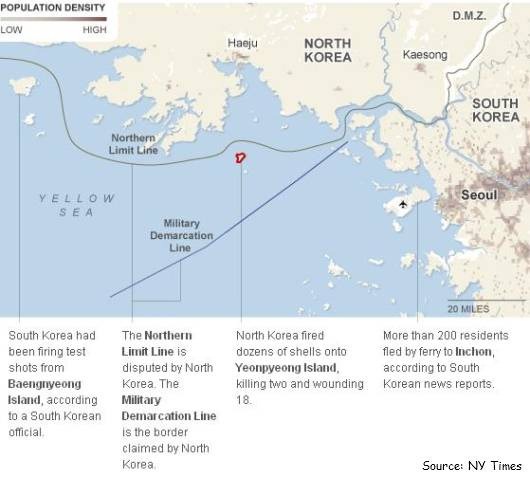
ny_times_yeonpyeong

Part one is here; part two is here.

Last week, I noted that I was drafting an interpretation of the NK shelling of Yeonpyeong island on November 24 for the Korean National Defense University. I am grateful for the many comments on received. My posting this week will represent my full thinking after three weeks of posting and comments and will be submitted for publication early next week. I would appreciate comments and thoughts no later than Monday. Thank you.

_____________________

3. Responses

SK lacks good short-term responses to incidents such as Yeonpyeong or the Cheonan. But it can develop a medium-term strategy to slowly throttle NK in a long-term Cold War-style stalemate.

3.1. Bad Short-term Choices

The Yeonpyeong shelling may be shifting the SK debate over responses to provocations. The new defense minister speaks of loosened rules of engagement (RoE). Proposals include lowering the threshold of NK misbehavior required to permit counter-fire, enhancing the amount of counter-fire force beyond proportionality, permitting greater on-site commander authority to return fire, expanding target packages to include NK sites beyond the immediate crisis zone, and using air power. This feels emotionally satisfying in the heat of the moment, because N and SK are engaged in an acute stand-off, in which both sides perceive strong, zero-sum material and prestige losses at the expense of the other. NK perceives SK status gains (point 2.2 above) at its expense and hits back; SK perceives the North to destroy its assets with impunity and presses to counter-strike yet harder. This is a classic tit-for-tat spiral, akin to Israel’s relations with the Arab states, that could easily degenerate toward war. Looser post-Yeonpyeong RoE are a misjudgment for three reasons.

First, SK is extraordinarily vulnerable to conventional Northern retaliation. One-half of SK’s population lives within 50 miles of the Demilitarized Zone (DMZ) in its enormous, high-density northwestern urban agglomeration. The Incheon-Seoul-Gyeonggi corridor contains approximately 25 million people in just 5% of SK’s land space. Many live in apartment towers dozens of stories high, very vulnerable, in the manner of the World Trade Center, to catastrophic collapse if hit by military fire. NK has stationed thousands of rockets and artillery at the closest point on the DMZ to hold this population hostage. Further, the SK government and economy are centered here. Hypercentralization and extreme exposure of the ‘Seoul-Republic’ has stayed SK’s hand in the past and likely will in the future. The risk is enormous.

Second, NK faces strong ideological and bureaucratic pressures to hit back in tit-for-tat spirals (point 2.3 above). NK is dependent on military bravado as legitimation in its ‘military-first’ polity. Expanding tit-for-tat counterforce beyond the immediate crisis time and space risks challenging the ‘manhood’ of the KPA in a system where that is absolutely central for regime identity. Openly challenging the KPA over its ability to defend the North is tantamount to asking for them to hit back, and yet harder. Counterforce also reinforces the Northern ideology, which is dependent on the domestic perception of SK as major national security threat. SK responses, however justified, feed this last remaining ideological prop of the regime.

Third, any extended, kinetic interaction between North and South will certainly generate compounding externalities of collateral damage, accidents, and misperception. Particularly in combination – Yeonpyeong local commanders calling for airstrikes on the NK mainland? – looser RoE could easily result in new incidents quickly spinning out of control. Once a tit-for-tat spiral begins, it would be increasingly difficult to halt as sunk costs mount; NK particularly may not have the command-and-control necessary to reign in the KPA once unleashed. As the accidents and misfire in the fog of war accumulate, events, not policy, would drive further escalation. A clear example is the Cuban downing of an American U2 during the Cuban Missile Crisis; local command authority nearly sparked a conflagration.

1.2. Medium-term Stalemate

With short-term options closed because of extreme exposure and escalatory insecurity, SK can improve its medium-term position to ‘win’ this long-term stalemate. By win, I understand the collapse of the North and re-unification on Southern terms, roughly modeled on German unification. Hawkish alternatives to the right, including aggressive RoE or invasion, are far too risky; the leftist, normalization alternative – permanent acceptance of the status quo of NK’s existence – is immoral, as it abandons the NK population to unending misery. Currently SK ‘muddles through,’ regularly managing NK on the short-term, crisis-by-crisis. But three medium-term policy shifts could improve SK’s long-term position of strength, with the goal of gradually pressuring NK toward collapse, much as the USSR eventually imploded under relentless allied pressure.

First, SK should de-centralize. The seat of government should move to Daejeon or Busan, far from the frontline. West Germany placed its capital far from its frontline for analogous flexibility and security. Government subsidies for residence and commerce outside of Gyeonggi could encourage a de-densification of the northwestern city-hostage, thereby untying the SK military’s hands after incidents like the Yeonpyeong. There are solid regional equity reasons for decentralization as well, but the national security benefit would dramatically tilt the intra-Korean stalemate in SK’s favor. A ‘hardening’ of northwestern SK through depopulation, improved architecture, civil defense drilling and bomb shelters, would lower the risks of escalation (point 3.1 above).

Second, Korea should expand its defense spending. 2.7% of GDP is rather low given the chronic threat NK, and it would gradually expand SK’s response options in tandem with decentralization. Specifically, SK should expand the navy, as many of these incidents occur in the Yellow Sea, and invest in the ‘networked battlefield’ technologies (C4ISR: command, control, communications, computers, intelligence, surveillance and reconnaissance) for which it leans so heavily on the US and the lack of which so clearly hampered the counterfire from Yeonpyeong. Offensive systems, most clearly armor, although controversial, would also signal to the North, that SK conventional deterrence is not simply defense-in-depth.

Third, neither of these suggestions is realizable without a much deeper electoral commitment to ‘win’ a long-term stalemate, rather than the current SK malaise to simply manage NK crisis-by-crisis and then ignore it otherwise. SK is constitutionally committed to reunification, but, like West German youth by the 1980s or the Irish today, SK younger generations are maturing with little knowledge of NK, growing fear of reunification’s costs, and increasing diffidence to the whole tangle. SK is slowly becoming a de facto status quo power in peninsular affairs; if NK can hang on long enough, South Koreans may not want unification anyway.

Active political leadership is required to prevent this drift. A national consensus to win, not just manage, would improve SK’s position of strength in what is already a test of wills and commitment. In the short-term, deterring NK’s regular, ideologically desperate provocations requires national sacrifice for decentralization and military expansion. In the long-term, a national consensus to end, not just manage-and-forget, the Northern regime would sustain these sacrifices. A grinding, expensive, and long Cold War-style stalemate in which NK is slowly throttled into collapse by relentless Southern power – on the US cold war model of slowly competing the USSR into oblivion – is the safest and most humane way to end the brutality under which North Koreans live.

Yeonpyeong Shelling Summation (2): More Causes in Hindsight

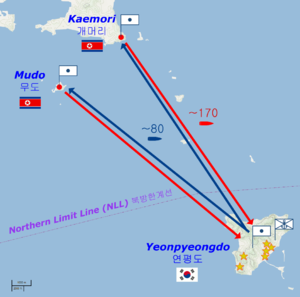
300px-Yeonpyeong_shelling

Part 1 is here. Part 3 is here.

Last week, I noted that I was drafting an interpretation of the NK shelling of Yeonpyeong island on November 24 for the Korean National Defense University. I am grateful for the many comments on received. My posting this week will represent my full thinking after three weeks of posting and comments and will be submitted for publication early next week. I would appreciate comments and thoughts no later than Monday. Thank you.

_________

More Causes

2.3. Long-Term/Structural: NK’s Permanent Legitimacy Crisis

NK faces a permanent legitimacy crisis in the wake of communism’s collapse. During the Cold War, Korea’s division could be explained, like Germany’s, by competing visions of economic justice (socialism vs capitalism). And indeed, Kim Il-Sung likely believed in socialism. But the son clearly does not; the Cold War is over; East Germany is gone. North Korean citizens increasingly know this. The post-famine explosion of private trading across the Chinese border has brought new information to the NK citizenry through (illegal) cell phones and SK VHS tapes (after-market resales due to the 1990s global switch to DVD). North Koreans now know that SK is wealthier; that Germany has unified; that USSR is gone. Indeed, the regime no longer speaks of communism or even juche much. So the obvious question for a people with no previous history of division, with substantially worse living conditions than the other national alternative, and ruled by an elite formally committed to unification is why NK cannot go as East Germany did. This existential problem ultimately destroyed East Germany after the Wall opening; its elites could find no answer and simply gave up. In Korea, unification on Southern terms would almost certainly result in a truth-and-reconciliation process given extreme Northern despotism. Post-unification courts would likely imprison or even execute senior KWP, KPA, and Kim family officials. (SK still retains the death penalty, likely for exactly this purpose.) NK elites do not want to go the way of Mussolini, Ceauşescu, or Saddam Hussein.

With communism a dead letter and unification blocked for elite security reasons, the only possible justification for the existence of separate, poorer, unhappier, unhealthier NK is that SK is a revanchist puppet of the imperialist US. NK’s last-ditch, post-communist ideology against the Southern and American ‘aggressors’ is now the ‘military-first’ policy, in which NK is reconceived as a national defense state protecting Korean national integrity. As such tension with SK is existentially required. NK must have a permanent oppositional relationship with the South, otherwise, why does it still exist? This is the structural cause of Sunshine Policy’s failure, despite heroic efforts and good-faith bargaining by SK’s liberal administrations. Normalization is simply impossible for the regime if it is to continue as it is. So even if SK does not provoke the North, then North must do so anyway; ergo, the long list of incidents in point 1 above. Something must justify deprivation, national division, and military privileges to the disconsolate, long-suffering Northern population, and ‘national defense’ incidents like the Cheonan or Yeonpyeong serve this purpose. This is why Yeonpyeong is nothing new and why something like it will happen again; it is in the structure of the regime.

2.4. Permissive: China’s Cost-Benefit Calculus

China continues to calculate that an erratic, nuclearized NK is preferable to unification on Southern terms. A peninsula-wide version of SK is the only realistic unity scenario given NK’s extreme backwardness – decrepit, corrupt NK probably could not even manage the whole peninsula – and SK’s demonstrated unwillingness to sacrifice democracy for unity. China’s continued subsidization for NK’s economy is well-known and has only become more crucial as events like the famines, failed currency reform, UN sanctions, expensive nuclear program, and continued resistance to Chinese-style reforms have effectively devastated the NK economy, all the more ironic for its autarkic claims of juche. (The CIA estimates NK’s GDP at just $42 billion for 24 million people.) China’s refusal to endorse the Security Council reprimand of NK over the Cheonan signaled that when pushed, it will choose North over South.

This opens the door for continued NK intransigence and provocation. Given NK’s extreme asymmetric dependence on China, it is highly unlikely that NK would openly cross its benefactor. One can only speculate what if any Chinese red-line warnings on provocations were given to Kim Jong-Il on his recent trips to Beijing. Yeonpyeong probably did not cross that line, as the Chinese response has been widely regarded as tepid and insufficient.

China is formally committed to Korea unification – ideologically required for its own claims to Taiwan. Yet Chinese scholars openly speak of NK as a buffer, hence instrumentalizing NK to Chinese foreign policy. China fears a ‘southernized’ peninsula – a unified, populous, wealthy, nationalist, democratic, American-allied Republic of Korea on its border. The NK buffer keeps SK and its American and Japanese allies one step further away. NK antics also serve to keep these three Chinese semi-rivals off-balance and confused in northeast Asia. Further, Manchuria contains millions of Korean-Chinese whose potential ethic nationalism China does not wish stirred by emotional, globally-evocative imagery of Korean unity.

Yeonpyeong Shelling Summation (1): Context and Causes in Hindsight – UPDATED: More in the Comments


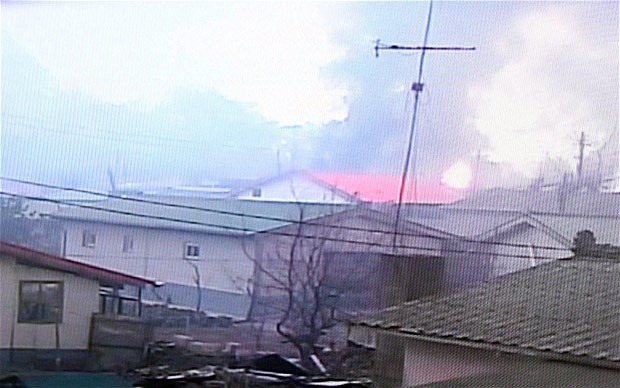
Yeonpyeong-island_1768397i

Last week, I noted that I was drafting an interpretation of the NK shelling of Yeonpyeong island on November 24 for the Korean National Defense University. I am grateful for the many comments on received. My posting this week will represent my full thinking after three weeks of posting and comments and will be submitted for publication early next week. I would appreciate comments and thoughts no later than Monday. Thank you.

Part 2 is here; part 3 is here

ABSTRACT

I identify four likely causes for the recent North Korean (NK) shelling of Yeonpyeong Island and argue nonetheless for a policy of retaliatory restraint. Two short-term causes are, 1. the regime’s domestic need to bolster the non-existent military credentials of Kim Jong-Un in order to ensure a successful transition in a hyper-militarized political system, and 2. to embarrass South Korea (SK) after the successful hosting of the G-20, which implicitly contrasted with NK’s worsening dysfunction and poverty. A third, structural cause is the regime’s permanent, post-Cold War legitimacy crisis – NK’s existential requirement for regular tension with SK in order to explain its continued existence as a separate poorer, unhealthier, unhappier Korean state despite the collapse of communism and, especially, of East Germany. A fourth, ‘permissive’ cause is China’s continuing refusal to leverage its influence over NK in order to indefinitely prevent the emergence of a unified, populous, wealthy, nationalist, democratic, American-allied Republic of Korea on its border. Unfortunately, SK’s post-Yeonpyeong responses are tightly constrained by the extreme vulnerability of South Korea’s enormous northwestern (Incheon-Seoul-Gyeonggi) urban agglomeration. 50% of SK’s population lives within 50 miles of the Demilitarized Zone; escalatory, kinetic tit-for-tat scenarios from loosened rules of engagement place them in tremendous jeopardy. I counsel short-term restraint coupled with a medium-term decentralization of SK out of the northwest, significant military expansion, and refocused government effort to build genuine popular, not merely formal-constitutional, commitment to win a grinding Cold War-style stalemate eventuating in NK’s collapse (akin to America’s slow reduction of the USSR).

_____________________________

1. Context: Nothing New

North Korea (NK) has a long history of provocations against South (SK), in which context the Yeonpyeong shelling is better understood as neither unique nor a step toward war. Much of the media commentary has exaggerated the escalatory potential of this crisis, generating a clear possibility for a self-fulfilling prophecy. That is, hyperbolic commentary that SK ‘honor’ is at stake in the ‘worst crisis since the war’ raises pressure on SK elites to respond with sterner measures, thereby worsening the very crisis they seek to de-escalate. Indeed, given that more casualties were suffered in the Cheonan incident (46) than Yeonpyeong (4), and that NK knew more clearly that a surprise-attack sinking would kill more South Koreans than the more random artillery fire against Yeonpyeong, NK is far more culpable for the earlier attack. SK rage this time is disproportionate to NK’s track record of such behavior.

A few incidents are worth recalling which diminish the uniqueness of the Yeonpyeong shelling and therefore mitigate the calls for looser rules of engagement (RoE): the 1968 attempt to assassinate Park Chung-hee, the 1976 tree-cutting incident, the 1983 cabinet bombing, the 1987 KAL 858 bombing, the Yellow Sea skirmishes of 1999, 2002, and 2009, and the 2010 Cheonan sinking. None of these incidents led to war; many were far worse than Yeonpyeong; despite humiliation, post-hoc restraint was ultimately the safest course given SK vulnerability (point 3.1 below).

2. Four Causes

Causal attribution of NK behavior is classic kremlinology, subject to large information failures due to NK secrecy and disinformation. My reasoning below is historical (previous NK behavior as indicators of the future) and analogical (how other late stalinist systems and aging dictatorships generally behave). I posit four causes:

2.1. Short Term 1: The Kim Family Transition

Since NK’s mid-1990s move toward ‘military-first’ politics, military prowess, whether genuine or manufactured, has become central to legitimizing rule in NK’s increasingly militarized polity. Kim Jong-Il rules not as president or prime minister, but as the chairman of the National Defense Commission (NDC). The North Korean People’s Army (KPA) is increasingly the central prop in a regime notably lacking a justifying ideology in the wake of the collapse of communism (point 2.3 below). Military factionalization is common in aging communist systems, and dictatorships generally, and the next Kim, Jong-Un, desperately requires military credentials to hold the rickety, corrupt system together when his father passes. Jong-Un has never served in the KPA, and his youth conflicts with traditional Korean norms of authority, in which age and experience legitimate hierarchy. To compensate, he was promoted to four-star general this fall and placed on the NDC last year. Manufacturing crisis like Yeonpyeong burnishes his minimal credentials further, and the Korean Central News Agency (KCNA) has hyped him as an artillery expert, suggesting a clear tie to the recent shelling. The leadership transition is likely to be more unstable this second time, as the Jong-Un is far less groomed and known in the relevant bureaucracies (KPA and the North Korean Workers Party [KWP]), and the economy is yet worse than in 1994.

2.1. Short Term 2: The G-20

Elites in both Koreas face a unique legitimacy problem, insofar as a second Korean political alternative exists for a people with a clear history of national unity. As with the previous divisions of Germany, Vietnam, and Yemen, both Koreas explicitly compete to be ‘the’ Korea and delegitimize the other. An important SK tactic in this competition has been to host major international functions such as sporting events, trade associations, and leadership conferences which bolster its global reputation as the ‘real’ Korea. This strategy has succeeded. NK is quite aware of the legitimacy threat it poses, and it has responded angrily, most notably in 1987, when it attempted to dissuade SK from holding the 1988 Olympics by bombing KAL 858. The long-term NK planning for the Yeonpyeong shelling indicates premeditation yet again (invalidating the KCNA claim that it was a response to local SK drills). The shelling clearly dampens the SK global afterglow of successfully hosting the G-20 the previous fortnight. SK regarded both 1988 and 2010 a global coming out. The 1988 Olympics showed that a previously poor underdeveloped country torn apart by war had bounced back through an economic miracle (two decades of double-digit GDP growth) and was wealthy and stable enough to hold a major international event. The contrast with brutalized, still poor NK was obvious.  In 2010, the Seoul G-20 was also regarded in SK as proof of Korea’s rank in the elite G-20. And now, NK is even poorer and worse off than in 1988. The comparison is quite stark. Some pique of NK responsive anger was likely in order to signal that the KPA is still the central force to be reckoned with in peninsular affairs.

The New, Looser SK Rules of Engagement – One Scary Step Closer to War – UPDATED: Comments Requested

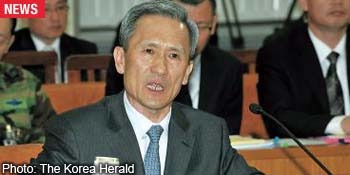
20101206_110134_101206-koreadm

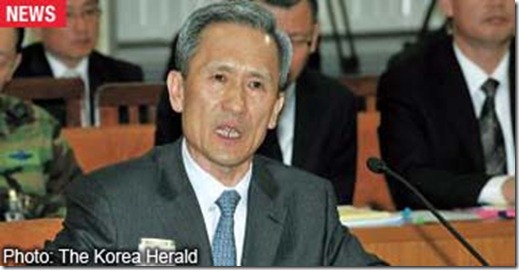
The new SK defense minister, Kwan-Jin Kim

UPDATE: I’ve been commissioned by the Korean National Defense University to draft an initial assessment of the Yeonpeyong incident and possible options. I would welcome serious reader responses to the whole mess. My previous writings on it are here, here, here and here, plus below. My sense broadly is that there are no good short-term options (see below), and that, because of extreme population vulnerability and public disinterest, SK must suffer these sorts of humiliations until it seriously reconfigures local defense around throttling NK in a long-grind Cold War-style stalemate (“hanging tough” in Gaddis’s famous expression). That means decentralization, bigger defense budgets; lots of investment in command-and-control, intelligence (including satellites), and the networked battlefield; and far greater domestic popular commitment to a long-term victory over NK in place of the current, tacit acceptance of the status quo. To my left, I reject accepting the status quo as immoral, because it dooms the long-suffering North Koreans to perpetual brutalization, and to my right, well, God forbid this sort of outburst become policy…

UPDATE II: Contrary to my argument below (point 4), there is data to suggest that South Korean more broadly want counter-strikes. But the title of that article is more aggressive than the actual report, so read it carefully. Nor is it clear to me that South Koreans would support the escalation spiral that might ensure; i.e., if NK hits, and SK then hits back harder, and then NK hits back harder still, then should SK keep going? Fire and counter-fire in a limited time and space (like Yeonpyeong, which counter-shelling I supported), is different from the likely degenerative spiral that would ensue with airstrikes and some of the tougher countermeasures under discussion.

_________

I got a number of comments and emails asking for my opinion on the new SK rules of engagement (RoE) post-Yeonpyeong.  I got some criticism for being too sanguine and dismissive of the whole thing. The new rules are emerging now; the new defense minister is in-post now only one week. For some early write-ups on the new rules, try here, here, and here. For a discussion of the RoE on Yellow Sea naval clashes, try here. I’ve also caught some of the debate on TV. In general, the drift seems to be to lower the threshold for permitting counterfire (less NK aggression necessary before return-fire is permitted), enhance the amount of force used in counterfire (beyond proportionality), permit greater on-site commander authority to shoot back, open up strike-back packages to include NK targets beyond the immediate crisis zone, and use air power.

My initial response is that all this is too risky, particularly in combination (Yeonpyeong local commanders calling for airstrikes on the NK mainland, anyone?).  It brings SK closer to war the next time a provocation happens, which it most certainly will. NK is dependent on military bravado as a legitimation in its ‘military-first’ polity. Expanding tit-for-tat combat beyond the immediate crisis time and space risks challenging the ‘manhood’ of the North Korean People’s Army (KPA) in a system where that is absolutely central for regime identity. Openly challenging the KPA over its ability to defend the North is tantamount to asking for them to hit-back, and yet harder. Strike-backs also reinforce the regime ideology, which is dependent on the domestic perception of SK as major national security threat. SK responses, however justified, feed this last remaining ideological prop of the regime. Finally, SK is so vulnerable to an escalating tit-for-tat spiral of strike and counter-strike, that I just don’t think it is worth the risk, even if it is humiliating. Restraint not only demonstrates SK’s seriousness to the rest of the world, especially China, but is, quite honestly, more in SK’s medium-term national interests than the short-term ideological satisfactions of shooting back.

1. I have discussed in detail elsewhere the extreme vulnerability of SK’s population centers to NK. As such, if loosened RoE lead to a serious, degenerative spiral (escalating strike and counter-strikes) pushing toward war, the likelihood of disaster for the South is huge. If SK can move some of its population away from the DMZ, so that likely civilian casualties from a serious flare-up diminish, then I would consider looser RoE. But SK has painted itself into this corner by allowing so many people to live so close to NK. Almost any national humiliation like the Cheonan or Yeonpyeong is preferable now to risking hundreds of thousands of lives in a NK shelling of Kyeonggi province.

2. NK faces a permanent legitimacy crisis. During the Cold War, Korea’s division could be explained, like Germany’s, by competing visions of economic justice (socialism vs capitalism). And indeed, I believe Kim Il-Sung actually believed in socialism. But the son clearly does not; the Cold War is over; East Germany is gone. Hence the only possible justification for the existence of separate, poorer, unhappier, unhealthier NK is that SK is a revanchist puppet of the imperialist US. This is why NK gins up these sorts of incidents to begin with; the regime existentially requires tension with SK. So if the looser RoE bring expanded attacks, or even bombing, with its instant memories of devastating US airpower from the war, then you just play into the regime’s hands. You give it yet more reason to explain itself to (and clamp down on) its otherwise disconsolate citizenry. In short, restraint is the best long-term answer in the ideological stalemate.

3. NK’s regime ideology against the Southern and American aggressors is now the ‘military-first’ policy, in which NK is reconceived as a ‘national defense state.’ Socialism went out the door in the 1990s constitutional revisions; it was a deadletter anyway with the end of the Cold War. In this increasingly militarized system, military prowess (real or manufactured) is legitimation for rule in politics. Hence, the wide belief among analysts, that the Cheonan and Yeonpyeong incidents were to burnish the empty CV of the next Kim, Jong-un. If we accept this hyper-militarization, then any tit-for-tat sequence from looser RoE would generate enormous ideological and bureaucratic pressure in the North for escalating ‘tats.’ The KPA, to justify its dominance and generous budgetary privileges, requires ‘victory’ in these sorts of flare-ups. It is highly unlikely to turn-away from a fight, instead hitting back each time, and probably harder too. In short, I gravely doubt that NK has the ability to control a serious tit-for-tat spiral. The outcome is a much greater likelihood of war.

4. Do South Koreans even support these loose RoE? The media line seems to be that South Koreans are ‘outraged’ that the military can’t seem to protect SK. Ok, but please show me the public opinion data that says that South Koreans therefore endorse more aggressive escalatory responses, including the hugely risky proposal for airstrikes. The two don’t necessarily connect. A few angry older Koreans demonstrating in Seoul, while enough to convince the neo-cons, is hardly a show of support for the new risks Minister Kim wants. In my own dealings with Koreans at work and in private, I see a lot of fear and concern about where this is going. Myers calls the SK electorate ‘pacificist,’ and that is my experience too.

5. The looser RoEs create more possibilities for accidents that could spin out of control, and then events, not policy, would drive, further escalation. Remember that the everyone was terrified in the Cuban Missile Crisis that local Soviet commanders in Cuba might have authority to use battlefield nuclear weapons (they did, in fact), or that local commanders might slip the noose and force one side’s hand by a provocation, as almost happened when the Cubans shot down an American U2 on October 27, 1962. We assume and hope that SK’s new expanded counter-force would be both limited and decisive in order to halt escalation, but what if it isn’t? What if one of those ‘amazing’ F-15Ks gets shot down? Then we have SK pilots behind enemy lines on the run, sure to be executed if they get caught. This would create yet further pressure for escalation. Or what if a local commander with new counter-fire authority shoots back at mainland NK with artillery and kills civilians by accident (SK artillery fire wasn’t that accurate in the Yeonpyeong incident)? Then what? You’ve given NK yet another excuse for its very existence (bloodthirsty SKs), as well as justification for them to shoot back yet again.

6. Another provocation is almost certain, so looser RoEs are basically a prediction of the future. It is almost certain NK will do something dangerous yet again. Per point 3 above, tension with the South is ideologically required, so try to imagine NK sinking a SK fishing boat in the Yellow Sea in the next few years. I dare say when the current unhappiness passes, South Koreans will think twice about whether they think airstrikes and all the ‘kinetic’ risks thereby entailed are really worth it. Honestly, the answer is no. That is why this time too, for all the unhappiness, there is no summer 1914 war fever here. It is just too risky, far too risky, in fact to challenge NK into some kind of Cuban Missile Crisis style stand-off. Until SK reconfigures itself to win a long-term stalemate through a major military build-up, then it will be very vulnerable to Northern asymmetric strikes and, ultimately, wisely, too fearful to respond. It may seem ‘wimpy’ to neocons Iraq warriors in DC think-tanks, but it is the smart thing to do. The risks are just too great.


Media Alarmism and Self-Fulfilling Prophecies about War in Korea

Scheuer should stick to Al Qaeda and his Middle East expertise…


For the last week , I have read and watched a lot of the coverage. Most of it was pretty good, to my great surprise, although the international media were too, almost intentionally, alarmist, with little coverage of the fact that South Korean citizens all but ignored this and went on with their daily lives. I didn’t even know about the shelling until my classes had ended that day and a BBC reporter told me. South Koreans have become inured to these outbursts, because they happen so often. This life-went-on-normally story needs to compete with all the images of smoke from the island and the USS George Washington deployment. The Korean media noted this problem as well.

There was a clear tone difference between international media outlets like CNN, Reuters, SkyNews, Fox (above), and the NYT, and the local Korean media. Friends in the US emailed me after watching US news coverage, because they thought a war was imminent. (What are the networks telling you guys?) I get CCN International in my house, and the initial coverage was unhelpful too, with flashy graphics of ‘Breaking News!’ and its on-site reporters got a little carried away with the claim that Korea is close to all-out war. More generally, the tone seemed to be that this was one of the  worst crises since the war. Really? You mean that? Do you see Koreans running around with their hair on fire? Didn’t everyone just stay to work that day and the next? Did they run civil defense drills? Did the KOSPI drop? Does Scheuer (above, whom I think is quite good on Middle East) really think we should sink the NK navy? Interviewing expat English teachers in Seoul whose mothers don’t know anything about Korea and are freaking out is not reporting. It was noticeable and disappointing that none of the foreign outlets hit the news conferences at the MND or MOFAT or Blue House, where an admirable restraint and seriousness prevailed. There is an obvious audience-expansion incentive to hyping the shelling (it’s World War III in Korea!), but the blowback problems created for policy-makers are serious and threaten a self-fulfilling prophecy: they don’t look ‘tough’ if they don’t hit back in a CNN-hyped crisis, so they hit back, thereby worsening that very crisis.

So please don’t portray the Yeonpyeong situation like the first step toward war in a wholly unique provocation. It was neither. NK does this stuff all the time; the NK elite doesn’t want a war because they will lose and all hang afterwards (this is why SK retains the death penalty which they almost never use at home anymore); NK frequently does these things for internal, intra-NK in-fighting reasons that have little to do with the rest of world; SK doesn’t want a war, because it doesn’t want its rich democracy nuked. So please, control the hype and hysteria. If it is both unwarranted and a bit dangerous, because it pushes SK’s elites toward macho, George-Bush-style decision-making so they don’t look ‘weak.’ Raising the temperature artificially to gain viewership is unethical and retards de-escalation.

Korea has ALWAYS been geopolitically tense in this manner. NK has regularly bullied SK; SK’s belligerent rhetoric has never been seriously followed-up; the US routinely steps in to back up its ally; there have been lots of these sorts of crises before, and many far worse: the tree-cutting incident (1976), the cabinet bombing (1983), the KAL bombing (1987), the Cheonan (2010), plus lots of little Yellow Sea skirmishes before (1999, 2002, 2009). NK is always saying they will bomb SK and turn Seoul into a sea of fire. So come on, wae-guk-sarams; put in some context, as if you are genuinely a qualified Korea expert and didn’t just fall off the plane from Tokyo or Hong Kong. For my previous thoughts on CNN, which broadly apply this time around, try here.

By contrast, I was struck by how good the Korean media was on this. I watched a lot of the KBS and SBS TV reports in the last week. They were very informative, full of interviews with government officials and academics, with lots of imagery and maps and such. They walked you through exactly where the NK rounds came from and which SK units returned fire, what the rules of engagement are, who might have been responsible in the KPA. They explained in detail about the in-theater US and Korean forces. So far as I have seen, none of this detail was presented in external media, although I tried. The context I mentioned above was fully presented, as most Koreans roughly know this history anyway. All sort of talking heads from universities and think tanks were rolled out to give lots of perspective and policy suggestions. There was no scary music or quick-cut graphics, although you can always read the Chosun Ilbo for your saber-rattling fix. Usually I am pretty tough on the Korean media on this site. Among other ills, they are endlessly jingoistic, fact-check even less than Dan Rather, are far too statist and deferent to elites, and tilt toward xenophobia on the English teachers here (underqualified, pot-smoking child molesters from Canada, they tell me). But this time they were measured, focused, and professional, maybe because of the gravity of the situation. Hear, hear.

So everyone should relax. If Glenn beck sounds off on the Rapture and North Korea, ignore him (in fact, ignore almost everything Beck, or worse, Palin on NK, says). If the neocon-industrial complex fires up on the necessity of NK regime change and starts claiming Obama is weak, don’t listen to them either. By Korean standards, this is not scarcely a crisis yet (you’d be amazed how blithe they are about these sorts of things), so let’s not raise the pressure on them for ratings or politics. This stuff is far more manageable than those early images of smoke rising from the island lead you to believe.

NB: if I sound to too sanguine, here is the threshold when you should indeed panic about Korea: when South Korea shoots back. Then  you can run your Michael Bay war-time stories, because SK is super-vulnerable to NK. Hence if they still shoot back, they are taking a huge risk and that means the debate here really has shifted. To date, SK has never struck back militarily after one of these sorts of things (no airstrikes, port mining, etc). So that is the real benchmark for ‘Krisis in Korea on Fox!’

NB2 for US readers in Korea: in event of a war, the embassy plan is for us all to head for Pusan and then be flown/shipped to Japan. You can bring your Korean spouse too, but not her family (so I won’t be going Sad smile). You will be notified via the embassy’s email registration system. Sign up here if you haven’t already. No joke on this info, btw.

What the Yeonpyeong Shelling Taught Us

Not quite… He actually ducks a little


Actually, not a whole lot. Mostly, it just reinforced stuff we already know. I said the same thing after the Cheonan was sunk earlier this year.

1. Koreans take this stuff in stride. It was more the international media that portrayed this as a major crisis. In Korea, everyone went about their regular business. The stock market didn’t drop. There was no rush on food-stuffs in grocery stores. No one is digging bunkers. It’s not evolving into the Cuban Missile Crisis. The Korean media reported rather well on the crisis, without the level of overstatement – ‘Korea on the brink of war!’ – that was common from the international media in the first few days especially. This is far from the worst crisis with NK in the history of the stand-off.

2. These sorts of things re-galvanize the flagging US-Korea defense relationship. This may be the biggest benefit to South Korea from the whole mess. Although US political and military figures regularly invoke the alliance as shoulder-to-shoulder (which of course you would expect them to say) both here and in the US, the reality is that the American position here is shrinking and moving away from the hot-spots under substantial US budgetary pressures at home (a $1.3 trillion deficit!). USFK (US Forces in Korea) has shrunk substantially over the years. US nukes are out. The Combined Forces Combined (CFC) is schedule for termination. The number of bases has shrunk. The US is no longer deployed along the DMZ (the big bases will be around Pyeongtaek, south of Seoul, in the future). The massive US fiscal mess will make it even harder to retain what we still have here. Defense budget cuts are coming – in a big way if we want to save Medicare, Medicaid, and Social Security – and US overseas deployments are an obvious place to cut (Iraq, Afghanistan, Korea, western NATO especially, unless the hosts want to pay 100% of the costs – which option the Koreans should genuinely consider as a part of point 3 below). Here is my fuller commentary on this. Also here and here.

Korea particularly is a tempting place to cut. Korea is wealthy and has a capable military. It can afford to spend even more on defense (below), while the US most certainly cannot. Nor is Korea really a core US defense interest. Unification on Northern-terms would have little impact on the US now that the Cold War is over; Korea is more a regional issue now, not a global one. Korea hardly ranks against Japan, Canada, Mexico, (Israel?) or Western Europe as obvious ‘core commitments’ to American security. This does not mean I want the US to abandon Korea, only that the likelihood is growing, because the costs to the US of an ROK defeat/reduction are low for the US. Nor do Americans really want to fight in Korea (only 41% now), especially after all the misadventures of the 10-year war on terrorism. Read this as well on this issue.

So if you are Korea, these sorts of scrapes are secretly valuable from a medium-term national defense view.  They put NK back on page 1 for the US voter. They force the US to say yet again in public, that the US will defend Korea. This creates greater ‘audience costs’ for US elites should they try to slip out of the alliance commitment in the future. After the Cheonan, the dissolution of the CFC was delayed for 3 years. Note here that Obama talked around Barbara Walters’ excellent question, ‘is an attack on SK  an attack on the US?’ The president ducked that one (video above). These kinds of public comments make it harder for the US to retrench (even though we really need to), and that is good if you are SK.

3. SK needs to spend more on defense. SK only spend 2.7% of GDP (according to the CIA). I hate to sound like an uber-hawk, but honestly, that is really not enough if you live next to NK and are number one on the hit list. By now it should be clear to almost everyone except the most unreconstructed SK leftist, that dealing with NK is only possible from a position of strength. The North cheated a lot during the Sunshine Policy years, even demanding a big cash payment for Kim Jong Il personally to get him to attend the inter-Korean summit. And in the last few years, the North has gotten even nastier – with the nuke and missile tests and more of these sorts of asymmetric strikes. But Koehler has a series of good links and analysis here that SK has not adjusted well. The US is broke; SK is not. The time for burden-sharing is here.

But you say this is just arms racing. Everyone will just run faster and faster to stay in place. More Southern weapons will scare the North into further wild behavior and yet further punish the much-suffering NK taxpayer. Maybe, but the NK military functions as a state-within-a-state already, and its stringencies on the NK citizenry derive as much from its internal as external insecurities. And NK policy-makers are so irresponsible (Brzezinski went so far as to call them insane), that the causal connection between lower SK defense spending and better NK behavior seems loose at best, while the costs – like the Cheonan and Yeonpyeong – are very clear. Among other things, South Korea might want to consider militarizing more areas north of Seoul and depopulating them gradually, expanding the navy, as these flashpoints occur mostly in the Yellow Sea, paying for more of USFK, even for its expansion, conscribing women as well as men (as Israel does), and possibly – I hesitate to say – signaling renewed interest in nuclear weapons. That last one is hugely controversial, but given the growing likelihood of US retrenchment and the expanding Northern nuclear program, it should probably be discussed.

The North Korean Shelling

Here is the frightening video if you haven’t seen it yet…


So much for the quiet week on blogging because of Thanksgiving. Yesterday NK started shelling Yeonpyeong Island in the Yellow Sea (what Koreans call the West Sea). It’s all over the news of course, but here is a good place to start, particularly on the possibility of a hawkish SK response. Here is a write-up from a more left-leaning Korean newspaper. For a good IR theory take on this, try here. I spoke yesterday on the BBC World Service “Newshour” program about this. Here is the link. My comments begin at 10:10 and conclude at 17:45 (this is ‘chapter 1’ of the listed choices). Here is the podcast (please refer to the download entitled “North and South Korea Exchange Fire 23 Nov 10”).

Here are my thoughts (fuller than my BBC remarks). All the links below connect to my previous posts on NK. Please see them for greater detail which this post summarizes:

1. I am surprised that this has evoked so much concern given that the Cheonan cruiser sinking in March was worse (46 deaths then vs 3 this time). The Cheonan sinking very clearly would entail many deaths, whereas yesterday’s artillery strike was less certain to do that. To my mind, NK is more culpable in the spring than this time, but the rhetoric is more belligerent from the ROKG this time than last. Even though fewer died, this might be explained by a ‘straw that breaks the camel’s back’ logic: SK has just had a enough of these sorts of out-of-the-blue strikes (point 3 below), and this time they are going to hit back regardless of the costs. This incident is also somewhat different from past provocations, because it openly is targeting South land territory, and the North Koreans knew that. The other Yellow Sea skirmishes were on the water. Also, there were civilians on the island – and only one firetruck – so it looks perhaps more egregious than attacking a warship. (Although the Cheonan sinking was wholly undeclared and the Yellow Sea islands have been disputed for a long time, so I still find the greater outrage this time confusing.)

2. NK is almost certainly miffed and unhappy at all the global press SK got for the G-20. This is a way to hit back and play the spoiler of SK’s afterglow. NK did something similar in in 1987, when it blew up KAL 858 in order to discourage SK from holding the 1988 Olympics. In both cases, SK regarded the event as a global coming out. In 1998, the Olympics showed that a previously poor underdeveloped country torn apart by war had bounced back through an astonishing economic miracle (2 decades of double-digit GDP growth) and was wealthy and stable enough to hold a major international event. The contrast with brutalized, still poor NK was obvious.  In 2010, the G-20 was also regarded in SK as a major coming out for Korea as a big economic player inside the elite G-20. And now, NK is even poorer and worse off than in 1988. The comparison is pretty stark. So my kremlinological guess is that NK is once again showing its displeasure and that it is still a major force on the peninsula.

3. NK has a history of these sorts of provocations against SK. These sorts of things are practically ritualistic now. While these things are disruptive (to say the least), they are not actually unpredictable. In fact, they follow a pretty established pattern of NK brinksmanship though asymmetric outlashings at SK from time to time. These strikes show the North’s unhappiness at something in the South (like the G-20 last week) or to bolster the CV of NK insiders (like Kim Jong-un today) jockeying for influence inside a fairly corrupt regime with pretty murky rules and shallow institutions. Just in the last 12 months, North Korea sank the SK Cheonan cruiser in the Yellow Sea (March 26, 2010) and fought a naval skirmish in the same area (November 10, 2009). There were also skirmishes in the same area in 1999 and 2002. So this stuff is pretty common actually.

4. This probably won’t escalate, because the South Koreans have little appetite for war against NK. The sinking of the Cheonan was a far worse provocation (46 sailors died), but the SK military did nothing, because most South Koreans just want to forget about NK. They don’t want their wealthy comfortable democracy trashed in a war with a ruler they consider a quack. So South Koreans just put up with this stuff. Their tolerance for NK pain is quite high, because the costs of war and reunification are frightening. Also, South Korea’s hands are badly tied by the extreme exposure of SK population centers to NK retaliation. 50% of the SK population lives within in 50 miles of the DMZ, and NK has stationed thousands, perhaps 10-20,000, canon and rockets with striking distance of those cities for the purpose of holding SK hostage. So NK can act out all these provocations with little fear of retaliation. It is just too risky for the South to hit back.

5. Finally, the Kim family transition in the North itself generates huge uncertainty. These kinds of strikes demonstrate the NK military’s relevance to all involved – not just in the South, but also China, whom they don’t want to dominate them, and to the leader-to-be, Kim Jong-un. This sort of thing reminds him who is boss in the regime, or at least, who is a competitor for power.