


Why don’t Korea & Japan Align?

Flag-Pins-Japan-South-Korea

For awhile I was collecting links and such to make an argument about Korea and Japan working together on big issues like China and NK, or finally clinching the much-discussed but little worked-on FTA. Both the realist and the liberal in me wanted to see two liberal democracies working together in a tough environment with similar structural threats. Initially I had written: “This may be the biggest news of the year if it actualizes: Japan is apparently considering real defense cooperation with SK. If you follow East Asian security, this is a revolution. Try here, here and here.” But this is sorta cheating on social science, right? Looking around for any scrap of data to support an outcome we like, even though it isn’t really happening?

Well, I give up. Instead of more normative, but ultimately speculative, essays on why East Asian states should align, found an Asian Union or Community, build a local alternate to the IMF, forge a common currency, take ASEM seriously, etc., I think we should start asking why Asian states cooperate so badly. (My short answer: they’re too nationalist.)

My students bring integration up all the time. Until the euro crisis got really bad, students used to tell me all the time that Asia needs an EU or coordination against the (much-loathed) IMF. And I’ve read lots of term-papers on this. But the more I look at the most important Asian international organization (IO), ASEAN, the more it just doesn’t impress me no matter how much hype it gets (which is a lot out here at the conferences and in business advertising in the media). ASEAN is around 60% of the age of the EU and has done maybe 20% of the integration/cooperation the EU has. I argued in ISR a few years ago that lots of IOs aren’t actually about integration at all, but rather the joint self-defense of weak and/or authoritarian elites (Organization for African Unity, Gulf Cooperation Council, Shanghai Cooperation Organization). But that still doesn’t explain why Korea and Japan are so distant. And now for work, I’m revisiting Walt’s Origins of Alliances. Balance of threat feels pretty persuasive too, but I think it would struggle with the Korea-Japan case, as would the democratic peace.

Continue reading

Why N Korea Gets Away with its Stunts: a Response to Jennifer Lind

NKl trajectory

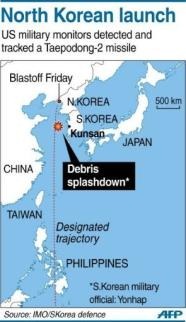
Jennifer Lind has a good piece up on Foreign Affairs this week on why NK seems to regularly get away with with hijinks like last week’s rocket test (which directly contravenes UN Resolution 1874). She notes, correctly, that NK has been pulling unanswered, wild stunts like this for years – shootouts in the Yellow Sea, nuclear tests, kidnappings, etc. Further, the US particularly tends to hit back when hit. Indeed, looking at the GWoT, America’s problem is over-reaction rather than passivity. If we look at the Israelis, it’s similar. They have a well-established reputation of hitting back, hard, when provoked. So why don’t the democracies of the Six Party Talks (Korea, Japan, US) do the same here? They easily out weigh NK.

Her argument is that NK manages to deter counter-strikes through a bizarre mixture of the ‘madman theory’ (what will the loopy, hard-drinking, megalomaniacal Kim family do next? so let’s just not provoke them), regional fear of what would follow a NK implosion (après moi le déluge), and traditional nuclear deterrence (if Saddam and Gaddafi had nukes, they’d still be alive, so we’ll never give them up!).

None of that is wrong, but I think she’s missing the big factor – SK domestic politics. Lots of countries and other international actors do wacky, crazy stuff; the question is whether the target wants to counterstrike and risk escalation. So it is SK ultimately (not the US or Japan) that decides whether or not to hit back. And SK doesn’t want to, because 1) South Korean population centers are extremely vulnerable to Northern aggression, and 2) South Koreans just don’t care that much about NK anymore.

Continue reading

All Politics is Local, Korean style

Dancing for Votes in Dongnae!


Because I work for a public university, I am a national civil servant. So it was inappropriate for me to comment on my site about the recent Korean parliamentary election. But now that it’s over (here are the results), I thought it would be fun, as a political scientist, to share this video of what downhome street politics looks like in my election district in Korea. Here’s a little anthropological, comparative politics participant observation in the field.

This took place about 2 minutes from our apartment, in the middle of a boisterous Korean streetmarket (the woman next to me was chopping the heads off of fish). The candidate’s name is Jin Bok Lee (the incumbent and a conservative); here’s his campaign truck and part-time campaign dance squad. So if you’re wondering what Richard Fenno’s ‘homestyle’ campaigning looks like in Korea, here you go, goofiness and all. Don’t miss the ajeossi on the left side boogying with the dancers. Awesome! Doubtless, this is what Rousseau and Thomas Jefferson had in mind Smile.

Continue reading

Kim Jong Un’s Ascent (2): Rocket Launch as a Sign of a Power Struggle?

KJU

Here is part one, where I argued that Kim’s rise scrambles our conventional wisdom on NK, opening a lot of unexpected room, at least early in his tenure, to try to deal. The cold war stand-off in Korea is now so bad, that there is little to lose in trying to talk with him, and it would seem like a huge missed opportunity to simply blow him off as identically awful to his father. For my regular argument that negotiating with Kim Jong Il was impossible, try here and here (or if you’d rather just read about the ridiculous Homefront video game, try this).

Continue reading

Kim Jong Un’s Ascent (1): A Unique Negotiating Opportunity

Kim-Jong-un-Meme-GeneratorOr maybe not…

The following short piece for the Korean National Defense University was written after the Leap Day Deal, but before the rocket launch announcement. In the interim, the US has decided to cancel the leap day deal, which is entirely understandable, but a mistake nonetheless I think. NK’s elite has to do something for Kim Il Sung’s 100th birthday this month (the cause of the launch); the regime depends on these sorts of shows. But this is a lot more tame than other possible hijinks, like another clash in the Yellow Sea, could be. Kim Jong Un might be signaling us from within the almost certain, post-Jong Il quiet power struggle now gripping the Pyongyang. For a similar and, I think, persuasive argument, try this. My full text at KNDU can be found here.

Kim Jong Il’s death is more than just the passing of a chief executive; given North Korea’s (NK) hyperpersonalization, it is transformational. As such, Kim Jong Un’s ascent offers a unique opportunity to try engagement once again with NK. It may fail, as it has so often before, but the very fluid new circumstances make it worth a major effort. NK is such a dangerous country and the cold war standoff with SK so severe now, that to pass up this rare window would be a tremendous missed opportunity.

Continue reading

Seoul 2012 Nuclear Security Summit

K-schmaltz! : where’s Dr. Strangelove when you need him to bomb Arirang back to the stone age?


This week is the big nuclear security summit in Seoul, with something like 60 attending countries and over 40 heads of state or government. Bobby McGill from Busan Haps magazine here in town asked me for a brief write-up; this is the re-print. Here are the issues as I see them from Korean IR and the local media. For full-blown think-tankery on the summit, try here.

1. Obama’s personal commitment to de-nuclearization: I can’t think of any president since Reagan who seems as personally offended by nuclear weapons as Obama. Back in the day, Reagan watched ‘The Day After,’ ‘Wargames’ and other nuclear war movies and came to dramatically oppose mutually assured destruction as it had underpinned US policy since flexible response. This helped Reagan achieve the first nuclear stockpile  reduction in history (the Strategic Arms Reduction Treaty – a point anti-New Start neocons conveniently forget). But Obama is going beyond that, talking about ‘global zero’ – the complete elimination of all nuclear weapons everywhere. Wow. This is why there have been two of these summits in three years, but nothing like this under Bush. To be honest, I don’t think the complete elimination of the American nuclear deterrent is probably not a good idea (although we can go pretty low); nuclear weapons are the ultimate guarantor of US sovereignty and democracy, and many US allies, like SK, rely on our extended deterrence. In any case, Obama’s personal interest in this issue is a major driver for this thing.

Continue reading

Korean Nat’l Identity (2): 4 Simultaneous Sociological Transformations

In part 1, I tried to offer some comparative national cases (France, Israel, US) by which non-Koreans can get a handle on Korea. Today, I thought it would be useful to use some conceptual, rather than national, benchmarks. I can think of at least four sociological conflicts through which Korea is moving simultaneously, and hence make it such a boisterous place to live:

Continue reading

Korean National Identity (1): Comparisons to Israel, France, and the US

imagesCA0EEEZ1

isfrimagesCAYPLPUQ

Part two is here.

I get lots of questions from Western readers about this or that aspect of Korea in comparison. We don’t really know about Korea too much, but Americans often use it as an example for some larger political point they want to make. Here are a just few examples: 1) Obama: SK is kicking our butt on education and tech; 2) Obama: SK is an example of a country that modernized but didn’t westernize; 3) Michael Crichton and Amy Chua: SKs and other East Asians are work robots who will take over America and cost your kids a job; 4) John Bolton: Long-suffering SK gives us an excuse to stomp on NK.

Of these, I really think only the second is valid. A few years here can rebut the others without too much trouble:

1) Korea has huge educational problems that Americans don’t really know about. After taking insanely difficult tests in high school in order to place into a good universities, Korean college students often slack and party as a ‘reward.’ Too much of university here is about building the informal social network that will carry you through your professional life and not actually clamping down to do the work. Korean students are also not the readers that college education demands, which is why they often struggle in US graduate programs. And far too much of K-12 is focused on rote memorization, so plagiarism is a huge problem. Also, in case you ever wonder why Korea is so wired (which Koreans love to brag about), recall that Koreans live in very dense urban clusters, frequently in high rises. These are very cheap to wire, compared to the far more diffused American population and the high expense of the US ‘last mile.’ (That said, my broadband here is awesome and is about to get even better.)

3) As for Crichton and Chua, gimme a break. America’s inability to balance its budget, control its imperial temptations in the developing world, fix its K-12 schooling mess, reduce hyper-inequality and high crime, etc. are the reasons for US ‘decline.’ Asians like the Japanese, Koreans, or Singaporeans don’t have some magical growth formula. I will agree that East Asians are better ‘socially disciplined’ (crime here is mercifully low), but not the way Amy Chua’s ridiculously racist domestic fascism would have you think. I’ve been here close to 4 years, and I have never seen anything like what Chua describes in the Korean side of my family. As for the ‘Asians-as-work-robots’ idea so popular in the US in the 80s and 90s, once you’ve experienced the East Asian post-work business culture of hard drinking and debauchery, you know that’s bunk too. I have seen enough Korean ‘salary men’ lean out taxi windows on Friday night to vomit while the driver waits complacently to know that the whole ‘Asian values’ schtick is a fraud.

4) Bolton: I resent the way neo-cons manipulate SK unhappiness about national division to suit pre-existing ideological preferences for regime change and US military activism. This is cloying, pretended sympathy in service to American, not Korean, goals; that’s extreme bad faith. I have noted before that SK want nothing to do with ‘Axis-of-Evil’ talk.

Given this mediocre record of popular comparison, here are a few comparative classifications of SK with countries western audiences might recognize better. Compare and contrast is a basic social science method. And comparative politics in political science is always looking for similarities among states on which to build generalization. So here are the ones that have leapt out to me:

1. Like Israel, Korea is a barracks democracy striving for international normalcy. Both are democracies but under long-term siege. Both would like to join the global economy, get rich and be normal, but can’t. Both struggle to maintain civil liberties in an threatening environment with inevitable slippage. Korea, for example, blocks internet access to NK websites; in Israel, Israeli Arabs can’t join the military. Both are trapped in partial or incomplete states. Korea is half a country, and Israel’s borders are up for debate. Both are too militarized for a democracy, but still, they are doing a really good job balancing a huge military role in society with democratic freedoms. By comparison, look at simlarly over-militarized democracies like Indonesia, Pakistan, or Turkey.

2. a. Like France, Korea has aloof, farily corrupted political class in a too-cozy, corporatist relationship with business. Both also have weak political parties and weak legislatures. So voting doesn’t really make much difference; political participation looks for other avenues.  As a result, both have a vibrant street protest tradition. Working for serious change within the system feels pointless because of an entrenched, circulating elite, toothless opposition, close party-state relationship, and a bureaucracy rather insulated from popular pressure. So when Koreans and French are most angry, they turn to extra-parliamentary means. They march on the streets. Immobilist, scandal-ridden politics channels real political grievance onto the streets.

b. Also like France, Korea is extremely centralized on the national capital. Seoul dominates Korean life, vacuuming up talent, wealth, and prestige from around the country. The goal of just about everyone is to go ‘up’ to Seoul, whether for school, the best jobs, or the best cultural life. You even see it among the expats. Even we foreigners in Busan say we wish we had a Seoul gig! And, as Paris does to the provinces, the rest of Korea is impoverished by this.

c. Finally, both Korea and France are semi-presidential systems. Both have a tradition of a megalomanical ‘father of the nation’ who created a super-presidential post above ‘grubby’ politics. In France, de Gaulle directed the ship of state from a constitution he set up for his own personal benefit as the living embodiment of France. In SK, Park Chung-Hee did the same thing. In both countries though, political institutions are weaker than you’d think because of their ‘great man’ origins. Eventually a succession must occur – no one lives forever – and both France and SK have struggled to tame the office of the president and build more routinized, democratic institutions open to the public. To date, France has succeeded better. Korea remains a very presidentialized semi-presidential system. Ironically, that may help Korea, because the rise of the prime minister in French semi-presidentialism has effectively created a bifurcated executive, particularly when the PM and president have different party affiliations. In Korea, the reduction of the PM to essentially the first cabinet minister has helped unify its executive.

3. The cultural gap between the West and East Asia is wider than the between the West and Latin America, Russia, or even the Middle East. In terms of food, music, religion, and language, the differences are far greater. So it is therefore all the more surprising how Americanized Korea is. English is everywhere – in the schools, on street signs, music, TV. Its institutions, especially military ones, are heavily patterned on the US; until 1981, the Korean version of the CIA was even called – the KCIA! Today there is still the K-FDA. Koreans watch lots of American TV and film. They eat our fast food and junk food (and are getting heavier for it). And they are beginning to pick up the American culture wars. They fight increasingly over stuff like abortion and the death penalty as we do. Korean evangelicals (yes, they are here too) even say that God has a special mission for the US no less! (Now that really is brainwashing.) My own personal guess for why Korea is so Americanized, is that if Korea can close the cultural distance between it and the US, the US is more likely to honor its alliance commitment and fight for SK. In other words, cultural Americanization is a national security strategy to reduce the ‘otherness’ of Korea to average Joe American, in order that he will agree to fight here. Kinda smart if you think about it.

Don’t push any of these analogies too far, but Obama mentioned Korea five times in the 2011 State of the Union, so I thought this might help.

Continue to part two.

The Korean-German Unification Parallel; plus Blackwater … the Game?

Quick IR test: name that dictator!

Regular readers will know that I have blogged about the parallels between Germany and Korea at length before: here and here. This week the Korean Journal of Defense Analysis published the long-form version of my argument. It is available here for free in PDF. KJDA is a great little publication in east Asian security is your area, and it is offered for free too. Very nice.

Comments on the argument are always welcome. I thought because everyone always implicitly compares NK to EG, and possible Korean unification to Germany’s experience, it would help to formalize the comparison at length. The bumper sticker version is that NK is about 10x poorer than EG, so unification will be way harder and more expensive than the German experience.

A foreign IR professor in Seoul argued to me that starting from the German analogy is an error, perhaps one that is flattering and preferred by Koreans because it turned out so well. A better parallel might be Yemen’s reunification, which worked out far less well. That seems pretty harsh to me. SK is a lot more like WG that either of the Yemens. For other comparison cases to Korean unification, try this.

Here is the summary section from the PDF:

To recap, domestically, there are more North Koreans than East Germans,
and they are much poorer as well. There are fewer South Koreans than West Germans,
and they are (albeit less so) less wealthy also. South Korea’s state capacity is lower
than West Germany’s, while North Korea today is dismal by even the former East
Germany’s standards. In sum, fewer people with less wealth in a weaker system will
support more people with less wealth from a worse system. That domestic calculation
is punishing, on top of which the international balance of forces is worse now than
in 1989 too.

Internationally, today’s external patron (the United States) of the free Korean
half is weakening, while the external patron of the communist half (China) is
strengthening. The opposite was true of the United States and West Germany, and
the USSR and East Germany, in 1989. Today’s northern patron (China) is trying to
push further into the continent (Asia), while yesterday’s eastern patron (USSR) was
looking for an exit (from central Europe). Nor is there is a regional encouragement,
revolutionary wave, or democracy zeitgeist that might accelerate the process. The
incentives for China to meddle (because of the greater importance of North Korea to
China, than of East Germany to the USSR) and the greater ease of such meddling
(because the United States and South Korea today are weaker than the United States
and West Germany were then, while China is much stronger today than the USSR
was then) mean Chinese intervention is likely. It will almost certainly seek to structure
any final settlement. The major policy question emanant from this paper’s analysis is
therefore: Will South Korea forego the U.S. alliance if that is required to remove
China from peninsular affairs? Will South Korea exchange neutralization for unity?

————————————–

So I got my wife a Kinect for Christmas (yes, it is very cool, but it’s a pain to set up your living room for it). While browsing for it, I found ‘Blackwater – the Game.’ Wow! Mercs for kids! Phenomenal! Who came up with that idea?! Recall that the Kinect is meant for the non-gamer types and kids (like the Wii). I understand that there are already lots of military-style shooters at home, and some of them are genuinely brutal and extreme. Yet Blackwater of course is/was a real firm, implicated in some of the most controversial moments of the Iraq War, and the game is on the wii-like Kinect. So do you really want your kids playing hired guns in Iraq? At least in most shooters you play a ‘public-spirited’ character (ie, a soldier); here you’re just killing people for money – a great lesson for little Johnny, I geuss.

Blackwater of course is gone now. Its called Xe today, but apparently former CEO Erik Prince owns the rights to the name and I geuss he needs the money. I’m just not sure what to think. On the one hand, I think realism and/or edginess improve gaming and make it less ridiculous; that’s why I don’t mind Grand Theft Auto or Halo, and I thought Bioshock was super. But mercs for kids is probably a new low. In any case, the game is terrible apparently.

And here is another nice item for the Korean-watchers. We bought a TV mount for the Kinect. It costs $20 on Amazon, and $36 in Korea. Yet another example of how Korean mercantilism and the weak won policy are killing Korean consumers by making everything pointlessly, outrageously expensive here. What possible explanation besides politics can there be for an 80% (!) price differential like that on such a mundane, irrelevant product? Ugh.

Keeping USFK in Korea? – Soul-Searching after the Sexual Assaults

2011-11-01T135312Z_01_BTRE7A012L900_RTROPTP_2_KOREA


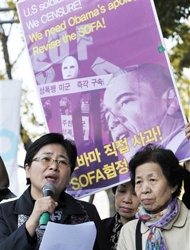
In the wake of the recent sexual assaults on Koreans by US soldiers in Korea, I was asked by the Korea Herald to participate in a debate about whether US forces in Korea should leave. (On the assaults try this and this. For NK manipulation of this as evidence of US “fascism,” try this.) It is terribly awkward in the wake of three assaults to argue that USFK should stay, but ultimately I think Korea benefits enormously from the US commitment.

My op-ed on the subject was published here on Tuesday, and is reprinted below:


USFK is in Korea’s Interest, but US Budget Pressures are Growing Fast

Whenever US soldiers in Korea misbehave egregiously, Koreans naturally soul-search on whether USFK should withdraw. This is proper; soldiers sexually assaulting teenagers is horrific. The debate also usefully signals to the US that Korea not be taken for granted. But in the end, Koreans have always hewn to the US, even after George W Bush famously alienated South Korea by placing NK on the ‘axis of evil.’ South Korea is the overwhelming beneficiary of a very one-sided relationship and terminating the alliance would dramatically weaken Korea in a very difficult neighborhood.

Korean foreign policy is structured by its dismal geopolitics. The traditional saying that ‘Korea is a shrimp among whales’ is accurate. Middle-power Korea is surrounded by three great powers with a history of intervention and bullying, and bordered by one of the worst tyrannies in history. As such, an alliance with a powerful external partner (the US) gives Korea critical leverage where it would otherwise be dominated. For the all US misbehavior in ROK history – from questions around the Kwangju suppression to the personal issues of ‘ugly American’ behavior – no serious ROK policy-maker has ever wavered from the belief that the US partner critically boosts SK autonomy against local encirclement. Because the US alliance gives Korea desperately sought local leverage, the US in turn has significant leverage over Korea. This is a cause of great consternation among proud, nationalist Koreans and explains enduring anti-Americanism, especially on the SK left. Conversely, it is the reason the Korean government so dramatically emphasizes English acquisition and exposure to the US. Americanization of what is otherwise a Sinic-Confucian culture reinforces Korean cultural compatibility with the critical US ally.

The contrast for the US is quite sharp. With the end of the Cold War, the utility of the Korean alliance to America has fallen significantly. A widely unappreciated fact in Korea, almost a willful blindness, is that a NK victory over SK would not dramatically impact US security. As a fellow democracy, the US would of course lament such an outcome, but with the end of expansionist Leninism as a threat to the US homeland, there is no longer an East-West balance in which Korea is a central weight. The Korean division is now a more local problem, to which the US is devoting fewer resources. It is well-known that USFK has shrunk over the years; the Combined Forces Command will be shortly abolished; and USFK is no longer stationed in a ‘hair-trigger’ posture on the DMZ. To Americans, with many global concerns including terrorism, nuclear proliferation, failed states, the drug war, climate change, and so on, Korea is one theater among many. Surveys of US public opinion by the Chicago Council on Global Affairs have found since the mid-2000s that only 40% of Americans want the US to fight in Korea, even if NK attacks first. A major conflict in Korea would be vastly more destructive than the recent war on terror, possibly involve nuclear weapons, and pull the US into a massive, unwanted post-war nation-building project, especially if SK is devastated by nuclear strikes. Given how badly the war on terror has flown off the rails in the last decade, American reticence about getting ‘chain-ganged’ by an alliance into another major war in Asia is predictable.

In short, the alliance is dramatically balance-positive for Korea, but increasingly neutral for the US. It is no longer clear what the main US benefit from the alliance is (this applies to many US alliances actually). Typically, the answer is that Korea is a central node in the American alliance network in Asia. But that just raises the next question of why the US needs a large, expensive Asian military footprint. Typically, the (unspoken) further step is that this will help contain China. But again, why the US should contain China is unclear. From an American national security perspective, China is primarily a local Asian dilemma. States like India, Japan, Australia, and Korea should really be dealing with that first, unless one believes the US should be a semi-imperial ‘globocop.’

‘Globocop’ hegemony may appeal to US allies in tough places (Korea, Israel, Afghanistan, Georgia), and it may be ideologically attractive to US neoconservatives, but is also very expensive, pulls the US into many conflicts of marginal value to US security (Iraq, Vietnam), and, most disturbingly, makes America morally culpable for violence, however justified, around the planet, including the deaths of non-combatants. In short, the US is flirting with empire, and the history of empires is often unhappy – too many wars, too much borrowing, over-extension leading to national exhaustion and institutional decay. Today, the US is on this path. By almost any definition, the US is overstretched. The military has been fighting continuously since 2001. The budget deficit is a staggering 10% of GDP; total debt is $10 trillion. National security spending is 25% of the budget. Post-Great Recession economic growth is anemic. For years the US disregarded its own values and tortured prisoners.

In such an environment, the US will eventually have to make hard choices about foreign commitments. Some measure of global retrenchment will likely happen, if only because the US is dallying with bankruptcy. Those Koreans who would like USFK to leave may be pleased to see the US pushed to the edge of insolvency, with a looming USFK retreat under budget pressure. But far more widespread will be anxiety about whether US relative decline will semi-abandon Korea in a tight neighborhood increasingly overshadowed by Chinese power. Do Koreans want to go it alone?