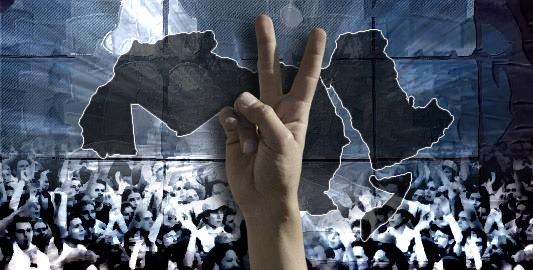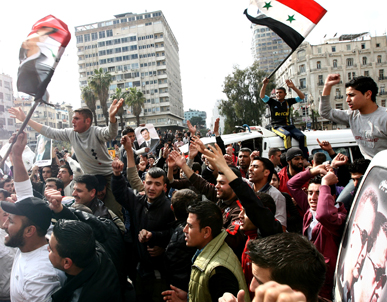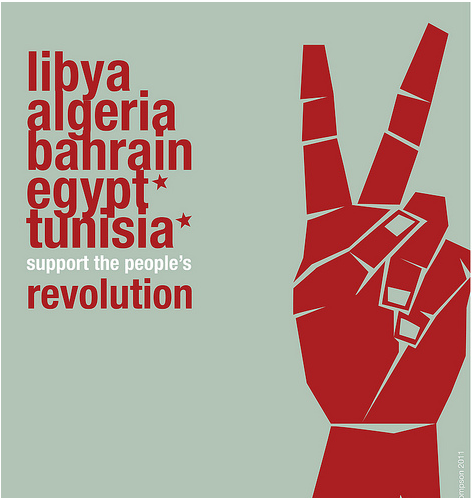
The Impact of Arab Spring on North Korea (1): When in Doubt, Repress

arab-spring1

Part 2 is here.

The following is a brief analysis of what NK will ‘learn’ from Arab Spring. The good people at the Korea National Defense University asked for a quick, non-jargony write-up. I have previously written for KNDU’s Research in National Security Affairs (RINSA) notes here (no. 70), about NK’s shelling of Yeonpyeong island last year. Northeast Asia security wonks would like RINSA.

Comments would be appreciated, as this will be published in the next few weeks. For my previous writing on Arab Spring, go here.

ABSTRACT

NK will draw six lessons from Arab Spring: 1. Quash protest as quickly as possible. 2. Give the military everything it wants. 3. Return to post-colonial ideology. 4. Find new nuclear proliferation clients. 5. Cleave to China, as the moral cover of fellow autocracies fades. 6. Do not give up the nuclear weapons – ever. In short – dig in your heel, clamp down harder, don’t change.

The Arab Spring revolts present a frightening prospect to any dictatorship. As the world’s most orwellian and repressive – Human Rights Watch has given NK its lowest score for almost forty consecutive years – the DPRK will clearly draw lessons from these events. Six ‘tips’ for NK stand out:

1. Quash protest as quickly as possible. Precisely because the Arab revolts drag on and on, they have held world attention long enough to force a major debate on the premises of Western policy in the Middle East (ME). The longer revolts continue, the harder it becomes for outsiders to ignore them and the louder calls for external intervention become. This ‘CNN effect’ – in which a steady stream of horrific images from conflict or other catastrophe raises hard, increasingly unavoidable moral questions about external intervention – precipitated US pressure on Mubarak, the French turn-around on Tunisia, NATO bombing in Libya, and a possible future intervention in Syria. The best way to keep outsiders out is absolute control. Tiananmen Square (1989), Burma’s Saffron Revolution (2007) and Iran’s Green Revolution (2009) were definitively crushed, while Mubarak tried to negotiate. Chinese overreaction to the proposed ‘jasmine revolution’ is the likely NK response to any civil protest, only yet harsher.

2. Give the military everything it wants. ‘People power’ does not undo dictatorships, splits in the regime, particularly the security services, do. Mubarak lost when the military split over the repression; Yemen and Libya’s rebels have strengthened as the militaries fractured. Son-gun was prescient in its blatant effort to buy off the KPA, even as it bankrupts the DRPK budget.

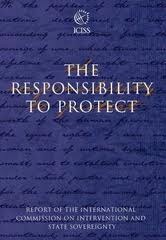
3. Return to post-colonial ideology. The growing global normative acceptance of the ‘responsibility to protect’ (R2P), the intellectual justification for external human rights-motivated intervention, narrows NK’s ideological space. R2P, for which even China and Russia voted in the UN, raises the ‘audience costs’ of the NK dictatorship. It posits that a legitimate government must meet a minimum threshold of good behavior toward its own people to preclude external intervention: some governments are so bad, they forfeit the right to rule. To date this has been used to justify interventions in Libya, Kosovo, Bosnia, and Somalia; it also impacted the debate on Darfur, Ivory Coast’s recent internal conflict, and a possible future intervention in Syria. This is an important breach of the long-standing norm of mutual, sovereign non-interference, behind which NK and most dictatorships hide.

No case more clearly meets the R2P benchmark than NK with its man-made famines, concentration camps, and extreme privation. The DPRK needs an intellectual response to this challenge, and anti-colonial nationalism is a good choice. Decolonization stirs strong feelings in the global South, the region most likely to confront R2P-motivated interventions. Qaddafi portrays the NATO bombing campaign as Western neocolonialism, with good effect in the African Union, which has repeatedly called for a NATO halt. A vigorous argument to global public opinion that SK is a US puppet bent on globalist exploitation of the peninsula would be a persuasive postcolonial counter to the ‘human rights imperialism’ critics fear in R2P. Further, ideological committed security forces, like Iran’s Basij, are less likely to split with the regime, so propagandizing the KPA complements ‘tip’ 2 above.

Continue to Part 2.

Think You Can Do Grand Strategy in Asia? (It’s Really Hard Actually…)


Regular readers will know that I part-time consult for a geopolitical consulting firm called Wikistrat, and this competition is a cool idea, especially for the IR types who likely read a blog like this. Graduate students especially should sign up for it. (And if you think you can hack it as an analyst, and you have some decent credentials, contact them. Good analysts are always in demand.)

It’s great practice for big thinking, as if you’re Clausewitz or Spykman or something, but always remember the well-know adage: “Amateurs talk about strategy, professionals talk about logistics.” Before you argue that China should fix Africa or the US should fix the Middle East, remember to figure out how to pay for it, and to plan your way to that outcome (i.e., avoid America’s mistakes in Iraq). For my own version of US grand strategy in Asia, read this.

I will be a supporting judge in the competition too, so please bring your good ideas so that I can repackage them as my own. Anyway, give it a spin; the blurb is below:

“Wikistrat is gearing up for an exciting International Grand Strategy Competition.

Select teams representing leading academic institutions from around the world are invited to participate in the first ever wiki-based grand strategy competition. Managed by Dr. Thomas PM Barnett, this competition will provide participants with the opportunity to test their skills with global counterparts and network within that community. Participants can demonstrate their capacity for strategic thought to agencies, institutions and firms seeking to recruit up-and-coming analytic talent.

We are currently reviewing applications by groups representing top Universities and Think Tanks worldwide. There are still open spots available for this exciting event.

To nominate a team, or to see if you institute has been invited, contact us HERE.

Participation is free, and winner team will get a $10,000 prize.

Some of the issues we will cover in the Competition include (Download the full PDF OUTLINE):

1. Global Energy Security

2. Global Economic “Rebalancing” Process

3. Salafi Jihadist Terrorism

4. Inevitable Sino-American Special Relationship

5. Southwest Asia Nuclear Proliferation

Some of the Scenarios explored will include:

1. Major Biological Terror Attack

2. “2.0 Revolutions” in Arab World

3. + Additional Surprise Shocks”

Does it Make Humanitarian Sense to Let Libyans Fight it Out Alone?

libya-war

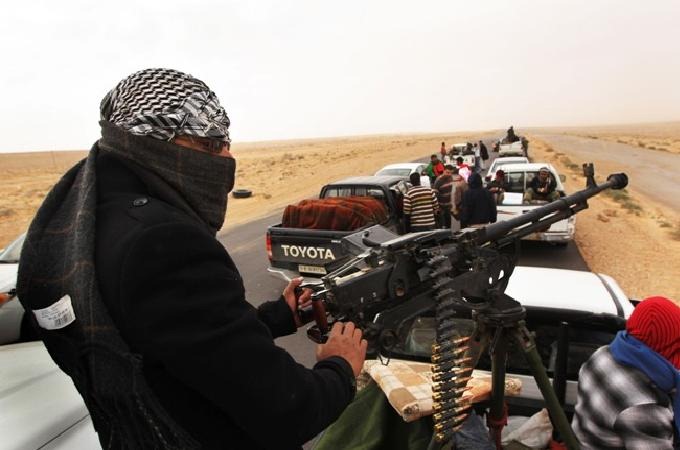
Regular readers know that I supported the Libyan intervention primarily on humanitarian grounds. For my writing on Libya, please try here and here. My big concern was that the fall of Benghazi might initiate a massacre like Srebrenica. If a limited intervention could forestall that, I think it was justifiable. To critics who said this was duplicitous, because we did not intervene in Ivory Coast or Syria, my response was that Libya moved first (its problems were presented earlier), which matters in a world of scarce resources with limited knowledge of the future. Also, Libya was proximate to NATO making it that much easier and so more morally compelling. This is hardly an air-tight case; Libyan lives are no more ontologically valuable than Syrian or Ivorian. But there are limits to what outsiders can do; and I thought Libya pretty well met the nexus of limited western capabilities – badly restricted by American military overstretch and degraded European militaries – and the clear humanitarian imperative raised when Gaddafi and sons started ranting about ‘rivers of blood’ and ‘hunting the rebels like rats, alley by alley.’ Non-interventionists retort that a massacre was not actually likely, but I disagree with that assessment.

A much stronger argument raised by non-interventionists directly challenges the humanitarian rationale. This argues that civil wars that stalemate, as Libya’s has now, actually produce more death and destruction over time than quick, definitive endings. I don’t have any particularly good cite on this, but generally I find that Max Hastings at the Financial Times, Stephen Walt at Foreign Policy, and various authors at the National Interest have leaned in this direction on Libya. In passing, I should say that I find all these authors to raise excellent points. Their analysis is worth your time and vastly more professional and serious than the partisan and uniformed commentary coming from Congress and the GOP presidential field. If you want to know why Libya is a mistake, read Walt or Hastings; don’t waste your time with FoxNews or Newt Gingrich.

So if the Libyan civil war drags on for years, with hundreds of thousands killed, does that mean it would have been better for Gaddafi to win early, and ‘only’ kill ten thousand? This strikes me as quite strong (and humane, albeit macabre) logic. Here are three possible responses:

1. Any comparative body counts (yes, it is that ghoulish to say so, but this is what murderous thugs force on us) must account for all the violence Gaddafi would also inflict on Libyans in the wake of his victory and restoration of the old order. In other words, it is not enough to say that Gaddafi would kill fewer than the civil war would, therefore his victory is better, because Gaddafi would end up killing many more in the future, presumably, in order to re-bolster his police state. These future murders and persecutions must be included with the casualties of a Benghazi massacre on the interventionist side of the ledger.

2. At the time of intervention (mid-March), it was not possible to seriously predict that the civil war would drag on. Indeed, even now, no one really knows how long this will go. Gaddafi could fold at any time; defections keep happening; the rebels do seem to be, slowly, clawing back. Even Walt agrees that Gaddafi is probably on his way out. This lowers the probability of a much higher body count from a civil war, because we don’t really know how long it will, in fact, last. On the hand, the probability was pretty high that a Gaddafi victory in Benghazi would lead to a massacre.

In the end, the only way to definitively know is post-hoc, which means we must estimate at the pre-hoc time of decision. We can only say if the intervention was humanitarianly beneficial after the war ends. If it does take 5 years and 250,000 dead, we will then look back in 5 years and concur that it was an error. If it ends next week, we won’t. By way of example, look at our thinking on Iraq 2. In 2003, the Bush people promised a blitzkreig like Desert Storm. We were to be liberators with a quick ‘mission accomplished’ and home by Christmas. Like many, I (foolishly) believed this narrative also and supported the Iraq War. In retrospect, this was a terrible error for which I feel ashamed and for which students regularly criticize me, but I (and many others) only knew that clearly by, say, 2005/06. (How Bush can still say he would do it all over again is just beyond me.)

Like so many, I thought the Bush people had actually planned something for Iraq after the victory, especially given that it was a war of choice with lots of time to plan and think. And indeed, if Iraq 2 had gone as Iraq 1, Bush 2 would be hailed as one of America’s great presidents. Unfortunately, decisions can’t be made with full information at the time, and looming massacre in Benghazi forced a rapid decision on Obama. This is the real distinction between Obama’s Libya forced intervention decision and Bush’s Iraq war of choice. Obama had little time to prepare, and so inevitably the operation is clunky and rushed; Bush, by contrast, had months of time to plan Iraq and its aftermath (plus the years spent on the Future of Iraq Project) and clearly didn’t do it. This is why I reject Walt’s comparisons of the Libyan war to Iraq 2.

So Obama had to make the best choice at the time and with time pressing dramatically. And while it is true that Iraq should have served as a cautionary against charging in, it is also true that Bosnia and Rwanda should have served as a cautionary against doing nothing and that Kosovo presented a possible model for how NATO airpower could help tip the local balance. The analysis, because it must be predictive, is messy and imprecise, and if Libya becomes Iraq 2, we will all be chastened as we were after Iraq 2 turned into a bloodbath. But remember that we were also all chastened after Rwanda also turned into a bloodbath. We felt ashamed we did nothing and promised to try harder the next time. This is that next time.

3. Finally, I am not sure how much I buy it that quickly resolved civil wars are in fact for the best. This post was motivated by this story at the Economist on the end of the Tamil insurgency in Sri Lanka. Sri Lanka is a good parallel with Libya, because it was a civil war that dragged on endlessly, killing thousands over decades and regularly debilitating Sri Lanka’s ability to develop and normalize. I think this is why everyone looked away as the Singhalese army basically wiped out the Tamils with inevitable end-massacre. Everyone just wanted it to end, and this seemed like the final closure the world wanted on an awful, endless problem that know one really knew how to resolve. One victor, completely triumphant and imposing a peace that might eventually mature, seemed better than years and years further of more of the awful same. James Fearon’s work on civil wars suggests this too: the best way to end them is a definitive victory by one side or the other. The American civil war would be a case in point, and definitive end of secession was clearly behind Lincoln’s tacit endorsement of Sherman’s scorched earth policy in the South. The Singhalese provided such an end in Sri Lanka, and NATO intervention probably stopped this outcome in Libya.

But note also the extraordinary cost the Economist notes of the Singhalese victory. Does anyone really feel comfortable advocating that? If tens of thousands of guaranteed Libyan deaths prevent possible hundreds of thousands of future Libyan deaths, how does one possibly morally choose among those alternatives? Who wants to say to the residents of Benghazi (or the Tamils), you must die for the ‘greater good’ of society? There are examples of fragile peace between the sides of a civil conflict (Bosnia today, or Cyprus) that manage to avoid the ‘eliminationist’ logic that one side needs to win in order to finally stop the killing. And who wants to make such an awful, unbelievably cold-blooded decision? Who could sleep at night endorsing this? Bill Clinton cannot.

The US Drawdown & National Debt Debate: AfPak, Korea, etc

Afghanistan rocket

I’ve been thinking a lot recently about the scale of US commitments and how to reduce them so as to not bankrupt the US in the medium-term. I have gotten a fair amount of criticism that I don’t know what I am talking about, US warfighters are superlative, US forces in various places like Korea or Afghanistan augment US national security, pull-outs jeopardize our credibility, etc. Ok. I am learning like the rest of us on this. I agree that US commitments are sticky, and I have little doubt that US servicemen are professional enough to win conflicts in places like Korea and AfPak (Afghanistan & Pakistan), so long as we have the resources to stay.

Further, I will admit that a ‘post-American’ world is a little unnerving. I say this not as an American who likes ‘empire’ (I don’t), but more generally because I still do think, even post-Iraq, that US involvement generally makes the world a better place. The dollar and US engagement help keep the world economy open, and US force can sometimes be the last line against truly awful acts that shame the conscience. This is why I supported the Libya intervention, and this is why I hope the US can keep forces in Korea. A retrenched, bankrupted, and sullen America worries more than just Americans. To clarify to my critics, my concern is whether the US can support allies around the world, not if it should. I don’t want US Forces in Korea (USFK) to leave any more than anyone else. I can think of few more valuable uses of US force than to help defend a democracy against the last worst stalinist despotism on earth. I just wonder whether we can afford it.

I think we need to be a lot more honest about the huge defense cuts that will be required to balance the US budget. The US deficit ($1.5 trillion) is a staggering 10% of GDP and 35% of the budget; publicly-debt ($9T) is at 60% of US GDP ($15T); and the integrated national security budget (DoD, Veterans, relevant parts of Homeland Security and Energy) exceeds $1T. You hardly need to be an economist to think that this is unsustainable and smacks of imperial overstretch. For an expert run-down on the US budget mess, try here.

This gap could of course be filled with tax increases, but a central GOP policy commitment since roughly the Ford administration has been ‘no new taxes.’ Unless this changes dramatically – and the recent Ryan budget proposal showed no GOP movement on tax increases – this means that most of the $1.5T hole must be filled with spending cuts. My own sense is that allowing the Bush 2001 and 2003 tax cuts to sunset, as is current statute, plus tax reform and a carbon tax, could in fact generate a lot of new revenue at tolerable and intelligent levels of pain. This would reduce some of the pressure to cut defense (and all other US government programming). But without such new taxes, the $1.5T hole calls for huge cuts, and the axe would inevitably land on defense too, including US bases and commitments overseas.

I am genuinely agnostic on whether this is a good idea. Part of me thinks that wealthy US allies, especially Japan and Germany, free-ride. They should spend more so that we can spend less. But others have retorted that encouraging wealthy Asian allies like Korea and Japan to spend more could trigger an arms race in Asia that might also go nuclear. Barnett has a nice post on how Asian elites are aware of this and worry about a weak US. (On the other hand, there is not actually a lot of empirical evidence that denuclearization brings peace.)

In response to my commenters at Busan Haps on a US withdrawal from Korea, I wrote:

“America’s economic problems will likely compel the rebalancing all of you are thinking about. Importantly, even if the US wanted to stay and provide ‘extended deterrence’ as we have for 60 years, the dollars are not there for it.

Whether or not we should go is a different question. My sense is that Korea does actually try harder than many US allies. Korea spends 2.7% of GDP on defense. Germany and Japan spend around just 1%. The US spends close to 6%. But like Germany and Japan, Korea is now wealthy enough to spend a lot more. This raises the free-riding question you all worry about.

If Korea really wants USFK to stay no matter what, then the most likely way is for Korea to pay for ALL of the expense of USFK here. Right Korea and the US split the bill roughly so far as I can tell.

But I find great resistance to this thinking. My sense is that within the Beltway, there is strong elite consensus for the US remain committed around the world. ‘Empire’ seems to be a knack or a habit Americans have grown into. We like being a globally present superpower but are increasingly unable to afford it and unwilling to pay the taxes for it.

The question then is what do we do now? Cut entitlements (Medicare, Medicaid, Social Security) to make room for defense? Do we raise taxes enormously for all these things? Are do we retrench from our global posture so we spend less money?

Finally, there is a model for retrenchment. Britain slowly retreated from its empire in the 1950s and 60s. In some places it went very badly – South Asia and southern Africa especially. But this slowly brought British commitments back into line with British resources. The alternative for the US is to change nothing and risk an imperial crack-up – something like the USSR in 1989 or Austro-Hungary in 1914. That is my worry.”

Here are two good recent articles from the Wall Street Journal by Leslie Gelb and Max Boot on whether or not we can drawdown from Afghanistan and Pakistan (AfPak) post-bin Laden. I lean toward Gelb, but I think Boot makes some good points. Particularly, Boot notes that a US presence in Afghanistan made it possible to get OBL, because US forces were proximate. But Boot still sidesteps the debt issue. Both Beinart and the US JSC chairman call the debt the biggest threat to US national security. I am inclined to agree…

R2P’s ‘Time Problem’: Helping Libya, not Syria, b/c Libya Revolted First

r2p

I am participating in a scenario on what the West’s response to the Syria revolt should be. A growing number of contributors are arguing for western intervention. Proponents explicitly cite the Western intervention in Libya. I have argued against this. Another such intervention would likely split NATO, bring howls of protest from the BRICS, and the likely western interveners (US, France, Britain) are already overstretched in Libya, Iraq, and Afghanistan. These are good practical reasons (one can only do so much). But they do not alter the obvious moral question – why help Libyans, not Syrians, or by extension, Yemenis who are also dying in increasing numbers for an admirable effort for more democracy? It is ontologically horrific to say that Libyan lives are more valuable than those of other Arab (or Africans, East Timorese, etc). So why help Libya, but not others?

The most obvious answers are, unfortunately pretty coarse and strategic: Libya is close (Rwanda was far from NATO); Gaddafi is a western enemy already (so getting rid of him is a ‘twofer’ – saving lives and eliminating an nuisance); Libya has oil. But these aren’t normative answers which fit the R2P framework. They are more traditional national interest answers. Within a traditional national interest frame of security (realism) these are good answers. But the whole point of R2P is to get beyond that sort of crass maneuvering and suggest there is minimum moral benchmark of global treatment of civilians.  If we accept the R2P logic, then some kind of moral distinctions should be made beyond the ‘extras’ that we don’t like Gaddafi already or that his oil supplies the huge EU market.

I do realize that this holds constant the notion that the West should go in. R2P might easily be construed as a recipe for neo-imperialism under the guise of human rights, as clearly many think the Libyan intervention really is. To which I would say two things. First, hold this thought for the sake of the argument. Assume that multiple interventions are justified, but scarce resources limit how much outsiders could intervene. Second, I don’t actually think R2P has to become a neo-conservative gimmick to go back to US empire. It could, I suppose, but that need not happen. Remember that the UN Security Council, including Russia and China, voted unanimously for the R2P resolution (1674), as did the General Assembly. (Go here for all the details.)

So if we assume that an R2P moral framework fits the Libyan intervention, then the question of the benchmarks for intervention come up. I argued before that Libya was a unique moment because a potential massacre was brewing in Benghazi. But it is also increasingly clear that the Libyan rebels got help because they moved first. That is, they revolted earlier and more seriously than did other places in Arab Spring. This has generated a lot of hypocrisy criticism about why then we did not go into Ivory Coast, and won’t into Syria or Yemen. This suggest it is just western imperialism after all in Libya.

I don’t think so, so this why I suggest that the timing of such crises might be a justification for deciding in which to intervene and which not. Ideally, of course, under an R2P frame, all brutal repressions would be subject to the same level of moral opposition, because any human life anywhere has the same ontological value (ie, Libyans are not ‘more’ human the Yemenis or Ivorians). This is so, but the reality of scarce resources in possible interveners means that discrimination will be made, and here is where I think timing can help to reduce the ontological awfulness of not helping Ivorians or Syrians while doing so in Libya.

I bring this up, because the debate over when to apply the responsibility to protect (R2P) doctrine has no good answer beyond the likelihood of mass slaughter. Nexon has done a good job of laying out all the tangled issues that justified the Libyan intervention (here and here), but he still can’t really place his finger well on anything that might be coherently called an ‘Obama Doctrine.’ The problem with the ‘mass slaughter’ benchmark is that it too places an uncomfortable value on life – ‘more’ is more important than ‘less.’ That is probably right, but leaves several obvious problems: how many is ‘more’ (1,000, 10,000, 100,000)?; there are lots of slaughters globally (Darfur, Rwanda), so how do we choose (if they have oil or not?!); any high benchmark of deaths is cold comfort to the ‘few’ people who are nonetheless being machine-gunned in Syria.

So it occurs to me that one benchmark that might help is the ‘first mover one. Libya gets help, because at the time of the revolt, other repressions (Yemen, Syria) weren’t so bad at the time. This has three advantages. First, it lessens the awful moral choice of saying the Syrian lives are less valuable than Libyan lives. Second, is responsive to the context of these sorts of repressions. Instead of placing all possible repressions against one another and saying which one, why not look at them sequentially in a time series. The West cannot do everything. Even if the West wasn’t in Iraq or Afghanistan, it would still be impossible to go everywhere there are truly awful repressions. Three, it helps lessen future repressions by drawing lines that other potential repressors will have to think about crossing, even if we couldn’t intervene anyway because we are overstretched from the first one.Ie, there is a potential signaling benefit for others from helping from the first mover.

So if we accept that R2P really is a global public good, and not just a western interventionist plot, then the issue of when to deploy it comes up. Using the time sequence logic sketched above seems like a good first cut, and a far better than saying R2P kicks in only when other more important, but unstated, interests, like oil or alliances, coincide. And Libya seems to meet that. There isn’t that much oil or other western interest there; Robert Gates admitted that much.

There’s No NATO ‘Crisis’: Muddling Through Libya is Good Enough

NATO Flag


Besides the much-needed debate on the limits of the responsibility to protect (R2P), the Libyan mess has also provoked some good discussion of what NATO is supposed to do now, 20 years after the Cold War. It is a good question actually. Western publics are so accustomed to it, we just don’t even consider it much (such public opinion inertia is one reason it is still around). Conversely, the Chinese, and Russians especially, continue to suspect it as a ‘bloc’ that might somehow be used for future containment of them. Here and here are good articles Libya as a NATO-breaking event – a distinct possibility, especially if there is a push to extend NATO intervention into other Arab Spring revolts. Here and here are two defenses, that still struggle to define NATO’s military role.

My own sense is that NATO would be better off just openly admitting that it is now western military club for the general promotion of democracy and liberalism when its members feel so compelled. It is basically that ‘league of democracies’ idea, the formal proposal of which failed a few years ago. I understand that this is terribly messy, and it sounds pretty open-ended. But like the evolution of the R2P concept, just because it is open-ended, doesn’t mean the alliance needs to act on every possible scenario. We are learning how this works; there is no rush. Like the evolution of R2P, a more general mission for NATO would allow the members to pick-and-choose where interest, values, capabilities. Such ‘selective action’ is well-shown in the current Libya operation.

Yes, the Cold War brought a level of clarity to world politics that we all, disturbingly, seem to miss. But trying to force NATO into old boxes – ie, looking for a Soviet-style threat that brings ‘mission clarity’ or ‘threat definition’ is a fool’s errand by now. We really ought to know that 20 years after the Wall fell, and god help us if we place China into the Soviet ‘enemy box.’ As I argued earlier, the mess of crises of the future will be mostly ‘third world brushfires’ that like Somalia, Kosovo, or Rwanda. This should hardly be news to anyone who has followed the emergence of COIN in US military thinking in the last decade.

Such third world crises  require different force postures among NATO allies, yes, but they are hardly a reason to dissolve or disdain NATO. The most obvious evidence for this is George W Bush’s dismissal of NATO assistance in Afghanistan and Iraq. Bush thought NATO too encumbering, sluggish, and political for the rapid action he sought. But then both operations went south, and the US has tried repeatedly to pull NATO in.

Anyone who follows NATO knows the endless ‘out-of-area’ discussion discussion: should NATO go out of its European area into places like Afghanistan? I have no definitive answer – probably, but selectively. But far more important is that NATO is working this out, albeit slowly. This is why I don’t understand the pundit contempt for NATO ‘dithering.’ What is the alternative? Do neo-cons, eg., really want the US do all this stuff alone, again? Didn’t we learn that hard lesson in the last decade? And to those who think NATO is just irrelevant, should we simply close it? NATO is the closest thing we have to a club of democracies. As such, it carries enormous moral weight in world politics, beyond the simple aggregate of its military capabilities (which are, to be sure, atrophying). Yes, NATO bickers incessantly, but any show of unanimity from organizations like the Shanghai Cooperation Organization or ASEAN is almost certainly farcical and repressed – a representation of solely elite, frequently dictatorial, views. By contrast, NATO, because it is democratic, signals far more credibly. So while it takes awhile for NATO to get its act together (dithering), it is vastly more meaningful when it does – even if partially, as in Libya. And NATO ‘interoperability’ reduces the coordination costs among the democracies. Finally, its existence is minimally costly. Members can still free-lance as the US did in Iraq and France just did in Ivory Coast. NATO does provide room for ‘coalitions of the willing.’

In sum, the costs of NATO are low – some meetings and a lot of hassle. But the benefits are high – a credible, somewhat united democratic voice in global affairs with enormous moral prestige, a functionally meaningful and capable alliance (unlike the ‘alliances’ between China and NK, or Russia and Belarus that look more like gangs than real alliances), and retained national room to maneuver.

So why complain about NATO so much? It is muddling through pretty well it seems to me. It is stumbling toward a new role to project democratic force on a selective basis. A more R2P focused NATO will re-assure China and Russia that they are not the alliance’ targets (even if they will call R2P ‘human rights imperialism’). What great benefit does anyone in the West (not just the US, but anyone) get if we close NATO?

The real problem with NATO is not the endlessly harped-on issue of its mission: I really can’t read anymore of these sorts of articles with variants of the title ‘the future of NATO.’ It should be blindingly obvious that in a messy post-Cold War, post-colonial world, NATO’s mission focus will correspondingly be unclear (beyond basic member security). But so is the mission of the UN, ASEAN, and maybe even the EU (!), so this is not uncommon in generalist, big-theme international organizations. The real issue is member capabilities – specifically the precipitous decline of the European democracies to project power independently of huge US intervention. The well-known ‘free-rider problem’ debilitates the alliance no matter what its mission. This is a problem in Asia too (although the SKs try harder than Japan, to be fair.) The real issue for NATO is not its irrelevance – in world of ‘brushfires,’ it will still have relevance as Libya just showed – it is the willingness of members to provide resources.

More on the Benghazi Massacre Counterfactual; Syria; plus some Media


So this is a bits and pieces post.

1. Benghazi:

In the last few weeks, the issue of whether a massacre would have happened in Benghazi has a emerged as a major empirical divide between those who counseled intervention in Libya and those who did not. My own sense is that a massacre was a likely possibility, so I reluctantly supported intervention. My earlier thoughts on this are here, here, and here. Here is a very good review of the reasons, and here are Walt’s thoughts that the purported massacre was a bogus rationale.

The last link is Walt’s latest rejoinder. I still am not convinced. As I argued on Sunday, it is a mistake to suggest that Gaddafi’s behavior in the other towns is an indicator – the bloodbath will come after he wins, not while the war is raging (it is a diversion of critical resources). Also, I think Walt’s figure on Benghazi’s population (650k) is low. That city is now swollen with battlefield refugees, and by voting with their feet to go to Benghazi, not Tripoli, they have signaled their sympathy for the rebels. It is hardly a stretch to suggest that many of these people would be targeted for revenge killings. Finally, 650k is still quite a sizeable number. Most of Libya’s cities and towns are a lot smaller.

Walt does make the important point that we must think about just how many people must die or be threatened to meet an R2P threshold (dicsussed below for the Syrian case too). I admit I don’t really know the right answer to that one; that is an awfully uncomfortable moral proposition – albeit one that R2P advocates must answer somehow. My own sense is that Benghazi would not have been Rwanda, but Srebrenica. So Walt is probably right that there would not have been 100k dead and that such numbers were scare tactics. Maybe figures like that were used by human rights groups to morally bully western decision-makers into intervention. But still, Srebrenica was pretty god-awful. It’s very hard to figure this one out…

2. Syria:

Besides this blog, I write for another service now running a scenario on Arab Spring in Syria. As with my commenters on my Libya posts here, I have been pressed about applying the Libyan logic to the brewing Syrian mess. Here are my thoughts:

Without a UN mandate and local Arab endorsement (ideally from the Arab League) – as was the case in Libya – a Libyan-style western intervention option would be widely viewed as re-run of the Iraq War. The Libyan intervention decision was already fraught enough – both Germany and Turkey in NATO opposed it. Only the growing evidence of a looming bloodbath in Benghazi forced the West’s hand in Libya. To run that scenario again, and so soon, would likely split NATO yet again (as it was over Iraq 2 and Libya), and the Chinese and Russians, and the other BRICS too, would howl in protest.The only possible way an unsought NATO intervention might occur is if Israel were seriously considering intervening, which might spark a local war with Iran involved as well. NATO would then preempt that. Beyond that, an unrequested NATO intervention would alienate the planet, split NATO , and dump yet another Arab/Mulsim nation-building problem on the hands of the West, complete with Iranian meddling and all the disastrous, thoroughly foreseeable consequences that would flow from all that.

Abstaining from taking action, and waiting for an international call for action is almost certainly the right way to proceed, at this point. Everyone knows the US/West is dramatically overextended now, with huge budget deficits and debt, with a ‘neo-imperial’ reputation (rightly or wrongly) tarnished by the Iraq War. This means intervention can only be a last ditch measure, as it was in Benghazi to stop what look liked an impending massacre akin to Srebrenica. If the current Assad crackdown devolves into a major civil conflict in which thousands face annihilation, as they did in the 1982 Hama massacre, non-intervention will have to be re-evaluated. But the ‘responsbility to protect’ (R2P) threshold must stay somewhat high (Walt’s point above), otherwise the West could get chain-ganged into multiple human rights intervnetions that will increasingly look to Arab audiences like neo-imperialism. Libya was different because the Arab League, and UN, provided local moral cover, as did the clear warning alarms from human rights NGOs about a possible slaughter. I doubt that will happen again, and the Libyan intervention also is not going too well. So unless genuinely brutal suppression is verifiably imminent, intervention carries huge risk to be avoided. As I have argued before, the West can’t do everything, which leaves one in the uncomfortable position of helping the Libyans more than the Syrians, because the Libyans moved first. That feels terribly inadequate, I agree. Nothing about this Arab Spring is getting any easier…

3. Some Media:

A shortened, more professionalized version of my essay on the comparison of German and Korean unifcation was posted by the East Asia Forum here. The East Asia Forum is a good site on Asia-Pacific politics and economics; like Foreign Policy, it mixes scholarship and policy thinking into short, digestible presentations. I wholeheartedly recommend the site to readers of this blog.

Also, I spoke on a local radio station on Korea-Japan relations – what a tangle. Please go here if you are interested. Scroll down the page and click on the big green button with Korean lettering. My comments begin around 16:15.

Can We Please Stop Denying that We Prevented a Massacre in Benghazi?


The backlash to the Libyan intervention has begun, and to be sure, it is a controversial mess. My own support was lukewarm; like the president, I felt my hand was forced by the likelihood that Qaddafi would butcher thousands of people had he taken Benghazi two weeks ago. I feel like the president gave a good-enough rationale for the intervention, and western governments are trying hard to avoid getting pulled into an Iraq-style nation-building mess. I realize that ‘good-enough’ feels like an awful cop-out when it comes to war, but the world is pretty d— messy, and the acrimony of the debate tells me that no one really knows what we should do (let’s all at least admit that). Applying Clausewitzian-Powell Doctrine benchmarks – overwhelming force for a quick victory and a quick, clear exit – fits poorly on the emerging tangle of developing world crises where the issue is not a huge, militarized threat to western security (the Nazis or USSR), but a mix of mass humanitarian slaughter (Rwanda), terrorism (Afghanistan), piracy (Somalia), ethnic cleansing (Balkans), criminal takeovers (parts of Mexico and Columbia), etc. The problem, as Kaplan notes, is the semi-anarchic level of governance in much of the developing world, a problem Barnett tagged years ago as the ‘integrating the gap.’ As I argued last week, imposing Clausewitzian standards on intervention in such conflicts means that we will, then, almost never intervene – as we did not in Rwanda or Darfur.

This strikes me as an analytically clear benchmark for US intervention or not; often tagged as ‘realism,’ it is best associated in international relations theory with Walt and Layne. The problem is that, as critics of realism have argued since Mencian criticisms of Sun Tzu more than two millennia ago, it feels so very cold and heartless. Realists have fought this charge for years. In the end, not intervening in Kosovo, Darfur, Bosnia, Rwanda, Libya, etc. means that many people may die (or , in fact, have died), and this pulls on the heartstrings of anyone who thinks that the world should be a less brutal place and that if help is possible, there is a moral case to, if not always intervene, at least debate it and possibly do something. All this is captured in the debate over the responsibility to protect (R2P) that has exploded over the Libyan war.

It seems to me therefore that non-interventionists must defend a position that includes mass butchery as a likely outcome, yet still argue that we should not go in. For obvious reasons, no one really wants to say that in print. In fact the only serious figure I know of to unequivocally state, after the fact, that we still should not have gone into Rwanda, despite all the carnage, is John Bolton. So it strikes me that the current effort to downplay the likelihood of a massacre in Benghazi is driven more by the desire of non-interventionists to avoid the moral posture of having to admit that thousands of bodies, rapes, dead children, torture would nonetheless be ‘ok;’ as Stewart says in the clip on above Bolton, “When someone says would you have stopped the genocide, just say yes, just say yes!” I would still like to hear that case made more vigorously from the non-interventionists; it is analytically required to support the non-interventionist position, and to duck it by disputing the possibility is an analytical and moral dodge.

So consider the following on Benghazi, which I believe forces this issue:

 1. Qaddafi is a known brutal tyrant, with similarly brutal ‘buddies’ like Robert Mugabe (Zimbabwe), (now deceased) Hafez al Assad (Syria), and Omar el Bashir (Sudan) – all guilty of their own mass slaughters. It seems likely that moving in such circles, which comes at a high price of international respectability, means you don’t care too much about how many of your people will hang. It’s par for the course for these guys. I don’t think anyone disputes the reasonable possibility that Qaddafi would do what his buddy tyrants have also done in similar situations.

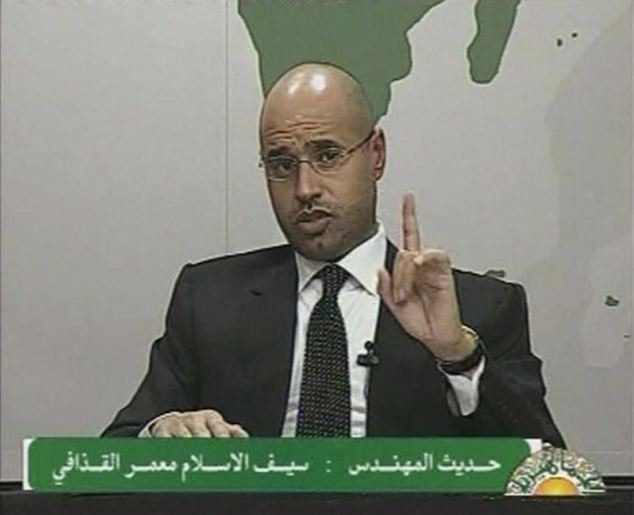
2. He and his family went on TV and said they intended a slaughter. His son Saif said there would be ‘rivers of blood in the streets.’ Qaddafi spoke of hunting the rebels ‘like rats, alley by alley.’ The Qaddafis’ various media spokesmen talked in similarly harsh, if less openly explosive ways too. To be sure, they may have been lying. Leaders lie all the time. Non-interventionists argue that this sort of talk was meant to deter other Libyans from joining the rebellion. Perhaps, but the rebellion had already started when Qaddafi started these terrifying ravings. As Pape notes, something like 75% of the country had already risen up against him, so there really wasn’t anyone left to deter. The whole country had already lined up on one side or the other.

Mead calls Qaddafi the ‘Great Loon,’ so maybe he is just too bonkers to know what he is saying. But Post says Qaddafi is more rational than we think. If so, then Gaddafi surely knew that talking like that would attract global attention immediately, and certainly Saif, who lived and was educated extensively in the West (complete with a PhD from the London School of Economics), knew that ‘rivers of blood’ would dramatically raise the likelihood of a western intervention. Despite these obvious ‘audience costs’ in the West (the ‘CNN effect’), they said this stuff anyway. That tells me they meant it.

3. I don’t buy the idea that because Qaddafi forces didn’t engage in mass slaughters in other re-captured cities, that suggests they would not have done so in Benghazi. First, the cities between Tripoli and Beghazi aren’t really ‘cities’ at all. There are only about 6 million people in Libya total, with half of them in just Benghazi and Tripoli. The rest of Libya’s ‘cities’ are more like towns, with Misrata, e.g., having only around 300 k. Further, the civil war has emptied much of the middle coastal strip between Tripoli and Benghazi. Those with rebel sympathies have been moving east for weeks. That means Benghazi is swollen with regime opponents, while the coastal middle towns are emptying. In short, the regime’s greatest opponents are concentrated in Libya’s second city, so the Qaddafi forces’ behavior in small, almost empty places like Brega (15.k) or Ras Lanuf (12.5 k) don’t indicate well what Gaddafi’s behavior in a large, rebel-swollen metropolis like Benghazi would have been.

Second, the towns aren’t really ‘captured.’ The civil war has see-sawed back and forth regularly for weeks now. I recall hearing one CCN reporter saying Ajdabiya has exchanged hand 6 times in as many weeks. The point being, that even as Qaddafi retakes places, his people don’t really have time to ‘hunt them like rats.’ Even mass slaughters take some planning, and his fighters are better needed to keep pushing east. Again, the critical difference would have been the fall of Benghazi. Because that is the ‘capital’ of the resistance, its fall would have likely ended the revolt. Qaddafi would then have the time and political order necessary to begin the re-consolidation of his position. That would be the time to launch his own version of the Hama massacre – after he has won and taken the rebel base.

For another view on why massacre was likley and how that forced action, read this excellent piece.

I may be wrong, and I open to counter-arguments. And of course, we will never know. This is counterfactual reasoning at its most controversial. But the likelihood of a massacre seemed pretty high, at least reasonably high enough to cross the R2P threshold. We stood aside during some truly horrifying atrocities in Rwanda, Bosnia, and Darfur, and our sense of shame plays a major role in this intervention. Non-interventionists need to address that straight-on, and not duck it by disputing the counterfactual itself. It would take extraordinary (and, honestly, rather disturbing) sang-froid to argue that doing nothing in the midst of butchery is the right thing to do.

Turkey’s ‘neo-Ottoman’ Rise (3): Why I am Wrong…

turkish flag

This is the continuation of a Wikistrat (where I consult a bit) game scenario on Turkey’s economic and possibly military rise. Readers are counseled to start with parts one and two.

The following are responses to criticism, mostly that I didn’t flesh out the reasons why Turkey is likely to hold broadly western course:

1. Turkey’s rise unbalances the region more than I admit, and I don’t muster enough evidence.

My sense is that Turkey’s growth is pretty good, but I don’t see any particular reason that it should be labeled stratospheric or ‘neo-Ottoman’ or something like that. By the standards of a dysfunctional region – Greece, Iran, Syria, Egypt – it is great. But compared to the old and new cores, or even other middle powers, it is a middle power. Even compared to tiny Israel, Turkey is probably a generation behind in state-development, the translation of economic power into military capability, functional political parties, trustworthy courts, and the many other attributes of thick, cohesive, functional state-ness. The CIA lists Turkey’s growth in 2008 at 0.7%; 2009 at (negative) -4.7%; and 2010 at 7.3%. The IMF’s numbers are 2010: 7.8%; 2011: 3.6%. I don’t see that as revolutionary, nor justifying big rhetoric. However, if the argument is more limited, that Turkey will play a greater role in the Middle East and central Asia, I agree. The big losers will be Greece (further unbalanced competition), Israel (yet another headache) and Egypt and Iran (lost prestige as potential regional leaders).

Turkey faces tough structural constraints that do not really mark it out from other second-world risers. No talks about major Brazilian or South African shockwaves, so why is Turkey’s fairly standard modernization-developmentalist growth arc that much different? I am open-minded about this. My thinking is hardly set. I guess I am just not convinced yet.

Finally, my sense is that the tectonic plates of international politics move terribly slowly. Hence I note the stability of Turkey’s foreign policy. Really deep shifts take a long time, like East Asia’s rise, so I am not convinced that a decade or so of choppy albeit healthy growth, coupled pushy, semi-Islamist rhetoric is enough.

2. “The demographic growth in Turkey is all in populations less likely to be EU/West friendly, i.e, the eastern, more rural hinterlands. What’s Turkey’s motivation?”

I think the motivation is primarily economic. A significant turn from the West would reduce critical inward foreign direct investment flows and tourism dollars, and damage links that military and business cherish (easier visa rules; access to Wall Street, western universities, and the international financial institutions; etc.). Turkish elites are aware of this. Like most late, second world developers, Turkey needs continued access to old (West) & new (East Asia) Core dollars, markets, and technologies. This is why I originally said ‘neo-Ottoman’ rhetoric might be more justified in 20 years. For a comparison, look at Indonesia or Malaysia. They too have populations that rankle at Western dominance, want more international stature and maneuvering room, and have populist, entrepreneurial, Islamist politicians. But these tendencies have been held in check by the huge economic incentive of continuing, decent relations with OECD states. I see this in Turkey too – hence my list of institutions and relationships Turkey has retained.

Populism may work for electoral reasons, but does Turkey want to become Venezuela? Perhaps the the AKP (Justice and Welfare Party) really wants to push in this direction, but resistance from the revenue-generating (western and westernized) parts of the country would be strong. This is the counter to the eastern demographic growth you mention. Perhaps this is why Huntington referred to Turkey years ago as a ‘torn’ country. I did not think so much about the demographic evolution though. Point taken.

A second motive is national security. If Turkey drifts from the West, to whom will it go – Iran and Syria? If so, it faces balancing and isolation by some combination of Israel, the US and the EU, and possible exclusion from NATO and the WTO. I suppose Russia is a possible patron/ally/friend, but what does Russia gain? The reset is important for Russia, as well as WTO entry, and, most importantly, being perceived as a great power by the West. Siding with a semi-islamized, somewhat unpredictable ‘new Turkey’ might be useful to poke the West in the eye – certainly a Putin proclivity – but how much does it advance Russia’s great power pretension? Not much I think, but I admit this question requires more research. Next, Turkey might reach to Central Asia – hence the neo-Ottoman moniker I think. But again, how much is there to gain? Those regimes are terribly poor, with weak state apparatuses, and repressions that have alienated investors. The cost-benefit analysis of the ‘stans vs the core is quite one-sided IMO.

The best chances for a real turn would be some kind of alignment with the Shanghai Cooperation Organization (SCO) against the West. This would effectively split the new core, between China and the Asian democratic periphery. In so far as China has propped up some nasty regimes for the last decade or so, a genuinely independent Turkish line that alienated the old core could still find some succor with Sino-Russian assistance. This SCO strategy strikes me as far more viable than reaching out to local ME nasties like Iran or Syria. I will admit that I haven’t thought through this likelihood, but the SCO doesn’t seem so much like a club or alliance, but just a gang united by ‘anti-hegmonism.’ I am not sure if it represents a coherent enough alternative. But this too requires more scenario thinking.

Finally, I would say that my argument flows directly from Barnett’s general core-gap analysis. I believe it fits rather well actually. Late developers’ future is with the core. The gap represents what they are leaving behind, and what they so very often, so desperately don’t want to be perceived as in the eyes of global public opinion – backward, third-world, irrelevant. Maintaining those newly emergent links to the core – its money, trade, professionalism, geopolitical clout, and general seriousness – weighs heavily in the cost-benefit analysis and motivates important domestic actors – youth, business, military – who will resist populism.

BONUS: Here is the Wall Street Journal on ‘neo-Ottomanism,’ including Erdogan’s appalling refusal to support a no fly-zone over Libya.

Turkey’s ‘neo-Ottoman’ Rise (2): Late Developers Need Inward FDI

hagia_sophia_1

This is the continuation of a game scenario on Turkey’s economic and possibly military rise. Readers are counseled to start with part one. Part three will be in three days. In part one, I argued that Turkey will not pursue a populist-neo-Ottoman course in the Middle East, despite the recent trouble from its islamic leaning leadership:

Global Implications of a Turkish Climb-down from neo-Ottomanism


The EU and NATO will breathe a sigh of relief they don’t have to countenance yet another Muslim-ME headache. Most importantly Turkey’s return to the fold will reduce the explosion of criticism it had recently faced from American supporters of Israel. China will ignore the whole thing and move on; no one else in the new core (East Asia’s wealthy states) either will pay much attention, except for a few business groups. Triumphalist western analysts and neo-cons will over-read this, albeit with some justification, as a part of the general democratization trend in the post-Arab Spring ME.

Opportunities


The biggest opportunity will be the restoration of market confidence in Turkey by foreign investors. Risk analyses of Turkey will reduce the downside political risks. Indeed, this the single biggest reason – the likely reason IMO – for a Turkish return to the fold. A populist-islamist turn will incentive a flight to quality out of Turkey, reducing the inward foreign direct investment (IFDI) flows and tourism dollars it so desperately needs to continue its rise. In this way, Turkey is caught. Its population may wish to pursue a more independent, perhaps even Islamist course, but the costs of access to (especially old, western) Core money is large. As Iran and Venezuela are showing – and conversely Indonesia and Malaysia – one can’t be too populist and anti-western, while keeping FDI. You can’t have both (especially without oil to sell). These are pretty incompatible, would push Turkey back toward the IMF and World Bank for financing, and generally slow its rise.

Probability Turkey will not Become an Ottoman/Islamic version of Venezuela

High. 

Turkey is a middle power. For all the ‘second world rising’ hype, Turkey has the same problems and needs of other similar states – South Africa, Brazil, Indonesia, etc. It faces major corruption and infrastructure problems at home. It has few if any globally recognizable brands. It has a military whose relationship to power is cryptic. It has only a mildly competitive workforce. It won’t continue to grow without continuing inward FDI flows. It must trade, and this requires stability and professionalism. It is surrounded by other middle powers whose red flags will go up immediately at expressions like ‘neo-Ottoman’ or ‘Islamic Republic.’ It has a history of imperialism (the old Empire) and atrocity-denial (the Armenians) that will make others wary and push them to balance should recklessness prevail. Arabs won’t bandwagon to aggressive Turkish power, and its geographic encirclement makes counter-balancing by the neighborhood easy. It has no serious allies outside the West. Its burgeoning middle class is nervous about Islamic politics. Iran and Syria are hardly geopolitical winners representing the future in a world of globalization, iPads, dollars, and East Asia. Ottoman-Islamic bluster can’t overcome these serious structural constraints on its rise.

Given all this, it is fairly unlikely to go its own way. It simply doesn’t have the strength to genuinely break with the old (West) or new (East Asia) cores by openly tilting towards Islamism, Iran, or some other other Middle Eastern ‘special path.’ It may sympathize with the Palestinians and be miffed at US and EU behavior, but those are fairly common traits in the Muslim world. In order to keep the critical IFDI and tourism flowing, to keep the relationships alive that allow its students, military, and businesses to interact with the rest of the world, and to prevent open balancing by Israel, the EU, or the US against it, Turkey won’t wander far. If China, vastly more powerful and influential, won’t balance the wealth and military capability of the democracies, then an independent Turkish line would face yet greater hurdles.

Talk is cheap, and mild hedging is easy. Praising Islam and damning Israel are easy rhetorical strategies for elites seeking reelection, especially since Turkey can’t do much. Talking to Iran raises its local prestige a bit, sure. But so far Turkey had done nothing meaningful to chart an independent course: it’s still in the WTO, hasn’t left NATO, cooperated somewhat on Iraq, hasn’t instituted capital controls or other big mercantilist policy, hasn’t withdrawn its application for EU membership, hasn’t built a formal alliance with Iran or Syria, etc.

Its rise complicates life for the US and the EU a little in the Middle East, but not much. Turkish unhappiness is not sui generis; it is more an outcome of typical regional resentment over the Iraq War and US support for Israel. This simulation‘s worst fears (another scenario pathway is entitled “Shift Eastward”)will be serious in 20 years should Turkey continue to grow and the West continue to slip. But for now, ‘neo-Ottoman’ is pretention and hubris, not reality.