
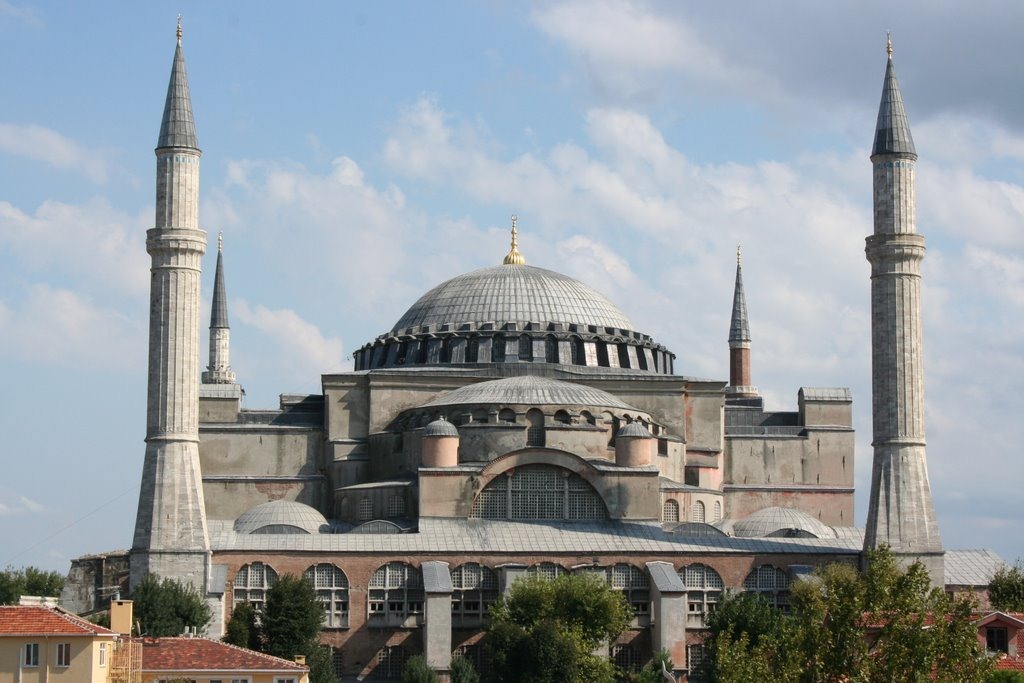
This is the continuation of a game scenario on Turkey’s economic and possibly military rise. Readers are counseled to start with part one. Part three will be in three days. In part one, I argued that Turkey will not pursue a populist-neo-Ottoman course in the Middle East, despite the recent trouble from its islamic leaning leadership:
Global Implications of a Turkish Climb-down from neo-Ottomanism
The EU and NATO will breathe a sigh of relief they don’t have to countenance yet another Muslim-ME headache. Most importantly Turkey’s return to the fold will reduce the explosion of criticism it had recently faced from American supporters of Israel. China will ignore the whole thing and move on; no one else in the new core (East Asia’s wealthy states) either will pay much attention, except for a few business groups. Triumphalist western analysts and neo-cons will over-read this, albeit with some justification, as a part of the general democratization trend in the post-Arab Spring ME.
Opportunities
The biggest opportunity will be the restoration of market confidence in Turkey by foreign investors. Risk analyses of Turkey will reduce the downside political risks. Indeed, this the single biggest reason – the likely reason IMO – for a Turkish return to the fold. A populist-islamist turn will incentive a flight to quality out of Turkey, reducing the inward foreign direct investment (IFDI) flows and tourism dollars it so desperately needs to continue its rise. In this way, Turkey is caught. Its population may wish to pursue a more independent, perhaps even Islamist course, but the costs of access to (especially old, western) Core money is large. As Iran and Venezuela are showing – and conversely Indonesia and Malaysia – one can’t be too populist and anti-western, while keeping FDI. You can’t have both (especially without oil to sell). These are pretty incompatible, would push Turkey back toward the IMF and World Bank for financing, and generally slow its rise.
Probability Turkey will not Become an Ottoman/Islamic version of Venezuela
High.
Turkey is a middle power. For all the ‘second world rising’ hype, Turkey has the same problems and needs of other similar states – South Africa, Brazil, Indonesia, etc. It faces major corruption and infrastructure problems at home. It has few if any globally recognizable brands. It has a military whose relationship to power is cryptic. It has only a mildly competitive workforce. It won’t continue to grow without continuing inward FDI flows. It must trade, and this requires stability and professionalism. It is surrounded by other middle powers whose red flags will go up immediately at expressions like ‘neo-Ottoman’ or ‘Islamic Republic.’ It has a history of imperialism (the old Empire) and atrocity-denial (the Armenians) that will make others wary and push them to balance should recklessness prevail. Arabs won’t bandwagon to aggressive Turkish power, and its geographic encirclement makes counter-balancing by the neighborhood easy. It has no serious allies outside the West. Its burgeoning middle class is nervous about Islamic politics. Iran and Syria are hardly geopolitical winners representing the future in a world of globalization, iPads, dollars, and East Asia. Ottoman-Islamic bluster can’t overcome these serious structural constraints on its rise.
Given all this, it is fairly unlikely to go its own way. It simply doesn’t have the strength to genuinely break with the old (West) or new (East Asia) cores by openly tilting towards Islamism, Iran, or some other other Middle Eastern ‘special path.’ It may sympathize with the Palestinians and be miffed at US and EU behavior, but those are fairly common traits in the Muslim world. In order to keep the critical IFDI and tourism flowing, to keep the relationships alive that allow its students, military, and businesses to interact with the rest of the world, and to prevent open balancing by Israel, the EU, or the US against it, Turkey won’t wander far. If China, vastly more powerful and influential, won’t balance the wealth and military capability of the democracies, then an independent Turkish line would face yet greater hurdles.
Talk is cheap, and mild hedging is easy. Praising Islam and damning Israel are easy rhetorical strategies for elites seeking reelection, especially since Turkey can’t do much. Talking to Iran raises its local prestige a bit, sure. But so far Turkey had done nothing meaningful to chart an independent course: it’s still in the WTO, hasn’t left NATO, cooperated somewhat on Iraq, hasn’t instituted capital controls or other big mercantilist policy, hasn’t withdrawn its application for EU membership, hasn’t built a formal alliance with Iran or Syria, etc.
Its rise complicates life for the US and the EU a little in the Middle East, but not much. Turkish unhappiness is not sui generis; it is more an outcome of typical regional resentment over the Iraq War and US support for Israel. This simulation‘s worst fears (another scenario pathway is entitled “Shift Eastward”)will be serious in 20 years should Turkey continue to grow and the West continue to slip. But for now, ‘neo-Ottoman’ is pretention and hubris, not reality.


 Robert E Kelly