In Social Science, You’re always Under-read, so What do You do? (1)

nerds-nerd-reading-book-glasses-demotivational-posters-1314307098

If there is one constant to modern social science, it is that you are always under-read. There is always some critical book you missed, some article you never had time for, some classic of which you only read the first and last chapters in grad school. And this is just the modern work immediately relevant to your field. After college you all but gave up on reading the ‘great books’ in the Chicago sense – Plato, Augustine, Mill, Nietzsche, etc. That’s the stuff that really got you interested in social analysis – you’ve still got a marked up copy of Aristotle’s Politics somewhere – but if you cite these guys today, it’s usually just a lifted quote from someone else’s modern social science book that you are reading. Your own black-edged Penguin Classics are collecting dust. If it wouldn’t be so uncomfortable, it would be fascinating to hear what ‘obligatory’ international relations or Asia studies classics readers haven’t actually read and why not.

Continue reading

Vietnam Political Science Impressions- 2

Vietnam 013

Here is part one, where I noted how much the communist super-idolization of leaders like Ho and Mao weirds me out. Here are a few more social science impressions from our trip:

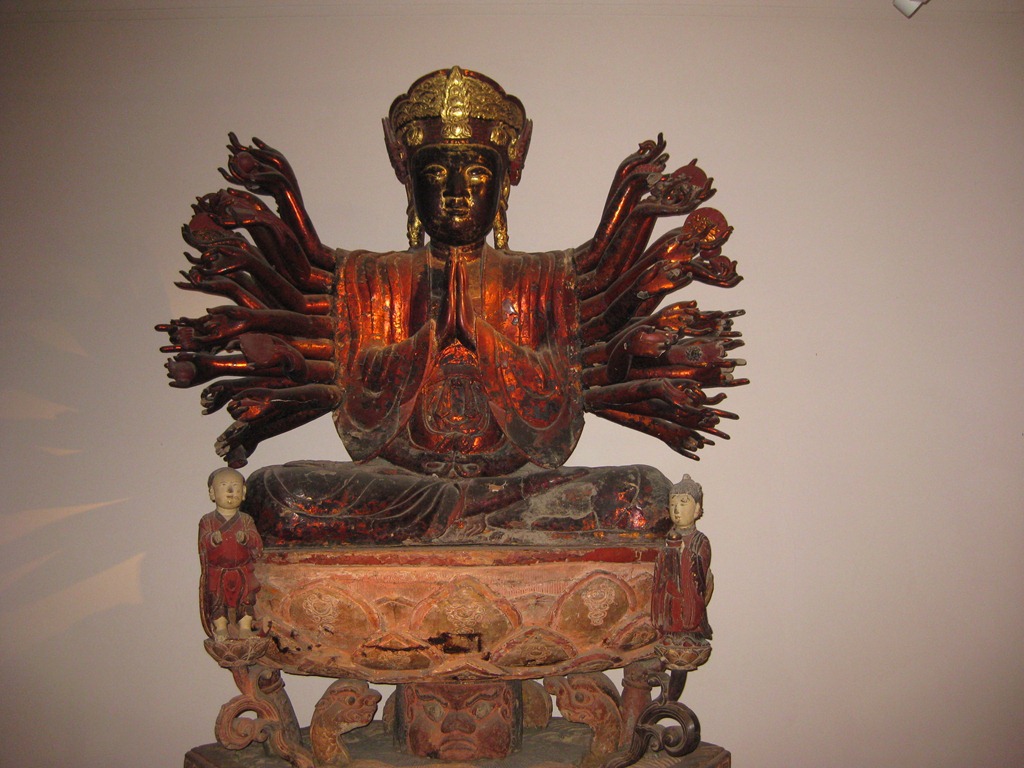
4. The Indo-Sinic collision in Vietnam makes the local art the most interesting I’ve seen yet in Asia. The national museum of fine art has (above) a wonderful serene Buddha, with his hands clasped and face placid (fairly typical) – plus 30 arms. Wow! That stopped me cold: Buddha + Vishnu = I have no idea. I can only imagine how the monks back in Korea (my wife is a Buddhist) would react. But it is truly unique, and I find Confucian art with all its rigid, formal wise men telling me to be a good son kinda boring. Bring on the wild Champa statuary with bodhisattvas who look like Hindu gurus and dancers with their legs backwardly touching their heads. Awesome.

Continue reading

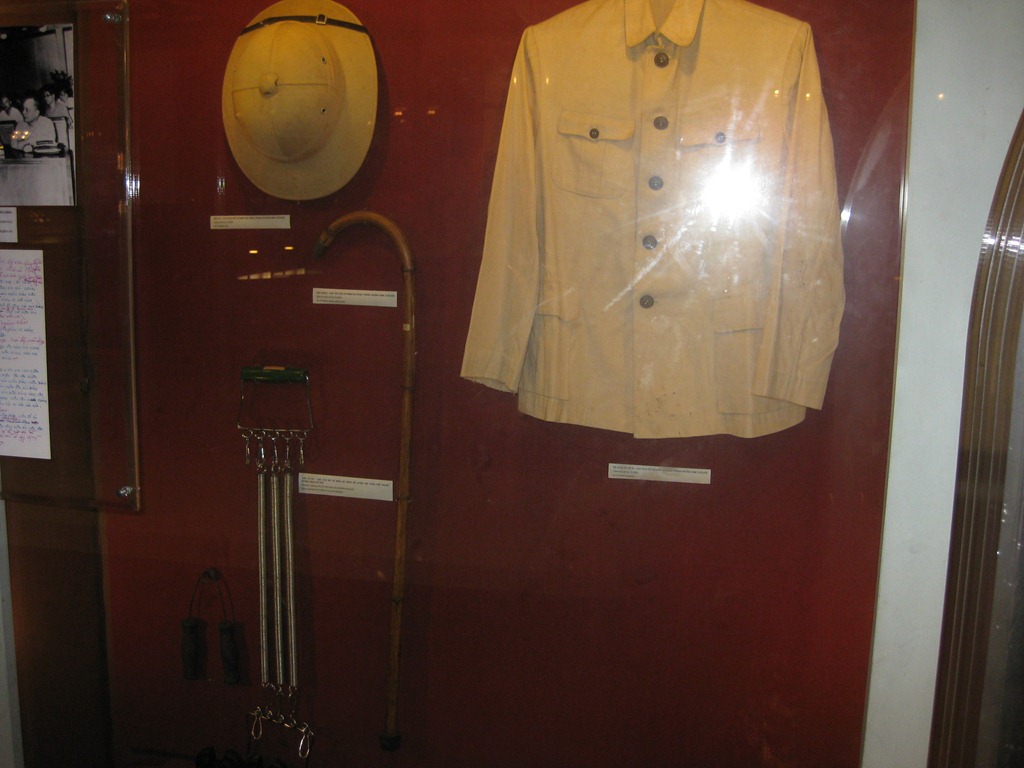
Even Uncle Ho’s Hand-Weights Contributed to the Revolution (1)

Vietnam 064

Our social science faculty association organized a trip to Vietnam last week. It was pretty fascinating. It was my first trip, and I don’t speak the language, so obviously I am qualified to generalize wildly about it now. As Gabriel Almond once quipped, ‘you should never generalize about a country until you’ve at least flown over it. So guess I meet that test at least. Here are some anecdotal, political science-y impressions:

1. Communist hagiography really freaks me out. I have now been to the ‘holy-site’ tombs of Lenin, Mao, and Ho Chi Minh, and they are some of the most bizarre human artefacts I’ve ever seen. (Kim Il Sung has one too.) If you’ve never seen a communist mausoleum, you should visit at least one, especially if you are a political scientist. Modeled on the Lenin tomb of Red Square, Ho’s is a large, raised rectangular box, designed in hideously ugly Soviet-esque grey concrete. Ho is inside in-state – even though he explicitly wanted to be cremated (Lenin too wanted to be buried). And yes, they do refer to him as Uncle Ho to your face. Accompanying the mausoleum are two museums – and a gift shop in which you can buy Ho Chi Minh keychains and playing cards. Wait, what?!

Continue reading

What I Learned Teaching IR in Asia (2): Show me the Policy Relevance!

The robot special effects are pretty funny

Part one is here, where I noted how teaching IR in Asia taught me to stop worrying and love American empire, and that American social science’ monolinguism is actually a highly responsible research technique. Here are a few more:

4. Imperial Star‘Fleet Professors, or why everyone seems to want to work for MOFAT. In his essay in Cooperation under Anarchy (btw, was that sorta the bible for anyone else in their first year of IR grad school?), Van Evera had that good remark about ‘fleet professors.’ The German navy, in the race with the Royal Navy, coopted professors, through money, access, and prestige, to make an intellectual case for expansion and competition. We used that term in grad school to indicate PhDs who wanted to work for the government or DoD, or more generally, had possible conflicts of interest because of relations with the state. Yet connection to the state is fairly common in Korea and smiled upon by university administration. Everyone (yes, me too) seems to have some relation to government-affiliated think-tanks and such (here, here, here). Conferences routinely and explicitly invite policy-makers and expect academics to comment on current issues. I worry about this, because government preferences inevitably influence positions, and it is so easy to get pulled into predictions for which you have little knowledge beyond a few articles you’ve read. I am regularly asked when NK will collapse, e.g., or who should own the Liancourt Rocks, but as Saideman noted, it’s so easy to put your foot in your mouth when you reach like that. It’s also kind of easy for this to turn into an academic food-fight, as it did the first time I debated a Chinese IR academic. By contrast, I find Korean colleagues quite excited to engage in the policy-making joust. 

Continue reading

What I Learned Teaching IR in Asia (1): Learning to Love US Hegemony

If you haven’t seen this yet, it’s pretty hysterical


Here is part two of this post.

This year I will be cross-posting my work on the international relations theory website, The Duck of Minerva. For readers of my site interested in social science theory in world politics, the Duck is a great place to start. Readers will also find the comments section much more vigorous than here on my own site. I encourage you to visit the Duck. The writing is fairly complex, and its contributors are excellent. I am flattered to be asked to guest-post this year. I’d especially like to thank Vikash Yadav for his solicitation.

I have been teaching IR (international relations theory) in Korea for almost 4 years. Generally, it’s a lot like teaching it in the West. The same theories get circulated, and we read the same journals. My university, a big state school, is organized a lot like any Big U in the US – dozens of departments, huge faculty, growing administration, a large middle class student body (but no student athletics). As at home, my department has theorists, internationalists, comparativists, and Koreanists. In fact, given how far away the Western system is geographically, it is almost a little too easy, too seamless. I guess this means political science really is a globalizing discipline.

So here are a few macro-lessons I have picked up teaching and conferencing IR in Asia:

Continue reading

Taking a Break for Xmas – Back in Jan – Some ‘Best of 2011’ Asia Reading

CharlieBrown-Xmas-kills_tree

It’s time for a break. Blogging is pretty time-consuming, so I need some down-time. I will be back in mid to late January, and I will be cross-posting at the academic international relations blog The Duck of Minerva. After 2.5 year of blogging, I am excited to step up to something with greater visibility next year. Academic readers especially will find that site a good one, and I want to thank the Duck’s outreach guy, Vikash Yadav, for inviting me.

So while your guzzling too much eggnog for New Year’s, I have tried to put together a list of stuff from 2011 that is worth your time. I try to avoid academic articles and stick to informed journalism that is easier to digest. Here we go:

Continue reading

Gaming Out NK’s post-Jong Il Future (2): A Likely Military Dictatorship

north-korean-military-backs-succession-of-kim-jong-un

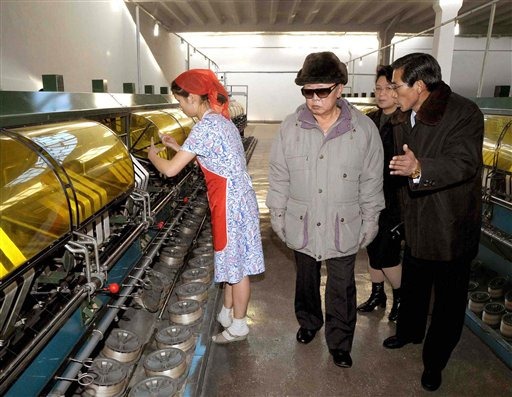
On-the-spot guidance, because the Dear Leader is apparently a baking expert also…

Part one is here.

So in the last week, Wikistrat, a consulting service I work with, ran a scenario to game out a sudden death of Kim Jong-Il. (The website set-up for this is kinda cool; take a look.) I have written a lot about this stuff before (here, here, here), but this useful exercise forced me to go on record about what I think will happen. Given Kim Jong-Il’s poor health and absolute centrality to the regime, his rapid passing would certainly provoke a systemic crisis. Some of the other scenario-gamers were even predicting war, internal dissolution, or foreign invasion! So here is my counterfactual run-through on what would happen if Kim Jong-Il died abruptly:

(the helpful underlined topic headers come from Wikistrat)

Summary

Kim Jong-Un will ascend to the throne, but he will increasingly be a figurehead for a military happy to retain its privileges and avoid South Korean courts.

Scenario Outline

Kim Jong-Un will likely rise into his father’s shoes, but there will be a great deal of jockeying behind the scenes. The son doesn’t have the regime connections of his father, nor the charisma and legacy of his grandfather. So he is likely to be more ceremonial than real, yet this is valuable in itself to the regime’s most important actors: the Kim family and the military. Jong-Un provides a face to the public that maintains the Kim family aura central to DPRK legitimacy. If NK simply becomes yet another dictatorship like Syria or Burma, then what is the point of a separate NK anymore? So a Kim III is a valuable fig eaf; he will not be eliminated; the regime will neither fall nor implode.

The real consequence of Jong-Il’s death will be increasing factionalization in the NK elite. The current system is a messy balance of competing interests including party, state, industry, the police state apparatus, the military – much like the USSR in the 70s. Sitting on top of this fragile balancing act is the extended, decadent Kim family. Jong-Il had the ability to balance these subnational competitors; Jong-Un does not; he’s too inexperience and too unknown in the relevant circles. Expect post-Jong-Il Korea to look like China late in Mao’s life or the USSR in the 80s: disintegrated, erratic, badly factionalized, with frequent subnational capture of national policy, unable to forge a coherent general will because of incessant twilight infighting.

Regional Implications

NK will become yet harder for the neighbors to manage. Factionalization will generate inexplicable foreign policy behaviors that suit domestic actors while undermining further the coherence of the NK state. While this may accelerate eventual collapse, it also means more unprovoked outbursts like the Yeonpyeong shelling last year. China’s delicate position between N and SK will become yet harder. But for SK and Japan, it will be more of the same.

Global Implications

The new, more militarized regime will probably be more willing to bargain. Nuclear weapons have been Jong-Il’s signature achievement in an otherwise disastrous tenure; he cannot surrender them without undermining his legitimacy. This is why all the denuclearization talks go nowhere. With more generals and fewer Kims afterward though, it is more likely that the KPA (Korean People’s Army) will deal. Militaries tend to be a little less paranoid than long-standing dictators…

Opportunities

None that I can think of…

Risks

The earliest years of the transition will be the scariest. The new pecking order among the Kims, party officials, and the KPA will have to be worked out through nasty infighting, including likely purges. So the risks emanating from NK will initially get worse. The noveau regime is likely to pull some stunt in order to grab global attention, build domestic legitimacy (at least among the relevant Pyongyang elites), and shake down SK and Japan for yet more cash. But once the regime settles into its new SOP, its more militarized character will likely restrain the dangerous hijinks associated with past Kim family megalomania.

Probability

70%

I think a civil war is highly unlikely. While the elite will skirmish for rank in the new system, none of the power-brokers wants to risk state implosion. SK still has the death penalty. Post-unification courts will hang much of the top leadership. These guys don’t want to go out like Mussolini or Ceausescu. They like the highly luxurious lifestyle, and they are terrified of a ‘truth and reconciliation’ process post-unification.

Business as usual is unlikely because NK, like Mao’s China, is highly personalized around the two Kims. Yet the next Kim hardly has the weight of his predecessors, leaving a huge hole in the middle. Jockeying to fill that gap seems inevitable. If NK is effectively a ‘Kim-state’ built around a cult of personality, then when that personality dies, crisis and change is inevitable. Both the USSR and China changed dramatically when their god-leaders, Stalin and Mao, passed. It seems likely NK will evolve.

NK will not implode. We’ve been predicting this for years: after the Cold War ended (1990), after Kim Il Sung died (1994), after the famines (1998), after the Axis of Evil speech (2001), etc. It doesn’t happen. NK has turned out to be a lot more durable than anyone expected, probably because it is willing to tolerate barbaric levels of repression. This year, the Egyptian military ultimately proved unwilling to shoot its own people; the KPA has no such compunction. The big question that no one can answer now, is, will the next Kim be so thoroughly harsh as his predecessors; the regime in its current form depends on it.

Gaming Out NK’s post-Jong Il Future (1): Counterfactual North Korea?

KIM-JONGIL

Kim Jong Il as Nietszchean Superman: Now you know who was Casper David Friedrich’s Wanderer

 Part 2 is here.

Regular readers will know that I joined the geopolitical consulting firm Wikistrat as a part-time analyst and blogger. They set up a big simulation this week based on fall-out from a sudden demise of NK leader Kim Jong Il. I think this is a great question and a timely one. This post is to solicit your input for my write-up in that scenario.

Jong-Il turned 70 this week. Most people think he had a stroke in 2008, and defectors have painted a picture of him as hard-drinking and -partying when he was younger. There is lots of speculation that he may have kidney or liver problems. Hence Kim’s death is imminent, and we need to start planning for it, because it will almost certainly be disruptive.

Any system as personalized as the DPRK will struggle when that person passes.However, it is not clear to me whether a protracted death process or a sudden one would be worse for NK. If Kim’s death is a protracted decline, like Brezhnev’s as leader of USSR, NK could slide for years into a grey  zone of factional stasis and drift, unable to make domestic choices or conduct foreign policy. The sort of political immobilism and stagnation that characterized the early 80s of the east bloc could leave Pyongyang inchoate, a fairly scary thought given NK nuke and missile programs that could easily be proliferated away in an environment of state decay.  Conversely, a rapid death, per this Wikistrat scenario, opens the possibility of sharp internal conflict, because the next Kim (Jong-Un) has not yet been properly groomed and trained. Jong-Il had 15 years to learn the ropes; his son will have at best a few years. A quick death would likely expose the many institutional, familial, and factional fault-lines that Jong-Il papers over.

Gaming out these sorts of ‘what if’ scenarios like this is what we call a counterfactual in social science: a thought experiment in which a small, important, and plausible historical change is made in order to reveal new facts. E.g., what if the Cuban Missile Crisis had provoked a nuclear war? Would the Europeans have held their NATO alliance commitment to the US as the missiles were flying over their heads? What would have happened to nonwhite emancipation in the Western Hemisphere if the South had won the American Civil War? This exercise on Kim’s death fits the counterfactual requirements quite well. Here is a bit of method to inform structure this scenario and any comments on a post-Kim NK:

1. Plausibility. A lot of counterfactuals in movies and airport thrillers are so implausible as to be ridiculous. It is reasonable to speculate about a North America after a Southern civil war victory. For the first two years, the South did remarkably well, and a few times it was really close. By contrast, I just finished reading the ridiculous DaVinci Code. It is all but impossible to imagine the Church keeping some super-conspiracy for 2000 years that would turn everything in Christianity upside down. In short, the variable being changed has to be credibly mutable. A counterfactual that posits a German victory in WWI is genuine heuristic device, because it was pretty close and so all the mechanisms to explain and learn from that would-be outcome are in place. By contrast, Dan Brown’s work is so far out that it taught us almost nothing about the Catholicism. Kim’s well-known poor health makes this plausible.

2. Small events. Counterfactuals become more and more ridiculous the more they must change. The best counterfactuals change as little as possible. Hence, counterfactuals usually change discrete events or policy choices by agents who could clearly have changed their mind. Counterfactuals that would undue massive structural characteristics like the discovery of agriculture or gunpowder are all but useless. This is why counterfactuals so frequently focus on the outcome of certain battles and assassinations: the battle could have gone the other way; the assassin might have missed. Probably the most famous to American readers is Oliver Stone’s JFK, which claims if Kennedy hadn’t been shot, the US would have pulled out of Vietnam. This logic is especially applicable to NK. In such cults of personality, the small decisions by all-powerful leaders have huge consequences. Had Hitler died in 1944 assassination attempt, Europe would be quite different. In the same way, when Kim Jong Il dies, an era will end in NK.

3. These small changes must still be important. The world is filled with data that vary, but most of it is irrelevant. It makes no difference if Napoleon liked tea or coffee. Counterfactuals must identify variables that are discrete and limited in scope (point 2), plausibly changeable (point 1), and yet still of major importance. If John Wilkes Booth had missed, what would Reconstruction have looked like? No one cares about his choice of boots, but his target practice played a catastrophic role in American history.

Gaming out Kim’s passing meets all these criterion. Kim’s sudden death is quite plausible, and his eventual death completely predictable. It is a small event – not for him of course – but it requires no re-imagining of the DPRK regime or its history. Finally, Kim’s lifestyle choices are in fact critical; one fear back in the 1990s was that an possibly alcoholic/drug-abusing Kim Jong Il would achieve nuclear power and start pushing buttons in a haze. No one cares if Kim would prefer opera to film, but his health is central. As morbid as it is to say it, it is almost certain that the sooner he passes, the happier NK will be.

My comments following these criteria will go up on Monday. Any previous feedback would be much appreciated.

2010 Asia Predictions: How did I do?

new-year-image


Last year in January, I made  some predictions on Asian security. It is always useful to look back at how one did. I did ok, but one might criticize me  that I predicted too many things would not happen. That predicts the lack of change, which is easier than predicting proactive change. That is true.

But prediction is one of the great goals of the social sciences. Indeed it is our hardest chore, and no matter how much we read, data we collect, or theories we propound, we still don’t seem to do much better than the ‘random walk’ theory. Depressing, but nonetheless worth the effort. So here is a quick review of my record. (For a nice collection of the worst world politics predictions from 2010, try here; thankfully none of mine are as eye-rollingly bad as them.) Here is a nice run-down from CFR on the big (East) Asia events of 2010. Note the differences from mine below.

My review of my 2010 Korea predictions will go up on Thursday. Here are my 2010 Asia predictions in retrospect:

1. There will be some kind of power-sharing deal in Iran before the end of the year.

X!

I really blew this one. My sense 12 months ago was that Iran was really slipping toward some sort of genuinely systemic crisis. Not primarily because of the street demonstrations. Those are relatively easy for dictatorships to contain with nasty head-crackings. In the movies (Avatar), the people overthrow the powerful, but in reality it is usually other powerful who overthrow the powerful. That is, elites usually depose other elites in dictatorships. And that is what I thought we saw in late 2009: the emergence of real splits inside the regime’s elites. Particularly, I thought that the clerics’ growing hesitation on Ahmadinejad’s policy of confrontation with the West might lead to a real cleavage requiring some kind of accommodation. Note that I did not predict a revolution or major change in the regime’s Islamist character. No one really expected that. But I did think that Ahmadinejad needed the clerics for legitimacy in what is still an overtly theocratic state. Looking back, I am fairly impressed at his ability to maneuver these domestic difficult waters, while nonetheless continuing to bluff the West. Yet perhaps the external bluff is the key to that internal success. Perhaps the nuke program insulates him against clerical unhappiness. He can appeal to a Persian populist nationalism with the nuclear issue, which allows him to ideologically outflank the clerics. If this is so, then Ahmadinejad is more enduring then we anticipate.

2. Israel will not bomb Iran.

This is a negative prediction, so it was a little easier. But still, given how much noise Netanyahu and the Israel lobby in the US make on this issue, including regular veiled threats to take matters into their own hands, I do think this deserves some credit. Also, the Wikileaks revelations that Sunni Arab states might look that other way on a bombing add further weight to my prediction’s riskiness. Netanyahu is playing a tough negotiating game with the US, but this one was probably a bridge too far, although I bet the righties in his cabinet are unhappy. Still, Israel really needs the US, and that need will deepen the more it becomes apparent that the Israeli right is the primary force blocking an Israeli accommodation with the rest of the Middle East. And without US approval, unlikely on Obama’s watch, I still think the cost-benefit calculus tilts against an Israeli strike. That said, a strike is more likely this year, because the Iranian nuclear program keeps rolling along and Iran (point 1 above) has not softened.

3. Japan will disappoint everyone in Asia by doing more of the same – more moral confusion over WWII guilt and wasteful government spending that does nothing meaningful to reverse its decline.

This is another negative prediction, and seems like an easy one too, because it just predicts more of the same from a country that has been doing that for 20 years. But placed the context of the DPJ’s (pseudo-)revolutionary election victory of late 2009, it still seemed like a mildly risky prediction at the time. Recall that the DPJ came in saying it would change so much – fixing the ever-sliding economy, improving Japan’s relations with its neighbors, edging away from the US, etc. All that turned out for naught. Some of this was because China seemed to flip out in 2010 (a big positive prediction I really missed – X!). China’s 2010 behavior pushed Japan back toward the US in a way the DPJ probably wanted to avoid. But on the other issues, Japan still strikes me as stuck in a terrible historical funk. It can’t seem to get beyond the fact that the glory days of its developmentalist economy (1960s-80s) are over, and that more Asian-style state intervention now just means more debt. Nor can it seem to figure out, despite the DPJ talk, that the rest of Asia is genuinely freaked out by Japan and pays attention to every change in Japan’s defense policy or utterance by defense officials. Worse, every time some disgruntled righty in Japan say the old empire wasn’t so bad after all, the neighbors go into paroxysms on incipient Japanese re-militarization. My own experience with Japanese students tells me that Japanese are just blind to this (although Japanese academics do seem aware). So my sense was that for all the DPJ talk, there was no real popular interest in a Willy Brandt-style ostpolitik on the history issues. Nor does that seem to have changed in the last year.

4. North Korea won’t change at all.

X! – It got worse!

Who would have thought that the worst state in the world could plumb the depths yet further? Somehow the loopy Corleones of Korea – the Kim family gangster-state – became ever more unhinged and dangerous. My original prediction was aimed at those who thought that Kim Jong Il’s trips to China and China’s growing ‘investment’ in NK might somehow hail a Chinese-style liberalization, at least of the economy a little. To be fair, no one expected NK to morph into a ‘normal,’ somewhat well-behaved dictatorship like Syria or Burma. But there was a mild hope that NK, finally, under the weight of economic collapse and the pressure to show results for the 2010 65th anniversary of the state’s founding, might open a little. I thought that was far-fetched, so in that sense, my prediction was right. But more importantly, I missed that NK would actually go the other way. Instead of possible better behavior, NK went overboard – provoking three major crisis – the Cheonan, the new uranium plant, and Yeonpyeong– in just 7 months. Wow. Wth is going up on there?!

5. The US drawdown from Iraq will be softened, hedged and qualified to be a lot smaller than Obama seemed to promise.

✔/X

This one seems mixed but broadly accurate. It was a gutsier positive prediction, but the evidence is not definitive. I was genuinely surprised when the last brigades rolled out, but then, there are still 50k US troops in Iraq (more than in Korea or Japan, btw). Now that Iraq is off the front pages, and with Obama’s speech that it is all over, no one pays attention much. But we are still running around performing what really should be called combat operations, and Americans are still dying. And in Afghanistan, the Obama people are now openly moving the goal posts from 2011 to 2014 now. While I didn’t predict that, it does fit into my general sense that Obama can’t really end the GWoT quickly as he hinted during the campaign. Instead, it seems likely that it will slowly splutter out.


Back from Africa – Quick Impressions

So I admit this has nothing to Asian security, but off we went to southern Africa for what is likely one-time exposure to some of the most dysfunctional countries on the planet. We visited South Africa, Namibia, Botswana, Zimbabwe, Zambia, and Mozambique. Here are some political science observations:

1. Passport-stamping to reinforce sovereignty. In all my travels, I don’t think I ever got stamped, photographed, or ID’d as much I did in Africa. Mozambique alone made me pay $80 for a ridiculously garish and oversized tourist permit, plus entry and ext stamps that took up two pages. But it occurred to me that for many of these states, just being a functional state is pretty d— challenging. Mozambique’s HIV infection is 21% and Maputo looks like Baghdad. So one subtle way to reinforce your ‘stateness’ is elaborate border controls.

2. African streetnames as the last bastion of Marxism. Nothing beats a relaxing stroll down Maputo’s Kim Il Sung Avenue, poking between the proliferating trash and yawning potholes, except perhaps scurrying as fast as possible away from Windhoek’s cringe-inducing intersection of Fidel Castro and Robert Mugabe Avenues. I used to think the apartheid South African government’s line about Marxist revolutionaries in the black front-line states was just an excuse for its front-line destabilization policy. But not after visiting these capitals and their national museums. The national museum of Namibia in Windhoek is a Marxist-Cold War throwback in tone, and Mozambique so completely transplanted the East Bloc-model, it still feels today like East Germany in Africa – crumbing concrete everywhere, half-finished rusting buildings, brownouts, purposeful disdain of ancien regime architecture, and even a scary, commie-inspired national logo with a AK-47 on it! Having grown up in the 80s, there was something vaguely familiar to all this stuff, but for the world growing up on globalization and iPods, maybe its time to take down down those pictures of Erich Honecker, huh?

3. Please stop trying to rip me off. This was probably the most depressing part of the experience. Although you are traveling in genuinely third world countries, your sympathy quickly dissipates when you are confronted with routine and blatant efforts to scam you at almost every turn. As a foreigner you are seen as a min-gold mine by just about everyone and you become a magnet for noxious money changers and street hawkers determined to ruin your day. After a few weeks, it becomes a depressing reflex to rudely blow off almost anyone speaking to you on the street, because you know it is a time-wasting scam. Taxi drivers, hostel owners, waiters, street kids and dealers, clerks of almost every variety, airport porters, etc, etc. – all of them seek to charge outrageous prices for faux, nonservices like you showing you where your luggage arrives.

4. White enclavisation. The safari companies run from one ‘white’ enclave to another, in a depressing recognition that the most tourists don’t want to see the black parts of the country and that these are likely too dangerous for a group of ignorant, western newbies. One after another, we hit Swakopmund, Walvis Bay, Vilankulos, and places like that, and they just look liked western resorts. About the only thing ‘African’ was the guy serving you drinks in the disturbingly neocolonial dining experience you regularly have in Africa – that is, hordes of obese white tourists ordering game meat from black waiters in white-owned restaurants ‘safe’ for the companies to take you to. Creepy!

5. Nature tourism is about all there is to do. With only one world-class museum in all of southern Africa, and a cultural life far below what you get in wealthier societies, basically all the tourists go to the bush. It really hit me when one traveler said to me, ‘yeah, we did Botswana in about a week – we hit Chobe and Okavango, and that’s basically all there is to see there.’ In other words, the white people fly in, run around the bush looking at water, flora & fauna, and rock formations, and then take off. You spend more time talking to the other white people in your safari truck then you ever do talking to the native black population of any of the places you visit. Even creepier, the tour companies have realized that the western tourists don’t really want to do that anyway. That’s why the companies bounce you from one resort to another like a chain across the landscape. You are never too far away from a bar that offers Jack Daniels and western food.

6. The Afrikaners are even creepier than you thought; conversely black South African restraint is astonishing. Invictus does a good job showing you how restrained the black majority was in South Africa after 1994, but you don’t realize how extraordinarily generous South Africa’s blacks have been till you visit Pretoria. It is littered, still, with all the old monuments to white domination, topped off by the astonishingly racist Voortrekker Monument. The Voortrekkers were the Calvinist, Dutch-descended Boers who broke from British control of the southern cape and ‘trekked’ inland in search of their (slavery-practicing) ‘free states.’ All of this is presented in the most heroic terms, whitewashing (literally), 1) that the Boers broke from the British primarily because they wanted to continue to enslave Africans, not because of trumped-up British high-handedness, and 2) the massive cultural disruption the Boers brought to black tribes in their path – instead the museum literally says the “Voortrekkers brought the light of civilization to the interior.” The Battle of Blood River is portrayed, inevitably, as a triumph of Christianity and sturdy white rural folk – the marble imagery is brutally classical – and vindication of the civilizing mission.

Honestly, I found the presentation shocking, appalling. It was like some museum glorifying the Old South had somehow survived. Stunned, I asked our black tour guide what he thought. I told him that in Eastern Europe, after the revolution, they tore down all those statues of Lenin, and the Iraqis pulled down Saddam’s statue. But he was remarkably stoic about it. He genuinely seemed concerned that whites in South Africa feel like they belong. That was probably the most impressive sentiment I saw in our entire trip. If I were the president of South Africa, I would dynamite the Voortrekker Monument immediately, even if I weren’t black.