Robert E Kelly

Political Science, International Relations, East Asia, US Politics…and, yes, the BBC Dad

Robert E Kelly

If Trump Takes Greenland, the US would Struggle to Project Power into the Middle East – My Latest for ‘1945’ Magazine

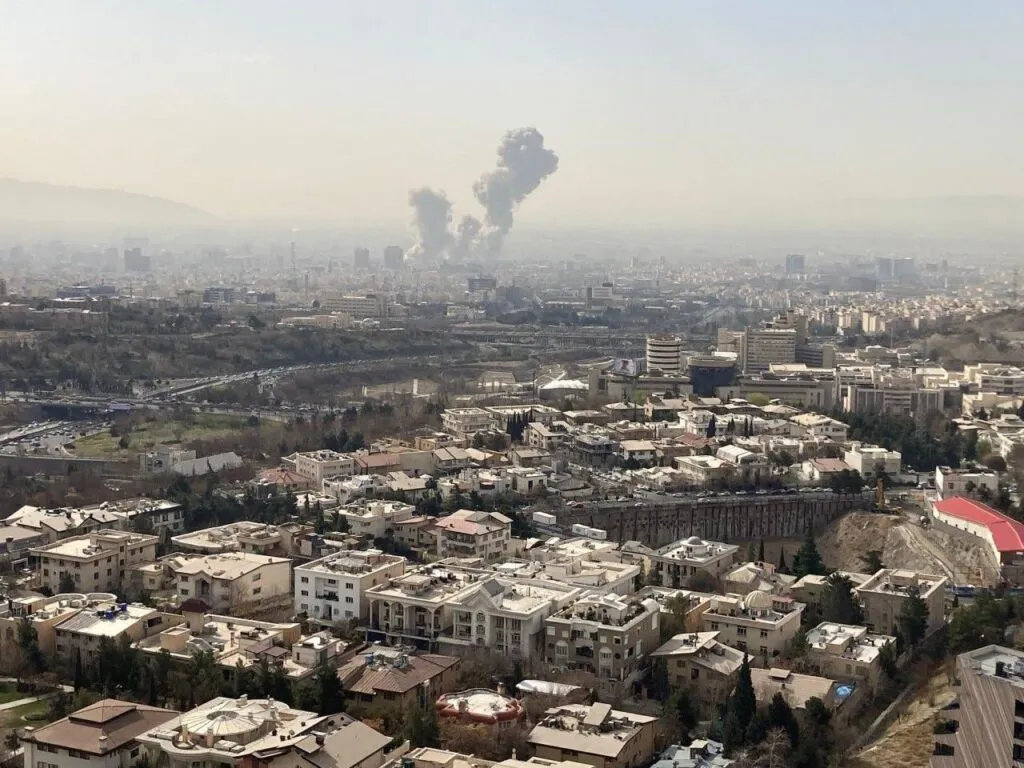
ImageSo Trump has decided not to take Greenland by force. He announced that today at Davos. This is great news. It was becoming pretty apparent that a military move might:
spark a stock market meltdown

– be met by force (even if we would win)

– break NATO

– lead to massive European Union counter-sanctions

– spark yet another impeachment effort against Trump

– provoke a civil-military crisis in the US (because the US military might not follow attack orders on the belief that they are illegal, because NATO’s 1949 Washington Treaty is signed and ratified and, therefore, US law).

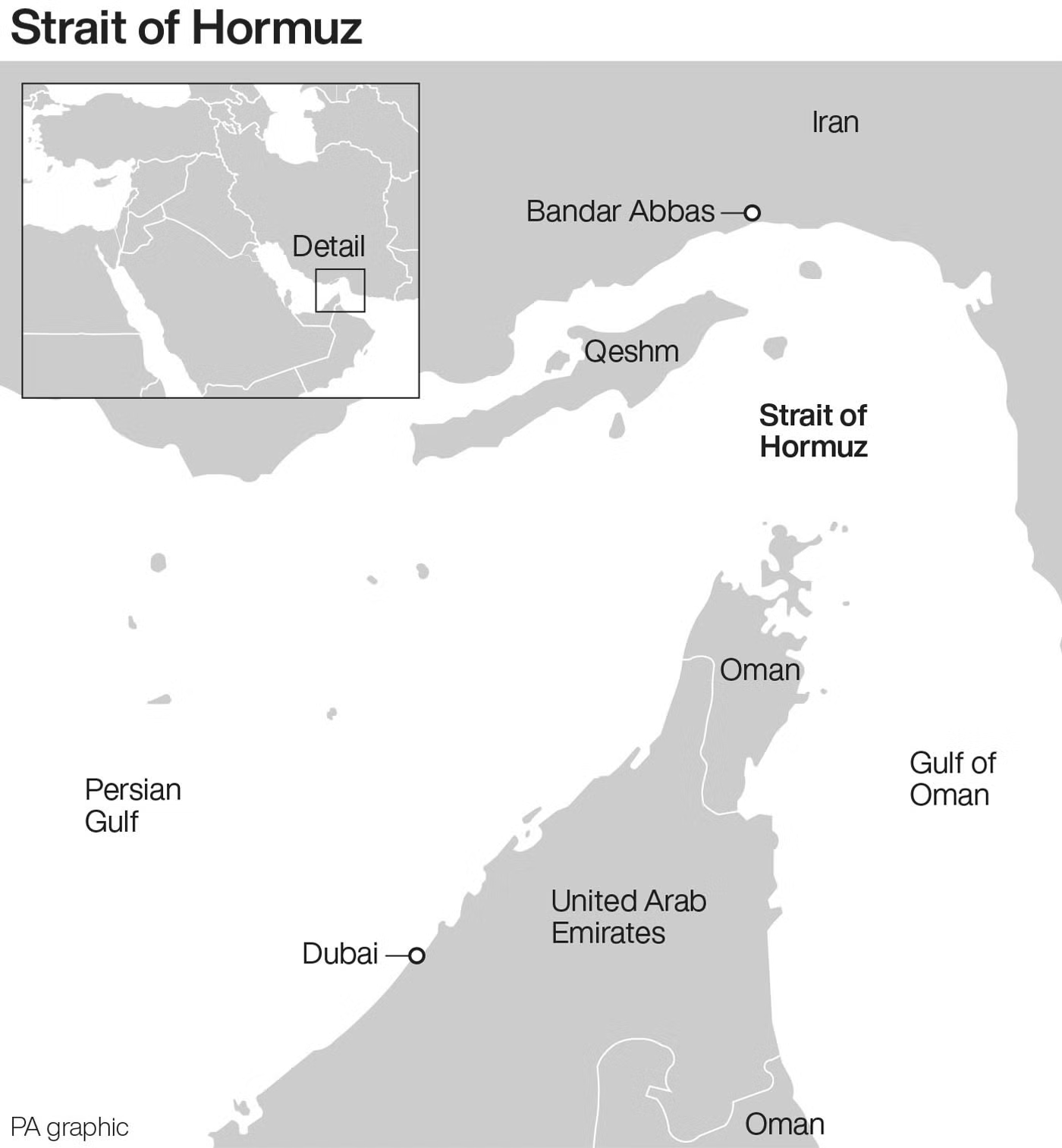
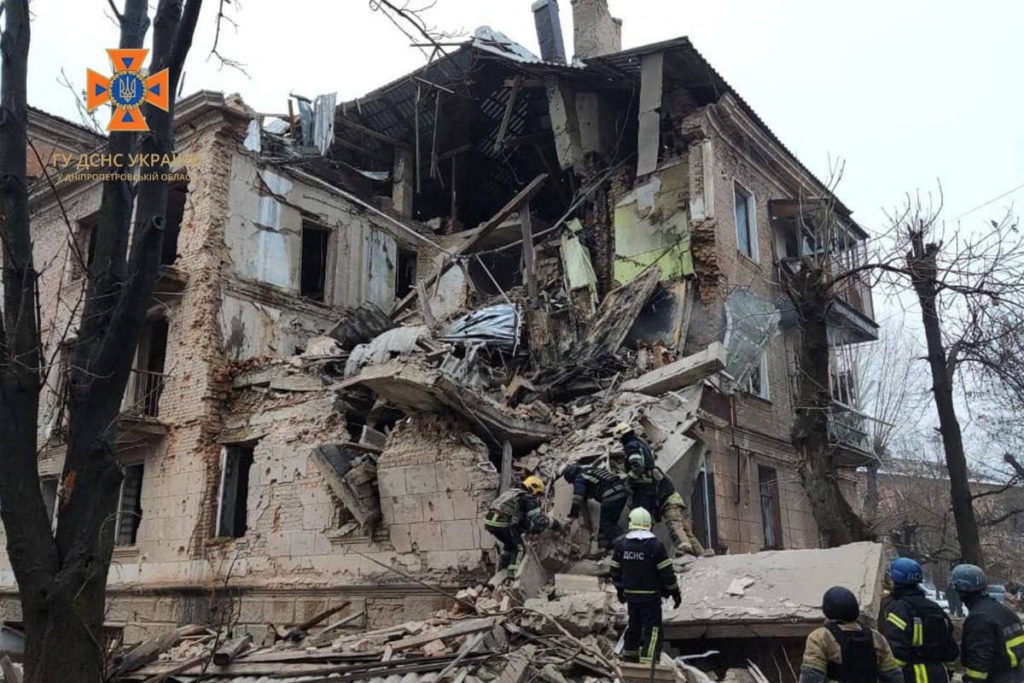
But there is another possible cost which I saw little discussed: the loss of US bases in Europe in the wake a NATO’s implosion, and the consequent loss of US power projection into the Middle East. I develop this idea here, in my weekly column for 1945 web-magazine.

Here is my core claim:

[Expulsion of the US military from Europe in the wake of NATO’s rupture] will dramatically reduce America’s ability to project power into Europe, Africa, and the Middle East. The US has dozens of bases in Europe. These are its largest in the world outside of the US mainland. They enable the US to project force throughout the western Eurasia and North Africa; they provide the massive logistic tail needed for modern military operations. Particularly, US airbases and friendly ports permit the maintenance and support required by modern, hi-tech air and sea platforms. As one former US commander in Europe put it, “a large-scale withdrawal would make US power projection slower, costlier, and less effective.”

MAGA might argue that the US does not need to project power into Europe or Africa…But Trump’s coalition does care – quite intensely – about US power projection into the Middle East. Trump’s staunchest supporters are evangelical Christians. For them, US alignment with Israel is a core national security priority, as is the ability to strike Muslim states perceived as anti-American. European logistical hubs help substantially with that. US bases in Middle East tend to be smaller and more politically controversial with their hosts than those in Europe.

I also point out that MAGA might not even have grasped this problem. Americans have become so accustomed to US global dominance – it’s 81 years now since we emerged on top after WWII – that I think we just take it for granted. We just don’t get that we need allies and partners to project into far away places like the Persian Gulf. MAGA certainly doesn’t get that at all. Their relentless belligerence strongly suggests they think the US can do almost anything without losing allies. That is incorrect.

No, Donald Trump is Not a Realist or China Hawk; He’s Too Ill-Disciplined for That: The Full Version of My Trump Essay for Foreign Policy

AP-putin-trump-handshake-g20-jef-170710_16x9_1600Trump is too lazy, ill-disciplined, and venal to be the ‘thinker’ or strategist realist and China-first hawks keep trying to make him out to be. This post is the longer and pre-edited version of an essay I just wrote for Foreign Policy magazine.

In fact, I am amazed anyone thinks Trump has the discipline to do this. Are you not watching the same Trump – erratic, confused, chaotic – the rest of us are? Trump is far more likely to simply sell US foreign policy to the highest bidder if he becomes president. He loves money and adulation. The Chinese and the Russians are more than happy to throw that at him to get him to bend on their interests.

We keep hearing that Trump will prioritize China and Taiwan over Europe and Ukraine, but listen to what he says about Taiwan and China. He doesn’t sound a realist at all. He dislikes Taiwan for protectionist and free-riding reasons, and he clearly admires Xi Jinping’s autocracy.

The best predictor for Trump’s second term is what he did in the first term, and that was a confused mess. He dislikes Ukraine – and will surrender it to Russia – because Zelenskyy wouldn’t help him cheat in the 2020, not because of a strategic re-prioritization toward Asia.

Maybe realists will get their wished-for realignment or re-prioritization out of Trump’s staff. Perhaps Elbridge Colby will push that through. But it’s hard to imagine a major foreign policy realignment without POTUS’ consent, if not participation. And Trump just isn’t focused enough. Worse, Trump has a tendency to staff himself with clowns. Your more likely to get incompetence out of a Trump second term than anything.

The full, unedited FP essay is below the jump. Continue reading

The Pro-Russian Bloc in the West is Looking for Any Excuse to End Ukraine Aid. Ukraine should Not Strike Russia

UKRAINE-CRISIS/MISSILES-ATTACKSUkrainian strikes on Russia proper jeopardize the rickety pro-Ukraine aid coalition in the West. Ukraine shouldn’t do this. It is too risky.

I just wrote on this topic for 1945.com.

There are many reasons to strike Russia directly, which Eliot Cohen helpfully develops here:

– Morally, it is fair because Russia has been terror bombing Ukrainian cities for more than a year. This mild Ukrainian response is far below law-of-war proportionality norms.

– Psychologically, bringing the war home to Russians confronts them with the costs of the war and may encourage them to re-consider it.

– Militarily, forcing Russia to spread its defenses helps thin out its forces on the front lines in Ukraine.

Despite all the reasons to hit Russia at home, the political risks in the West to Ukraine are too high. Yes, that is unfair. It is ridiculous that Russia gets to bomb Ukrainian cities, but if Ukraine does the same, it is suddenly a massive escalation. But it is important to remember that the Western hard right and hard left are looking for any excuse to halt aid to Ukraine. These people have variously claimed that we should support Ukraine because it would lead to a nuclear wear, Ukraine could not win anyway, it just prolongs the war, Europeans will freeze without Russian winter gas, the cost is huge, and so on.

There is no consistent or principled argumentation about the war from the pro-Putin Western bloc. What they really want is a Russian victory for ideological reasons. They can’t say that outright, so they keep jumpingn from one rationale to another which would justify an aid cut-off aid. The right admires Putin’s reactionary, anti-woke authoritarianism; the left is hung up on US imperialism. They crave a Russian victory, so they will say anything to claim Ukraine aid is a mistake. Ukrainian strikes inside Russia are precisely the sort of card they will play – it is ‘escalation.’

Ukraine can’t win without Western assistance. The political-strategic risks – to invaluable Western military assistance – outweigh an operational gains of these strike. That sucks, but Trump, Marjorie Taylor Green, the NatCons, the anti-imperial lefties are all looking for any excuse to end aid. Ukraine should do its best to fight in way which gives them no ammunition to press their claims

My full essay on this at 1945.com is here.

My Extended Comments on Potential South Korean/Japanese Nuclearization for the Asian Leadership Conference and Foreign Policy Magazine

imageI spoke at the Asian Leadership Conference in Seoul a few weeks ago on S Korean/Japanese indigenous nuclearization and then published my basic thinking with Foreign Policy magazine on the topic a few days later.

Both of the venues required a more abbreviated presentation for time/space constraints, so I thought I would put up my full remarks here, at my own site. Here is the 2022 ALC site, and here is my original article for FP.

In brief, my argument is that the US should get out of the way to let Seoul and Tokyo make up their own mind. The US has long opposed ROK/Jpn nuclearization, but increasingly that strikes me as inappropriately hegemonic or strong-arming of them. There is a pretty strong case for SK and Japan to counter-nuclearize against China, Russia, and especially NK. I sketch that in detail after the jump, but the short version is:

1. The US is not going to exchange LA for Seoul/Tokyo. In 1961, de Gaulle asked JFK would he exchange NY for Paris. JFK waffled; de Gaulle was no idiot; he built French nukes shortly afterwards. The logic is the same here. The US is not going to fight a nuclear war solely for non-Americans. This will raise endless, irresolvable credibility debates between the US and its Asian allies. The best way to resolve that is to do what our European allies did – self-insure through indigenous nuclearization.

2. Trump will likely get elected – or ‘elected’ – in 2024, and he will ‘blow up’ the ROK alliance as he promised he would. So ROK nuclearization may happen no matter what we think. And a US retrenchment from SK would probably scare Japan so much that the whole nuclear debate there would shift substantially to the right.

There is a lot of anxiety about this step, and I share it too. So I don’t endorse SK/J nuclearization. But there is SK polling showing high interest in this, and SK is terribly exposed to NK nuclear devastation with few good options as the NKs continue to build relentlessly. (All this I cover below.) So the least we Americans can do is get out of the way and let them debate it themselves.

The original, pre-edited FP essay on this follows below the jump:

Continue reading

Don’t Bet on a Biden Breakthrough with North Korea – but Trump was Never Serious about it Anyway

ABCDEFGHIJK

This is a re-post of an essay I wrote last month for The National Interest, but since Biden just became president, this seems like a good time to put it up here.

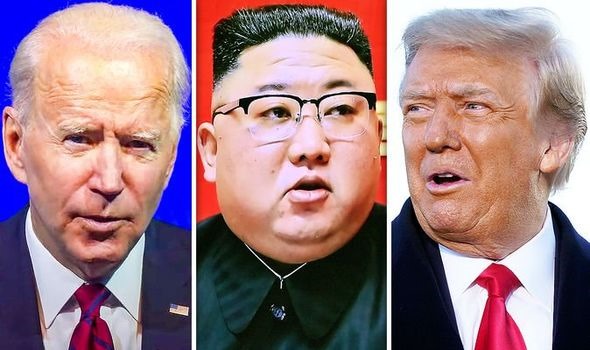
The short version is that America’s North Korea policy options are poor, so now that the adults are back in charge, US policy toward North Korea will probably snap-back to pre-Trump form. Trump tried all sorts of hijinks – threatening war, then cozying up to Kim Jong Un – but none of it was ever serious and all of it failed, because Trump was buffoonish dilettante.

And yes, the status quo with NK is bad, but the options are worse – war or appeasement, basically – so this is why the containment and deterrence of North Korea has basically been our North Korea policy for decades even though no one likes it. I figure that is what is coming back now.

The full essay follows the jump:

American North Korea Policy under the Next President 2: Trump – He will just Drop North Korea

Biden calls North Korean leader a 'thug' but says he'd meet Kim if  denuclearization is agreed - Pacific - Stripes

This is the second part of a series for The National Interest on North Korea policy under the next president. Here is my first essay on Biden and North Korea.

I am of the school that says Trump’s outreach to North Korea was a great big nothingburger. More dovish analysts will tell you that there was a window there for a few years (2018-2019) to forge a deal. I don’t buy that, mostly because of Trump himself – his laziness, disinterest, unwillingness to prepare, and so on.

Instead I think Trump went into this solely for the symbolic imagery and a Nobel Peace Prize. Obama won a Nobel. Trump loathes Obama, so he had to get one too. I think it’s really as simple as that. That’s why there was no deal. The Trump team had not thought through the concessions which would be necessary to strike a deal. The North Koreans were going to ask for way more than just sanctions relief. Trump had nothing greater to offer – and bureaucratic resistance at home would have fought a serious concession like a US drawdown.

So my prediction for Trump and North Korea in a second Trump term is that he will do nothing. Trump has the pictures he wanted. He won’t get a Nobel, and he won’t fight the battles in Washington to offer concessions which NK might actually go for.

The full essay follows the jump:

70th Anniversary of the Korean War: North Korea isn’t Going Anywhere; It’s Pretty Stable (Unfortunately)

abcd

This is a re-post of my contribution to The National Interest’s recent essay round-up on the 70th anniversary of the Korean War. (My essay here; the full symposium here.)

My argument, in brief, is that North Korea is actually quite stable. Hence the answer to the symposium question – would Korea be re-unified by 2025 – is a resounding ‘no.’ Here is a brief Twitter thread which summarizes my argument.

North Korea faces little pressure internally – Kim has consolidated power quite nicely; elites are quiescent; there’s never been a popular revolt – and externally – China is unwilling to cut NK off; nukes give NK deterrence against regime change. The sanctions are tough, but Northern elites have been pushing the costs of them onto their population for decades. They won’t bring down or substantially change the DRPK system.

So we are stuck. We can try to negotiate, and we should, but the last few years’ flailing shows how hard that is. The stalemate is quite persistent.

The full essay follows the jump:

Continue reading

Trump and Moon are the most Dovish Presidents Ever on N Korea, and Kim will Still Give Them Nothing

This is a repost of an essay I wrote earlier this month for The National Interest. My argument is that Kim Jong Un is passing up his best chance for a deal for years, maybe decades, to come. Both Moon and Trump are extremely unusual, and favorable, counterparties for the North.

Most South Korean and US presidents have been either hawkish or very hawkish on North. Doves haven been rare – two SK presidents between 1998 and 2008. But neither of them ever went as far or talked as détente-ish as Moon does. Similarly, Trump is a huge outlier for US presidents on North Korea. He has made a far greater and more personal outreach effort than ever before.

And that these two dovish presidencies currently overlap is unique. This is a fantastic alignment for North Korea and almost certainly won’t last. If Pyongyang really wants a deal, this is the time to go for it.

Instead, they have played Trump for a fool – getting the legitimating photo-ops with POTUS while giving up nothing – and been surprisingly cold toward Moon’s repeated outreach. As so often, it’s their way or no way at all.

Expect hawks to cite this behavior in a few years to justify a much tougher line on NK. The missed opportunity between 2018 and 2020 will be seen on the right and center as proof that NK doesn’t want a deal, even under very favorable circumstances.

The full essay follows the jump:

Continue reading

Failing North Korea Talks Once Again Suggest Starting Small

Image result for north korea talks sweden

This is re-post of an essay I wrote for The National Interest a few weeks ago. The argument is one I have made repeatedly – that big-bang, all-or-nothing deals with North Korea are unlikely – because of low trust on both sides – and they represent far too large a leap to take given North Korean cheating in the past. We should scale back our efforts to smaller, cumulative steps which are actually doable. Think where would be now if we had done this for the last 18 months instead of gambling again and again on a huge breakthrough while not making any actual progress.

The problem is that the US and South Korean presidents both want a big-bang deal for domestic political reasons unrelated to the substance of denuclearization talks with the North. Trump wants a Nobel Peace Prize to stave off impeachment and get himself re-elected. He will sign anything because he doesn’t actually care about the deal’s contents. Also, and perhaps as important, Trump is lazy. He doesn’t want to negotiate in depth and detail with NK because he doesn’t know enough to do that and doesn’t want to learn.

SK President Moon wants a big-bang deal because he has pinned his whole presidency to détente with North Korea. All his domestic policies are contentious and are being overwhelmed by the North Korea issue which is absorbing all Moon’s time and energy. NK has a way of overwhelming SK presidents’ time in office, and Moon has worsened that normal time-suck by jumping in with both feet (and getting nothing).

In short, the North won’t go for a big, one-shot deal just because Moon and Trump are desperate at home. If we really want progress, we need to start with small, manageable, transparent swaps. These should involve a limited series of steps on both sides over a limited period of time. This would make post-hoc evaluation easier: after such a swap, we could do an after-action analysis and decide what the next swap should be. With each step, we could enlarge cooperation, building organically and credibly on previous steps. Needless to say, this will take a long time. But it is far more likely to actually work than hoping that NK will suddenly – after 50 years developing nukes – agree to trade them away. They won’t. That should be pretty obvious at this point.

The full essay follows the jump:

Trump’s Impeachment is Good for US Foreign Policy

RTX74MJ5-1024x683

This essay is a local re-post of my essay for the Lowy Institute for this month.

In brief, I argue that Trump, for all his bluster and chaos, has not actually moved the US foreign policy consensus that much. So if he is impeached, we’ll likely get a ‘snap-back’ to more traditional liberal internationalist positions. That would broadly be a good thing, but for the over-interventionism of the traditional foreign policy community. Trump’s departure would mean the end of idiocy like undercutting the World Trade Organization or the Universal Postal Union, attacking US allies, throwing friends like the Kurds under the bus, and cozying up to dictators like Kim Jong Un.

Trump is too uninformed, impulsive, and erratic to represent any kind of meaningful critique of foreign policy liberalism. Some of his supporters try, but it’s most been in vain. There’s no coherent Trump Doctrine, just whatever suits his fancy or serves his political purposes at the time. Nor has Trump created an alternative foreign policy community to the current one. As POTUS, Trump is hugely influential in that community, but he’s leaving no lasting mark because he’s too incoherent and, well, dumb. So if he’s impeached, it’s back to what was, because there is no serious Trumpian alternative.

The full essay follows the jump:

Continue reading