Transformers 3 (1): “We will Kill them all in the name of Freedom” – Yikes!


In the name of freedom, we will kill them all!

– Optimus Prime (the protagonist in the clip above) updates the Bush Doctrine after a decade of war


Part 2 of this post is here.

I missed this over the summer, but the blu-ray just came out, and it’s a nasty, harsh, rah-rah militaristic mess. I won’t bother with the story. You already saw it and know how ridiculous it was. (Try here if you don’t.) I’ll only note that great actors like Malkovich, McDormand, Turturro, and Nemoy are complicit now in the militarization of American cinema, as is Buzz Aldrin (sooo embarrassing that was – wow). The Asian racism and gay jokes are a just as offensive (and painfully unfunny) as the black racism of the second one. And the new ‘Bay girl’ is even worse than Megan Fox, who at least had a grittiness. This one is just living plastic and skin-cream. Bay never misses a chance to promote emotionally debilitating lookism to young girls. (Even Bay’s female corpses must be hot. That must take a sexism award somewhere.)

No one captures the ups-and-downs for popular consumption of current American attitudes toward war as well as Michael Bay. Bay’s films obviously carry the moral weight and approval of the American Right. This is most clear when he guiltlessly references signature moments in US history like the collapse of the Trade Towers, the moon landing, or Challenger explosion. More leftish action directors like James Cameron or George Lucas would be relentlessly criticized were they to do that. Consider the Right’s response to Avatar and Star Wars III, compared to Transformers. But ‘America’s director,’ just like ‘America’s newsroom,’ can do this, because he is reliably nationalistic and pro-military. As Time put it, Bay has become the “CEO of Hollywood’s military-entertainment complex.”

As a result of Bay’s signature position as the filmic voice of the US populist-militarist right, no movies better capture the US emotional arc regarding the war on terror than his Transformers trilogy. As Americans have become more and more frustrated by an unwinnable war, more tolerant of brutality like torture, and less compromising, so has Bay. The films have become progressively more jingoistic, bitter, macho-sexist, and cruel. This is entertainment for the Tea-Party. In this most recent installment, there are even four battlefield-executions (!) in this Steven Spielberg (!) production based on a line of toys and aimed at young boys. But I guess that’s good stuff in the GOP primary these days.

The antagonists (the Decepticons) are nastier than usual, but the protagonists (the Autobots) are extraordinarily brutal for mainstream heroes, and Bay revels in it. The usual story about how the Decepticons are ‘evil’ is thrown in to provide a moral fig-leaf for the Autobots’ violence, but it’s a sham. Bay really wants to show us a vengeful bloodbath (the last hour), and here is where the Tea-Partier frustration and anger at the confusion over the GWoT’s course is most obvious. The film, like current the Tea Party-influenced GOP primary season, is filled with a deeply disturbing bloodlust for brutality. This is not a fun action film for the comfortable, amiable America of the 1990s (like Bay’s Armageddon). This is war carnage for a bitter America desensitized to vengeance and brutality after a decade of torture, confusion, wounded veterans, ‘ingratitude’ from Iraqis and Afghans at being ‘liberated,’ sky-rocketing costs, and global condemnation. T3 is wish-fulfillment for the people who hoo-rahed at OBL’s death: if only we could just go and kick the s— out of all them.

The Decepticons execute an Autobot made up to look like an old-man by shooting him in the back of the head. This came off so harsh, that a woman sitting next to me gasped and looked at her rather shocked boyfriend. When a Decepticon fighter crashes, the Autobots dismember the pilot alive to the jokingly-delivered line, ‘this is going to hurt.’ Holy c—! Sadism is hilarious? Kids are supposed to find that line humorous? At the end, Optimus Prime – remember, this is main good guy – kills one bad guy (Megatron), who had actually just assisted him, by hatcheting him unsuspectingly in the back of the head and them pulling out his entire brain stem, complete with arterial spray. Next the chief bad guy is dispatched after he is badly wounded and crawling on the ground begging for mercy. Nevertheless, Optimus Prime shot-guns him in the back at close range. Twice. And the camera lingers on his pained face as he’s being shot. Wow. WTH happened to Michael Bay (and Steven Spielberg)? Does Bay really expect us to endorse this kind of brutality as entertainment? Both antagonists are in morally compromised positions, yet the hero effectively executes them?! Are we supposed to cheer on the Autobots (allied with the US military in the film) when they brazenly disregard the rules of engagement (which makes liberal states’ use of force more trustworthy) and just execute people?
Some Media on the 9/11 Anniversary and Libya

bc92d_520cb8b4-e80d-4da7-bb0d-017f06888204

1. This week I wrote on an op-ed for the local Korean affiliate of the International Herald Tribune. It is based on my two 9/11 posts from last week.

Re-reading it today makes me wonder if I was too tough in calling Afghanistan a ‘quagmire.’ But honestly I don’t think that is an exaggeration anymore. Does anyone really believe we are winning there anymore? I find this as frustrating as anyone else; is there no way to ‘win’ (no, I don’t know what that means either) that wouldn’t keep us there for decades and cost more trillions we don’t have? I just don’t see it anymore, even though I supported the original invasion. Similarly this the most high-profile platform in which I state that I think Iraq 2 was an error. I supported that too until recently, but we killed so many people and disrupted so many lives, for such modest improvement in Iraqi governance, that I just can’t find a way to defend it anymore.

2. I also spoke about Libya on Pusan’s English language radio station, 90.5 FM. (Go here and click on no. 117, for September 5, 2011 show.) Those comments are based on these blog posts. In the last two weeks, I still don’t understand why NATO is staying in Libya anymore. I argued both in print and on the radio that the only way to keep R2P as a legitimate humanitarian intervention doctrine is for the interveners to get out of the way as soon as they are no longer needed to prevent the massacres that brought about the intervention calls to begin with. If the interveners (in this case, NATO) stay in beyond necessity (as is clearly so in Libya now), then R2P increasingly becomes a gimmick for externally-imposed regime change. That casts the R2P debate back into the terms broached by the Iraq invasion – R2P will be read as human right imperialism, American empire, neocolonialism, etc. Please don’t do this!

Libya is an important opportunity to demonstrate the R2P is a limited, non-western intervention doctrine that can hold non-western support, because its based in human rights lessons learned in the Balkans, Rwanda, and Darfur. NATO needs to get out immediately to keep it that way. If we stay in there taking victory laps, Russia, China, and India will never go along with this again. GET OUT NOW.

Cheering & Whistling for Executions: Republican Primary goes Talibanic

Bloodlust on the Right


I try not to be too openly partisan on this website, but I worry a lot about the course of US conservatism, especially after 9/11 and because I am a registered Republican. And this was genuinely horrifying. Just watch. This is from the Republican primary debate on September 7 and should tell you why a vote for against the GOP is practically a moral requirement, at least until the Tea Party fury fades. Someone vote for Huntsman please…

The best piece I have seen on that debate is this. Also, from deep in the military-industrial complex comes this from a friend:

“After watching Wednesday’s GOP debate, I think Rick Perry will probably win the nomination. I think Mitt Romney is actually underrated as a general election candidate – he’s smart and he stays on message, he looks presidential, and I’m certain the Tea Party will give him wide latitude to moderate after the nomination if that’s what it takes to win the election. People say all the time that the Tea Party won’t support him – I disagree. They’re as hive-minded as the rest of the ‘conservative’ (i.e., radical reactionary) movement. They’ll line up behind any plausible candidate with an effective general election narrative regardless of past sins, if he or she demonstrates a present willingness to their bidding.

When it comes to the nomination, what Rick Perry says doesn’t matter as much as how he says it. I’ve never actually heard the guy talk before until the debate. I was expecting more rootin’, tootin’ Yosemite Sam unpredictability than Perry showed, and the left should be little nervous. The left’s ‘Bush-without-the-brains’ narrative for Perry isn’t going to hold. I think George Bush was slow and incurious and frequently kind of goofy, and he sounded like it when he talked. But the right loves decisive alpha males and Bush claimed to be one, even if as a manager he was weak, passive, and indecisive. But despite some stumbles (which will probably dissipate with experience) Perry doesn’t sound like a moron. I think he is a lot like Bush (I mean that in the worst possible way), but reading him from your gut, the guy projected decisive alpha-maleness without the moronic, verbal lost-in-the-woods dead ends and cliffhangers that afflicted Bush and made watching him speak such a nerve-wracking experience. (ed.: I love that last line.) And Rick Perry has none of Bush’s fundamental goofiness.

In the general election I think Perry’s attacks on Social Security as ponzi scheme will cost him but…maybe not. The line that those on or approaching SS have nothing to worry about may actually work. People our age really don’t believe SS will be there, and selfish, aging boomers will absolutely love the thought of pigging out on the remains of SS while it’s being eliminated for the rest of us. Tell the average narcissistic boomer that SS will be there for him, and screw the rest of us, and he’ll be perfectly satisfied with the arrangement. Younger voters probably won’t care or even bother to show up, and a lot of those who do see SS as a poor investment vehicle rather than as social insurance will welcome its “restructuring”. The proper Dem response should be, “Just wait – they’ll take it away from everybody the second they get the chance” and then let the GOP scramble to promise it won’t. But Dems are far too weak and inept to go on offense like that.

My prediction for the general: The analytical and fundamentally decent Obama is compelled to qualify and explain his thoughtfully crafted policy positions, vs. a Perry unrestrained by rational thought or character or policy ideas. In politics, any time you’re explaining anything you’ve already lost. Perry doesn’t explain himself, much like Bush, and both benefitted from this because it concealed the vacuity of their ideas.

Perry will lean forward, stay on offense, and lie without hesitation. Obama will stay on defense and complain about the lies and continue trying to prove how reasonable and decent he is, which swing voters don’t give two tosses about.

So I can see Perry pulling this off. Obama is superior and preferable in every way but the one that matters right now because of the nation’s current malaise – that gut feeling swing voters will have about who’s packing more testosterone. Dems never, ever learn that strut as important as policy to governing, and that policy has almost nothing to do with winning elections. There were hints in Obama’s jobs speech that he may shelve the tweedy jacket and start going on offense – which is great! – but that’s not naturally in his character.

With Perry, it is. There was a great shot of Perry grabbing Ron Paul by the arm and poking a finger in his face during one of the debate commercials. That’s the real Perry, and the GOP is in thrall to that kind of tough-guy strutting. Just look at the body language in those pictures! A lot of voters are going to love that.

BTW, I also thought the bloodlust on display with the applause over Perry’s 234 executions was repulsive and frightening, and his gosh-no response to the question about his discomfort over dishing out so much death (well deserved or not) could have been delivered just as easily by George Bush.”

For more GOP ‘cheering for death,’ came this from the second debate. What is with the bloolust?!

_________

NB: On a different point, East Asianists should not miss this from the ‘rising China’ debate.

9/11 a Decade later (2): Flirting with Empire

map_3

Part 1 of this post is here.

Terrorism is the weapon of the weak; terrifying your enemies is a lot less satisfying than actually defeating them. If OBL had an army, no doubt he would have invaded NYC. But terrorists have limited force, so much of their impact depends on how the target responds. Hence, in my previous 9/11 post I argued that the largest change came not from 9/11’s actual material impact, but from the US over-response. The most obvious elements of that would be the freedom-eroding homeland security clampdown, the badly misguided Iraq War, and the catastrophic budgetary consequences of a ‘military,’ rather than law-enforcement response to 9/11. Why GWoT (global war on terror) defenders and Bush partisans are so proud of that last claim strikes me as bizarre given the growing consensus that the GWoT has really lost it way and became much too expensive.

1. The idea that ‘9/11 changed everything’ was a self-fulfilling prophecy made so by America’s (specifically the Bush administration’s) reaction to it. It didn’t need to be this way. Ten year’s out now from 9/11 it should be apparent to everyone how little 9/11 actually changed, except for the changes that we wrought. The mantra ‘9/11 changed everything’ morphed into a blank check. It started as a defensible justification for an assertive foreign policy – on terror, in central Asia – plus better border control (long needed anyway because of out-of-control illegal immigration). But increasingly it turned into a fig leaf for something akin to a barracks state at home and semi-imperialism abroad – the Patriot Act, warrantless wiretaps, rendition, torture, indefinite detention, the Iraq War, exotic and probably illegal drone warfare, spiraling national security spending, etc.

Remember too that in the wake of 9/11 we were told relentlessly how vulnerable we were and how we should expect a progression of attacks against the US. No matter what you think of Michael Moore, he captures well the paranoia and wild over-speculation of this period in Fahrenheit 9/11. My favorite in the film is the Fox News report on pen-bombs. Did we really believe that sort of stuff in 2002ff? I remember teaching international security courses in those years with students writing endless papers about terrorist attacks on dams, bridges, ports, airports, even theme parks. I was at OSU, and we actually debated in class the economic impact on Ohio of barbed wire and armed guard patrols at King’s Island and Cedar Point. One student wrote that we should use nuclear weapons in Iraq; another that we should put SAMs on top of the Sears Tower in Chicago. I remember the students and I gaming out how easy it would be for a few terrorists to attack a shopping mall, based on the Columbine school assault and Sang-Hui Cho’s Virginia Tech massacre. My syllabi from that time describe terrorism as the ‘central national security threat to the US for a generation’ and approvingly cite Rumsfeld’s moniker, ‘the long war.’

Yet none of this happened. There was no wave of attacks. Muslim-Americans did not turn out to be a fifth column as loopy righties like Frank Gaffney or Rod Parsley insisted. For all the vulnerabilities – the easy-to-penetrate border with Mexico, the obese security guards at your local stadium, the hundreds of power plants with minimal security, the terrifying scenarios of 24 or Die Hard 4 – nothing like 9/11, no mega-terror, happened again. Yes, the Bush crowd will argue that that is because of the counter-measures put in place by the Bush administration, but there is no empirical evidence to support that statement and much missing evidence that demolishes it. Specifically, as I argued in the last post, 6M Americans live overseas – soft targets in expat clubs and bars all over the world that are easy targets of opportunity. Yet nothing happened to them. Nor have we yet seen any meaningful, independent study on serious plots foiled by DHS to actually verify that we needed the Iraq War, the Patriot Act, torture, Guantanamo, etc, in order to achieve reasonable security. Perfect security is impossible, and do we really want to try to torture our way to the ‘one percent doctrine’? As early as 2006, we knew this was overblown.

But the bureaucratic incentives for threat inflation are obvious. No one wants to say we can let our guard down, and then have the next attack happen on her watch. So we get one report after another about how we need to harden this or that part of American life; in the end we look likea garrison state. Here is a nice example of how even when a report finds little to worry about, the authors can still encourage more ‘vigilance,’ more money, and more hysteria. Does it even matter anymore to remind people once again that you are more likely to get hit by lightning than die in a terrorist incident?

2. The GWoT turned out to be a spectacular error that probably didn’t do much a far narrower and less hysterical counter-terror (CT) effort could have done. Fairly quickly it turned into a global counterinsurgency that CT advocates have bemoaned ever since as far too expensive, intrusive, and corroding of the US military. As the Atlantic notes, a lot of the martial, ‘kill-em-all,’ Jack Bauer posturing of the early GWoT days not only didn’t work, but in fact backfired.  I agree with the conventional wisdom that Afghanistan was a war of necessity, and Iraq a war of choice. Early I supported both, but it is pretty obvious now that Iraq was not worth it. Far too many people died – mostly Iraqis who’d made no choice to be put in the firing line – to justify the modest improvements in Iraqi governance. On top of that, the US military got badly run-down, America’s global image cratered, and the country went bankrupt.

There is no doubt that Iraq is a better place, but the US forced this on Iraq (unlike in Libya), and we did so in such an inept way (‘fiasco’) that our staggering mis-execution of the whole operation invalidates the arguably defensible principle behind the war. That is, the basic neo-con idea that the Middle East needed a hammer strike to break up the horrible nexus of authoritarianism, religious medievalism, terrorism, oil corruption and social alienation that gave birth to 9/11 is actually a good argument. It may be true, and certainly looked that way ten years ago, long before Arab Spring. So I don’t buy any of this ‘neo-con cabal, they did it for Israel’ schtick. This was supposed to be a demonstration strike against the Arabs to warn them that their local pathologies were morphing into global problems and would no longer be tolerated by the West.

But the execution of that hammer strike in the heart of a dysfunctional ME was so awful, so catastrophically badly managed, that it invalidated the whole premise by suggesting the US is simply incapable of acting properly on that otherwise arguable neo-con logic. And the rhetoric surrounding it, particularly the wild hype of WMD ‘mushroom clouds’ and then Bush’s grandiosely frightening second inaugural, made the US look like a liar and then a revisionist imperialist. This is why I supported the Iraq war until around 2007/08, at which point it became painfully obvious that we had no idea what we were doing there – despite the good arguments for the war – and that hundreds of thousands of innocent Iraqis were paying their price of our incompetence. (This is yet another reason why my support of the Libya R2P operation has never endorsed ground forces; it’s just not something we can do.) On of all that, we were morphing into a semi-empire under the globalist pressure of neoconservatism, so a vote for Obama became a necessity.

3. Finally, the GWoT has become ridiculously, astonishingly expensive. This sounds callous, of course. As we remember 9/11, we feel that we should do anything we can to kick these people in the head, and I am as glad as anyone that OBL is dead. But of course there are opportunity costs; there must be. That is how scarce resources, i.e. everyday life, work. The GWoT has contributed substantially to the US budget crisis, which will, connecting the relevant dots in the GOP’s preferred language, leave us ‘less safe’ in the future because we can’t spend the money we may need on security later on. Stiglitz has famously argued that the Iraq conflict will total around $3T when it’s all over. Worse, the Bush administration borrowed to pay for it, and actually cut taxes just as the GWoT’s costs began to spiral. This is inexcusable, and has substantially accelerated the global power shift from the US to China, because it is China that funds much of the US’ debt. By 2020, I guess most Americans will regret that we ever launched the GWoT and chose a ‘military’ path, instead of learning from Britain’s CT struggle with the IRA or Israel’s (earlier) quiet ‘sub-war’ response to Arab terror. It didn’t have to be this way…

Here is part one if you missed it.

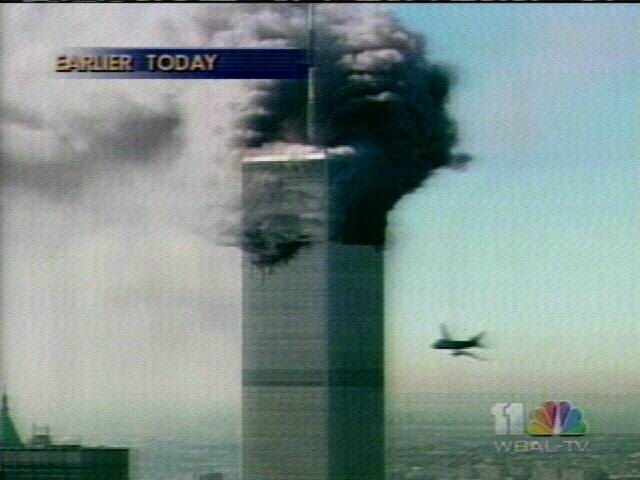
9/11 a Decade Later (1): The Apocalypse that Wasn’t…

wtc-plane

Part two of this post is here.

The 9/11 anniversary commentary will be endless, so here are a few I thought were good.

First, a few thoughts on what to avoid:

I am increasingly suspicious of stuff from the mainstream foreign affairs crowd: Council on Foreign Relations, CSIS, Brookings, and (especially) the conservative think-tank set. They are so Washington, predictable, and establishmentarian (because the all want gigs in the next administration of their choice), that you already know what you will read: no suggestion that the 20-year US massive presence in the Gulf infuriates Muslims and Arabs and helped catalyze 9/11; laundry lists of expensive ideas for the US to ‘do more in the region’ rather than to let locals be themselves; little hint that America’s relations with Muslims would improve dramatically if we were more even-handed on the Palestinians; no suggestion that America might have been better off doing much, much less in response to 9/11; full endorsement of the liberal internationalist-neocon position that 9/11 is a once-in-a-generation justification for continuing America’s massive globocop presence after the Cold War; minimal criticism of the massive Bush national security state overkill in response; shameless exploitation of 9/11 to prevent reductions in America’s gargantuan national security budget, etc. Stick with Foreign Policy, the American Review, the Atlantic, Slate or the New Republic (sometimes) for views that at least challenge the status quo and don’t just recycle what Thomas Friedman, David Brooks, and the rest of the DC pundit class will tell you.

Next, avoid the emotional manipulative 9/11 retrospectives. This may sound callous – it was an awful day for everyone, and a truly horrible day for some. But far too often since 9/11, politicians, especially W, played to our emotions from that day, and used and manipulated them to support policy we would almost certainly not have agreed to otherwise, and which we will regret with shame in the future. Here’s the Wall Street Journal telling you that ‘Old Glory’ waved on 9/11 (you’re a patriot and love America, right?), and that’s why they called it the Patriot Act. But then the ACLU and Democrats sabotaged the GWoT, cause they hated W over the Florida recount. So the American left, completely out of power from 2000 to 2006, nonetheless made us ‘less safe’ – for a personal vendetta no less. This is Rovism, wrapped in the flag, but still manipulative and hardball. Further, I have little doubt that, just as we look back today in shame at the incarceration of Japanese-Americans during WWII, we will do the same in 20-30 years when look at how we tortured people in the GWoT. Don’t let torture’s defenders – Yoo, Cheney, Thiessen – emotionally roll you by telling you they stopped the next 9/11 and more grieving widows by ‘legalizing’ waterboarding, ‘walling,’ and generally beating the s— out of people in the name of ‘America.’ Keep your wits (and it ain’t true anyway).

In line with this resistance to inevitable grandstanding, posturing, and macho heroics, my own sense is that 9/11’s importance is wildly over-exaggerated – perhaps because I live in Asia, and I increasingly see the Chinese challenge looming for decades to come. But know this – as just about any American living in Asia can tell you – the Chinese sure are happy that we got lost in the Middle East for a decade.

There are a million possible ‘lessons’ from 9/11, but the big one is actually a non-lesson – 9/11 actually changed very little (beyond the changes we made for ourselves, like Iraq and torture). As early as 2006, we were starting to realize just how much we had over-hyped 9/11. The tectonic plates of international relations change slowly. Al Qaeda could not in fact dent unipolarity. (China can, but that is another story.) The stock market didn’t crash. The US military didn’t suddenly collapse. The actual material loss on 9/11 was ‘only’ about $100B out of a $12T economy, and 2700 people from a citizenry of 300M+. (I don’t intend to sound cold; every life is ontologically unique and valuable. But from a national point of view, these numbers are small. Recall that almost 38,000 Americans died in car accidents in 2001.) 9/11 did not unravel NATO or US alliances. US GDP in the proximate quarters continued to expand. China and Russia did not suddenly become nice or nasty. Bin Laden’s much hoped-for Islamic revolution did not occur (one goal of the attack was to spark a global Muslim revolution with al Qaeda in a leninist ‘vanguard party’ role). The much-predicted ‘wave’ of terrorist attacks and plots against the US did not occur, at home or abroad. (Bush defenders will say this is because Bush improved US security at home, but what about the roughly 6M Americans living outside the US? If there really was a global Islamist conspiracy to kill us, there’d be kidnappings and assassinations of US businessmen, students, and tourists all over Eurasia. It never happened.) In the end, well over 99% of the population went to work the next day; unipolarity rolled on.

In short, from a national power perspective, 9/11 is more like Hurricane Katrina – an awful yet manageable one-time disaster – than Hiroshima – a city-breaking catastrophe that promised to be the first in a pattern leading to national collapse. 9/11 was a sucker-punch – a cheap shot al Qaeda managed to slip in because the US wasn’t paying attention (even though the CIA warned Rice and Bush a month earlier). 9/11 did not galvanize the Muslim world, nor provoke a fiery revolt. And given even reasonable homeland security measures (far less draconian than what we choose), repeat attacks at that magnitude are unlikely. In the end, the real reason 9/11 is seared into everyone’s mind is not its catalyst effect toward a global war or clash of civilizations – it is because it was a surprise attack, and because it targeted civilians.

That we permitted that one-shot sucker-punch to drive into us hysterics, to capture our dark imagination, zealous vengeance, and righteous fury is where 9/11 really changed things. American psychology – perhaps insulated too long from the world by US power and distance from Eurasia’s problems – is what changed, not the world.

Continue to part two.

Libya Lessons (2): NATO is No Longer Necessary – Get Out Now

66857-demonstrators-protest-against-libyas-muammar-gaddafi-outside-the-libya

Part one of this post is here. Here are a few more lessons to draw:

6. The International Criminal Court (ICC) is, unfortunately, encouraging dictators to dig in instead of scram. The ICC is classic liberal internationalism -a multilateral forum crafted mainly by the liberal democracies for the purpose of spreading international law and taming the ‘anarchy’ of international relations. It looks like a great idea, and indeed the US reticence to it is based on rather specious claims that US soldiers might somehow get hauled before it despite the myriad protections to prevent that from happening. (The real US concern is any constraint on war-making by the Pentagon, and the US obsession with its ‘exceptionalism.’) I support the ICC and wish the US would join.

That said, it is pretty clear that ICC indictments against Gaddafi and sons encouraged them to stay and fight, because flight was impossible. If they can’t flee to a safe haven – because the ICC makes it a sanctionable offense for any state to harbor them – then they have no choice but to stay and slug it out to the bitter end. And indeed, there is a nice rest home for Afro-Middle Eastern despots – autocratic Saudi Arabia. The Saudi took in Idi Amin in 1980 and Zine al-Abidine Ben Ali in 2011. Gaddafi would make a nice addition; perhaps he and Ali could reminisce about the good old days, like in some John Hughes movie for dictators. But once the indictments came down, the Gaddafis had nowhere to go, even though they were sending pretty clear signals for awhile that they would exchange an exit for abdication and an end to the conflict.

It seems to met that getting these guys out of power is the most important priority. The ICC, paradoxically, gets in the way. Remember that for awhile there it looked like Gaddafi might win or split the country. No one expected Tripoli to fall so easily. I think it would be a much better outcome to offer these guys just about anything they want to scram. Usually all they want is their family out with them, some cash to keep on with the good life, and immunity from prosecution. That strikes me as a pretty good bargain, even if if thwarts justice. And it is a good precedent for trying to get other autocratic nasties, like the Mugabe and Kim cliques in Zimbabwe and NK, out the way as well without a huge bloodbath.

7. The American president needs to start declaring war again. Libya has all but set in stone the awful, dictatorship-looking, and very unconstitutional practice that the US president can war with minimal Congressional intervention or even approval. The president’s shenanigans around the War Powers Act were disgraceful. Obama made a good case for the war in March and April, and it would have been a good exercise in national deliberation on US warmaking after Iraq to have had a big national and Congressional debate. Instead, Obama – a constitutional lawyer no less! – took the low road; isn’t this one of the reasons we voted for him, and against the Bushist, I-can-do-whatever-I-want GOP?

8. Get NATO out as soon as possible, i.e., right now. The NATO mission, against high odds and great (and deserved) skepticism, helped. Don’t push your luck, and keep the mission as absolutely minimal as necessary. Once Tripoli fell last week, NATO should have withdrawn immediately. The NTC clearly no longer needs NATO assistance. Gaddafi is finished, not matter what his nut-ball sons say on TV. To keep NATO on-mission when it isn’t necessary anymore, only stokes the anger of countries, especially China and Russia, that dislike R2P already. If NATO keeps staying involved, it will indeed look like R2P means ‘regime change’ and not the protection of human rights. NATO’s desire to stay in the game is understandable: this is a nice win for NATO after a decade of GWoT confusion and transatlantic tension, and Libya’s course clearly impacts the southern tier of the NATO states. But those benefits are more than outweighed by the need for limits: the West is broke now, so it should set a precedent of restrained intervention, even when things are going well. Nor do we want anything like Iraq – where the US/West gets pulled deeply into domestic reconstruction by hanging around. The best way to prevent the mission creep everyone worried about in this operation is to end as soon as possible (i.e. in this case, when the NTC would no longer be wiped out in a bloodbath without NATO) and we have clearly reached that point now.

____________

NB: On an unrelated note, you should probably read this, from the foremost proponent of the ‘China threat’ school.

NB2: Last week I argued that the US needs another stimuls. US conservatives and the whole GOP field oppose this. But on Monday the yield on US Treasuries dropped below 2%! That hasn’t happened since the 40s. If that doesn’t tell you the USG should spend, because no else will – i.e., people are so desperate to save, they will even take just 1.98% interest on their savings – then nothing will. But I have no doubt the GOP will trash Obama’s jobs initiative today with no hesitantation. It’s going from bad to worse.

Libya Lessons (1): Don’t Gloat, but Liberal Interventionism did Work

Part 2 of this post will come on Thursday.

There is a lot of commentary, of course, on the war. I think, this, this, and this are a good start. Here are my own thoughts:

1. Can Libya be rolled in with Kosovo 1999, Afghanistan 2001, and France’ recent intervention in Ivory Coast into a winning model for future western interventions in the severe conflict zones? Somalia 1993 is not necessarily a counter-case, because the US went there to distribute aid (ie, nation-build), not to actually intervene militarily with a defined outcome for ‘victory.’

2. NATO pulled itself back from the post-GWoT brink, especially concerning Europe. Libya helps counter-act the growing belief that the Europeans don’t want to fight anymore. But it’s very obvious that Libya – minor country of just 7 million people – pushed NATO coordination to the brink. I remain a supporter of NATO, because it pools liberal democratic force, but Libya was a bullet dodged as much as a success. NATO should not be gloating or cheering, but rather thanking the gods that it all didn’t go horribly wrong.

3. The emergence of NATO a la carte is now entrenched. Some allies simply decided they didn’t want to be involved in Libya – Turkey and Germany specifically. But to avoid an alliance-wide crisis, they didn’t stand in the way either. So NATO countries, including the US (‘leading from behind’, the early shift in command to NATO), dipped in and out, more or less as dictated by their domestic politics. This was presaged by the many conditions placed on the operation of national forces in NATO’s Afghanistan operation in the last decade. Together, this could portend a major, new, de facto (although never admitted) modality in NATO’s use of force. On the one hand, it opens the possibility that other non-NATO members could cooperate more easily (if Germany can drop out, why not invite Mexico or SK in for a mission or two?). But most importantly, a la carte modalities effectively erode the collective security guarantee of Article 5 (that all the NATO members will fight as a unit if any is attacked). So the Eastern Europeans should be pretty terrified right now – maybe Germany or Spain will slack if Russia starts bulllying the Baltics.

4. This should not be a cause for neo-con gloating, or otherwise lead to a renewal of Bush, democratic imperialism, American empire talk, and the rest. The arguments against the campaign were very strong and the reason why most proponents argued for a limited intervention – a thumb on the scale to help the rebels, not an invasion cloaked in overwrought ‘freedom agenda’ rhetoric. My support for the intervention was narrow. NATO was to prevent a bloodbath, but otherwise let the rebels do it themselves. That would encourage local ownership of the results, prevent another Mideast quagmire for western forces, and limit the West’s moral culpability if it all went horribly wrong (as it may still). The obvious comparison is of course Iraq, where we are far more responsible for all the death and chaos of the 2000s. Intellectual defenders of the intervention should realize that we got fairly lucky in Libya, even as we did help shape the course. So hubris is foolish. On the other hand, opponents who discounted the closeness of Libya to NATO (making intervention easier), the close attention to limits (so keeping the intervention cheaper and less bloody for the West), and moral value of Gaddafi’s ouster (the rationale to begin with), really should recognize this. Walt ducks this by saying he never doubted the outcome once the US got involved, even though he argued earlier that we shouldn’t get involved, and the National Interest really should apologize to Samatha Power for its mean-spirited May/June 2011 cover.

5. Keep refining R2P. If Libya had gone wrong, it would have killed liberal interventionism. The West is running out of money for this sort of things, and its publics don’t like it either. The ‘rest’ worry that it is imperialism, and even non-western democracies like India, Japan, and S Korea, quietly reject or won’t sacrifice seriously for R2P. R2P Critics insists on taking an all-or-nothing attitude toward these sorts of operations – that any intervention will become a quagmire like Iraq, so we shouldn’t do it. But to be fair, Libya actually worked out pretty well. The limits on western intervention were maintained; ‘mission creep’ did not happen. The right guys won the war with minimal western assistance. The whole world didn’t have an Iraq-style freak-out over US imperialism. That’s not bad at all for R2P to my mind. But we should be open to the possibility that most R2P operations won’t go as well, but that isn’t a reason for not trying. R2P is so messy and hard, that we should be prepared to accept some level of failure.

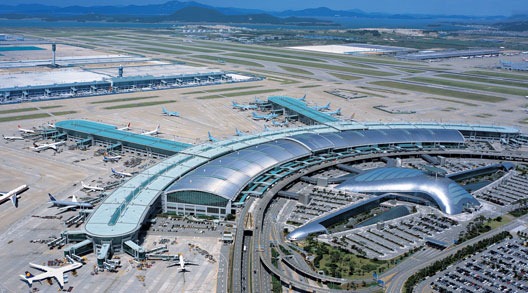
Soldiers Shooting at Airplanes: Yet Another Reason to Decentralize Korea

seoul-incheon-airport

I was just about to leave town for the summer when this incident occurred. In June, two Korean marines fired on a civilian airliner coming in to land at Incheon international airport (pictured above). Much of the commentary has focused on the heightened levels of tension because of last year’s incidents (the sinking of the Cheonan and the shelling of Yeonpyeong Island). And certainly, the ‘enhanced readiness’ and ‘proactive deterrence’ sought by the new minister of defense add (with obvious justification to be sure) to the tension. While clearly SK should defend itself, I was wary last year of the new guidelines because of precisely this possibility. Everyone is edgy, so incidents like this aren’t unexpected.

Yet no one has brought up the obvious fact that is hugely dangerous for civilian airliners to be regularly landing and taking off less than 50 miles from the demilitarized zone to begin with. I argued this point at some length last year. My concern was and remains that SK is far too centralized (a problem in itself) on a hugely vulnerable region right on the border with NK. 55% of the SK population lives within 50 miles of the DMZ, most obviously the massive northwestern agglomeration of people living in Seoul, its surrounding Kyeonggi province, plus the city of Incheon.

Note further that this problem is worsening, not improving. Seoul continues to grow, while Incheon, a new, hyper-modern ‘model’ city is exploding in size too. To boot, the new (and supercool and efficient) Incheon airport is now one of the busiest and largest in Asia. On the downside, Korea’s second city, Busan, which is already a paltry 3 million (Seoul is 20+ M), is shrinking. A friend who works in US Forces in Korea, and who interfaces regularly with the Korea military, tells me that the Korean military is increasing closing (naval) installations in the south (near Busan), because no one is willing live down here anymore. Just about all of my students tell me they want to move up to Seoul, the center of the universe.

So I will ask once again, why does the ROK government continue to worsen SK’s strategic position by permitting this wildly lop-sided regional development? You could say that this is simply the outcome of consumer choice – ie, SKs all want to live in Seoul. That is true, but the government could obviously do a lot to discourage that. Remember that this is SK – ground-zero for state-led capitalism, ‘administrative guidance,’ and all that. SKs are accustomed to the government ‘directing’ or “nudging” (in American/Obama era parlance) national life far more than westerners. SK efforts to incentive extra-Seoul demographic accumulation would hardly been seen as a government tyranny or something like that. And besides, the reason – security against NK – is very defensible. This wouldn’t be like uprooting a neighborhood to build a strip mall or something. This wouldn’t be District Six in Capetown.

If you lived next to North Korea (North Korea!), would you really want these sorts of demographic-regional patterns? Even if you drop all the other (very good) arguments about regional equity, sustainable living patterns, the informal discrimination against the rest of Korea doomed to the ‘provinces,’ etc, there is an obvious national safety argument to unwind Seoul-centricity. Yet this is never discussed, even after incidents like this shooting. I don’t get it…

————————

OTHER POST-SUMMER THOUGHTS

1. The S&P downgrade of US debt was both meaningful yet ludicrous. Meaningful in that it put a point on something everyone already knew anyway – the US political process is so gridlocked and its political culture so acrimonious, that it calls into question the ability of the USG to meet future obligations. But it was simultaneously inaccurate, because the very next day, the market rushed into US Treasuries as the safest global asset. Interest on the benchmark US debt issue – the 10-year Treasury bond – is near record lows, around 2.5%.

In fact, I find this astonishing. For a decade, budget hawks (me included) thought the US was borrowing far more than it could ever pay back to cover the Bush tax cuts, the GWoT, and Medicare Part D. I find the interpretation that the western welfare state is in crisis, to be persuasive. I never thought the US would be able to just borrow and borrow and borrow like this. It is astonishing just how willing foreigners are to buy American debt. For all the chaos, no other asset is even close to the reliability of the T-bill, so maybe Cheney was right – we can just borrow forever… (how terrifying) … which leads to me next thought:

2. It is probably time for another stimulus. Increasingly it looks like the economy never climbed out of the 2008 implosion. The fear of the double-dip looks pretty warranted, but it is more likely to be understood as the long tail of the Great Recession rather than as a separate event. And increasingly I think Krugman is right that we should use the continuing super-low interest rates on US debt to fund another stimulus. I find the GOP/WSJ argument that the first stimulus didn’t work to absolutely fatuous. No less than the IMF has found that the stimulus prevented US unemployment from reaching 15-20%. The standard Keynesian prescription is that when consumer spending contracts, followed by investment spending, government is the only collective or ‘public goods’ actor that can step in countercyclically. And I don’t see much evidence that this doesn’t apply here, just as it applied and worked pretty well 3 years ago.

It should painfully obvious after the stockmarket roller coaster of two weeks ago, that uncertainty is worse than usual; government focus would probably help, especially given the policy-process meltdown of the debt-ceiling fight. But the DOW numbers increasingly strike me as frothy and casino-like rather than genuinely indicative. CNBC can cash in on the drama of wild ups and downs, but I think Yglesias (following Krugman) is increasingly correct – the real issue is growth and unemployment. And I don’t see the correlation between debt reduction and (job) growth (much-touted in the GOP Iowa debate). Speaking of…

3. The GOP Iowa debate was terrifying. Among other ideas raised were: to return to the gold standard (Ron Paul), to criminalize abortion for rape-victims (Santorum), to never raise the debt ceiling (Bachmann), to cut the highest US tax rate to 25% (Cain), and that the EPA runs a “reign of terror” over US business (Huntsman). Wow. Really? Who let these people of out the asylum? Is the GOP really this conservative? Is this even conservatism anymore, because it increasingly looks to me like nihilism of a sort. Do Republican primary voters (FULL DISCLOSURE: me included) really believe it when Perry says God is calling him to run for prez? None of this tea-party reactionary delusion actually reflects the reality of modern, cosmopolitan democratic governance enmeshed in the global economy. As always, I can only think that this sort of stuff convinces the rest of the world that we are bonkers and unfit to lead to lead the international community. Don’t believe me? Try to figure out how you explain this to non-Americans. Why aren’t the GOP candidates talking about stuff like this, a far more realistic and worrisome scenario of American power? Only Huntsman even came close, so if he survives to the Ohio primary, I guess I’ll vote for him. If anything, I left the debate thinking of Thomas Frank’s book, which I read this summer: the surreality of the GOP primary speaks to extraordinary insularity of rural America and the almost purposive resentment of the modernity in contemporary US conservatism. Creepy…

______

This and this are the best short-form articles you didn’t read this summer. And then of course, there’s this, by an expat busted for pot who turned his jail-term into local Korean celebrity – bizarre, but the article is dead-on.

NATO’s Biggest Problems in the Future will be Internal, not External

untitled

If you missed the flap over Robert Gates’ speech to the Europeans over defense spending, start here. I am participating in one of those forums about the future of NATO. If had a dime for every time I have been to a conference or forum on this, or read an article on it from the Council of Foreign Relations, the German Marshall Fund, Foreign Policy…

I am amazed at the endless amount of navel gazing on this issue, especially by Europeans in conjunction with the (equally tiresome, endless, and speculative) ‘future of the EU’ debate. You could write a book about the future of NATO or the EU (and many have), but a far more interesting book would be on the cottage industry and rubber chicken circuit that has grown up around these topics. Most westerners still don’t know the difference between Sunnis and Shia, but there’s always more time and money to bemoan NATO’s lack of a ‘strategic concept’ or (worse) the EU’s rube goldberg institutional structure. My guess is the real reason we don’t close NATO is because about 10,000 transatlantic security analysts would be out of a job (but me too, so I’ll shut up now).

Anyway, here we go on the big problems for NATO in the next decade:

1. Coherence: The Soviet threat forced an unnatural level of coherence on alliance members that has since faded. Salafist terror is not a substitute (nor should be – god save us from the ‘long war’ and ‘world war IV’) . The policy struggles over NATO action in the Balkans, Afghanistan, Iraq, and Libya suggest this tussle (‘alliance politics’) will be a regular feature in the future. This will tempt the US to go it alone, especially as the European members are divided among themselves as well. So NATO will look less like an alliance and more like a club of democracies. Its operations will have a more ‘a la carte’ feel as members opt in and out of what suits them, such as Germany and Turkey’s rejection of the current Libyan operation. The more NATO operations move from consensus to majority decision-making, with ‘modalities’ of mixed cooperation, the less the ‘all for one, one for all’ Article 5 will mean. This will progressively unnerve eastern European members who now take Article 5 more seriously than anyone else in NATO.

2. European military capabilities: Collapsing European defense spending reinforces the slide from alliance to club. NATO was always unbalanced with no integrated European ‘pillar’ to complement the US one. This is worsening, because of growing Continental skepticism about the morality and utility of the use of force, and because of the ‘age of austerity’ cuts being forced on all NATO militaries (including the US soon, but worst in Europe). The back-biting and buck-passing of the Libya operation is likely to be repeated as NATO’s high-minded idealistic commitments collide with its operational limitations.

3. Out of area: The big NATO debate from the mid-1990s to mid-2000s was whether to go ‘out of area’ (out of Europe). Afghanistan was the first test of that, and no one seems to like it. European commitments there are so hedged with rules of engagement limitations, that US commanders simply go around them. European publics don’t support ISAF. Perhaps Afghanistan was too far away and too contentious to Europeans for its connection to the much-disliked war on terror. Perhaps Libya, Syria or Somalia might revive the idea. But European publics seem to have little taste for large footprint operations. Minimalist ‘bombing for peace,’ as in Kosovo and Libya, seems like about all the out-of-area European publics are ready to tolerate, again reducing the ‘alliance’ character of the alliance.

4. No one in Asia cares about NATO that much anyway. I have been teaching international relations in Asia for years, and in my experience NATO is seen as just a pleasant, somewhat dated, regional organization. Any hype about NATO as a global police force for globalization would crash right into the new core’s disinterest in any such role. Forget that.

5. Ad hocery is the rule now. In the endless speculation over the future of NATO, my sense is that the organization increasing suffers from the outsized, almost mythic expectations that have accreted around it over two generations. Call it the public relations inertia of NATO’s path dependent trip in the western mind – from hastily thrown-together alliance to the single most important international organization ever (particularly to Europeans). After 60 years, the notion of ‘NATO’ has taken such a hold of the public imagination, certainly among western foreign policy elites, that we are constantly calling for big plans to ‘revive’ it with ‘strategic concepts’ and the like, and we regularly lament that it is fracturing. We have talked up NATO into a powerful image of western solidarity and community, but one which members don’t really want to pay or sacrifice for. NATO’s own self-image often gets in the way of its likely and ad hoc role in the future. No one really knows what NATO is supposed to do after the Cold War, but inertia in the West means we are afraid to close it (which is why we have been having forums like this one for 20 years now). So we keep throwing missions at NATO, wondering whether or not they will work, unsure quite what to expect. Expectations management (read: reduction) is needed. NATO is highly unlikely to forge a widely shared geopolitical consensus, as in the Cold War. But we can try various missions and experiments. Some may work, some won’t. But holding NATO together as a symbol of western political unity is not a bad thing in itself.

Erratum Notification for Korea Times Readers: I am not a US Imperialist

IMG_4560

On the editorial page of today’s Korea Times, a significant misprint of my writing occurred.

The editorial, “Implication of US Budget Deficit for Korean Security,” reads: “Although America should be globocop, America’s finances force the obvious question of whether it can.” It should have read: “Even if one believes America should be globocop, America’s finances force the obvious question of whether it can.” Due to this and other editorial issues, I have asked the editors to remove the electronic version and to print an erratum retraction tomorrow.

Readers interested in the original argument can refer to the original blog-post on which the op-ed was based – here.

Sorry for the misunderstanding. Thank you for visiting my website.

2 pm UPDATE: The editorial has since been republished in its correct form.