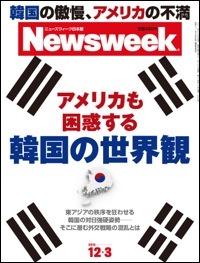
My Cover Story for Newsweek Japan: The Subtext of S Korea’s Dislike for Japan is Competition with N Korea

cover1203-thumb-200xautoI just published a long essay about Korea’s view of Japan for Newsweek Japan. Please contact me if you would like the Japanese version. Below is the reprint in English.

As so often when I write in this area, I immediately got hate-mail. So please, don’t bother telling how much this website sucks, that I’m a mouthpiece for whomever you dislike, that I am ‘taking sides,’ betraying Korea, and so on. I know Koreans and Japanese read critical analyses of one or the other in zero-sum terms. The essay below is not meant as a ‘Japanese win.’ It is meant to explore why Koreans exaggerate Japan so much. Why do Koreans routinely say things like Japan is run by right-wing fanatics who want to invade Dokdo with samurai? These statements are not only obviously false, they are ridiculous.

I have said before (here, here) that Koreans have legitimate grievances regarding Japan, particularly on Yasukuni and the comfort women. But Koreans don’t stop there; they go over-the-top with things like the Sea of Japan re-naming campaign, claims that Japan wants to invade Korea again, that Japanese behavior in Korea equates with the Holocaust, or that Dodko is worth going to war over – even though a Korean use of force against Japan would almost certainly eventuate a US departure from SK and dramatically reduce Korean security. Other victims of earlier Japanese imperialism don’t talk like this, and I think a lot of well-meaning Japanese, who do recognize what Japan did here, are genuinely baffled by all this.

So the puzzle, to put it in social science terms, is not why Koreans dislike Japan. There are grounds for that. But rather, why do Koreans (specifically the media) exaggerate those grievances so much that even sympathetic outlets (like this blog or American analysts more generally) feel compelled to call out the nonsense? That is actually a really good research question – but for all the hate-mail – if you are writing a PhD in this area.

Here is my primary hypothesis: ‘Japanphobia’ – the over-the-top Korean descriptions of Japan as some unrepentant imperial revanchist – serves S Korean domestic nationalist needs. Specifically Japan functions as a useful ‘other’ for the identity construction problem of a half-country (SK) facing a competitor (NK) that openly proclaims itself the real Korean national state against an imposter (SK). Trapped in  who’s-more-nationalist-than-thou contest with NK, demonizing Japan is way for South Korea to compete with the North for Korean nationalist imagination. The RoK can posture as an instantiation of the minjok by criticizing Japan, which it can’t do by attacking NK, because NK says the same thing. Given that Koreans are more moved by the blood and cultural associations of the Chosun minjok than the dry, corrupt formalism of the RoK, the RoK desperately needs something to give itself some identity. Japan is that something. The RoK can’t connect convincingly with Koreans as the anti-DPRK, because too many South Koreans are ambiguous on NK. So the (post-dictatorial, democratic) RoK is the anti-Japan instead

NK routinely calls SK the ‘Yankee Colony’ to delegitimize it, but beating up on NK is not so easy in SK. A sizeable minority of S Koreans clandestinely sympathize with NK and agree that SK is too Americanized and not Korean enough. And NK cynically, relentlessly manipulates the evocative symbolism of Mt. Paektu to emotionally confuse the South. By contrast, Japan, the former colonialist, brings a convenient, black-and-white ‘moral clarity.’ It’s morally easy to condemn Japan. As a result, Dokdo gets fetishized (instead of now compromised Mt. Paekdu, the much more obvious geographic symbol of Korea) and Japan (not NK) becomes the state against which the RoK defines itself.

The full essay follows the jump. The framing is the recent trip by US Secretary of Defense Hagel to Tokyo and the furious grand strategy debate that touched off in Seoul. If the language seems a little ‘journalist-y,’ that’s because this was edited for readability by Newsweek.
Continue reading

My November Diplomat Essay: China & Russia are Not Displacing the US bc of the Syria Deal

sep-3-2013-syria-s-leader-assad

This is a re-up of my monthly column for The Diplomat for November. Here is the original. I must say I don’t find the comments to be particularly helpful over there, so please give me your thoughts.

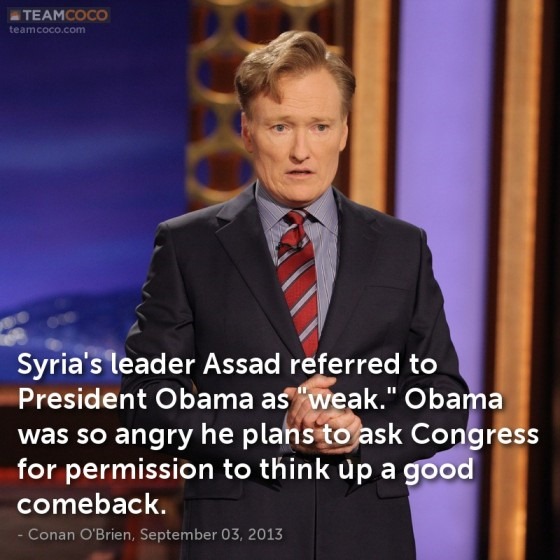
My primary argument is that the media is far too shallow in judging “US decline” on passing issues of minor relevance to the lineaments of American power. Remember two months ago, when Obama ‘had’ to act in Syria, even against Congress? That his very presidency was in peril, that American would be perceived as weak and lacking credibility? And now, no one is talking about that. Or then there was the idea that Obama missing APEC amounted to handing Asia to a bullying one-party state with a bad human rights record and no allies ‘rising China’? Good grief. Enough alarmism. Only the vanity of elites who think the very fate of the world hangs on their choices would lead one to believe that some missed meetings and airstrikes will change the balance of power. It won’t.

Always remember that Asian states need the US a lot more than the US needs them. US regional allies need us to hold back China, and even China needs us to buy all their exports and provide a savings safe haven. Sure, we benefit from cheap Asian exports and lending, but that’s a lot less important. The relationship is very asymmetric, and those who tell you otherwise are trying to cover the weakness of many Asian states and their desperation for US attention with bravado that America ‘needs’ Asia. That’s bunk. As I have been trying to argue on this blog for awhile, if they don’t want us in Asia, it’s no big deal for US security, and it’s an economic blow far worse for them than it is for us. And this is getting even more asymmetric as the US becomes energy independent because of fracking – so have fun fixing the Middle East, China! The US Founders identified the luxury of US distance from Eurasia long ago, so forgot all these hyperventilating Asian columnists (Kishore Mahbubani being the most obvious) who resent that America can be a lot more insouciant about Asia than vice versa. *natch Smile

Here’s that essay:

Continue reading

No More Neocon Faux-Cassandra Posturing: American Defense is not “in Decline”

Two pieces got emailed to me in the last few days that nicely illustrate just how entrenched semi-imperial thinking has become in Washington, how wildly disconnected from the reality of US security our foreign policy community’s threat assessments have become, and the hysteria that greets serious debate on DoD’s size in this post-Great Recession era of high unemployment and large deficits. This, by good-journalist-turned-disturbing-militarist Robert Kaplan, and this, by the ‘Iraq was a victory’ crowd at AEI. Here’s Kaplan:

“The bottom may be starting to fall out of the U.S. defense budget. I do not refer to numbers when I say this. I am not interested in numbers. I am only interested in public support for those numbers…. Actually, we might need a big army for an occupation of part of North Korea… The public, in short, wants protection on the cheap. It may not necessarily be willing to police the world with a big navy and a big air force at least to the degree that it has in the past — that is, unless a clear and demonstrable conventional threat can be identified.”

The rest basically follows the depressing neocon pattern: the (invariably hawkish and hegemony-loving) Washington foreign policy community know America’s interests, while the public is annoyingly ‘isolationist.’ If only they believed in the US globocop, (cue grave headshaking at our ignorance), then we wouldn’t have to write these sanctimonious, tsk-tsk op-eds. The AEI brief is even more predictable: throwaway boilerplate about the need for a strong defense in a world of unpredictable and diverse threats and all that. Got it already. Neocons and DC hawks have been saying that sorta stuff now for so long, that I really don’t even need to read this stuff anymore. And of course, any cuts automatically ‘reduce our readiness,’ the all-time favorite cliché of hawks everywhere as if somehow ‘only’ $680+ billion would leave us unable to defend ourselves. Come on, neocons! I thought you were supposed to be intellectuals. Stop recycling 1990s ‘indispensible nation’ bromides, and try a little harder.

Zack Beauchamp and Daniel Drezner’s correctives are very useful here. But here’s mine:

Continue reading

My Essay for Newsweek Korea on the Current Korean Strategy Debate in the Media: K Caught b/t the US and China

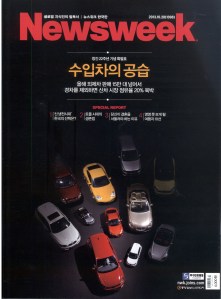
newsweek-1028_페이지_1 (3)This is a lengthy piece I just wrote for this week’s edition of Newsweek Korea. Here is the link for the Korean version; below is the English translation. The Korean version is unfortunately gated after page 1, so if you want the whole thing in Korean, email for the PDF. That is the edition’s cover to the left.

The short, IR theory version is that: a) S  Korea is a middle power that risks ‘overplaying its hand’ against Japan, as a think-tanker friend put it, because of the ‘moral hazard’ facilitated by the American alliance (as Katzenstein noted, Japan is the US anchor state in Asia, and Koreans can’t change that no matter how much they resent that special relationship); b) the Americans believe in the democratic peace and simply don’t accept that Japan is some kind of proto-fascist state (this is a real breakpoint with the Americans); and c) Korean geography basically traps it in a Waltian ‘balance of threat’ quandary: even though it is small, its proximity means it will get pulled into the Sino-US/Japan stand-off whether it likes it or not. The only possible way out I can think of for Korea is unilateral nuclearization (yikes). Also, my continuing skepticism of the pivot pops up. I still don’t think Americans actually care enough about Asia to really get pulled into a major competition with China. Here’s that essay:

Continue reading

My Diplomat Interview on North Korea, Syria, and China’s Rise

the-diplomat_logo_en

Frequent readers know that I am regular contributor to the Diplomat web-magazine. On October 10, Editor James Pach interviewed me, mostly about Northeast Asia. Jim is a great guy, and I think these questions helpfully expand on some ideas I have put on the blog recently, especially my recent piece on reining in US presidential wars powers. The original interview is here.

JP: North Korea has put its troops on high alert, restarted its reactor at Yongbyon and called South Korean President Park Geun-hye an “imbecile.” We’re accustomed to the pendulum of ratcheting up and then easing tensions, but this year Pyongyang seems especially schizophrenic. Is this the new leader Kim Jong-un settling in, or are there other factors at play?

REK: This is a tough question given how opaque North Korean leadership decisions are. My own sense is that this is typical North Korean game playing. I made a similar argument at the Diplomat during the spring war crisis. It is true that Kim Jong Un is likely still finding his way. He is too young and too inexperienced in the old boys networks that run NK to easily step into his father’s shoes. But his period of greatest vulnerability was last year. The regime seems to be settling in around him comfortably – to many people’s surprise – so my sense is that this is the Korean People’s Army going through its usual hijinks to justify its massive and massively expensive role in NK life. I thought this too was the reason for the spring crisis, because NK does not actually want a war which they will lose, badly.

Continue reading

My October Diplomat Essay: Was Syria a Bridge-Too-Far for Untrammeled Executive War-Powers? (yes)

Jump to 1:13: That’s best question asked during the GOP debates last year

This is my monthly essay for the Diplomat web-magazine. The original can be found here. I will say upfront that I am not a lawyer, but a political scientist, so I am aware that the legal argument about presidential war powers independent of Congress is fierce. But that interests me less than the absolute (or moral or philosophical) argument for unconstrained presidentialism on the use of force. That is, whether or not presidential unilateralism in the use of force is ‘constitutional,’ as the lawyers would say, is something a dodge. That does not mean it’s right. The Constitution is not perfect and has been amended for things like slavery, women’s enfranchisement, and Prohibition. So ultimately the president should justify ignoring Congress in war-time by some argument consonant with liberal democratic values, rather than an ex cathedra appeal to authority. And I don’t really think it is possible to coherently argue that presidential free-lancing with minimal Congressional oversight and consent is good for democracy. In fact, that strikes me as self-evident, which is why I love that Ron Paul quote in the video (1:13 mark) above. The essay follows the jump and is written in an op-ed style.

Continue reading

My September Diplomat Essay: Relax – Chinese Hegemony in Asia is Unlikely

water_pollulation_shaoxing_zhejiang

The following is a re-up of a piece I wrote for the Diplomat last month as part of an informal back-and-forth series with the National Interest this summer on the US pivot to Asia and AirSea Battle. (Here and here are some of the other entries.) That pic, which has got to be the grossest river in all China, is from here.

In brief, I increasingly think that ASB is a mistake, because it’s almost impossible to read it as anything other than hugely provocative from the Chinese point of view, no matter what we say to them about our peaceful intentions. (Read this, and tell me reasonable Chinese wouldn’t flip out.) It’s a classic example of the security dilemma, but as I argue below, I am not really convinced that we actually need this high-tech, super-fearsome-sounding ASB right up in their face. More generally though, the pivot to Asia – a sharpening of American attention on the region, is probably a good idea. China is vastly more influential on American life than Israel or Iran. But the Middle East and Islam activates belligerent American religiosity so much, that I doubt we’ll really be able to pivot. In any case, the essay follows the jump and is written in an op-ed style.

Continue reading

My July Diplomat Essay: The Korean ‘OPCON’ Soap Opera Rolls on – Hint: just drop it

Thank you for waiting out my summer break. I need summers to get some writing done, but inevitably I didn’t get nearly what I needed to wrapped up. Should you ever hear that argument that college professors slack, because we only teach 2/2 or 3/3, you ought to try writing for these journals. Just read this. That is why we don’t teach 30 hours a week. 
But I am still writing for The Diplomat, a gig I really enjoy. Here is my piece from August on the endless soap opera of the transfer of wartime operational control (‘OPCON’) from the US to the Republic of Korea. (The pic is the US SecDef and SK DefMin.) Why the RoK would even want OPCON back, before unification, is beyond me. It’s a perfect opportunity to buckpass to the superpower security guarantor. And in fact, that is sorta the way the Korean debate is going; they increasingly don’t want it back. Also, it seems pretty clear now that the Koreans aren’t really ready. Too many officers have been playing golf or whatever instead of getting ROKA specs and procedures up to snuff. Anyway, my own sense is to just drop it, because the US and RoK are just going to re-build a version of CFC (Combined Forces Command) that does all the same stuff but is just a little less ‘joint.’ I don’t really see the point then in ending OPCON. If you’re a real mil-tech expert, please tell me in the comments why a new ‘CFC light’ is better than the current arrangement? 

The essay starts after the jump.

Continue reading

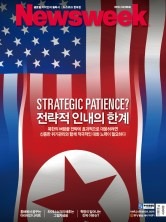
My ‘Newsweek Korea’ Cover Story: A Defense of Obama’s ‘Strategic Patience’ on North Korea

Newsweek Korea cover 2

Newsweek Korea asked me to participate in a cover story debate on Obama’s strategic patience. A friend of mine wrote against it; I wrote in defense. Here is the Korean language text at the NWK website. Below is my original English language version.

In brief I argue that NK is so hard to pin down, that big strategies never work with it, provoke North Korea into lashing out, and raise impossible expectations on democratic decision-makers. So Obama is acting responsibly, IMO, by not promising more than he can deliver and by not giving a reason for NK to act out.

After 20+ years of negotiating on more or less the same topics, it should be pretty obvious that NK is insistent on not being placed in some box by outsiders. It will not be treated as some technocratic ‘problem’ to be ‘solved’ by a conference of experts, like global warming or something. And it will lash out if necessary to remind us of that. Hence, I argue for ‘muddling through,’ and that we should stop expecting our policy-makers to have some great NK strategy that will fix the issue. That’s not gonna happen. We all know that. We just have to wait for China to stop paying NK’s bills. Until then, all the sweeping declarations (‘agreed framework,’ ‘sunshine’,’ the ‘axis of evil,’ the current big idea du jour of ‘trust’) are rather pointless and raise impossible expectations among voters in SK, the US, and Japan. Let’s be a little more honest about what we can expect from North Korea.

Here we go:

Continue reading

Agree with Heinlein’s ‘Citizens vs. Civilians’? then this US Military History is for you: Book Review

Starship-Troopers-starship-troopers-13578603-1024-768

I was asked by a participating member of the H-Diplo/ISSF network to review The American Culture of War. Here is the original link to my review, but it’s off in some far corner of the internet, so I thought I’d repost it here. In brief, I found the book a pretty disturbing rehearsal of right-wing tropes about the military in a democracy, especially from an academic, and there’s no way I’d ever use it with undergrads as Routledge suggests. The underlying moral driver is the ‘chicken hawk’ principle – that those without military experience are not morally qualified to lead DoD and should otherwise defer to uniformed military. At one point the author actually says that, because the US Army ‘distrusts’ Congress, the Army should ‘guide’ Congress. Yikes. Do Americans (and the author) really need to be told civilian authority runs the other way, and that that’s in the Constitution? I find that sort of military elitism democratically terrifying and reflective of the post-9/11 militarization of America that is now the single most important reason, IMO, to end the war on terror.

I would just add the following update: Both the book and review were written before Petraeus’ resignation, but it should come as no surprise that the text lionizes Petraeus. It is therefore a pleasing schadenfreude for the frightening post-9/11 military hero-worship of the US right to be taken down a notch. Here we go:

Continue reading