Abenomics is Not more Dangerous than the North Korean Missile Program

okRegular readers know that I write now-and-again for the Diplomat web-magazine. This post is a re-print of my June column. Abenomics is still dominating Korean business news, and I continue to be amazed at how few people want to admit that Japan’s revival is really good for democracy in Asia and the prevention of Chinese regional primacy.

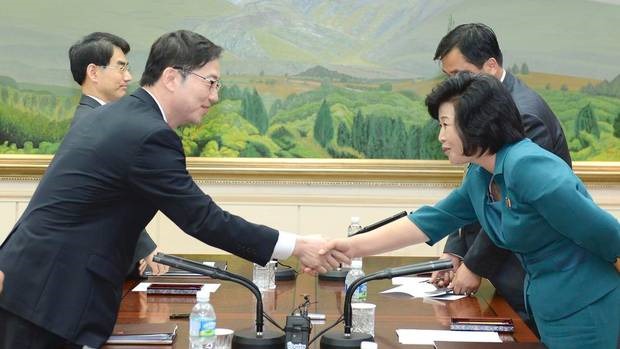
As I discuss below, no less than the SK finance minister (pic) actually said Abenomics is more dangerous to SK than the NK missile program. Wait…what??? Did you know the mic was on? Does anyone genuinely believe that the worst totalitarianism in history gets a pass when the Bank of Japan prints a lot of cheap money? Come on. Are Korean officials so deeply bought by the chaebol that they actually have to say stuff like that? Honestly if Minister Hyun really believes that (I doubt that though, see below), he should probably resign. This is just a travesty, hugely embarrassing – so if this post reads a little rant-ish, that’s why.

Continue reading

My ‘Korea Times’ Op-Ed on what Korea Needs from its New Prez: Liberalization

ParkBefore President Park’s inauguration, the Korea Times asked me to participate in a forum of ‘foreign experts’ (don’t laugh too hard) on her incipient presidency. We were asked to make one direct suggestion for the new president. Here is the section at the KT website. I know several of the authors, and some of the op-eds are pretty good (too many are shameless pandering though). Unfortunately, my accepted submission was not published in this section, published after the inauguration, and edited far too heavily. (They never told me why; maybe this.)

Anyway, below is the original version of the op-ed, where I basically argue that Korean democracy is becoming a Seoul-based oligarchy of wealthy, similarly-schooled, intermarrying business and political elites  – basically the dark side of Kangnam style. Someone in Korean politics needs to turn this around, or under-40s in this country are going to ‘drop out’ Timothy Leary-style. There’s a quiet crisis of youth alienation brewing, but no one in ‘Kangnam world’ seems to care.

Continue reading

Admit it: South Korean President Lee Myung-Bak Was Pretty Good

PD*26038004

So President Lee has been out of office for a bit now, and the retrospection will begin soon. And while he left with really low approval ratings, I always thought that was pretty unfair. I am pretty sure history will be kinder to him than the SK public was during his tenure. Particularly the growing critique on the South Korea left that current President Park Geun-Hye’s many staffing gaffes means she is out of her depth also suggests that LMB was at least ready and professionalized enough for the responsibilities of the office. The essay below is a longer version of an op-ed I wrote for the JoongAng Daily.

In passing, I should say that yes, I am aware that this is the sort of column that drives folks like Glenn Greenwald, whom I really admire, up the wall. If you’re convinced, like my students, that I’m a conservative pretending to be a moderate, here’s your evidence. Call it shameless right-wing hackery, sycophantic shilling for the powerful, craven attention-seeking, but it’s also true: Lee Myung Bak was a lot better than most Koreans give him credit for and is probably Korea’s best president in its democratic history.

Continue reading

My ‘JoongAng Daily’ Op-Ed: Don’t Fear Abenomics, Korea

kuroda

A few weeks ago in the JoongAng Daily, I co-authored the following editorial. (My co-author is one of my finest students, who can be found here on Twitter.) The temperature is rising in Korea on Abenomics. The government is coming out strongly against it, but I still think the basic arguments we present below are undamaged.

In brief, Abenomics is important because Japan is the world’s third largest economy and therefore systemically (i.e., globally) important (Korea is not; it’s too small). So Japan’s reflation is about a lot more than just Japan; it impacts the region and the globe. Also, the Korean won is ridiculously undervalued and the Bank of Korea has itself gimmicked the won exchange rate a lot in the past, so it’s not exactly fair for Korea (or China, who is even worse) to complain. Finally, in the medium-term, a functioning Japan is far more in Korea’s interest than Korea’s nationalist japanophia will allow anyone here to admit. That is a shame. I’ve argued this a lot, but no one listens.

So bring on the K-hate-mail, but please do recall that I have already rejected Abe the nationalist. Koreans are absolutely right about the comfort-women and Yasukuni. But Abenomics is not about history; it is a last-ditch, throw-everything-including-the-kitchen-sink effort to get Japan on its feet again so that it can prevent Chinese primacy in Asia. Keep your eye on the big picture of South Korea’s interest, and a few lost sales of Samsung TVs to Canadians pale in comparison.

Just to avoid referencing Abe again – he’s become such a lightning rod in Korea – the picture is Hiruhiko Kuroda, the (awesome) governor of the Japanese central bank. (Someone form the Bank of Japan really ought to be put in charge of the IMF one day soon.) I’d like to think Kuroda’s hand reference in the pic means he wants to dectuple the Japanese money supply. Hah! – ‘Just wait a year, PM Abe, and I will chop down every tree in Japan and print so much cheap yen, that we’ll wallpaper our houses with it!’ Think of Kuroda as the flip side of Paul Volcker. If Japan’s economy weren’t such a mess, it’d actually be kinda funny. But honestly, let’s all – Koreans included – hope Abenomics works.

Continue reading

My Joint ‘Newsweek Korea/Japan’ Story: Do US Alliances Create Moral Hazard in Asian Conflicts?

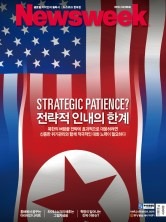
Newsweek Korea coverI am pleased to say that the following essay was printed simultaneously in this week’s Korean and Japanese editions of Newsweek. It think it is critical for both sides to think about the issues I present, and it is pitched to both communities as American allies, no matter how sharp their disagreements.

In brief, I argue that – contrary to the conventional wisdom that US alliances in Asia tamp down conflict by re-assuring everyone that they need not arms-race against each other – US alliances may in fact be freezing those conflicts in place by reducing the incentives of all parties to solve them. The US reassures Asian states not just against each other, but also against their own reckless nationalist rhetoric and racially toxic historiographies. I think the Liancourt Rocks fight is a particularly good example of this ‘moral hazard’ mechanic, as is the recent comment by no less than the South Korean foreign minister (!) that Abenomics’ threat to Korean export competitiveness is a greater danger to SK than North Korea’s nuclear program. That kind of preposterous, reckless myopia can only be explained by taking the US security umbrella for granted. (Or how about SK officers’ golfing during last month’s nuclear crisis?)

I realize the argument will be somewhat controversial, even to Americans given that we are ‘pivoting’ to Asia, but I think it needs to be said and genuinely researched. As with my other Newsweek pieces, there are no hyperlinks because this was intended for print:

Continue reading

Good Survey of Students of International Relations: Please Complete if Relevant to You

IR majorsDaryl Morini, an IR PhD candidate at the University of Queensland whom I know, has put together an interesting global survey for undergraduate and graduate students of international relations. It looks pretty thorough and might make a pretty interesting student couter-point to the Teaching and Research in International Politics (TRIP) report on scholars’ attitudes. Eventually the goal is an article on our students’ attitudes toward the discipline; here is the full write-up of  the project at e-IR. So far as I know, nothing like this has been done before (please comment if that is incorrect), so this strikes me as the interesting sort of student work we should support. Daryl’s also made an interesting effort to use Twitter as a simulation tool in IR, so I am happy to pitch this survey for him. Please take a look; Daryl may be contacted here.

PS: That pic is dead-on accurate.

My ‘Newsweek Japan’ Story on Korea’s Regional Foreign Policy: Being an Encircled Middle Power Sucks

Newsweek 3rd coverNewsweek Japan asked me to contribute an essay on Korean foreign policy for a special issue on current Northeast Asian tension. I also wrote the introductory essay for this special issue. There is one essay each on Japan, China, and Korea; mine is the Korean one. So this is a nice laymen’s review without too much fatiguing jargon. This was originally published in January, so this translation is late, but the points still hold.

In brief I argue that Korea’s foreign policy is driven by its geography. Korea is a middle power surrounded by three great powers, plus the most orwellian state in history. That position really, really sucks. The US alliance helps buttress Korea sovereignty in that tight neighborhood, but China’s rise is unbalancing everything, especially calculations for unification. Once again, there are no hyperlinks, because it was intended for print. Here we go:

“On December 19, Korea elected a new president, Park Geun-Hye. Park comes from the conservative New Frontier Party. The current president, Lee Myung-Bak, is also a conservative. Park will be inaugurated in late February. Her campaign presented her as more ‘dovish’ on foreign policy than Lee, but she represents greater continuity than her opponent, particularly regarding North Korea.

Korea’s foreign policy is heavily-driven by its geography. It is an encircled middle power that has frequently struggled to defend its autonomy against its much larger neighbors. And since World War II, it has faced the most orwellian country in history in a harsh stand-off that dominates Korean foreign policy. An opening of North Korea, leading to eventual reunification, is the central policy issue of every Korean administration. Beyond that, Korea’s central relations are with the United States, China, and Japan. All three structure Korea’s neighborhood and will significantly influence unification.

Continue reading

I’m Done Defending Abe: the Japanese Right is getting Genuinely Creepy

protesting-comfort-women-by-bloggerswithoutbordersIf you’ve ever read this blog before, you know I try to avoid the details of the Korea-Japan tussle. It gets so emotional so fast. Like most Americans, I want Japan and Korea to reconcile so they can work together on the larger, more important issues of North Korea and China. I don’t take a position on the Dokdo/Takeshima flap. I refuse to call the Sea of Japan the ‘East Sea’ (do you want to re-name the Korea Strait too?). When Koreans push me about the war, I try to deflect the issue. It is really not appropriate for outsiders, especially Americans, to weigh in on the details of Asian disputes. We can’t be an umpire to local fights, and our intervention would be seen as illegitimate by the losing party anyway. This is also the USG’s position: we have no position other than that we want all the parties to work out the disagreements without coercion or force. That’s the right attitude IMO.

Continue reading

My ‘Newsweek Japan’ Cover Story on the post-1979 ‘Asian Peace’ & Economic Miracle

Newsweek 3rd coverNewsweek Japan asked me to write an introductory essay for its January 16 special issue on tension in Northeast Asia (cover story to the left). I should have put this up 4 months ago, but I forgot and the arguments are still valid. Anyway, here is the link in Japanese, but I thought it would be useful to publish the original, untranslated version as well. (If you actually want the Japanese language version, email me for it please.)

The essay argues that Northeast Asia has benefited enormously from an ‘Asian peace’ in the last 35 years. All the remarkable growth in China and South Korea (as well as India and Southeast Asia) would not have happened without it. So fighting over some empty rocks (Liancourt Rocks, Pinnacle Islands) is a terrible idea. And for political scientists, the current Sino-Japanese tension is a good test of the hypothesis that economic interdependence brings peace. It’s fascinating to watch China especially try to figure out just how much economic gain to forego in pushing Japan over the Pinnacle Islands.

This was intended for their print edition, so there are no hyperlinks included in the text. Here we go:

“1979 was an important year in modern East Asia. It captures two of the region’s most important trends. It was the year of both the last serious military conflict between two East Asian countries – a Sino-Vietnamese border war – and the start of China’s capitalist modernization under Deng Xiaoping. These moments usefully frame the following thirty-four years: much of Asia has gotten substantially wealthier, and no major conflicts have broken out to upset that upward economic swing. This magnificent regional achievement has catapulted Asia, particularly East Asia, into the center of world politics.

Continue reading

NKorea Recap (2): NK is an ‘Upper Volta with Nukes’, so Ignore Them

Still my favorite TV interview I have done yet: Jump to the 1:05 mark, and tell me you would not laugh out loud at that awesome question


Here is my original essay on the NK crisis, where I called NK ‘the boy who cried wolf’: no one believes their war-mongering rhetoric anymore, because they say outrageous stuff all the time that they never follow-up on. That piece enjoyed good traffic at the Diplomat, where it was originally posted. So I wrote a response to the comments made both there and at Reddit. That response was originally posted at the Chinese Policy Institute Blog of the University of Nottingham and at e-IR. I re-post it here for convenience. I would like to thank John Sullivan of Nottingham and Max Nurnus of e-IR for soliciting me.

Rather than respond individually – some of those guys at Reddit are just off-the-wall – I thought I would provide some general follow-up to certain critiques that showed up regularly.

1. You’re just an arm-chair general, air-head liberal, cloistered academic hack, and so on.

I was surprised that the essay was taken by some as ‘liberal’ or ‘blind to the NK threat’ and so on. I am actually fairly hawkish on NK. I think the Sunshine Policy failed and should not be tried again unless NK makes real concessions it did not last time. I also think the Six Party Talks were a gimmick to allow NK to play China, the US, SK, Japan, and Russia off against each other. For example, Kim Jong Il mentioned in the context of those talks that NK could be an ally of the US against China, and a lot of people think NK built nuclear weapons to prevent Chinese political domination even as NK becomes its economic colony.

Continue reading