Guest Post, part 2 – Dave Kang: Yes, the Media Coverage of the Korean Crisis is Inflammatory

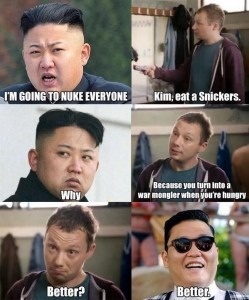
Kim-Jong-Snickers-249x300Yeah, I know what you’re thinking, two guest posts in a row? Christ, Kelly, you’re lazy as hell. In the midst of the biggest North Korea flap in years, you’re at the bar playing Xbox or something.

While that is true, I did get up that piece on the Diplomat. It summarizes my thinking on this current crisis-that’s-not-really-a-crisis and got me promptly accused of being an air-head liberal in the comments. Lovely. I was also pleased to respond to Kim Jong Un’s threat that I should leave the country. And I managed not to explode laughing when a reporter asked me point blank on live TV if Kim Jong Un was ‘just bonkers.’ Was itching to say yes to that one actually. Good times… Never waste a missile crisis, right?

Anyway, here’s my good friend Dave Kang agreeing with yesterday’s guest post query on whether the cable and satellite news services are overhyping this thing. Regular readers will know that Dave is my good friend, and a far better Korea/Asia hand than I’ll ever be. A professor of international relations and business at the University of Southern California and director of its Korean Studies Institute, you really should be reading him if you aren’t already. Here is his Amazon page; here and here are his previous guest posts on this site.

The non-crisis on the Korean Peninsula

In a poll released by Donga Ilbo last week, 4.5 percent of South Koreans think North Korea means to start a war.

In contrast, a CNN poll reveals that 51 percent of Americans think the latest round of name-calling will only end in war, and 41 percent think North Korea is an “immediate threat” to the U.S.

So – either South Koreans are incredibly naïve, or Americans over-reacting. Hmmm…I wonder which it is.

A few comments:

Reading the entire statements by the KCNA would actually give a fairly clear view of North Korea’s position. Most North Korean statements are reported in the Western press with the first clause missing. That is, almost all North Korean rhetoric is of the form “IF you attack us first, we will hit you back.” (Incidentally, that’s what we’re telling the North Koreans, too). If you can ignore the hilarious Communist-style rhetoric about capitalist running dogs and the like, the situation is actually quite stable, because despite their bluster, the North Korean rhetoric is also cast almost entirely in deterrent terms. For example, although widely reported as a threat to preemptively attack the U.S. with nuclear weapons, the full quote from the KCNA April 4 reads: “We will take second and third countermeasures of greater intensity against the reckless hostilities of the United States and all the other enemies… Now that the U.S. imperialists seek to attack the DPRK with nuclear weapons, it will counter them with diversified precision nuclear strike means of Korean style…The army and people of the DPRK have everything including lighter and smaller nukes unlike what they had in the past.” Clearly intended to deter, clearly saying that North Korea will respond if attacked first.

Second – why are we playing this game? North Korean rhetoric should be ignored as the empty threats that they are. Perhaps there could be one or two mild statements from the U.S. reminding North Korea that we can crush them like a grape whenever want. But after that, why are we allowing North Korea to set the tone? Why do we let them make us react? I may be missing something here about this all being an indirect show of force for China, or something clever like that, but still. This is getting ridiculous.

Third, I remain mystified why this is a crisis. I was quite surprised a few weeks ago when everybody got upset. After all, North Korea is only talking – they haven’t actually done anything yet. There has been no attack on the U.S., not even engage in a skirmish over the NLL. So why are we reacting this way now?

Finally, you can never, ever, go wrong being a pessimistic realist. [This is really good theoretical insight, because it allows realism to be nearly unfalsifiable yet sound ‘clear-eyed’ – REK]  I.e., “I don’t know, the situation looks dangerous…power is all that matters in international relations…things can get really bad, nuclear war is just one hair-trigger, slight miscalculation away.” You could be 100% wrong, but nobody will ever accuse you of being naïve. But I want to point out that while it’s important to be careful around the peninsula, deterrence has been extraordinarily stable for the past sixty years. Why? Because we believe what they say – that they will fight back and destroy Seoul; and I am quite sure they believe us when we say we will fight back and end the regime. Far from being one mistake away from the 2nd Korean War, we have experienced numerous shooting incidents in which people died but no all-out war occurred….

Guest Post – Is the Media Coverage of the North Korea Crisis Inflammatory?

I’m going to put something on the Diplomat about this preposterous faux-crisis in a few days, and I’ll re-post that here. In the meantime, go here for the many posts I’ve written about North Korea beforehand. And go here for my recent TV appearances where I ague that a war is really unlikely, because North Korea will lose unequivocally, and its elites will wind up in SK jails and then before the hangman like Saddam. (SK still has capital punishment.)

Given my fatigue with NK, I am happy to invite a guest-post on North Korea from John Corrado. John’s a Korea studies graduate student at Seoul National University. Here is his website, on issues similar to those I cover here. And I do like his basic observation that the news media can get carried away with all the talk about nuclear war in Korea. You’ve probably noticed a point I will develop in the Diplomat: the cleavage between the analyst community and the international media regarding the current peninsular crisis. The analysts say it’s a lot of bluster, while reporters react rather incredulously when we say that. Maybe they know something we don’t; in their own way, reporters are closer to decision-makers than we are. But I also have the sense that all this media coverage is one of the things NK wants from this faux-crisis. No would care one bit about crappy, backward, dysfunctional little NK (it is; I’ve been there) if they didn’t make endless trouble. No one likes to be ignored and consigned to the kiddie table, so NK pulls these shenanigans just so we’ll all pay attention. *sigh* It’s all so inane… Anyway, here’s that guest-post. REK

Continue reading

Final Iraq Post – from the Archives: My 2007 Essay in Support of the Iraq Surge

iraq_multiple_fatality_bombings_by_type

Back when I was at Ohio State University in graduate school, I was solicited by a friend to write for a start-up journal in political science, the OSU Journal of Politics and International Affairs. My essay is no longer findable through their website – their archive doesn’t go back to the first issue – but my essay at the time was on the surge debate. Given that I’ve been talking about Iraq for the last month here, I thought I’d put this up; it’s not available elsewhere anymore. This is the unaltered text from the spring 2007. I feel like I did pretty well actually. I still agree with most of what I wrote 6 years ago in the midst of the war’s worst days:

One Last Chance in Iraq for a Sustainable War on Terror

The sense that the United States is losing the war (or more precisely, the peace) in Iraq is palpable. The cable news networks are filled with images of burning cars and markets. The Bush administration seems almost paralyzed – reciting only bromides about freedom and democracy as the long-predicted post-sovereignty civil war seems already to have begun. New York Times pundits like Paul Krugman and Thomas Friedman increasing see a negotiated, half-and-half, ‘at-least-its-better-than-Saddam’ outcome as the most likely scenario. Centrist/liberal supporters of the war, like the Economist and the New Republic are publishing a flurry of criticism that we are ‘losing the peace’ despite having won the war. Even conservatives like the Wall Street Journal and the Weekly Standard, stalwart defenders of the war, have backed away from higher hopes of a democratic, liberal Iraq which the President outlined.

But the growing Iraqi withdrawal debate is wrong-headed. The pullout mooted by such diverse figures as Senator Charles Hagel, Jon Stewart, and Cindy Sheehan would be catastrophic, and our growing national fantasy with its imminence is hazardous. It creates an unreal expectation that ignores the probable post-withdrawal bloodbath, emboldens the insurgents to hang tough, gives false comfort to military families especially, and tempts the Democrats to abdicate responsible policy input for cheap political shots.

Continue reading

Guest Post – Tom Nichols: “Bob Kelly was Wrong (and Right) about the Iraq War”

imagesCAI6BD5TI am happy to invite my friend Tom Nichols to guest-post about the continuing Iraq War debate. Tom responded so substantially to my original post series on the war (one, two, three), that I invited him to provide a longer write-up. Tom is a professor of National Security Affairs at the U.S. Naval War College and an adjunct professor in the Harvard Extension School. His blog can be found here, his twitter here. His opinions of course are his own, so whenever he says I’m wrong, you probably shouldn’t listen… REK

I’ve been reading Bob’s thoughts – cogent as always – on the 10th anniversary of Iraq. I reject Bob’s exploration of the “culpability” of the IR field for providing any kind of intellectual infrastructure for the war, mostly because I don’t think anyone in Washington, then or now, listens to us, and for good reason. Joe Nye long ago lamented that lack of influence elsewhere, and others agree (by “others” I mean “me”). So I won’t rehearse it here.

Bob and I sort of agree that the outcome of the war doesn’t say much about the prescience of at least some of the war’s opponents: there were people whose default position was almost any exercise of U.S. power is likely to be bad, and they don’t get points for being right by accident.

Continue reading

Iraq 10 Years Later (3): Why the Neocon Theory behind the War Failed

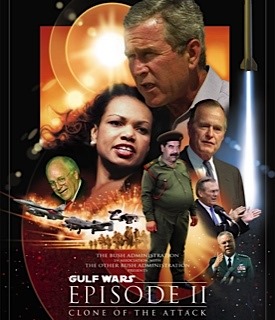
gulf_war_poster1

Here are part one and two of this post.

The arguments below expand on my second recent JoongAng Daily op-ed on the Iraq war.

My first post on the Iraq War asked if academic IR had any responsibility to slow the march to war.

The second tried to formulate what the   neoconservative theory of the war was, because many of us, in retrospect of a conflict gone so badly, desperately want to un-remember that there really was a logic to the war, that it was at least somewhat intellectually defensible, and that a lot of us believed it. We may want to retroactively exculpate ourselves by suggesting it was just W the cowboy acting ridiculous, or a neocon hijacking of the policy process, or Halliburton oil imperialism, and all the other reasons so popular on the left. And some of that is true of course.

But it ducks the crucial point that the war was popular until it flew wildly off-the-rails, which in turn revealed the staggering incompetence of the Bush administration to act on the neocon logic the country had embraced by March 2003. In short, I argued that the Iraq invasion was not about WMD, preemption, or democracy, although that rationale was played up in the wake of the failure to find WMD. The real neocon goal was to scare the daylights out of the Arabs and their elites by punching one of their worst regimes in the face, thereby showing what was coming to rest of the region unless it cleaned up its act, i.e., crack down on salafism and liberalize so as to defuse the cultural extremism that lead to 9/11. (Read Ajami saying in January 2003 that the war is ‘to modernize the Arabs;’ that’s about as a good a pre-war summary of this logic as you’ll get.)

So what went wrong?

Continue reading

Iraq 10 Years Later (2): What was the Neocon Theory behind the War?

Learn-About-the-Iraq-War-300x210

This post is in three parts; here are one and three. I published a laymen version of the following arguments (part two) in my recent JoongAng Daily op-ed.

My first thoughts on the war’s ten year anniversary are here. There I asked if there was any defensible theory behind the war, anything that might explain what why we launched the war, because weapons of mass destruction were not really the reason. Paul Wolfowitz notoriously admitted they were just a pretext to rally the country behind the invasion. And it wasn’t really about pre-emption either; Iraq was hardly a looming military threat in 2003. So here’s my guess of the real neoconservative logic. I should say up front, I do not endorse this rationale. I’m just trying to lay it out what I think neocons were saying to each other in 2002:

The Iraq invasion was to serve two purposes. 1) It was to be a demonstration strike against the Arabs. Gulf anti-western pathologies lead to 9/11, so the Iraq invasion was a warning to Arabs, and Muslims generally, to never to attack the US like that again. As Cheney put it in the film W, ‘don’t ever f— with us again.’ 2) It was to be a hammer strike to break the frozen, horribly dysfunctional Arab political status quo which generated those pathologies; this would force the region toward democracy it would never attain on its own. This thinking was summarized in the widely used expression at the time, ‘drain the swamp.’

A lot of people will (and did) accuse the neocons of orientalism, racism, and US hegemonic arrogance. Nevertheless I’ve always thought this neocon argument was somewhat convincing to most Americans, especially the GOP. I’ve always thought it was the horribly botched execution of the war (‘fiasco’), not the idea itself of ‘draining the swamp,’ that cost the invasion American public opinion support. I also don’t think the neocon argument was ever properly made to the US public, probably because it sounds both orientalist and hubristic. This is not the sort of argument the Bush administration could make out loud; WMD was much easier to sell and far more direct, as Wolfowitz noted. But I think if you read neocons like Kristol, Krauthammer, Gerecht, or Podhoretz, as well as high profile area experts like Thomas Friedman, Fareed Zakaria, or Bernard Lewis, or the right-wing thinks-tanks that supported the war (AEI, Heritage, Foundation for Defense of Democracies), this is what you heard. (For example: this, this, this, this, or this). I once participated in the FDDs’ terrorism fellowship program, and this was pretty much the line we got.

So you may not like the argument, but at least there is one. The war cannot just be dismissed as US imperialism, an oil grab, or a PNAC/neocon cabal, which I think was too often the default position on the left, especially in Europe, during the war. Opponents should rebut this and not just stick to deriding W the swaggering cowboy, fun as that may be.

Continue reading

Iraq 10 Years Later (1): How Culpable is Academic International Relations?

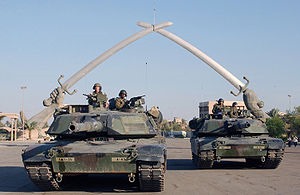
300px-UStanks_baghdad_2003

This post is in three parts. Here are two and three.

I’ve been thinking a lot about the war this month. I’ll be teaching it in the next few weeks at school because of the decade anniversary (March 20). To my mind, it is the most important geopolitical event, for the US, possibly the planet, since the USSR’s collapse. It also pre-occupies me to this day, because I initially supported it, and didn’t really turn against it until 2008/09. I had students who told me, late in the war, that I was the only instructor they knew who still supported the invasion. Finally, I gave in, and accepted the by-then conventional wisdom that the war was a ‘fiasco.’ I will argue in my next post in a few days, that there was in fact an at least minimally defensible argument for the war, but the execution of it was so awful, disorganized, mismanaged, and incompetent, that any moral justification was lost in the sea of blood and torture we unleashed.

The whole episode became just shameful, and regularly teaching and conferencing with non-Americans these last few years has made this so painfully clear. My students particularly are just bewildered to the point of incredulity. Again and again, the basic thought behind the questions is, ‘what the hell happened to you people? 9/11 made you lose your minds there?’ *sigh* (NB: when Asians ask me about guns in the US, the ‘what the hell is wrong with you people?’ bafflement is the same.)

Hence, the post title purposefully implies that the invasion was a bad idea. But to be fair, that should be the first question: what, if any, arguments at this point can be mustered to defend the war? IR should try to answer this seriously, because I’m all but positive that the journalistic debate will be not be driven by the state of Iraq or US foreign policy today, but by the high personal reputational costs faced by so many pundits supportive of the war. It would not surprise me at all if folks like the Kagans, Krauthammer, or Thomas Friedman miraculously found that the war was worth it after all. McNamara-style mea culpas only happen at the end of a career (so I give Sullivan and Fukuyama credit for theirs on Iraq). But academic international relations (IR) should be more honest than that.

Continue reading

‘Rodman-gate’: Can ‘Useful Idiots’ please Stop Shilling for North Korea?

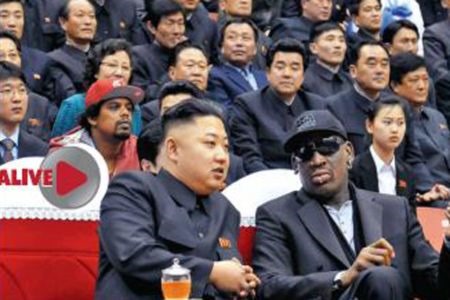
rodman nk

Studying North Korea inevitably means people ask me pretty outlandish stuff. People have asked, if the North really believes long hair is bad for socialism, if that goiter on Kim Il Sung’s neck made him crazy, if Kim Jong Il’s platform shoes meant that he liked disco, and if North Korean women are good looking because a food shortage would mean everyone is slim. (I presume that last one is a reaction to obesity epidemic in the US.) So I tried to avoid this latest outbreak of Norko bizarreness with Rodman. But people keep asking me, so here a few thoughts to the effect that: no one should shill for NK – ever.

Call it yet another chapter in the history of clueless foreigners getting lost in and manipulated by North Korea – what Lenin used to call ‘useful idiots,’ knaves from the West who defended the Soviet experiment, blissfully ignorant of the camps. Who knows what to make of that utterly weird photograph of Rodman in bling and Kim Jong Un dressed like Mao. There are so many contradictions in there, it’s not even worth unpacking.

Continue reading

My Comments to al Jazeera TV on Park GH’s Inauguration as SK Prez


Despite the fact that Donald Rumsfeld supposedly wanted to bomb al Jazeera during the Iraq War as a jihadi propaganda machine, I have to say I find it a pretty good news source. It’s got a great documentary hustle that lazy incumbents like CNN don’t, and its Middle East coverage is far more balanced and fair than most Americans think.

Anyway, the vid is my quick thoughts on Park Geun Hye’s inauguration as South Korea’s new president. The quick sum: she can’t follow through on making Korea ‘happier’ unless she takes on the vested interests, especially the chaebol, central to her political coalition. I don’t think she can do that, and, honestly, I’m not even sure she wants to. So I would not expect anything big at home in her term; the right, the elderly, and business in Korea like the status quo, and they’re the ones that put her in office. And certainly, the social democratic policies of ‘economic democratization’ kicked around last year won’t happen meaningfully. That’s my prediction at least. I’ll have more in a few days when my contribution to a foreign ‘Korea analyst’ forum on PGH is published in the Korea Times.

For my previous TV appearances, go here.

5 Biggest Strategic Errors of the Emperor: a Contribution to Spencer Ackerman’s ‘Battle of Hoth’ Debate

You can’t defeat a rebellion with counter-insurgents like these


Technically, I am supposed to be on vacation, but I couldn’t miss this.

An international relations theory website I also write for has gotten into an excellent debate with Wired’s Spencer Ackerman on the Empire’s blown opportunity to stamp out the Space Vietcong Rebellion at Hoth. William Westmoreland spent 5 years trying to nail down the VC in set-piece battles where US firepower could be brought decisively to bear and end the Vietnam war. Here was the Emperor’s similar chance, but Darth Vader and Admiral Ozzel blew it (mostly because the Empire’s officer corps was filled with grandstanding self-promoters, as Ackerman rightly points out).

But as the respondents noted, the larger context does a better job explaining why the Empire’s massive advantages seem to fail repeatedly (Yavin 4, Hoth, Bespin, Endor), beyond just the poor tactical leadership at Hoth. The larger strategic context is counterinsurgency, and obviously the Emperor spent too much time cackling in the Senate to watch The Battle of Algiers. So here are the five big structural problems in the background:

1. Trusting the Bloated, Showboating Navy to do Counterinsurgency

Navies are big, blunt instruments with hugely expensive platforms vulnerable to swarming, as at Yavin and Endor, and only useful for large, ‘target-rich’ enemies. They scream national vanity, and they’re terrible for hunting rebels. Why does the Empire need a massive, and massively expensive, fleet after the Clone Wars? Probably because the army was staffed by clones – genetically-designed to be dull-witted – who couldn’t push their bureaucratic interest, while the navy had lots of fully human, showboating egos like Tarkin’s Death Star council.

Continue reading