“Against Dogmatic Bourgeois Flunkeyism,” or what I learned in NK (1)

North Korea 2012 382

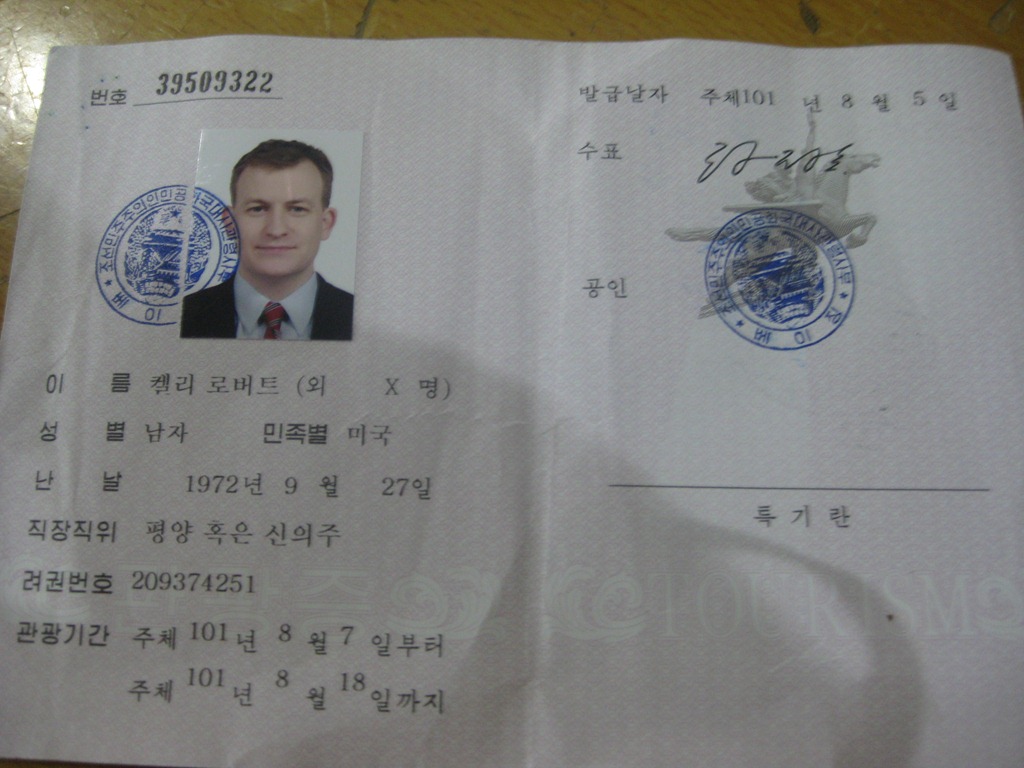
My North Korean visa

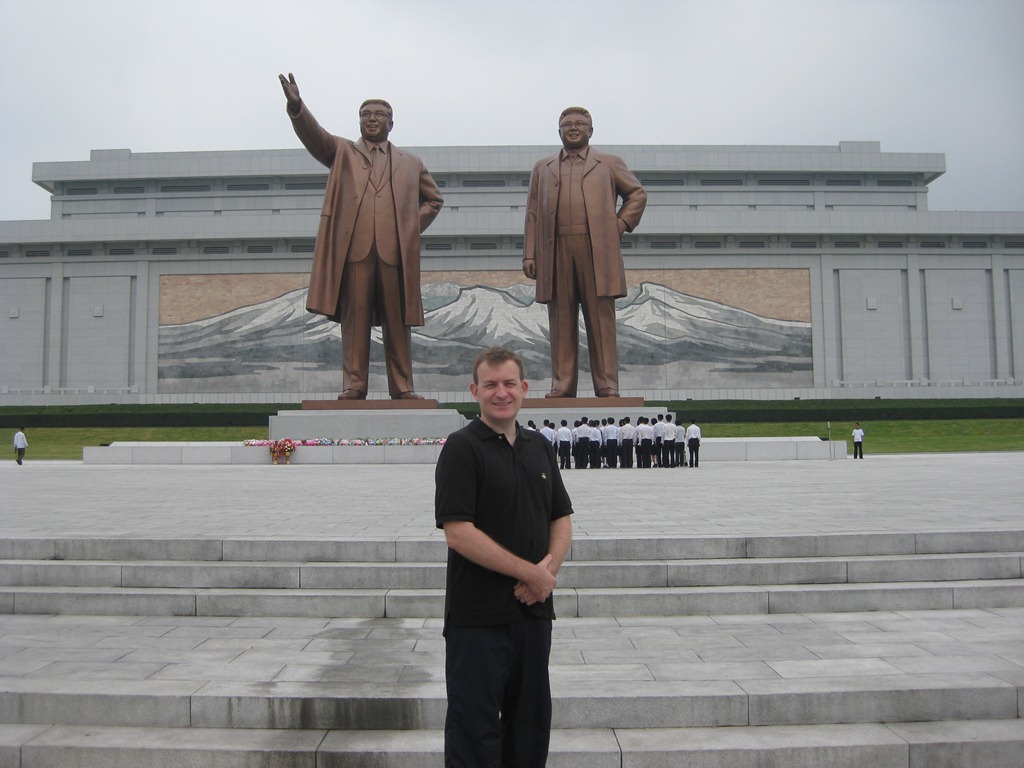
In August, I visited North Korea for the first time. It was the most unique travelling experience I’ve ever had. I’d certainly recommend it to political scientists and Asia experts, but it wasn’t anything close to a ‘vacation’ or break or anything like that. (Yes, some of the sites marketing tours of NK actually call it that.)

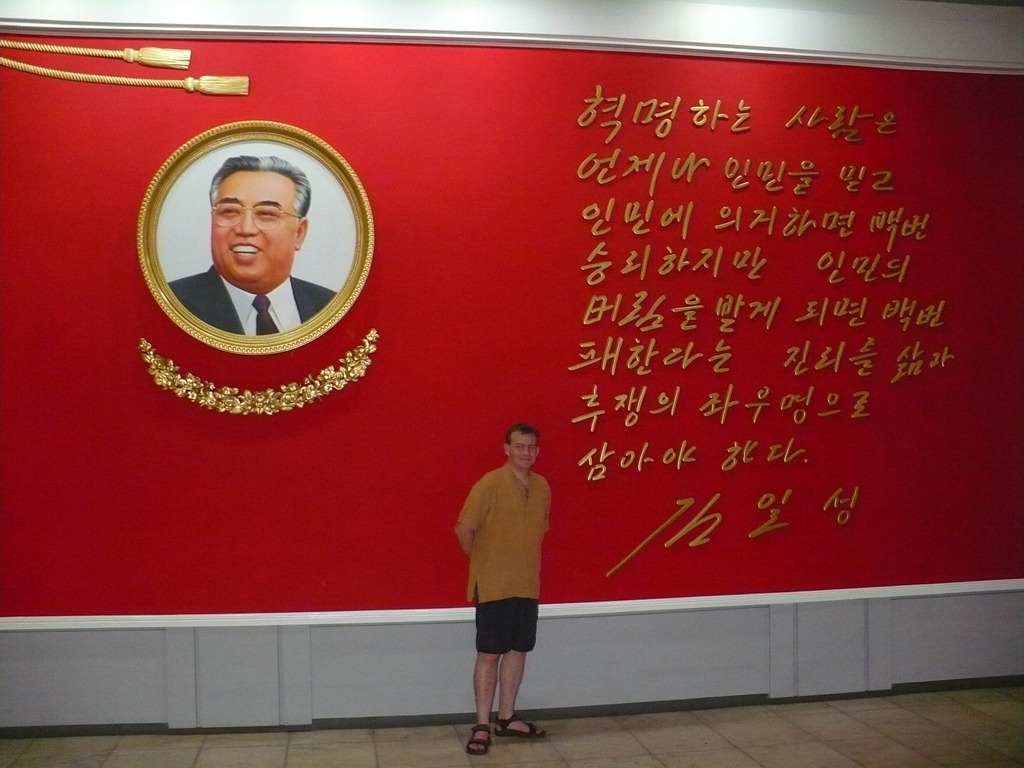
At a bookstore devoted to the works of Kim Il Sung and Kim Jong Il, I stumbled across an essay, from the latter if I remember correctly, about social scientists’ commitment to the revolution and juche. It included the title line – that we must avoid ‘flunkeyism’ toward ‘bourgeois’ forms. We are supposed to contribute to revolution, not critique too much, and not ‘ape’ western ideas.

(I love that sort of over-the-top Marxist writing – I remember the first time I read Maoists decrying ‘capitalist roaders’ and their ‘imperialist running dogs.’ I couldn’t even figure out wth that meant until I got to college. Who doesn’t miss the Cold War? But wait – perhaps Kim Jong Il is wired into the ‘poverty of social science theory’ debate and knows about the flunkeyism endemic to grad school?! A-hah! He knows! He is the great leader! He sees all!)

So here some thoughts that presumably demonstrate my flunkeyist failings:

1. It really is Kim-land

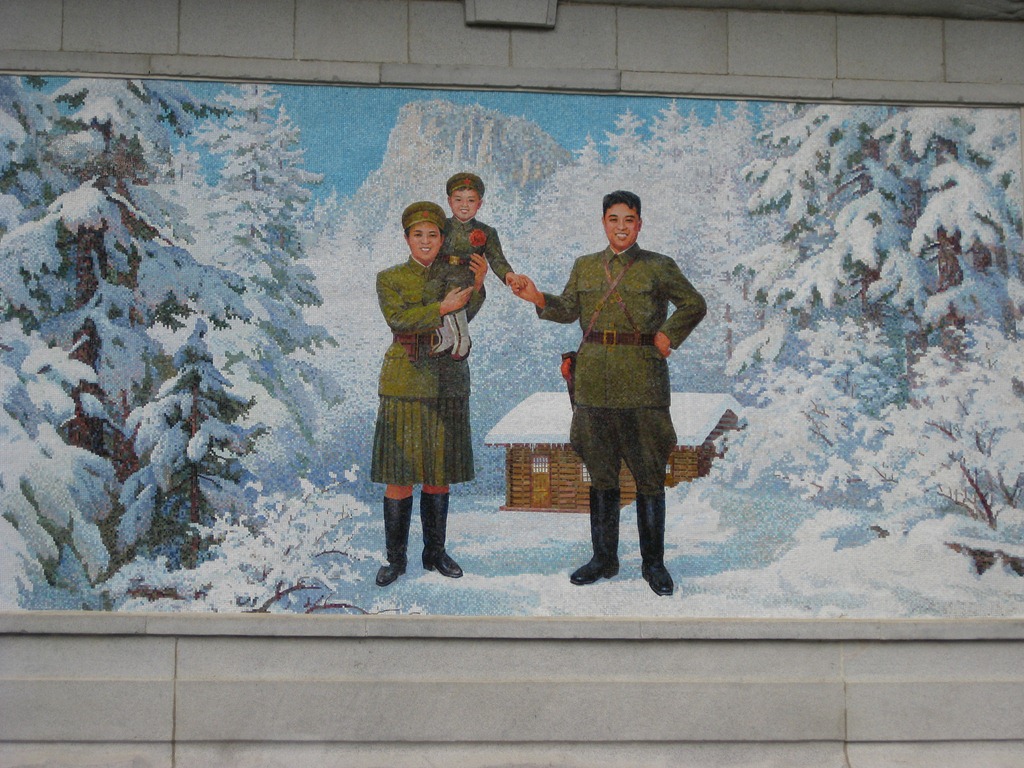
There is an endless debate over the ‘real’ nature of NK – is it a gangster state? A neo-Confucian kingdom? A typical stalinist half of a country divided by the Cold War? Semi-fascist? Presumably the answer is some mix of all that, but what really struck me in-country was the personality cult. Back in April Kim Jong Un referred to NK as “Kim Il Sung nation,” and that is certainly what they showed us. The Kims, especially KIS, were all over the place – statues, placards, and their names on one institution after another.

Continue reading

Guest Post: Dave Kang – “Confucian North Korea”

I am on break for the summer, but I am happy to open this space to a good friend and excellent scholar on international relations theory and Asia – David C. Kang, a professor of international relations and business at the University of Southern California and director of its Korean Studies Institute. Regular readers will know that I cite Dave’s stuff a lot. If you aren’t reading him, you should be: here is his Amazon page.

Confucian North Korea

clip_image002

Figure 1. Korean Worker’s Party symbol

It is easy to caricature North Korea as a “bizarre” “land of no smiles” full of brainwashed robots. In the past few years, North Korea has become somewhat prominent in popular culture either as a salacious joke or a freak show of a country. (And yes, I refuse to give you too many links to articles I think are misinformed caricatures). The trope of North Korea as a nation of automatons, grimly marching through each day is very powerful.

It is absolutely true that the regime itself is horrific and reprehensible, and engages in systematic human rights abuses. Indeed, the people of North Korea are the most direct victims of the ruling regime. I am totally for regime change, or a regime that modifies its ways and introduces economic and social reforms that improve the lives of its people. However, wishful thinking has gotten us nowhere, and rather than simply sit back and laugh at North Korea or call it names, perhaps we might explore why the regime has survived as long as it has.

In addition to extensive repression and selective bribery, what is widely overlooked is that the North Korean dictatorship is built on deeply traditional Korean cultural and Confucian roots. In fact, the best way to understand both the regime and its people is to remember that North Koreans are Koreans more than anything else. Far more insightful than any other description such as “communist monarchy,” North Korea is identifiably Korean, and there is a coherent internal logic in much of its way of life. As a result, the regime is more stable and enduring than commonly thought. (The arguments I make here have been made much more cogently by Bruce Cumings and Suk-Young Kim, among others).

Take a look at picture at the top of this page, which is a photo of the official emblem of the Korean Worker’s Party. Although the hammer and sickle are easily recognizable as signs of all Communist Parties from the Soviets to the Chinese Communist Party and others (Figure 2),

Figure 2. Flag of the Chinese Communist Party

clip_image004

North Korea is unique in that there are actually three symbols. What is that middle symbol in Figure 1?

1. Candle?

No. Wrong. C-

2. Paintbrush?

Warmer. What kind of paintbrush?

3. A calligraphy brush they used in olden times to write Chinese characters?

Yes!

It is a Confucian scholar’s brush – perhaps the most direct and vivid symbol of traditional learning, culture, and scholar-elite rule in Korea since the 9th century Silla dynasty first introduced an examination system for selecting government officials.

This is pretty remarkable. The Communist Party everywhere has stood for an utter rejection of the past and tradition as feudal and oppressive, and the basic message from Stalin to Mao has been to destroy the past and totally rebuild society. Yet the North Korean regime, rather than attempting to erase the past, has grafted itself onto traditional Korean traits, and reached back to some of the most traditional iconography possible: a hierarchic and elitist symbol of education, with all the other Confucian connotations that go with it: a ruler who embodies both the country and the “mandate of heaven,” an emphasis on centralized political control, and a clear set of hierarchical relationships that create harmony.

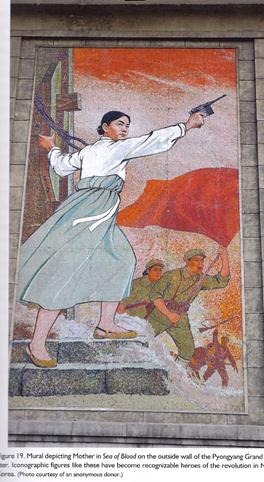
What about the role of women? Figure 3 is prominently displayed in Pyongyang, and depicts a generic and heroic “Mother,” fighting against the Japanese.

Figure 3. “Mother” in Sea of Blood

clip_image006

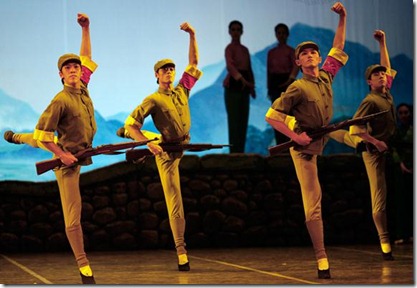
What is interesting about that painting? As with the KWP symbol, it might strike the viewer as somewhat odd that she is wearing traditional Korean women’s dress (“hanbok,”or “choseonot as they call it in North Korea). Compare this with the standard depictions of revolutionary Communist women from China or the Soviet Union – they are all in drab “Mao jackets” that reject and depart from any traditional and feudalistic tendencies (Figure 4).

Figure 4. Chinese revolutionary women
clip_image008

But in North Korea women have been presented with an image that emphasizes their Koreanness – a traditional dress that is far more common in Pyongyang and North Korea than in South Korea. The regime explicitly is telling North Korean women that they are a link to a way of life that is Korean, and the way they dress is the most obvious manifestation of that link.

What about the “cult of personality” and the rise of the grandson? Surely that’s bizarre, right? Not really, in a traditional Korean context. The Confucian emphasis on family places the father as the head of the family. Kim Il-Sung simply placed himself as father of the country, and grafted an authoritarian state onto the existing social and cultural roots. Leadership by a powerful family makes sense in a Korean context. Korea is a clannish country, and the family is the basic building block of social, political, and economic life.

The best way to understand the role of families is by comparison with contemporary South Korea. The foundation of Korean life in both North and South is the clan. For example, most major business conglomerates are family-run, and often the grandson of the founder is now in charge. This is the case even of the biggest companies in Korea. In addition, it may appear to outsiders that Korea is a country with only three last names (Kim, Park, and Lee, hahaha). But all those Kims are actually divided up into dozens of different clans, each connected to a hometown, each with extensive family lineage records, and each vividly distinctive to other Koreans. Thus, there is Kimhae Kim, Seoul Kim, Kyongju Kim, etc. So powerful was the clannish nature of Korea that until 1998, members of the same clan could not legally marry, even if they were separated by tens of generations. Similarly, Kathy Moon has recently argued that the blather over Kim Jong-un’s marriage is mostly misguided: “For Koreans on both sides of the 38th parallel…Unless one is married (and with children), one is not fully an adult. In both Koreas and in dynastic cultures, those pieces are supposed to come in the same box, to be pieced together into a coherent puzzle.” Thus, within a Korean cultural context, multigenerational leadership in North Korea and family as the building block of society is common sense.

Why does this matter? Because the story the North Korean regime tells itself and its people is aimed at domestic audiences, not at international audiences. They are telling a story that — however warped and corrupted — resonates deeply and instinctively with Koreans: North Korean are the true Koreans, and are the only ones remaining true to the essence of being Korean. South Koreans have been corrupted and forgotten who they are. The Kim family is leading the fight against external oppressors such as Japan and America. If the people must endure some hardship in order to maintain a Korean way of life, that’s a small price to pay.

This is one reason I tend to think an Arab Spring or uprising is not likely. Questions of imminent demise overlook the fact that North Korean dictatorship has grafted itself onto deeply traditional Korean culture roots. As a result, the regime is much more stable than some may think. For some people of North Korea, conditions may become so horrific that they choose to try and leave. But far more remain, and they remain not because they are brainwashed and not only because of repression. Many stay because North Korea is their home, where they grew up, where their family and friends live, and it is what makes sense to them.

Going to IQMR – Some Summer Asian Security Reading – Back in August

CQRM

I am off to the Institute for Qualitative and and Multi-Method Research for their summer training at Syracuse University. Take a look at the syllabus. Whoa. ‘Can you spell ‘Bayesian hermeneutics’ correctly, little Johnny? No? Me neither!’ But the preparation looks great for qualitative-types like me. I must thank Colin Elman and Andrew Bennett for taking me. The people in that pic look so much more lucid and intelligent than me, that I think they must have read the wrong file or something. I hope they don’t bust me playing ‘Halo’ in the back there…

If debating multicollinearity doesn’t sound like fun (yeah, I don’t really know what it means either, but I think it’s bad), then here is my regular list of good reads from the last few months before I go on break:

Continue reading

MBC brings Multicultural Panic to Korea

Xenophobia so sloppy and racist, Glenn Beck himself would blush…

I came late to this controversy, but it merits some quick comment given just how creepy the above vid is.

This ‘report’ was shown in primetime on Korea’s largest TV network, on a holiday when people would likely be home with family (and was then rebroadcast until the explosion of response halted it). While xenophobia is fairly common in the Korean media, this is so nasty – especially at this very late date in the long, tiresome ‘Korean women dating western men’ discussion – that it has gone viral in the expat blog world of Korea. It even got into the Wall Street Journal.

I rarely blog about this sort of thing. As an IR academic, domestic politics and sociology aren’t really my area, and I don’t really see myself as a ‘k-blogger’ or whatever. I don’t like blogging about identity politics in Korea, as I think it is prone to recycled stereotyping that tells us little. And I have broadly argued against our (foreigners) participation in the Korean multiculturalism debate, because it’s their country and they themselves need to decide what they want from us. It’s their choice.

But this is the nastiest race-baiting – primetime, slap-dash unprofessional, on a major network, for a general audience – I’ve seen in my time here. (Full disclosure: my wife is Korean). Casual racism is a widespread problem in Korea, as any foreigner living here can tell you. Wide-eyed kids shamelessly point at you like you are a martian; people stare at your body hair; grade and high schoolers giggle and smirk; the old ladies glare at you on the subway; average folks on their cell phones will pause their conversations to remark, ‘hey, a foreigner just walked by me!,’ as if it’s some kind of major event in their day (presumably they think I can’t understand that, or maybe they don’t care?). It’s all fairly fatiguing (read this for a good example), and that’s for white westerners. I can’t imagine being from Southeast Asia or an LDC here. In fact, Cambodian import brides have been so badly abused, the Cambodian government made it illegal for its citizens to marry Koreans. (This hugely embarrassing and deeply disturbing restriction was scarecely reported by the Korean media.) And when the Korean race hang-up gets wrapped into sex, it breeds genuinely disturbing levels of xenophobia, especially for an OECD/G-20 country that really ought to know better. Hence this vid.

Continue reading

Ranking US Allies: A Response to Stephen Walt, Andrew Sullivan & all those Canadians…

Who knew Canada could be so controversial…


Ok, this has gotta be my last response to the many comments from this sprawling series  (one, two, three, four, five) of posts on ranking US allies. Thanks for all the interest. Who knew Canada was so interesting or Canadians so passionate?

I’d like to thank Stephen Walt (whose blog I think is the best in IR) for linking this debate, and Andrew Sullivan for linking me twice. If you aren’t reading Sullivan yet, you’re at the wrong website. Thanks too to all those Canadians who came out of the woodwork to defend its boring relevance. Finally, who could fail to thank a website disturbingly entitled  f—-dgaijin.com?! (Yes, that’s the actual name; check it out for yourself; at least these guys know where we resident-foreigners stand in the East Asian racial food-chain – at the bottom.)

So here are some final thoughts on the many comments, but especially Walt and Sullivan:

1. I accept the arguments from several commenters that Turkey should be on the list. So here is a final list, a ‘top 12’ of US allies in order: Canada, Mexico, Saudi Arabia, Taiwan, India, Indonesia, Israel, South Korea, Japan, EU/NATO, Egypt, and Turkey.

2. I was please to see that Sullivan flagged – not necessarily approved, but just noted – my argument for Indonesia as America’s most important bridge to the Muslim world. I realize this is kinda off-beat, given that the ME is what dominates our perceptions of Islam and where Islamist pathologies are worst. (Here is a critic, a neocon perhaps, calling me ‘delusional’ for ranking Indonesia this way.) So here is a quick defense, more or less along the lines of what Secretary Clinton said a few years.

Indonesia is a syncretic model of pluralist Islam and politics; I think this is pretty widely accepted. No, it’s not as modern and liberal as we might like, but by the standards of the region, other developing countries, and the OIC, it is a paragon. Let’s be honest about that. It could easily be far, far worse (think Pakistan), which is why I find it unfortunate that we don’t pay attention much. We should not let the perfect be the enemy of the good, and a friendship with Indonesia doesn’t mean avoiding tough issues, just like engaging China doesn’t mean we should ignore human rights and other similar issues.

So in its own imperfect, struggling way, Indonesia represents the future of political Islam (speaking very broadly to be sure), not the past, which is a lot of what the ME represents and what Arab Spring is trying to break. If the flat-earth religious elites of places like Iran, Pakistan, or Saudi Arabia are allowed to dominate the global conversation on Islam, more conflict is likely. By contrast, Indonesia offers a possible model for Islam to live with both democratic politics and religious pluralism. That we should vigorously support such an effort, through some kind of alignment, strikes me as so self-evident, that I am amazed that we never talk about this.

Continue reading

More on Abusing America’s ‘Exorbitant Privilege’: How Long can the US Borrow to Sustain Hegemony – up to a 100% Debt-to-GDP ratio?

85448_Dollar-Hegemony-by-Luojie-China-Daily-China-515x335

As part of a now lengthy chain (one, two, three, four) on US allies and the likelihood of US retrenchment (hat-tip to Andrew Sullivan for referencing this chain of posts yet again), I argued that American hegemony, despite America’s huge debt and deficit, is more financially stable than almost anyone expected. Because foreigners’ appetite for dollars seems unquenchable and because we print the global reserve currency, borrow in it, and face no serious reserve challengers (the euro and RMB maybe, see below), US can exploit this ‘exorbitant privilege’ far worse than anyone ever thought.

For example, I think almost everyone expected the bond-market to turn against the US in the last decade given: exploding debt and deficits, huge welfare state expansions like Medicare part D and ObamaCare, the expensive and financially-unplanned GWoT, China’s relentless ascent, the Great Recession, and two rounds of quantitative easing. Wow – that’s a helluva list. Despite all that, interest rates and inflation are low, because we can exploit (and have) that exorbitant privilege. Stein’s Law says there must be a limit, but I think almost everyone is amazed at just how deep confidence in the dollar goes.

More simply put, all this means is that foreigners so want dollars, that America can just print more and more dollars without consequent inflation, and borrow from foreigners a lot cheaply (because they want those dollars so badly). This means America can borrow and/or just print huge amounts of money at very low interest and inflation rates. That is ‘exorbitant,’ because no one else can do that without Greece-style financial trouble. We can borrow at low interest rates (the rate on the US ten-year bond is around 1.5% right now) and print lots of money (the recent quantitative easings, e.g.) without suffering like so many others who over-borrow and run the printing press. Barry Eichengreen’s book on this is helpful if you don’t quite get it.

Vikash Yadav gave such good commentary on this tangle over at Duck of Minerva, that I have reposted our full debate on US borrowing and hegemony below. Warning: it gets fairly wonky, so please be sure to read the OP. Also, further IPE are comments wanted. Specifically, someone tell me please when the US will finally hit the ‘soaring’ inflation and interest rates regularly predicted by deficit hawks at the WSJ or CNBC? This is what Romney means when he says we will become Greece, but I just don’t see any evidence of that. Does anyone have a good guess on the timeline for exploiting the exorbitant privilege? When does it finally give way? When do foreigners turn against us in the bond market? As I said in the OP, I think it (super cheap US borrowing) has gone on already far longer than anyone expected. But I also think that a 100% debt-to-GDP ratio might be the bond-market turning point. That is a pretty big psychological benchmark.

So here is our debate on this:

Continue reading

More on US Allies (2): A Response to My Critics

The_world_seen_from800

I found the above image here.

Here is part one of my response to two recent, heavily-trafficked posts (one, two) on hypothetical retrenchment under Ron Paul. (So yes, that makes 4 total posts, including this one.) I got some flak on how I ranked US allies in order of importance, with the implication that those further down were more likely candidates for a diminished American commitment. So rather than responding point-by-point, here are some broad responses on specific countries.

My original ranking, in order, was: Canada, Mexico, Saudi Arabia, Taiwan, India, Indonesia, Israel, South Korea, Japan, EU/NATO, and Egypt. (That’s actually 11, not a ‘top 10,’ because I originally put Canada and Mexico in together at # 1.)

1. I was surprised how much controversy my choice for Canada at # 1 provoked. I thought that was pretty self-evident actually. (Stephen Walt, in a riff on my post, says pretty much the same thing.) Just because Canada is quiet and boring (in a good way) doesn’t mean it is not existentially important for the US. (This same logic, boring ≠ unimportant, applies to my choice for Indonesia. The very fact the Indonesia is a moderate Muslim state is why no one cares about it, but that is a good thing! I guarantee you that if Indonesia had nasty salafists running around like in the ME, we’d all be talking about it.) The US trades the most in the world with Canada. We expect Canada to come with us on just about all our foreign ventures. Its cooperation provides crucial symbolic value: if the country most like us in the world can’t agree with us, then we must be doing something wrong. And most obviously, its security is a direct concern, because of the border. In fact, given that the border is something like 3x the length of the US-Mexico border, Canada easily beats every other state in the world for the most basic US national security concerns.

2. Japan (#9): A good commenter noted that after WWII, the US wanted to make Japan into the ‘Switzerland of Asia,’ and that we are reaping what we sow. Absolutely. I do think Americans send mixed signals to allies. We don’t want them taking an independent line, we want them to do what we say, but then we complain that they free-ride. As I argued in the OP, all this US commitment ‘infantilizes’ US allies by not forcing them to deal with their own regional issues. But Americans, or rather the neocon-liberal internationalist elite synthesis that dominates US foreign policy discourse, ultimately accept weak, dependent allies, because we are in love with our own hegemony. It fires our imagination to compare ourselves to Athens, Rome, or Britain. Neocons read Pericles’ Funeral Oration or Gibbon, and they tear up that America too is the noble, tragic ‘weary titan,’ carrying the great orb of its world-historical task of spreading democracy. Americans thrill to that kind of ‘national greatness’ pseudo-metaphysics while Europeans roll their eyes in disillusionment and Asians wonder wth we are even talking about. So yes, free-riding is pretty obvious to see, because we abet it.

Continue reading

More on US Allies: America’s ‘Exorbitant Privilege’ means it can borrow to Sustain Hegemony Longer than Anyone Ever Expected

P1-AP194B_CHINA_NS_20090323190818

This post expands ideas which were published in my recent JoongAng Daily op-ed.

Two of my posts this week (one, two) on hypothetical retrenchment under Ron Paul got a lot of traffic and comments. Hat-tips go to Andrew Sullivan and Stephen Walt for citing me; if you don’t read Walt and Sullivan already, you should. Given the large numbers of comments, both here and elsewhere, I thought I would try to capture some of the concerns generally. This post focuses on the surprisingly low likelihood of retrenchment; a second, in a few days, will look at specific countries mentioned by commenters.

The OP was intended as an emergency exercise if the US were to face a truly significant crisis that forced retrenchment. The purpose was to ask who are the most important US allies and commitments if we were forced to choose. Right now, the US is not choosing. We are all over the place; if anything, we are taking on more commitments (Iraq, Afghanistan, Pakistan, Yemen, the Asian pivot). As I tried to say in the second post, I don’t think we are about to pull out of Japan or Egypt, but if we get to the point where we really can’t afford globe-spanning hegemony anymore, it would be help to try to prioritize what is genuinely strategically necessary, from what are ‘extras.’ One doesn’t hear this much, except for Ron Paul, whose debate performances motivated the post.

On this point, I should say that the bifurcation of the OP into two parts was not to indicate the those in part 2 should get the axe; it was just a matter of convenience. The point of the OP was to try to force a ranking – who is more important to the US than who? This is why I tried to limit the listees to a conventional ‘top 10.’ To go beyond that tight focus, would get us back into the global alliance sprawl the US is in now.

The above point raises the next, obvious question about whether we are therefore getting to a point of forced US retrenchment. There is a whole declinist literature that emphasizes long-term US problems, like atrocious public finances, too many wars, bad public schools, political gridlock, rising anti-Americanism in the world, etc. Zakaria’s ‘post-American world’ captures are lot of this, and apparently the Chinese believe the US is in decline too. Probably the best I can think of at the moment is Gideon Rachman’s take.

I go back and forth on this myself. The economist in me finds it hard to imagine how the US can borrow $1-1.5T a year and stay on top. We’re borrowing around 9% (!) of GDP per annum, and the IMF calculates America’s debt-to-GDP ratio is 100% already (if you include state debts; it’s 75% now at just the federal level.) I wonder how we can fight so many wars without national exhaustion and diversion of investment from domestic priorities like infrastructure or health care. Signal markers in the decline and fall of empires are heavy borrowing and lots of wars which sounds a lot like us, no?

Continue reading

Say Ron Paul Won…Which US Allies would get Retrenched? (2) Japan?

retrenchment graph

This post series is getting so much traffic, here is a part three on likelihood of retrenchment. Here is part one where argued that America’s 8 most important allies are, in order: Canada, Mexico, Saudi Arabia, Taiwan, India, Indonesia, Israel, and South Korea.

I argued for 3 quick-and-dirty reasons for that ranking, but I got some criticism on these in the first post, so here is some elaboration :

1. National Security: Some places, like SA and Mexico, may not appeal much to Americans, but they are so obviously important, that abandonment would be hugely risky. So yes, SA is a nasty, reactionary ‘frenemy,’ not really an ally at all, but we’re stuck with it. A Saudi collapse would set off both huge economic and Islamic religious turmoil; all the more reason to slowly exit the Middle East and pursue green energy. But until then, I think we have to be honest and say that we can’t really leave the Gulf. But the bar of this criterion should be awfully high. With some frenemies, like Afghanistan and Pakistan, we don’t really need to pretend to be allies actually. We can just get out if have to.

2. Need: In some places, the US can get a lot more bang for its commitment buck, because without us, our ally would likely collapse/lose/fail. Taiwan is the most obvious example. Conversely, other places, like Germany, pretend to need us, because they don’t want to shell out the cash (and we’re so bewitched of our God-given, history-ending, last-best-hope-for-mankind, bound-to-lead neocon unipolar awesome-ness that we let ourselves get taken for a ride).Between Taiwan and Germany, I would place Israel and SK.

3. Values/Symbolism: I don’t like this criterion much, because it reminds me a lot of McNamara, ‘credibility,’ Vietnam, the Munich analogy and all that. But still, there are a few places where the American commitment has taken on an almost ‘metaphysical,’ good-guys-vs-bad-guys dimension. The whole world is watching, and a departure would be seen as a huge retreat from critical values that would bolster dictators everywhere, especially in China and Russia. SK is the most obvious example. NK is so bizarre, frightening, and horrific that while the US commitment isn’t really that necessary anymore, it’s taken on a symbolism wholly out of proportion to events on the peninsula. Taiwan also comes to mind, as does cold war West Germany. Avoiding another such perpetual commitment was one of the important reasons to get out of Iraq. If we’d stayed, we might have have gotten chain-ganged into never leaving our symbol of GWoT ‘success.’ We really don’t need more of that sort thing

So back to the list. Now come the ones that can more easily be retrenched, because either they are wealthy enough to defend themselves, or their value to the US has fallen:

Continue reading

Would Ron Paul Retrench the US from Korea?

retrenchment

Here is part two, and then a third, given just how much traffic this post has received (h/t to Stephen Walt and Andrew Sullivan).

Here is Steve Walt saying nice things about Ron Paul, and Layne has a nice recent piece in the National Interest, and another at ISQ, about looming US retrenchment.  Earlier I argued that I think lots of people in IR now both expect and want some measure of US pullback. The argument is pretty well-known by now – empirically, the US is doing more than it can afford, like the Iraq war (trillion dollar deficits and ‘overstretch’); normatively, we are violating far too many of our liberal values against a comparatively minor terrorist threat (torture, indefinite detention, unoverseen drone strikes). But I don’t see too much on what specifically could be cut if absolutely necessary. The British retrenchment east of Suez in the 70s is probably our best model, but of course, the Brits had different sets of commitments, so it’s not a great blueprint.

So I try below to compile a list of who would/could/should get the axe and who not. Just like the intense competition over the periodic BRACs, one could imagine US allies making their case for a retention of US bases, troops, aid, etc. In one of his speeches, I heard Ron Paul argue that we have 900 overseas bases, so the field of choice is very wide.

I can think of 3 basic criteria for judgment of whom should be cut loose and who not:

Continue reading