Kim Jong Un’s Ascent (2): Rocket Launch as a Sign of a Power Struggle?

KJU

Here is part one, where I argued that Kim’s rise scrambles our conventional wisdom on NK, opening a lot of unexpected room, at least early in his tenure, to try to deal. The cold war stand-off in Korea is now so bad, that there is little to lose in trying to talk with him, and it would seem like a huge missed opportunity to simply blow him off as identically awful to his father. For my regular argument that negotiating with Kim Jong Il was impossible, try here and here (or if you’d rather just read about the ridiculous Homefront video game, try this).

Continue reading

Kim Jong Un’s Ascent (1): A Unique Negotiating Opportunity

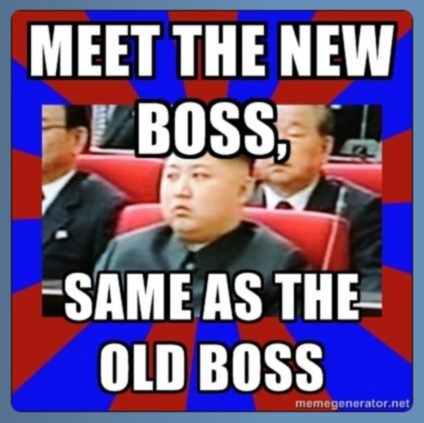
Kim-Jong-un-Meme-GeneratorOr maybe not…

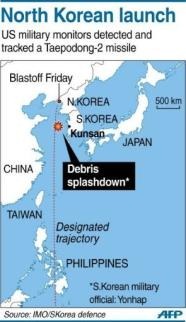
The following short piece for the Korean National Defense University was written after the Leap Day Deal, but before the rocket launch announcement. In the interim, the US has decided to cancel the leap day deal, which is entirely understandable, but a mistake nonetheless I think. NK’s elite has to do something for Kim Il Sung’s 100th birthday this month (the cause of the launch); the regime depends on these sorts of shows. But this is a lot more tame than other possible hijinks, like another clash in the Yellow Sea, could be. Kim Jong Un might be signaling us from within the almost certain, post-Jong Il quiet power struggle now gripping the Pyongyang. For a similar and, I think, persuasive argument, try this. My full text at KNDU can be found here.

Kim Jong Il’s death is more than just the passing of a chief executive; given North Korea’s (NK) hyperpersonalization, it is transformational. As such, Kim Jong Un’s ascent offers a unique opportunity to try engagement once again with NK. It may fail, as it has so often before, but the very fluid new circumstances make it worth a major effort. NK is such a dangerous country and the cold war standoff with SK so severe now, that to pass up this rare window would be a tremendous missed opportunity.

Continue reading

China’s Counter to the Asian ‘Pivot’ (2): ‘Swarms’ in the Pacific

china-us-economic-warfare

Part one is here, where I noted China’s growing fear of encirclement (I get Chinese students a lot who talk about this). So, in the role of China, I argued for an Indian charm offensive to prevent encirclement, and how China might buy off Korea from the US camp by abandoning North Korea. Here are some more ‘B-Team’ style ideas for pushing back on US local dominance, including swarming the US navy in the western Pacific with cheap drones and missiles:

Continue reading

China’s Counter to the Asian ‘Pivot’ (1): Korea, India

obamahu132628592pk

So the US is supposedly going to pivot to Asia and start worrying more about China. This makes sense (which is probably why we won’t do it). The Middle East has become a pretty terrible sinkhole of American power. Increasingly the verdict on the war on terrorism is negative, and we should probably retrench from the Middle East (but we won’t because of the religious right’s interest in the region). Mearsheimer argued that if it weren’t for 9/11 we probably would have focused on China a lot earlier. Kaplan sketched how the US would defeat China in a war. I argued a few years ago, at the height of the ‘China-has-changed-into-a-scary-revisionist’ hype of 2009-11, that containment of China was likely (maybe even desirable Sad smile). And clearly China’s behavior over the last few years has raised the likelihood of at least soft containment; even the Vietnamese and the Filipinos are asking for US agreements now.

But I don’t see much Western discussion of how China would/should respond. So in the tradition of those old CIA A team/B team exercises, here are five ideas for how China should/could respond to its incipient encirclement:

Continue reading

Seoul 2012 Nuclear Security Summit

K-schmaltz! : where’s Dr. Strangelove when you need him to bomb Arirang back to the stone age?


This week is the big nuclear security summit in Seoul, with something like 60 attending countries and over 40 heads of state or government. Bobby McGill from Busan Haps magazine here in town asked me for a brief write-up; this is the re-print. Here are the issues as I see them from Korean IR and the local media. For full-blown think-tankery on the summit, try here.

1. Obama’s personal commitment to de-nuclearization: I can’t think of any president since Reagan who seems as personally offended by nuclear weapons as Obama. Back in the day, Reagan watched ‘The Day After,’ ‘Wargames’ and other nuclear war movies and came to dramatically oppose mutually assured destruction as it had underpinned US policy since flexible response. This helped Reagan achieve the first nuclear stockpile  reduction in history (the Strategic Arms Reduction Treaty – a point anti-New Start neocons conveniently forget). But Obama is going beyond that, talking about ‘global zero’ – the complete elimination of all nuclear weapons everywhere. Wow. This is why there have been two of these summits in three years, but nothing like this under Bush. To be honest, I don’t think the complete elimination of the American nuclear deterrent is probably not a good idea (although we can go pretty low); nuclear weapons are the ultimate guarantor of US sovereignty and democracy, and many US allies, like SK, rely on our extended deterrence. In any case, Obama’s personal interest in this issue is a major driver for this thing.

Continue reading

It’s Time to De-Russianize the BRICS — UPDATED (twice): Response to My Critics

UPDATED, March 22, 24: This post got a lot of traffic, due to Andrew Sullivan’s citation of it. Thank you to all those readers coming for the first time; please come again. The criticisms levelled here have been similar to those made at the Duck of Minerva, where I also blog. It seems there are three main critiques, although you may wish to scroll further down to the original post first: 1. I exaggerated; Russia is still a great power. 2. I didn’t provide enough data and links. 3. I don’t really ‘get’ Russia, or I’m just recycling western propaganda.

(In passing, I find it both curious/frustrating as an author that what I think is my more creative and fresh work in the last few months [this or this series] didn’t get nearly so much attention, whereas lamenting Russia’s postimperial decline, which so many have done before me [see all the links below], got an explosion of interest. Not quite sure what to make out of that…)

1. I overshot in saying Russia isn’t a great power anymore.

Ok, but not by much. I’ll agree that it was probably gratuitous to call Russia a ‘joke’ as a great power. But then again, be honest with yourself and tell me you didn’t laugh: when Putin rode around shirtless on horseback, when Putin stage-managed a discovery of ‘antiquities’ while scuba diving, when Putin claimed the State Department and Secretary Clinton were fomenting the Moscow protests, when Zhirinovsky “backed free vodka and the reconquest of Alaska,” when the president fired a minister on live TV (!), the minister refused (!!), and Medvedev responded with farcical lecture on Russia’s globally-regarded ‘constitionalism’ (!!!). Or just read this from Gawker on the Putin the crossbow-toting whaler and tell me you don’t burst out laughing – over a head of state with superpower pretensions?

These are the sorts of howlers and hijinks we expect from leaders like Qaddafi, with his retinue of female ‘bodyguards,’ or Idi Amin, with so many gold medals on his uniform you could store it in a bank vault. But modern states, desirous of global prestige, seeking to be taken seriously at the highest levels of the game, just don’t do this stuff. Could you imagine Wen Jiabao doing he-man photo-ops? You’d laugh, right? Well… Putin’s become a punchline, regardless of Russia’s other strengths, which is ultimately what motivated the original post.

As Niall Ferguson put it last December, “Russia—who cares? With its rampant voter fraud and declining population, the country is careening toward irrelevance. …Russia isn’t quite “Upper Volta with missiles”—West German chancellor Helmut Schmidt’s immortal phrase. But it’s certainly a shadow of its former Cold War self. The U.S. economy is 10 times larger than Russia’s. Per capita gross domestic product is not much higher than in Turkey. Male life expectancy is significantly lower: 63, compared with 71 on the other side of the Black Sea. And the population is shrinking. There are nearly 7 million fewer Russians today than there were in 1992. By 2055, the United Nations estimates that the population of Egypt will be larger. Remind me: why did Goldman Sachs group Russia with Brazil, India, and China as the “BRICs,” supposedly the four key economies of the 21st century? Give me Turkey or Indonesia any day.” That’s exactly right (I know people think Ferguson is a neo-victorian apologist for empire, but hold that thought),  and it should deeply worry and embarass Russians that the rest of the planet thinks this way about one of the world’s great cultures. I wrote something similar last fall when Putin announced his re-taking of the presidency, and the whole world shrugged.

Here is more from the Duck of Minerva comment section:

“My interest was more developmental than realist-theoretical. On re-reading the post, it was a bridge to far to say that Russia isn’t a great power anymore. It still is, by the skin of its teeth. Nukes compensate for other areas of decline, I suppose, as you are suggesting. De Gaulle saw this, as did N Korea.

My real goal was to developmentally differentiate between Russia and the other BRICS. That BRICS moniker is to imply some level of cosmopolitan comfort with the modern world economy and rapid growth to greater weight within that economy (hence my reference to Parag Khanna). The other 4 BRICS capture that upward trend – as do other economies like Turkey, S Korea, Mexico, or Indonesia (hence my preference for Khanna’s term ‘second world’). But Russia really doesn’t. Russia is slipping, not rising and has been, more or less, since the late 1970s. That’s quite a hegemonic decline. Its internal rot is pretty severe now. Its Transparency International score in 2011 is a staggering 143 out of 182, putting it in the company of Nigeria, Belarus, and Togo, and obviously calling into question not just its BRIC credentials, but its great power ones too. And the shirtless one’s return puts off a turn-around for another six to twelve years. Given that China rose to the ‘G-2’ in just 30 years, 20+ long years of Putinism (after 10 years of Yeltsin chaos plus late Soviet stagnation) portends a disaster for Russia. This is the real reason for the Moscow protests. They see this now.

Rotation at the top is just one marker for BRIC normalization, but other obvious red flags include the relentless xenophobia of the Putin regime, the alienation from the WTO, the huge missed opportunities of globalization, the blow-out levels corruption and state capriciousness including the murder of journalists, the third worldish reliance on carbon and weapons exports, the 19th century ‘spheres of influence’ obsession with countering the West in Eurasia, the confiscatory attitude toward private wealth most obvious displayed in the Khodorkovsky case, or Putin’s laughably ridiculous throwback-to-Kaiser-Wilhelm bravado of hunting on TV with a crossbow or fighting stage-managed martial arts contests. Does that sound like a BRIC or Khanna’s ‘second world’? Not really. It sounds like Venezuela or Iran. It sounds like an angry, Weimar-style pseudo-democracy high on petro-dollars with a ‘postimperial hangover,’ as Vice-President Biden once put it. Hence the argument that BRIC/second world is the wrong developmental category for Russia. For more of this, ‘should the R be taken out of the BRICS’ debate, try here and here. For a similar write-up on how Putin’s return will critically aggravate so many of Russia’s outstanding problems, try here.

2. I didn’t provide enough data.

Ok, so here you go. It’s pretty easy to find. Please read the links above and these below. From the Duck:

Actually there’s lots of data on this that’s pretty easy to find with Google. I suppose I should have included more links orignally, but I thought a lot of this was common knowledge at this point. But here you go; all the following links come from the last few years:

a. On demography, I was thinking of Nicolas Eberstadt’s work. He’s been writing on this for a long time now, most recently November 2011 in Foreign Affairs. His title, ‘The Dying Bear,’ is pretty blunt about the population contraction. For more, try this.

b. On corruption so high, it’s incommensurate with being a great power, here’s that Transparency International score again.

c. It is downright heroic, if not irresponsible, to suggest that alcoholism is not a huge problem in modern Russia and severely impacting men’s health and mortality: here or here. Just look at those estimates of average male lifespan – around 60! Gorbachev even thought alcoholism imperiled the very existence of the USSR and launched a major government campaign against it.

d. On the brain drain, try here.  Note the big listed reason – problems with the Putinist regime – and their profile: “vast majority of those who admitted wanting to leave were under 35 years old, lived in a major city, and spoke a foreign language.”

e. On the economic overreliance on carbon and how weak the economy really is under the hood, try this from the Financial Times just today. More generally try this and this from the Economist how post-‘reelection’ dysfunctional.

For what it’s worth, this wasn’t intended to be ‘anti-russian gloom and doom.’ I studied in Russia for a bit and spoke it reasonably well once; I’d like to think I am sympathetic. But simply denying Russia’s internal decay is not really a response – as the Moscow protestors themselves understand.”

3. I am not sympathetic enough to Russia’s unique condition/I’m just spinning western propaganda.

Maybe, but I did study there for a bit, and I could speak the language pretty well once. And none of that really changes how Putin is dragging Russia down.

From the Duck:

“On my empathy, try this, which I wrote in 2009, long before this flap. I noted how Americans vastly underestimate how much Russia did to win the Second World War and that our Spielbergian self-congratulation leads us to overlook the huge suffering of Russians at the hands of the SS: “I didn’t really realize this much until I went to Russia to learn the language and travelled around. The legacy of the ‘Great Patriotic War’ is everywhere. Everyone lost someone, and frequently in brutal circumstances Americans can’t imagine. Every Russian guide you get will tell you how Americans don’t know much about war, because we were never invaded, occupied, and exterminated. The first time I heard that, I just didn’t know what to say. You can only listen in silent horror as the guides tell you about how the SS massacred everyone with more than a grammar school degree in some village you never heard of before, or how tens of thousands of those Kiev PoWs starved or froze to death because the Wehrmacht was unprepared for such numbers and the Nazi leadership just didn’t care.” Please note that a Russian even graciously commented there about how rare it is for Americans so say stuff like that. I did study in Russia; I did have friends there; I do have some language and culture skills. So I’d like to think of myself as a sympathetic critic. My real concern is that Putin’s awful misgovernment of Russia is pushing it towards irrelevance, per Ferguson above, and as I think the protestors intuit. Putin has become a global laughingstock, and he’s pulling Russia down with it.

I don’t disagree that Russians have deep social energies that we miss by focusing on Putin and the Kremlin, but one could say that about almost any country. Most peoples like to think of themselves as proud, energetic, innovative, unique, etc. Americans love to call themselves exceptional, and Koreans regularly tell me how the ‘miracle on the Han’ proves how Korea is the most awesome, cohesive, energetic, team-work society in the world that can overcome anything. Ironically, the most consequential grassroots/civil society movement in Russia is the anti-Putin protests, which fits my argument.

Finally, you raise an interesting question about whether all the issues I discuss combine into real momentum for decline. I wonder how that could not be the case, unless the leadership changes. Russia’s traditionally been a top-down place. It’s hard to see turn-around coming from below. (Again, this is why the protests are so important; they’re trying to change that.) Russia’s been slipping for three decades now. I agree it hasn’t fallen off a cliff, like, say, the end of the Ming dynasty or something, but a generation’s worth of negative trends is slowly chewing away at Russian power. I have stepped back from the original statement that Russia is not a great power; that was overreach. But the margins are narrowing.”

———————–  ORIGINAL POST ——————————————-

With Putin’s ‘return’ to the presidency, Russia is now officially a joke as a serious great power state. True, Putin has been ridiculous for awhile, what with those shirtless photo-ops that came across like desperate, bizarre geopolitical ‘ads’ that Russia is still a superpower. But this is different. Not even Chinese elites play the sorts of merry-go-round games at the top that Putin has engineered in the last 6 months. To their great credit, Chinese presidents and premiers serve and go. Russia is now the only one of the BRICS in which power does not rotate. Instead, Putin is starting to look like one of those oil-rich Arab dictators who never leaves, continually gimmicking the the ‘institutions’ and ‘constitution’ to justify how, mirabile dictu, he keeps staying in power. In the meantime, the real power structure morphs into an oil-dependent, rent-seeking, cronyistic despotism. And like those Arab dictators, Putin is facing a local resistance that increasingly realizes that Putinism is taking their country nowhere but nest-feathering. To paraphrase Helmut Schmidt, Russia’s pretty much a petro-state with nukes at this point.

Continue reading

The US will not ‘Pivot’ much to Asia (3): We can’t afford it

Pesident-Obama-China-001

Please read parts one and two first, where I argued that there is no constituency in the US for the pivot, and that Asia is so culturally distant from the US, that Americans are unlikely to care enough to sustain the pivot. But we also don’t really need to pivot, nor do we have the money for it:

3. The Middle East is characterized by so many nondemocracies that the US must be heavily invested (at least to meet current US goals – oil, Israel, counterterrorism). Katzenstein noted this; America has no strong subordinate anchor-state in the region (like Germany in Europe and Japan in Asia). This is why the GOP particularly emphasizes an enduring, semi-imperial presence in the Gulf. Besides tiny Israel, we don’t have the friends necessary for things like the dual containment (Iran and Iraq) of the 90s, and or the Iraq war of the 2000s. So we have to do it all ourselves.

By contrast in Asia, we have lots of allies and semi-friends who are strong and functional – Japan, Australia, Korea, and Taiwan most obviously – with improving relations with India and Vietnam too. Now, if we are smart – or maybe just because we are broke – we can push a lot of the costs of our goals onto them. Specifically, much of the pivot has been assumed to be targeted at China. But why should we encircle, contain, or otherwise provoke China, when the frontline states should be it doing it first? In other words, we don’t have to pivot toward Asia unless China threatens to invade everybody, because places like India, Korea, and Japan will work hard to build and maintain a multipolar equilibrium. They don’t want to be dominated by China, and they will suffer a lot more than we will if China becomes the regional hegemon. So we can hover in the background, offshore, over the horizon, as we always have. Given the strength of liberal democracy in Asia (unlike the ME), there is no need for us to be there in strength.

Continue reading

The US will not ‘Pivot’ much to Asia (2): We don’t really care @ Asia

4478141208_8caeba59d9

That is my Asian pivot.

Here is part one, where I argued that there is no constituency in the US to support an Asian pivot besides the some business people.

2. Connected to the first point is that Americans don’t know much about Asia. Of course, it’s true Americans don’t know a lot about the world generally. We are a superpower, so we don’t have to know about others; others have to know about us. That’s why ‘they’ learn English, and we think Urdu is a country in the Sahara. We are geographically far away, so touring Europe or Asia is very expensive. We don’t (need to) speak foreign languages. But beyond that general ‘ugly American’ stuff, I think Americans are particularly ignorant about Asia. Asia is the most culturally different social space in the world from the US I can think of, with the possible exception of central Africa. Latin America, Europe, Oceania, and Russia are all in, or close enough to, Western Civilization that what we learned in high school civics classes can apply. They look like us (kind of); they eat like us, their languages are fairly similar (Indo-European roots); they dress like us; they worship like us. The tribal cultural gap (how others eat, dress, talk, worship, look, write, etc.) is not that wide .

Continue reading

The US will not ‘Pivot’ much to Asia (1): We don’t really Want to

Asia According to USA

I pulled this image from here.

So the US pivot toward Asia is all the rage in foreign policy  now. Obama and Secretary Clinton genuinely seem to believe in this, and there good reasons for it. Briefly put, Asia has the money, people, and guns to dramatically impact world politics in a way that no other region can now. But I think the US Asian pivot won’t happen much nonetheless, because: 1) Americans, especially Republicans, don’t care about Asia, but they really care about the Middle East (a point the GOP presidential debates made really obvious); 2) Americans know less about Asia than any part of the world, bar Africa perhaps; 3) intra-Asian soft balancing (i.e., almost everyone lining up informally against China) means we don’t really need to be that involved, because our local allies will do most of the work; 4) we’re too broke to replicate in Asia the sort of overwhelming presence we built in the Middle East in the last decades.

Continue reading

Some IR Thoughts on the GOP Debate Marathon

I guess if you speak a foreign language, you’re a traitor

Here were my first, domestic politics thoughts on the GOP debate-run, particularly the competitive, extreme position-taking forced onto the candidates by the audience reactions. But I thought the debates actually taught us very little directly on foreign policy (beyond bombast, or just watch the vid above you francophile, cheese-eating traitor to the heartland). Instead, most of my cues were indirect, such as audience reaction:

4. We (and the world) learned a lot from the audience behavior. I don’t think anyone anticipated this, but the GOP audience demographic (aging white evangelicals), plus its hoots and hollers (for torture, against the Palestinians, for executions, for war with Iran) communicated a lot of information in itself. It showed just how captured the GOP is now by a hard right Christianist ideology that comes off as more than just angry, but downright belligerent, if not scary. And for IR, this is important too. Foreigners will see this stuff and hardly believe that American hegemony is ‘benevolent’ or ‘benign.’ I’ve said this before, but this Tea Party radicalism is washing downstream to the rest of the world; a few years ago, my students here were asking me in amazement why Americans were comparing Obamacare to the Nazis, and I just ran out of lame excuses. Foreigners do pick up on this stuff, Fox News execs. You can’t talk like this and be a superpower at the same time. Foreigners do think we are fairly bonkers, and don’t even start with that ‘bound to lead’ schtick (more like unfit), when so many Americans muse that Obama might be the Antichrist or a Muslim non-citizen.

Continue reading