Another Laugh-Riot Asian IR Video, on the Currency War

And you thought economics was the dismal science…


It is Thanksgiving week, so here is something light. If you aren’t watching Charlie Brown Thanksgiving, get to it. See you next week.

(Should you actually want to ruin your holiday with serious reading on this issue, my previous thoughts are here, here and here.)

Hat-tip to Daniel Nexon on Duck of Minerva for this one.

This is great, yet another clever inside joke for the field. Here a few thoughts:

1. This is yet more evidence that IR needs some kind of serious treatment of alternative media presentations of what we do. Movies, video games, and now videos like this or the Chinese professor ad, all bolster my growing belief that we are missing something by not seriously examining media and IR. Reading – what IR-types do all day, cause its all we did in grad school – is obviously competing with lots of other sources of information in our digital age. Anyone who has taught undergrads for more than a few months knows that they don’t like doing the reading, but they love digital media. In the same way we now teach more and more IR film courses, we more generally need to adapt our pedagogy to the multifarious ways our students absorb information. NB: This is not an argument to dumb-down the field with video; it is a pedagogical concern. IR grad programs will still be the chilling, totalist, never-exercise, read-all-day, live-on-cigarettes-and-microwavable-food boot camp for you brain.

2. I am impressed how much knowledge of detail the authors of the video assume. Insofar as this is meant for a general audience, that reflects a fair amount of economic literacy in your average Joe viewer. Consider all this insider jargon: ‘capitalism with Chinese characteristics,’  DoT Secretary Geithner is only referred to as ‘Timmy G,’ ‘reserve currency,’ ‘currency manipulator,’ the list of Chinese premiers, the joke that GM means ‘government motors,’ Argentina’s 2002 default/meltdown, ‘buyer of last resort,’ ‘dollar denomination.’ That is a nice compliment to how much about econ the general public has learned since the Great Recession broke.

3. Great jokes: Uncle Sam dances and fires a machine gun in the air as Obama wears ‘USA No. 1’ bling. Somehow they managed to build a rhyme with ‘capitalism with Chinese characteristics.’ Did anyone else notice that the Chinese panda looked like Panda from Tekken? Obama’s dog died from lead in the Chinese dog food, complete with a green cloud around the dog. Adding the macarena dance from the 1990s was superb. I am embarrassed to admit that I thought the macarena was pretty cool dances moves back in the 1990s golden age…

The North Korean Shelling

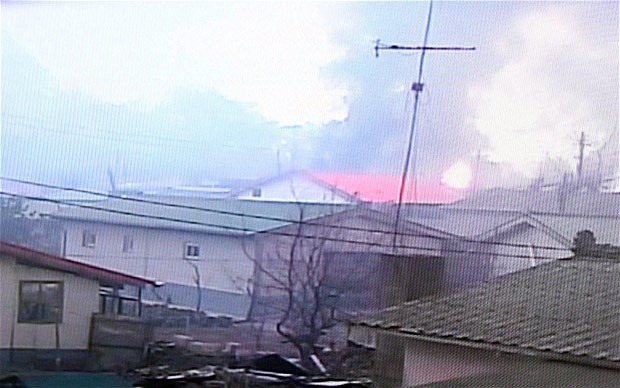
Here is the frightening video if you haven’t seen it yet…


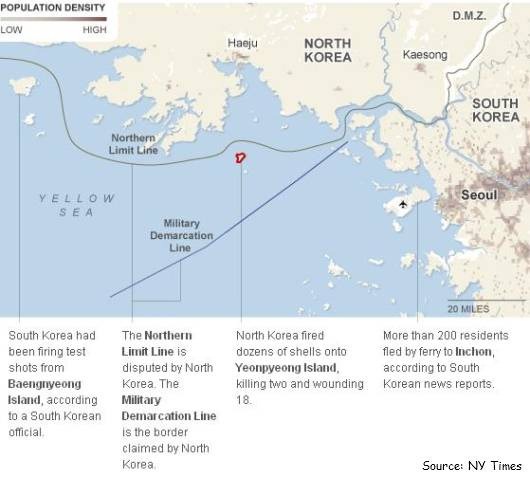
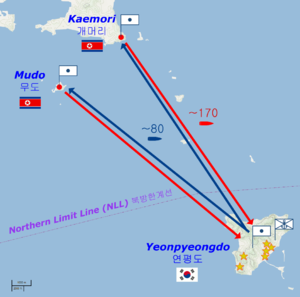
So much for the quiet week on blogging because of Thanksgiving. Yesterday NK started shelling Yeonpyeong Island in the Yellow Sea (what Koreans call the West Sea). It’s all over the news of course, but here is a good place to start, particularly on the possibility of a hawkish SK response. Here is a write-up from a more left-leaning Korean newspaper. For a good IR theory take on this, try here. I spoke yesterday on the BBC World Service “Newshour” program about this. Here is the link. My comments begin at 10:10 and conclude at 17:45 (this is ‘chapter 1’ of the listed choices). Here is the podcast (please refer to the download entitled “North and South Korea Exchange Fire 23 Nov 10”).

Here are my thoughts (fuller than my BBC remarks). All the links below connect to my previous posts on NK. Please see them for greater detail which this post summarizes:

1. I am surprised that this has evoked so much concern given that the Cheonan cruiser sinking in March was worse (46 deaths then vs 3 this time). The Cheonan sinking very clearly would entail many deaths, whereas yesterday’s artillery strike was less certain to do that. To my mind, NK is more culpable in the spring than this time, but the rhetoric is more belligerent from the ROKG this time than last. Even though fewer died, this might be explained by a ‘straw that breaks the camel’s back’ logic: SK has just had a enough of these sorts of out-of-the-blue strikes (point 3 below), and this time they are going to hit back regardless of the costs. This incident is also somewhat different from past provocations, because it openly is targeting South land territory, and the North Koreans knew that. The other Yellow Sea skirmishes were on the water. Also, there were civilians on the island – and only one firetruck – so it looks perhaps more egregious than attacking a warship. (Although the Cheonan sinking was wholly undeclared and the Yellow Sea islands have been disputed for a long time, so I still find the greater outrage this time confusing.)

2. NK is almost certainly miffed and unhappy at all the global press SK got for the G-20. This is a way to hit back and play the spoiler of SK’s afterglow. NK did something similar in in 1987, when it blew up KAL 858 in order to discourage SK from holding the 1988 Olympics. In both cases, SK regarded the event as a global coming out. In 1998, the Olympics showed that a previously poor underdeveloped country torn apart by war had bounced back through an astonishing economic miracle (2 decades of double-digit GDP growth) and was wealthy and stable enough to hold a major international event. The contrast with brutalized, still poor NK was obvious.  In 2010, the G-20 was also regarded in SK as a major coming out for Korea as a big economic player inside the elite G-20. And now, NK is even poorer and worse off than in 1988. The comparison is pretty stark. So my kremlinological guess is that NK is once again showing its displeasure and that it is still a major force on the peninsula.

3. NK has a history of these sorts of provocations against SK. These sorts of things are practically ritualistic now. While these things are disruptive (to say the least), they are not actually unpredictable. In fact, they follow a pretty established pattern of NK brinksmanship though asymmetric outlashings at SK from time to time. These strikes show the North’s unhappiness at something in the South (like the G-20 last week) or to bolster the CV of NK insiders (like Kim Jong-un today) jockeying for influence inside a fairly corrupt regime with pretty murky rules and shallow institutions. Just in the last 12 months, North Korea sank the SK Cheonan cruiser in the Yellow Sea (March 26, 2010) and fought a naval skirmish in the same area (November 10, 2009). There were also skirmishes in the same area in 1999 and 2002. So this stuff is pretty common actually.

4. This probably won’t escalate, because the South Koreans have little appetite for war against NK. The sinking of the Cheonan was a far worse provocation (46 sailors died), but the SK military did nothing, because most South Koreans just want to forget about NK. They don’t want their wealthy comfortable democracy trashed in a war with a ruler they consider a quack. So South Koreans just put up with this stuff. Their tolerance for NK pain is quite high, because the costs of war and reunification are frightening. Also, South Korea’s hands are badly tied by the extreme exposure of SK population centers to NK retaliation. 50% of the SK population lives within in 50 miles of the DMZ, and NK has stationed thousands, perhaps 10-20,000, canon and rockets with striking distance of those cities for the purpose of holding SK hostage. So NK can act out all these provocations with little fear of retaliation. It is just too risky for the South to hit back.

5. Finally, the Kim family transition in the North itself generates huge uncertainty. These kinds of strikes demonstrate the NK military’s relevance to all involved – not just in the South, but also China, whom they don’t want to dominate them, and to the leader-to-be, Kim Jong-un. This sort of thing reminds him who is boss in the regime, or at least, who is a competitor for power.

Asia’s Improved IMF Quotas — Wake Up! It’s not that Boring…

images

Here is a subject that could put anyone to sleep but is probably the best thing to come from the otherwise poor G-20 summit last week. The voting shares of the IMF were reweighted to reflect Asia’s expanding size in the global economy. Here is good write-up; for Asian self-congratulation, try this. This puts it in context for Korea.

The quota represents the percentage of control that a state has over IMF decisions. Big decisions are made by the IMF’s Board of Governors, the national representatives who collectively control the institution. On the Board, each country receives a weighted vote whose size (quota) is roughly in line with its national percentage of global GDP, crossed against the importance of exports to national GDP (its ‘openness,’ in IMF-speak). (The voting formula is ridiculously arcane for non-experts. There are endless proposals to reform it. Here it is in the words of the IMF itself.) In short, the bigger your quota, the more sway you have in IMF decisions (about loans, the creation of Special Drawing Rights, IMF responsibilities for the global economy, etc.). The biggest quotas, inevitably, belong to the US, Japan, and the Europeans. However, given Asia’s expansion of the last few decades, pressure is rising to re-weight the votes to Asia’s favor. In practice, that means giving China a bigger voice at the expense of the Europeans, who are resisting quite selfishly it must be said, for all their talk about cooperative global governance and multilateralism. US and Japanese shares will be scarcely affected. Korea’s share will reweighted a little bit as well (1.4% to 1.8%).

For Korea and other emergent economies’ share to get even bigger, they would need explosive growth like China’s, as well as a major demographic expansion. Neither will happen realistically. Globally speaking, Korea is just too small to have a much bigger quota, although a 0.4% jump is 30% quota expansion, which is actually pretty good. The really big quota fight is between China and the EU, with India coming down the pike as well. In short, global economic institutions are adjusting, albeit painfully, to the rise of Asia. The increasing equality of wealth between Asia, Europe, and North America means that the voting weights of each of those regions are slowly equilibrating.

States are sensitive about quota size, because it is a zero-sum game. If Korea gains .04%, that means some other state loses 0.4%. Hence the Fund can never be made large enough to make all feel confortable. Instead, control of the Fund will always be relative – if I have 0.0001 percent, then you do not have it. While global GDP expansion is positive sum, Board control of the IMF (and World Bank) Board is not. And inevitably, the size of a national quota is interpreted as a general sign of global clout and importance. One can see that in the Europeans’ strenuous efforts to delay and obfuscate the re-weighting, for they will lose in that process. It is like the veto rights of the permanent 5 members of the UN Security Council. That is widely considered as a signal of their great prestige, and even though the French and British empires are long gone, it is unrealistic to think that they will give up their P-5 status.

So Korea’s quota increase is good for Korea, in a small way, and it is just, insofar as Korea has grown more rapidly than the EU in the last few decades. But it is not really that important, because 1. Korea’s relations with the IMF are quite chilly anyway, and 2. Korea is simply too small economically and demographically at the global level. More interesting would be Korea’s ‘quota’ in the emerging Chiang Mai Initiative, which is like a local Asian version of the IMF.

Generally, we should be pleased that the IMF was able to evolve like this. The more it looks like the actual world economy, the more it can meaningfully intervene. Contrast that with the UN Security Council, frozen in time (1945), with three veto-wielding ‘great powers’ (Russia, France, and Britain) that are no ‘greater’ than a lot of other countries now. Unable to adapt – again, primarily because of European selfishness (France and Britain will not a agree to consolidate their veto into one for the EU) – the Security Council is sliding into irrelevance. If the IMF – the supposed global tyrant – can adapt, how about the UN?

Asian Myopia on the Imbalances – Deficit Importers will Revolt in Time…

Suominenfig1

This week, I explained the issue of imbalances in my classes, as well as the general failure of the Seoul G-20. For all the talk of Korean ‘leadership’ at the G-20, it fizzled. Instead of leading by example to actually push through a deal, Korea ethnocentrically took the G-20 as an opportunity to grandstand to the world that “Koreans are great.” So self-congratulatory G-20 concerts took the place of any real leadership on the most obvious thing Korea could have done – finish the US-Korea free trade agreement (FTA) – to help unwind those imbalances. Instead, President Lee choose to sink the FTA at the behest of rabidly protectionist, consumer-punishing Korean auto and agricultural interests. So, with no help from Korea’s ‘world leadership,’ global imbalances have worsened this year.

So let’s go over this once again – with economic logic in the place of raw nationalism.

1. In a closed system, like world trade, some one needs to buy stuff. Everyone cannot export; everyone cannot run a permanent trade surplus; it is mathematically impossible. We cannot export to the moon or God. There must be global demand somewhere, and for much of the last two decades, the US was that anchor – so much so that we even re-packaged the business term  ‘buyer of last resort’ to apply to the US. So, as my students protested, it is true that the US government and consumers, as well as many EU countries, went wild in the last decade with their credit cards and created their own debt problems. But it is also true that without their demand, Asia and the Germans would have nowhere to export to. Now that the US and many other places are deeply in debt, it is obviously time to return the favor. The old exporters should become new importers in order to restore some balance to the system. ‘Diffuse reciprocity’ in trade is a basic requirement, in order that no one feels too much like they are being rooked by the other side. Without rough balancing over time, political disruption ensues (think Greece this year). This threatens the whole system in the long-term. Why is the Korean media too myopic to not see that?

2. The near permanent trade surpluses (above graph) in Asia are not, NOT, natural. It is mathematically all but impossible that a free-trade environment would return a situation where Korea, Japan, China and Germany would run 30 years of trade surpluses while the US ran corresponding deficits in the hundreds of billions USD. Why is this nearly impossible? Because the currency of such super-exporters would go up and up as their exports went up and up. In laymen’s terms, if the whole world wants to buy your stuff (Japanese cars, Korean TVs, Chinese everything), then the whole world needs more and more of your currency to buy all those amazing exports. So all those foreigners buying your stuff exchange their currencies for your currency. All this bidding to buy your currency (so they can buy your exports) means that the price of your currency goes up and up. So if you are permanently exporting more than importing, your currency should be permanently rocketing to the moon as foreigners scramble to buy it. Of course this has not happened. If you look at east Asian currencies, they all are pretty soft against the dollar, frequently moving downward. This is mathematically impossible to square with a permanent trade surplus. The only possible explanation is currency interventions to keep their currencies undervalued. In other words, cheating. And this is in fact well documented. China’s currency is pegged at a ridiculously low value to the dollar (estimates rage around 40-50% undervaluation!), and the Koreans and Japanese regularly ‘sterilize’ their currencies’ appreciation through massive dollar purchases. The Korean central bank’s euphemism for such raw mercantilism is ‘fine-tuning.’

3. Trade must be a two-way street in the medium-term, or the permanent deficit countries will eventually revolt. Here the Korean media is totally unhelpful with its nationalist and short-termist thinking that Korea’s success requires a surplus. This is also logically incorrect. There is no especial value to piling up dollars. Foreign currency cannot be spent in another country, so why stockpile hundreds of billions of dollars, or in China’s case, trillions, of someone else’s currency? If you don’t spend it back by importing, then at some point your export targets run out of money. And this is precisely what has happened in the great recession. The importers of yore are broke, and they need some of their dollars recycled back as export sales. But if you politically refuse to countenance a trade deficit by buying imports from your trade partners, then eventually you anger them: you are trade manipulator, and you provoke trade conflicts. Japan learned this the hard way. Its currency and trade gaming lead to two US backlashes – first when the US broke the Bretton Woods system and inflated in the 1970s, and then again the 1980s with the Plaza Accord. And this is what the Fed’s current quantitative easing is today. The US, unable to convince the surplus countries (esp. China) to import for the collective good of the system, is going to force them to do so, or they will see the value of their dollar reserves evaporate in inflation. Quantitative easing is a declaration of war by the Fed on the People’s Bank of China. This is extremely risky for everyone, as it throws the dollar’s reliability in the air, but it shows you just how head-in-the-sand obstinate the surplus countries are. In order to maintain short-term trade surpluses, they risk the inflation of the very currency they have stockpiled.

Korea and the G-20: An Exercise in Koreaphoria

P101025001

A street near my house got festooned with G-20 flags for a week.

There has been lots about the G-20 in the major financial press, but little on the way in which Korea has rewritten the meeting, at least to itself, as a global homage to Korea’s arrival. Most Koreans haven’t the slightest clue what the G-20 is. Nor do they really care much for OECD trading norms – which, of course, is the whole point of the G-20. In fact, they flagrantly violate those norms (as just about every western businessman I have met in Korea reminds me at every conference I go to). The ROK is irritatingly mercantilist, and Americans are right to think Korea cheats on trade. So if Koreans actually wanted the G-2o to be a success, how about dialing down the protectionism and currency ‘fine-tuning’ (i.e., sterilization of inflows to favor big exporters like the ship builders)? I am hardly one to defend the US auto industry for making cars that no wants to drive and that wreck the environment, but Ford nails it with this write-up. So the Chosun Ilbo says Korea should be a good global citizen, but that’s not what Korea really cares about in the G-20.  In Korea-land, the G-20 is an opportunity to preen, not what it actually is suppsed to be – a global economic coordinating body. In the words of no less than the SK president, the G-20 in Seoul means, “Koreans are great and that the world is now recognizing that fact.” Somehow I doubt that is what Medvedev, Singh, Kirchener, and all the rest had in mind. *Sigh*

The Korean press is nothing if not unprofessional and arriviste, aggressively desperate for recognition that Korea is a ‘player’ or, in the locution most preferred by the jingoistic media here, an ‘advanced country‘ (with the obvious implication that other countries are therefore ‘below’ Korea – ask Koreans what they know about Africa, e.g.) Start here and here, in order to learn that the G-20 in Seoul means that the whole world is watching Korea, that Koreans should be proud, that Korea is a global player, a powerhouse, a model, blah, blah, blah. Among other narcisisstic disinformation was the media line that Korea was the ‘first’ non-G-7 state ‘ever’ to host the G-20 leaders. Technically this is so, but the G-20 leaders have only met 4 times before, so it’s hardly as unique as it sounds. (This is preceisely the kind of faux statistic the ROKG and media love to create in lieu of something meaningful; try here for a simliarly desperate non-category – that Korean is a ‘top five food.’) But nothing could stem the self-congratulation. For the three weeks previous, there was a media countdown to ‘D-Day’ – yes, that’s what they called it. Literally, in the top left corner of the major TV networks’ broadcasts, there was a permanent ‘D-15’ (day minus 15) or ‘D-3’ graphic counting down to the big day the whole world would swoon over Korea. Perhaps my favorite moment in this bathos of self-absorption was the televised message on ‘D-1,’ by no less than the mayor of Seoul, that Koreans should be nice to visiting foreigners if they meet them on the street. Hah! How about the rest of the time for those of us who live here, huh? The last thing already hyper-nationalistic Koreans need is to be told that they should be even more proud.

I have said it lots of times before, but Korea is a really nice place to live actually – a lot better than the Central Valley – but then Koreans insist on spoiling that with over-the-top insistence that Korea is unbelievably awesome, and using almost anything to argue that Korea’s ‘brand’ – whatever that means – is on the rise. If all this sounds like the Tea-Party’s hysterical American exceptionalism it should.

For a more serious take on the G-20, one that actually recognizes Korea’s small size and its consequent limits, try this piece by a friend of mine at the Korea Times. Cho admits what Koreans know in their hearts, but adamantly refuse to admit to foreigners: that Korea is a bit-player, that it faces severe constraints in the future, and that Korea’s super-growth days are over. In short, Korea is a middle power, will remain one, and Koreans should accustom themselves to this rather than demanding, Uncle-Tom style, that resident foreigners recite a mawkish Koreaphoria.

Another Too-Realistic War Video Game: We Need a Book on this Topic…

I guess bloodbaths are fun…


A few months ago, after endless referrals by my students that it was ‘totally awesome’ and ‘the real war on terrorism,’ I finally played the controversial Call of Duty: Modern Warfare 2. While much of it is entertaining to be sure, it is also disturbingly realistic and sadistic.  In fact, parts of it aren’t really ‘enjoyable’ at all, particularly the notorious airport massacre, where they expect you to mow down (yes, mow) civilians as a terrorist. (What psycho put that sequence in?) At the time, I said we really need a serious treatment of video games in IR. (I admit to being a fan of the Halo series, but in part because the aliens are silly non-human targets, so the ethical questions raised by ‘playing’ Modern Warfare are muted.)

Here we are again. I haven’t played this game, but who are these guys at Activision that come up with this stuff? A hat-tip here must go to Jon Westen for sheer stupefaction on this. There is so much wrong here, yet it is so obviously campy, I don’t know what to think. The best part has to be 0.14, with the smiling, chunky pre-teen blowing down the door for an Iraq-style house-to-house sweep. I know we are supposed to laugh (one can’t help it; check 0.44 when the fat guy falls over from the RPG back-blast), but isn’t it supremely immoral to laugh at realistically portrayed combat, especially when the military of the game’s target audience is involved in exactly this sort of urban combat? (The commercial is clearly modeled on Black Hawk Down.) I asked a similar question once before: is it moral to laugh at North Korea?

This raises a million good questions for a dissertation, although an interdisciplinary one, because the writer needs training in both communications and ethics to really get a handle on these issues. Here are just a few thoughts:

1. Without advocating censorship, is it ethically proper to take entertainment pleasure from direct, first-person involvement in realistic war scenarios? This strikes me as different from watching a war film that is realistic. No one would say that Saving Private Ryan or Platoon are enjoyable in the same way that these sorts of games are intended to be. The former are exposes that are tragic, and learning experiences for the audience on the horror of violence while nonetheless recognizing the moral necessity of force sometimes. In that sense they are good, and I recommend them in class. By contrast, games like this entertain through adrenaline rush: war is exciting not tragic, in the vein of the film 300 or Starship Troopers.

2. In defense of the games, the literature on battlefield stress does in fact identify the thrill of combat as one possible reaction. This theme was (badly) explored in the Hurt Locker last year. And in the far better Generation Kill, this is a topic of regular conversation among the soldiers, and the colonel in the last episode openly admits that he enjoyed the combat. (Patton said the same thing, that ‘war is hell,’ but he ‘would miss it so.’) And I imagine that in a dim way, that is what the game makers had in mind above when they made this commercial, particularly when they show the ‘combatants’ smiling as they blow stuff up. So we are all tempted by the thrill of killing? But aren’t these the sorts of Freudian, primordial, bloodlust instincts we want to tamp down? I think that is the ultimate moral problem of the commercial. War is supposed to be something awful and tragic; isn’t it political incorrect to show it as a kick-a– high like Hurt Locker or Ernst Juenger suggested? But if it really is that kind of high, are the Activision game designers just showing us our true nature? Tough…

Whoever writes this dissertation/book faces the obvious credibility problem that the field might laugh at it. That is an unfortunate by-product of IR’s stubborn determination to be as irrelevant as possible. But here are a couple possible tropes:

1. Our students, and many others, play these games a lot more than they read the world politics textbooks we assign them. They function, however badly, to communicate information about international relations to the public, and ignoring that out of professional hauteur is just arrogance. This is one reason why ‘IR and film’ courses have taken off in the last decade or so: so many people watch them. So the gap in literature, however silly it might initially appear, is there.

2. A distinction can be drawn between strategy games and first-person shooters (FPS). In grad school, I knew lots of fellow students who enjoyed the Civilization video game series, and just about anyone with an interest in history played Risk or Axis and Allies as a kid. (Risk taught me where Kamchatka was when I was 11.) These sorts of games focus on cost-benefit analyses, resource mobilization, probability estimations, etc. – i.e., game theory. The blood and death of war disappears behind primitive plastic representations, and the challenge is really bureaucratic not adrenal. By contrast, the ‘fun’ of the FPS is precisely the bloodbath, which is why they sell so much better and provoke so much more discussion.

3. The moral discomfort lies in the evolution of games from identifiably unreal entertainment into real-life simulations. Barnett makes the astute observation that unmanned drones used in combat are miniaturizing in such a way that they increasingly resemble the model planes people can build in their backyards. Gaming is similarly blurring these sorts of lines. I recall reading that race car drivers were practicing on the Gran Turismo video game, as were pilots on Microsoft’s Flight Simulator game. When I visited Ft. Jackson, SC once on an educator’s tour, they showed us how FPS video game technology was adapted for training simulations, and, of course, the Army has come in for all kinds of criticism with its America’s Army game, which, its detractors claim, is a shameless recruitment tool that militarizes high school. My point is that the more video games are like virtual reality, rather than a playful pause or break from reality, the more criticism will grow of disturbing content. It is the simulation of reality, not the violence itself, that so worries people (that is why Halo-style alien-invasion games are never so controversial).

So if you are a closet video junky, here is your excuse to intellectualize your couch-potato-ness. It could be a very interesting book.

That Hysterical ‘Chinese Professor’ Ad from the 2010 Election Campaign

China’s own Heinrich von Treitschke!


This is a great ad. Anyone with an interest in Asian security should see it. Not only is it a great inside joke if you are in this area, it also does a great job capturing the American public’s angst about China’s rise. And quite honestly, it’s basically correct. We are spending our way into oblivion, and the Chinese are (deservedly) laughing as we fall into the abyss of our own making. We are doing this to ourselves – and Chinese elites are studying past hegemonies – so the scenario presented in the ad is, in fact, credible. Plus, it’s nice to see a professor presented in the US media who actually looks serious and authoritative instead of the usual Fox Network tropes that we’re pointy-headed, irrelevant Marxists who have affairs with our students. Now if only that professor image could include Americans…

There is some grumbling that the ad is racist. A friend in the field suggested it replaces the bogus Japanese threat 20 years ago with a Chinese one today. But I don’t really see that myself. The concern of the ad is not the ‘yellow-peril,’ but American foolishness, and the Chinese are presented rather well actually. The students look serious, civil, and healthy, while the prof behaves and talks like he actually knows wth he is talking about. Contrast that with typically condescending or idiotic portraits of academics in the US media – think about the ridiculous professor sequence from last year’s Transformers 2, e.g. At least this guy actually moves and speaks the way we really do in class. Ok, well, maybe he is a little more like Heinrich von Treitschke than most of us are, but still, he looks like a pretty good lecturer. Think of him as the Chinese Leo Strauss or something. LOL. I imagine that his class would be pretty fun to take. Fallows’ treatment of the ad is worth a look too.

More seriously, the ad is right on target actually in its basic claim. American errors and profligacy are the makers’ real targets; it is not ‘Asia-baiting,’ although it may feel that way initially. If it gets Americans to think more seriously about the looming debt crisis and the seriousness of the Chinese challenge, so much the better. Certainly the Tea Party, for all its sturm and drang, has neither the guts nor focus to say anything meaningful about the US response to Asia – another one of its many failures of seriousness. Nor does anyone in official Washington really know how to rein the $1.3 T budget deficit – funded, incidentally, by massive borrowing from China – without huge tax increases and spending cuts. (Quick note: It’s mathematically impossible!, which is why no one has any idea.) So if we must scare Americans into budgetary seriousness by noting that China is breathing down our neck (which they are starting to), then so much the better.

Finally, it is worth noting that China is a much more serious long-term threat than Japan ever was. China is 10 times larger in population (and 4 times larger than the US), and it is not democratic. So while I wouldn’t want yellow-baiting, ads like this that prick America’s unipolar daydream are useful actually.

The Tea-Partiers and US Foreign Policy, post-2010 election

tea-party-signs

So Obama took the ‘thumpin’’ that W got back in 2006. I find this unfortunate generally, because I believe the GOP is still unreconstructed from the dark days of George W Bush. Yes, the Democrats are protectionists tied to rapacious public sector unions, but the anti-science, jingoistic GOP is worse. I worked for the GOP on-off throughout the 1990s and cast a heartfelt vote for Bob Dole. But when Bush said Jesus was his favorite political philosopher in 2000, he lost my vote, and things went downhill fast – Iraq, torture, ‘big government conservatism’ (ie, debt), Katrina, Rumsfeld, etc. Yet astonishingly, the GOP learned nothing in the wilderness and got even worse after W – which still confounds me – with the rise of Sarah Palin. She and the Fox News set of Hannity and such strike me as astonishingly unserious; I recall reading that McCain’s people had to explain to Palin why there are two Koreas! With their capacious, uncompromising rhetoric of freedom or American power and awesomeness, I just can’t image them actually doing the hard, compromising business of government.

So on their big day of triumph, that is my ultimate question about the Tea Partiers – American exceptionalists in the extreme – about foreign policy. Consider:

1. Tea Partiers worry about debt, but nothing bloats out government like defense. The combined budget for national security is around $1 trillion, if one includes intelligence, veterans affairs, some relevant homeland security spending, and the Department of Energy’s control of US nukes with the traditional DoD budget. I just saw Rand Paul on CNN. In his acceptance speech he talked about freedom from socialism and crushing debt, but as Andrew Sullivan identified months ago about the movement generally, Paul did not mention what he will cut. And none of them seem prepared to say that Defense really needs to go on a big diet, unless you want to start cutting Medicare/Medicaid/Social Security.

Defense plus M/M/SS are 80%+ of the budget, so something’s got to give. Is the Tea Party ready to chop defense as the Brits just finally admitted was necessary? I don’t see this, given how super-nationalist the Tea Partiers are. Their rallies were filled with endless paeans to the uniformed soldier. But Americans love M/M/SS entitlements too; no one wants grandma to lose her check either, regardless of their feelings about ‘socialism.’ I would love to see a serious debate inside the GOP, like just happened among Britain’s Tories this fall, on how to square guns-and-butter. That the Tea Party simply will not go into the details and grit on this is why I just don’t believe they’re serious. (Try here for ideas on DoD’s needed diet.)  Obama may a ‘socialist’ to them, but I don’t see them proposing what parts of the government to close to save the money. Even WR Mead admits this about the movement.

2. What do the Tea Partiers say about the rise of Asia and the BRICs? Phillip Stephens really nails this, IMO. Obama has tried to push the US to adjust to a world where US power is imperiled by overstretch (from huge debt and two wars) and simultaneously confronted by the ‘rise of the rest,’ ie, the growing wealth and social mobilization of much of the former third world. I don’t mean just China and India either. Lots of places are closing the gap with the US as they get wealthier. Smaller countries too like Turkey, Indonesia, S Korea, South Africa, etc. are all getting wealthier and so more capable of resisting US pressure, forging deals and agreements beyond the US, etc. As I’ve said before, this not the end of American power – only intra-US foolishness like the Iraq War and the debt can do that. But the social and economic modernization of much of the planet through globalization does slowly reduce the US room to maneuver. Hence we have the G-20 now.

Yet I see no recognition of this in the Tea Party, only endlessly repeated neocon/theocon narcissism about America as the greatest country on earth. I really do wish American conservatives would travel more to grasp that they are limits, that God is not an American, that foreigners find this sort of rhetoric deeply insulting, etc. This partly what I meant about the Tea Party simply not being serious. The Tea Parties, so far as I heard and read their stuff, are militant in insisting on Henry Luce-style US exceptionalism. This may make good politics against Obama the non-citizen Muslim, but in the real world, it is is poor training for the serious trade-offs the US faces in a crowded, ‘post-Atlantic’ world, where the US fractions of global GDP and global population are in decline and many foreigners don’t trust us after W.

Shallow, narcissistic talk about how awesome the US is, how it is the greatest force for freedom in the world, or the most amazing place in history is not actually real geopolitical analysis at all. It does nothing to prepare the US electorate for challenges like the Chinese juggernaut, a looming defeat in Afghanistan, a NATO unable and unwilling to fight with the US much at all anymore, climate change, etc. The irony of course is that earlier Republicans did in fact talk seriously about foreign policy. Nixon, Kissinger, Scowcroft, Bush 1 – all spoke realistically about America’s reach. This is exactly what the US needs now given the debt and dysfunction of the GWoT. Hence I like Obama’s more restrained style, such as the Cairo speech. But neoconservatism seems to have replaced realism as the dominant foreign policy ideology of the GOP, and too much of it is easily politicized fantasy to stroke the American ego about our ‘special role.’

Japan is an EU Country Trapped in Asia

japan_us_flag

The Council of Foreign Relations blog, Asia Unbound, is quite good. If you don’t read it, you probably should before you read my stuff. To be sure, CFR is establishment; indeed, it is the very definition of the foreign policy establishment in the US. So it is not exactly the font of challenging new ideas. But still, they are linked into power in way that lonely academic bloggers will never be. And this week’s bit on Japan really got me thinking about how Japan is basically stuck with the American alliance indefinitely, whether they like it or not.

Recall a year ago when the LDP got whipped in the election, that there was lots of talk about how Hatoyama was going to create distance between Japan and the US, how this was a new dawn in the relationship, how the Japanese left would be so much more prickly with the US than the old boys network of the LDP. I was fairly skeptical of this at the time, and I think the recent flap with China over the islands has done a lot to confirm that skepticism.

Japan really has nowhere else to go but the US. It is stuck with us, primarily because it is geographically fixed in a neighborhood where it has no friends. And this opens all sorts of room for the US to push and bully Japan, which leads to regular Japanese outbursts that Japan needs to be independent of the US. (For the most famous, read this.) In fact, Japan is like a post-modern EU country in the wrong place. It should be comfortably ensconced in a post-national intergovernmental framework like the EU, where it could promptly forget about history and defense spending, and worry about how to care for its rapidly aging population – like Germany is morphing into ‘Greater Switzerland.’ But it’s not. Instead, Japan is trapped in modernist-nationalist-historical Asia, surrounded by states that don’t trust it and who want a lot from it that it doesn’t really want to give (historical apologies, imports, engagement, development aid, territorial compromises).

Consider that Japan, like China or Russia, has no friends or allies (save the US), and lots of semi-hostile neighbors:

Russia: Neither side has much interest in the other. There is an island dispute that has blocked normalization for decades. And, of course, Russia has been an erratic partner for just about everyone, not just Japan, since the end of the Cold War. So there is nothing to gain there.

Korea: There is also an island dispute with South Korea, over which even North Korea (!) has supported the SK position. NK kidnapped Japanese citizens in the 70s, and this has remained a permanent fixture in Japanese politics. For the North, Japan is high-up on the hit list; the North has launched missiles over it. Relations with the South are possibly even worse. S Koreans are intensely japanophic. The island dispute (Dokdo) rouses extraordinary passions here. Finally, of course, both Koreas are furious with Japan over its invasion and colonization from 1910-1945 and feel that Japan has never properly apologized.  Given how much S Korea and Japan share – democracy, concern over China’s rise, a US alliance, fear of NK, Confucian-Buddhist culture – they should should be natural allies, but Koreans will tell you with a straight face that Japan wants to invade it again. So forget that.

China: Yet another island dispute plagues the relationship from the start. And like Korea, so does history. The Japanese were even harsher in China than they were in Korea. The Rape of Nanking was brutality on par with the Nazis, and the Japanese used biological warfare against the Chinese as well. As the CFR post linked above notes, anti-Japanese street protests are becoming a regular part of Chinese politics now. A Sino-Japanese reconciliation would require astonishing, Willy Brandt-style statesmanship that the immobilist Japanese political system is wholly incapable of delivering.

Southeast Asia/India: Things get a little easier here, if only because it is further afield. But the ASEAN states too suffered under Japan in WWII, and like China and Korea, don’t feel that Japan has engaged in the appropriate historical reckoning. Only India is a possible serious Asian ally of the future because of mutual concern for China and the lack of historical-territorial problems.

Bonus problem – Economic Decline: As if this unhappy neighborhood weren’t trouble enough, add in Japan’s bizarre economic malaise. When China, Korea and the Soviet Union/Russia were a mess a generation ago, Japan could strut in Asia, but now these competitors are closing the gap while Japan stagnates. That just makes all the frictions that much harder to manage. China is so big, it can afford to miff the neighbors, but Japan no longer has this luxury.

In short, a weakening Japan so infuriates it neighborhood, that the US is all its got left. Given Japan’s paucity of options, the US has lots of room to bully and push Japan. But it must ultimately give in, because it’s position in Asia alone would be terrible – isolated, suspected, friendless. So bad is Japan’s position, that the US could effectively bring down the Hatoyama administration over something as minor as Futenma.

This is not meant to be an endorsement of US wedge politics against Japan. But it should certainly explain why its 20-year old complaint about US dominance has led to nothing, just like Gaulle’s petulant withdrawal from NATO ended in ignominy when the French finally gave up on ‘expectionalism’ and rejoined last year. It’s nice to be two oceans away from the competitions of Eurasia…

Is there Halloween in Korea? Alas, no…

I still love Charlie Brown 30 years later…


It’s Halloween, so here is something semi-serious – if US holidays show up in Asia, is that proof of cultural Americanization?

One of the things I miss most in Korea as an expat is the US holiday season. In terms of fun, parties, color and festivities, nothing beats the three-month run of Halloween, Thanksgiving, Christmas and New Year’s. Interculturally then, it is always interesting to see how much of this washes into other countries, given the endless debate about Americanization, globalization as cultural American imperialism, and all that.

In that vein, readers from the left might be glad to hear that little of that occurs in Korea. US holidays are generally un-celebrated here. While Korea is christianizing rapidly, Christmas has not even come close to the annual fun-time blow-out it has become in the US. It is still a religious holiday, not the cultural and shopping event it has evolved into in the US. (Ironically, religious conservatives who disdain the commercialization of the holidays might like the Korean attitude.) And Halloween has come mostly as an odd American event that is seen as somewhat fun, but kind of strange. When I explain Halloween to Koreans – Hallow’s Eve as the last night for evil spirits’ rampage in old Christian tradition – most Koreans find it fairly ridiculous. And all those new Korean Protestants don’t seem to know that story either.

Because of the big US presence in Korea for decades – first political-military, then commercial, increasingly now religious (American Protestantisms are pretty successful here) – you do have an awareness of US holidays, and some celebrations. But interest in this among Koreans generally serves Koreans’ interest to demark themselves from their fellows as cosmopolitan, worldly, and traveled. Ie, if you’re a Korean who celebrates Halloween with some resident expats, then you are ‘linked-in’ to the US culture in a way other Koreans are not, and that is a mark of social prestige. It is ‘cool’ to be able to say you celebrated Halloween with some white guy, kinda like it was to own a pair of blue jeans in the USSR.

In practice, then there is no trick-or-treating at all. Koreans mostly live in high-rises anyway, so trick-or-treating would be a weird, vertical affair requiring constant one-floor trips in the elevator. Horizontal neighborhoods filled with lights and people ambling about don’t really exist here. There are Halloween parties though. Korean clubs have them, but I have heard they are pretty strange events – just like a regular night at a club, only with some people in weird make-up. (Technically, there is no race-line for club attendance, but there are Korean clubs where foreigners would just never go in practice.) Ultimately though, it is the expat bars that try the hardest. They have costume contests and catch the spirit pretty well. The best expat bars are mixed; ie, Koreans come too. My impression though at these has always been that Koreans in attendance find the whole thing pretty bizarre and don’t get it at all.

So enjoy your Halloween. You are lucky to have the real deal…