Is there an EU Role in Asia? (2): Not Really… (plus thoughts on Greece)

asem6_logo01

Greece Addendum: I spoke at an EU conference yesterday, and I was amazed at how blithely the EU representatives glided by the Greek meltdown. If you read the coverage from the Economist or Financial Times, they make it sound like this is an existential crisis, but the Europhiles would have none of that. When I asked, I heard variants of the ‘it’s-too-big-fail’ argument: the euro is too important, Greece must and will be bailed out, the EU cannot fail. This strikes me as putting your head in the sand – denial rather than analysis.

Far too much of the EU’s supranationalism is reallyone country’s supranationalism paying for other countries’ nationalisms. That is, Germany pays for its historical guilt by paying for European unity heavily on its own. (Check this graphic to see just how much the Germans fork over.) This free-riding on German liberal guilt has pompously masqueraded as ‘transcending the nation-state.’ It is perilously close to fracture today, but I guess this can’t shake the Kantian-Europhilic elites that dominate the ‘eurocracy’ and its affiliated NGOs and universities. As I argued in paper (below), European regionalism is as much an article of faith as a testable empirical proposition, and this attitude has spread to Asia, where the regionalism discourse – in the face of persistent nationalism and talk-shop regional organizations – seems like an even greater fantastical flight of fancy.

For what its worth, I think the EU and the East Asian Community are both good ideas, but I think they are seen in too rosy a light too often. Nationalism is far more persistent, and a much deeper obstacle to regionalism than European-trained IR and foreign policy elites will admit. For good summaries of the big EU’s challenges, if not coming paralysis, try here and here.

Part 1 of this post is here. This post is intended to be a graphically summary of part 1’s argument.

Korea and the European Union have signed a free trade agreement, and the European Union is regularly a top five export market for Korea. Both sides are now exploring further dimensions to the relationship. Using a traditional list of state goals in foreign policy – national security, economic growth, prestige-seeking, and values-promotion – I examine the prospects for cooperation and integration in the future. What would either side gain by richer contact? I find that deeper engagement is unlikely. Most importantly, neither side is relevant to the basic security issues of the other. Specifically, the EU cannot assist Korea in its acute security dilemma, and ‘sovereigntist’ Korea does not share EU preferences for soft power, regionalization, and multilateral collective security. However, Korea is likely to pursue the relationship for cost-free prestige-taking. And the European Union will understand this ‘Asian bridge’ as a success for the promotion of liberal-democratic values in a non-European context. Pro-regionalist elites, most notably the ‘eurocracy,’ may pursue ‘inter-regional’ ties – such as ASEM (picture above) – for internal institutional reasons, but deep Korean attachment to the Westphalian state model will likely stymie such efforts.

Table 1 summarizes my findings:

Table 1.: EU-Korea Dyadic Benefits

 Foreign Policy Goal                                                      Benefits to each Player

  EU Korea
Security Minimal– no Korean power projection to Europe

– Korean irrelevance to Russia, GWoT/Islam, Southern & Eastern Europe

Minimal– No EU role in 6-Party Talks

– No EU global posture, esp. re: the DPRK

– Shared ambiguity on PRC

– EU irrelevance on Japan

Growth Welfare-Enhancement of FTA assumed Welfare-Enhancement of FTA assumed
Prestige Middling– Korea too small to meaningful raise EU’s global status

– Korea relationship serves eurocracy’s internal bureaucratic interest

High– large, ‘civilized’ EU raises Korea’s global profile
Values High– Korea as central example of universality of western values Minimal– low likelihood of the ‘Korean Wave’s’ success in the EU/West

Is there an EU Role in Asia? (1): EU-Korea Relations beyond just Trade

EU-Korea Flag

This entry is cross-posted at the excellent European Geostrategy. Leave comments there as well. Part 2 is here.

On May 6-7, 2010, the EU Center of the Pusan National University is holding a conference on EU-Korea relations. This is a good time to think about the EU’s relations in Asia, about which I have been pretty critical so far. Here is a summary of my paper. I intend to submit this for publication, so comments would be especially welcome. Email me if you want the whole thing.

In 2009, Korea and the EU signed an free trade agreement (FTA), and the EU is regularly a top five export market for Korea. Interest in future cooperation is high, however the research on which this post is based finds that deeper engagement is unlikely. Most importantly, neither side is relevant to the basic security issues of the other. Specifically, the EU cannot assist Korea in its acute security dilemma, and ‘sovereigntist’ Korea does not share EU preferences for soft power, regionalization, and multilateral collective security. However, Korea is likely to pursue the relationship for cost-free prestige-taking. And the EU will understand this ‘Asian bridge’ as a success for the promotion of liberal-democratic values in a non-European context. Europhile, pro-regionalist elites may pursue ‘inter-regional’ ties to bolster the European Comission (EC) within Europe, but deep Korean attachment to the Westphalian state model will stymie pan-regionalism.

Neither the EU nor Korea can meaningfully contribute to the other’s primary security challenges – a central pillar for deeper bilateral relations among states. As James Rodgers and Luis Simon note frequently, the EU lacks serious power projection far from the Continent. Its ‘loss of strength gradient’ toward East Asia is severe since the British retrenchment from east of Suez. The EU cannot meaningfully deter NK or China. EU land forces do not bolster US Forces in Korea. Although a participant in the Proliferation Security Initiative and the (now defunct) Agreed Framework, the EU plays no role in the new Six Party frame. Similarly, Korea is irrelevant to big EU security issues, such as the course of Russia, terrorism and the Middle East, or Eastern Europe’s stabilization. Their shared liberal democratic values place them broadly in the liberal security community of the democratic peace, but a more positive military contribution to either’s security is unlikely.

Both sides derive prestige from the relationship. Korea, small and peripheral to the global economy until recently, captures most of these benefits. A bilateral relationship with Europe flatters the Korean imagination of its stature in world politics. Instead of a half-country whose international image is dominated by a clownish rogue despot, Korea lusts for Europe’s status and rank. Its famous antiquities, high-profile tourism locations, rich history of art and culture – all nested in a wealthy, healthy, international society broadly at peace with itself – strongly attracts the Korean imagination.

A well-known, highly recognized ‘global player,’ the EU captures little direct prestige from Korea. However, the Korean partnership does benefit pro-European elites within the EU, most notably in the EC/EU bureaucracy. The ‘eurocracy,’ trapped in a decades-long turf-battle with the national bureaucracies, is likely to seize on the prestige of a direct EU-level relationship with a G-20 economy. This is ammunition against critics that the EU is simply a trade deal or that other states do not take it seriously. If the 2010 host of the G-20 summit takes the EU seriously enough to label it a ‘strategic partner,’ then the eurocracy gains in the intra-European conflict to establish the EU more soundly and eventually build a real Common Foreign and Security Policy.

Finally, the EU does reap psychological gains of domestic values validation. Korea is a great successes in the transplantation of liberal, democratic, Enlightenment values outside of the West; Korea is routinely touted a central case that these values not ‘western,’ but in fact universal. This excises the cultural-racial bite of the ‘Asian values’ and ‘human-rights imperialism’ arguments of Asian actors such as the Chinese Communist Party or Matathir Mohamad. Conversely, Korea will find little back-traffic, despite heroic efforts to export the ‘Korean Wave.’

The EU and Korea have an unremarkable relationship. Given the mutual irrelevance of one’s security to the other, it is easy to predict that no alliance is likely. The FTA is step forward, but ultimately one based solely on material utility. The EU also trades with Iran, and Korea has a ‘strategic partnership’ with Kazakhstan. This provides perspective on the mutual, post-FTA rhetoric of ‘strategic partners.’ A ‘friendly partner’ is a more credible assessment. The EU-Korea relationship will not mature into a meaningful bond to rival the more critical relations of either with the US, China, Japan, or Russia.

The EU’s preference for Asian regionalism will generate friction, although Korea will tolerate it in order to retain the huge prestige boost an EU relationship. Hence the greatest frustration will fall on the European side. Korea’s prestige gains are already achieved by the completion of the FTA and the ‘strategic partnership,’ and the EU cannot leverage a security contribution to the peninsula to push Korea into the East Asian Community (EAC) or Asia-Europe Meeting (ASEM). So long as Korea, and East Asia generally, remains committed to the ‘ASEAN Way’ of talk-shop intergovernmentalism, Kantian-Europhilic elites – pro-EU, pro-EAC, and pro-ASEM – are likely to find nationalist Korea, and Asia, a frustrating ‘inter-regional’ partner.

Stand with “South Park” vs Sharia Orwellianism

SouthPark

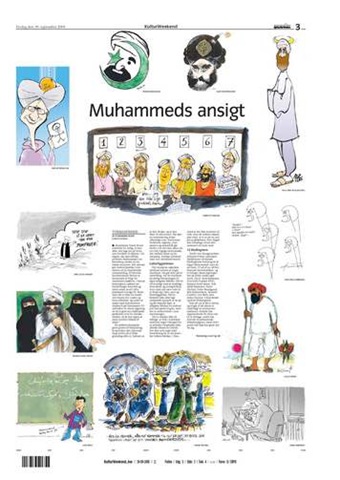
By now you know that not even “South Park” is immune from salafism’s insistence on terrifying and alieanting the rest of the world. You may love or hate the show, but the defense of free-speech is a central values breakpoint between liberal modernity and reaction, between the best traditions of the West and the worst of Gulf Islam. This is an important part of the battle of ideas in the GWoT, as is defending the Salman Rushdie, Ayaan Hirsi Ali, and the Mohammed cartoonists in Denmark. Ali, herself a terrible victim of this paranoia, has a nice summary of the explicit free-speech threat of Muslims exporting sharia onto non-Muslims.

Everyone with a blog should do as Jon Stewart did on April 22 and explicitly defend the right of free speech, especially the right to ridicule and mock religion. Religions as a body of thought deserve as much scrutiny as any another paradigm, intellectual system, or philosophy. And religion certainly needs this criticism if it is not just to be superstition and received ascientific silliness, repackaged as ‘time-honored tradition,’ and codified by some book written a long time, then repackaged as ‘divine revelation.’  Even the faithful know this in their heart of hearts. Consider this counterfactual: if your friend told you that snakes could talk, that people came back from the dead, or that bushes burned without disintegrating, wouldn’t you be pretty incredulous – unless you heard it at Sunday school? I never had a teacher in my Catholic grade school who could answer that one, which was a pretty big let down.

If you don’t know the story of Augustine’s conversion to Christianity, it is an object lesson in this healthy interchange between religion and criticism. Read the Confessions for the whole story, but the short version is that the young Augustine found Christianity ridiculously primitive, intellectually soft, and superstitious. Trained in Greek philosophy and the high Latin of the great Roman authors, he found the writing of the New Testament poor and unconvincing. The story of how Augustine still came to Christianity and helped drag Christianity into a meaningful interaction with Greek philosophy is intellectual gripping, spiritually provocative, and more likely to convince you of Christianity’s veracity than any of the Palin-esque, family values TV preachers who masquerade today as authorities on Christianity. (If you want a 20th century version of this back-and-forth, read about CS Lewis and JRR Tolkein’s lengthy discussions of Christianity.)

The point is that religions, most especially today Gulf Islam (and American evangelical Christianity), desperate need their Nietzsches, South Parks, Hirsi Alis, and Christoper Hitchens to force them to stay up to par. Defending “South Park” is not just about free speech. It’s also about the larger point made by the New Atheists in the last 10 years: that religion must find a way to live in a the modern, plural, ‘impure’ multicultural, scientific, democratic world. If it can’t, if it simply lashes out to demonize (Benedict XVI) or butcher (salafism) its opponents, then trained people will never take it seriously. And that is the greatest ‘disrespect’ the faithful should really fear – when even the mildly educated think you’re like the Raelians or something – simply ridiculous and unworthy of meaningful consideration.

Addendum: It should be noted that the Islamic prohibition against imagery of Muhammad is far less totalist than the Gulf Sunni salafists would have you think. Shi’ites don’t care a whit, and Southeast Asian Sunnism was pretty lenient on this too until Saudi oil money and clerics start bringing the ‘pure’ (i.e., ‘arid-as-the-Gulf-desert’) version of Islam in the last generation. ISLAM DOES NOT HAVE BE MONOPOLIZED BY THE JIHADIS.

The Six-Party Talks as a Game Theoretic ‘Stag-Hunt’ (2): China Likes the Rabbit Too Much

hackaert-stag-hunt-forest-NG829-fm

Part one of this post is here.

In the formal language of game theory (GT), here is the pay-off matrix for the hunters (SK, PRC, Japan, Russia, US) if they capture the stag (NK’s better behavior in the region):

1. SK: SK is the most obvious winner from taking the stag because NK is an existential threat to the South – both physically and constitutionally.

2. Japan: Japan is the second big winner, because the NK nuclear and missile program increasingly represent a major physical threat to its cities, and perhaps even an existential threat if the North can put enough nukes on missiles.

3. US: The US is a weaker winner, because it is far less threatened by the North directly. The big pay-off from NK change (the stag) would be the reduction in troops and other expense from keeping USFK in Korea. Another benefit would be the reduction in the post-9/11 concern for proliferation of missile and WMD technology to terrorists and rogue states. But this is still far less critical than SK and Japan’s benefit. To the US, NK is more a troublesome, throwback-from-the-Cold-War headache when it would rather concentrate on salafism and the rise China.

4. Russia: Russia has essentially no stake in Northeast Asian security, given that it has basically retrenched from the region to focus on Central Asia and Eastern Europe. However, the Six Party talks are a prestige-generator for a country desperate to still look like a great power even as its lineaments erode. So Russia doesn’t get much from the stag.

5. China: The PRC’s portion of the stag is the smallest, while its rabbit is the biggest. A more docile NK would almost certainly fall heavily under the influence of its southern twin. The more ‘southernized’ NK becomes, the less sinified it will be. (This of course is the whole point from the Korean perspective – reunification.) And the PRC almost certainly reads greater southern influence in the North as greater American influence. So the Chinese rabbit is the long-term survival of a separate NK state to act as a buffer against the democracy, American influence, liberalism, and Korean nationalism that would all flood into NK were an inter-Korean settlement (the stag) finally struck. (A friend at the Renmin University of Beijing all but says this here, and I generally find Chinese scholars will openly tell you why the PRC props up the DRPK even though the PRC’s official policy is reunification.)

What to do then? How do the other hunters get China to stop defecting and start cooperating? The most obvious way is to equalize the pay-offs more, i.e., make it more valuable for China to coordinate by increasing China’s portion of the stag. Here is where strategic restraint on the Cheonan sinking may be useful. If SK holds its fire over the incident, it may be able to ‘sell’ this restraint to China as a hitherto unrecognized benefit. The SK claim to China would be:

See how small your rabbit really is? NK is so unpredictable, so erratic, so uncontrollable, that the stag is more beneficial than you think. Without a long-term settlement, NK’s erratic behavior could eventually generate a crisis the SK population will no longer choose to overlook. Next time this happens, SK government may be forced by popular outrage into coercive retaliation that could pull everyone in northeast Asia into the vortex.

Recall in early 1991 that Israel demonstrated similar strategic restraint as Saddam Hussein shelled it with Scuds before Desert Storm. This helped convince Saddam’s Arab neighbors that Saddam really was a danger to everyone. SK might be able to do the same here.

However, this is unlikely to be enough. China will probably as for a higher concession – a promise for the removal of USFK after unification. It is not clear to me if a unified Korea would need USFK, so this may be an option to explore.

Six-Party Talks as a Game Theoretic ‘Stag-Hunt’ (1): N Korea is the Stag

stag_hunt

Last week, I suggested that South Korea demonstrate ‘strategic restraint’ vis-a-vis NK if the North truly sank that SK destroyer. Not only are the South’s tactical response options terrible, but there is benefit here to be captured if the South’s restraint is marketed to China as a concession in exchange for more pressure on the North. For all of NK’s reputed autarky, it is in fact highly dependent on Chinese aid and trade, both licit and illicit. Without Chinese fuel oil, the lights in the North would go out; without the imports of booze, dollars, and pornography, the life of the Korean elite would be far less pampered. China cannot force the NK to change, but it can dramatically raise the costs of its continued intransigence.

All this is well-known but could be helpfully formalized in our research. In fact, I am surprised how little game theory (GT) I see applied to NK at the conferences here in Asia, given how obvious its utility is to the bargaining and brinksmanship endemic in NK foreign policy.

The stag-hunt (SH) is the best GT model or ‘game’ by which to map Northeast Asia’s security dilemma. We use GT all the time in IR but usually the prisoner’s dilemma (PD). (If you have no idea what I am talking about, start here for GT in IR; the Wikipedia write-ups, linked for the SH and PD, are actually quite good too.) The PD is cooperation came – how do you get the players to cooperate when there are high incentives to cheat on each other. The stag-hunt is better understood as a coordination game – how do you get the players to coordinate a common strategy to get the big pay-off, the stag.

Here is the basic schematic: a group of hunters can probably bag a big stag if they work together. They can weave a net around the stag that is likely to catch him. However, the hunters will also see the occasional rabbit bounce by. If one of the hunters goes for a rabbit, the stag will escape through the hole created and the other hunters will lose the stag almost certainly. Formally put, the stag is a big pay-off, and there is a good probability of successfully catching it if the hunters all coordinate. Conversely, the rabbit is a sure thing, but a much smaller, payoff. So the trick is to convince all the hunters to coordinate and not take the easy rabbit by cheating or ‘defecting’ on the other hunters.

So apply this to the Six Party Talks: The Hunters (players of the game) are the 5 parties besides NK: Japan, US, SK, Russia, and China. The Stag is North Korea, or more specifically change by the NK regime. The NK stag knows that if the 5 hunters can’t cooperate, it can escape. And it is widely noted that this is exactly what NK has done for decades. NK’s foreign-policy methodology since the 50s has been twisting and turning to prevent domination. Since the end of the Cold War, this has meant a constant ‘divide-to-survive’ effort aimed at the other 5 parties to prevent their coalescence into a united front against the DPRK. (I even wrote a book chapter about this, in galleys here.)

So the trick then is to build a common front among NK’s hunters to insure that they won’t defect or cheat and go for the rabbit. The rabbit in the NK case would be NK concessions to one party, but not the others: for example, abductee returns to Japan, family reunions for SK, mineral exploration rights for China, etc. These piecemeal, now-one-but-not-the-other concessions are all designed to keep the other 5 players off-balance and disunited. To date this has worked spectacularly well, even though the 5 hunters all know they are getting shamelessly manipulated.

The big problem to date for the hunters’ coordination is that China sees a lot of gain from taking the rabbit. The Chinese rabbit is in fact so juicy, it probably outweighs the tasty stag. The Chinese rabbit is a route of influence into the Korean Peninsula through North Korea’s continued existence. The big stag – change in NK to be a better international citizen in Northeast Asia – is of much greater value to SK and Japan, followed by the US, than it is to China. So long as China perceives a utility from NK as a buffer against SK, Japan, and the US, it is likely to continue to defect on 5 party cooperation, as it did last year, and take the rabbit of propping up NK in order to influence Korean events.

Part two is here.

Ahh, the Navel-Gazing Pakistani Military: One More Reason to Be Out the Door of South Asia…

pakistan-war-games-2010-4-18-11-12-9

Thomas Barnett is a good blogger and his strategy work, especially the Pentagon’s New Map, is solid, if not exactly IR theory. I think Barnett sees himself more like Halford Mackinder or Robert Kaplan than Kenneth Waltz or Robert Keohane. In any case, his books are worth your time in that ‘not-quite-IR-but-still-important’ category (which also includes books like the Lexus and the Oliver Tree, Guns, Germs, and Steel, and The Best and the Brightest).

He absolutely nails it in regard to Pakistan here. We shovel mountains of money to the Pakis so they can scare the hell out of America’s emergent ally in Asia through this month’s huge military exercise right on India’s border (pic above). I noted last year as well the Pakistani military’s propensity to read the GWoT as just another way to bilk the US into paying for it never-ending anti-Indian build-up. Why are we running with these people?…

These shenanigans just reinforce my growing sense that we need to get out of the middle of the Asian landmass.

How to Respond if North Korea really Sank that SK Destroyer: ‘Sell’ Southern Strategic Restraint to China for Pressure on the North

15214047

The sinking of a South Korean vessel, the Cheonan, has dominated the news here for weeks. Increasingly it looks like an external explosion caused the ship to break in two and sink rapidly. Suspicion is high that the only external force strong enough to sink a modern reinforced warship would have to a be a (presumably NK) mine or torpedo.

Predictably the conservative SK press has started the drumbeat for an aggressive response, including possible military action. President Lee of course is painted into a corner. A wholly unprovoked attack like this screams for blood, and the South Korean right is virulently anti-communist. If Lee does nothing, he’ll be hammered in the media and by his rivals within the governing party.

I sense a decisive moment building, akin to Austro-Hungary’s 1914 debate on how to respond to Archduke Ferdinand’s assassination, or Bush’s post-9/11 reckoning. Here is a moment rich and justified in the aggressive rhetoric so beloved by conservatives the world over; try to imagine how Fox News would respond if the ship had been American. This could easily slide into nationalist hysteria and escalation. 9/11 too raised America’s temperature and pushed the US government to aggressive action in the Middle East. Only a few years later did it become apparent how much the US overreacted. I fear the same here. As Andrei Lankov (one of the best NK experts – read him if you don’t) notes, Lee doesn’t really have much room to do anything against the North that is significantly punishing, yet won’t cause a NK escalatory response, and then a dangerous tit-for tat downward spiral. I think the Korean Foreign Ministry sees this too.

In brief, the problems with any military response are:

1. North Koreans will suffer the costs of any retaliation, not the KPA/KWP elite likely responsible for the attack.

2. NK is heavily ‘bunkered’ and hardened. Any military response would likely be from the air and would require multiple sorties. This means more chances for accidents, shootdowns, and other ‘kinetic’ interactions that could lead to a spiral of violence.

3. Realistically, the US would have to political approve of SK action; this is unlikely.

4. The North is already so deprived and impoverished, it is hard to find a juicy target that would both hurt but not lead the KPA to call for war. (This is what would happen if the nuclear sites were bombed, so scratch that idea.)

5. My friend Brian Myers has convinced me that NK is such a paranoid, ‘national-defense state,’ that any attack is likely to provoke an escalated armed response. The KPA derives it prestige and legitimacy from its ability to defend the country – indeed this built into the constitution now as as the “military-first” policy – so it would be existentially important for it to hit back.

Hence it is extremely likely that any SK strike would be immediately countered and escalated. This is not like Israeli airstrikes in Lebanon or Syria. The North will almost certainly pursue escalation dominance into a quickening and widening cycle of hits and counter-hits. This is not a game the South really wants to play, especially given Seoul’s extreme exposure to North Korean artillery. So swallowing its anger out of sheer fear of escalation is my prediction of SK’s response.

So what to do? How about going to China and telling them, ‘we will hold off on a response in the interest of stability, but you really need to get serious with the pressure. No more bail-outs and trips to Beijing for the Northern elite.’ China doesn’t want a tit-for-tat, degenerative North-South spiral anymore than anyone else. Perhaps the South can use this to really push the Chinese hard on finally cutting off NK.

To be sure, the road to Pyongyang doesn’t go through Beijing. North Korea coldly plays China for gain as much as it does the US, Japan, and South Korea. But I have always thought that if NK ever faced a truly united front of the other 5 parties of the Six Party Talks (China, US, SK, Japan and Russia), the DPRK might finally be cornered. In this way, the relevant Six Party game theory is the stag-hunt. If only the 5 can coordinate and not defect on each other (NK’s constant goal), the can catch the big stag – change in NK. Strategic restraint on the Cheonan sinking might be a way to convince China to finally stop defecting over North Korea.

Is It Moral to Find Humor in North Korea’s Bizarreness?

kimjong2

kimjong5

kimjong7


I never really know how to answer this question. Among IR and foreign policy types, the DPRK is just as easily a punch-line over drinks after a long conference as it is a topic of that same conference. Andrew Sullivan equivocates on the question here.

I found these pictures, with the appended humorous dialogue, here. Remember that Kim declared long hair bad for socialism. The NK media also claims Kim Jong Il can manipulate time. So when it gets this wacky, it’s fairly hysterical. It’s hard not to laugh, right?

On the other hand, you can in fact imagine that the captions above to the third picture are accurate. The regime is that arbitrary and brutal.

My sense is that it is within the bounds of ethics to laugh at communist kitsch after the regimes have collapsed or at loopy Chavez-types who aren’t too destructive  – yet. But North Korea is probably too far. Comments would be appreciated.

If you want even more North Korean surreality to tempt your ethics with humor, try here for the genuinely bizarre subculture fetishizing the pretty but robotic North Korea traffic cops. Yes, it’s that weird. See if you can avoid laughing…

For my other writing on how opaque and bizarre NK is, try here, here and here.

Communist Kitsch Update: North Korean Traffic Cops Gone Wild!


There is something genuinely surreal about communist kitsch. In the midst of the grey, dingy, low-growth, high-corruption, fearful yet boozy commie sub-cultures stretching from East Berlin to Pyongyang, weird, irrelevant, yet distinctly socialist-bloc cultural images tied people together. Stephen Kotkin nailed it by calling this ‘trashcanistan.’ Think of commie-kitsch as the Red version of MTV’s ‘I Love the 80s’: we all know its god-awful and that it embodies the fall of Western civilization; yet we love the trashy, wannabe celebrity commentary and the references to long-lost 80s junk we nonetheless remember, like jerry-curl or Whitesnake; we can all use it as a reference point with each other, if only for inanity; and we could easily pass a hangover afternoon watching it as a guilty pleasure.

So transpose that moronic intellectual frame onto the grinding, burned-out, alcohol-sodden, polluted, ‘they-pretend-to-pay-us-and-we-pretend-to-work’ world of 20th century communism. [You didn’t know there were Soviet proverbs? You’re not even sure you know what an ‘east-bloc proverb’ is? 🙂 Try here.] What would be the trashy mediocrity, nonetheless widely shared and still socially tying post-communist populations together?

The  best known treatment of communist kitcsh is the movie Goodbye Lenin. In East Germany, former GDR citizens fought to retain their pedestrian streetlights, because the red and green lights were shaped as cute little people (Ampelmaenner), not just the colored blob most of see. Don’t believe me? There is an internet campaign to save the Ampelmaenner, as ridiculous as that sounds. (Don’t these people have to go to work?) You can even learn why the Ampelmann is a “cult figure.” Hah!

In the ‘red-kitsch-yet-to-be’ category has to be the scary as hell, yet… disturbingly sexy female traffic police of North Korea. Again, you think I am lying? Try this website set-up by westerners (men presumably) just to celebrate these stalinist sex symbols (yes, in trashcanistan, ‘stalinist sex symbol’ is a meaningful concept). Among other surreal commie kitsch wonders is the monthly,“Pyongyang Traffic Girl Of The Month” Contest (on the homepage), the forum moderated by “Jong-Il’s Hair Apparent,” and a picture gallery in which you can admire the umbrellas the cops use when its very sunny. Hah! You can’t make this stuff up its so loopy…

Watch the video at the top of this post, and consider of ALL of the following contradictions in just 80 seconds (h/t to Tom for catching this genuinely surreal vid):

1. How can two dumb American guys pull off wandering around Pyongyang alone?

2. Where is their minder, and how did they possibly get a video-camera in?

3. Why are they so stupid as to film a cop, without permission, in the world’s worst police state?

4. Wth is that other dude in Mini-Cooper?

5. How did HE get in alone, with a video camera, to film a cop also? Hey, wait a minute! I thought NK was the world’s worst police state? How do these guys pull this off?!

6. How do you get a Mini in North Korea?

7. How do you ‘pimp-out’ a Mini in North Korea? ‘Fast and Furious 5: Pyongyang Milk Run’? Haha!

8. Isn’t that car exactly the kind of thing the predatory DPRK elite would confiscate?

9. Is the guy in the Mini filming the cop or the dumb Americans? I am not sure which is scarier…

10. Why doesn’t the guy in the Mini freak out when the cop gets angry? Good lord, who has the b—- to provoke the North Korean police?!

Honestly, someone needs to write a master’s thesis on red kitsch. It is clearly a shared social context the provides meaning in its own way, and the laugh potential is awesome, especially for regular, all-too-drab social science.

If you need more vids of North Korean terminatrixes gone wild, try here.

Jason Bourne Goes to Iraq: Iraq War Film Debate, part 3 – “Green Zone”


I have written on Iraq war film before. Here are parts 1 and 2 on the The Hurt Locker.

The Green Zone (GZ) got 54% on rottentomatoes. I would give it an 80%.

This is an awkward film to review because its political content is serious, yet it wraps that in action-movie panache. It’s a war film (serious) that awkwardly treats violence like an action film (fun, exciting), so you’re morally not quite sure what to think. The message, that there was a fair amount of Bush administration shadiness in the 2003 run-up, is accurate. Anyone who has followed the war will absolutely relish the sequence at the swimming pool of the private military contractor in a bikini carrying a machine gun. Hah! I laughed out loud at that one, while the Koreans looked bewildered at me. Unfortunately, there’s too much ‘Jason Bourne goes to Iraq’ excitement to take the message all that seriously.

1. Usually war film reaches for a ‘message’ by portraying violence as tragic and dehumanizing to all involved. I can’t think of a serious war film that portrays war as fun; only idiot portraits of war, like 300, do that. No viewer wants to think he is ‘enjoying’ morally meaningful violence (as opposed to video game/300 violence). It is morally necessary for the viewer to not enjoy the on-screen violence, because that would trivialize the political message and generate huge internal conflict in the viewer. If the viewer gets a rush from the on-screen action, the moral effect is more like a cool video-game sequence from your favorite shooter. So in Apocalypse Now or Platoon, the action sequences are never a video game-style rush to watch. Instead they are framed, with somber music frequently, to make the viewer reflect seriously, and presumably agree with the directors that the Vietnam war was an error.

2. By contrast, action movies that want you to enjoy the frenzy and violence must make the bad guys ridiculous. It is too challenging to show morally realistic (i.e., mixed, not all bad) bad guys suffering from extreme violence. The only way the viewer is morally permitted to enjoy extreme on-screen violence is with cartoonishly evil guys. Good guys dishing out brutal just desserts need really bad Bad Guys. Think about Lord of the Rings or Starship Troopers. Aragorn is astonishingly brutal (beheadings and such), but he is still the hero, because those orc-things are clownishly over-the-top bad guys. (This, btw, is why the LotR films are so empty of real meaning and hence wildly overrated.)

3. This tension is one of the reasons why Black Hawk Down (BHD) is so controversial and so morally flawed. It reaches for seriousness, but then provides an exhilarating action thrill ride for two relentless hours. The film’s replay value is not as a portrait of the BHD event, but as a gripping, visceral action film. So it’s a real war film that people like because for its action movie content. Ugh. Because of course all those Somalis are real people whom our military killed in large numbers. We shouldn’t enjoy watching them get mowed down, but we do. (Student after student has asked me about that films for more than a decade now.) This is a growing problem in the video game industry too.

4. GZ suffers from the same problem. It tries to have it both ways. The movie reaches for depth with a serious political message, but then gives you action sequences that are so exciting and exhilarating to watch, that you aren’t quite sure what to make of it. How can you oppose the Iraq War if Jason Bourne Matt Damon is so gripping to watch?

5. GZ is morally superior to BHD though, because BHD director Ridley Scott clearly took a perverse joy in showing the extreme violence of the story. He was obviously making an action movie, which morally reduces the awfulness of the actual BHD event. My sense of Greengrass (GZ director) is that he included the ‘Jason Bourne goes to Iraq’ sequences to ensure that viewers would come to his film. I.e., the action sequences are the hook to get the viewers to hear the Damon-Greengrass message that the Bush administration rooked us into Iraq.

6. Conservatives have predictably panned the film as Hollywood ideology, and Damon has now made two left-critical takes on the GWoT (the other being Syriana). To which I would only say that such a take on the war is way overdue. The war is still on, so Hollywood probably terrified of being seen as ‘not supporting the troops’ if it were to make films questioning our presence. Hence, most Iraq films have been unwilling to address the central political issues. The overrated Hurt Locker ducked politics altogether, and other Iraq films like Stop-Loss or Lions for Lambs don’t actually get into the central political question: how did we get there on such false premises? The only film yet to dig somewhat is Oliver Stone’s W – where Bush is shown telling Blair that the war is on regardless what the UN does. But Stone’s reputation today is too far gone, especially with conservatives, for his work to establish real credibility. So I welcome GZ, even if it isn’t really close to the best US war film.

7. I can’t imagine that anyone today, knowing what they know now, would still counsel the war. (This is not to say that that the 2003 decision was wrong given 2003 information; only that with 2010 information, it is hard to endorse the 2003 decision.) So it is important that our film – which is a far more widely shared social media than books or journalism – begin to investigate the war’s origins. In the same way that our best war film has looked back at Vietnam and told us difficult things we don’t like to think about US power, the GZ will hopefully start the process on Iraq. To all those conservatives who love to hate Hollywood on the Iraq war, remember that self-criticism is a central American political value too.