More on Asian Multiculturalism: 5 Masters Theses to be Written

rman6645l 


If you don’t know anything about this topic, start here.  This is outside my normal area of interest – foreign relations – but I double majored in political theory in grad school, and PNU just had this big multiculturalism (MC)conference, so its on my mind. On MC specifically in Korea, my previous thoughts are here and here.

1. Northeast Asians (NEA – Chinese, Koreans, Japanese) strike me as quite nationalistic, and nationalism up here is still tied up in right-Hegelian, 19th century notions of blood and soil. In China, the Han race is the focus of the government’s newfound, post-communist nationalism. In Korea, it is only the racial unity of minjeok that has helped keep Korea independent all these centuries. In Japan, the Yamato race is so important that even ethnic Koreans living there for generations can’t get citizenship and there’s no immigration despite a contracting population. MC in NEA faces huge political opposition that the already existing multiculturalism of South and Southeast Asia (SEA) don’t face.

2. SEA is where the real action is on this question, and it is not all clear to me that it has been really successful. In the discussion of last week’s conference, I warned the other participants to look at the ethnic conflict that can come from multiculturalism – Malaysia, Indonesia, the Philippines. Japan saw this and decided to risk a general social decline from ageing and low births, rather than to chance renewal through immigration, because it might lead to ethnic conflict. Really successful MC is rare outside the 4 classic immigration countries (US, Canada, Australia, NZ), and SEA’s MC is more often associated with separatism and ethnic violence than with growth and social harmony.

3. I wonder sometimes how much MC is just an academic fad that Asian countries are mimicking, because they feel like it shows how modern they are if they worry about the same things that western intellectuals and societies do. I have a very deep suspicion that emulation from a desire for foreign respect plays a big role, because the central foreign policy goal for Asian elites is to be accepted by Western elites as equals. In order to be equals, they have to look like and act like equals. As the post-modernists would say, equality with the West will be created by performing as the West does. So Asian mimicry of the MC discourse of western political has nothing to do with functional utility of MC in Asia, and everything to do with capturing respect by acting as already respected  actors do. Besides the cloned MC discourse in Asia, here are two other examples of this emulation phenomenon:

3.a. Western clothes and music, for example, carry much of their cachet in Asia, because they signal modernity in cultures with long, old, highly conservative patriarchal traditions: in the New York and LA Asians see on TV, white people wear designer clothes and go to clubs (think Sex and the City or Friends). Hence if Asians do that too, they are also modern.

3.b. The Asian regionalism discourse in Asian IR is wholly abjured from the empirical reality of persistent Asian nationalism and talk-shop regional organizations. Asian organizations are many but shallow; they don’t actually integrate their members. Yet Asian elites talk about the integration of Asia, even though there is really no evidence for that. ASEAN is 2/3 the age of the EU, but has done maybe 10% of the integration work that the EU has done. Instead, the real explanation for the Asian regionalism discourse in Asian IR is mimicry out a desire to look modern: if the Europeans are regionalizing, and they keep telling us about it, then this is an important ‘modern’ or ‘civilized’ discourse we need to elaborate too, even if it is wholly fanciful and unempirical. (The same thing happened in Africa; the African Union cloned the EU explicitly to make Africa look more like European and hence ‘modern’ or ‘civilized.’ But like Asian regionalism, the AU has gone nowhere, because African citizens don’t actually want it.)

4. I am not convinced that Asians, especially in NEA, really want this. NEA states are in an interesting pre-MC position. That is, Japan, Korea and China (less so) have essentially ethnically homogenous populations that feel that they are a unique people represented by their own national states. MC, by contrast, assumes a universal-generic, non-ethnic state which umpires among different cultures doing their own thing; Canada is the best model of this. So a good question is whether NE Asians want that. The academic discourse may say they should (otherwise they are racist), or that it will happen whether they want it to or not. But that is scholasticism and elitist arrogance. There is a critical democratic choice question that MC routinely avoids in claiming, simply, that MC is inevitable. The better question is whether citizens want their countries to multiculturalize. And I think the answer to that is pretty obviously ‘no’ in most places. I dare say most French would – if offered the choice strictly on its own merits – prefer a France without its Muslim population; Americans would likely say the same thing about the illegal Hispanic population. Hence for ‘pure’ Asian states, the question is whether their demos actually want to open the doors when so many other countries have come to regret it.

5. The big difference between the US debate on immigration and the of Asia (and Europe) is over legality. The US shows its far greater willingness to multiculturalize insofar as it willingly accepts lots of legal immigrants ever year. It strikes me as amazing that resistance to illegal immigration would be read as racism, but that is how far along the US is on the MC route. By contrast Asians are still debating the value of legal immigration. Illegal immigration is not tolerated and punished swiftly with uncontroversial, widely-accepted deportation.

AZ’s Immigration Law is Only ‘Harsh’ if You’ve Never Lived Abroad

74863546CS061_Would_Be_Immi

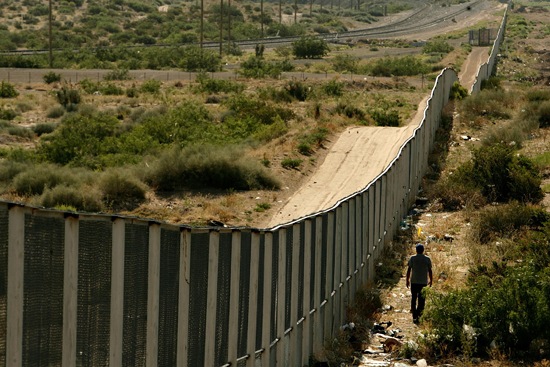
Last week’s big PNU conference on multiculturalism in Korea got me thinking about the new Arizona immigration law that allows police to demand valid identity paper on reasonable suspicion.

As with so many other debates in the US, the new one on Arizona’s ‘racist’ immigration law is ridiculously uniformed by practice in other places. Usually this iconic American ignorance of the rest of the world rebounds to the disadvantage of the US Right. Conservatives, absolutely bedazzled by American exceptionalism, refuse to see how Bushism alienated the world and forced Americans travelling to say they were from Canada. But on illegal immigration, it is really the US Left that is benighted, willfully refusing to see the rule of law problem of 10-20 million undocumented people running about. For example, Chait will tell you how your concern for about unlawful migration is really just racism. How cynically, smugly condescending of the race-obsessed American Left to share its moralism with you racists thinking about law and documentation.

I have lived in other countries for 6 years and counting (about 1/6 of my life), and I simply accept it as routine that I can be stopped by the police and demanded for ID. In Germany, I had to have my ID card at all times; in Russia, I had to carry my passport at all times (rather risky, that). In Korea, I must carry my alien ID card at all times too. I do, and I certainly don’t howl and complain about it. I get asked for it, as well as a copy of my visa, all the time – in hospitals, on the internet, by government officials, cops, etc. Since when did non-citizens carrying proper ID become ‘racist tyranny’? Do US liberals really believe that? Do we really want 15 million illegals running around the US without documentation?

I went through the legal immigration process; let them do it too. Yes, it is a pain. Yes, I pay the Korean government a lot of money for some silly stamps, and I wait forever in some stuffy room for a bored bureaucrat to glare at me. But it’s not ‘orwellian racial profiling.’ Come on already. You’re a guest in someone else’s house. You know the rules are going to be a little tougher. And you should accept that, because you choose to go there. That is their system. You must respect it; you can always leave.

Ultimately, immigrants are guests, and it is our responsibility to follow our hosts’ rules. If you don’t like those rules you – a guest – don’t have the moral standing to criticize. We immigrants take what the residents dish out. It’s their system to set, not ours. And it is extraordinary bad faith to name-call our hosts racists. That is offensive to very people we want to allow us in the door. It’s both stupid and rude.

If you think the US rules are burdensome or racist, try living in Asia or Europe! Dual citizenship is nearly impossible. The Korean government makes me renew my visa every year – even though I am long-term employed resident foreigner with property, education, and all that. They make money off the foreigner population by requiring annual visa renewals, but it is also a way to check up on us that we aren’t screwing around too much.

So where in god’s name did ILLEGAL immigrants in the US get the gumption to expect they shouldn’t have to demonstrate who they are to the lawful authorities? If anything the moral posture should be reversed. Illegal immigrants should bend over backward in thankfulness that Americans are so tolerant they even look the other way on rampant illegality. If I were a publicly known illegal immigrant in SK, I would last about 5 minutes before being shoved onto a plane. If that constitutes ‘racism’ and a ‘police state,’ then you can understand why the Tea Party movement hates the government. By law the government is supposed to deport illegal immigrants. Illegal immigration is a misdemeanor, and repeated attempts are a felony. Yet 15 million people function everyday outside the basic rule of law. That is not ‘victory against racism;’ it is a massive failure of the US justice system.

The heart of the US Left’s critique of Bush – which I accept – is that he violated the rule of law with torture. But that means the Left, and America’s Hispanics, must acknowledge the same on this question. If you want different immigration laws, then change them through the policy process. But the current regime of ‘purposive unenforcement’ is incompatible with political order.

I shudder to say it, but the US Right is correct on this one.

Illiberal Zionism Update: Beinart Nails It

images


Peter Beinart is exactly the sort of liberal necessary to win the GWoT. He correctly realized that the American right is not credible in its claims to defend Western liberalism against salafi illiberalism, because too much of the GOP base is too illiberal now and sees the GWoT exactly as Bin Laden does – a theological clash of civilizations – only they are on the other side. The increasingly Christianized and fundamentalist (Protestant mostly) GOP wants to ‘win’ the GWoT as a triumph of Christianity and/or American power. They are, as Walter Russell Mead correctly notes, ‘Jacksonian Zionist,’ not liberal. No Muslim, correctly, will believe US power to be neutral, serving universalist liberalism, when Bush needed to be told that the GWoT had biblical justification and Sarah Palin insists that Israel be allowed to do whatever it wants in the Occupied Territories.

In the same vein, he makes a good case here for the growing illiberalism of Zionism and the increasing inability of liberal countries to support its religio-nationalist, rather than liberal, opposition to Islamism and Arab authoritarianism. I made exactly the same point a year ago. (It is always nice to be confirmed in one’s prejudices I suppose, but Beinart does a better job of it than I did.) Sullivan adds his usually biting and gloomy commentary.

All sides seem to be sliding toward a clash of civilizations paradigm. All the more reason for the US to focus on the battle of ideas against salafism and get out of the Middle East in the medium-term…

Sharia Orwellianism Update, or Why the GWoT Rolls on and on…

Yet another attack on a Mohammed cartoonist in Europe, complete with violent, alienated, unintegrated Muslim youth screaming ‘Allah akhbar’ at bewildered Europeans…


The relevant context is here and here.

This sorta stuff just makes my blood boil, because it lays so bare the splits between western liberalism and Middle Eastern salafism. This pretty much tells you why the war on terrorism continues, as does the West’s concern about Islam, despite Obama’s election. And it should make pretty clear why it is important to fight the GWoT and win it.

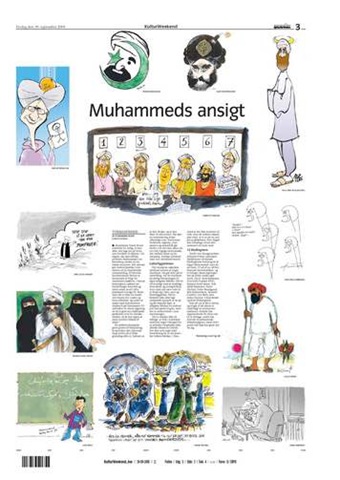
If you haven’t seen the original Mohammed cartoons, here they are. If you are ‘offended,’ then I am elated. Liberalism is good for you. I am proud to re-post them. Go surf someplace else…

Jyllands-Posten

PNU Multiculturalism Conference: How ‘MC’ is Korea Really? (Not Much)

New Image

Multiculturalism is growing issue in Korean life because of Korea’s severe demographic slow-down and aging. I have written about this before here. The following is my discussant response to a paper on the confused Korean administrative response to Korea’s growing non-citizen population. Multiculturalism is growth area in Asian studies; there is a good dissertation here waiting to be written. Email me if you want the paper on which this post is based. The conference is today.


“This paper provides a valuable first overview of the emerging Korean policy response to the oft-declaimed ‘multiculturalization’ of Korea. Chung provides an impact assessment of various policy tools with which the Korean government is experimenting. She finds that Korea is increasingly treating its foreign population as a resource to be cultivated and exploited through outreach, where in the past the Republic of Korea Government (ROKG) viewed the foreign population more as a burden or necessary evil to be managed. In the jargon of public administration, this is her identified switch from policy instruments stressing ‘negative coercion’ to ‘affirmative non-coercion.’ She also notes the ‘experimentation,’ if not disorganization and bureaucratic turf-conflicts, that characterize the administrative response. I have four comments.


1. Organizational Theory: Bureaucratic Failure

The experimentation and gradual drift of the ROKG toward more positive interaction with the resident foreigner population strikes me as typical bureaucratic behavior in response to new and awkward issues. An organization’s first, pathological response is to punish and sanction what it does not understand. Only as anomalies and policy failures accumulate are new methods tried. In the language of social science theory, Chung has uncovered classic institutional behavior, and I think a future version of this paper would benefit from some comparison of Korea with other, traditionally non-immigration states’ public policies on multiculturalism (MC). Japan would be a fine East Asian example, particular as the contrast would be quite stark. Japan remains in Chung’s first stage of sanction and punishment; ethnic Koreans, e.g., despite decades of residence in Japan, are excluded from Japanese citizenship. Japan has clearly rejected multiculturalization in the last generation, even as its demographic crisis accelerated into absolute population contraction in the last few years.


2. Non-Korean Multiculturalism Experience: Unused Western theory

I wish Korean MC theory would more clearly use the pre-existing Western theory and policy experience. My sense of the media debate and policy response in Korea is that Koreans see this as some radically new issue. And Chung’s work clearly demonstrates the organizational and policy ad hocery and confusion of the last decade. But obviously this debate is not new in the classic immigrant countries – the US, Canada, NZ, and Australia. And European countries face the same dilemma Korea does: they have a strong national sense of distinction and find the ethno-religious pluralism of sustained immigration a major social challenge. So there is a lot of experience out there among Korea’s OECD peers that I think is not being utilized.


3. Low Empirical Multiculturalization of Korea

I believe we can explain Korea’s generally disorganized response – regardless of its improving intentions – because the issue of multiculturalization is not, in fact, as pressing as is made out to be in the Korean media. In a population of 50.2 M, only 1.14 M are not Korean citizens. Of those 1.14 M foreigners are 400k ethnic Korean ‘returnees’ and 100k USFK soldiers and affiliates who live in artificially Americanized and short-term circumstances. In short, the ethnically distinct population of long-term resident foreigners is only about 600k. That is awfully small number. And how many of them actually intend to stay and settle in Korea? Very few I imagine. There are of course issues of racism in Korea, and Koreans remain deeply attached the romantic-organic notion of the minjeok that makes it tough for long-term resident foreigners to join the community. But still, as a public policy issue, Chung’s finding of experimentation and ad hocery should not surprise us given the statistical tininess of the cohort examined.


4. Korean Democratic Consensus for Multiculturalism?

There is a democratic theory problem in the discussion of Korean multiculturalism that I believe is frequently overlooked. It is not clear at all to me that Korea wants to be ‘multiculturalized.’ Before we engage in the normatively self-congratulatory discourse of Korean’s imminent multiculturalization, we should discern whether the median Korean voter actually want this. To be honest, I am not sure. My sense is that Koreans have a strong sense that they have suffered from invasion and turbulence so often in their national history, that they very much want this tiny sliver of land in the world to be theirs and manifestly culturally Korean. At the very least, the multiculturalization of Korea, whether in social science theory or public administration, should proceed on the basis of a deep democratic consensus for this change. I would like to see far more polling data that substantiates that a durable majority of Koreans do in fact want the major socio-cultural shift implied by sustained immigration. Japan again is a good Asian counterfactual. Its citizenry reject MC, even though the demographic argument for immigration is quite strong.

Part 2 is here.

The Normalization of Torture, and, oh yeah, Obama is Probably the Anti-Christ…

TownhallFeb2010b225x200

I stumbled across this advertisement at http://townhall.com/.

When I first saw this ad, I was just speechless. Isn’t this image downright TERRIFYING? : ‘Yeah, I’d rather be hanging out with the Khmer Rouge and breaking US law. Maybe then I can drown my victim in our nice family pool behind me; it’s all good fun. Then after that, I’ll get a slushy or hit mall for some new shoes.’ Good lord. On a t-shirt no less!

Can you imagine the moral bankruptcy of someone who would wear a casual clothing item declaiming a desire to torture? This is the sort of outfit that guy who tried to blow up the IRS would wear.

And who makes these shirts? Shouldn’t the FBI be investigating this company, ‘http://thoseshirts.com/’? If you go the website, thoseshirts.com claims this to be humor. I’m just floored that torture debate is now so normalized that it can be a conservative punch line: ‘Hey dude, it’s totally hysterical that we make those Muslims guys vomit all over themselves at Guantanamo. Far out!’ 

Consider this counterfactual: If some Muslim walked around the mall with a shirt saying ‘I’d rather be on jihad,’ wouldn’t you call flip out and call the police?

Just in case you still don’t know that waterboarding is torture and that torture is a felony, click here and  here and follow all the copious links provided. If you want the full bore academic treatment explaining why US ‘enhanced interrogation’ is really torture, read this. The point is that we must stop deluding ourselves that is stuff is not a massive human rights violation.

Honestly, I wonder sometimes if the American right realizes what its post-9/11, post-Obama freak-out/meltdown/plunge into the abyss is doing to America’s reputation in the world. If those Tea Partiers could spend just 3 months in another country, I think they’d be shocked and then hugely embarrassed at the disdain and loathing imagery like this t-shirt provokes about the US. I see it all the time when I travel in Asia. The same people who are the most dogmatic that America is the greatest country on earth are the market for ‘pro-torture products’ like this. But you can’t have both. You can’t loudly insist on America’s unrivaled awesomeness and world-historic greatness while simultaneously undercutting the evidence of that by torturing foreigners. We can’t be the only superpower if everyone hates us.

Bonus Tea-Party Freak Out Moment: After health care, 25% of Republicans think Obama might be the Antichrist. This is not conservatism anymore; this is becoming nihilism…

Is there an EU Role in Asia? (2): Not Really… (plus thoughts on Greece)

asem6_logo01

Greece Addendum: I spoke at an EU conference yesterday, and I was amazed at how blithely the EU representatives glided by the Greek meltdown. If you read the coverage from the Economist or Financial Times, they make it sound like this is an existential crisis, but the Europhiles would have none of that. When I asked, I heard variants of the ‘it’s-too-big-fail’ argument: the euro is too important, Greece must and will be bailed out, the EU cannot fail. This strikes me as putting your head in the sand – denial rather than analysis.

Far too much of the EU’s supranationalism is reallyone country’s supranationalism paying for other countries’ nationalisms. That is, Germany pays for its historical guilt by paying for European unity heavily on its own. (Check this graphic to see just how much the Germans fork over.) This free-riding on German liberal guilt has pompously masqueraded as ‘transcending the nation-state.’ It is perilously close to fracture today, but I guess this can’t shake the Kantian-Europhilic elites that dominate the ‘eurocracy’ and its affiliated NGOs and universities. As I argued in paper (below), European regionalism is as much an article of faith as a testable empirical proposition, and this attitude has spread to Asia, where the regionalism discourse – in the face of persistent nationalism and talk-shop regional organizations – seems like an even greater fantastical flight of fancy.

For what its worth, I think the EU and the East Asian Community are both good ideas, but I think they are seen in too rosy a light too often. Nationalism is far more persistent, and a much deeper obstacle to regionalism than European-trained IR and foreign policy elites will admit. For good summaries of the big EU’s challenges, if not coming paralysis, try here and here.

Part 1 of this post is here. This post is intended to be a graphically summary of part 1’s argument.

Korea and the European Union have signed a free trade agreement, and the European Union is regularly a top five export market for Korea. Both sides are now exploring further dimensions to the relationship. Using a traditional list of state goals in foreign policy – national security, economic growth, prestige-seeking, and values-promotion – I examine the prospects for cooperation and integration in the future. What would either side gain by richer contact? I find that deeper engagement is unlikely. Most importantly, neither side is relevant to the basic security issues of the other. Specifically, the EU cannot assist Korea in its acute security dilemma, and ‘sovereigntist’ Korea does not share EU preferences for soft power, regionalization, and multilateral collective security. However, Korea is likely to pursue the relationship for cost-free prestige-taking. And the European Union will understand this ‘Asian bridge’ as a success for the promotion of liberal-democratic values in a non-European context. Pro-regionalist elites, most notably the ‘eurocracy,’ may pursue ‘inter-regional’ ties – such as ASEM (picture above) – for internal institutional reasons, but deep Korean attachment to the Westphalian state model will likely stymie such efforts.

Table 1 summarizes my findings:

Table 1.: EU-Korea Dyadic Benefits

 Foreign Policy Goal                                                      Benefits to each Player

  EU Korea
Security Minimal– no Korean power projection to Europe

– Korean irrelevance to Russia, GWoT/Islam, Southern & Eastern Europe

Minimal– No EU role in 6-Party Talks

– No EU global posture, esp. re: the DPRK

– Shared ambiguity on PRC

– EU irrelevance on Japan

Growth Welfare-Enhancement of FTA assumed Welfare-Enhancement of FTA assumed
Prestige Middling– Korea too small to meaningful raise EU’s global status

– Korea relationship serves eurocracy’s internal bureaucratic interest

High– large, ‘civilized’ EU raises Korea’s global profile
Values High– Korea as central example of universality of western values Minimal– low likelihood of the ‘Korean Wave’s’ success in the EU/West

Is there an EU Role in Asia? (1): EU-Korea Relations beyond just Trade

EU-Korea Flag

This entry is cross-posted at the excellent European Geostrategy. Leave comments there as well. Part 2 is here.

On May 6-7, 2010, the EU Center of the Pusan National University is holding a conference on EU-Korea relations. This is a good time to think about the EU’s relations in Asia, about which I have been pretty critical so far. Here is a summary of my paper. I intend to submit this for publication, so comments would be especially welcome. Email me if you want the whole thing.

In 2009, Korea and the EU signed an free trade agreement (FTA), and the EU is regularly a top five export market for Korea. Interest in future cooperation is high, however the research on which this post is based finds that deeper engagement is unlikely. Most importantly, neither side is relevant to the basic security issues of the other. Specifically, the EU cannot assist Korea in its acute security dilemma, and ‘sovereigntist’ Korea does not share EU preferences for soft power, regionalization, and multilateral collective security. However, Korea is likely to pursue the relationship for cost-free prestige-taking. And the EU will understand this ‘Asian bridge’ as a success for the promotion of liberal-democratic values in a non-European context. Europhile, pro-regionalist elites may pursue ‘inter-regional’ ties to bolster the European Comission (EC) within Europe, but deep Korean attachment to the Westphalian state model will stymie pan-regionalism.

Neither the EU nor Korea can meaningfully contribute to the other’s primary security challenges – a central pillar for deeper bilateral relations among states. As James Rodgers and Luis Simon note frequently, the EU lacks serious power projection far from the Continent. Its ‘loss of strength gradient’ toward East Asia is severe since the British retrenchment from east of Suez. The EU cannot meaningfully deter NK or China. EU land forces do not bolster US Forces in Korea. Although a participant in the Proliferation Security Initiative and the (now defunct) Agreed Framework, the EU plays no role in the new Six Party frame. Similarly, Korea is irrelevant to big EU security issues, such as the course of Russia, terrorism and the Middle East, or Eastern Europe’s stabilization. Their shared liberal democratic values place them broadly in the liberal security community of the democratic peace, but a more positive military contribution to either’s security is unlikely.

Both sides derive prestige from the relationship. Korea, small and peripheral to the global economy until recently, captures most of these benefits. A bilateral relationship with Europe flatters the Korean imagination of its stature in world politics. Instead of a half-country whose international image is dominated by a clownish rogue despot, Korea lusts for Europe’s status and rank. Its famous antiquities, high-profile tourism locations, rich history of art and culture – all nested in a wealthy, healthy, international society broadly at peace with itself – strongly attracts the Korean imagination.

A well-known, highly recognized ‘global player,’ the EU captures little direct prestige from Korea. However, the Korean partnership does benefit pro-European elites within the EU, most notably in the EC/EU bureaucracy. The ‘eurocracy,’ trapped in a decades-long turf-battle with the national bureaucracies, is likely to seize on the prestige of a direct EU-level relationship with a G-20 economy. This is ammunition against critics that the EU is simply a trade deal or that other states do not take it seriously. If the 2010 host of the G-20 summit takes the EU seriously enough to label it a ‘strategic partner,’ then the eurocracy gains in the intra-European conflict to establish the EU more soundly and eventually build a real Common Foreign and Security Policy.

Finally, the EU does reap psychological gains of domestic values validation. Korea is a great successes in the transplantation of liberal, democratic, Enlightenment values outside of the West; Korea is routinely touted a central case that these values not ‘western,’ but in fact universal. This excises the cultural-racial bite of the ‘Asian values’ and ‘human-rights imperialism’ arguments of Asian actors such as the Chinese Communist Party or Matathir Mohamad. Conversely, Korea will find little back-traffic, despite heroic efforts to export the ‘Korean Wave.’

The EU and Korea have an unremarkable relationship. Given the mutual irrelevance of one’s security to the other, it is easy to predict that no alliance is likely. The FTA is step forward, but ultimately one based solely on material utility. The EU also trades with Iran, and Korea has a ‘strategic partnership’ with Kazakhstan. This provides perspective on the mutual, post-FTA rhetoric of ‘strategic partners.’ A ‘friendly partner’ is a more credible assessment. The EU-Korea relationship will not mature into a meaningful bond to rival the more critical relations of either with the US, China, Japan, or Russia.

The EU’s preference for Asian regionalism will generate friction, although Korea will tolerate it in order to retain the huge prestige boost an EU relationship. Hence the greatest frustration will fall on the European side. Korea’s prestige gains are already achieved by the completion of the FTA and the ‘strategic partnership,’ and the EU cannot leverage a security contribution to the peninsula to push Korea into the East Asian Community (EAC) or Asia-Europe Meeting (ASEM). So long as Korea, and East Asia generally, remains committed to the ‘ASEAN Way’ of talk-shop intergovernmentalism, Kantian-Europhilic elites – pro-EU, pro-EAC, and pro-ASEM – are likely to find nationalist Korea, and Asia, a frustrating ‘inter-regional’ partner.

Stand with “South Park” vs Sharia Orwellianism

SouthPark

By now you know that not even “South Park” is immune from salafism’s insistence on terrifying and alieanting the rest of the world. You may love or hate the show, but the defense of free-speech is a central values breakpoint between liberal modernity and reaction, between the best traditions of the West and the worst of Gulf Islam. This is an important part of the battle of ideas in the GWoT, as is defending the Salman Rushdie, Ayaan Hirsi Ali, and the Mohammed cartoonists in Denmark. Ali, herself a terrible victim of this paranoia, has a nice summary of the explicit free-speech threat of Muslims exporting sharia onto non-Muslims.

Everyone with a blog should do as Jon Stewart did on April 22 and explicitly defend the right of free speech, especially the right to ridicule and mock religion. Religions as a body of thought deserve as much scrutiny as any another paradigm, intellectual system, or philosophy. And religion certainly needs this criticism if it is not just to be superstition and received ascientific silliness, repackaged as ‘time-honored tradition,’ and codified by some book written a long time, then repackaged as ‘divine revelation.’  Even the faithful know this in their heart of hearts. Consider this counterfactual: if your friend told you that snakes could talk, that people came back from the dead, or that bushes burned without disintegrating, wouldn’t you be pretty incredulous – unless you heard it at Sunday school? I never had a teacher in my Catholic grade school who could answer that one, which was a pretty big let down.

If you don’t know the story of Augustine’s conversion to Christianity, it is an object lesson in this healthy interchange between religion and criticism. Read the Confessions for the whole story, but the short version is that the young Augustine found Christianity ridiculously primitive, intellectually soft, and superstitious. Trained in Greek philosophy and the high Latin of the great Roman authors, he found the writing of the New Testament poor and unconvincing. The story of how Augustine still came to Christianity and helped drag Christianity into a meaningful interaction with Greek philosophy is intellectual gripping, spiritually provocative, and more likely to convince you of Christianity’s veracity than any of the Palin-esque, family values TV preachers who masquerade today as authorities on Christianity. (If you want a 20th century version of this back-and-forth, read about CS Lewis and JRR Tolkein’s lengthy discussions of Christianity.)

The point is that religions, most especially today Gulf Islam (and American evangelical Christianity), desperate need their Nietzsches, South Parks, Hirsi Alis, and Christoper Hitchens to force them to stay up to par. Defending “South Park” is not just about free speech. It’s also about the larger point made by the New Atheists in the last 10 years: that religion must find a way to live in a the modern, plural, ‘impure’ multicultural, scientific, democratic world. If it can’t, if it simply lashes out to demonize (Benedict XVI) or butcher (salafism) its opponents, then trained people will never take it seriously. And that is the greatest ‘disrespect’ the faithful should really fear – when even the mildly educated think you’re like the Raelians or something – simply ridiculous and unworthy of meaningful consideration.

Addendum: It should be noted that the Islamic prohibition against imagery of Muhammad is far less totalist than the Gulf Sunni salafists would have you think. Shi’ites don’t care a whit, and Southeast Asian Sunnism was pretty lenient on this too until Saudi oil money and clerics start bringing the ‘pure’ (i.e., ‘arid-as-the-Gulf-desert’) version of Islam in the last generation. ISLAM DOES NOT HAVE BE MONOPOLIZED BY THE JIHADIS.

The Six-Party Talks as a Game Theoretic ‘Stag-Hunt’ (2): China Likes the Rabbit Too Much

hackaert-stag-hunt-forest-NG829-fm

Part one of this post is here.

In the formal language of game theory (GT), here is the pay-off matrix for the hunters (SK, PRC, Japan, Russia, US) if they capture the stag (NK’s better behavior in the region):

1. SK: SK is the most obvious winner from taking the stag because NK is an existential threat to the South – both physically and constitutionally.

2. Japan: Japan is the second big winner, because the NK nuclear and missile program increasingly represent a major physical threat to its cities, and perhaps even an existential threat if the North can put enough nukes on missiles.

3. US: The US is a weaker winner, because it is far less threatened by the North directly. The big pay-off from NK change (the stag) would be the reduction in troops and other expense from keeping USFK in Korea. Another benefit would be the reduction in the post-9/11 concern for proliferation of missile and WMD technology to terrorists and rogue states. But this is still far less critical than SK and Japan’s benefit. To the US, NK is more a troublesome, throwback-from-the-Cold-War headache when it would rather concentrate on salafism and the rise China.

4. Russia: Russia has essentially no stake in Northeast Asian security, given that it has basically retrenched from the region to focus on Central Asia and Eastern Europe. However, the Six Party talks are a prestige-generator for a country desperate to still look like a great power even as its lineaments erode. So Russia doesn’t get much from the stag.

5. China: The PRC’s portion of the stag is the smallest, while its rabbit is the biggest. A more docile NK would almost certainly fall heavily under the influence of its southern twin. The more ‘southernized’ NK becomes, the less sinified it will be. (This of course is the whole point from the Korean perspective – reunification.) And the PRC almost certainly reads greater southern influence in the North as greater American influence. So the Chinese rabbit is the long-term survival of a separate NK state to act as a buffer against the democracy, American influence, liberalism, and Korean nationalism that would all flood into NK were an inter-Korean settlement (the stag) finally struck. (A friend at the Renmin University of Beijing all but says this here, and I generally find Chinese scholars will openly tell you why the PRC props up the DRPK even though the PRC’s official policy is reunification.)

What to do then? How do the other hunters get China to stop defecting and start cooperating? The most obvious way is to equalize the pay-offs more, i.e., make it more valuable for China to coordinate by increasing China’s portion of the stag. Here is where strategic restraint on the Cheonan sinking may be useful. If SK holds its fire over the incident, it may be able to ‘sell’ this restraint to China as a hitherto unrecognized benefit. The SK claim to China would be:

See how small your rabbit really is? NK is so unpredictable, so erratic, so uncontrollable, that the stag is more beneficial than you think. Without a long-term settlement, NK’s erratic behavior could eventually generate a crisis the SK population will no longer choose to overlook. Next time this happens, SK government may be forced by popular outrage into coercive retaliation that could pull everyone in northeast Asia into the vortex.

Recall in early 1991 that Israel demonstrated similar strategic restraint as Saddam Hussein shelled it with Scuds before Desert Storm. This helped convince Saddam’s Arab neighbors that Saddam really was a danger to everyone. SK might be able to do the same here.

However, this is unlikely to be enough. China will probably as for a higher concession – a promise for the removal of USFK after unification. It is not clear to me if a unified Korea would need USFK, so this may be an option to explore.