What Lesson will China Learn from the Iran War? That the US is Overstretched

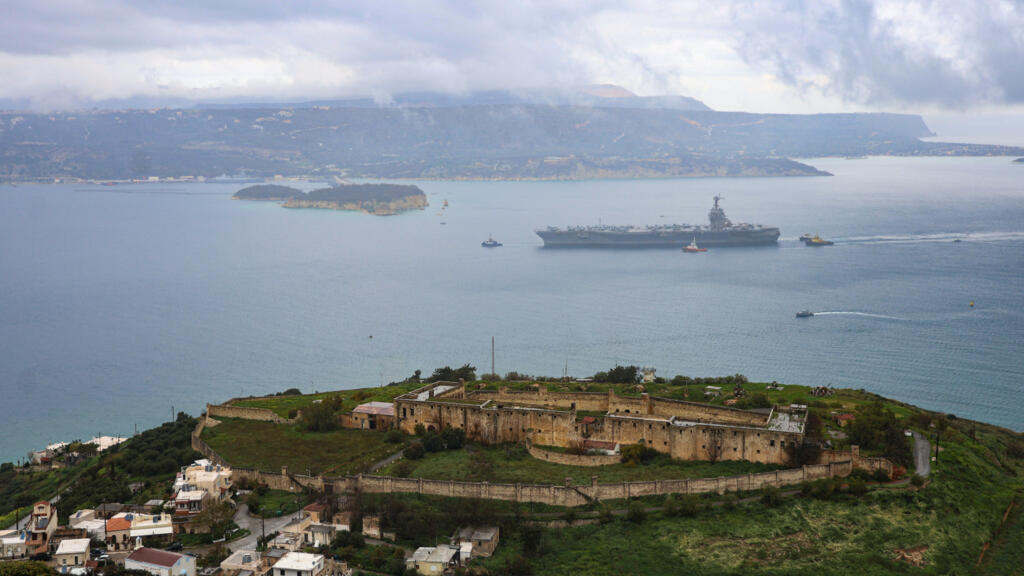
The USS Gerald Ford in Greece for repairs

I don’t really like ‘lessons of war’ arguments. It’s really easy to just project your own biases and favorite variables onto conflicts for self-validation. But everyone is starting to note that China is watching how the US war in Iran is flying off the rails. It is pretty clear that the war is bigger than Trump expected, and he doesn’t know what to. It is now pulling US combat power into the Gulf, and this is just to defeat a middle power. And if we actually invade Iran on the ground, it’s gonna be an overextension disaster…

All this should make you wonder if we can tackle China. Phillips O’Brien had some thoughts on this which I pivoted off of for an essay at 1945 magazine. My basic argument is that the US is overstretched. It has too few platforms, however ‘exquisite’ they may be. Specifically, I think it is pretty clear now that:

  • the US Navy is doing too much (even before Trump made it worse)
  • the US Navy too small
  • US missile defense is too costly per unit
  • the US air force needs more cheap UAVs instead of high-priced super-fighters

(The big recent story on that last point is that two ultra-expensive US F-35s appear to have been hit in this war. If that’s true, imagine what a proper peer competitor like China will be able to do.)

So my big take-away, at the end of the 1945 essay, is that China is learning that it can overwhelm the US with masses of cheap, mid-quality airpower. I am teaching a junior-level conflict & security class this semester, and my informal ‘thesis’ for the term is that both the Ukraine war and the Iran war are teaching us that swarms of cheap unmanned platforms are the future.

So going forward, the US can then either:

  • massively expand defense spending to continue fighting lots of wars with exquisite weapons (worst answer)
  • pull back, fight less, and concentrate on China (best answer)
  • switch to cheaper, easier-to-produce platforms – the kind of stuff South Korea is really good at making – within current budget constraints

Try the 1945 essay for the full argument.
Iran War: Can We Open Hormuz or Denuclearize Iran Without a Ground War? Probably Not

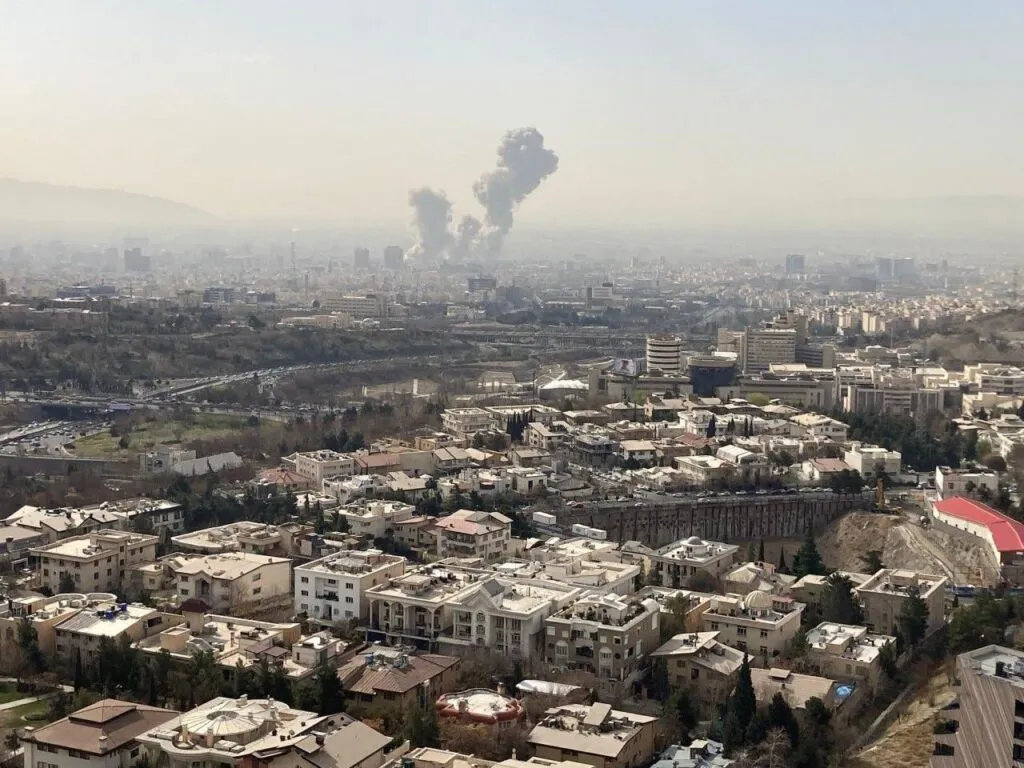
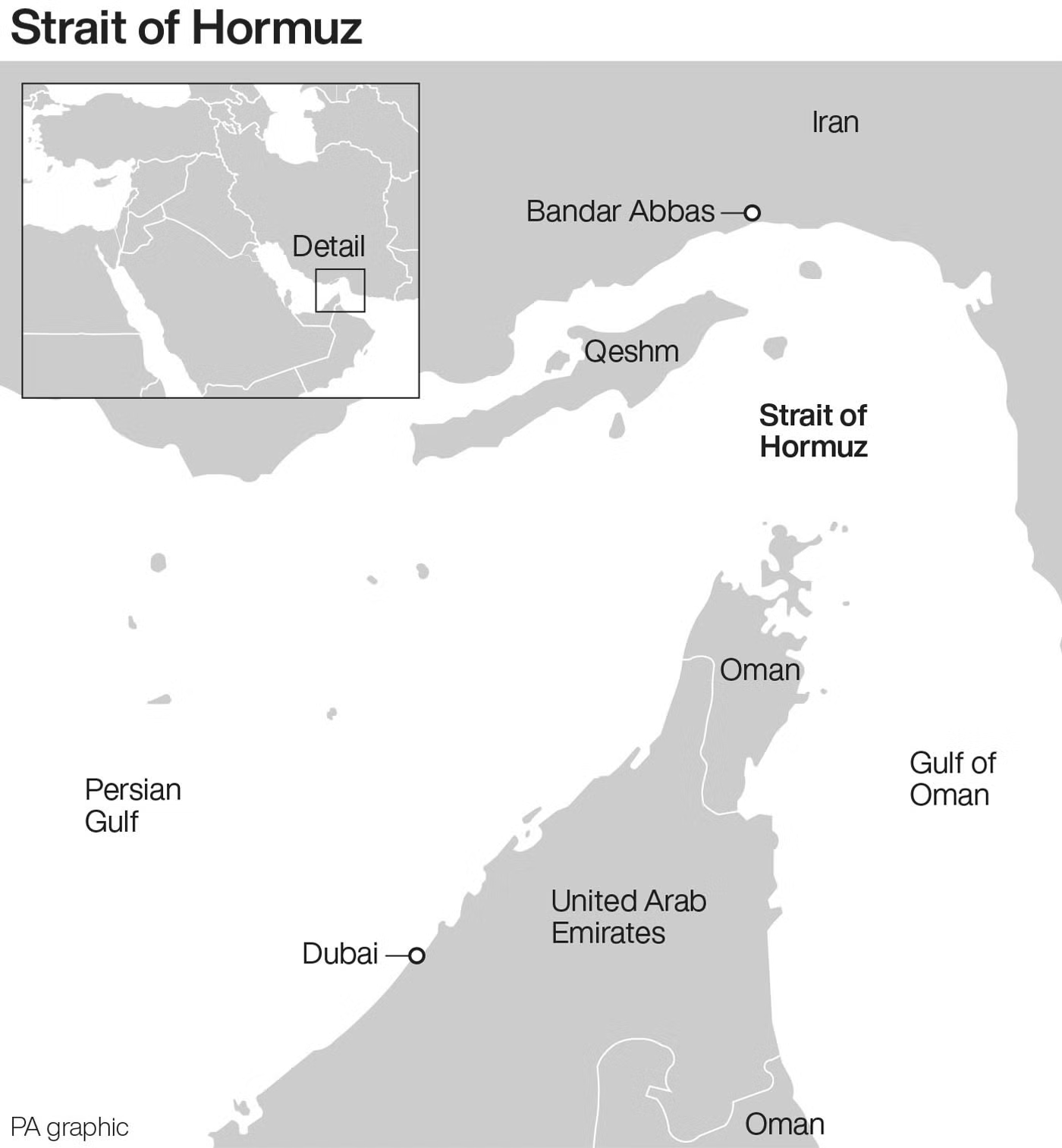
The Strait of Hormuz, including Qeshm which the US probably has to neutralize

I increasingly don’t think that Trump can win this war without going in on the ground. I wrote this up at 1945 magazine this week. Specifically:

1. Opening Hormuz will probably require at least taking a strip of coast on the strait’s Iranian side. Qeshm island is emerging as a key, heavily-fortified location from which Iran threatens Hormuz shipping. So we are now bombing along the Iranian side of the strait to destroy the capabilities which frighten off shipping.

But the Iranians have been preparing for this for decades. They’re dug in. There seems to be a general consensus that we can’t bomb our way into getting the strait opened. So US ground troops are probably necessary to dislodge Iranian coastal power projection. But once you actually land troops – especially if they land on the coast and not just strait islands – the potential for mission creep and an escalating ground war is obvious.

2. If the Iranian clerical regime surives the war, it will sprint for a nuke. They won’t trust negotiations with the US or Israel again for a long time. They will see North Korea as the model: once you have a nuke, you are in a position of strength to bargain, plus you won’t get bombed. The war will strengthen the hardliners who want a nuke for protection.

So now, the only way to keep Iran from getting a nuke is to push the current regime out of power. Ideally, the air strikes would open a window for a domestic revolution to push out the clerics – which might have been possible in January when the dissident movement was on the streets fighting. But they were crushed violently, and there’s been no uprising since we started bomnbing.

Thus the US has to go in, on the ground. Bombing alone won’t provoke regime change. The Iranian people don’t look like they are gonna do it. If the clerics survive, they’re definitely going for a nuke. So the only way to stop that is regime-change which requires a ground war, and we are the only force capable of doing that.

* And yes, I am aware of current idea that we can use special forces to snatch Iran’s nuclear program. That strikes me as unbelievably dangerous. Those facilities will be guarded by Iran’s best troops, and there is no element of surprise to such an operation now, because it’s all over the media. I’d guess that such an operation would fail.

** Yes, Trump could just withdraw and drop the whole thing. He could ‘TACO,’ which markets still seem to expect. I doubt this, primarily for psychological reasons, as I have been arguing on Twitter for a week now. Trump can’t admit defeat. He can’t process it. He will almost certainly escalate to at least a limited ground incursion, and there are no Congressional checks-and-balances to stop him.

Iran War: Will the US Ever Pivot to Asia? It Sure Doesn’t Look Like It

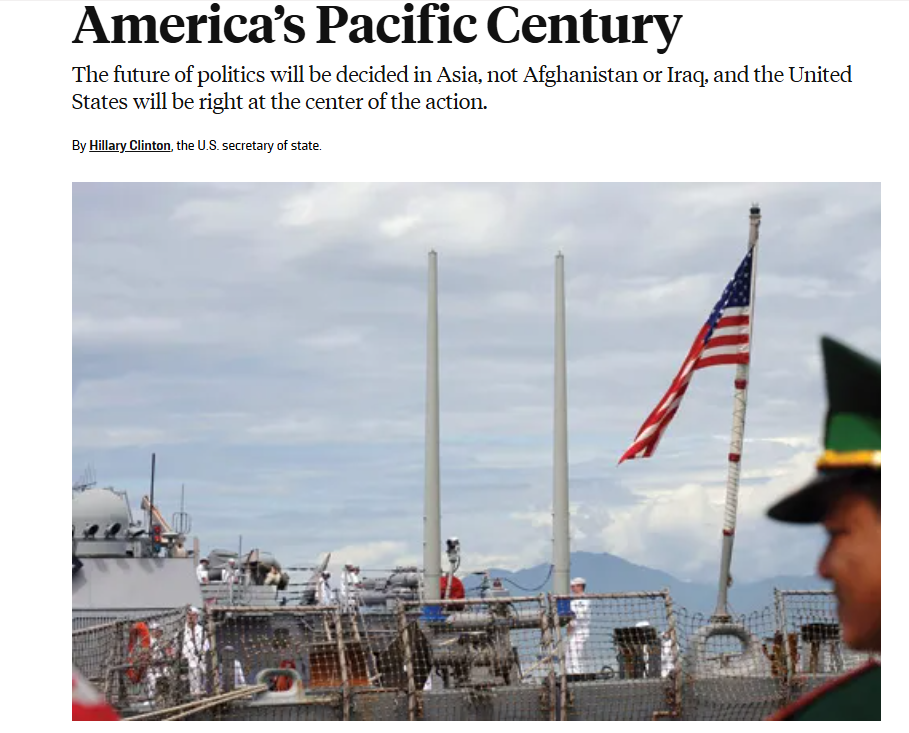
Hillary Clinton’s original, 2011 article in Foreign Policy announcing the pivot

I wrote a couple op-eds this week on this question of the ‘pivot’ in the wake of yet another US Mideast war – one at Channel News Asia, another at 1945. Here’s the arguement flow:

  • the strategic case (China) for the pivot to Asia is stronger than ever
  • the Iran War is probably going to be bigger and longer than we thought
  • so we can’t pivot more to East Asia for while
  • in fact, we are ‘de-pivoting’ – i.e., moving resources from East Asia to the Persian Gulf
  • also, a lot of Americans don’t want the US to pivot out of the Middle East for religious reasons
  • at least we are pivoting out of Europe. It’s long overdue that Europe do far more for its own defense and take the lead
  • Trump’s interest in Western Hemispheric hegemony will pull away resources better sent to East Asia
  • So the pivot is probably dead
  • So Japan and South Korea better start spending more on defense and cooperating more

I wrote an academic article on the pivot twelve years ago (here), where I argued that American Protestant fundamentalism is the big domestic reason the US can’t quit the Middle East for East Asia. 40+% of Americans believe that Israel plays a major role in the End Times and/or sees Israel as a Western, civilizational bulwark against Islam which they hate/fear. So you’ve got both eschatology and the ‘clash of civilzations’ motivating a deep, religious conservative commitment to America’s presence in the Middle East.

China does not move Americans like that. To most Americans, China is some place farway which makes cheap stuff you buy at Walmart. Does grandma care that much about Taiwan? Probably not. Yes, the American foreign policy community is really worried about China, but the voters don’t care about foreign policy much, and the GOP detests America’s intellectual class. So nobody is listening to us. If they did, we wouldn’t be fighting Iran right now.

So here we are, in yet another Middle Eastern war with yet another president talking about regime change and fighting evil, with the pivot pushed off into the future yet again.

The Trump Doctrine: Rogue State Elite Replacement

Delcy Rodríguez, the new, sorta pro-American despot of Venezuela

I put up some thoughts on Trump ending the war in Iran at 1945 magazine. We’re moving toward putting a pro-US stooge in the place of now-deceased Iranian leader Khamenei so that we can withdraw quickly. It seems like this is what Trump wants – basically a replay of the Venezuelan drive-by decapitation we did in early January.

The idea, as Steven Taylor similarly notes, is to replace the anti-American elite of a rogue state, through swift, surprising violence, with a new, pro-Amerincan despot while the rest of the regime is left intact. That way, there is no messy nation-building, reconstruction, democratization, and so on. Trump pretty obviously doesn’t care about democracy, and the US public opposes LDC nation-building. So just bumping off a leadership we dislike and replacing it with a stooge seems pretty easy by comparison. We swing a troublesome state into our column by replacing its elites, not its regime.

At 1945, I call this emergent method ‘rogue state elite replacement‘ – in contradistinction to regime change, democratization, tranition, and so on.

Here, at last, we have a ‘Trump Doctrine’ (or Method), and it fits Trump perfectly. It ignores democracy, development, international law, and so on for raw, short-term American interest from individial gangster leaders Trump can bully for pay-offs. Get rid of anti-American leaders; put in pro-American leaders; put the screws to them; get the hell out: ‘He may be a son of a b*tch, but he’s our son of b*tch.’

If Trump can get this to work in Iran, as it seems to be working in Venezuela, I figure Cuba is next on the hit list.

Iran War: Trump Goes Full Neocon in the Biggest Gamble of His Presidency

I posted my first thoughts on the Iran war over at 1945; please go there. But my short take is that this thing is going to require a ground war to do right. And Trump seemed to admit that when he told Iranians to rise up in his first war speech on Saturday.

By now everyone knows that airpower isn’t enough for regime change. Robert Pape has banging away at that all week. So you need some force on the ground to actually snatch power from those who have it now.

The obvious choice is the Iranian dissident movement. But they were crushed in January. Indeed, thatwas the time to launch this operation. We could have targeted strikes to help the protestors, destroying security forces and their weapons to give the revolt on the streets a fighting chance. But Trump had moved the needed naval assets to the Carribean so that he could kidnap Maduro. So we missed our chance.

Maybe we will get lucky, and whatever is left of the resistance will hit the streets again to fight on the ground as we pound Iran from the air. But the risk is obvious; the resistance is weakened because of the January massacre; and Trump cannot make credible commitments (to support them). Who knows if he will actually support an uprising. He sold out the democratic opposition in Venezuela to get a ‘deal’ with Maduro’s regime successor. I’d bet he would sell out any Iranian uprising to get a deal with Khamenei’s successor.

So if we want regime change, we have to go in on the ground. Trump likely won’t do that. So instead of regime change, we are getting elite replacement: some vaguely pro-American, or at least less fanatical islamist, ruler in the place of Khamenei.

Given that we did this in Venezuela and will probably do it in Cuba soon, a ‘Trump Doctrine’ is emerging: knock off anti-American elites in rogue states, put in a stooge who will do what we till him/her, and then get out. So we are back to ‘he is a son of a b****, but he’s our son of a b****.’

Trump is Incentivizing Allied Nuclearization

EfIfPIeXoAA41Hz

Trump’s threats against US allies and partners encourage them to consider nuclear weapons. This strikes me as painfully obvious, even though we keep saying we don’t want allies to nuke up. I just wrote about this at 1945 magazine. Please got there for the full argument.

Post-Greenland, I don’t know why US allies would trust us. For two months, we were openly discussing the possibility of using force against a long-standing partner. It is hard to over-emphasize how crazy and self-defeating that it is. Trump has threatened Canada, Mexico, and Panama. When MAGA got drunk on US power right after we kidnapped Maduro, I saw Jesse Waters on Fox say we take Bermuda.

We seem to expect that even as we break the rules of the liberal community of states, other liberal states will not. We get to tariff and bully our allies, and they are just supposed to take it smiling.

That can work for a little while. US allies are asymmetrically dependent on US security guarantees and market access. They are vulnerable to our bullying, because they never thought we would bully them.

But they won’t put up with that forever. Late last year, pre-Greenland, my friend Paul Poast and I argued in Foreign Affairs that US allies would eventually defect. If anything, events suggest our analysis was too easy on Trump. Neither of us expected that the US would actually openly menace an ally.

But here we are. If you are a US ally today, it is hard now to believe as I say on Twitter that the US would fight for you, and impossible to believe we would use nuclear weapons for you. In fact, we might attack you instead. So it makes sense to consider your own coverage, because they American nuclear umbrella is gone.

I argued this a year ago for South Korea – that it should nuke. If anything, the ensuing year has made that argument even stronger.

A North Korean SSBN is an Advertent Escalation Risk

images (1)What might bring us (the US, South Korea, Japan) to deliberately attack North Korea? Are there triggers for deliberate (advertent) escalation, on top of the traditional, nuclear age fears of accidental (inadvertent) escalation? The following is from my essay on this for 1945 magazine and Twitter thread.

To me it seems like the most likely trigger for us to deliberately bomb NK is NK building a nuclear missile-carrying submarine (an SSBN). An SSBN would significantly improve the ‘survivability’ of NK nuclear missiles, which is problematic for us two reasons:

1. A more survivable force would reduce the ability of the allies to disarm NK by force if necessary in a crisis, because it is much harder to find missiles undersea than on land. The land constraint on NK missiles is particularly tough for them, bc NK is small in size, too poor to build a lot of roads, and is fill with mountains and forests.

2. If NK’s nuclear force was more assured and survivable, NK might take greater conventional risks in its provocations of SK, per the logic of the stability-instability paradox. NK has long history of shenanigans along the SK border. One of these spinning out of control has always been the big inadvertent escalation risk in Korea. That will worsen once they have an SSBN fleet.

Given that the US has long sought ‘damage limitation’ in its nuclear affairs – that is, America persistently rejects mutually assured destruction (MAD) as acceptable and inescapable – it is foreseeable that the US would see bombing a NK SSBN under construction as an acceptable risk to keep NK from attaining a MAD relationship with the US.

We claim close to bombing NK in 2017/18 because they were on the cusp of an ICBM which could reach the US mainland, and we have repeatedly intervened in Iran to halt its nuclear progress. So bombing NK to block the advent of MAD is not fantastical. Of all the possibilities for deliberate, chosen escalation with NK, I think this is the most likely.

If Trump Takes Greenland, the US would Struggle to Project Power into the Middle East – My Latest for ‘1945’ Magazine

ImageSo Trump has decided not to take Greenland by force. He announced that today at Davos. This is great news. It was becoming pretty apparent that a military move might:
spark a stock market meltdown

– be met by force (even if we would win)

– break NATO

– lead to massive European Union counter-sanctions

– spark yet another impeachment effort against Trump

– provoke a civil-military crisis in the US (because the US military might not follow attack orders on the belief that they are illegal, because NATO’s 1949 Washington Treaty is signed and ratified and, therefore, US law).

But there is another possible cost which I saw little discussed: the loss of US bases in Europe in the wake a NATO’s implosion, and the consequent loss of US power projection into the Middle East. I develop this idea here, in my weekly column for 1945 web-magazine.

Here is my core claim:

[Expulsion of the US military from Europe in the wake of NATO’s rupture] will dramatically reduce America’s ability to project power into Europe, Africa, and the Middle East. The US has dozens of bases in Europe. These are its largest in the world outside of the US mainland. They enable the US to project force throughout the western Eurasia and North Africa; they provide the massive logistic tail needed for modern military operations. Particularly, US airbases and friendly ports permit the maintenance and support required by modern, hi-tech air and sea platforms. As one former US commander in Europe put it, “a large-scale withdrawal would make US power projection slower, costlier, and less effective.”

MAGA might argue that the US does not need to project power into Europe or Africa…But Trump’s coalition does care – quite intensely – about US power projection into the Middle East. Trump’s staunchest supporters are evangelical Christians. For them, US alignment with Israel is a core national security priority, as is the ability to strike Muslim states perceived as anti-American. European logistical hubs help substantially with that. US bases in Middle East tend to be smaller and more politically controversial with their hosts than those in Europe.

I also point out that MAGA might not even have grasped this problem. Americans have become so accustomed to US global dominance – it’s 81 years now since we emerged on top after WWII – that I think we just take it for granted. We just don’t get that we need allies and partners to project into far away places like the Persian Gulf. MAGA certainly doesn’t get that at all. Their relentless belligerence strongly suggests they think the US can do almost anything without losing allies. That is incorrect.

The Putin-Kim Summit is like that Godfather scene of the ‘Commission’ – They’re just Gangsters

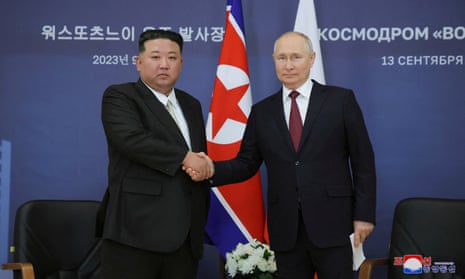
North Korea's leader Kim Jong-un shaking hands with Russia's President Vladimir Putin during their meeting at the Vostochny Cosmodrome in Russia's Amur region. Vladimir Putin and Kim Jong Un are gangsters who rule over mafia states. No wonder they get along famously. Like recognizes like.
Most of the commentary on the meting of Kim and Putin has focused on what they will trade to each other: NK weapons for Russian aerospace tech seems to be the consensus.

But what interests me more is how these two are basically the same type of El Jefe, Big Boss gangster leader. They both run their countries like their personal fiefdoms, and they tolerate massive corruption to tie elites to themselves – or they push them out windows if they speak up to loud. It’s like a Scorsese movie.

And their ‘summit’ is like the Commission meeting scene in The Godfather. Everyone notes this about authoritarian states – how they slide into gangsterism. But I can’t think of any academic IR work on how that impacts foreign policy or alignment choices. The mafia experience does suggest, though, that any alignments are entirely transactional and will be betrayed as soon something more valuable comes along. I could certainly see rank, cynical opportunism being the dominant ethos of a Russia-North Korean pact.

I wrote this all up at 1945.com. Here is my takeaway:

This is a fitting meeting for both leaders. Both govern effectively as gangsters. They rule in the mafia-style, relying heavily on family, friends, and other long-time associates. Both treat political opponents as competitors to be eliminated, frequently with great brutality to warn others against intrigue or deception. Both corrupt the institutions of their own country and the international institutions in which they operate. Both engage in rampant criminality — smuggling, trafficking, and fraud — to raise external funds. Both treat state resources as a personal slush fund.

Read the rest here.

My Comments to the South Korean Navy’s International Seapower Symposium: A Big SK Inter-Service Budget Fight Looms

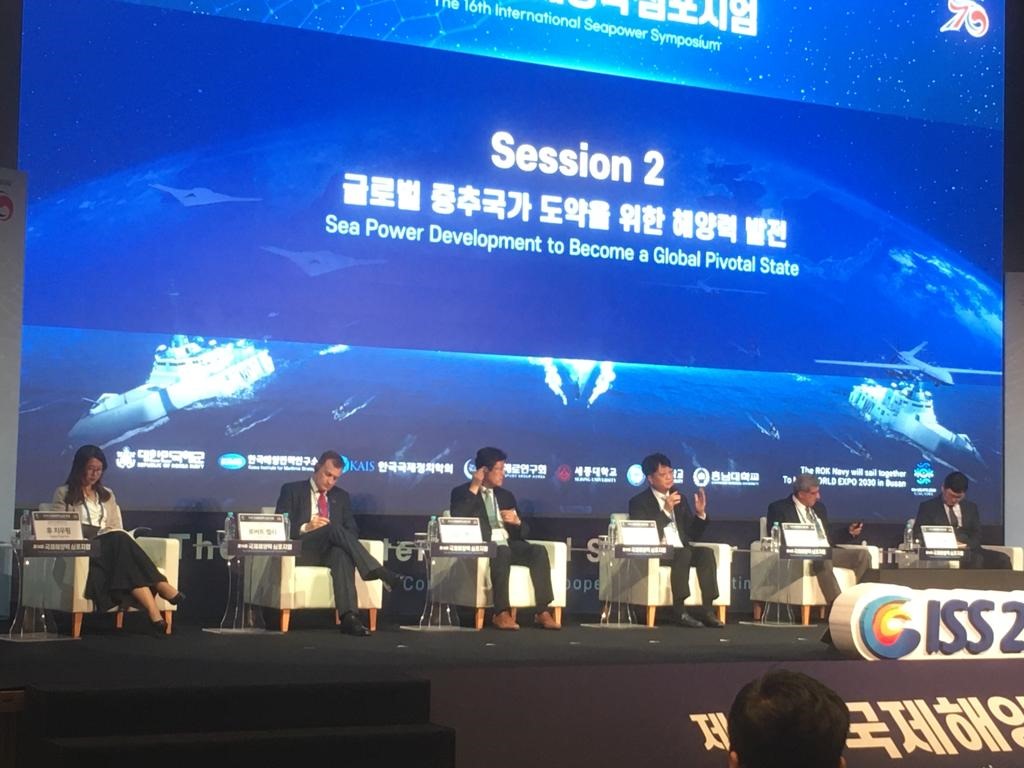
20230608_061928000_iOS 4Without a headline defense budget hike, ROKA, ROKAF, and ROKN are going to collide over the costs of army manpower replacement, missile defense, and an aircraft carrier in the next decade. (I am second from the left in the picture.)

This was the gist of my comments at the South Korean Navy’s 16th Annual International Seapower Symposium here in Busan this month. Here is my Twitter thread on that event with some nice pictures. I also wrote up these ideas in an essay for 1945.com.

To my mind, a big new issue for the SK navy in the next 10-20 years is the Chinese naval threat to SK SLOCs through the South China Sea. Particularly, SK oil shipments from Persian Gulf through the SCS are vulnerable to a PLAN blockade if China gets upset at something South Korea does, like cooperation on missile defense with the US and Japan. China has already bullied SK on missile defense in the past.

China’s creeping control of the SCS will eventually allow it to ‘quarantine’ shipping there to punish SK, Japan, and Taiwan. The odds of this strike me as pretty high once China has de facto control down there. Any embargo will be done informally, first with fishing fleet and coast guard harassment, escalating if necessary. I am surprised more thinking is not given over to this possibility. It seems really obvious to me.

This is one reason why South Korea is thinking about building an aircraft carrier, which I support. Expecting the US to do all the heavy lifting in the SCS is cheap-riding, so SK. Japan, and others should consider maritime bulking up to help.

For SK, the problem is the expense of the carrier at the same time that its army and air force have new, expensive needs too:

    • ROKA is facing a large manpower shortage in the next twenty years bc of SK’s birthrate is super low. ROKA will likely try to fill that gap with tech like drones and armor, which is pricier than conscript infantry.
    • ROKAF faces NK’s spiraling missile program. It will need lots of missile defense and strike fighters (to hit NK missile launch sites). That too will be expensive too given just how costly THAAD and F-35s are.

These army and air force pressures will probably squeeze out the aircraft carrier – an argument I made for the Korean Institute of Maritime Strategy a few years ago (and which has turned out to be correct).

So I figure that MND will see a pretty sharp inter-service budget fight in the next decade or so unless the overall defense budget goes up. All three service branches are looking for pricey, big-ticket platforms.