Don’t Fear Trumpism too Much, East Asia – You’re Already Governed by It

A98C826C-499C-4C5C-9523-01EE6B656210_w987_r1_s

The following is a local re-up of an essay I wrote for The National Interest recently. That essay was edited. The original is below, and I think it is better.  

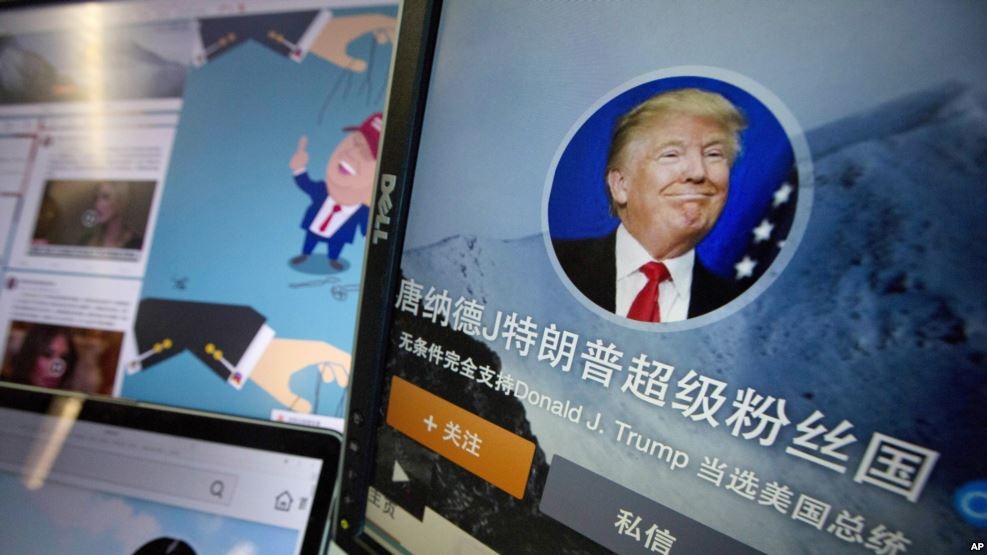
The text in the picture is Chinese and reads: “Donald J. Trump super fan nation, Full and unconditional support for Donald J. Trump to be elected U.S. president.”

That Trump has sympathizers out here makes sense – even though he bashes the region all the time – because he obviously got a lot of his political ideas from East Asia: Mercantilism, race nationalism, hostility to immigration, huge distrust of Islam, oligopolistic mega-corporations dominated by interlocking family and crony networks, soft authoritarianism, manipulating the state to benefit politically-connected insiders, golf – that’s Trumpism. But it’s also the de facto governing ideology of contemporary Sinic-Confucian East Asia.

I remained convinced that Trump learned about East Asia primarily through the ‘declinist’ school of the 1980s. The popularized version of that argument was Michael Crichton’s 1992 novel Rising Sun. Given that this is Trump we are talking about though, he probably just watched the movie instead. This is why he talks about Japan so much.

What just amazes me is that Trump simultaneously has a 35-year history attacking the East Asian (mostly Japanese) nationalist-developmentalist model while pretty much proposing to bring it to the United States now if he gets elected. Trump is basically acting like what he thinks Japanese businessmen acted like in 1985 – just with an extra thick layer of idiocy and know-nothingness on top . Why does no one else see this? So if you are Japanese, maybe you can be proud in a weird way (lol): Trump thinks he’s you, just turning the tables.

The full essay follows the jump.

Continue reading

What a Trumpish GOP would Mean for Asia: Reduced Trade & Migration, and More Defense Spending


This a re-print of an op-ed I just published with the Lowy Institute.

I’ve argued elsewhere that I don’t think a President Trump would pull the US out of Asia. That would requiring battling a deep Washington consensus of government officials, think-tankers, military, and the rest who strongly support a continued American presence out here. Trump is too lazy and too ill-informed to try that. So don’t worry about that. Nor will Trump win. So don’t freak out yet. 

But I do think Trump has changed the GOP a lot, and that he will have successors. Trump just proved that the median GOP voter doesn’t give a damn about Reaganism. Republican voters are now lower middle class and downscale (whites), and they are not anti-statists who want tax cuts for the rich. Nor are they neocons (it’s their kids that fight the wars), nor are they social conservatives, as their rates of divorce, single parenthood, and substance abuse make clear. What they do want though is a dramatic reduction of immigration in order that the United States remain majority white longer.

In short, Trump has just showed the potential for the US to have a European-style nationalist-rightist party, complete with a whiff of fascism in Trump’s authoritarian posturing.

So my prediction is that: 1) Trump will lose, but 2) post-Trumpers will pop-up and try to use his message to win GOP primaries. This will ignite a serious civil war inside the GOP between the establishment – who are mostly Reaganites like Paul Ryan but who have weak roots among actual GOP voters, as Trump just illustrated – and white nationalist post-Trumpers who actually speak to issues the GOP base cares about. It’s not clear to me who will win, but the post-Trumpers have the votes and the passion.

The full essay follows the jump.

My Take on Trump and Asia for Newsweek Japan: He’s Too Lazy to Push for Real Change, so Don’t Worry

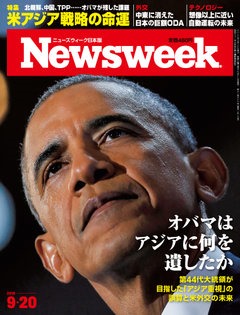
2016.6.14号(6/ 7発売)

I write a monthly column for Newsweek Japan, and below is this month’s English original (on pages 36-37 of the edition pictured).

I haven’t written much about Trump, mostly because he says so little of value in my area, nor do I believe that he really means what he says, because he changes so often and puts so little thought into foreign policy.

So my first comment to Asians who ask is: relax, because even if he wins, he isn’t likely to push through some major geopolitical retrenchment, because of the effort that would take in Washington. Nor is he likely to spark a huge trade war with China for the same reason. The bureaucratic resistance would be massive, and I don’t buy it at all that Trump has the tenacity, focus, intelligence, or interest in any policy issue necessary to undo long-standing precedents such as the decades-old US engagement in Asia.

If Obama can’t get us out of the Middle East, do you really believe Trump will take us out of Asia? Forget it. Perhaps it is the teacher in me, but, like Regan, Bush 2, Palin, and Fox before him, Trump’s defining intellectual feature is laziness, and it will take a helluva lot of work to change the US architecture out here. So forget it. Instead, think about what Trump really cares about – his show-boating, made-for-TV image as manly, tough, a winner, and so on.

President Trump will spend all his time and energy chasing whatever the polls say voters want in a desperate effort to stay popular. What he will really use US government power for, where he will show genuine commitment and focus, is in pursuing his media enemies Nixon-style, and enhancing his business interests. In that sense, he will govern like the CPP or Putin – chasing after journalists, feathering his nest, changing laws and regulations that damage his businesses, and so on.

So don’t worry Asia. Trump is too intellectually lazy to learn, too uniformed to understand, and too narcissistic to care. Trump is a threat to the First Amendment and check-and-balances, not the American architecture in Asia.

My essay follows the jump.

Guest Post – Dave Kang: International Relations Scholarship Underutilizes Asia for the Same Old Western Cases (WWI & Cuba Forever!)

This is a guest post from my friend David C. Kang of the University of Southern California. Dave is a political scientist and runs the Korean Studies Institute there. He is way better at East Asia than I’ll ever be, so stop wasting your time on this blog and get to his author page to start reading his books.

Dave and I were just at the Korea Foundation’s big conference on Korean studies in the 70 years since liberation from Japan. There he made a number of the points below, which I broadly agree with. In short, western IR says Asia is really important – China, North Korea, the pivot, and so on – but still use the same western cases in its writing. Dave has some nice data on this below. I made similar points a few years ago. I think the basic problem is that we still aren’t learning the languages or coming here early in our careers. How many of you studied French and did your junior year abroad in Europe? So when IR actually gets into the casework, its WWI, WWII, and the Cuban Missile Crisis all the time.

Dave’s comments follow the jump.

Some Regional Honesty on the 70th Anniversary of the End of the Pacific War? Not a Chance

There will be loads of retrospectives this year. But rather than write yet another ‘what are the lessons of WWII?’ piece, I thought I would write about how current Asian politics is still framed so much by the war. Particularly, I thought it would be useful to point out in all honesty how some of region’s elites actually came to power on the back of the war – even though they’d never, ever admit that. Specifically, Chiang Kai-Shek would have crushed Mao if he hadn’t had to fight the Japanese instead, and the (North) Korean Worker’s Party would never have come to power without the Red Army ‘liberation’ that was legitimized by Japanese occupation. Being honest about this stuff is helpful, if uncomfortable.

This piece was originally written for the Lowy Institute. It starts after the jump:

Continue reading

Northeast Asia 2015 Predictions: Another Year of the Repetitive, Uninspiring Status Quo

images

This is another of my end of year prediction/look-back posts. The others, on 2014, are here and here. This time I want to look forward to 2015, and I’ve got to admit that I see little that inspires confidence. Every state in northeast Asia is run by nationalists and social conservatives who have little interest in overcoming regional foreign policy splits, or altering the bureaucratic, crony corporatist status quo.

So expect another year of the same: loud, angry, status-quo reinforcing foreign policy fights over empty rocks and events 80 years ago; corruption scandals; competitive devaluation and outrageously punitive consumer prices; a rough deal for working women; dirigisme instead of innovation; North Korean shenanigans; and so on. NE Asia really needs visionary leaders – an Adenauer or Mandela – someone to pull the region out of the blind alley of nationalism and crony statism that rewards nationalist elites and punishes everyone else.

The following predictions were originally made in the Diplomat here.

Continue reading

Looking Back on What Predictions for East Asia 2014 I got Wrong…and a little Right

untitledI have always liked these end of the year prediction check-ups, and new year prediction-making exercises. It’s fun, but it also is an important check on irresponsibility in our punditry. Month after month we say this or that is important, or this or that will happen. But later when the current we thought was important turns out not to be, or the ‘revolutionary’ leader we thought would ‘change everything’ turns out to be a bust, we conveniently forget about that and say some other trend is actually what really matters.

This is intellectually pretty shoddy but understandable. No one likes to admit they are wrong. But identifying why causal mechanisms we thought important actually weren’t, is an important way for us to improve our thinking and explain ourselves to readers. The alternative is those neocons who got Iraq really, really wrong, but still come back on TV unchastened. Bleh.

So here is a run-down of the big things I got wrong in 2014 in Asia. In brief, I overestimated the importance of the Sewol in driving reform in Korea, and the depth of the freeze between North Korea and China; I underestimated the importance of the UN report on North Korean human rights, and China’s efforts to build parallel institutions in Asia particularly. This was originally posted at the Lowy Institute last week:

Continue reading

My Top 5 List for 2014: 5 Biggest Foreign Policy Events for the US in Asia

empire-in-asia-e1377199333368

I love these hoky, end-of-the-year lists. But I don’t know much about genuinely interesting or cool stuff, like the top 5 classical music pieces or architectural masterpieces of the year. So before you read another list about the Kardashians’ top 5 lip glosses, or the 5 most repetitive comic movies of the year, here is an uber-wonky one that’s basically about the sustainability of the pivot.

I am constantly wondering whether the US can carry through on the ‘rebalance,’ whether we can actually shift out of the Middle East and Europe and pay more attention to the Asia-Pacific. I am skeptical, in part because I tend to see US commitments as opportunity costs of one another. In other words, if we are tangling with Putin or ISIS, then we don’t have much time for China or Maduro. But if you’re a neocon, then the pivot is no trouble. Getting involved in Asia doesn’t mean lessening commitments elsewhere, because the US should be globocop anyway, and US domestic expenses should be cut to fund to all this intervention.

The following post was originally put up at the Diplomat:

My November Diplomat Essay: If We can’t Stop Fighting in the Middle East, We’ll Never Pivot

images

You think that guy to the left cares about China or ASEAN? Gimme a break.

This is a point I have made again and again on this blog: Asia does not activate the racial/cultural/religious paranoias of Americans, especially conservatives, evangelical Christians (who are around 45% of the country), and the GOP. This is why we won’t stop fighting in the Middle East. The ‘America is a Judeo-Christian country’ crowd absolutely wants to stay and fight it out against the jihadis, because it fears/hates them in a visceral way it never will feel about east Asian geopolitics. China may be threatening in a traditional, state-to-state kinda way, but that doesn’t move people’s deep fears/beliefs/angst though. But the idea that Muslims might bring sharia to the West, build a mosque near ground-zero, or see their holidays treated equally by Western public authorities is enough see a lot of Americans into a cultural panic. Hence the huge well of public opinion support to keep fighting and fighting in the Middle East.

This is what Huntington grasped a long time ago with the clash of civilizations, but China is too different for most Americans to get excited about in a personal way. But Islam does provoke Americans like this; just watch Fox. Its focus on Islam is relentless and astonishing. So yes, the long war is still the long war, and the Chinese can sit back and watch the GOP insist that the US fight endlessly in the Gulf.

The original essay is here; reprinted after the jump:

Continue reading

My Submission on Dodko to the University of Nottingham’s Blog Symposium on Asian Territorial Disputes

Dokdo

The China Policy Institute of the University of Nottingham in Britain is running a blog symposium – cool idea! – this week on Asia’s territorial disputes. Here is the series page, and here is my submission. I’d like to thank the CPI blog director, my friend Jon Sullivan, for inviting me to submit. Not surprisingly, I was solicited to write on Dokdo/Takeshima/Liancourt.

Regular readers of my work will notice some of my preferred themes – that Korean claim is probably stronger; that a Japanese acceptance of that is nonetheless necessary to legitimate that sovereignty claim; that Korea wildly overblows the importance of this conflict because ‘anti-Japanism’ is central to modern South Korean identity.

The other entries in the series are worth your time if this area interests you. I was happy to participate. Below the jump is my contribution: