THAAD is Not about Missile Defense anymore; It’s about a Chinese Veto over South Korean Foreign Policy

1431539692094

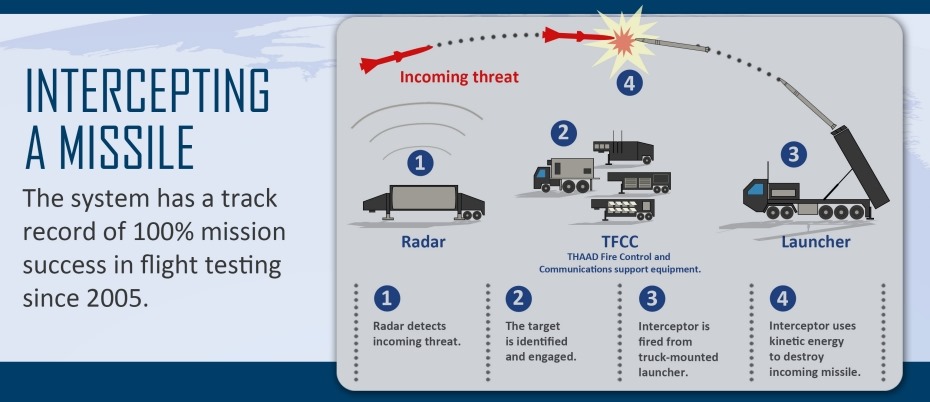
This is a local re-post of a piece I wrote at The National Interest a few weeks ago. The graphic here comes straight from the Lockheed Martin webpage on THAAD. There’s so much contradictory information floating around about THAAD, maybe it’s best just go to the website and look for yourself. No, I’m not shilling for LM; I have no relationship. I just thought it would be convenient. And yes, I support the THAAD deployment here.

Anyway, this essay is actually about the politics, specifically that China WAY overplayed its hand against the THAAD deployment in South Korea. Now THAAD isn’t about THAAD anymore. The Chinese have ballooned it into such a huge issue, that it’s now about SK sovereignty and freedom to make national security choices without a Chinese veto. If you want to read why I am wrong, here’s my friend Dave Kang to tell you that I am getting carried away.

I still stand by my prediction though: neither Ahn nor Moon will withdraw THAAD even if they’d want to otherwise, because now it would look like knuckling under to China. Maybe the Justice Party candidate would withdraw it, but she is polling at 3%.

The full essay follows the jump:

Continue reading

Obama did about as well in E Asia as could be Expected: One Last Defense of Strategic Patience

I know the only thing people want to talk about now is Trump, but here is a parting review of Obama in Asia. I wrote this a few weeks ago for the Lowy Institute. All in all, I’d say he did about as well as you could expect.

Yes, he didn’t prevent North Korea from getting a nuclear weapon and missile, but no one knows how to do that barring kinetic action which is off the table because of South Korea’s ridiculous decision to place its capital, and allow it to flourish, just 30 miles from the border. And no he didn’t slow China’s rise, but no president could do that without kinetic action either. And that’s even crazier than bombing North Korea.

There are no good solutions to our challenges out here, just as there were none to communist power in the 1950s. Hawks calling for ‘toughness’ and ‘leadership’ should remember that rollback was a catastrophe (in the Korean War) that almost ignited WWIII. We then settled for hanging tough’ until communist power imploded, which it did. The contemporary Asian analogue of hanging tough is Obama’s ‘strategic patience.’ Everyone criticized it, but no one has a better option that isn’t hugely risky. So stop complaining about strategic patience until you’ve got a better, genuinely workable idea.

The full essay follows the jump.

Continue reading

What are the Chinese Telling Us by Bullying South Korea so Much over Missile Defense?

MASTER GFX TEMPLATE 2015v05

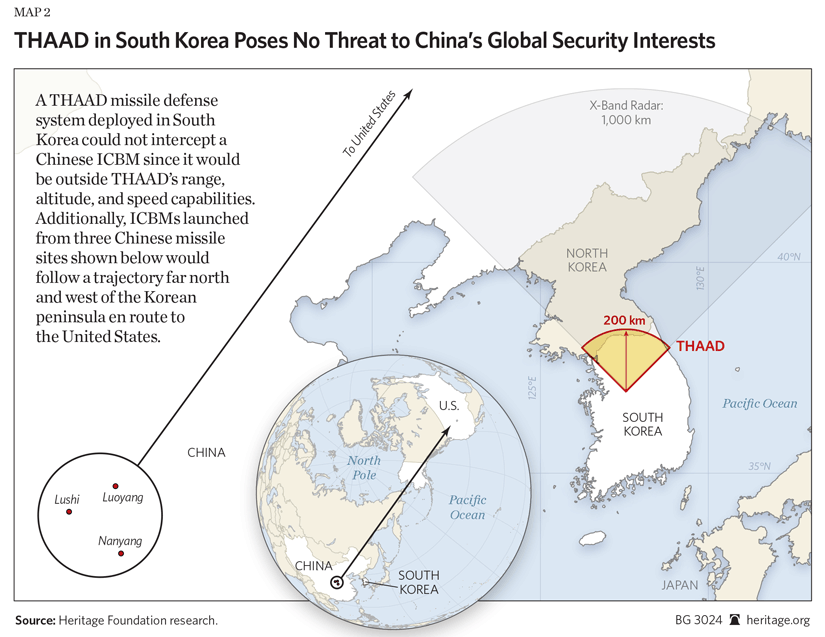
This is a local re-post of an essay wrote for The National Interest about 10 days ago. Basically, I’m curious why the Chinese are making such a huge deal out of THAAD missile defense. They’ve been bullying South Korea relentlessly for a year or so now over this. But THAAD doesn’t even impact them, as everyone knows now. That graphic over, from the Heritage Foundation, nicely illustrates that.

So the big question is why. Why is China making a huge deal of something where it’s so obviously on the wrong side of the debate? (Everyone can see North Korea’s nuclear missile program and South Korea’s obvious need for a ‘roof.’) Why does China think something this minor – THAAD has no impact on Chinese strategic forces – is worth wrecking a decent relationship with South Korea, one of the few regional states that is not that scared of China’s rise? Is this coercive diplomacy to prove Chinese regional hegemony, with South Korea being the first target to be bullied into knuckling under? Is Vietnam next? Or does China really care about North Korea so much that it wants NK to be able to blackmail South Korea with nuclear missiles?

I can’t believe that latter explanation is right. To me, this is China feeling its oats. It’s rising; no longer feels it has to keep its head down per Deng’s early advice. Now it’s number 2 in the world, on the way to being the world’s largest economy. So it’s going throw its weight around, and the states closest to it will feel the hammer of its prestige-seeking fall first.

The full essay follows the jump:

Continue reading

2017 Preview, part 2: Korean Security

Image result for north korea mobile icbm

This is a local re-post of an essay earlier this month for The National Interest. It is also intended as a sequel to my last post, drilling down from East Asia generally to Korea specifically.

There are three big challenges for South Korean security this year:

1. Will China insist on South Korean removing American missile defense? And how far will they go to insure that? (It’s looking pretty far.) Is China prepared to alienate one of the few countries around that is genuinely ambivalent about China’s rise (where most others are nervous)?

2. Does President Trump care about Korean security? If his inaugural address is anything to go by, then no, he doesn’t.

3. Will South Korean President Park Geun-Hye’s successor – almost certainly from the left – accommodate (read: appease/sell) out to North Korea and China?

The full essay follows the jump:

Year in Review, 2016: Top 5 Events of Northeast Asian Security

Image result for trump abe

If that thrilling post title doesn’t pull you away from It’s a Wonderful Life or Sound of Music, I don’t know what will.

This essay is a local re-post of my op-ed posted with the Lowy Institute this month. The pic is President-Elect Donald Trump in his first meeting with Japanese Prime Minister Shinzo Abe. It well captures what a banana republic amateur hour set will be running the US shortly, which makes Trump the number one Asian security story of the year. That is Trump with his daughter and son-in-law business partners, but no US-side translator or Japan expert, because heh, what really matters is getting Trump Tower Tokyo built…

My top 5 security events for the region in 2016 follow the jump, but honestly you’re probably a lot more interested in my picks for the worst TV show and movie of the year.

Continue reading

If Trumpian Duterte Really Bandwagons with China, It won’t End Well

1101-thumb-240xauto

This is the English-language version of a story I just wrote for Newsweek Japan on Philippine President Duterte’s strange new flirtation with China.

The big question I suppose is whether Duterte actually follows through. He has already shown himself to be a ‘trumpian’ nutball character, talking about killing millions of drug-dealers and users while praising Hitler. Previous associates have claimed him to be erratic and difficult. Sound familiar?

And just as I figure Trump would not follow through on his outlandish promises, like stealing Iraq’s oil, or retrenching from Asia, because it would be too hard – fighting all the interest groups in Washington, Congress, DoD, and so on – so I figure Duterte may just be spouting off. When he collides with the reality that no one in Asia trusts China, that his own people don’t want to give up Scarborough Shoal, this his own military is terrified of cutting links with the US to line up with China, I imagine his ‘pivot’ to China will be hard to pull off.

But let’s say he does take the Phils out of the US Asian alliance network. It wouldn’t surprise me at all if he comes to rue that decision. China has no allies; it has purely transactional relationships with places like N Korea, Pakistan, or Myanmar. Beijing would screw them over in a heartbeat if it was in its strategic interests. So I have little doubt that Beijing will come knocking again in the future, asking Manila to surrender all claims to the Spratlys too, or to ‘permit’ China to operate in its airspace. If you think a state run as a nasty authoritarian oligarchy at home, is suddenly going to be a liberal abroad, disappointment is coming.

The full essay follows the jump.

Continue reading

The THAAD Debate is now Wildly Overwrought and Exaggerated

clip_image002

This a local re-posting of an essay I just wrote this week for The National Interest here. That pic is mine, taken next to the US embassy in Seoul.

Basically, I’m amazed at how unhinged the THAAD (Terminal High Altitude Area Defense) missile defense debate has become in South Korea. The South Korea left is really digging in its heels and turning this into a huge issue. ‘Activists’ have shaven their head and and thrown eggs at officials supporting deployment. Opposition lawmakers even went to Beijing, which strongly opposes the deployment, to ‘apologize.’ The National Assembly, now with a leftist majority, wants a vote on THAAD, and this might even become a presidential election year.

I honestly don’t understand this at all. All THAAD does is raise South Korea’s missile defense roof by about 100 kms. That’s it. SK already has lower tier missile defense, and THAAD’s radar adds nothing that the US doesn’t already have (contrary to China’s assertions, which the Chinese know but won’t admit). Yet the South Korea left and China (cynically) are treating this like the apocalypse, as some massive re-orientation of the northeast Asian strategic landscape. It’s not.

This is not intended to seem partisan. I actually agree with the SK left on a lot of domestic issues, such as better regulation of the chaebol, press freedom, protests rights, the SK right’s creepy mccarthyism. But on North Korea, I just don’t get the SK left at all, and running off to China over THAAD looked like craven appeasement of a bully. Appalling flunkeyism.

Anyway, read after the jump about why THAAD only buys SK a little more time to figure out to response to NK missilization. It’s hardly a revolution.

Will Japan Get Sucked into the Post-PCA Ruling South China Sea Mess? Yeah, Probably

2016.9. 6号(8/30発売)

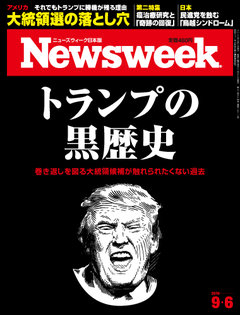
This is the English-language original of an op-ed I published in this week’s Newsweek Japan. I was thinking about what if any impact the recent Permanent Court of Arbitration ruling on the South China Sea, and China’s full-throated objection to it, will have on Japan. Three things come to mind:

1. Given the size of Japan’s economy, Japan is more absolutely dependent on SCS freedom of navigation than anyone else. Its straight-up dollar interest in FON down there is huge. It is hard to imagine Japan not getting pulled in just by the criterion alone.

2. China need not start a war or do anything very dramatic to cause genuine trouble for Japan in the SCS. It only needs to stop a few transiting ships for a few days for ‘health inspections’ or ‘environmental concerns.’ Or its fishermen or coast guard could ram or block ships. Once the pressure of an incident rose, China would release the ships, saying that they were now in compliance with some bogus regulation. This would send a clear signal that China has its boot on Japan’s windpipe but in a very oblique way that would make responding to China very hard. The Chinese have proven themselves adept at this sort of salami slicing. Future one- or two-day stoppages for specious health or traffic safety reasons would constantly be hanging out there as a potential threat. At the very least, it would drive up the cost of shipping and insurance.

2. The US is probably not going to fight a major conflict with a near-superpower just over shipping lanes. Were Japan directly attacked, sure, the US would intervene. But the Chinese aren’t stupid. They learned from the massive counter-balancing the Soviets incurred when they tried to bully everyone during the Cold War. The Chinese are much more oblique and crafty, and they’ll work hard to avoid a direct military confrontation with the US. This too will likely force Japan to get more involved.

The full essay follows the jump.

Continue reading

Would a Chinese Cut-Off of North Korea Bring It Down?

This is a re-posting of something I wrote for the Lowy Institute here. Basically, I was trying to think of what might either bring North Korea down, or otherwise force it to change substantially. Usually at this point, people say something like, a war, or an internal revolt. But a war would be so disastrous, that it is worth looking at other possibilities. And an internal popular revolt seems really unlikely. In 71 years, North Korea has never had one.

In the movies, like Avatar, the people rise up and overthrow their oppressors. In reality, authoritarian regimes almost always collapse when the regime’s internal groups turn on each other. Regime splits, possibly catalyzed by popular protest, can force dictatorships to change or even collapse. In Egypt in 2011, the regime split after Mubarak failed to quell the revolt with his thugs and then flirted with using the army. They brass balked, and Mubarak began to lose internal support.

But if there won’t be popular revolt in North Korea, how to set the regime’s factions against one another? Well, how about going after their cash? The military and police who keep the Kim regime afloat pay a pretty high price for that. They are globally isolated, hated by the countrymen, and will be remembered in Korean history as thugs. What is the compensation? The great lifestyle of the gangster racket Pyongyang runs – the HDTVs, booze, women, foreign cars, and so on. All of that depends on a) foreign cash, and b) a foreign pipeline. China is required for both. Shut that gate, and the pie of foreign goodies suddenly starts to dry up. That might get them them tearing at each other.

The full essay follows the jump:

Continue reading

“The Curious Love-Hate Relationship between China and North Korea”

The following is a re-up of my monthly post for the Lowy Interpreter for June. The original is here.

The fissure between North Korea and China is widely noted, and Kim Jong Il supposedly told Madeleine Albright when she visited Pyongyang in 2000 that he’d rather have a deal with the US than with China.

That’s somewhat understandable actually. The US is too far away, both geographically and culturally to really dominate North Korea if the two managed to strike a deal. But dealing with China – right next door, bullying, opportunistic – must be tough. There’s nothing Beijing would like more than for North Korea to be like East Germany: a completely dependent, completely controlled satellite. So the North Korean nuclear program is a great idea: even as North Korea becomes an economic semi-colony of China, the nukes can prevent the loss of political sovereignty.

The full essay follows the jump.