


The Contemporary China–Wilhelmine Germany Analogy, part 2: Differences

imagesHere is part one.

This is the second half of my series on the analogy of China today with Germany in 1914. This was originally written for the Lowy Institute in Sydney. China today = Wilhelmine Germany is a pretty common analogy in international relations writing, especially in the op-ed ‘literature’ on China. I thought it deserved a little more deconstruction given how much we use it. Here I argue that there are enough dissimilarities to undercut the predictive value of the analogy.

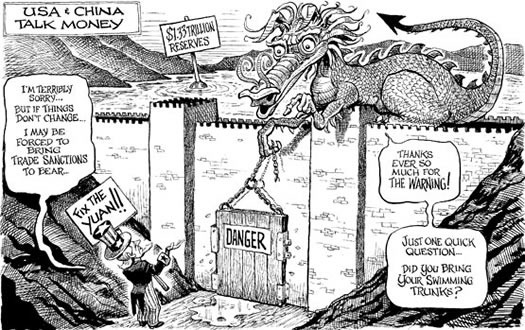
Once again, I can’t find a good image of Wilhelmine Germany and China. Someone please find me a pic that doesn’t use the modern Germany flag like this one. Here is that post:

“In my previous post, I noted that China today is often analogized to Wilhelmine Germany in the run-up to WWI. This is probably captured most famously in well-known argument observation, ‘will Europe’s past be Asia’s future?’ The basic idea is that intense nationalism, seething historical and territorial grievances, and rapid modernization might plunge Asia into a WWI-style general war, with China as the neo-wilhelmine villain provoking it all. Previously, I argued that there are four shared structural characteristics that drive the China today-Germany 1914 analogy: encirclement by suspicious powers, rapid economic expansion, grievance-driven nationalist ideology, and rapidly expanding military power upsetting the regional balance of power.

But many other, perhaps less hawkish observers, such as Timo Kivimäki, David Kang or Amitav Acahrya, have regularly noted that east Asia has enjoyed a robust peace since 1979, and that realist-hawkish predictions of Chinese aggression have been around since Tiananmen Square yet never come true. Predictions that never pass but are regularly re-warmed by saying that we should just wait a little longer, are theoretically weak and deserve re-evaluation. 1979 was the last time a serious inter-state war – between China and Vietnam – occurred in East Asia. And Kang has argued for awhile that declining military expenditures in East Asia belie the standard western op-ed page narrative of rising Chinese power and fear of it throughout Asia. Asian behavior seems not to support that contention of the ‘China threat’ school.

Continue reading

My Latest for Lowy: “On the Contemporary China-Wilhelmine Germany Analogy, part 1: Similarities”

untitled

There is so much analogizing of contemporary China to Wilhelmine Germany (here’s yet another one), that I thought a longer treatment would be in order. I wrote this originally for the Lowy Institute, whose blog I write for. I like this post, as I feel like it takes a widely thrown-around, yet poorly elaborated meme and fleshes it out. Part 2 will go up in a week or so. And yes, I know that the German flag in the pic is the modern one of the FRG, not the old black-white-red. But I couldn’t find the two of them together…

Here’s that essay:

“Contemporary China is frequently analogized to pre-1914 Wilhelmine Germany. A host of commentators have made this comparison in the past few years: Walter Russell Mead, Martin Wolf, Edward Luttwak, and Joseph Nye, and a little further afield, Gideon Rachman, and Victor David Hansen. Similarly, it is often suggested in these analogies that East Asia today is like Europe before WWI; one famous formulation has it that ‘Asia’s future will be Europe’s past.’

So in this and my next post, I want to examine the China-Germany analogy in some detail. In brief, I think the comparisons are enticing, particularly because it is hard to find a good analogy of a ‘peaceful rise,’ as China, until recently at least, seemed to be pursuing. That is, we use Germany 1914 as an analogy in part, because we can’t find others that seem to China fit well, and we routinely use analogical reasoning in social science to improve our understanding. But I also think the contrasts are stark enough that the predictive value of the analogy is weak. Ideally, this would be pursued more seriously as a full-blown research paper, so to any graduate students reading, this is a nice IR project with an Asian empirical focus.

Continue reading

Morgan Tsvangirai, not the EU, should have Won the Nobel Peace Prize

Tsvangirai_2285903b

The EU? Over a guy regularly facing down death-threats, bullying, and intimidation from one of the worst dictators on earth? Boo to the Nobel Committee for missing this obvious choice.

If they can give the prize to the drone-warrior with a kill-list (Obama) and an institution run by wealthy, comfortable lawyers, bankers, and white collar professionals, then surely they can give it to someone who every day is making a far more direct, personal, bodily commitment to peace and social change. In fact, why Tsvangirai hasn’t won yet is beyond me. It seems so obvious. (Yes, his personal life is somewhat chaotic, but I don’t think that is normally a consideration. Kissinger called himself a ‘swinger.’)

Here is a good profile from the BBC. Note how badly he got beaten up by the thugs of President Robert Mugabe in 2007. He’s be charged with treason multiple times, and his party, the Movement for Democratic Change, has been harassed from the beginning. That is commitment, far more than endless EU meetings about some treaty no one will read.

Continue reading

Say Ron Paul Won…Which US Allies would get Retrenched? (2) Japan?

retrenchment graph

This post series is getting so much traffic, here is a part three on likelihood of retrenchment. Here is part one where argued that America’s 8 most important allies are, in order: Canada, Mexico, Saudi Arabia, Taiwan, India, Indonesia, Israel, and South Korea.

I argued for 3 quick-and-dirty reasons for that ranking, but I got some criticism on these in the first post, so here is some elaboration :

1. National Security: Some places, like SA and Mexico, may not appeal much to Americans, but they are so obviously important, that abandonment would be hugely risky. So yes, SA is a nasty, reactionary ‘frenemy,’ not really an ally at all, but we’re stuck with it. A Saudi collapse would set off both huge economic and Islamic religious turmoil; all the more reason to slowly exit the Middle East and pursue green energy. But until then, I think we have to be honest and say that we can’t really leave the Gulf. But the bar of this criterion should be awfully high. With some frenemies, like Afghanistan and Pakistan, we don’t really need to pretend to be allies actually. We can just get out if have to.

2. Need: In some places, the US can get a lot more bang for its commitment buck, because without us, our ally would likely collapse/lose/fail. Taiwan is the most obvious example. Conversely, other places, like Germany, pretend to need us, because they don’t want to shell out the cash (and we’re so bewitched of our God-given, history-ending, last-best-hope-for-mankind, bound-to-lead neocon unipolar awesome-ness that we let ourselves get taken for a ride).Between Taiwan and Germany, I would place Israel and SK.

3. Values/Symbolism: I don’t like this criterion much, because it reminds me a lot of McNamara, ‘credibility,’ Vietnam, the Munich analogy and all that. But still, there are a few places where the American commitment has taken on an almost ‘metaphysical,’ good-guys-vs-bad-guys dimension. The whole world is watching, and a departure would be seen as a huge retreat from critical values that would bolster dictators everywhere, especially in China and Russia. SK is the most obvious example. NK is so bizarre, frightening, and horrific that while the US commitment isn’t really that necessary anymore, it’s taken on a symbolism wholly out of proportion to events on the peninsula. Taiwan also comes to mind, as does cold war West Germany. Avoiding another such perpetual commitment was one of the important reasons to get out of Iraq. If we’d stayed, we might have have gotten chain-ganged into never leaving our symbol of GWoT ‘success.’ We really don’t need more of that sort thing

So back to the list. Now come the ones that can more easily be retrenched, because either they are wealthy enough to defend themselves, or their value to the US has fallen:

Continue reading

Korea 1997 & the Greece mess today

Flag-Pins-South-Korea-Greece

Here is a good article on Korea and other near-defaulters or defaulters, and what lessons they might have Greece now. Greece can in fact recover if it leaves the euro, and increasingly, I think both it will and it should. However, one important element Greece should not pass up, is using the crisis to force discipline on the parts of the economy that caused the currency run to begin with. The Korean government was partially able to discipline the out-of-control chaebol who had caused the crisis by wildly over-borrowing on Wall Street in the mid-90s. Koreans hate to hear it, but their political economy got substantially cleaner and less corrupt because of the 1997 brush with default. Greece should do the same; it should not leave the euro just so it can go back to its bad old ways. That would be a catastrophe and turn Greece into a prototypical Middle Eastern patronage state.

Continue reading

China’s Counter to the Asian ‘Pivot’ (2): ‘Swarms’ in the Pacific

china-us-economic-warfare

Part one is here, where I noted China’s growing fear of encirclement (I get Chinese students a lot who talk about this). So, in the role of China, I argued for an Indian charm offensive to prevent encirclement, and how China might buy off Korea from the US camp by abandoning North Korea. Here are some more ‘B-Team’ style ideas for pushing back on US local dominance, including swarming the US navy in the western Pacific with cheap drones and missiles:

Continue reading

Korean National Identity (1): Comparisons to Israel, France, and the US

imagesCA0EEEZ1

isfrimagesCAYPLPUQ

Part two is here.

I get lots of questions from Western readers about this or that aspect of Korea in comparison. We don’t really know about Korea too much, but Americans often use it as an example for some larger political point they want to make. Here are a just few examples: 1) Obama: SK is kicking our butt on education and tech; 2) Obama: SK is an example of a country that modernized but didn’t westernize; 3) Michael Crichton and Amy Chua: SKs and other East Asians are work robots who will take over America and cost your kids a job; 4) John Bolton: Long-suffering SK gives us an excuse to stomp on NK.

Of these, I really think only the second is valid. A few years here can rebut the others without too much trouble:

1) Korea has huge educational problems that Americans don’t really know about. After taking insanely difficult tests in high school in order to place into a good universities, Korean college students often slack and party as a ‘reward.’ Too much of university here is about building the informal social network that will carry you through your professional life and not actually clamping down to do the work. Korean students are also not the readers that college education demands, which is why they often struggle in US graduate programs. And far too much of K-12 is focused on rote memorization, so plagiarism is a huge problem. Also, in case you ever wonder why Korea is so wired (which Koreans love to brag about), recall that Koreans live in very dense urban clusters, frequently in high rises. These are very cheap to wire, compared to the far more diffused American population and the high expense of the US ‘last mile.’ (That said, my broadband here is awesome and is about to get even better.)

3) As for Crichton and Chua, gimme a break. America’s inability to balance its budget, control its imperial temptations in the developing world, fix its K-12 schooling mess, reduce hyper-inequality and high crime, etc. are the reasons for US ‘decline.’ Asians like the Japanese, Koreans, or Singaporeans don’t have some magical growth formula. I will agree that East Asians are better ‘socially disciplined’ (crime here is mercifully low), but not the way Amy Chua’s ridiculously racist domestic fascism would have you think. I’ve been here close to 4 years, and I have never seen anything like what Chua describes in the Korean side of my family. As for the ‘Asians-as-work-robots’ idea so popular in the US in the 80s and 90s, once you’ve experienced the East Asian post-work business culture of hard drinking and debauchery, you know that’s bunk too. I have seen enough Korean ‘salary men’ lean out taxi windows on Friday night to vomit while the driver waits complacently to know that the whole ‘Asian values’ schtick is a fraud.

4) Bolton: I resent the way neo-cons manipulate SK unhappiness about national division to suit pre-existing ideological preferences for regime change and US military activism. This is cloying, pretended sympathy in service to American, not Korean, goals; that’s extreme bad faith. I have noted before that SK want nothing to do with ‘Axis-of-Evil’ talk.

Given this mediocre record of popular comparison, here are a few comparative classifications of SK with countries western audiences might recognize better. Compare and contrast is a basic social science method. And comparative politics in political science is always looking for similarities among states on which to build generalization. So here are the ones that have leapt out to me:

1. Like Israel, Korea is a barracks democracy striving for international normalcy. Both are democracies but under long-term siege. Both would like to join the global economy, get rich and be normal, but can’t. Both struggle to maintain civil liberties in an threatening environment with inevitable slippage. Korea, for example, blocks internet access to NK websites; in Israel, Israeli Arabs can’t join the military. Both are trapped in partial or incomplete states. Korea is half a country, and Israel’s borders are up for debate. Both are too militarized for a democracy, but still, they are doing a really good job balancing a huge military role in society with democratic freedoms. By comparison, look at simlarly over-militarized democracies like Indonesia, Pakistan, or Turkey.

2. a. Like France, Korea has aloof, farily corrupted political class in a too-cozy, corporatist relationship with business. Both also have weak political parties and weak legislatures. So voting doesn’t really make much difference; political participation looks for other avenues.  As a result, both have a vibrant street protest tradition. Working for serious change within the system feels pointless because of an entrenched, circulating elite, toothless opposition, close party-state relationship, and a bureaucracy rather insulated from popular pressure. So when Koreans and French are most angry, they turn to extra-parliamentary means. They march on the streets. Immobilist, scandal-ridden politics channels real political grievance onto the streets.

b. Also like France, Korea is extremely centralized on the national capital. Seoul dominates Korean life, vacuuming up talent, wealth, and prestige from around the country. The goal of just about everyone is to go ‘up’ to Seoul, whether for school, the best jobs, or the best cultural life. You even see it among the expats. Even we foreigners in Busan say we wish we had a Seoul gig! And, as Paris does to the provinces, the rest of Korea is impoverished by this.

c. Finally, both Korea and France are semi-presidential systems. Both have a tradition of a megalomanical ‘father of the nation’ who created a super-presidential post above ‘grubby’ politics. In France, de Gaulle directed the ship of state from a constitution he set up for his own personal benefit as the living embodiment of France. In SK, Park Chung-Hee did the same thing. In both countries though, political institutions are weaker than you’d think because of their ‘great man’ origins. Eventually a succession must occur – no one lives forever – and both France and SK have struggled to tame the office of the president and build more routinized, democratic institutions open to the public. To date, France has succeeded better. Korea remains a very presidentialized semi-presidential system. Ironically, that may help Korea, because the rise of the prime minister in French semi-presidentialism has effectively created a bifurcated executive, particularly when the PM and president have different party affiliations. In Korea, the reduction of the PM to essentially the first cabinet minister has helped unify its executive.

3. The cultural gap between the West and East Asia is wider than the between the West and Latin America, Russia, or even the Middle East. In terms of food, music, religion, and language, the differences are far greater. So it is therefore all the more surprising how Americanized Korea is. English is everywhere – in the schools, on street signs, music, TV. Its institutions, especially military ones, are heavily patterned on the US; until 1981, the Korean version of the CIA was even called – the KCIA! Today there is still the K-FDA. Koreans watch lots of American TV and film. They eat our fast food and junk food (and are getting heavier for it). And they are beginning to pick up the American culture wars. They fight increasingly over stuff like abortion and the death penalty as we do. Korean evangelicals (yes, they are here too) even say that God has a special mission for the US no less! (Now that really is brainwashing.) My own personal guess for why Korea is so Americanized, is that if Korea can close the cultural distance between it and the US, the US is more likely to honor its alliance commitment and fight for SK. In other words, cultural Americanization is a national security strategy to reduce the ‘otherness’ of Korea to average Joe American, in order that he will agree to fight here. Kinda smart if you think about it.

Don’t push any of these analogies too far, but Obama mentioned Korea five times in the 2011 State of the Union, so I thought this might help.

Continue to part two.

The Korean-German Unification Parallel; plus Blackwater … the Game?

Quick IR test: name that dictator!

Regular readers will know that I have blogged about the parallels between Germany and Korea at length before: here and here. This week the Korean Journal of Defense Analysis published the long-form version of my argument. It is available here for free in PDF. KJDA is a great little publication in east Asian security is your area, and it is offered for free too. Very nice.

Comments on the argument are always welcome. I thought because everyone always implicitly compares NK to EG, and possible Korean unification to Germany’s experience, it would help to formalize the comparison at length. The bumper sticker version is that NK is about 10x poorer than EG, so unification will be way harder and more expensive than the German experience.

A foreign IR professor in Seoul argued to me that starting from the German analogy is an error, perhaps one that is flattering and preferred by Koreans because it turned out so well. A better parallel might be Yemen’s reunification, which worked out far less well. That seems pretty harsh to me. SK is a lot more like WG that either of the Yemens. For other comparison cases to Korean unification, try this.

Here is the summary section from the PDF:

To recap, domestically, there are more North Koreans than East Germans,
and they are much poorer as well. There are fewer South Koreans than West Germans,
and they are (albeit less so) less wealthy also. South Korea’s state capacity is lower
than West Germany’s, while North Korea today is dismal by even the former East
Germany’s standards. In sum, fewer people with less wealth in a weaker system will
support more people with less wealth from a worse system. That domestic calculation
is punishing, on top of which the international balance of forces is worse now than
in 1989 too.

Internationally, today’s external patron (the United States) of the free Korean
half is weakening, while the external patron of the communist half (China) is
strengthening. The opposite was true of the United States and West Germany, and
the USSR and East Germany, in 1989. Today’s northern patron (China) is trying to
push further into the continent (Asia), while yesterday’s eastern patron (USSR) was
looking for an exit (from central Europe). Nor is there is a regional encouragement,
revolutionary wave, or democracy zeitgeist that might accelerate the process. The
incentives for China to meddle (because of the greater importance of North Korea to
China, than of East Germany to the USSR) and the greater ease of such meddling
(because the United States and South Korea today are weaker than the United States
and West Germany were then, while China is much stronger today than the USSR
was then) mean Chinese intervention is likely. It will almost certainly seek to structure
any final settlement. The major policy question emanant from this paper’s analysis is
therefore: Will South Korea forego the U.S. alliance if that is required to remove
China from peninsular affairs? Will South Korea exchange neutralization for unity?

————————————–

So I got my wife a Kinect for Christmas (yes, it is very cool, but it’s a pain to set up your living room for it). While browsing for it, I found ‘Blackwater – the Game.’ Wow! Mercs for kids! Phenomenal! Who came up with that idea?! Recall that the Kinect is meant for the non-gamer types and kids (like the Wii). I understand that there are already lots of military-style shooters at home, and some of them are genuinely brutal and extreme. Yet Blackwater of course is/was a real firm, implicated in some of the most controversial moments of the Iraq War, and the game is on the wii-like Kinect. So do you really want your kids playing hired guns in Iraq? At least in most shooters you play a ‘public-spirited’ character (ie, a soldier); here you’re just killing people for money – a great lesson for little Johnny, I geuss.

Blackwater of course is gone now. Its called Xe today, but apparently former CEO Erik Prince owns the rights to the name and I geuss he needs the money. I’m just not sure what to think. On the one hand, I think realism and/or edginess improve gaming and make it less ridiculous; that’s why I don’t mind Grand Theft Auto or Halo, and I thought Bioshock was super. But mercs for kids is probably a new low. In any case, the game is terrible apparently.

And here is another nice item for the Korean-watchers. We bought a TV mount for the Kinect. It costs $20 on Amazon, and $36 in Korea. Yet another example of how Korean mercantilism and the weak won policy are killing Korean consumers by making everything pointlessly, outrageously expensive here. What possible explanation besides politics can there be for an 80% (!) price differential like that on such a mundane, irrelevant product? Ugh.

NATO’s Biggest Problems in the Future will be Internal, not External

untitled

If you missed the flap over Robert Gates’ speech to the Europeans over defense spending, start here. I am participating in one of those forums about the future of NATO. If had a dime for every time I have been to a conference or forum on this, or read an article on it from the Council of Foreign Relations, the German Marshall Fund, Foreign Policy…

I am amazed at the endless amount of navel gazing on this issue, especially by Europeans in conjunction with the (equally tiresome, endless, and speculative) ‘future of the EU’ debate. You could write a book about the future of NATO or the EU (and many have), but a far more interesting book would be on the cottage industry and rubber chicken circuit that has grown up around these topics. Most westerners still don’t know the difference between Sunnis and Shia, but there’s always more time and money to bemoan NATO’s lack of a ‘strategic concept’ or (worse) the EU’s rube goldberg institutional structure. My guess is the real reason we don’t close NATO is because about 10,000 transatlantic security analysts would be out of a job (but me too, so I’ll shut up now).

Anyway, here we go on the big problems for NATO in the next decade:

1. Coherence: The Soviet threat forced an unnatural level of coherence on alliance members that has since faded. Salafist terror is not a substitute (nor should be – god save us from the ‘long war’ and ‘world war IV’) . The policy struggles over NATO action in the Balkans, Afghanistan, Iraq, and Libya suggest this tussle (‘alliance politics’) will be a regular feature in the future. This will tempt the US to go it alone, especially as the European members are divided among themselves as well. So NATO will look less like an alliance and more like a club of democracies. Its operations will have a more ‘a la carte’ feel as members opt in and out of what suits them, such as Germany and Turkey’s rejection of the current Libyan operation. The more NATO operations move from consensus to majority decision-making, with ‘modalities’ of mixed cooperation, the less the ‘all for one, one for all’ Article 5 will mean. This will progressively unnerve eastern European members who now take Article 5 more seriously than anyone else in NATO.

2. European military capabilities: Collapsing European defense spending reinforces the slide from alliance to club. NATO was always unbalanced with no integrated European ‘pillar’ to complement the US one. This is worsening, because of growing Continental skepticism about the morality and utility of the use of force, and because of the ‘age of austerity’ cuts being forced on all NATO militaries (including the US soon, but worst in Europe). The back-biting and buck-passing of the Libya operation is likely to be repeated as NATO’s high-minded idealistic commitments collide with its operational limitations.

3. Out of area: The big NATO debate from the mid-1990s to mid-2000s was whether to go ‘out of area’ (out of Europe). Afghanistan was the first test of that, and no one seems to like it. European commitments there are so hedged with rules of engagement limitations, that US commanders simply go around them. European publics don’t support ISAF. Perhaps Afghanistan was too far away and too contentious to Europeans for its connection to the much-disliked war on terror. Perhaps Libya, Syria or Somalia might revive the idea. But European publics seem to have little taste for large footprint operations. Minimalist ‘bombing for peace,’ as in Kosovo and Libya, seems like about all the out-of-area European publics are ready to tolerate, again reducing the ‘alliance’ character of the alliance.

4. No one in Asia cares about NATO that much anyway. I have been teaching international relations in Asia for years, and in my experience NATO is seen as just a pleasant, somewhat dated, regional organization. Any hype about NATO as a global police force for globalization would crash right into the new core’s disinterest in any such role. Forget that.

5. Ad hocery is the rule now. In the endless speculation over the future of NATO, my sense is that the organization increasing suffers from the outsized, almost mythic expectations that have accreted around it over two generations. Call it the public relations inertia of NATO’s path dependent trip in the western mind – from hastily thrown-together alliance to the single most important international organization ever (particularly to Europeans). After 60 years, the notion of ‘NATO’ has taken such a hold of the public imagination, certainly among western foreign policy elites, that we are constantly calling for big plans to ‘revive’ it with ‘strategic concepts’ and the like, and we regularly lament that it is fracturing. We have talked up NATO into a powerful image of western solidarity and community, but one which members don’t really want to pay or sacrifice for. NATO’s own self-image often gets in the way of its likely and ad hoc role in the future. No one really knows what NATO is supposed to do after the Cold War, but inertia in the West means we are afraid to close it (which is why we have been having forums like this one for 20 years now). So we keep throwing missions at NATO, wondering whether or not they will work, unsure quite what to expect. Expectations management (read: reduction) is needed. NATO is highly unlikely to forge a widely shared geopolitical consensus, as in the Cold War. But we can try various missions and experiments. Some may work, some won’t. But holding NATO together as a symbol of western political unity is not a bad thing in itself.

The EU has Sewn Up the IMF Race Already? …. plus some media

christine-lagarde-imf-600

I published an op-ed in the Korea Times last week on the IMF managing director (MD) race. For readers outside of Korea, the KT is a mid-level paper here in Korea, sort of like the Plain Dealer from my hometown Cleveland. The biggest paper in Korea’s landscape is the conservative Chosun Ilbo. The KT is smaller, and because it is written only in English, it has a substantial foreign readership beyond Korea. My op-ed is based on this post last week.

I am amazed at how quickly the replacement for Dominique Strauss-Kahn (DSK) is emerging as a European once again  – the French Finance Minister, Christine Lagarde (above). The Europeans seem to be moving lightning fast on this, before Asians or developing states can get their act together and congeal around one or two non-European alternatives. As I noted in the op-ed, there is no functional reason for the IMF MD to be a European. It has simply been precedent, justifiable so long as Europe was the second major pole in the global economy with the US. Well now there is a third, in East Asia, what Barnett calls the ‘New Core’ (the North Atlantic being the Old Core). Surely it’s time to give the new Core a shot at running one of the big international economic organizations of the world?

The EU has driven its economy into a ditch in the last few years, so I see no ‘competence’ reason why a European finance minister would be better than a Japanese or Singaporean banker, e.g. Nor have the last three European MDs of the IMF been very good. Horst Koehler (2000-04) and Rodriego de Rato (2004-07) were placeholding non-leaders who took the MD-ship in order to springboard into higher office back home. And of course, DSK just globally embarrassed the institution in a manner that basically epitomizes its critics’ worst fears. The narrative of a powerful wealthy white man assaulting an black immigrant female maid is straight out of the antiglobalization movement’s nightmare imagery. So there is no particularly history of ‘quality leadership’ from the EU to justify its sinecure either. In fact, quite given how bad the last three MDs in a row have been, it would be a good idea to drop the EU for a round or two.

So where is substance to the argument that somehow Europeans are somehow entitled to the MD-ship? There is none. It’s bogus. The real claim is tribal – the EU wants the position, because it bolsters Europe’s otherwise declining claim to global leadership and relevance. The EU is like a child running around the adult table waving its hands demanding attention. As Martin Wolf noted on this issue, if the IMF can’t change to accept new realities (the rise of  the rest, especially Asia and the BRICS), then unfairly excluded states will simply walk away from the institution. Asia has already flirted with this because it felt so high-handedly treated in the Asian Financial Crisis (AFC).

Finally, the argument that the IMF should have a European leader right now because the IMF will be working so much in Europe in the near-future, is so specious as to be nearly racist. I find this almost revolting. Back when the AFC hit (1997-98) and westerners were dispensing painful but necessary advice to Asia, no one in the West worried about white bankers dispensing hard medicine to Asians. To say, today, that German Chancellor Angela Merkel won’t trust anyone to run the IMF unless it’s a European she knows,  is so ridiculous, hypocritical, self-serving, and borderline racist, that it really should shock the non-western IMF members into some pretty harsh language in response. If the EU wants to run its economy over a cliff, that’s its own choice. But the EU has no special claim to line up the globe’s resources (through the IMF) to bail out foolish German bondholders badly exposed in Greece, Spain and Ireland. For a counter-example, ask if California, with its own nasty budget crunch, is getting a bail-out from the IMF? No; Americans will wrestle through that on their own, and the EU should too on Greece and the other euro-miscreants.

I find the sheer, bald-faced selfishness and parochialism of this just shocking, especially given how often the EU preens about the importance of multilateralism and international institutions, in obvious contradistinction to ‘mercantilist’ Asians and ‘cowboy unilateralist’ Americans. So here is a golden chance for the EU to really improve global governance, to make it fairer and more democratic. But no, they’d rather insist on tribal privileges. Bleh.

Does it need to be restated that the IMF is a global institution, not a European regional one? The IMF does have other lending responsibilities, and most of its non-European borrowers are vastly poorer than Greece or Ireland. The EU has huge resources compared to the many LDCs (less developed countries) of Africa, but I guess the IMF is really supposed to be a global slush fund for the euro mess.

As best I can tell, Lagarde is pretty competent, and may do a good job. I certainly hope so, and her first trip as MD should be to non-European borrowers, especially in Africa, to prove her credibility. But there is no substantive argument from her resume to set her apart. Try here and here for a nice run-down of all the good non-western candidates who won’t be considered, because Merkel couldn’t care less about global governance and multilateralism when her campaign contributors’ South European bond-holdings are about to be ‘hair cut.’ It’s all just tribalism and selfishness. The real European claim is narcissism – put off succumbing to the new global reality where Asian economies are easily as influential as the old Core’s.

Read this and this as well on this issue.