Does the US Need a Long-Term Exit from the Middle East?: 1. Afghanistan

158px-Flag_of_Afghanistan_svg

Part 2 is here; Part 3 is here.

This week I am putting up my thoughts on accepting a ‘defeat’ in the Greater Middle East (at least for a little while); cutting our losses; and a long-term exit from a region that is consuming US power at a remarkably frightening rate. My ‘rah-rah’ instincts are to stay and ‘win’ and my blogging to date has supported the GWoT pretty strongly, but increasingly the parallels of Afghanistan to Vietnam linger in my head. It’s hard not to see this debate like those of the Johnson administration in 1964-65. The risks of staying and draining US power, especially in the face of rising Asia, increasingly worry me. Perhaps living in Asia and seeing how wealthy they are all getting, while we run all over the ME, has instilled greater fear in me of US overstretch. The GWoT needs to end soon, or at least we need to find a far less expensive way to fight it.

The intellectual drivers of this rethink are all the good punditry that has emerged in the last 2 months of the Obama review. (This time has been an excellent public participatory debate on the republic’s foreign policy. Let’s hope this style recurs. It is downright revelatory and democratic compared to W.) Particularly influential on me have been Walt, Kaplan, and Greenwald. Walt’s constant and intelligent blogging at FP has really forced me to rethink how unlikely, unnecessary, and costly a counterinsurgency ‘victory’ would be, and the importance of husbanding US power for other concerns (Asia). Kaplan convinced me that we are helping others a lot more than ourselves. And Greenwald convinced me that my own thinking on US geopolitical problems too easily slides to the standard US ‘foreign policy community’ response of more force, more intervention, more effort. If all you read all day is stuff from think-tanks and policy institutes like Brookings, Rand, or the Council of Foreign Relations, you’d think the US should be the world’s first problem solver. But Walt is probably right that that is recipe for overstretch, and Greenwald is probably right that that puts a lot of blood on US hands.

So I am going wobbly on Afghanistan first:

Like Friedman and Kupchan, I am starting to think this is a bridge too far – at least right now. I am not so sure, but the costs of this thing seem pretty high, and likelihood of failure too, and it is not clear how much the US needs a victory in Afghanistan defined by a decade of nation-building (the McChrystal approach). Why my change of heart?

1. US finances are a mess, even worse than usual, and US unemployment just broke 10%. This constraint is worsening as the budget outlook worsens. It should condition ALL new foreign policy outlays, especially those involving the military, as wars usually out-cost expectations. A major counterinsurgency ramp-up may be the ‘imperial’ indulgence that pushes the US into a financial crisis. Think about the parallel of Johnson’s expensive Vietnam build-up and the costs it brought in the 70s.

2. The US partner in Afghanistan is really bad. Karzai is so obviously corrupt now. The stolen election may be the last straw. US troops are now in the bizarre position of tacitly protecting warlords, as well as the drug growers who supply opium in the US. How can we win if the government is a lost cause? Isn’t that oxymoronic?

3. The US Army is badly overstretched by any reasonable measure. Recruitment is problematic. Gear has worn down faster in hard conditions of Afghanistan (and Iraq) than expected. The Army and Marines need some pretty serious institutional downtime to rebuild capacities and absorb GWoT lessons.

4. International cooperation on Afghanistan is pathetic; this is a coalition of the unwilling. The Europeans are wholly disinterested. They just want to come home. Obama can’t get anything more from them than W got. America’s Asian allies (Japan, SK, Australia) are not enthusiastic at all. Korea will go, but they will be non-combat forces. Japan won’t go, and is even probably going to stop its Indian Ocean refueling operation. Australia won’t go either. Not even the UN can really function in Afghanistan now either after last week’s bombing. And Pakistan’s role is downright pernicious.

If this sounds like I am flip-flopping, that is somewhat correct. Try here for my argument 2 months ago in favor of the Afghan COIN. I am genuinely unsure of the right course – as is Obama apparently, so at least I am in good company.
Why Muddling Through with NK is the Only Option

seoulskyline2

This is a letter to the editor of Foreign Affairs. In the endless blizzard of commentary on what to do about NK, I thought this recent essay was excellent.

“Three of Andrei Lankov’s arguments – “Changing North Korea” (Nov/Dec 2009) – deserve expansion.

First, doves miss that the Kim regime is highly unlikely to meaningfully denuclearize – ever. The regime unprecedently starved its own people to get to here. Without nuclear weapons, it becomes a fourth world outcast state ignored by everyone, a social catastrophe in the Confucian worldview. Given the radical dysfunction of its economy, shilling, again and again, its nuclear weapons for assistance is central to economic survival. As Lankov correctly notes, economic liberalization is impossible, because NK would go the way of the East Germany, not China. There is no final deal waiting to be clinched by a kinder, gentler administration in Washington or Seoul. Kim’s response to Obama’s election was a nuclear blast. Endless bargaining and threatening for favors is the foreign policy objective of NK.

Second, hawks overestimate the utility of pressure or coercion on NK. It is already so isolated, that further sanctions mean little. The NK regime has already acclimated itself to a level of poverty, brutality, and isolation that might have frightened even Saddam Hussein under sanction in the 1990s. But so long as personal goodies for the regime elite come from the China connection, further sanctions will only punish the population.

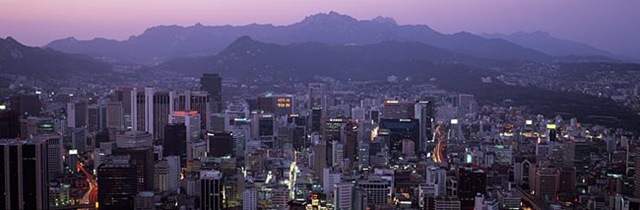
More importantly, Seoul is badly exposed to extreme NK retaliation, even without nuclear weapons. This obvious fact is widely under-remarked. The Seoul National Capital Area (greater Seoul) contains a staggering one-half of SK’s population (25 million), and it lies just 30-40 miles from the DMZ. South Hwanghae, the nearest NK province, has 10-20,000 rocket launchers and artillery tubes pointed southward. It is simply impossible for allied air power to indentify and destroy them all. In a war, Seoul would be, as NK regularly promises, a ‘sea of fire.’ Given high population density, Seoul residents live vertically in high, concentrated apartment blocks. 9/11 demonstrated the potential of explosive projectiles colliding with non-hardened skyscrapers. Imagine a repeat of the World Trade Center collapse dozens of times; NK shelling would kill tens of thousands of civilians in minutes.

No US commander or SK administration is willing to run this risk. NK knows this. And the problem is only worsening. Seoul exercises a role akin to Paris over the rest of France. Paltry decentralization efforts have failed, and neither the national nor municipal government has tried to slow its expansion for national security purposes. Despite Seoul’s enormous size, it is still getting bigger, as everyone seeks to ‘move up’ to Seoul. The next largest metropolitan area is great Busan with 4 million people, but it is contracting due to the out-migration to Seoul. The urban-sprawling (both up and out) national capital is a proximate city-hostage gift to NK negotiators

Third, Lankov generously underplays the low interest in SK for unification. As with West Germans by the 1980s, SK youth increasingly see the internal border as a real one. NK refugees in the South are an invisible and isolated population. As SK has grown into a consumer society and trading state, its population’s willingness to sacrifice for unification, much less war for it, has diminished dramatically.

The three constraints are nearly immovable, and Lankov is right to demand strategies that accept, rather than ignore, them.”

What the Europeans Might Learn from Korea about Free-Riding on US Power

nato-EU_preview south-korea-flag

For almost 40 years, since the Nixon doctrine, the US has complained that its allies free-ride on its power. The US does heavy lifting like fighting in Afghanistan or building a huge and costly military against the USSR. The Europeans enjoy the benefits, without providing much for the costs. Stephen Walt has made this argument in IR theory, as has Robert Kagan more popularly. Kagan particularly is the best-known proponent of the idea that the EU is ‘post-modern’ and focuses on soft power. By contrast the Russians are playing the ‘modern’ nation-state game of power politics in Eastern Europe, and the Middle East is ‘pre-modern’ insofar as supranational identities (Arabism, Islam) and sub-national identities (tribes and clans) contest the state and make state function very difficult. I like to think of Europe as an ally for the US and concerned about terrorism, Russian misbehavior, N Korea, etc., but it increasingly looks like Kagan is right. My thoughts are here and here.

This well-worn argument strikes me as wrong though in Korea. I am repeatedly impressed at Korea’s willingness to go along with US military ventures for the sake of global public goods provision. I go to conferences a lot here and constantly hear about the US as a ‘strategic partner’ for Korea, and that Korea must move into things like peacekeeping. My students genuinely seem to be aware of what the US provides here and that Korea should make a reciprocating effort. Consider the last line of this Korean op-ed about the current ‘what to do in Afghanistan’ debate: “The Korean government has to consider its obligations as a responsible member of the international society and find a way to help reduce the suffering of the people of Afghanistan from a humanitarian point of view.” Find something like that in European op-ed.

It is true that the Koreans went to Iraq, because they need the US against N Korea. And Poland signed up because of Russia. France and Germany have the luxury of Poland as their front-yard, so they can play hard-to-get. But it is also clear that ‘old Europe’ just doesn’t want to contribute to collective goods that much any more. Their defense spending is atrociously, irresponsibly low; only 5 out of 28 NATO members meet the ‘required’ NATO defense spending minimum of 2% of GDP (see Table 3 of this NATO 2009 defense spending report). Germany, supposedly a great power, spends just 1.3%. They like US power when things get hairy, but they are quite content to free-ride otherwise. Bush was a gift to western Europe in that his belligerence allowed them to duck the war on terror. But now Obama can’t get them to contribute either, and he was supposed to initiate a new era. European restrictions on troop behavior in Afghanistan mean too many European troops are just glorified policemen. Consider the ridiculous German reaction to the civilian deaths of a recent anti-Taliban airstrike. The deaths, of course, are regrettable, but ‘collateral damage’ is ‘normal’ in war and permissable under international law. But now the Germans want to leave. It is a European luxury to say ‘we can’t participate in any dirty operations at all.’ That just bucks the burden and blood to the US. The Europeans can retain their moral purity while enjoying the benefits the US military gives by trying to win (whatever that means) in Afghanistan. It is very poor form and smacks of deep selfishness.

By contrast, I find Koreans far more understanding about the costs of global order maintenance. Maybe this is because they live next to NK and every male has to serve in the military. But I find a moral shame at the idea of Korean free-riding that I do not when I talk to Europeans. The Europeans I meet here (a lot inevitably, because foreigners in Korea clump together) are quite content with the Der Spiegel-Le Monde image of the US as imperialist bully, and when I mention NATO obligations, I might as well be talking about space travel. The idea that European NATO members are treaty-obliged to help in Afghanistan (they are – Article 5 of the Washington Treaty was invoked after 9/11) falls on tone-deaf ears. For shame! The Europeans are natural US allies, because of high cultural and political similarity, and Islamic radicals target all of us. Yet Koreans seem to realize better the costs of the US commitment in the war on terror, and they feel some sense that the should help. I find this reversal stunning and disappointing.

Time for Indecision on Afghanistan

afghanistan-map

The growing pressure for a ‘big’ decision on Afghanistan is misguided. The neo-cons and other hawkish elements are raising the temperature on this unnecessarily by suggesting that Obama must go all in soon, or the Democrats will be responsible for losing another war. Slow down there, Tom Clancy. There is a case for muddling through also, not just leaving or going all in.

There is growing evidence that a big rush to judgment and commitment on Afghanistan is unnecessary. (Read Fred Kaplan’s last few columns.) I found this article by AJ Rossmiller most persuasive against the fallacy that Obama has to make One BIG Momentous Decision that will determine his whole first term. Rossmiller wisely suggests that there is actually no big need to ramp up huge forces there right now, with all the costs and commitments that come with a build-up. Muddling through is working pretty well.

It seems to me that the push to have one big decision is really a rhetorical strategy by Afghan surge supporters. By talking this way, they seek to create the view that if O doesn’t make a huge choice RIGHT NOW, all could be lost. This framing of the decision is designed to push him into the surge, by making it look like he is giving up if he doesn’t pile in. Better to lock in Obama on Afghanistan now, early, before he learns too much and starts to hedge.

The model for such a decision-making approach is Kennedy and the Bay of Pigs, and LBJ on Vietnam after Pleiku. A new, unsure president gets pushed into a big war-making effort by a collection of advisors with deep stakes in the military-industrial approach to conflict. As a Salon blogger put it, LBJ probably should have listened to Norman Mailer (!) instead of Bundy or McNamara. I wouldn’t go that far, but the point is that these ‘strategic reviews’ recycle the usual suspects. Even better is Greenwald’s powerful column that the ‘foreign policy community’ as an industry has a vested interest in imperial overstretch and war as a tool of conflict resolution. I particularly like Greenwald’s identification that whenever you ring up Rand or the Kagans, the answer is more military action. Hah! Money quote:

As Foreign Policy‘s Marc Lynch notes:

“The ‘strategic review’ brought together a dozen smart (mostly) think-tankers with little expertise in Afghanistan but a general track record of supporting calls for more troops and a new counter-insurgency strategy.  They set up shop in Afghanistan for a month working in close coordination with Gen. McChrystal, and emerged with a well-written, closely argued warning that the situation is dire and a call for more troops and a new counter-insurgency strategy. Shocking.”

The link he provides is to this list of think tank ’experts’ who worked on McChrystal’s review, including the standard group of America’s war-justifying theorists:  the Kagans, a Brookings representative, Anthony Cordesman, someone from Rand, etc. etc.  What would a group of people like that ever recommend other than continued and escalated war?  It’s what they do.  You wind them up and they spout theories to justify war.  That’s the function of America’s Foreign Policy Community.

The model for going ‘all in’ of course is the Bush surge in Iraq. But there was hardly a decision-making ‘process’ with W, understood as a careful weighing of options and competing views. You knew W would not leave, but double-down instead: Iraq was the signature issue of his presidency in by 2007; he was obsessed with machismo and mistook bulheadedness for toughness; and no arguments were going to dissuade Bush, because the ‘decider’ was a ‘gut player,’ not a listener. There was no real debate; W blew off the Iraq Study Group and rolled the dice. Nor do we know if it was the surge that helped stabilize Iraq. A lot suggests it was the change in strategy from warfighting to COIN, as well as the the shady and mundane pay-off of Sunni insurgents. In short, it may not have been Bush’s heroic insight into the war, but simply handing bags of $100 bills to Sunni gunmen that helped quiet Iraq.

Six weeks ago, I argued to give McChrystal a chance on COIN in Afghanistan. I am not arguing now for the offshore CT approach, but rather for a little more muddling through. I still think we should stay in Afghanistan with a heavier footprint than VP Biden would like. But my concern here is to avoid pushing Obama into one great, over-heated ‘ALL OR NOTHING!’ decision. Framing the decision that way basically blackmails him into making the choice those framing the debate this way want him to make, ie, the big build-up.

China Keeping North Korea Afloat…Again

1262846776-north-korea-s-kim-woos-china-s-wen

I must be a dumb foreigner, because I just cannot understand Koreans’ continuing affinity for China over Japan or the US. I have repeatedly argued (here and here) that China is the single biggest obstacle to single most important aspiration in South Korean politics – unification. This week I feel justified. Once again the PRC threw NK a lifeline. Once again, China has violated the spirit of its publicly stated diplomatic commitment to Korean unification. Once again China set back Asian peace, prosperity, and stability by another 3 to 5 years. Now we must wait further for NK to collapse. *Sigh* How thoroughly unhelpful this visit was to just about everyone out here.

The new aid package will certainly help the regime stumble along for another few years. And it almost certainly includes unmentioned personal goodies for Kim Jong Il himself – whiskey, insulin, porn, cigars, home theater, and the rest. The Chinese should be downright embarrassed. Kim and his cronies are just gangsters now. Kim Il Sung probably believed in the socialist experiment, but the son clearly doesn’t care a wit for it or his people. This is larceny raised to an art form. Kim is just a governmental version of the Somali pirates.

So now more Chinese aid means we must go back to same merry-go-round of brinksmanship with North Korea. With this new dollop of aid and Kim’s improved health, it’s back to the six party talks for more haggling, more photo-ops that allow Kim to pretend he is a world leader, more goodies in exchange for vague promises, more wasted time and effort. As usual nothing will come of it; nothing has changed in NK. And we will all continue to wait, wait, and wait for NK to finally implode. We will all hope that this headline really is finally correct this time. When I first started blogging, I wrote that I was amazed how little NK matters in everyday life in SK; instead, South Koreans have just become used to it, bored by it, and frustrated by it. Now I understand. It took me about 15 months living here to get the same way.

The Chinese are just liars on this issue. All year, I have gone to conferences on Northeast Asian security where Chinese participants tell everybody all about how the want to help and be constructive. How they admire Korea’s economic miracle and want good relations. How they support unification. My foot. The photo above tells you the real story. The Chinese are using the North. They like that it boxes in the South, terrifies the Japanese, and distracts the US. The care not a wit for the Korean people.

If this analysis is right, then I just don’t understand why Koreans don’t more openly balance against China. Kang says this is evidence that Koreans implicitly accept a sinocentric/Confucian hierarchy. Maybe. Or maybe Koreans are just so scared of China’s size, that they shut up? Whatever the reason, my students and friends here are far more comfortable complaining about Japan’s past than China’s present, or that the US military should redeploy in Korea, pay for military environmental damage, and discipline its soldiers better. All this is true of course, but isn’t it overlooking the 800 pound gorilla in the room? China is subsidizing the DPRK! China carries a growing part of the blame that Seoul lies catastrophic nuclear jeopardy, NK populace is horrendously brutalized, and unification is unfulfilled. I just don’t get it…

Top 10 Eurasian Sociopaths of the 20th Century

stalin-mao In myriad ways, living and working outside your own country helps you see things you never would at home. I teach American Government and American Foreign Policy at PNU, and the questions I get asked are frequently astonishingly naive or extremely creative. On the naive side, students frequently ask me about CIA plots to run the the Middle East or tell me about the JFK conspiracy. On the insightful side, they frequently bristle at the self-justifying language of US foreign policy. When I tell my American students about American exceptionalism, they love it. US students swoon when they learn that John Winthorp called the US ‘the city on the hill,’ or Abraham Lincoln said we were ‘the last, best hope for mankind.’ At best, I get some smirks and sheepishness about how purple and immodest US self-justifying rhetoric can be. (Read W’s second inaugural for your most recent, ‘God-has-a-special-mission-for-America’ hyperbole infusion.) So my average American student carries the US belief in the righteousness of US power acting in the world. Foreigners, on the other hand, go ballistic when you talk like this. When I explain how Americans talk about their own foreign policy, they laugh, smile, and roll their eyes. To them, American exceptionalism smacks of arrogance, imperialism, hubris, etc.

On of my favorite moments is teaching Eurasians about the US view of Eurasia as a sinkhole of US power and the spawning ground of world-breaking fanaticisms that ultimately Americans are tasked to destroy. Eurasians are generally convinced of their cultural superiority to Americans, so they are pretty shocked when they hear that US foreign policy sees the Old World as the land of the Kaiser, Stalin, bin Laden, etc. Whether living in Germany or Korea, one trope I have heard again and again in the 6 years I have lived in Eurasia is how young the US is, how primitive and shallow we are, how we have no culture, no deep traditions, watch too much TV, can’t write poetry, etc. This is old news though; any US expat has heard this for years. And there is some truth to it. The US has no author who has scaled the heights of Tolstoy, Dante, or Shakespeare. We have no architecture to rival the Forbidden Palace or Saint Peter’s. American philosophy, until recently, was a pale reflection of the long, rich traditions of, say, Germany or Confucianism.

But turn-around is always fun, and Eurasians are stunned when I tell them how dysfunctional Americans find their politics. If Eurasia is the font of world culture, it is also the breeding ground for the world’s most bloodthirsty ideologies and ideologues. Hah! That is always good for a laugh, as my non-American students look up in amazement.

The US view of Eurasia is that we should stay out of its entangling alliances, but unfortunately, we get pulled in when Eurasia’s pathologies attack us (the Lusitania, Pearl Harbor, 9/11). Put another way, if Eurasians want to kill each other in huge wars, the US attitude is ‘fine, it’s not our show, we’ll sit it out and get more powerful as you destroy yourselves.’ But since the 20th C, Eurasia’s psychotics have a growing taste for attacking the US. So increasingly the US attitude toward Eurasia is a paternalistic one: they can’t run their own house without slaughtering each other over religion, ideology, territory, etc., so we must order their affairs for them. If we don’t stay in Europe and Asia, eventually their paranoias (communism, fascism, Islamism, etc.) will metastasize and attack the US. When my foreign students tell me the US is arrogant, I tell them to try to see the world the way the US does. The long American foreign policy tradition toward Eurasia is isolationism and offshore balancing– stay out of its wars; intervene only if one power is on the cusp of controlling all of Eurasia (Nazi Germany, USSR). But now, the wars are brought to us, so we feel we must intervene.

My Eurasian students have never even thought this way, so I like to provide a list of the various ideological sociopaths Eurasia has given the world – just in the 20th Century.

 Top Ten: Lenin, Stalin, Hitler, Tojo & the Japanese WWII military junta, Mao, Kim Il Sung, Pol Pot, Kim Jong Il, Ayatollah Khomeini, bin Laden.

B-List: Kaiser William II, Czar Nicholas II, Mussolini, Franco, Sukarno, Tito, the Saudi clerical establishment, Zia ul Haq, Hoxha, Brezhnev, Ceausescu, Erich Honecker,the Shah of Iran, Suharto, Ho Chi Minh, Hafez al Assad, Yasir Arafat, Saddam Hussein, Milosevic, the absolutist megalomaniacs running the Central Asian ‘Stans’ in the 1990s, Mullah Omar

Runners-Up:  Park Chun-hee, Syngman Rhee, Marcos, A.O. Salazar, G. Papadopoulos, Chang Kai-shek, Indira Gandhi

That is a pretty grim list of the worst of the worst. Who else would you add ? (It can’t be a henchman like Beria or Himmler.)

US Strategy is Now Selective Retrenchment? How Humiliating…

OL345919M-M

As usual, Walt nails it with an incisive critique of US foreign policy. (If you don’t read him, you should.) He argues that the US grand strategy has become ‘selective retrenchment.’ That is a good term that captures well the post-Bush hangover US power is enduring. After W’s dreams of global democratic imperialism, we have crashed into reality. W overreached and infuriated the world. In 2000, the US was the ‘indispensible nation.’ Today, we talk about the coming of non- or multi-polarity, or the ‘post-American world.’ For all W’s strutting machismo about defending and strengthening America, he left us far worse off than the pot-smoking draft-dodger did.

For Americans, this should be rather sad, especially if you think that US hegemony is more benevolent than any others would likely be. Consider the possible list of other leaders: The EU is paralyzed and inward looking, India is too weak, China is undemocratic and culturally arrogant, and Russia is too mean. In short, the list of replacements for global US power are unappealing. For all that US arrogance and messianism under Bush, the US has by and large supported good, liberal things like human rights and democracy. (Compare Chinese and US behavior in Africa, e.g.) Don’t expect the realist Euros or nationalist Chinese to advocate this way. (For the longer version of this argument, read this.)

So, once again, you can blame W for this. Under Clinton, for all his personal shenanigans, US power was relatively secure. Foreign respect for the US was reasonable, US overseas commitments were manageable, the US budget – the long-term foundation for US power projection abroad – was improving. In just 8 years, W did astonishingly damage to US power, and now we must retrench, as Walt says. We must increasingly give up important projects (possibly even AfPak) and share leadership with others in some flimsy multilateral collective effort more likely to induce free-riding and buck-passing than joint leadership. Obama has to run around the world telling to telling foreigners we are not a bully. How humiliating. Andrew Sullivan said the Bush administration was one of the worst presidencies in US history. Any American should be embarrassed at this low ebb of US power. Like the overstretched and widely perceived as imperialist British in the 50s, we now have to start to pull back. It did not have to be this way.

But so hath W wrought. He convinced even a lot our allies that the Pax Americana didn’t have much pax  in it. The notion that the US was a gentle giant, a benevolent hegemon flew out the window; we became Thucydides’ Athenians  – right down to our own Sicilian expedition in Iraq and Melos at Abu Ghraib. Under the preemptive war doctrine, the US became something unheard of in IR – a revisionist hegemon. IR theory doesn’t even know what that means – hegemons, by definition, are supposed to be status quo seeking. It’s an oxymoron. Yet the Bush people pulled it off. We looked like we wanted to rewrite global rules – the very ones that we helped build after WW2. To the rest of the world, we became imperialists. I spend enormous amounts of time here in Asia trying to convince Koreans, Chinese, and Japanese that we are not in fact global imperialists. It’s terribly embarrassing.

To boot, W broke the bank. The budget flew out of extremely out of balance; W added 50% onto the national debt in just 8 years ($6T to $9T). No rainy day fund for crises like the Great Recession was ever even contemplated. The Clinton-Rubin opportunity to place US power on a durable financial footing was squandered. Now we borrow $20B a month from the Chinese. If you think we can hang on at the top doing that, go take Econ 101. We are, literally, selling American preponderance to the PRC – ast0nishing,  heartbreaking. No ‘empire’ can survive very long when it becomes a debtor; yet the Bush people pursued a costly foreign policy while simultaneously stripping the government of the resources to pay for it (through tax cuts we could not afford). This was simply insanity, and the pain of the Great Recession is deserved because we brought it on ourselves. For an example of serious budgeteering, including cuts and tough choices, try Korea, instead of US fantasies that we can spend without worrying about where it comes from. What a waste, what a squandered opportunity to make the world a better place…

Will that ‘Groundbreaking’ Japanese Election Actually Change Much?

183px-Democratic_Party_of_Japan_svg I have not said anything about the most important event in Asia in the last month, because I am still stumped as to just what meaningful changes the Democratic Party of Japan (DPJ) intends to initiate. It has been a month now since the election, and I am pretty disappointed at how little ‘change we can believe in’ is forthcoming given Japan’s truly catastrophic fiscal condition.

All the talk about how this election is making Japan more democratic is correct. It is clearly healthy for Japan’s Liberal Democratic Party (LDP) to be out of power – and for awhile. Korea’s democracy jumped forward when opposition leader Kim Dae Jung got elected president (1998), and Mexico’s democracy improved when the Party of Institutional Revolution (PRI) lost the presidency for the first time (2000). Japan’s party system is now fuller and more serious. But this is an institutional, long-term improvement.

I am more curious about what policy changes the DJP will pursue, and my Japanese colleagues out here can’t quite tell me. I keep asking at the conferences I go to, and I keep hearing macro-level stuff – Japan will be more democratic, more accountable, etc. That is correct, of course, but I don’t actually see that much room for policy change, because what change Japan does need is pretty painful and not what the electorate wants.

So, the DJP says they will pursue a foreign policy more independent of the US. Lame. Grumpy American allies always talk like this, and it is possible, but unlikely. France and Germany speak this way every few years, but never really do much. SK President Roh (2003-2008) campaigned on anti-Americanism and flirted with China for a little bit. But ultimately, the US guarantee of SK sovereignty against China’s looming hugeness pushed SK back to the US. Japan is stronger than SK, but what kind of independent Japanese foreign policy is conceivable? Japan, for all its money and strength, is conspicuously lacking in friends. It has a long-standing territorial dispute with Russia that has blocked serious relations since WWII. The two Koreas and China are convinced that militarism is lurking in the Japanese psyche and want post-Holocaust German-style apologies for Japan’s wartime behavior. But the Japanese just can’t see to fully apologize and really mean it. So if they want to leave the US orbit, fine. But where will they go? Do they really want to stand against China (plus the unhappy Koreas and loose-cannon Russia) alone in the future? I doubt it. Just like France felt compelled to rejoin NATO’s military integration despite all of Jacques Chirac’s Iraq War anti-Americanism, Japan will come back after some populist-nationalist noises for a year or so.

Domestically the DJP says they want help for farmers and the poor and provide more money for childcare, worker protection, etc. All these are nice social democratic goals (sorta like Obama). Everyone likes to help the poor, and if childcare assistance will get Japan’s birthrate up, that would be excellent. But there is no money for this. Japan’s debt is absolutely out-of-control. It is at 175% of GDP now – that is roughly a $8.75 trillion debt on a $5 trillion economy. (US debt is $9T on a $15T economy.) Here is a 2001 description that captures just how bad it is in some detail. Money quotes: “Japan’s Runaway Debt Train” and “Japan’s Public Spending Orgy.”

Most foreign IPE (international political economy) observers say what really needs to happen is an assault on the bureaucracy that really runs Japan under the hood of its parlor-game politics. Yet the LDP under Koizumi could not do this, and the DJP has scarcely talked about it.

So while the election is good for long-term democratic institutionalization, I still see the same wishful thinking as under the LDP – more public money (except for families now instead of construction companies), more subsidization of wildly expensive and inefficient Japanese famers, no moves to tame the bureaucracy and open the economy, and most importantly, no serious plan to get the staggering deficit and debt down. Instead its just more red ink – just this time from leftist-populists instead of business-conservatives. Meet the new boss, same as the old boss. Bleh…

UPDATE (Oct. 1, 2009): I feel vindicated in my assessment.

“Forging Autonomy in a Tough Neighborhood: Korea’s Foreign Policy Struggle” (3)

This is the conclusion of my last two posts. It is the oral synopsis of a conference paper on Korea’s strategies to escape its harsh geopolitical neighborhood.

“Finally, what is the likely future course of Korean foreign policy? For the South, the answer is easy. Barring unification, the Southern Republic will almost certainly retain the US alliance as the ultimate guarantor of its autonomy. Going your own way is hugely risky, as NK will find out if the 5 other parties of the 6 party talks can ever coordinate a common front against it. Striking out independently from the US risks Chinese subordination. President Roh’s brief flirtation with China (2004-2007) was more to flatter South Korean ego that the country was a ‘player’ or ‘mediator’ between the US and China. The Chinese blithely rebuffed this, and their Dongbei Manchurian history project and treatment of NK refugees quickly drove the South back to the US under the current conservative President Lee.

The North is clearly much more exposed. Going it alone is extraordinarily difficult for small states, and NK’s economic contraction makes this even harder. Clearly the nuclear program is an extreme measure to preserve autonomy from Chinese encroachment particularly. Unlike the SK’s US alliance, if the NK bandwagons openly and clearly with China, it will be absorbed or dominated. The Chinese have neither the geographic distance nor the democratic scruples to preserve NK autonomy.

A unified Korea would change these calculations. I see two possibilities. One, a unified ROK could aspire to stand on its own, particularly if Russia and Japan continue their relative decline. Massive demobilization would follow unification – the NK People’s Army alone has one million soldiers. That newly freed manpower could fuel a production and baby boom that could put a unified ROK within striking distance of still struggling Russia and Japan.

But that still leaves China, rising China. So possibility two is the increasing likelihood that the Chinese price for unification will be the finlandization of united Korea – strict neutralism. Given the US’ relative decline vis-à-vis China, it is unlikely the US will be able to counterbalance this pressure. When Germany unified, West Germany was stronger than South Korea, and East Germany was not as bad off as North Korea. The US was stronger then than now, and the USSR was much weaker than China is now. So the balance of forces today favors a more sinified outcome, and the likely Chinese price for unification is the termination of the US alliance and the withdrawal of the USFK.”

This conference got some press coverage, as have the others I participated in here. That is quite a change from the US, where no really seems to care much about academic conferences.

My argument that the Chinese will likely force Korea to choose between unity and the US alliance went down badly. People didn’t seem to like that, but the Chinese are certainly taking a a tougher line on Korea. I have been to four of these sorts of conferences with Chinese colleagues this year, and the vibe is increasingly: ‘the Olympics went well; the US is a mess; we’re on the up and up; you will need to start to account for us.’ In fact, one of the Chinese scholars at this conference bluntly said in the discussion, “We are big and rich now. Why should we listen to the US?” By extension, that would include Japan and Korea.

NORTH-EAST ASIAN NATIONAL POWER STATISTICS 

Country Population(Millions) Birth Rate Land Mass(km2) Gross Domestic Product (GDP in billions of US Dollars) GDP(Purchasing Power Parity in billions of USD) Economic Growth Rate Budget(in billions of USD) Military Spending (% of GDP & absolute value in billions of USD) Military Manpower(millions) Army Manpower(millions)
China 1,350 +0.7% 9,569,901 $4,300 $8,000 9% $900 4-4.5%      $200 3 2.2
Japan 127 -0.2% 364,485 $4,900 $4,400 0% $1800 1%              $50 0.250 0.148
Russia 140 -0.5% 16,377,742 $1,800 $2,300 6% $275 4%              $80 1 0.4
ROK 48.6 +0.3 96,920 $900 $1300 2.5% $222 2.7%          $24 0.65 0.5
DPRK 22.6 +0.4 120,408 $26 $40 -2.3% $3 N/A 1.2 1

“Forging Autonomy in a Tough Neighborhood: Korea’s Foreign Policy Struggle” (2)

This is the continuation of my last post. It is the oral synopsis of a conference paper on Korea’s strategies to escape is harsh geopolitical neighborhood.

“If this seems gloomy, it is instructive to note how many other states have wrestled with this dilemma and fared far worse than Korea. As Kenneth Waltz tells us, states are ‘self-regarding units.’ They want domestic and foreign policy autonomy – for whatever purpose: cultural promotion, economic growth, individual liberty, ideological reconstruction, etc. But it is easy to get bullied. A few examples are helpful here. In the late 18th C Poland was partitioned three times – in 1772, 1793, and 1795 – by Russia, Austria, and Prussia. After the 1795 partition, it ceased to exist until 1918. But it was partitioned yet again in 1939 between the Nazis and the Soviets.

Paraguay and Mongolia suffered similar, if less well known, fates. From 1864 to 1870, Paraguay fought its much larger neighbors Brazil and Argentina, as well as Uruguay, in the War of the Triple Alliance. Inevitably the Paraguayans lost and were stripped of 25% of their landmass. After centuries of being kicked back and forth between czarist Russia and imperial China, Mongolia finally threw in its lot with the Soviet Union in the 1920s. It was a less an ally than a protectorate and became a forward staging base for the Red Army during the Sino-Soviet split. Like East Germany, Mongolia might easily have been the center of superpower war with little actual control over its fate and that of its citizens. This did not happen to Korea.

This prompts the question why, or rather why not? Why hasn’t either Korea been absorbed or otherwise bullied into submission since WWII? It happened frequently in Korea’s history before 1945. It has not happened since, and today with rising China on its doorstep, it does not appear to be happening again.

I propose two hypotheses to answer this question. One for each Korea. NK has learned to successfully play its opponents off of each other. NK is the weaker of the two Koreas, and it is the most likely to be subverted – by the USSR in the past, and by China since the early 90s. But it has hung on tenaciously. SK by contrast has recruited an external patron – the United States. The Republic of Korea has leveraged US power to push back on local encroachments quite successfully.

In some ways, the North’s ability to prevent domination is more remarkable than the South’s because the North is so much weaker. Its GDP per capita is low $1700 per annum. Yet NK has never been a proper satellite of either the Soviet Union or China. During the Cold War, Kim Il Sung regularly played the two communist behemoths off against each other for gains. Most spectacularly of course, Kim maneuvered both Stalin and Mao into support for his unification war. Material from the Cold War International History Project shows how wary both Stalin and Mao were. Both feared a major American response, including the use of nuclear weapons. Stalin worried about a distraction when the heart of the conflict was in Europe, and Mao feared that his long-sought, newborn revolution would unravel. So unprepared was the People’s Republic that its some of its ‘volunteers’ were sent into Korea without rifles. They were commanded to pick them up from fallen comrades.

Since the Soviet implosion, Northeast Asian geopolitics would suggest that China overlord NK. It is the last serious ‘friend’ of the regime. Without Chinese trade and aid, NK poverty would be so much worse. If the PRC wanted, the People’s Liberation Army could easily eliminate the Kim Jong Il regime. But this has not happened. And China’s much-touted ‘leverage’ over NK has not prevented its various missile and nuclear weapons tests, nor resulted in meaningful sanctions on food, fuel, and luxury items.

The moral of the story is that the Kims have done a masterful job keeping the other five members of the 6 party talks divided and unsure. The Kims have constantly juggled and separated their opponents, and NK has lived in the geopolitical ‘spaces’ created by all this confusion.

The Southern strategy differs. Rather than zig-zag on its own, the South chose to bandwagon with an external party. SK has acquiesced to an asymmetric patron-client relationship with the United States. But the benefits to the South have clearly outweighed the benefits to the Americans. Indeed, the US is an ideal ally for the South, because it is strong enough to project power to NE Asia and so resist local encroachment on Southern sovereignty. But the US is also too far away to really control Southern internal affairs. To which must be add a deep cultural gap which raises the costs of any US domination of Korea, and US liberal-democratic values, skeptical of imperialist expansionism. In short, the US is big enough to help SK, but geographically and culturally distant enough, and democratic enough, not to dominate it.

So Republic of Korea (ROK) received extensive assistance throughout the 50s, although US officials were unable to dissuade President Rhee from either his import-substitution industrialization plans or his constitutional shenanigans. Under General Park, the US had no role in emerging Korean miracle – the US would hardly have supported the oligopolistic cartelization of the Korean economy that created the chaebol. Nor was the US able to redirect Park’s constitutional misbehavior. In the 1980s, the US leaned on President Chun, but again, it hardly structured the emerging democratic politics of the Republic. It is highly unlikely, for example, that the US would have ‘approved’ the semi-presidential system Korea choose. Even the Kwangju suppression – frequently touted as proof of US domination by scholars like Bruce Cumings – occurred mostly by Korean special forces under local control. And certainly since the 1990s, no one would meaningfully suggest that the US Forces in Korea (USFK) dominate or secretly control the South Korean state. Finally, never in the alliance history did the US pursue anything remotely similar to the cultural genocide committed by Soviets in the Baltics, China in Tibet, or Japan in Korea. If Korea is Americanized, that process is driven by Korean consumer demand and interest in things like rock-and-roll or Hollywood films, not by enforced US cultural imperialism.

These two hypotheses from the Korean case suggest explanations for how a middle power with tough geopolitics can retain its autonomy. Other examples such as Benelux, Switzerland, or Canada would be usefully investigated as comparative cases.”