The Big Annual US-Korean Military Exercise this Month

size0-army_mil-33739-2009-03-27-160320

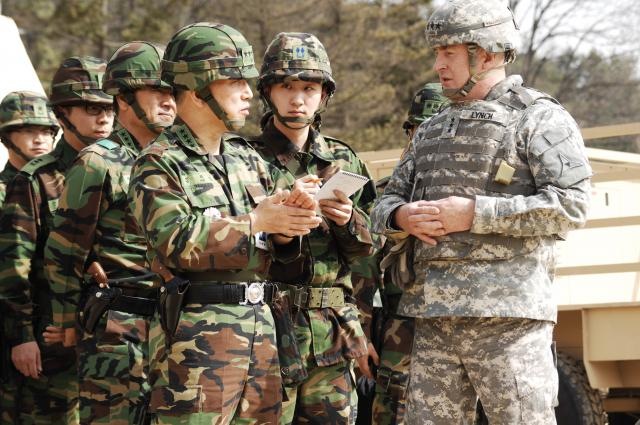
This month is the big annual joint exercise between US Forces in Korea and the Korean military, the army particularly. I talked about this on the radio this week; if you are curious for an introduction to US-Korean military cooperation, check the transcript below.

These drills have shrunk dramatically over the years, mostly in an attempt to bring around the North. Also, as Korea has gotten wealthier, environmental restrictions have made it increasingly difficult and politically unpopular to put a 100,000 people and tanks into the countryside. West Germans used to complain about this too in the 70s and 80s. Try to imagine what, say, 100 M1-A1 tanks would do to a river valley. They weigh 65 tons each! So increasingly these exercises are actually computerized wargame scenarios.

Anyway, these exercise are less and less about maneuver warfare (the old story for the North Korea army), and more and more about what to do if North Korea implodes (or explodes, or whatever – no one really knows). They big concern for the US is how to prevent NK WMD from either being launched or smuggled out. For the South, it is how to prevent NK civil war and army mutinies, to restore civil order, feed the NK population, and capture the party elite before they spring for China. And of course, lurking in the background, undiscussed by everyone and never properly accounted for in the wargaming, is what happens if the Chinese army, the PLA, pushes south and collides with us coming north. Yikes…

____________________________________________________________________________

TRANSCRIPT – DR. ROBERT E. KELLY, PUSAN NATIONAL UNIVERSITY

BUSAN E-FM: “MORNING WAVE”

MONDAYS, 8 AM

March 15, 2010


Petra:

Professor Kelly comes to us each Monday to talk about big issues in Korean foreign affairs. And this week we are going to discuss the big US-Korea military exercises last week. Hi, Dr. Kelly.

REK:

Hi, Petra. Thanks for having me

Petra:


Thanks for being with us again today.

REK:


It’s my pleasure.

Petra:

So last week there were these big Korea-US military drills. It seems like these are so common, we don’t pay attention to them much anymore

REK:

That’s right. They are pretty regularized now. They get a little bit in the news each year, but not much more. Politically the most interesting thing for Korea is not the US participation actually, but how North Korea responds each year.

Petra:

Don’t they usually say this is practice for an invasion?

REK:

That’s right. They always denounce it as imperialism, but the calm or anger of their denunciation tells us a little about what is going on in Pyongyang.

Petra:


And this year they didn’t seem to say much.


REK:

That’s right. In fact, after last year, when the North was very belligerent on just about everything, their recent behavior is downright gentle by historical standards.

Petra:

So what purpose do these drills serve?

REK:

Well, they are essentially practice. The first exercise is called Key Resolve; the second is Foal Eagle. That title is to indicate the resolve of the US to fight for Korea. This a computerized wargame, in which various scenarios are ‘played.’ These scenarios are defensive in nature, although the increasingly focus on the possibility of North Korean collapse. That is why the North Koreans worry. Should the North’s government implode, the US and South Korean militaries need plans on the shelf about how to restore order, disarm the North Korean military, and prevent nuclear weapons from either being launched or slipped out of the country. These are the big areas of interest now.

Petra:

What about an Northern invasion of the South?

REK:

Yes, that is still drilled too, but most experts, both Korea and American, consider that extremely unlikely. In fact, I have never read any war scenarios at all for Korea that realistically predict a Northern victory today. As we all know, the North’s economy is a shambles, its people are under-fed, and its military equipment is increasingly obsolete. In fact, South Korea could probably win a war on its own without the US at this point. This is one of the big reasons Kim Jeong-Il sought nuclear weapons. The inter-Korean race – military, political, economic – is over and has been for 15 to 20 years now. And North Korea has lost, very decisively. Nukes are just a desperation tactic.

Petra:

So do we even need the exercises?

REK:

That’s actually a good question at this point. I think the answer is still yes, but North Korea is in so much trouble now that the US and South do not exercise nearly as much as the used to. There used to be four really large exercise each now. Now it’s more like two, and they are smaller. As you might imagine, it costs a lot of money to run these simulations. Almost 20,000 Americans, beyond the US Forces in Korea here already, are flown for several weeks. Tens of thousands of Koreans are mobilized too. That’s a lot of money, and increasingly, South Korea’s environmental laws make it difficult for huge numbers of soldiers to tramp all over the countryside. It’s quite a big show, although its size has declined in the last decade or so.

Petra:

I heard that the US is going to give up the command of the Korean military sometime soon. What’s that all about?

REK:

Yes, that’s true. Right now, the US military has legal authority over the South Korea military in wartime. The Korean military is integrated with the US military into what we call the Combined Forces Command, or CFC.

Petra:

But that’s going to be abolished or something, right?

REK:

It is supposed to be, in 2012. Former President Roh pushed for this. He sold this to the Korean public as a restoration of Korean sovereignty. Seoul received peacetime control of its military in 1994. Before then actually – many Koreans don’t know this – the US government was legally the permanent, commander in chief of whole Korean military. For obvious reasons of course, that looked like US colonialism, and Kim Il Sung used to say that all the time. So after the Cold War, and the withdrawal of Soviet and Chinese support for North Korea, peacetime authority was returned to Seoul. As said earlier, by the mid-90s, South Korea had essentially won the inter-Korean race. North Korea became increasingly isolated as its former communist patrons turned away. So the Northern threat diminished dramatically. This gradual demilitarization of domestic life also helped South Korea democratize more rapidly.

Petra:

But CFC retained wartime authority. I have seen that discussed in the media a little.

REK:

That is correct. If there were a war, the US would re-take control of the Korean military. From a Korean perspective, this sacrifice was worth it. By giving the Americans command of Koreans’ own military, this helped keep the Americans here and committed to Korea’s defense. But again, it looked somewhat imperialistic – a foreign power controlling your own army – and the South Korean left had complained for years about this.

Petra:

So President Roh negotiated an end to it…

REK:

That’s right. Roh was probably the most anti-American president Korea has ever had, and George Bush was quite unpopular here. So Roh marketed the abolition of CFC as a big deal. CFC is supposed to disappear in April 2012, but now Koreans are starting to get cold feet.

Petra:

Why?

REK:

Under Presidents Kim and Roh, relations with North Korea – the sunshine policy – seemed to be improving. CFC looked like a relic of the Cold War. But sunshine never really came together, and the North’s nuclear program has grown and grown. This helped put a conservative, Lee Myung-Bak in the Blue House, and the Lee people a lot more nervous about ending CFC.

Petra:

What do you think?

REK:

Well, it does make life easier for the Americans. It makes it easier for the Americans, if they want, to say they are not as tightly bound to Korean defense as they were. If I were a Korean I think I would be nervous. I think the political pleasure of ‘total sovereignty’ does not outweigh the military benefit of tying the Americans to Korea as tightly as possible.
Do Americans Know Anything about Korea beyond the North? Not so Much…

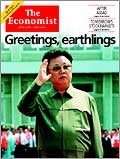
Greetings Earthlings

On the radio this week, I spoke about Americans’ image and sense of Korea; the transcript is below. This is a big deal here. Korea has lately gotten quite excited about ‘public diplomacy,’ brand promotion, and soft power. You may recall that the Bush administration got big into this for a few years after the Iraq War and Guantanamo wrecked the world’s opinion of the US.

National ‘branding’ has always struck me as pretty ridiculous. A rose is a rose is a rose, and no cute advertising campaign is suddenly going to make people think differently about you. No amount cheesy ‘peace ambassadors’ or ‘socialist fraternity’ internationales conned people into believing the USSR was any less dangerous. In the same way, Bush hack Karen Hughes’ surreal photo-ops with Arab children could do nothing to change the US image in the Middle East that was being set everyday by the carnage in Iraq. The point being, you can’t do something dumb, have it blowback in your face, and then try to advertise or ‘rhetoric’ your way out of it. If the US wants to change its image with Arabs, killing fewer of them is the most obvious thing to do, not sending some flunky to smile on al Jazeera.

This skepticism applies to Korea’s efforts too. The overwhelming problem for Korea’s image is the North. This simply goes without saying. Newsweek put Kim Jeong Il in its ‘global elite,’ and I dare say most westerners couldn’t name another major Korean figure, political or otherwise. When Gallup recently asked Americans to name their favorite/least favorite countries, North, but not South, Korea was on the list. Pity South Korea. We can’t even remember they’re an ally. (That’s actually pretty pathetic. I’m fairly embarrassed. Even worse: only 41% of Americans think the US should fight to defend South Korea. On how the US is slipping out of the SK defense treaty, read this.)

This annoys Koreans to no end. I hear about it all the time from friends and students. So here are my quick top guesses on why Korea is so ‘foreign’ to Americans and Westerners.

1. It is small. When westerners think of East Asia, that means China or Japan. Korea is just the little bit in between. This could change if unification happens, if unification is successful, if Japan continues its slide. But for the foreseeable future, Koreans should think of  Austria – quiet, small, rich – as their model, not Germany, China, or Japan – rich, aggressive, demanding.

2. Korean food is not distinct enough from other East Asian fare for the median westerner to know the difference. Now that I live here, I know the difference, but, honestly, it is a learned art. For the average westerner looking for lunch, accustomed to eating his national cuisine mostly, Korean food is just another ethnic take-out choice.

3. The language is really hard. The US Defense Department’s Defense Language Institute ranks Korean in its hardest languages to learn category, along with Chinese, Japanese, and Arabic. By contrast, Spanish is a snap for anglophones.  This is an absolutely crucial barrier. It makes the life of all the foreigners I know in Korea much, much harder. (See p 8 here for the complete DLI ranking of language difficulty for anglophones; the State Department’s Foreign Service Institute estimates that a mediocre, ‘professional working proficiency’ in Korean requires 4000 hours of study!! Spanish is ranked at just 1100 hours.)

4. The Confucian-Buddhist tradition. The West’s religious traditions are Christian, Jewish, with some Islam thrown-in. These monotheistic sensibilities are distant from  Korea’s social norms (ancestor veneration, e.g.) and the more ‘metaphysical’ religions of Asia.

_______________________________________________________________________________

TRANSCRIPT – DR. ROBERT E. KELLY, PUSAN NATIONAL UNIVERSITY

BUSAN E-FM: “MORNING WAVE”

MONDAYS, 8 AM

March 8, 2010

Petra:

Hello everyone and welcome to …..

Right now we have our weekly foreign affairs expert for some commentary on Korea and Northeast Asia. Dr. Robert Kelly teaches in the Political Science and Diplomacy Department at Pusan National University. He’s been living in Korea about 18 months now, and his area of expertise is the international relations of East Asia. If you wish to contact him, please see his website at http://www.AsianSecurityBlog.WordPress.com.

Professor Kelly comes to us each Monday to talk about big issues in Korean foreign affairs. And this week we are going to discuss US relations with South Korea. Hi, Dr. Kelly.

REK:

Hi, Petra. Thanks for having me

Petra:

Thanks for being with us again today.

REK:

It’s my pleasure.

Petra:

It seems that several new polls came out about Americans’ image of Korea. What can you tell us?

REK:

About three weeks ago, the biggest US polling service, Gallup, released a survey of American attitudes towards foreign countries. And then last week the Chosun Ilbo and Gallup Korea ran a survey of ten wealthy countries’ attitudes toward each other. Unfortunately, Korea did not fare too well in either survey.

Petra:

Can you tell us some of the details, and why Korea is viewed poorly?

REK:

Well, I think poorly is not the right word. Instead I would say that Korea has two big ‘image’ problems. The first is North Korea. The Democratic People’s Republic of Korea simply dominates the world’s sense of Korea. I know this disappoints South Koreans very much. South Koreans would very much like Yuna Kim or Samsung televisions to be their representatives to the world, but this is just not the case. Kim Jeong Il is easily the best known Korean in the world.

Second, Korea is quite small, and to western populations, geographically and culturally quite distant. I discuss this often with my students. Koreans seem unhappy that there is a strong asymmetry between Koreans’ interest in the US, and American interest in Korea. Koreans, for example, have great interest in English, like to attend American universities, eat US fast food, and watch so many American movies that the Korean film industry requires tariff protection.

Petra:

But Americans don’t really know anything about Korea, do they? Hah!

REK:

Beyond the Korean immigrant community of course, no, not really. The Gallup survey, for example, did not even list South Korea as a choice for Americans to select as favorable or unfavorable. So traditional US allies, such as Germany, Canada, Britain, France, Japan, etc. were listed, and all received high scores of favorability. That is, Americans said they liked these countries. But South Korea was not listed at all. However North Korea was, and the DPRK received an 80% unfavorable rating. The only country with a worse number was Iran. So, no, South Korea is just not really on the radar for most Americans; Korea means North Korea to most Americans.

Petra:

What about the Chosun Ilbo study?

REK:

It too found that South Korea had only a 37% favorability rating.

Petra:

That seems pretty low.

REK:

Yeah, it is. I agree. Actually, I was surprised that the Chosun figure was so low. I am quite aware of how little Americans know of Korea, but the Chosun poll included other Eurasian countries that I thought would have more exposure to Korea, including France, Russia, Italy and China.

Petra:

So what does this mean?

REK:

Well, honestly, I don’t think it means all that much. It does not mean that Korea is any less free, wealthy, green, socially happy, secure, democratic, etc. These sorts of polls are usually like high school popularity contests. They make you feel good or bad, but they don’t actually change that much. However, Koreans have stressed Korea’s ‘global image’ a lot under this administration. Notions like ‘branding’ Korea or Korean ‘soft power’ mean a lot to South Koreans, so the government has embarked, eg, on a big push of Korean food in the West.

Petra:

Right. I read about. The First Lady is pushing Korean food. So these polls are disappointing, but don’t mean too much. Ok.

REK:

Generally, I think so. Koreans worry a great deal, unnecessarily in my opinion, about Korea’s image. But, we all know that clever TV campaigns or cute food advertisement aren’t really the driver of such things. Korea’s image in the world will be built on its political values, not by things like how many LEDs get exported to the EU. Look at India. It is quite poor, yet its long-standing commitment to democracy and freedom, and the pacifist, Gandhian heritage in its foreign relations has won it many friends for decades. And Korea will enjoy this sort of reputation if it continues to build an open, globalized, free democracy.

Petra:

But I think Koreans want more than that. They wants others to see and enjoy their cultural products too – like hanbok or kimchi.

REK:

Yeah I think that’s right, but I just don’t know how well that stuff translates into the West. Asian food is available in the West of course, but quite honestly, I never really knew or cared to know the difference between Chinese, Korean or Japanese food when I lived in the US. I didn’t know many people who could properly eat with chopsticks. And I certainly never met anyone who could speak Korean. There are of course pockets of interest in the biggest cities, but outside the Asian immigrant community, I dare say, Korea just doesn’t have that sort of profile.

Petra:

Why not? I think Koreans really would like Westerners to be more aware of it, as distinct from China or Japan.

REK:

I think you really put your finger on it right there. Korea is small; Japan is big, and China is simply enormous. Less than 10% of Americans have passports; we don’t travel that much. And the US has ethnic populations from almost every country on the planet. In the huge melting pot of American life, Korea is just one far-off place, with a very difficult language and religious traditions very different from those of America. By contrast, when Hispanics immigrants come to the US, they already share some cultural territory: the alphabets are the same, and Spanish is vastly easier for English speakers to learn; Mexican food has already made huge inroads in the US; most Hispanics are Catholics. But the cultural gulf with Korea is much wider – language, Confucianism-Buddhism, food, chopsticks, traditional dress and music. Things like that.

Petra:

So China dominates everything?

REK:

That is an exaggeration of course, but kind of. To the extent that Westerners follow events in Asia, China is the behemoth that dominates discussion, and for Americans, it is the alliance with Japan that is the lynchpin of the US presence in Asia. This is important. It is the alliance with Japan that draws most US attention on security in Asia. Indeed, the one truly important statistic for Koreans is that only 41% of Americans think the US should deploy combat troops to South Korea to defend it. That I think it is genuinely worrisome.

Petra:

Thank you professor for coming again this week.

The Politicization of the Olympics

olympics

Honestly, I have never understood the appeal, much less the fanaticism, of professional athletics. To quote Ian Malcolm from the Jurassic Park (the novel), grown men swatting balls is not serious as a career, nor particularly entertaining. I certainly understand that there is something admirable in watching highly trained people perform their expertise, but MDs, PhDs, and soldiers are all highly trained too. At least what they do with all those long years of training is socially meaningful (health care, education, national defense). Beyond entertainment, it is not clear if there is any benign social purpose professional athletics serves. Note further, that its malign social impacts are well-known: corruption of US collegiate education, dead-end hopes with squandered education for millions of poor kids dreaming to be Michael Jordan, a huge diversion of social attention away from meaningful social questions to the ‘sports page,’ families and teen health ignored so athletes can spend 6 hours a day in the gym. I admire the old British tradition of the ranking amateur with a proportional view of athletics as part of physical health. How all this stuff can be a career genuinely baffles me.

As for the viewer, I think we watch not just for the entertainment of competition, but also for darker reasons. First, there is definitely freak-show curiosity. There is something deeply creepy about Barry Bond’s biceps being larger than your thighs, or those misshapen teen athletes who sacrifice their menstrual cycle to become Olympic gymnasts. That is why we respond so lightly to doping and steroids; we kinda want to see what these aliens will look like. Part of us is curious to see the East German women’s swim team with hairy chests or Mark MacGuire’s robo-body perform, even though we all know he cheated. I also think we find a dark pleasure in watching people with unique abilities purchased a terrible cost. Watching skiers fly into moguls at 100 mph or boxers get the hell beat out of them is part of the bloodsport of it all. You didn’t turn away when those lugers crashed, did you?

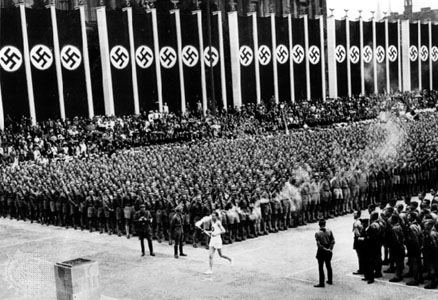
Nor is there any doubt that professional athletics, especially across borders, gets deeply politicized and nationalized. Today on the radio I talked about how South Korea has used the Olympics as a wedge against North Korea for decades. There is a long tradition of politicizing the Olympics that goes back at least to Hitler’s perversion of the games in 1936 into a demonstration of Aryan physico-racial superiority.

_________________________________________________________________

TRANSCRIPT – DR. ROBERT E. KELLY, PUSAN NATIONAL UNIVERSITY

BUSAN E-FM: “MORNING WAVE”

MONDAYS, 8 AM

February 22, 2010


Petra:

Hello everyone and welcome to …..

Right now we have our weekly foreign affairs expert for some commentary on Korea and Northeast Asia. Dr. Robert Kelly teaches in the Political Science and Diplomacy Department at Pusan National University. He’s been living in Korea about 18 months now, and his area of expertise is the international relations of East Asia. If you wish to contact him, please see his website at http://www.AsianSecurityBlog.WordPress.com.

Professor Kelly comes to us each Monday to talk about big issues in Korean foreign affairs. And this week we are going to discuss the two Koreas at the Olympics. Hi, Dr. Kelly.

REK:

Hi, Petra. Thanks for having me

Petra:


Thanks for being with us again today.

REK:


It’s my pleasure.

Petra: 

This seems like a lighter topic than usual. Why are the Olympics important for the inter-Korean relationship?

REK:

It is a lighter topic. We can’t always discuss trade or border conflicts in the Yellow Sea. But it is also true that countries take their international tensions into world sports. You can learn a surprising amount about the workings of the global economy or nation-state competition by watching the Olympics.

Petra: 

How is that? Aren’t they just athletes?

REK:

Well, yes and no. The Olympics is supposed to be apolitical, but they are very clearly not. The International Olympic Committee has been riddled with corruption for years. Countries are regularly caught trying to bribe the committee members to vote for their cities. Host countries routinely use the Olympics to display their modernity, prestige, economic growth, etc., to a global audience. Or countries that are competing with each other in more serious global arenas, like security or ideology, frequently seek to win medals at Olympics as a marker of national greatness or triumph in the larger international contest. In fact, athletes frequently allow themselves to be used in this manner. Korean athletes, for example, routinely carry the Taeguki in their victory laps. This is unnecessary, of course, and violates the Olympic spirit, but it is a hypocrisy that most countries demand from their athletes. In the Korean case, carrying the Taegukgi is a way to prove to the world that South Korea, not North Korea, is the real Korea.

Petra:

I never thought of that Olympics as so politicized…

REK:

Well sure. Let me just give you a few examples. In 1936, the Nazis used the Berlin Olympics to show the world that Germany had recovered from the devastation of World War I, that fascism was the wave of the future, that Germany was racially clean and hence physical superior. It was consequently a huge embarrassment when an American black, Jesse Owens, defeated German athletes. In 1980, before professional athletes were allowed in the Olympics, the US hockey team, composed of mostly amateurs from college teams, played the highly professionalized Soviet team and won. Americans took this as a huge underdog victory in the Cold War, and there is even a movie about it. More recently, Greece used the 2004 Olympics to prove that it was a modern European country that rightfully belonged in the European Union and the euro currency zone. Today we know how wrong that is, as Greek debt is now threatening to destroy the euro. In 2008, China used the Olympics to prove that it was rich, modern, intimidating, and a great power. And all Koreans, of course, will recall how South Korea used the ’88 Olympics as a world-wide coming out party or fashion show for the Korean economic miracle. Indeed, so highly politicized were the Seoul Olympics that North Korea engaged in terrorism to stop them. Kim Il Sung knew, correctly, that a successful Olympics in South Korea would be a significant defeat for North Korea in the inter-Korean competition.

Petra:

Yes, of course. And the 88 Olympics did presage the North Korea’s very difficult problems of the 1990s. It really did mark the beginning of South Korea’s victory in that competition. So what about today?

REK:

Well the Olympics today are relevant for South Korea as a continuing global marker of North Korea’s defeat and humiliation. The North Korean team is small, poorly-trained, and their performance has been weak. North and South Korean athletes did compete against each other in a few events, with the Northern athletes easily trumped. With no medals, no one in the global viewing audience will see the North Korean flag raised, nor hear the North Korean national hymn. By contrast, South Korea is wealthy and populous enough to field a major team. Yuna Kim of course will get lots of publicity, and other South Korean athletes will win here and there. So the monolithic image of Koreans in this global forum will be of South Koreans

Petra:

It sounds tough for the North.

REK:

Yes it is. Very clearly. Which is probably why the North declared last week yet another round of military exercise in the Yellow Sea, and yet more zones of military exclusion that will provoke the South Korean navy. Rocket tests are troublesome way to remind South Koreans and the world that Yuna Kim is not really that important.

Petra:

And South Korea has been trying to get another Olympics too, hasn’t it?

REK:

Yes. South Korea has come pretty close in the last few years to winning another Olympics. And it seems likely that it will get one again reasonably soon. This would be yet another humiliation for the North. Two Olympics in a row in the South, and none in the North. You can imagine the torrent of bellicose Northern rhetoric that another Southern Olympics would bring.

Petra:

This is somewhat cynical view of the Olympics as a tool of countries to show off and compete with each other. What happened to the idea of global sport something all people can enjoy, regardless of the nationality or citizenship?

REK:

Well, there is some of that. When the classical Greek city-states started the Olympics, they really did see them this way. But today, they really aren’t. The Olympics have become about much more than the sports – particularly money and nationalism. I would blame a few things. First, the Cold War. The East-West competition for decades all but insured that just about every Olympics would be highly politicized. The importance of Yuna Kim today as a triumphant South Korean athlete, fits exactly that Cold War context. Second, I blame television. TV has turned the Olympics into a global bonanza for countries – and companies – to strut their stuff. In the same way that TV and money have corrupted American college athletics, they have also corrupted the Olympics. Consider all the advertising revenue Yuna Kim will earn from her Olympic performance. She is clearly doing this more than just love of skating. Finally, I blame the host countries. Hosts as diverse as the Soviet Union, Greece, the Nazis, the Chinese communists, or South Korea have all sought the Olympics for primarily political purposes, and used the Olympics as such. Just recall how intimidating and subtly threatening the Beijing Olympics seemed; the whole vibe of Beijing 2008 was China rising. I even went to a political science conference last year on this topic! Even the mild-mannered Canadians used the opening Vancouver ceremonies as a celebration of Canadian nationalism, not a global sport community.

Petra:

So the Olympics are a nationalist backlash against globalization? It’s a global sporting event in which the athletes wear their national colors?

REK:

I think so. Certainly, Koreans don’t treat the Olympics as just a global sporting event. My impression from Korea’s coverage of the Olympics is that it is highly nationalized and politicized.

Petra:

Ok. How depressing. Thank you professor for coming once again. See you next week.

Reform of US Institutions to Prevent Decline?

images

James Fallows had a good piece at the Atlantic on US decline. This sort of writing is all the rage now of course, given the huge US debt and deficit and the indefatigable rise of China. Zakaria made a fortune and got a gig at CNN on the back of punchy neologism ‘the post-American world.’ Fallows is a nice antidote to the simple ‘power is moving to the East’ schtick of so many, especially out here. Asians love this discourse – for obvious reasons – but don’t really see the limits on the flow. There is too much enthusiasm out here, not enough analysis. For my short take on this, see here.

Fallows makes some solid arguments about Asia’s limits: gross levels of corruption, weak education systems that encourage volume over quality, limited, messy semi-democracy, socially circumscribed personal freedoms (due to strong social pressure to conform) and consequently lower creativity. All this is true. To it I would add the huge informalism and personalism of the economy. Massive amounts of money sloshes about illegally, informally, or simply ‘off-budget’ (what a wonderful euphemism for your slush fund!). As I have remarked before, the grey economy here is pretty big. I am always prompted by small vendors out here to buy in cash, not on a credit card. Credit card purchases are used for tax purposes, so this is basically a form of quiet tax fraud. I wish Fallows had actually written more on these bureaucratic-institutional limits on Asia’s rise. They don’t get nearly enough attention, as the GDP expansion stats dominate the debate.

But for Americans, probably the most interesting claims he makes concern US institutional reform. He notes that the US Constitution is over 200 years old. While this is a source of pride, it is also that case the the original document grows distant with each passing day from the realities of American life. Further, the simple age of the US government has insured the now long accretion of interest groups around the Washington policy process.

Fallows particularly targets the Senate, in which the divergence of voting weights runs from 1 senator per 18.5 million Californians, to 1 senator per 270,000 Wyomingans. Furthermore, the rise of the filibuster threat by the minority in the Senate means that a functioning majority in the Senate is now 60%, not 50%+1. Targeting the Senate for reform is popular at the moment. Obama hinted obliquely at it in the SotU.

The problem with reforming institutions, particularly the Senate, is that we have been here before. Robert Dahl noted many years ago about how the Senate wildly overrepresented agricultural interests in the US. The Progressive moment also thought that Congress got in the way as much as it worked constructively. It upheld the president as the sole carrier of the national interest, because he was the only one to get elected from a fully national constituency.

But ultimately, I am not really sure if the problem is institutional, but rather popular. The US public is simply unwilling to pay for  the expense of the services it wants from government. The country is now so large, so heterogeneous, that it is easy to adopt a NIMBY approach to tax hikes and spending cuts. The pool of US resources is still enormous. So its easy to lose sight of the costs your selfishness. Someone somewhere else is paying for you Medicare. Or perhaps even worse, we are losing the sense that behind government spending are the taxes that we pay. So of course we can raise unemployment benefits; it would be cruel not to, right? Of course we know in the abstract, but the bite of reality – of higher taxes when we demand more unemployment or Medicare – is lost. The chain of steps between completing our 1040s in the spring and the receipt of grandma’s social security check is now so long, that we not longer see the causal relationship. This creates the illusion that someone else can pay, but you can keep your redistribution or tax credit. So let other see their services cut and/or their taxes go up.

Hence, my sense is the problem is attitudinal. As US dominance ages, we have become more and more accustomed to more and more. We have lost the gritty bootstrap spirit that rising actors always have, whether they be emerging nation-states like China, or upstart interns at work.

As our sense of entitlement has expanded-  due to the sheer scope of US influence and wealth for 3 generations now – we  have accrued wildly unrealistic expectations of what government owes us. Bush 2’s fiscal policy is the perfect embodiment of that explosion of unrealistic expectations. He said we could have it all: tax cuts, wars, more Medicare. Serious people knew this was unsustainable, but the great damage done has been to the US citizen’s perception. We have been borrowing from the future for so long, that these expectations are now set; they are locked into the psychology. This psychology of being owed a lot, not institutional blocks in the Senate or K Street, is the real problem. And it may very well take a national fiscal calamity to change popular attitudes downward. By way of example, this happened in Korea in 1997/98. The Asian financial crisis brutalized the country, but helped insure a national seriousness about growth and taxes that you just don’t see in the US.

Would it just be Easier to Pay-Off our Middle Eastern Opponents?

generation-kill

I recently watched Generation Kill, the HBO miniseries on the invasion of Iraq. It is quite good, particularly on the huge uncertainty generated by the fog of war, and the consequent overuse of violence to protect oneself from that uncertainty. At one point in the miniseries, a town is being hit by Tomahawk cruise missiles, and a soldier makes the interesting remark that with all the money put into just a few of those Tomahawks, they probably could have just bought off the local Fedayeen or Republican Guard units, or bought off enough locals to kill or arrest them. It is an interesting notion, and once I can’t say has ever received scholarly treatment in IR or strategic theory. Here is another good master’s thesis waiting to be written.

Instead of killing these people, can we just throw money at them? Fred Kaplan asks this question, and so does Michael Semple. Both are dubious. But I am not so sure, especially given the huge costs of Westerners trying to coerce the Taliban, ex-Baathists, and other various alienated Muslim/Arab elements around the Middle East. The obvious retort is that money does not buy allegiance, only temporary quiet. Money does not ensure ideological affinity or loyalty; it does not make its recipient a liberal committed to the democratic processes or central governments of Iraq, Afghanistan, Pakistan, Yemen, Somalia, etc. This is so, but consider the following counterpoints:

1. The US military, as the soldiers in Generation Kill pointed out, is an extremely expensive machine. The just-released 2011 US defense budget is $700+B. That is a staggering sum of money. The cost of using such an expensive force is high too. US equipment is super-expensive, given increasing computerization and integration (the ‘networked battlefield’). It will cost another mint to replace and bring back up to par US military stocks around the world when the GWoT ends (someday, we hope). What the US military spends in the GWoT every day certainly out-costs what bribery would cost by at least an order of magnitude (billions vs millions).

2. Shooting people instead of buying them has huge costs too. As we have learned by now, we are never going to kill every terrorist on the planet. We cannot kill our way to victory. Worse, in tribalized cultures like the ME, for every person we kill, there is a brother, son, uncle, friend who gets pulled into a blood oath to avenge that death. We have created spirals of ‘accidental guerillas’ through less-than-ideal discrimination in the use of force (another point Generation Kill demonstrates very well). Every unnecessary or partially necessary combat fatality creates a high possibility of more and more irregular combatants joining up for revenge. We might stanch the inflow of new recruits if we kill fewer and buy off more. Indeed, many people, Kaplan included, have noted that funding the Sunni gunmen to fight against al Qaeda in Iraq was the turning point in Iraq, not Bush’s surge. We also used bags of money in in Afghanistan in late 2001. So there is some evidence that this might work.

3. Isn’t paying off people morally superior to coercing, much less shooting, them? I am aware of course that the die-hards of al Qaeda and other Salafist groups cannot be bought. But there are many others who might be ‘buyable.’  I think a morally superior use of American power would be to purchase their temporary quietude than to hunt them.

4. You might object that simply buying them just delays the fighting. When the money drys up, then they will go back into the bush. Maybe, but

A) Buying them off, even temporarily, buys the government time to reach out and reconcile them. It gives exactly the ‘breather’ to the Iraqi or Afghan central government that Bush claimed they needed to get on their feet. But instead of the US military coercing a pause in violence, the dollars buy it. But in the end, the effect is the same. And if the Iraqi or Afghan governments can’t use that pause to get their acts together, then no amount of US killing will help them in the medium-term. Whether you choose policing/coercing or buying, you still get the same outcome (the pause), which our ME client-friends must then use (but they will likely squander).

B) Buying them indefinitely is still probably cheaper than a medium- to long-term US commitment, like the new Afghan surge Obama just announced in December. Everyone seems terrified that the US will be in the Middle East for decades, as it is in Germany, Korea, and Japan. Ok, so instead of hotly disputed withdrawal deadlines – which get flim-flammed anyway by ‘conditions on the ground’ which warrant that trainers, pilots,  the CIA, etc. to stay behind after the withdrawal date – why not substitute pay-offs for awhile? I realize it is hardly ideal. It’s US-funded local graft. But consider the alternative.

These are just some initial thoughts. As I said, this is a wholly under-researched question, probably because it feels morally uncomfortable, shady, or sleazy. It reeks of corruption. And it surely does, but given the alternatives, particularly the use of US force, I think the moral equation is overbalanced in its favor actually. But this needs more serious investigation.

Why Does North Korea Ritualistically Provoke South Korea?

_47192629_n_s_korea_nl_226

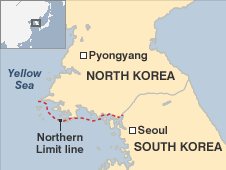
In the last few weeks, North Korea once again threw out a wild, unpredicted military tantrum. Now it has decided to start shelling the weakly agreed-upon sea border, the Northern Line Limit, in the Yellow Sea. For the details, try here or read my radio transcript below.

Less interesting than the details of the latest provocation – these things are terribly formulaic, to the point of ritual – is the IR theory question why. As I note in the transcript below, these gimmicks never work. In fact they usually backfire. Instead of frightening the SK citizenry or elites, these incidents usually stiffen the spine, because they look like bullying, and fairly crude at that. Further, NK truculence always serves to re-gel any possible rifts between SK, the US and Japan. In the same way that the Soviet invasion of Afghanistan reenergized NATO after the ‘alliance politics’ of the 70s, NK provocations routinely evince thicker and more explicit commitments by the US to defend SK.

Assuming the North Koreans aren’t stupid, the obvious question is why? I can think of two reasons, with a hat-tip on number 2 to Bryan Myers of Dongseo University in Busan, with whom I have discussed this at length. As always, this is a good IR master’s thesis-in-waiting.

1. Kim Jong Il is not fully in control of the NK military (the KPA) anymore.

This would not be a great surprise to anyone. Dictatorships are almost always heavily reliant on the military, and North Korea more than most. Indeed, it is hard to think of many truly civilian dictatorships. Most communist dictatorships slide into militarism, and even the Islamic semi-dictatorships of the Middle East usually have deep roots in the military. In the case of NK, this is even more extreme. When Kim the elder passed, so did communist party/civilian rule. Kim the younger immediately began placating the military as a means to neutralize the greatest threat to his shaky authority. In the mid-90s, NK declared a ‘military-first’ policy, whereby the military would have first claim on national resources. In the current NK constitution, Kim Jong Il rules as the chairman of the National Defense Committee, not as the civilian president. So extreme has this militarization become, that Bryan calls the DPRK a ‘national defense state,’ not a stalinist one.

So in such an environment, it is not hard to imagine the KPA high brass insisting on regular displays of their cool toys as means of justifying their insanely large budget, and otherwise trying to impress everyone, Kim Jong Il included, of the KPA’s inordinate influence over peninsular affairs.


2. NK faces a permanent legitimacy crisis which must be regularly ‘abated’ through external confrontation.

Clandestine traffic from China over the Yalu river has introduced far greater awareness of the wider world to North Koreans over the last 15 years. It was the non-response of the regime to the late 90s famine that drove the  Chinese connection originally, and now cell phones and VHS have illicitly gotten in. Indeed, the regime has lost so much of its information control, that is longer tries to claim that it is wealthier than SK. So if East Germany collapsed, if it gave up after 45 years of trying (and failing), why does NK hang on? How does NK legitimize itself when a prosperous, happier Korean national analogue is right next door?

By claiming that SK is an American colony and/or subject to ongoing Japanese control. Hence Myer’s description of NK as a ‘national defense state.’ It is defending the nation, where SK has sold out. To maintain this narrative however, regular tensions with the South, the US and Japan are necessary. Hence outbursts like last November’s North-South naval clash in the Yellow Sea, and now this artillery barrage.

The most gloomy part of this logic is that it predicts that NK will never surrender its nukes, and that it will continue to regularly, indeed, ritualistically, provoke SK.

_________________________________________________________________

TRANSCRIPT – DR. ROBERT E. KELLY, PUSAN NATIONAL UNIVERSITY

BUSAN E-FM: “MORNING WAVE”

MONDAYS, 8 AM

February 8, 2010

Professor Kelly comes to us each Monday to talk about big issues in Korean foreign affairs. And this week we are going to discuss North Korea’s recent artillery firing into the East Sea. Hi, Dr. Kelly.

REK:

Hi, Petra. Thanks for having me

Petra:

Thanks for being with us again today.

REK:

It’s my pleasure.

Petra:

So in the last few weeks, the North Korean military fired artillery shells into the East Sea. Why? What purpose does this serve?

REK:

Well, as usual, the North Korea government gave us no clear reasoning about this. The stated purpose was practice firing, but no one believes that. More likely, is saber rattling in the current North-South negotiations over pay at the Kaesong industrial park. If the artillery fire scares the South somewhat, perhaps it will make a better deal with the North over the salaries at Kaesong.

Petra:

That seems like a fairly crude negotiating stratagem.

REK:

Yes, it is. This sort of military posturing is a commonplace from North Korea. Far more interesting is that it does not really work, yet the North keeps doing it.

Petra:

Why doesn’t it work?

REK:

Well, the South Korean government and citizenry are simply inured to this now. For decades the North has acted like this to extract better deals from the South, but the South has never really given in to this. Southerners are just use to this by now, and they ignore it. Indeed, one can read the North’s nuclear program the same way. It is an elaborate and expensive tool for North Korea to club South Korea, the US and Japan into giving more aid.

Petra:

But this doesn’t work well…

REK:

No not really. The response of South Korea, and by extension Japan and the US, to these sorts of provocations is to stand firm and in fact to stand more closely together. In this way, it is rather foolish. Every time NK tries to bully South Korea and its allies, it backfires. It causes the opposite response. So Robert Gates, the US Secretary of Defense, pledged last year, the most public commitment ever that the US will use nuclear force to protect South Korea, because last year, the North’s rhetoric and behavior was so aggressive.

Remember too, that when South Korea has reached out to North Korea, it has been because of internal change in South Korea; that is, South Koreans the voted for left-leaning Presidents Kim and Roh, and they tried the sunshine policy. If North Korea really wants South Korea to help, you would think they would want to facilitate the election of more such presidents. But events like last week’s artillery barrage serve the opposite. They justify the hawkish, conservative vision of North Korea of the current Lee administration.

Petra:

So why do they do it then?

REK:

Good question. I have two educated guesses on this. First, the civilian government in North Korea can’t fully control the military. Second, these sorts of provocations of the South serve internal North Korean political purposes.

Petra:

Can you explain that a little more?

REK:

Sure. In the last 15 years, the North Korean military has increasingly dominated the government as a whole. The declaration of the ‘military first’ song-gun policy was the end of communism or Stalinism in North Korea, and the most obvious marker that North Korea was evolving into a military dictatorship. Recall that Kim Jong-Il’s title in the North Korean constitution is the Chairman of the National Defense Committee, not president. Kim Il-Sung is the eternal president of North Korea. Kim the younger rules from a military post. So it seems possible that the military was free-lancing last week with these artillery tests. Making trouble like this in inter-Korean relations is a good way for the military to make known its authority over North Korea.

Petra:

Ok. You also suggested there might be a domestic political purpose.

REK:

Yes. The regime suffers from a permanent legitimacy crisis. South Korea is wealthier, healthier, happier, etc. Most North Koreans have learned this in the last 20 years from information filtering in from China. The regime can no longer hide how far behind it is in the inter-Korean race. So an obvious question for any North Korean, is why North Korea still exists, long after the Soviet Union and East Germany are gone.

The regime’s answer to that problem is to manufacture a regular series of external crises. So long as the US, South Korea, and Japan are implacable foes intent on destroying North Korea, then the government can justify to its own people why it persists. This is why things like the artillery shelling last week or the naval skirmish last year in the same area, happen. The North cannot ‘win’ these sorts of stand-offs, but they do serve a domestic political need.

Petra:

So what is it about the East Sea that creates these sorts of problems so much anyway?

REK:

Good question. The East Sea, or in its international title, the Yellow Sea, is a good place for such North Korean shows, because the border there is so imprecise. After the Korean war, there was no formal border commission, on either land or sea. Remember that the war didn’t really cease, it just stopped temporarily. As we all know, this temporary border on land hardened into the demilitarized zone. But on land that was easy insofar as one could easily see where the battle lines between North and South were.

Petra:

But on the seas, no one really knew.

REK:

That’s right. It was just wide open. So the US and South Korea simply declared a de facto border that we call the Northern Limit Line. And in fact, it is drawn awfully close to North Korean islands. When we drew the line, it basically cut north immediately from land. It does, arguably, discriminate against North Korea. One can understand why the North rejects. But it also reflected the balance of seapower in the area in 1953. The US navy controlled the Yellow Sea, so the NLL also correctly reflects the geopolitical realities from the time. It is also worth mentioning that there is a annual crab harvest in the area. So every year, fishing boats from either side wander over the line. All in all, it is a messy, disputed area, so it is ideal for North Korean provocations whenever one is needed.

Petra:

So we should expect more of these sorts of provocations and clashes?

REK:

Yes, I think so. The NLL area is ripe for miscommunication, especially given the fishing traffic. Serious naval clashes have happened there three times in the past. Last November was the most recent. North Korea claimed that last week’s shelling was an annual exercise, so we might expect it again next spring. But honestly, I cannot recall that something like this happened last year, so I am not sure how ‘annual’ it really is. As so often with North Korea, it is murky. But I think you are right that we can expect fairly regular low-level conflict there indefinitely.

Petra:

Ok. Sounds gloomy. Thanks again for coming professor. We’ll see you again next week.

Korea’s Post-American Alliance Choices (1): India?

200x


This will be an occasional series. The US is entering a period of decline. Its ability and willingness to meet its alliance commitment to South Korea is waning. So Korea is, quietly, beginning to poke around in Asia. It is setting up preferential trade areas where possible, signing up whomever it can for ‘strategic partnerships,’ and generally branching out in the region. This serves both its desire to be a more regional player (rather than be permanently trapped in its peninsular ghetto with NK) and its growing need for friends beyond the US. The US has neither the money nor the domestic will to fight another Korean war. So it makes sense for Korea to look around, even if no one will admit that that is what it is doing.

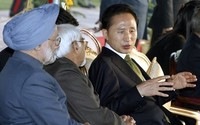
On Monday, I spoke on the radio about this. Last week, the president of Korea had a state visit to India. India is a good choice for several reasons. Like Korea, India is

1. a liberal democracy with a lot of religious diversity.

2. worried about China’s rise.

3. an American ally.

4. Bonus: India is not Japan.

While more common than in the past, stable democracy is still hard to find in Asia. It makes sense for Korea and India to hang together. Of course, the closest democracy to Korea is Japan, but the mutual loathing is so severe, that Japan is a last ditch alliance choice for Korea. Further, both have a good tradition of internal tolerance based on their religious diversity. Everyone knows of India’s of course, but Korea too is one of the most religious fragmented states in Asia (sizeable minorities of Catholics, Buddhists, born-again protestants, and agnostics, with no dominant bloc).

This commonality of values is complemented by a commonality of interests, or rather an interest: China. Both are edgy about its quick rise (no surprise there), and both continue to hedge it and ally with the US in order to do so.

The downsides though are high. India is far away. It does not have the two-ocean fleet necessary to project serious power into Northeast Asia, and it is still losing the race with China.

__________________________________________________________________

TRANSCRIPT – DR. ROBERT E. KELLY, PUSAN NATIONAL UNIVERSITY

BUSAN E-FM: “MORNING WAVE”

MONDAYS, 8 AM

February 1, 2010

Petra:

So President Lee went off to India last week. What happened? Why is this important?

REK:

Two reasons. First, Korean has a trade relationship with India. Second, Korea is slowly poking around Asia for other friends and possible partners.

Petra:

Ok. Is Korea’s trade with India significant?

REK:

Middling. Korea is India’s 9th biggest trading partner. That is ok. But there are 1.3 billion Indians, and they are getting wealthier. So it makes sense for Korea to try to push into this market. This is similar to the growth of China. As China and India both develop and get wealthier, their huge internal markets will attract interest from around the world.

Petra:

So if this was basically a trade mission, why did President Lee go?

REK:

Well, it was more than that. President Lee was a guest of honor for India’s big national holiday. It was an official state visit. Such trips fit President Lee’s style of diplomacy. First, the president has increasingly used his position to act as a salesman for Korea industry. You may recall his earlier bout of commercial diplomacy in the United Arab Emirates regarding Korean-designed nuclear power plants. Second, the pursuit of trade agreements has grown into a major Korean foreign policy tool in the last decade or two.

Petra:

Can you explain that a little more?

REK:

Sure. The bedrock of Korean foreign policy is the security alliance with the United States. But increasingly Korea has looked for an autonomous economic foreign policy. And Korea’s chosen manner of reaching out, especially in Asia, is trade deals. Korea has sought all sorts of preferential and free trade areas, and President Lee has made this a regular focus of his trips abroad.

Petra:

Has it been successful? I thought Korea belonged to the World Trade Organization which organizes global trade rules.

REK:

That’s true. But the WTO is stuck right now. The current round of trade negotiation, begun in Doha in Qatar in the Middle East, has been bogged down for years. With the Doha round frozen, Korea has turned to bilateral and regional trade deals in its foreign policy. This trip to India, as well as the recent sale of nuclear reactors in the Middle East is a part of this process.

Petra:

So the WTO is stuck, and President Lee is trying to push Korean exports on his own on these trips?

REK:

Yes, that’s right. In international relations, we call this commercial diplomacy, and President Lee is getting quite good at it. The big prize, an FTA with the US, is still out of reach though.

Petra:

Ok. Let’s stay with India. You said something about Korea looking for other friends and partners. What does that mean?

REK:

Well Korea is a tight neighborhood. It is surrounded by three big countries – Russia, Japan, and China – who have traditionally bullied or informally dominated the Korean peninsula. Korea’s political geography, or geopolitics, is quite poor; it is encircled. This is the great benefit of the US alliance. The US is too far away from Korea to dominate it, but the US alliance does help Korea prevent itself from being dominated by others. As long as US troops are in Korea, Korea can push back any encroachment by China, Japan or Russia.

Petra:

So what does this have to do with India?

REK:

Well, the US is in trouble now. The US deficit is gigantic. The US public debt is too. The US is fighting two hot wars in the Middle East, and several clandestine conflicts there as well. It is eight and a half years now since 9/11, and Americans are exhausted with all these wars and conflict.

Petra:

Does that include Korea?

REK:

Not really, but Americans certainly don’t want to get pulled into a big conflict here. As most Koreans know, the US military footprint in Korea is shrinking, and the US will officially relinquish wartime authority of the Korean military in 2012. In short, the US is increasingly looking for ways to lower the costs of the Korean alliance.

Petra:

So Korea is shopping for other friends?

REK:

Probably, quietly. I certainly would be. The US looks at Korea, and it sees a wealthy modern country that it believes should be able to defend itself without much US assistance. So Korea is wise to begin to think about friends and possible allies beyond simply the US.

Petra:

So can India be an ally to Korea?

REK:

Maybe. India has some definitely upsides for Korea. Like Korea, India is a democracy. Democracy in Asia is still somewhat rare, so Indo-Korean cooperation on security makes good sense. India also worries a lot about China’s rapid growth. India has an ongoing border dispute with China, much as the two Koreas and China do over the ancient Koguryeo role’s in history. So there is a community of values between India and Korea – liberalism, democracy, religious tolerance – as well as a community of interests – careful observation and response to China’s rise. Finally, both Korea and India are American allies.

Petra:

So how is the Korean government proceeding?

REK:

Well President Lee and the Indian prime minister agreed to upgrade Indo-Korean ties to a ‘strategic partnership.’ That implies that the two see each other as more than just trading partners or friends. President Lee pursued the same approach with US President Obama in the summer 2009. But for observers, it is hard to know the details of this new partnership. There will be regular meetings between officials of the two countries’ ministries, but it is hard to know how serious this will be.

Petra:

So there is no Indo-Korean alliance in the offing?

REK:

Probably not. Better to see this another sign that Korea is aware that the US is in trouble because of the long war on terrorism and the huge financial burden of the crisis. Korea is wise to start poking around for new friends, if not trade partners, and India is a good choice.

Petra:

Thank you coming again, Professor.

Should the US Pull Out of South Korea (2): No

USFK

(Part one of this post, in favor of leaving, is here.)

US SecDef Gates recently reaffirmed in very strong language the US commitment to Korean security. This served as a catalyst to extensive discussions among my colleagues about the value of the US commitment to SK. This is part 2 of the debate. My own thinking tilts toward the opinions in this post.

So here is why we should stay:

1. If we leave, everyone in Asia will read it as a sign that we are weak and that we are leaving Asia generally. Yes, this is the credibility argument straight out of the Vietnam, Iraq, and Afghanistan debates. But the world sees US power today as wavering; we are the tottering giant, especially in Asia. If we leave during the GWoT, that image will be confirmed, and the Chinese will push hard in Asia. A US departure will touch off an arms race as regional uncertainty rises. Asia is not where Europe or Latin America are in terms of regional amity. The US presence is more needed in this region, and it earns the US the friendship of the local democracies. It is hard to see how a spiraling arms race, as Japan and China openly start competing for regional leadership, plus perhaps India and China, would help the US. The US could very well be pulled back in later. A US departure from Korea (and Japan next?) will be read as a clear victory for China in the Sino-US regional competition.

2. It also means that the US will lose SK as an ally, because without the troops, they’ll feel, rightfully, that the US abandoned them. It would be nice to assure SK security without the ground forces, but US infantry on the ground (the USFK logo above) sends a much greater signal of commitment than air and sea power. SK will slide into China’s orbit if the US leaves. It’s already edging that way now. If America bails, it loses them. It is correct that SK no longer needs us to win a second Korean war though. So after unification, US retrenchment from Asia would be more possible and likely. But if America sticks with the Koreans through these difficult times, it will have them as good allies long into the future. Consider how loyal Kuwait and Germany are to the US because of historical goodwill. When Korea finally does unify – and it will happen as the post-Cold War North is in a permanent economic and legitimacy crisis – the Koreans will be deeply grateful if the US is here, or deeply resentful, and likely very pro-Chinese, if the US is not.

3. Unless the US demobilizes the troops of USFK, it must to rebase them somewhere else. That will require money, construction, hassle, etc. So long as the Koreans are paying for them – and they are, somewhat – and so long as they have Korean popular assent – and they do (USFK is not hated as US forces in Iraq are, e.g.) – then why withdraw them? They are not seen as occupiers; their establishments are already in place; the locals do not mind (too much) their presence.

4. Finally, DoD is restructuring USFK so that the bulk of any warfighting will fall of the ROKA. The primary US contribution to a second Korean war will be airpower. The ROKN already outguns the NK navy significantly, and the US ground presence here (28.5k) is too small to be really meaningful against the NK army (1.1 million). In other words, the costs to the US military in lives and dollars is shrinking. The US is dumping most of the burden on the locals, and Koreans generally seem to accept that this is really their responsibility.


So rather than leave, the US should continue to push South Koreans to pay a lot more under the USFK Status of Forces Agreement. This is renegotiated every 2 or 3 years, and SK’s portion of the burden has regularly. Right now, as best I can determine, SK pay about 47% of the (USFK) bill. For an OECD economy, that is low. So we could probably squeeze them for more, as Walt would recommend, but I don’t think we should leave.

Should the US Pull Out of South Korea? (1): Yes

 korea_beef_protest(1)

(See Part 2, in oppostion of withdrawal, here.)

Last month US SecDef Gates pledged the most formal statement yet of US “extended deterrence” to South Korea in history. Extended deterrence is an IR theory term. A country deters aggression against itself by a powerful military. A strong military drives up the costs of conquering a country, and so it deters aggression. During the Cold War, the US extended its deterrence to its weak and exposed allies. Countries like West Germany and South Korea could not withstand a communist onslaught alone, so the US pledged to defend them by extending its security umbrella. Such ‘collective security’ made everyone safer against the communists. In Korea, this has always included the use of nuclear weapons, as Gates made clear again  week.

The US Forces in Korea (USFK) total about 28,500 men. The are stationed north of Seoul by the DMZ, although they are being slowly withdrawn south of the DMZ to Pyeongtaek. Elsewhere, I have argued that this shift implies a loosening of the US commitment to SK. And lots of smart people – Bruce Cumings, Selig Harrison, and Brian Myers – have argued that the US should leave SK altogether. Chalmers Johnson said the US refusal to withdraw from Asian bases after the Cold War helped convince him the US had become an empire.

So here is the debate as I see it. Here are the reasons to leave:

1. In terms of raw US national interest, the value of the Korean alliance has decline dramatically. The Cold War is over, so the original rationale of US extended deterrence here is gone. Even if NK invaded SK and won, i.e., if the peninsula were reunified on communist terms, it would not matter that much to US security. Japan and China would still be around to balance/contain a communist united Korea. This is essentially the retrenchment argument. The Soviets were a genuine global threat that required a global US response. No one in world politics today poses such a threat – not China, NK, or Islamism. The US is a very secure great power – safe behind two oceans, a large nuclear arsenal, and the world’s most capable conventional military. Walt makes this argument regularly at Foreign Policy.

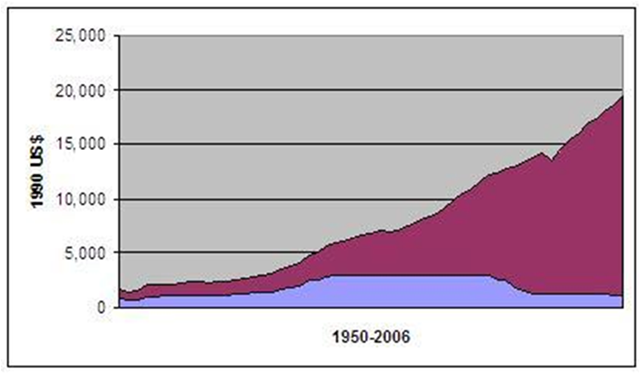
2. A more ‘moral,’ or altruistic approach would grapple with the social fact of South Korea’s long-term friendship with the US. It has stood by us for a long time as a reliable ally. It is a friend. It has participated in the coalitions of the willing in both Iraq and Afghanistan, even though it didn’t really want to go. Compared the to Europeans, the Koreans take their alliance commitment to the US very seriously. But even by this reckoning, we could arguably leave SK without great loss. SK has clearly won the intra-Korean competition. NK would lose a war with SK, even without US help. In a presentation I saw last moth in a conference at Changwon National University, my friend James Strohmaier of Pukyong National University presented this powerful graph of per capita GDP in the North and South. SK is purple; NK is blue. Obviously the race is over:

image

NK’s military, while large, is badly behind the South in technology. No one I have heard here thinks NK could win, even with the use of its nukes. So if SK can win this thing all by itself, what is the point of the US staying?

Is American Global Primacy Just Too Expensive?

200px-Flag_of_the_United_States_svg

One of the reasons I started a blog was because I get pulled into some excellent email chains that deserve to see the light of day. Here is a nice debate between me and a good friend (whose IR background is more law; mine is security and political economy). He thinks the costs of US empire’/dominance/unipolarity are too high to the US, and that we should start pushing burdens onto the allies more – an idea as old as the Nixon Doctrine. I agree in principle, but in practice, the allies won’t do it, the world will slide into multipolarity, and become more dangerous I think.

Friend:

An Empire At Risk. I share all of Niall Ferguson’s concerns, but he is focused, at least in this article, on a military decline as the ultimate effect of our profligate ways.  I say – so what?  I would like to see a US that spends less on the military and is less focused on policing the world. Let’s hear it for Germany, Sweden, Norway, Japan, etc. – countries that direct their resources toward their people and not an extravagant defense establishment and adventurism. In the world today, the US has had to invent a global enemy – ‘terrorism’ or a boogie man China – to justify its fantastically large military. Security today is not as the Neo-Realists traditionally portray. The great powers are not likely to return to the days of the 1930s any time soon.

Me:

Ferguson is always a good read, although ten years ago he said the US was the “colossus” bestriding the world as the new Rome. That didn’t work out too well…

You’re right that the US military needs to go on a diet. After 9/11, the military got everything they wanted including lots of c— we don’t need (F-22s, missile defense, Future Combat System). But the larger point is correct. The ultimate backstop of the liberal global economy is the US military. The more powerful the US is, the less it makes sense to compete against it. Unipolarity encourages bandwagoning and hedging at worst, not open balancing. If the French, Russians and Chinese get their wish for multipolarity, watch security dilemmas in places like northeast Asia, the Middle East, and Central Asia move into defection spirals of arms-racing. Unipolarity correlates well with systemic peace, and a liberal unipole is even better. Switzerland can claim the moral highground of neutralism and abdication, and no one cares. If the US does it, the world will change.

Friend:

We have two basic disagreements.  First, I don’t share your concern about SD and spiraling arms races.  I am a believer in Jervis’ security community, though there are areas outside of it, a great power war is highly unlikely. Peripheral wars have gone on, are going on now  – even with ‘unipolarity’ – and will go on regardless of US military might. Moreover, it is rather speculative that US unipolarity will prevent the consequences you describe as the number of cases of unipolarity is quite small.

Regardless, and second, the problem with maintaining unipolarity is someone has to pay for it.  Why is it the burden of US citizens to maintain this blessed (if often fractured) liberal economic world order of peace and prosperity?  The British are sending an extra 500 troops to Afghanistan and they are one of the better allies there. Everyone knows the current US fiscal deficit is unstainable so, to fund unipolarity, Americans must give up public health insurance, infrastructure investment, and basic government funded research, fight inflation, suffer a depreciating dollar, yada yada, while the rest of the developed world has social safety nets and high-speed trains. If the world becomes more complicated without US unipolarity, if other liberal, peace-loving democracies must step up in a multipolar world, that’s fine. Americans deserve to have their wealth spent on their needs (cancer research comes to mind. Cancer touches everyone of us and will probably kill you and me. Compare what has been spent on that to just one year of defense spending – it’s shocking). 

Me:

1. You don’t think that the regional security dilemmas in places like Northeast Asia or the Middle East would inflame if the US retrenched? I can’t agree. If the US leaves the ME, Israel and Iran will be at blows. In Asia, China and Japan, and India and Pakistan and China would start racing furiously. I think even the Chinese think so, judging by what I have heard from Chinese scholars at conferences out here. Unipolarity has strong causal effects for peace.

2. Here I agree with you partially. But the US DID afford hegemony for awhile. Not even Vietnam broke US power: http://asiansecurityblog.wordpress.com/2009/04/09/careful-with-that-decline-of-the-west-riff-weve-heard-it-before/. In fact, under Clinton, the budget was balanced, the debt was declining, the US was respected, and our foreign policy requirements were reasonable. Sullivan called the 1990s a ‘silver age’ for the US in his book the Conservative Soul. The real problem is that Bush misread unipolarity as omnipotence. Bush and his buddies wrecked US power through conscious choice. It was not the structure of unipolarity itself that bankrupted the US; it was W. Try here.

Friend:

I don’t believe in US isolationism.  Of course, complete disengagement from Asia and the ME would be destabilizing.   Multipolarity is not isolationism. The US should remain a balancer and diplomatic force.

But, I don’t think NE Asia countries would race furiously even with a large US draw down.  I think here we differ because my view is more informed by commercial liberalism and the waning of war among developed countries as a cost-effective or even plausible solution to problems (constructivism).  Though it doesn’t surprise me that Chinese scholars would promote the idea of a spiraling arms race and war if the US draws down – of course the party line is let the US carry our security water while we build our economy.  There view is that the US presence makes every feel OK while China grows.

Sub-Asia and the ME are different, I agree. 

As I mentioned, there are areas outside of the ‘security community,’  but I am not that concerned about arms races there.  India and Pakistan have been racing and warring for years and the world survived without a great power holocaust. Nuclear weapons provide a certain stability there, as does US even- handedness in arms sales to Pakistan and India. Stability can also come from balancing. 

The ME also has a long history of localized arms races and wars and while it has been tense and economically destabilizing at times, we have managed (until recently) without US  military entrenchment there.  The US has balanced through its support of Israel and relationships with ‘moderate’ ME powers.  The prospect of a war in the middle east are less than they ever were (unless the governments of moderate powers topple to extremists) and that is largely because of war exhaustion and peace efforts going back to camp David. Iran is a problem but do you really think a middle east war will result?

I know the world is a dangerous place but I not worried about regional powers balancing themselves – I prefer it because of cost issues for the US. The US should remain engaged and a balancer but not the balancer. If wars break out, that is bad but it’s not like the last 20 years of US unipolarity have been peace and prosperity.  Before Iraq and Afghanistan, there were the Balkans.

I can only say here that today is not the 1960s or even the 1990s.  You know that US economic preeminence, allowing it to afford lots of guns and butter, was an a rare confluence of factors. Those factors have largely receded and are rapidly diminishing.  The 1990s was an economic bubble as we learned in 2000.  Moreover, your domestic agenda (and maybe Sllivan’s) is apparently smaller than mine.  Clinton may have balanced the budget  but he didn’t deliver health care, infrastructure investment, ya da ya da.  (In fact, Clinton, for all his talents and opportunities, was a waste of space.)  So, I don’t view the 1990s as an example of our ability to do it all.  The 1960s is a better case but not a realistic one today. The price of unipolarity: http://www.msnbc.msn.com/id/34263381/ns/us_news-life.”