What Lesson will China Learn from the Iran War? That the US is Overstretched

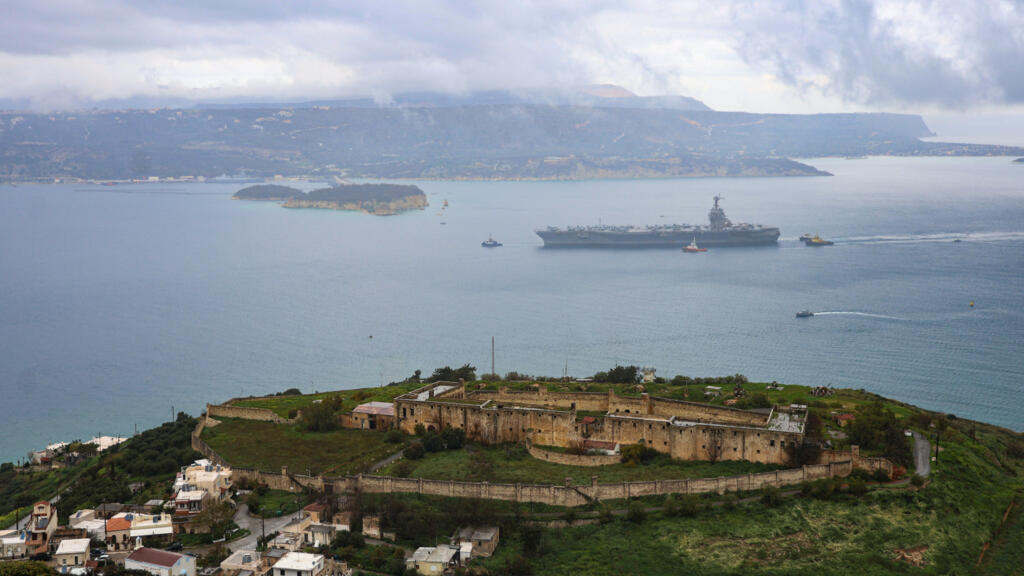
The USS Gerald Ford in Greece for repairs

I don’t really like ‘lessons of war’ arguments. It’s really easy to just project your own biases and favorite variables onto conflicts for self-validation. But everyone is starting to note that China is watching how the US war in Iran is flying off the rails. It is pretty clear that the war is bigger than Trump expected, and he doesn’t know what to. It is now pulling US combat power into the Gulf, and this is just to defeat a middle power. And if we actually invade Iran on the ground, it’s gonna be an overextension disaster…

All this should make you wonder if we can tackle China. Phillips O’Brien had some thoughts on this which I pivoted off of for an essay at 1945 magazine. My basic argument is that the US is overstretched. It has too few platforms, however ‘exquisite’ they may be. Specifically, I think it is pretty clear now that:

  • the US Navy is doing too much (even before Trump made it worse)
  • the US Navy too small
  • US missile defense is too costly per unit
  • the US air force needs more cheap UAVs instead of high-priced super-fighters

(The big recent story on that last point is that two ultra-expensive US F-35s appear to have been hit in this war. If that’s true, imagine what a proper peer competitor like China will be able to do.)

So my big take-away, at the end of the 1945 essay, is that China is learning that it can overwhelm the US with masses of cheap, mid-quality airpower. I am teaching a junior-level conflict & security class this semester, and my informal ‘thesis’ for the term is that both the Ukraine war and the Iran war are teaching us that swarms of cheap unmanned platforms are the future.

So going forward, the US can then either:

  • massively expand defense spending to continue fighting lots of wars with exquisite weapons (worst answer)
  • pull back, fight less, and concentrate on China (best answer)
  • switch to cheaper, easier-to-produce platforms – the kind of stuff South Korea is really good at making – within current budget constraints

Try the 1945 essay for the full argument.

Iran War: Can We Open Hormuz or Denuclearize Iran Without a Ground War? Probably Not

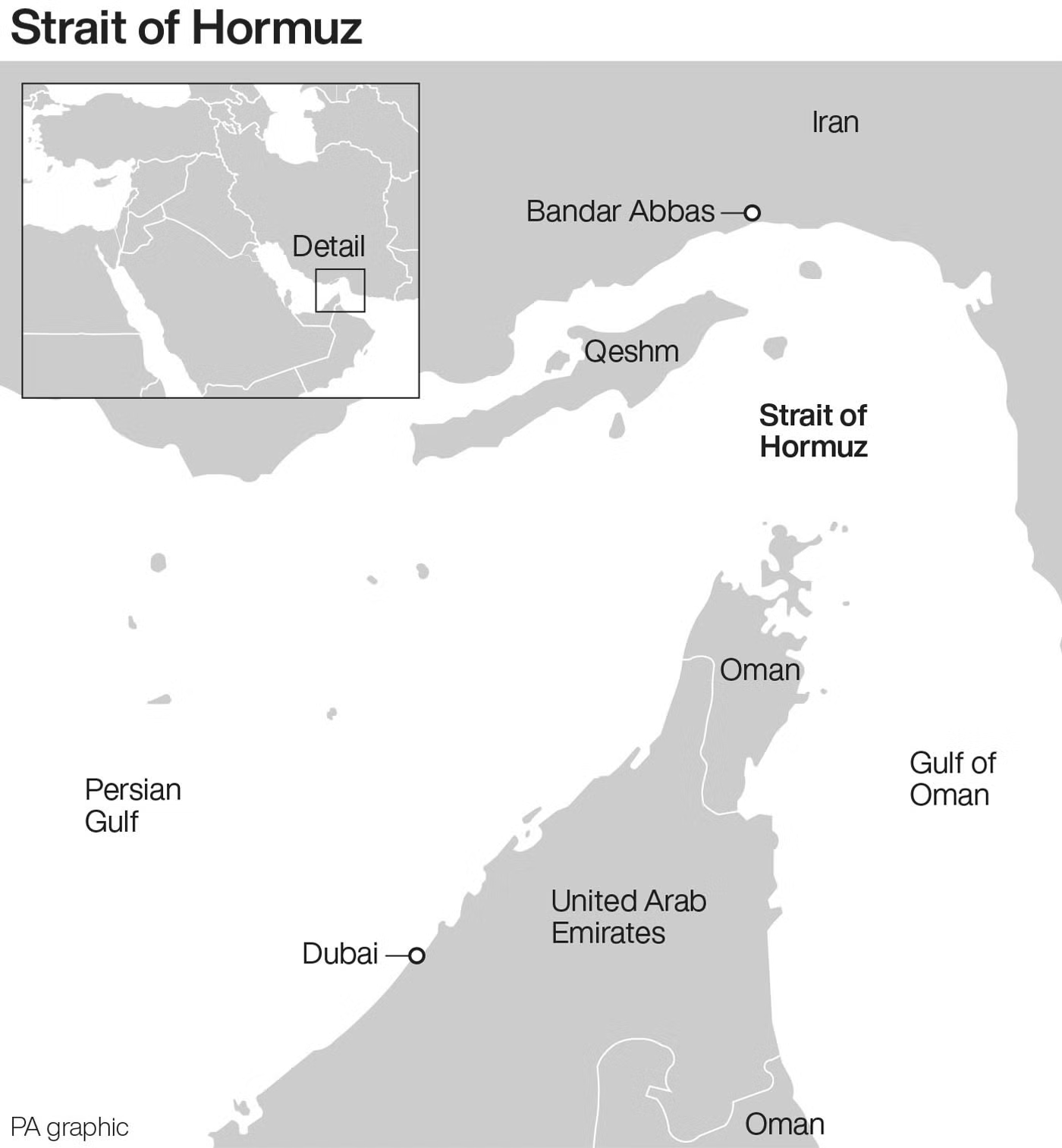
The Strait of Hormuz, including Qeshm which the US probably has to neutralize

I increasingly don’t think that Trump can win this war without going in on the ground. I wrote this up at 1945 magazine this week. Specifically:

1. Opening Hormuz will probably require at least taking a strip of coast on the strait’s Iranian side. Qeshm island is emerging as a key, heavily-fortified location from which Iran threatens Hormuz shipping. So we are now bombing along the Iranian side of the strait to destroy the capabilities which frighten off shipping.

But the Iranians have been preparing for this for decades. They’re dug in. There seems to be a general consensus that we can’t bomb our way into getting the strait opened. So US ground troops are probably necessary to dislodge Iranian coastal power projection. But once you actually land troops – especially if they land on the coast and not just strait islands – the potential for mission creep and an escalating ground war is obvious.

2. If the Iranian clerical regime surives the war, it will sprint for a nuke. They won’t trust negotiations with the US or Israel again for a long time. They will see North Korea as the model: once you have a nuke, you are in a position of strength to bargain, plus you won’t get bombed. The war will strengthen the hardliners who want a nuke for protection.

So now, the only way to keep Iran from getting a nuke is to push the current regime out of power. Ideally, the air strikes would open a window for a domestic revolution to push out the clerics – which might have been possible in January when the dissident movement was on the streets fighting. But they were crushed violently, and there’s been no uprising since we started bomnbing.

Thus the US has to go in, on the ground. Bombing alone won’t provoke regime change. The Iranian people don’t look like they are gonna do it. If the clerics survive, they’re definitely going for a nuke. So the only way to stop that is regime-change which requires a ground war, and we are the only force capable of doing that.

* And yes, I am aware of current idea that we can use special forces to snatch Iran’s nuclear program. That strikes me as unbelievably dangerous. Those facilities will be guarded by Iran’s best troops, and there is no element of surprise to such an operation now, because it’s all over the media. I’d guess that such an operation would fail.

** Yes, Trump could just withdraw and drop the whole thing. He could ‘TACO,’ which markets still seem to expect. I doubt this, primarily for psychological reasons, as I have been arguing on Twitter for a week now. Trump can’t admit defeat. He can’t process it. He will almost certainly escalate to at least a limited ground incursion, and there are no Congressional checks-and-balances to stop him.

Iran War: Will the US Ever Pivot to Asia? It Sure Doesn’t Look Like It

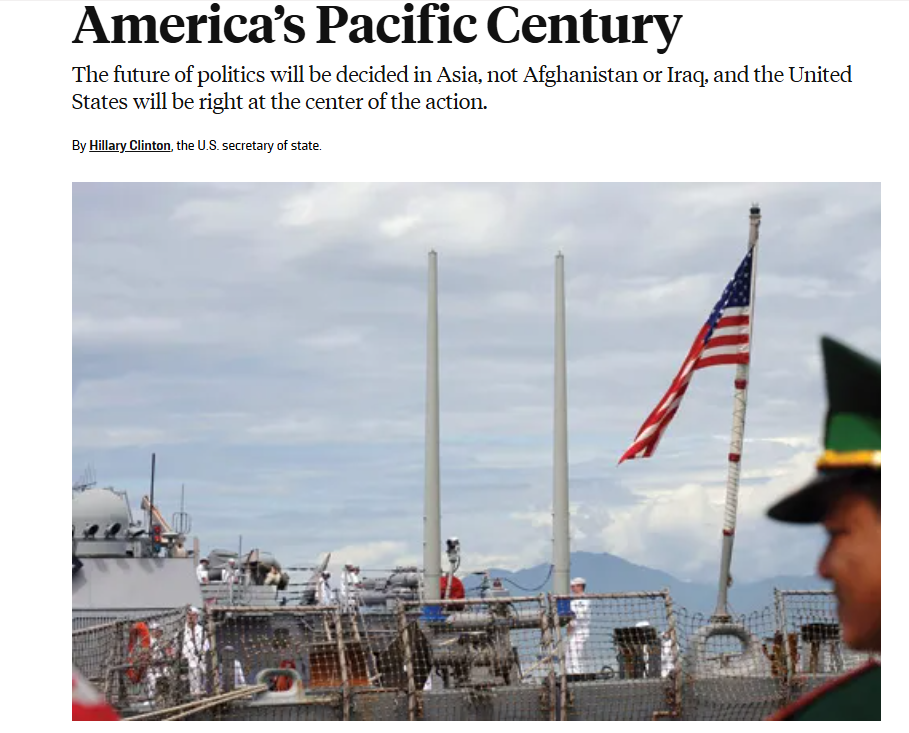
Hillary Clinton’s original, 2011 article in Foreign Policy announcing the pivot

I wrote a couple op-eds this week on this question of the ‘pivot’ in the wake of yet another US Mideast war – one at Channel News Asia, another at 1945. Here’s the arguement flow:

  • the strategic case (China) for the pivot to Asia is stronger than ever
  • the Iran War is probably going to be bigger and longer than we thought
  • so we can’t pivot more to East Asia for while
  • in fact, we are ‘de-pivoting’ – i.e., moving resources from East Asia to the Persian Gulf
  • also, a lot of Americans don’t want the US to pivot out of the Middle East for religious reasons
  • at least we are pivoting out of Europe. It’s long overdue that Europe do far more for its own defense and take the lead
  • Trump’s interest in Western Hemispheric hegemony will pull away resources better sent to East Asia
  • So the pivot is probably dead
  • So Japan and South Korea better start spending more on defense and cooperating more

I wrote an academic article on the pivot twelve years ago (here), where I argued that American Protestant fundamentalism is the big domestic reason the US can’t quit the Middle East for East Asia. 40+% of Americans believe that Israel plays a major role in the End Times and/or sees Israel as a Western, civilizational bulwark against Islam which they hate/fear. So you’ve got both eschatology and the ‘clash of civilzations’ motivating a deep, religious conservative commitment to America’s presence in the Middle East.

China does not move Americans like that. To most Americans, China is some place farway which makes cheap stuff you buy at Walmart. Does grandma care that much about Taiwan? Probably not. Yes, the American foreign policy community is really worried about China, but the voters don’t care about foreign policy much, and the GOP detests America’s intellectual class. So nobody is listening to us. If they did, we wouldn’t be fighting Iran right now.

So here we are, in yet another Middle Eastern war with yet another president talking about regime change and fighting evil, with the pivot pushed off into the future yet again.

The Trump Doctrine: Rogue State Elite Replacement

Delcy Rodríguez, the new, sorta pro-American despot of Venezuela

I put up some thoughts on Trump ending the war in Iran at 1945 magazine. We’re moving toward putting a pro-US stooge in the place of now-deceased Iranian leader Khamenei so that we can withdraw quickly. It seems like this is what Trump wants – basically a replay of the Venezuelan drive-by decapitation we did in early January.

The idea, as Steven Taylor similarly notes, is to replace the anti-American elite of a rogue state, through swift, surprising violence, with a new, pro-Amerincan despot while the rest of the regime is left intact. That way, there is no messy nation-building, reconstruction, democratization, and so on. Trump pretty obviously doesn’t care about democracy, and the US public opposes LDC nation-building. So just bumping off a leadership we dislike and replacing it with a stooge seems pretty easy by comparison. We swing a troublesome state into our column by replacing its elites, not its regime.

At 1945, I call this emergent method ‘rogue state elite replacement‘ – in contradistinction to regime change, democratization, tranition, and so on.

Here, at last, we have a ‘Trump Doctrine’ (or Method), and it fits Trump perfectly. It ignores democracy, development, international law, and so on for raw, short-term American interest from individial gangster leaders Trump can bully for pay-offs. Get rid of anti-American leaders; put in pro-American leaders; put the screws to them; get the hell out: ‘He may be a son of a b*tch, but he’s our son of b*tch.’

If Trump can get this to work in Iran, as it seems to be working in Venezuela, I figure Cuba is next on the hit list.

Iran War: Trump Goes Full Neocon in the Biggest Gamble of His Presidency

I posted my first thoughts on the Iran war over at 1945; please go there. But my short take is that this thing is going to require a ground war to do right. And Trump seemed to admit that when he told Iranians to rise up in his first war speech on Saturday.

By now everyone knows that airpower isn’t enough for regime change. Robert Pape has banging away at that all week. So you need some force on the ground to actually snatch power from those who have it now.

The obvious choice is the Iranian dissident movement. But they were crushed in January. Indeed, thatwas the time to launch this operation. We could have targeted strikes to help the protestors, destroying security forces and their weapons to give the revolt on the streets a fighting chance. But Trump had moved the needed naval assets to the Carribean so that he could kidnap Maduro. So we missed our chance.

Maybe we will get lucky, and whatever is left of the resistance will hit the streets again to fight on the ground as we pound Iran from the air. But the risk is obvious; the resistance is weakened because of the January massacre; and Trump cannot make credible commitments (to support them). Who knows if he will actually support an uprising. He sold out the democratic opposition in Venezuela to get a ‘deal’ with Maduro’s regime successor. I’d bet he would sell out any Iranian uprising to get a deal with Khamenei’s successor.

So if we want regime change, we have to go in on the ground. Trump likely won’t do that. So instead of regime change, we are getting elite replacement: some vaguely pro-American, or at least less fanatical islamist, ruler in the place of Khamenei.

Given that we did this in Venezuela and will probably do it in Cuba soon, a ‘Trump Doctrine’ is emerging: knock off anti-American elites in rogue states, put in a stooge who will do what we till him/her, and then get out. So we are back to ‘he is a son of a b****, but he’s our son of a b****.’

My Latest for Foreign Policy, Un-Paywalled: Israel’s Air Campaign against Iran is Exactly why N Korea Built Nukes and won’t Give Them Up

ec0ac160-4929-11f0-bbaa-4bc03e0665b7This is the un-paywalled version of an essay I wrote for Foreign Policy on Monday.

Israel’s preventive disarming strike on Iran last month is a model of what the US and South Korea would do to North Korea – either as a ‘bloody nose’ strike, or in the opening days of a second Korean war. Deterring that from happening is why North Korea built nuclear weapons.

And now that we have helped Israel in the attack – after reneging on our 2015 deal with Iran – North Korea will never denuclearize. That is the very obvious lesson for NK to draw from Israel’s war of choice. This is the core point I make in my FP essay. In fact, NK probably won’t even negotiate arms control with us now. Instead Pyongyang will likely build up even more – convinced that if Iran, Iraq, and Libya had nukes, they never would have been attacked by Western power, which is almost certainly true.

The repeated use of Western power against non-nuclear rogue states – Iran, Iraq, Libya, Syria, Serbia, and, sort of, Cuba & Venezuela – signals to illiberal and anti-western countries that nuking up is your best defense. That we broke our word to Libya in 2011 and, especially, Iran in 2018 reinforces that signal.

Trump particularly deserves blame here. Kaddafi was already in trouble in 2011 when Obama reneged on 2003 nuclear deal, and Kaddafi was promising an enormous bloodbath in Benghazi if we did not intervene. By contrast, the Iran deal of 2015 was working when Trump pulled out of it for no substantive reason. (He did it to please the GWoT hawks and End Times-craving evangelicals in his coalition.) That sent a huge signal to anti-western countries everywhere: the US will not negotiate with you in good faith on nukes; secretly sprinting for nukes is the best way to get security.

No one learned this lesson better than NK. For decades Pyongyang disbelieved our security assurances and pushed relentlessly for nukes. Nukes, as I write in the FP essay, are a ‘unique shield.’ Nothing can replace their deterrent power – certainly not a deal with the US which MAGA will just dump when it is convenient. So now, we should prepare for a world where other nuclear-curious rogues sprint for NWs too.

The full essay follows the jump:

Continue reading

The Iran Deal Cannot be a Template for a North Korea Deal if NK doesn’t Want to Deal

This is a rather tardy re-post of something I wrote for the Diplomat in the wake of the Iran deal in late July.

I still think my basic argument is correct. North Korea is far more isolated than Iran, so it needs the weapons a lot more. It also spent a far larger proportionate share of GDP to develop those weapons. So there’s no way they’d give them up without impossible concessions like the withdrawal of USFK or the end of multiparty elections in South Korea.

I do think the Americans, and especially South Koreans, would be open to dealing. But the Norks aren’t. The South Koreans especially just want to find modus vivendi with North Korea so that they can forget about it. But being ignored as the backward, nut-ball, third-world hellhole that it is, is exactly what the Norks don’t want. They crave the prestige of global attention, because otherwise they’re just a nuclear version of Zimbabwe or Turkmenistan. And how could the heroic Baekdu bloodline preside over a dump no one cares about?

So forget any deals. Provocative, nuke-adulating North Korea is here to stay. The full essay follows the jump.

Continue reading

Note to Congressional Republicans: Please Don’t Send One of Your Iran Letters to China

Does anyone wonder what it would be like it neoconservatives brought their unique blend of bluster, recklessness, and belligerence to Asia? I kept thinking about that in the wake of that wildly irresponsible Iran letter from the Senate GOP last month. As Jonathan Chait notes, that letter was the perfect metaphor for neoconservative rashness, poor planning, maximal belligerence, and relentless nationalist self-congratulation. And this will be the tone of the GOP primary (again) too.

Now try to imagine how that would have gone down if we had sent that letter to China. Yikes! I hope these guys stay focused on the Middle East where their free-lancing recklessness and belligerence have manageable costs. But please, please keep these people away from Asia, where they know even less than in the Gulf and the costs are much higher. Scary.

The following was originally written for the Lowy Institute, here.

2010 Asia Predictions: How did I do?

new-year-image


Last year in January, I made  some predictions on Asian security. It is always useful to look back at how one did. I did ok, but one might criticize me  that I predicted too many things would not happen. That predicts the lack of change, which is easier than predicting proactive change. That is true.

But prediction is one of the great goals of the social sciences. Indeed it is our hardest chore, and no matter how much we read, data we collect, or theories we propound, we still don’t seem to do much better than the ‘random walk’ theory. Depressing, but nonetheless worth the effort. So here is a quick review of my record. (For a nice collection of the worst world politics predictions from 2010, try here; thankfully none of mine are as eye-rollingly bad as them.) Here is a nice run-down from CFR on the big (East) Asia events of 2010. Note the differences from mine below.

My review of my 2010 Korea predictions will go up on Thursday. Here are my 2010 Asia predictions in retrospect:

1. There will be some kind of power-sharing deal in Iran before the end of the year.

X!

I really blew this one. My sense 12 months ago was that Iran was really slipping toward some sort of genuinely systemic crisis. Not primarily because of the street demonstrations. Those are relatively easy for dictatorships to contain with nasty head-crackings. In the movies (Avatar), the people overthrow the powerful, but in reality it is usually other powerful who overthrow the powerful. That is, elites usually depose other elites in dictatorships. And that is what I thought we saw in late 2009: the emergence of real splits inside the regime’s elites. Particularly, I thought that the clerics’ growing hesitation on Ahmadinejad’s policy of confrontation with the West might lead to a real cleavage requiring some kind of accommodation. Note that I did not predict a revolution or major change in the regime’s Islamist character. No one really expected that. But I did think that Ahmadinejad needed the clerics for legitimacy in what is still an overtly theocratic state. Looking back, I am fairly impressed at his ability to maneuver these domestic difficult waters, while nonetheless continuing to bluff the West. Yet perhaps the external bluff is the key to that internal success. Perhaps the nuke program insulates him against clerical unhappiness. He can appeal to a Persian populist nationalism with the nuclear issue, which allows him to ideologically outflank the clerics. If this is so, then Ahmadinejad is more enduring then we anticipate.

2. Israel will not bomb Iran.

This is a negative prediction, so it was a little easier. But still, given how much noise Netanyahu and the Israel lobby in the US make on this issue, including regular veiled threats to take matters into their own hands, I do think this deserves some credit. Also, the Wikileaks revelations that Sunni Arab states might look that other way on a bombing add further weight to my prediction’s riskiness. Netanyahu is playing a tough negotiating game with the US, but this one was probably a bridge too far, although I bet the righties in his cabinet are unhappy. Still, Israel really needs the US, and that need will deepen the more it becomes apparent that the Israeli right is the primary force blocking an Israeli accommodation with the rest of the Middle East. And without US approval, unlikely on Obama’s watch, I still think the cost-benefit calculus tilts against an Israeli strike. That said, a strike is more likely this year, because the Iranian nuclear program keeps rolling along and Iran (point 1 above) has not softened.

3. Japan will disappoint everyone in Asia by doing more of the same – more moral confusion over WWII guilt and wasteful government spending that does nothing meaningful to reverse its decline.

This is another negative prediction, and seems like an easy one too, because it just predicts more of the same from a country that has been doing that for 20 years. But placed the context of the DPJ’s (pseudo-)revolutionary election victory of late 2009, it still seemed like a mildly risky prediction at the time. Recall that the DPJ came in saying it would change so much – fixing the ever-sliding economy, improving Japan’s relations with its neighbors, edging away from the US, etc. All that turned out for naught. Some of this was because China seemed to flip out in 2010 (a big positive prediction I really missed – X!). China’s 2010 behavior pushed Japan back toward the US in a way the DPJ probably wanted to avoid. But on the other issues, Japan still strikes me as stuck in a terrible historical funk. It can’t seem to get beyond the fact that the glory days of its developmentalist economy (1960s-80s) are over, and that more Asian-style state intervention now just means more debt. Nor can it seem to figure out, despite the DPJ talk, that the rest of Asia is genuinely freaked out by Japan and pays attention to every change in Japan’s defense policy or utterance by defense officials. Worse, every time some disgruntled righty in Japan say the old empire wasn’t so bad after all, the neighbors go into paroxysms on incipient Japanese re-militarization. My own experience with Japanese students tells me that Japanese are just blind to this (although Japanese academics do seem aware). So my sense was that for all the DPJ talk, there was no real popular interest in a Willy Brandt-style ostpolitik on the history issues. Nor does that seem to have changed in the last year.

4. North Korea won’t change at all.

X! – It got worse!

Who would have thought that the worst state in the world could plumb the depths yet further? Somehow the loopy Corleones of Korea – the Kim family gangster-state – became ever more unhinged and dangerous. My original prediction was aimed at those who thought that Kim Jong Il’s trips to China and China’s growing ‘investment’ in NK might somehow hail a Chinese-style liberalization, at least of the economy a little. To be fair, no one expected NK to morph into a ‘normal,’ somewhat well-behaved dictatorship like Syria or Burma. But there was a mild hope that NK, finally, under the weight of economic collapse and the pressure to show results for the 2010 65th anniversary of the state’s founding, might open a little. I thought that was far-fetched, so in that sense, my prediction was right. But more importantly, I missed that NK would actually go the other way. Instead of possible better behavior, NK went overboard – provoking three major crisis – the Cheonan, the new uranium plant, and Yeonpyeong– in just 7 months. Wow. Wth is going up on there?!

5. The US drawdown from Iraq will be softened, hedged and qualified to be a lot smaller than Obama seemed to promise.

✔/X

This one seems mixed but broadly accurate. It was a gutsier positive prediction, but the evidence is not definitive. I was genuinely surprised when the last brigades rolled out, but then, there are still 50k US troops in Iraq (more than in Korea or Japan, btw). Now that Iraq is off the front pages, and with Obama’s speech that it is all over, no one pays attention much. But we are still running around performing what really should be called combat operations, and Americans are still dying. And in Afghanistan, the Obama people are now openly moving the goal posts from 2011 to 2014 now. While I didn’t predict that, it does fit into my general sense that Obama can’t really end the GWoT quickly as he hinted during the campaign. Instead, it seems likely that it will slowly splutter out.

2010 Asian Security Predictions

FASI

This is always a useful exercise, if only to see how wrong you are next year. So let me go on record.

These are in no particular order.

1. There will be some kind of power-sharing deal in Iran before the end of the year.

Why: Andrew Sullivan’s superb coverage suggests to me that the regime is increasingly facing a mobilized population pushing for something like a color revolution. Given the the regime is divided too – which is a strong hallmark that it may lose the gathering contest – it seems highly unlikely the troika dictatorship of Ahmedinijad & cronies, the clerics, and the Basij can survive entirely intact. The won’t be swinging from the lamposts, but look for something shaky and transitional like Zimbabwe’s messy on-again-off-again coalition government.

2. Israel will not bomb Iran.

Why: I have always found this possibility wildly overrated. The logistics are atrocious, the military value is mixed at best (b/c Iran has de-concentrated its nuclear program, unlike Iraq’s Osarik), the Americans oppose it, the Palestinians will go ballistic, it would save the mullahs from the own currently rebelling people.

3. Japan will disappoint everyone in Asia by doing more of the same – more moral confusion over WWII guilt and wasteful government spending that does nothing meaningful to reverse its decline.

Why: The DJP did not really get elected to change things, but more to make the status quo work again. The Japanese growth model was great until 1988, and then the Japanese locomotive just went off the rails. But I’ve seen no evidence of the socio-cultural revolution in attitudes toward consumption, education style, the construction industry, lifetime employment, government debt, etc. that means the Japanese public actually wants to reform Japanese social structures.  In fact, Hatoyama wants to roll back the one big change of the LDP in the last 20 years – the privatization of postal service cum government slush fund. On education, e.g., various Japanese figures have said for decades that the Asian mandarin system of memorization is rigorous and suffocating. (Koreans say the same.) But nothing has happened.

As for the apology tour everyone in Asia wants from Hatoyama? Forget it. Again, there is no public opinion data from Japan that suggests that Japanese really want a Willy Brandt-style Asienpolitik to heal wounds with China and Korea. East Asians still retain 19th C notions of race, and the Japanese are still tempted by the rightist spin on WWII that it saved Asia from white imperialism and brought modernity to Korea, China, and SE Asia. If Japan really apologizes – particularly to Koreans on whom they look down as weaker and backward – then a central myth in the conservative pantheon of Japanese race and history will shatter. The Japanese elderly and conservatives are not even close accepting this normative shift; there’d be riots in the streets.

4. North Korea won’t change at all.

Why: If there is one thing we all seem to expect all the time, but never happens, it’s this. Everyone has predicted the implosion of North since the early 1990s. The end of Soviet aid, the Chinese recognition of SK, the death of Kim Il Sung, the weakness of the playboy son Kim Jong Il, the famine, the placement on the axis of evil, Jong Il’s stroke – all were supposed to bring the much-prophesied end.

I see only one faint shred of evidence of movement –the pushback on the currency reform of December 2009. The regime sought to reign in private markets – emergent as an alternate food source after the 1990s famine – by dramatically shrinking the money supply. There has been resistance, especially in the Chinese border regions. But that Kim felt that he could simply roll back 10 years of under-the-radar marketization suggests how strongly the regime feels it is entrenched.

5. The US drawdown from Iraq will be softened, hedged and qualified to be a lot smaller than Obama seemed to promise.

Why: If there is one thing post-Saddam Iraq has always needed, its more US troops, not less. I agree that we seem to have turned a corner there. But Thomas Ricks seems worried, and I think he scoped Iraq’s problems better than anyone, including DoD under Bush. We are supposed to leave by August 31, 2010, but are they taking down those mega-bases we put up? Are the contractors pulling up stakes? If more contractors simply fill the US hole, isn’t that cheating? A fairer way to put it is that the US will be there in a different capacity – training, protecting, arming, flying, fighting (semi-publicly and less though) – kinda like the way we stayed in Vietnam even after Nixon and Laird declared Vietnamization. So, I will agree that US combat troops will shrink somewhat, but the US presence will stay massive, and I bet that combat troops will hang on for awhile under various escape-hatch provisions about ‘conditions on the ground’ and what not.