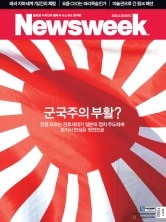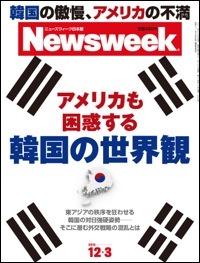
My Cover Story for Newsweek Japan: The Subtext of S Korea’s Dislike for Japan is Competition with N Korea

cover1203-thumb-200xautoI just published a long essay about Korea’s view of Japan for Newsweek Japan. Please contact me if you would like the Japanese version. Below is the reprint in English.

As so often when I write in this area, I immediately got hate-mail. So please, don’t bother telling how much this website sucks, that I’m a mouthpiece for whomever you dislike, that I am ‘taking sides,’ betraying Korea, and so on. I know Koreans and Japanese read critical analyses of one or the other in zero-sum terms. The essay below is not meant as a ‘Japanese win.’ It is meant to explore why Koreans exaggerate Japan so much. Why do Koreans routinely say things like Japan is run by right-wing fanatics who want to invade Dokdo with samurai? These statements are not only obviously false, they are ridiculous.

I have said before (here, here) that Koreans have legitimate grievances regarding Japan, particularly on Yasukuni and the comfort women. But Koreans don’t stop there; they go over-the-top with things like the Sea of Japan re-naming campaign, claims that Japan wants to invade Korea again, that Japanese behavior in Korea equates with the Holocaust, or that Dodko is worth going to war over – even though a Korean use of force against Japan would almost certainly eventuate a US departure from SK and dramatically reduce Korean security. Other victims of earlier Japanese imperialism don’t talk like this, and I think a lot of well-meaning Japanese, who do recognize what Japan did here, are genuinely baffled by all this.

So the puzzle, to put it in social science terms, is not why Koreans dislike Japan. There are grounds for that. But rather, why do Koreans (specifically the media) exaggerate those grievances so much that even sympathetic outlets (like this blog or American analysts more generally) feel compelled to call out the nonsense? That is actually a really good research question – but for all the hate-mail – if you are writing a PhD in this area.

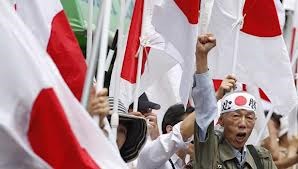
Here is my primary hypothesis: ‘Japanphobia’ – the over-the-top Korean descriptions of Japan as some unrepentant imperial revanchist – serves S Korean domestic nationalist needs. Specifically Japan functions as a useful ‘other’ for the identity construction problem of a half-country (SK) facing a competitor (NK) that openly proclaims itself the real Korean national state against an imposter (SK). Trapped in  who’s-more-nationalist-than-thou contest with NK, demonizing Japan is way for South Korea to compete with the North for Korean nationalist imagination. The RoK can posture as an instantiation of the minjok by criticizing Japan, which it can’t do by attacking NK, because NK says the same thing. Given that Koreans are more moved by the blood and cultural associations of the Chosun minjok than the dry, corrupt formalism of the RoK, the RoK desperately needs something to give itself some identity. Japan is that something. The RoK can’t connect convincingly with Koreans as the anti-DPRK, because too many South Koreans are ambiguous on NK. So the (post-dictatorial, democratic) RoK is the anti-Japan instead

NK routinely calls SK the ‘Yankee Colony’ to delegitimize it, but beating up on NK is not so easy in SK. A sizeable minority of S Koreans clandestinely sympathize with NK and agree that SK is too Americanized and not Korean enough. And NK cynically, relentlessly manipulates the evocative symbolism of Mt. Paektu to emotionally confuse the South. By contrast, Japan, the former colonialist, brings a convenient, black-and-white ‘moral clarity.’ It’s morally easy to condemn Japan. As a result, Dokdo gets fetishized (instead of now compromised Mt. Paekdu, the much more obvious geographic symbol of Korea) and Japan (not NK) becomes the state against which the RoK defines itself.

The full essay follows the jump. The framing is the recent trip by US Secretary of Defense Hagel to Tokyo and the furious grand strategy debate that touched off in Seoul. If the language seems a little ‘journalist-y,’ that’s because this was edited for readability by Newsweek.

Continue reading

4 Hypotheses on Why China Suddenly Declared this New Air Defense ID Zone

26071410If you haven’t yet seen the zone’s geography, here it is to the left, complete with its overlap with the Korean and Japanese zones. The most important conflict of course is over Senkaku, but Korea watchers will also note that the Ieodo submerged reef, which Korea claims, is also in the zone. Gotta wonder what the Chinese were thinking by giving Korea and Japan common cause over anything. Foolish.

Dan Drezner asked the question I think pretty much everyone is wondering now: did the PRC really expect the US, Japan, and SK to just accept this out of the blue? Obviously they’re not, and it’s hard to find anyone besides the Fox News of Asia Global Times who thinks they should.

I got called about this by my friend Sam Kim at Bloomberg. Needless to say, all my comments didn’t make into the story, so here is an edit of my email comments with Sam on why the Chinese seemed to just do this out of the blue.

SK/BB: Why are the Chinese doing this?

Me: “I see 4 possible explanations (each is roughly tied to a level of analysis in international relations theory):

1. Belligerence (anarchy, straight-up realism): the Chinese really are picking a fight with Japan. This is the worst possible reason. They may figure that the Hagel visit to Japan a couple months ago has made Japan into an open challenger to China now. And that is kinda true. America is hedging China, ducking and weaving, trying hard to avoid an open confrontation with it. But Japan is increasingly unabashed that is it balancing China directly as a threat. Abe is increasingly willing to call out China openly. So Asia is becoming a serious bipolar contest, and maybe the Chinese are thinking: ‘to hell with it; Abe’s playing tough; we have too also.’ Certainly my Japanese colleagues in this area increasingly talk about China this way.

Continue reading

My Latest Japanese Hate-Mail: Apparently I am a ‘S— Kimchi Propagandist’ Hah!

jpnThis is what happens when you write in the area of Japanese-Korean relations. Pretty much everybody hates you, because you don’t tell them what they want to hear.

The other day I posted how the Korean government leaned on me to alter the nomenclature in my writing – which, at this point, I wouldn’t do if only to oppose the highly inappropriate arm-twisting of academics by the state.

So obviously, I had to get some ken-kan from across the strait. Symmetric loathing of this blog is required!:

From: ——— [shitkimchi1@———.—]
Sent: Wednesday, November 13, 2013 6:19 PM
To: robertkelly260@hotmail.com
Subject: shameless and failed propagandist !

spread these videos, you failed idiot ! you kimchis are finished…

http://www.youtube.com/watch?v=5zPhBFEizzA

http://www.youtube.com/watch?v=JLyKJsbw4G4

Needless to say, I didn’t write back.

I can’t access those videos. They are blocked in Korea, but judging from the comments, it’s pretty rank stuff, back to creepy comfort women-denialism and all that.

If I had to guess, that email was a response to this post where I criticized the creepy nationalists in the corners of the Abe coalition denying the comfort women. I don’t think Abe is as bad as Koreans do; there’s been a lot of irresponsible exaggeration in the Korea media, which seems to be finally dawning on the far-too-alarmist Chosun Ilbo. But I do broadly agree with the moral case Korea makes against Japan on the comfort women and Yasukuni. For as much as I think Koreans flies off the handle way too much on Japan, they are generally right on these two core issues. So I guess that makes me a ken-kan failed idiot or something.

I’ve been called a lot of things over the years in the comments and in hate-emails – a Muslim, a Sinophile, a traitor (to America and/or Korea), every variation of idiot you can think, an orientalist, an American imperialist, a racist (but that’s so de rigeur at this point in this area that it’s meaningless now), a mouthpiece of the IMF/USFK/the American national security state, and so on. But I gotta give this guy credit – a ‘kimchi propagandist’ is a pretty creative. Gotta laugh out of that one.

A Little Korean Government Arm-Twisting of my Blog on the ‘Sea of Japan/East Sea’ Spat – How Unintentionally Flattering Actually

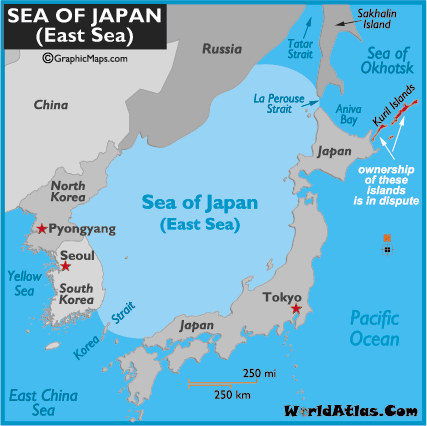
sea of japan


Did anyone else get this email below? Who wouldn’t be persuaded by some PR firm hack with no idea about East Asia giving suggestions she doesn’t understand by robo-email? Yuck. Maybe I’m reading it the wrong way – maybe getting yelled at by the Korean government about nomenclature means someone actually reads my blog. Hah!


“Dear Robert,

I came across your Asian Security Blog and read your post, “Why don’t Korea & Japan Align?”. Because of your interest in current affairs and issues in Asia, our communications firm is reaching out, on behalf of the Korean Consulate General, to inform you about an issue that you and your readers need to know about. 

The Republic of Korea is asking the US government and map publishers to use the name “East Sea” together with the “Sea of Japan” when referring to the body of water located between the Korean Peninsula and the Japanese Archipelago, over which both Japan and Korea have jurisdiction.  This body of water has been called East Sea for over 2,000 years – you can read the historical background here: http://bit.ly/EastSeaMaps

Why is this important and why should this issue matter to your readers?

* When dealing with matters of diplomacy, a name reflects how a country is viewed.

* Support for Korea’s position is gaining momentum among many internationally respected cartographers and the media. National Geographic, Rand McNally, The Economist, CNN, The Wall Street Journal, and Le Monde have all begun using both names concurrently.

* Other evidence of growing support for Korea’s position includes a vox populi petition to the White House with more than 100,000 signatures, and a vote at an international organization’s recent conference that denied Japan’s proposal to use only the Sea of Japan name.

Will you consider posting about this on your blog? Links to videos can be found at the bottom of this message, plus you can find additional information here: http://bit.ly/EastSea Please feel free to use any of this information found here in your postings.

Thanks, Robert! If you have any questions or need additional information, please feel free to contact me.

Best,

K—————-
Parter International/Tuvel Communications Team
on behalf of Korean Consulate General in New York
——@tuvel.com
—————————-
Video: The Name, “East Sea” – http://bit.ly/Lu5puJ
Video: The World Map is Changing: Korea’s East Sea – http://bit.ly/JJSYIF

——————

I find this ridiculous. Has anyone noticed how non-descriptive ‘East Sea’ is? At least the ‘Sea of Japan’ actually provides some basic geographic information (ie, a sea near Japan), while the ‘East Sea’ could be any sea east of anything else. To demand that the world use that term insists that the rest of the planet view bodies of water from a Korean perspective, which is a preposterous request. The name itself implies absolutely nothing. This is the US Government’s position also.

Should Israel demand the Arabian Sea be changed? Should Pakistan lobby the world to change the name of the Indian Ocean?  I have no idea if I have used the name ‘East Sea’ or not on my blog, but using an internationally accepted name is standard. I find this faux-controversy a fatiguing Koreanism, just like when Koreans insist on telling foreigners how old they are by their ‘Korean age.’ The ensuing confusion does little but gratify Korean insistence on uniqueness. Please, can we just stick to international standards and avoid self-flattering particularisms no one else cares about? Finally, it’s worth noting that there’s also the ‘Korea Strait.’ Should that be re-named the South Strait or something?Because this whole conversation will inevitably provoke a Japanese move on that name in response. Can’t we just drop this?

My Essay for Newsweek Korea on the Current Korean Strategy Debate in the Media: K Caught b/t the US and China

newsweek-1028_페이지_1 (3)This is a lengthy piece I just wrote for this week’s edition of Newsweek Korea. Here is the link for the Korean version; below is the English translation. The Korean version is unfortunately gated after page 1, so if you want the whole thing in Korean, email for the PDF. That is the edition’s cover to the left.
The short, IR theory version is that: a) S  Korea is a middle power that risks ‘overplaying its hand’ against Japan, as a think-tanker friend put it, because of the ‘moral hazard’ facilitated by the American alliance (as Katzenstein noted, Japan is the US anchor state in Asia, and Koreans can’t change that no matter how much they resent that special relationship); b) the Americans believe in the democratic peace and simply don’t accept that Japan is some kind of proto-fascist state (this is a real breakpoint with the Americans); and c) Korean geography basically traps it in a Waltian ‘balance of threat’ quandary: even though it is small, its proximity means it will get pulled into the Sino-US/Japan stand-off whether it likes it or not. The only possible way out I can think of for Korea is unilateral nuclearization (yikes). Also, my continuing skepticism of the pivot pops up. I still don’t think Americans actually care enough about Asia to really get pulled into a major competition with China. Here’s that essay:

Continue reading

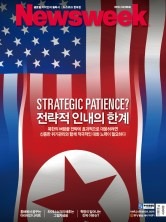
My ‘Newsweek Korea’ Cover Story: A Defense of Obama’s ‘Strategic Patience’ on North Korea

Newsweek Korea cover 2

Newsweek Korea asked me to participate in a cover story debate on Obama’s strategic patience. A friend of mine wrote against it; I wrote in defense. Here is the Korean language text at the NWK website. Below is my original English language version.

In brief I argue that NK is so hard to pin down, that big strategies never work with it, provoke North Korea into lashing out, and raise impossible expectations on democratic decision-makers. So Obama is acting responsibly, IMO, by not promising more than he can deliver and by not giving a reason for NK to act out.

After 20+ years of negotiating on more or less the same topics, it should be pretty obvious that NK is insistent on not being placed in some box by outsiders. It will not be treated as some technocratic ‘problem’ to be ‘solved’ by a conference of experts, like global warming or something. And it will lash out if necessary to remind us of that. Hence, I argue for ‘muddling through,’ and that we should stop expecting our policy-makers to have some great NK strategy that will fix the issue. That’s not gonna happen. We all know that. We just have to wait for China to stop paying NK’s bills. Until then, all the sweeping declarations (‘agreed framework,’ ‘sunshine’,’ the ‘axis of evil,’ the current big idea du jour of ‘trust’) are rather pointless and raise impossible expectations among voters in SK, the US, and Japan. Let’s be a little more honest about what we can expect from North Korea.

Here we go:

Continue reading

Abenomics is Not more Dangerous than the North Korean Missile Program

okRegular readers know that I write now-and-again for the Diplomat web-magazine. This post is a re-print of my June column. Abenomics is still dominating Korean business news, and I continue to be amazed at how few people want to admit that Japan’s revival is really good for democracy in Asia and the prevention of Chinese regional primacy.

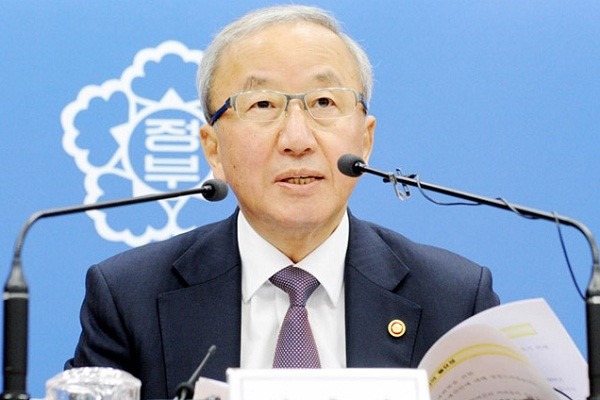
As I discuss below, no less than the SK finance minister (pic) actually said Abenomics is more dangerous to SK than the NK missile program. Wait…what??? Did you know the mic was on? Does anyone genuinely believe that the worst totalitarianism in history gets a pass when the Bank of Japan prints a lot of cheap money? Come on. Are Korean officials so deeply bought by the chaebol that they actually have to say stuff like that? Honestly if Minister Hyun really believes that (I doubt that though, see below), he should probably resign. This is just a travesty, hugely embarrassing – so if this post reads a little rant-ish, that’s why.

Continue reading

My ‘JoongAng Daily’ Op-Ed: Don’t Fear Abenomics, Korea

kuroda

A few weeks ago in the JoongAng Daily, I co-authored the following editorial. (My co-author is one of my finest students, who can be found here on Twitter.) The temperature is rising in Korea on Abenomics. The government is coming out strongly against it, but I still think the basic arguments we present below are undamaged.

In brief, Abenomics is important because Japan is the world’s third largest economy and therefore systemically (i.e., globally) important (Korea is not; it’s too small). So Japan’s reflation is about a lot more than just Japan; it impacts the region and the globe. Also, the Korean won is ridiculously undervalued and the Bank of Korea has itself gimmicked the won exchange rate a lot in the past, so it’s not exactly fair for Korea (or China, who is even worse) to complain. Finally, in the medium-term, a functioning Japan is far more in Korea’s interest than Korea’s nationalist japanophia will allow anyone here to admit. That is a shame. I’ve argued this a lot, but no one listens.

So bring on the K-hate-mail, but please do recall that I have already rejected Abe the nationalist. Koreans are absolutely right about the comfort-women and Yasukuni. But Abenomics is not about history; it is a last-ditch, throw-everything-including-the-kitchen-sink effort to get Japan on its feet again so that it can prevent Chinese primacy in Asia. Keep your eye on the big picture of South Korea’s interest, and a few lost sales of Samsung TVs to Canadians pale in comparison.

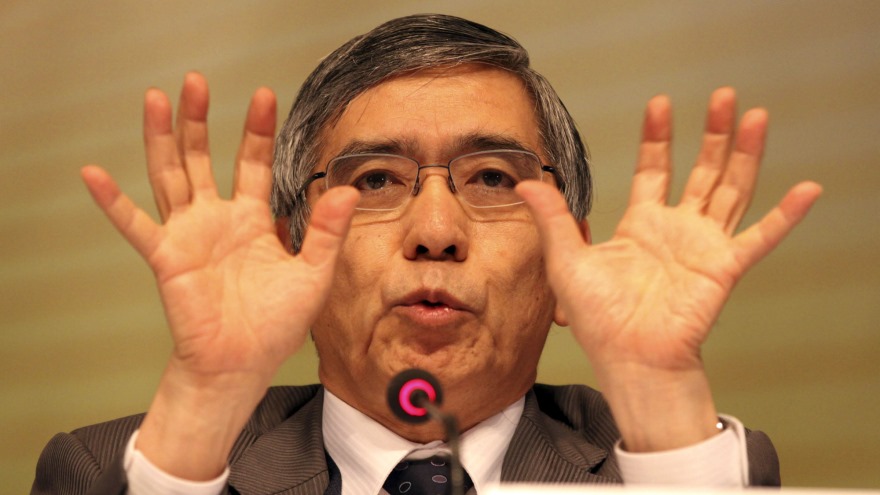
Just to avoid referencing Abe again – he’s become such a lightning rod in Korea – the picture is Hiruhiko Kuroda, the (awesome) governor of the Japanese central bank. (Someone form the Bank of Japan really ought to be put in charge of the IMF one day soon.) I’d like to think Kuroda’s hand reference in the pic means he wants to dectuple the Japanese money supply. Hah! – ‘Just wait a year, PM Abe, and I will chop down every tree in Japan and print so much cheap yen, that we’ll wallpaper our houses with it!’ Think of Kuroda as the flip side of Paul Volcker. If Japan’s economy weren’t such a mess, it’d actually be kinda funny. But honestly, let’s all – Koreans included – hope Abenomics works.

Continue reading

My Joint ‘Newsweek Korea/Japan’ Story: Do US Alliances Create Moral Hazard in Asian Conflicts?

Newsweek Korea coverI am pleased to say that the following essay was printed simultaneously in this week’s Korean and Japanese editions of Newsweek. It think it is critical for both sides to think about the issues I present, and it is pitched to both communities as American allies, no matter how sharp their disagreements.

In brief, I argue that – contrary to the conventional wisdom that US alliances in Asia tamp down conflict by re-assuring everyone that they need not arms-race against each other – US alliances may in fact be freezing those conflicts in place by reducing the incentives of all parties to solve them. The US reassures Asian states not just against each other, but also against their own reckless nationalist rhetoric and racially toxic historiographies. I think the Liancourt Rocks fight is a particularly good example of this ‘moral hazard’ mechanic, as is the recent comment by no less than the South Korean foreign minister (!) that Abenomics’ threat to Korean export competitiveness is a greater danger to SK than North Korea’s nuclear program. That kind of preposterous, reckless myopia can only be explained by taking the US security umbrella for granted. (Or how about SK officers’ golfing during last month’s nuclear crisis?)

I realize the argument will be somewhat controversial, even to Americans given that we are ‘pivoting’ to Asia, but I think it needs to be said and genuinely researched. As with my other Newsweek pieces, there are no hyperlinks because this was intended for print:

Continue reading

My ‘Newsweek Japan’ Story on Korea’s Regional Foreign Policy: Being an Encircled Middle Power Sucks

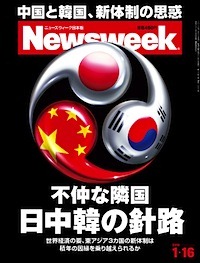
Newsweek 3rd coverNewsweek Japan asked me to contribute an essay on Korean foreign policy for a special issue on current Northeast Asian tension. I also wrote the introductory essay for this special issue. There is one essay each on Japan, China, and Korea; mine is the Korean one. So this is a nice laymen’s review without too much fatiguing jargon. This was originally published in January, so this translation is late, but the points still hold.

In brief I argue that Korea’s foreign policy is driven by its geography. Korea is a middle power surrounded by three great powers, plus the most orwellian state in history. That position really, really sucks. The US alliance helps buttress Korea sovereignty in that tight neighborhood, but China’s rise is unbalancing everything, especially calculations for unification. Once again, there are no hyperlinks, because it was intended for print. Here we go:

“On December 19, Korea elected a new president, Park Geun-Hye. Park comes from the conservative New Frontier Party. The current president, Lee Myung-Bak, is also a conservative. Park will be inaugurated in late February. Her campaign presented her as more ‘dovish’ on foreign policy than Lee, but she represents greater continuity than her opponent, particularly regarding North Korea.

Korea’s foreign policy is heavily-driven by its geography. It is an encircled middle power that has frequently struggled to defend its autonomy against its much larger neighbors. And since World War II, it has faced the most orwellian country in history in a harsh stand-off that dominates Korean foreign policy. An opening of North Korea, leading to eventual reunification, is the central policy issue of every Korean administration. Beyond that, Korea’s central relations are with the United States, China, and Japan. All three structure Korea’s neighborhood and will significantly influence unification.

Continue reading