Communist Kitsch Update: North Korean Traffic Cops Gone Wild!


There is something genuinely surreal about communist kitsch. In the midst of the grey, dingy, low-growth, high-corruption, fearful yet boozy commie sub-cultures stretching from East Berlin to Pyongyang, weird, irrelevant, yet distinctly socialist-bloc cultural images tied people together. Stephen Kotkin nailed it by calling this ‘trashcanistan.’ Think of commie-kitsch as the Red version of MTV’s ‘I Love the 80s’: we all know its god-awful and that it embodies the fall of Western civilization; yet we love the trashy, wannabe celebrity commentary and the references to long-lost 80s junk we nonetheless remember, like jerry-curl or Whitesnake; we can all use it as a reference point with each other, if only for inanity; and we could easily pass a hangover afternoon watching it as a guilty pleasure.

So transpose that moronic intellectual frame onto the grinding, burned-out, alcohol-sodden, polluted, ‘they-pretend-to-pay-us-and-we-pretend-to-work’ world of 20th century communism. [You didn’t know there were Soviet proverbs? You’re not even sure you know what an ‘east-bloc proverb’ is? 🙂 Try here.] What would be the trashy mediocrity, nonetheless widely shared and still socially tying post-communist populations together?

The  best known treatment of communist kitcsh is the movie Goodbye Lenin. In East Germany, former GDR citizens fought to retain their pedestrian streetlights, because the red and green lights were shaped as cute little people (Ampelmaenner), not just the colored blob most of see. Don’t believe me? There is an internet campaign to save the Ampelmaenner, as ridiculous as that sounds. (Don’t these people have to go to work?) You can even learn why the Ampelmann is a “cult figure.” Hah!

In the ‘red-kitsch-yet-to-be’ category has to be the scary as hell, yet… disturbingly sexy female traffic police of North Korea. Again, you think I am lying? Try this website set-up by westerners (men presumably) just to celebrate these stalinist sex symbols (yes, in trashcanistan, ‘stalinist sex symbol’ is a meaningful concept). Among other surreal commie kitsch wonders is the monthly,“Pyongyang Traffic Girl Of The Month” Contest (on the homepage), the forum moderated by “Jong-Il’s Hair Apparent,” and a picture gallery in which you can admire the umbrellas the cops use when its very sunny. Hah! You can’t make this stuff up its so loopy…

Watch the video at the top of this post, and consider of ALL of the following contradictions in just 80 seconds (h/t to Tom for catching this genuinely surreal vid):

1. How can two dumb American guys pull off wandering around Pyongyang alone?

2. Where is their minder, and how did they possibly get a video-camera in?

3. Why are they so stupid as to film a cop, without permission, in the world’s worst police state?

4. Wth is that other dude in Mini-Cooper?

5. How did HE get in alone, with a video camera, to film a cop also? Hey, wait a minute! I thought NK was the world’s worst police state? How do these guys pull this off?!

6. How do you get a Mini in North Korea?

7. How do you ‘pimp-out’ a Mini in North Korea? ‘Fast and Furious 5: Pyongyang Milk Run’? Haha!

8. Isn’t that car exactly the kind of thing the predatory DPRK elite would confiscate?

9. Is the guy in the Mini filming the cop or the dumb Americans? I am not sure which is scarier…

10. Why doesn’t the guy in the Mini freak out when the cop gets angry? Good lord, who has the b—- to provoke the North Korean police?!

Honestly, someone needs to write a master’s thesis on red kitsch. It is clearly a shared social context the provides meaning in its own way, and the laugh potential is awesome, especially for regular, all-too-drab social science.

If you need more vids of North Korean terminatrixes gone wild, try here.

The Big Annual US-Korean Military Exercise this Month

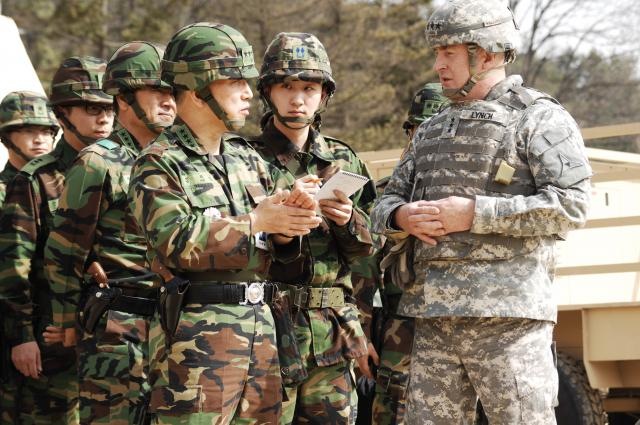
size0-army_mil-33739-2009-03-27-160320

This month is the big annual joint exercise between US Forces in Korea and the Korean military, the army particularly. I talked about this on the radio this week; if you are curious for an introduction to US-Korean military cooperation, check the transcript below.

These drills have shrunk dramatically over the years, mostly in an attempt to bring around the North. Also, as Korea has gotten wealthier, environmental restrictions have made it increasingly difficult and politically unpopular to put a 100,000 people and tanks into the countryside. West Germans used to complain about this too in the 70s and 80s. Try to imagine what, say, 100 M1-A1 tanks would do to a river valley. They weigh 65 tons each! So increasingly these exercises are actually computerized wargame scenarios.

Anyway, these exercise are less and less about maneuver warfare (the old story for the North Korea army), and more and more about what to do if North Korea implodes (or explodes, or whatever – no one really knows). They big concern for the US is how to prevent NK WMD from either being launched or smuggled out. For the South, it is how to prevent NK civil war and army mutinies, to restore civil order, feed the NK population, and capture the party elite before they spring for China. And of course, lurking in the background, undiscussed by everyone and never properly accounted for in the wargaming, is what happens if the Chinese army, the PLA, pushes south and collides with us coming north. Yikes…

____________________________________________________________________________

TRANSCRIPT – DR. ROBERT E. KELLY, PUSAN NATIONAL UNIVERSITY

BUSAN E-FM: “MORNING WAVE”

MONDAYS, 8 AM

March 15, 2010


Petra:

Professor Kelly comes to us each Monday to talk about big issues in Korean foreign affairs. And this week we are going to discuss the big US-Korea military exercises last week. Hi, Dr. Kelly.

REK:

Hi, Petra. Thanks for having me

Petra:


Thanks for being with us again today.

REK:


It’s my pleasure.

Petra:

So last week there were these big Korea-US military drills. It seems like these are so common, we don’t pay attention to them much anymore

REK:

That’s right. They are pretty regularized now. They get a little bit in the news each year, but not much more. Politically the most interesting thing for Korea is not the US participation actually, but how North Korea responds each year.

Petra:

Don’t they usually say this is practice for an invasion?

REK:

That’s right. They always denounce it as imperialism, but the calm or anger of their denunciation tells us a little about what is going on in Pyongyang.

Petra:


And this year they didn’t seem to say much.


REK:

That’s right. In fact, after last year, when the North was very belligerent on just about everything, their recent behavior is downright gentle by historical standards.

Petra:

So what purpose do these drills serve?

REK:

Well, they are essentially practice. The first exercise is called Key Resolve; the second is Foal Eagle. That title is to indicate the resolve of the US to fight for Korea. This a computerized wargame, in which various scenarios are ‘played.’ These scenarios are defensive in nature, although the increasingly focus on the possibility of North Korean collapse. That is why the North Koreans worry. Should the North’s government implode, the US and South Korean militaries need plans on the shelf about how to restore order, disarm the North Korean military, and prevent nuclear weapons from either being launched or slipped out of the country. These are the big areas of interest now.

Petra:

What about an Northern invasion of the South?

REK:

Yes, that is still drilled too, but most experts, both Korea and American, consider that extremely unlikely. In fact, I have never read any war scenarios at all for Korea that realistically predict a Northern victory today. As we all know, the North’s economy is a shambles, its people are under-fed, and its military equipment is increasingly obsolete. In fact, South Korea could probably win a war on its own without the US at this point. This is one of the big reasons Kim Jeong-Il sought nuclear weapons. The inter-Korean race – military, political, economic – is over and has been for 15 to 20 years now. And North Korea has lost, very decisively. Nukes are just a desperation tactic.

Petra:

So do we even need the exercises?

REK:

That’s actually a good question at this point. I think the answer is still yes, but North Korea is in so much trouble now that the US and South do not exercise nearly as much as the used to. There used to be four really large exercise each now. Now it’s more like two, and they are smaller. As you might imagine, it costs a lot of money to run these simulations. Almost 20,000 Americans, beyond the US Forces in Korea here already, are flown for several weeks. Tens of thousands of Koreans are mobilized too. That’s a lot of money, and increasingly, South Korea’s environmental laws make it difficult for huge numbers of soldiers to tramp all over the countryside. It’s quite a big show, although its size has declined in the last decade or so.

Petra:

I heard that the US is going to give up the command of the Korean military sometime soon. What’s that all about?

REK:

Yes, that’s true. Right now, the US military has legal authority over the South Korea military in wartime. The Korean military is integrated with the US military into what we call the Combined Forces Command, or CFC.

Petra:

But that’s going to be abolished or something, right?

REK:

It is supposed to be, in 2012. Former President Roh pushed for this. He sold this to the Korean public as a restoration of Korean sovereignty. Seoul received peacetime control of its military in 1994. Before then actually – many Koreans don’t know this – the US government was legally the permanent, commander in chief of whole Korean military. For obvious reasons of course, that looked like US colonialism, and Kim Il Sung used to say that all the time. So after the Cold War, and the withdrawal of Soviet and Chinese support for North Korea, peacetime authority was returned to Seoul. As said earlier, by the mid-90s, South Korea had essentially won the inter-Korean race. North Korea became increasingly isolated as its former communist patrons turned away. So the Northern threat diminished dramatically. This gradual demilitarization of domestic life also helped South Korea democratize more rapidly.

Petra:

But CFC retained wartime authority. I have seen that discussed in the media a little.

REK:

That is correct. If there were a war, the US would re-take control of the Korean military. From a Korean perspective, this sacrifice was worth it. By giving the Americans command of Koreans’ own military, this helped keep the Americans here and committed to Korea’s defense. But again, it looked somewhat imperialistic – a foreign power controlling your own army – and the South Korean left had complained for years about this.

Petra:

So President Roh negotiated an end to it…

REK:

That’s right. Roh was probably the most anti-American president Korea has ever had, and George Bush was quite unpopular here. So Roh marketed the abolition of CFC as a big deal. CFC is supposed to disappear in April 2012, but now Koreans are starting to get cold feet.

Petra:

Why?

REK:

Under Presidents Kim and Roh, relations with North Korea – the sunshine policy – seemed to be improving. CFC looked like a relic of the Cold War. But sunshine never really came together, and the North’s nuclear program has grown and grown. This helped put a conservative, Lee Myung-Bak in the Blue House, and the Lee people a lot more nervous about ending CFC.

Petra:

What do you think?

REK:

Well, it does make life easier for the Americans. It makes it easier for the Americans, if they want, to say they are not as tightly bound to Korean defense as they were. If I were a Korean I think I would be nervous. I think the political pleasure of ‘total sovereignty’ does not outweigh the military benefit of tying the Americans to Korea as tightly as possible.

Do Americans Know Anything about Korea beyond the North? Not so Much…

Greetings Earthlings

On the radio this week, I spoke about Americans’ image and sense of Korea; the transcript is below. This is a big deal here. Korea has lately gotten quite excited about ‘public diplomacy,’ brand promotion, and soft power. You may recall that the Bush administration got big into this for a few years after the Iraq War and Guantanamo wrecked the world’s opinion of the US.

National ‘branding’ has always struck me as pretty ridiculous. A rose is a rose is a rose, and no cute advertising campaign is suddenly going to make people think differently about you. No amount cheesy ‘peace ambassadors’ or ‘socialist fraternity’ internationales conned people into believing the USSR was any less dangerous. In the same way, Bush hack Karen Hughes’ surreal photo-ops with Arab children could do nothing to change the US image in the Middle East that was being set everyday by the carnage in Iraq. The point being, you can’t do something dumb, have it blowback in your face, and then try to advertise or ‘rhetoric’ your way out of it. If the US wants to change its image with Arabs, killing fewer of them is the most obvious thing to do, not sending some flunky to smile on al Jazeera.

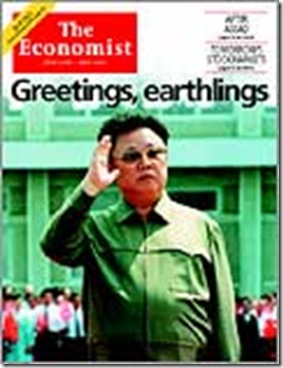
This skepticism applies to Korea’s efforts too. The overwhelming problem for Korea’s image is the North. This simply goes without saying. Newsweek put Kim Jeong Il in its ‘global elite,’ and I dare say most westerners couldn’t name another major Korean figure, political or otherwise. When Gallup recently asked Americans to name their favorite/least favorite countries, North, but not South, Korea was on the list. Pity South Korea. We can’t even remember they’re an ally. (That’s actually pretty pathetic. I’m fairly embarrassed. Even worse: only 41% of Americans think the US should fight to defend South Korea. On how the US is slipping out of the SK defense treaty, read this.)

This annoys Koreans to no end. I hear about it all the time from friends and students. So here are my quick top guesses on why Korea is so ‘foreign’ to Americans and Westerners.

1. It is small. When westerners think of East Asia, that means China or Japan. Korea is just the little bit in between. This could change if unification happens, if unification is successful, if Japan continues its slide. But for the foreseeable future, Koreans should think of  Austria – quiet, small, rich – as their model, not Germany, China, or Japan – rich, aggressive, demanding.

2. Korean food is not distinct enough from other East Asian fare for the median westerner to know the difference. Now that I live here, I know the difference, but, honestly, it is a learned art. For the average westerner looking for lunch, accustomed to eating his national cuisine mostly, Korean food is just another ethnic take-out choice.

3. The language is really hard. The US Defense Department’s Defense Language Institute ranks Korean in its hardest languages to learn category, along with Chinese, Japanese, and Arabic. By contrast, Spanish is a snap for anglophones.  This is an absolutely crucial barrier. It makes the life of all the foreigners I know in Korea much, much harder. (See p 8 here for the complete DLI ranking of language difficulty for anglophones; the State Department’s Foreign Service Institute estimates that a mediocre, ‘professional working proficiency’ in Korean requires 4000 hours of study!! Spanish is ranked at just 1100 hours.)

4. The Confucian-Buddhist tradition. The West’s religious traditions are Christian, Jewish, with some Islam thrown-in. These monotheistic sensibilities are distant from  Korea’s social norms (ancestor veneration, e.g.) and the more ‘metaphysical’ religions of Asia.

_______________________________________________________________________________

TRANSCRIPT – DR. ROBERT E. KELLY, PUSAN NATIONAL UNIVERSITY

BUSAN E-FM: “MORNING WAVE”

MONDAYS, 8 AM

March 8, 2010

Petra:

Hello everyone and welcome to …..

Right now we have our weekly foreign affairs expert for some commentary on Korea and Northeast Asia. Dr. Robert Kelly teaches in the Political Science and Diplomacy Department at Pusan National University. He’s been living in Korea about 18 months now, and his area of expertise is the international relations of East Asia. If you wish to contact him, please see his website at http://www.AsianSecurityBlog.WordPress.com.

Professor Kelly comes to us each Monday to talk about big issues in Korean foreign affairs. And this week we are going to discuss US relations with South Korea. Hi, Dr. Kelly.

REK:

Hi, Petra. Thanks for having me

Petra:

Thanks for being with us again today.

REK:

It’s my pleasure.

Petra:

It seems that several new polls came out about Americans’ image of Korea. What can you tell us?

REK:

About three weeks ago, the biggest US polling service, Gallup, released a survey of American attitudes towards foreign countries. And then last week the Chosun Ilbo and Gallup Korea ran a survey of ten wealthy countries’ attitudes toward each other. Unfortunately, Korea did not fare too well in either survey.

Petra:

Can you tell us some of the details, and why Korea is viewed poorly?

REK:

Well, I think poorly is not the right word. Instead I would say that Korea has two big ‘image’ problems. The first is North Korea. The Democratic People’s Republic of Korea simply dominates the world’s sense of Korea. I know this disappoints South Koreans very much. South Koreans would very much like Yuna Kim or Samsung televisions to be their representatives to the world, but this is just not the case. Kim Jeong Il is easily the best known Korean in the world.

Second, Korea is quite small, and to western populations, geographically and culturally quite distant. I discuss this often with my students. Koreans seem unhappy that there is a strong asymmetry between Koreans’ interest in the US, and American interest in Korea. Koreans, for example, have great interest in English, like to attend American universities, eat US fast food, and watch so many American movies that the Korean film industry requires tariff protection.

Petra:

But Americans don’t really know anything about Korea, do they? Hah!

REK:

Beyond the Korean immigrant community of course, no, not really. The Gallup survey, for example, did not even list South Korea as a choice for Americans to select as favorable or unfavorable. So traditional US allies, such as Germany, Canada, Britain, France, Japan, etc. were listed, and all received high scores of favorability. That is, Americans said they liked these countries. But South Korea was not listed at all. However North Korea was, and the DPRK received an 80% unfavorable rating. The only country with a worse number was Iran. So, no, South Korea is just not really on the radar for most Americans; Korea means North Korea to most Americans.

Petra:

What about the Chosun Ilbo study?

REK:

It too found that South Korea had only a 37% favorability rating.

Petra:

That seems pretty low.

REK:

Yeah, it is. I agree. Actually, I was surprised that the Chosun figure was so low. I am quite aware of how little Americans know of Korea, but the Chosun poll included other Eurasian countries that I thought would have more exposure to Korea, including France, Russia, Italy and China.

Petra:

So what does this mean?

REK:

Well, honestly, I don’t think it means all that much. It does not mean that Korea is any less free, wealthy, green, socially happy, secure, democratic, etc. These sorts of polls are usually like high school popularity contests. They make you feel good or bad, but they don’t actually change that much. However, Koreans have stressed Korea’s ‘global image’ a lot under this administration. Notions like ‘branding’ Korea or Korean ‘soft power’ mean a lot to South Koreans, so the government has embarked, eg, on a big push of Korean food in the West.

Petra:

Right. I read about. The First Lady is pushing Korean food. So these polls are disappointing, but don’t mean too much. Ok.

REK:

Generally, I think so. Koreans worry a great deal, unnecessarily in my opinion, about Korea’s image. But, we all know that clever TV campaigns or cute food advertisement aren’t really the driver of such things. Korea’s image in the world will be built on its political values, not by things like how many LEDs get exported to the EU. Look at India. It is quite poor, yet its long-standing commitment to democracy and freedom, and the pacifist, Gandhian heritage in its foreign relations has won it many friends for decades. And Korea will enjoy this sort of reputation if it continues to build an open, globalized, free democracy.

Petra:

But I think Koreans want more than that. They wants others to see and enjoy their cultural products too – like hanbok or kimchi.

REK:

Yeah I think that’s right, but I just don’t know how well that stuff translates into the West. Asian food is available in the West of course, but quite honestly, I never really knew or cared to know the difference between Chinese, Korean or Japanese food when I lived in the US. I didn’t know many people who could properly eat with chopsticks. And I certainly never met anyone who could speak Korean. There are of course pockets of interest in the biggest cities, but outside the Asian immigrant community, I dare say, Korea just doesn’t have that sort of profile.

Petra:

Why not? I think Koreans really would like Westerners to be more aware of it, as distinct from China or Japan.

REK:

I think you really put your finger on it right there. Korea is small; Japan is big, and China is simply enormous. Less than 10% of Americans have passports; we don’t travel that much. And the US has ethnic populations from almost every country on the planet. In the huge melting pot of American life, Korea is just one far-off place, with a very difficult language and religious traditions very different from those of America. By contrast, when Hispanics immigrants come to the US, they already share some cultural territory: the alphabets are the same, and Spanish is vastly easier for English speakers to learn; Mexican food has already made huge inroads in the US; most Hispanics are Catholics. But the cultural gulf with Korea is much wider – language, Confucianism-Buddhism, food, chopsticks, traditional dress and music. Things like that.

Petra:

So China dominates everything?

REK:

That is an exaggeration of course, but kind of. To the extent that Westerners follow events in Asia, China is the behemoth that dominates discussion, and for Americans, it is the alliance with Japan that is the lynchpin of the US presence in Asia. This is important. It is the alliance with Japan that draws most US attention on security in Asia. Indeed, the one truly important statistic for Koreans is that only 41% of Americans think the US should deploy combat troops to South Korea to defend it. That I think it is genuinely worrisome.

Petra:

Thank you professor for coming again this week.

Why Does North Korea Ritualistically Provoke South Korea?

_47192629_n_s_korea_nl_226

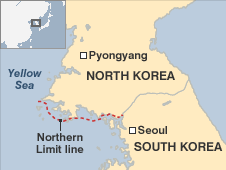
In the last few weeks, North Korea once again threw out a wild, unpredicted military tantrum. Now it has decided to start shelling the weakly agreed-upon sea border, the Northern Line Limit, in the Yellow Sea. For the details, try here or read my radio transcript below.

Less interesting than the details of the latest provocation – these things are terribly formulaic, to the point of ritual – is the IR theory question why. As I note in the transcript below, these gimmicks never work. In fact they usually backfire. Instead of frightening the SK citizenry or elites, these incidents usually stiffen the spine, because they look like bullying, and fairly crude at that. Further, NK truculence always serves to re-gel any possible rifts between SK, the US and Japan. In the same way that the Soviet invasion of Afghanistan reenergized NATO after the ‘alliance politics’ of the 70s, NK provocations routinely evince thicker and more explicit commitments by the US to defend SK.

Assuming the North Koreans aren’t stupid, the obvious question is why? I can think of two reasons, with a hat-tip on number 2 to Bryan Myers of Dongseo University in Busan, with whom I have discussed this at length. As always, this is a good IR master’s thesis-in-waiting.

1. Kim Jong Il is not fully in control of the NK military (the KPA) anymore.

This would not be a great surprise to anyone. Dictatorships are almost always heavily reliant on the military, and North Korea more than most. Indeed, it is hard to think of many truly civilian dictatorships. Most communist dictatorships slide into militarism, and even the Islamic semi-dictatorships of the Middle East usually have deep roots in the military. In the case of NK, this is even more extreme. When Kim the elder passed, so did communist party/civilian rule. Kim the younger immediately began placating the military as a means to neutralize the greatest threat to his shaky authority. In the mid-90s, NK declared a ‘military-first’ policy, whereby the military would have first claim on national resources. In the current NK constitution, Kim Jong Il rules as the chairman of the National Defense Committee, not as the civilian president. So extreme has this militarization become, that Bryan calls the DPRK a ‘national defense state,’ not a stalinist one.

So in such an environment, it is not hard to imagine the KPA high brass insisting on regular displays of their cool toys as means of justifying their insanely large budget, and otherwise trying to impress everyone, Kim Jong Il included, of the KPA’s inordinate influence over peninsular affairs.


2. NK faces a permanent legitimacy crisis which must be regularly ‘abated’ through external confrontation.

Clandestine traffic from China over the Yalu river has introduced far greater awareness of the wider world to North Koreans over the last 15 years. It was the non-response of the regime to the late 90s famine that drove the  Chinese connection originally, and now cell phones and VHS have illicitly gotten in. Indeed, the regime has lost so much of its information control, that is longer tries to claim that it is wealthier than SK. So if East Germany collapsed, if it gave up after 45 years of trying (and failing), why does NK hang on? How does NK legitimize itself when a prosperous, happier Korean national analogue is right next door?

By claiming that SK is an American colony and/or subject to ongoing Japanese control. Hence Myer’s description of NK as a ‘national defense state.’ It is defending the nation, where SK has sold out. To maintain this narrative however, regular tensions with the South, the US and Japan are necessary. Hence outbursts like last November’s North-South naval clash in the Yellow Sea, and now this artillery barrage.

The most gloomy part of this logic is that it predicts that NK will never surrender its nukes, and that it will continue to regularly, indeed, ritualistically, provoke SK.

_________________________________________________________________

TRANSCRIPT – DR. ROBERT E. KELLY, PUSAN NATIONAL UNIVERSITY

BUSAN E-FM: “MORNING WAVE”

MONDAYS, 8 AM

February 8, 2010

Professor Kelly comes to us each Monday to talk about big issues in Korean foreign affairs. And this week we are going to discuss North Korea’s recent artillery firing into the East Sea. Hi, Dr. Kelly.

REK:

Hi, Petra. Thanks for having me

Petra:

Thanks for being with us again today.

REK:

It’s my pleasure.

Petra:

So in the last few weeks, the North Korean military fired artillery shells into the East Sea. Why? What purpose does this serve?

REK:

Well, as usual, the North Korea government gave us no clear reasoning about this. The stated purpose was practice firing, but no one believes that. More likely, is saber rattling in the current North-South negotiations over pay at the Kaesong industrial park. If the artillery fire scares the South somewhat, perhaps it will make a better deal with the North over the salaries at Kaesong.

Petra:

That seems like a fairly crude negotiating stratagem.

REK:

Yes, it is. This sort of military posturing is a commonplace from North Korea. Far more interesting is that it does not really work, yet the North keeps doing it.

Petra:

Why doesn’t it work?

REK:

Well, the South Korean government and citizenry are simply inured to this now. For decades the North has acted like this to extract better deals from the South, but the South has never really given in to this. Southerners are just use to this by now, and they ignore it. Indeed, one can read the North’s nuclear program the same way. It is an elaborate and expensive tool for North Korea to club South Korea, the US and Japan into giving more aid.

Petra:

But this doesn’t work well…

REK:

No not really. The response of South Korea, and by extension Japan and the US, to these sorts of provocations is to stand firm and in fact to stand more closely together. In this way, it is rather foolish. Every time NK tries to bully South Korea and its allies, it backfires. It causes the opposite response. So Robert Gates, the US Secretary of Defense, pledged last year, the most public commitment ever that the US will use nuclear force to protect South Korea, because last year, the North’s rhetoric and behavior was so aggressive.

Remember too, that when South Korea has reached out to North Korea, it has been because of internal change in South Korea; that is, South Koreans the voted for left-leaning Presidents Kim and Roh, and they tried the sunshine policy. If North Korea really wants South Korea to help, you would think they would want to facilitate the election of more such presidents. But events like last week’s artillery barrage serve the opposite. They justify the hawkish, conservative vision of North Korea of the current Lee administration.

Petra:

So why do they do it then?

REK:

Good question. I have two educated guesses on this. First, the civilian government in North Korea can’t fully control the military. Second, these sorts of provocations of the South serve internal North Korean political purposes.

Petra:

Can you explain that a little more?

REK:

Sure. In the last 15 years, the North Korean military has increasingly dominated the government as a whole. The declaration of the ‘military first’ song-gun policy was the end of communism or Stalinism in North Korea, and the most obvious marker that North Korea was evolving into a military dictatorship. Recall that Kim Jong-Il’s title in the North Korean constitution is the Chairman of the National Defense Committee, not president. Kim Il-Sung is the eternal president of North Korea. Kim the younger rules from a military post. So it seems possible that the military was free-lancing last week with these artillery tests. Making trouble like this in inter-Korean relations is a good way for the military to make known its authority over North Korea.

Petra:

Ok. You also suggested there might be a domestic political purpose.

REK:

Yes. The regime suffers from a permanent legitimacy crisis. South Korea is wealthier, healthier, happier, etc. Most North Koreans have learned this in the last 20 years from information filtering in from China. The regime can no longer hide how far behind it is in the inter-Korean race. So an obvious question for any North Korean, is why North Korea still exists, long after the Soviet Union and East Germany are gone.

The regime’s answer to that problem is to manufacture a regular series of external crises. So long as the US, South Korea, and Japan are implacable foes intent on destroying North Korea, then the government can justify to its own people why it persists. This is why things like the artillery shelling last week or the naval skirmish last year in the same area, happen. The North cannot ‘win’ these sorts of stand-offs, but they do serve a domestic political need.

Petra:

So what is it about the East Sea that creates these sorts of problems so much anyway?

REK:

Good question. The East Sea, or in its international title, the Yellow Sea, is a good place for such North Korean shows, because the border there is so imprecise. After the Korean war, there was no formal border commission, on either land or sea. Remember that the war didn’t really cease, it just stopped temporarily. As we all know, this temporary border on land hardened into the demilitarized zone. But on land that was easy insofar as one could easily see where the battle lines between North and South were.

Petra:

But on the seas, no one really knew.

REK:

That’s right. It was just wide open. So the US and South Korea simply declared a de facto border that we call the Northern Limit Line. And in fact, it is drawn awfully close to North Korean islands. When we drew the line, it basically cut north immediately from land. It does, arguably, discriminate against North Korea. One can understand why the North rejects. But it also reflected the balance of seapower in the area in 1953. The US navy controlled the Yellow Sea, so the NLL also correctly reflects the geopolitical realities from the time. It is also worth mentioning that there is a annual crab harvest in the area. So every year, fishing boats from either side wander over the line. All in all, it is a messy, disputed area, so it is ideal for North Korean provocations whenever one is needed.

Petra:

So we should expect more of these sorts of provocations and clashes?

REK:

Yes, I think so. The NLL area is ripe for miscommunication, especially given the fishing traffic. Serious naval clashes have happened there three times in the past. Last November was the most recent. North Korea claimed that last week’s shelling was an annual exercise, so we might expect it again next spring. But honestly, I cannot recall that something like this happened last year, so I am not sure how ‘annual’ it really is. As so often with North Korea, it is murky. But I think you are right that we can expect fairly regular low-level conflict there indefinitely.

Petra:

Ok. Sounds gloomy. Thanks again for coming professor. We’ll see you again next week.

The Latest Bogus North Korean Peace Offering

images

Once again, North Korea asked for a peace treaty last week to formally end the bizarre stand-off on the DMZ. This was the topic of my weekly radio chat on Busan’s English language radio station. As you might imagine, every tremor from the North is felt in the South, no matter how small or gimmicky. The CW is that last week’s offer was not serious. Both the US and SK quickly rejected it. But nevertheless, it is amazing to see how ‘keyed in’ SK is to NK. That must be a great, albeit perverse, joy to Pyongyang. Whenever they want to make a fuss, they have a captive audience in the South who will jump whenever they pull the strings. His own country may be falling apart, but at least Kim can keep South Koreans jittery and jumpy year-in, year-out. Awful. In fact, there is probably a good master’s thesis in there about how states in a highly integrated region have massive side-effects (lateral pressure) on each other. Think about how inter-linked where Europe’s militaries before World War I. Once one mobilized in 1914, everyone else had to. It is the same here.

The interview below is mostly a review of how we got here. The inter-Korean border is the most militarized in the world, and the most irregular. The DMZ is technically an armistice space, not a border. (And it’s downright surreal to visit.) Legally, the war is still on. But no one really quite knows what that means. In practice of course, it means that the SK and US militaries are on a hair-trigger. The UN has long since been sidelined.

I don’t buy it at all that last week’s treaty offer was serious. My best guess is that now that NK has demonstrated that it is a nuclear weapons state, it is on a charm offensive. As I argued on air, I think NK is pursuing an ‘Indian strategy’ on nuclearization. The US told India not to go for nukes in the late 90s. They did anyway. The US and the other nuclear states complained and sanctioned for awhile, but after a few years, everyone just gave up. India hung tough, and eventually, it came back into international society with no serious damage for nuclearization and a nice new toy to prove it is a great power.

I think the same bargaining logic is occurring here. NK has changed the ‘facts on the ground.’ It is now a nuclear weapons states. It can now reconfigure the ‘status quo’ in any negotiation to include its nukes. The US will see the status quo ante is the baselines, but NK will not, and the reality of its functioning nukes will implicitly change the game. As always, NK proves to astonishingly successful and canny at brinksmanship.

__________________________________________________________________________

Petra:

So last week, North Korea suggested a peace treaty be brokered to officially end the Korean War.

REK:

That’s right. North Korea is really struggling under the weight of sanctions imposed by the United Nations. A lot of experts think North Korea is desperate.

Petra:

I see. Why do we need a peace treaty at all? The war is long since over…

REK:

That’s right. The active, shooting war ended in 1953, but amazingly, a formal treaty was never signed. Technically North and South Korea are still in a state of war. What exists today between them is simply a pause, what we technically call an armistice. But this has never actually been formalized in a signed document. So it would be technically legal for both sides to start shooting again.

Petra:

Yes, that’s right. So why don’t they?

REK:

Well, by 1953, everyone was exhausted from the war. Everyone wanted the peace, and over time, the armistice hardened into this long-term stalemate that we see today at the demilitarized zone. Indeed, the inter-Korean border and its strange war-like status is unique in world politics. Not even the two Germanies in the Cold War had this sort of relationship. In Korea, neither side has wanted a formal treaty, because neither side wants to officially recognize the other. Both claim to be the legitimate government of the whole Korean peninsula, so the war devolved into this unfinished stalemate. As I said, it’s a strange, unprecedented situation.

Petra:

So why is North Korea proposing a peace treaty now? What does this mean?

REK:

The North Koreans have sought a treaty for about 15 years now. In the early 90s, North Korea was badly hurt by major changes, including the withdrawal of Soviet support, China’s diplomatic recognition of South Korea, and the death of Kim Il Sung. Then of course came the brutal famine. Given all this difficulty, Pyongyang has repeatedly tried to get a peace treaty to bolster its own existence. North Korea has basically lost the race with South Korea, and it is desperate to get the US and South Korea to recognize it officially. Pyongyang fears that the continuing stalemate is helping to slowly destroy the country. A peace treaty would open the door for aid money.

Petra:

So why did the US and South Korea so quickly reject the offer last week?

REK:

Two reason. First, US official policy is that North Korea must negotiate with South Korea primarily, and North Korea has not made clear if the peace treaty would include South Korea. Excluding South Korea from Northern diplomacy is a longtime Northern trick. It prefers to negotiate directly with the US. The second reason is nuclear weapons. Last year, the North clearly demonstrated to the world that it is a nuclear weapons state. But the US and South Korea do not want to recognize that nuclearization. So any progress on the peace treaty is linked to denuclearization.

Petra:

Is that likely?

REK:

Quite honestly, I don’t think so. North Korea has endured staggering levels of poverty and deprivation to get nuclear weapons. Even as its people starved, the regime continued nuclear development, and 2009 was a banner year in which all that work came to fruition. After so much hardship it is almost unimaginable that the North will go back – unless there were some kind of amazing deal of aid and support from the US, South Korea, and perhaps Japan. But this is terribly unlikely.

Petra:

The North already know most of your argument about giving up its nukes right?

REK:

We think so. It is terribly hard to read Northern intentions, but US secretaries of state have been saying basically the same thing for almost twenty years now.

Petra:

So why are they proposing the peace treaty now if they already know it is unlikely to advance?

REK:

Again, no one knows for sure, but probably because of the weight of UN sanctions on the regime. Last year, after the nuclear test definitively proved North Korea was a nuclear power, the US, South Korea, and Japan pushed a tough set of trade and economic sanctions though the UN. These newest sanctions more than ever target the foreign enterprises and wealth of the North Korean elite. The sanctions are beginning to bite not just the long-suffering population, but also the ruling clique, especially the military, and that is dangerous for Kim Jong Il.

Petra:

So the treaty is just a trick or a gimmick?

REK:

No, I don’t think so. They genuinely want it, because they are so fearful of the South’s superior economic and military power. North Korea faces a perpetual legitimacy crisis, because South Korea is so obviously more successful and happy. Few Koreans would choose to live in North over South Korea, so the regime desperately wants Southern recognition and money.

Petra:

Bu nuclear weapons make that so much harder to achieve.

REK:

It does, which is why the decision to nuclearize is somewhat puzzling. I think the nukes are to prove that even though North Korea is economic inferior to South Korea, it is military superior. I think the regime hoped that it could stall and obscure the negotiations long enough to get nuclear weapons, and then the US – and South Korea and Japan – would be forced to recognize its nuclear status.

Petra:

So the negotiations would ‘reset’ after the achievement of nuclear weapons…

REK:

That is exactly right. Before nuclearization, North Korea’s cards in its poker game with the South were weaker. But now, the nukes are huge new ace. I think North Korea wanted to mimic the success of India with nuclearization in the 1990s.

Petra:

What happened there?

REK:

Well, the US told India not to pursue nukes. They did anyway – to have the global prestige of being a nuclear power. The US responded with sanctions, but not really with much commitment. A few years later, America gave up, and its normal relationship with India resumed. In other words, India hung tough through a few years of US-led sanctions, but eventually the US dropped the issue. So India got to keep its nuclear power, and have its relations with America.

Petra:

And North Korea is trying to do the same?

REK:

Basically yes. They know the US and South Korea are furious over the nukes, but they guess that if they can weather that dislike for a few years, they will be able to keep them, just like India. The peace treaty is just a way to signal that they are nice now they achieved nuclear weapons.

2010 Asian Security Predictions

FASI

This is always a useful exercise, if only to see how wrong you are next year. So let me go on record.

These are in no particular order.

1. There will be some kind of power-sharing deal in Iran before the end of the year.

Why: Andrew Sullivan’s superb coverage suggests to me that the regime is increasingly facing a mobilized population pushing for something like a color revolution. Given the the regime is divided too – which is a strong hallmark that it may lose the gathering contest – it seems highly unlikely the troika dictatorship of Ahmedinijad & cronies, the clerics, and the Basij can survive entirely intact. The won’t be swinging from the lamposts, but look for something shaky and transitional like Zimbabwe’s messy on-again-off-again coalition government.

2. Israel will not bomb Iran.

Why: I have always found this possibility wildly overrated. The logistics are atrocious, the military value is mixed at best (b/c Iran has de-concentrated its nuclear program, unlike Iraq’s Osarik), the Americans oppose it, the Palestinians will go ballistic, it would save the mullahs from the own currently rebelling people.

3. Japan will disappoint everyone in Asia by doing more of the same – more moral confusion over WWII guilt and wasteful government spending that does nothing meaningful to reverse its decline.

Why: The DJP did not really get elected to change things, but more to make the status quo work again. The Japanese growth model was great until 1988, and then the Japanese locomotive just went off the rails. But I’ve seen no evidence of the socio-cultural revolution in attitudes toward consumption, education style, the construction industry, lifetime employment, government debt, etc. that means the Japanese public actually wants to reform Japanese social structures.  In fact, Hatoyama wants to roll back the one big change of the LDP in the last 20 years – the privatization of postal service cum government slush fund. On education, e.g., various Japanese figures have said for decades that the Asian mandarin system of memorization is rigorous and suffocating. (Koreans say the same.) But nothing has happened.

As for the apology tour everyone in Asia wants from Hatoyama? Forget it. Again, there is no public opinion data from Japan that suggests that Japanese really want a Willy Brandt-style Asienpolitik to heal wounds with China and Korea. East Asians still retain 19th C notions of race, and the Japanese are still tempted by the rightist spin on WWII that it saved Asia from white imperialism and brought modernity to Korea, China, and SE Asia. If Japan really apologizes – particularly to Koreans on whom they look down as weaker and backward – then a central myth in the conservative pantheon of Japanese race and history will shatter. The Japanese elderly and conservatives are not even close accepting this normative shift; there’d be riots in the streets.

4. North Korea won’t change at all.

Why: If there is one thing we all seem to expect all the time, but never happens, it’s this. Everyone has predicted the implosion of North since the early 1990s. The end of Soviet aid, the Chinese recognition of SK, the death of Kim Il Sung, the weakness of the playboy son Kim Jong Il, the famine, the placement on the axis of evil, Jong Il’s stroke – all were supposed to bring the much-prophesied end.

I see only one faint shred of evidence of movement –the pushback on the currency reform of December 2009. The regime sought to reign in private markets – emergent as an alternate food source after the 1990s famine – by dramatically shrinking the money supply. There has been resistance, especially in the Chinese border regions. But that Kim felt that he could simply roll back 10 years of under-the-radar marketization suggests how strongly the regime feels it is entrenched.

5. The US drawdown from Iraq will be softened, hedged and qualified to be a lot smaller than Obama seemed to promise.

Why: If there is one thing post-Saddam Iraq has always needed, its more US troops, not less. I agree that we seem to have turned a corner there. But Thomas Ricks seems worried, and I think he scoped Iraq’s problems better than anyone, including DoD under Bush. We are supposed to leave by August 31, 2010, but are they taking down those mega-bases we put up? Are the contractors pulling up stakes? If more contractors simply fill the US hole, isn’t that cheating? A fairer way to put it is that the US will be there in a different capacity – training, protecting, arming, flying, fighting (semi-publicly and less though) – kinda like the way we stayed in Vietnam even after Nixon and Laird declared Vietnamization. So, I will agree that US combat troops will shrink somewhat, but the US presence will stay massive, and I bet that combat troops will hang on for awhile under various escape-hatch provisions about ‘conditions on the ground’ and what not.

2010 Predictions for Korea on the Radio

Busan e-FM


One of my nice new gigs in 2010 in Busan is a role as a ‘foreign affairs expert’ – please don’t laugh too much 🙂 – on a local English radio station. It is kinda flattering to be asked. The show is “Morning Wave” on Busan’s English language radio station. I speak on Monday mornings for about 8 minutes.

Today was my first contribution. I made a couple of quick predictions about Korea in 2010. The transcript is below. But here is the condensed version:

1. Korea will grow well, having sloughed off the Great Recession with little trouble.

Korea is a fairly small economy globally, even regionally. But it is fairly advanced, and it is a top 15 economy in GDP size. It is quite impressive how well Korea moved through the Great Recession. Unemployment did not spike. There was no capital flight, as there was in 1997. The contrast with the US is striking. There was a little nervousness last year, and the currency slipped for about 8 months as everyone sprinted to the dollar haven, but that’s it. Things never really got un-normal, in contrast to the West. There were not huge banking collapses, etc. So in 2009 things rolled along pretty smoothly, and they should in 2010.

2. The Korea-US free trade deal won’t go through.

What a shame. Just about every business and political official I know in Korea, from both countries, want the FTA to go through. But I don’t see any movement at all from the Democrats in Congress. The Great Recession stirred up all the old protectionist impulses of the Democratic Party. Hillary and Obama even competed to undo NAFTA. Amazing! The Democrats still haven’t made their peace with NAFTA 20 years later, so I see no trade deals at all going through this year. This is too bad, as the conservative Korean president could probably push the FTA through the legislature here if US movement was likely. Ironically that hurts us, the South Korean consumer more, because South Korea is a much more protected, and smaller, economy. Price differentials between foreign and domestic products are marked. The deal actually matters more here, but the US Congress cares more.

3. North Korea won’t change a bit.

NK is odd in so many ways. It is a closed to being a failed state, yet extraordinary stable for a stalinist hole. Everyone is terribly desperate to find change in NK. We look ceaselessly for any shred of movement, especially the doves who thought that putting it on the axis of evil was a mistake and that the sunshine policy was a good idea. But 10 years after sunshine, little has changed. NK is still the same awful repressive place it was, only now it is has nukes. We should stop predicting that NK is going to imminently collapse and strategize on those grounds, and we should start accepting that it has learned from the fall of communism in Europe and is going to hang around for awhile.

4. Japan won’t really come around on Korea.

This is probably the biggest disappointment coming to Koreans in 2009. The new, leftish Democratic Party of Japan government has really raised hopes in Korea for a meaningful apology (finally) over Japanese colonialism in Korea (1910-45) and a pro-Korean (naturally) settlement of a territorial issue (the Liancourt Rocks). The Lee government is even trying to finagle a Japanese Imperial visit. But I am with Jennifer Lind on this: the Japanese are just not there yet. The public doesn’t really care much about Korea, although Koreans care a great deal about Japan. Korean opinion is a nuisance most don’t care about; most voters want good relations with the US and China, which would compel Korea to come around anyway. But for the one group in Japan that really does think about Korea, it is firmly against the apology. Korea is ground zero for all the old rightist pretensions in Japan about WWII – that was defending Asia against the whites, that brought modernity to backward places, etc. To admit that Japanese was simply a rapacious colonialist here would definitively strip the Japanese right of a deep prejudice about Japan’s ‘proper’ place in Asia history. It will take more than the election of Hatoyama to get the Japanese to climb down from that one. But at least he is not visiting the Yasukuni shrine. That’s progress.


_____________________________________________

TRANSCRIPT:

Petra (the host):

Hello everyone and welcome to …..

Today we have a new foreign affairs contributor at Busan e-FM. Dr. Robert Kelly teaches in the Political Science and Diplomacy Department at Pusan National University. He came to Korea about 18 months ago.

So good morning Professor Kelly. Please, tell us a little about yourself.

REK:

Good morning Petra. Let me first start by thanking you and the producers here at e-FM for inviting me. It’s an honor to speak on Busan’s only English radio station.

As for me, I am a professor of international relations at Pusan National University. I grew up in the US. I am originally from the city Cleveland in the state of Ohio. Cleveland lies about midway between New York City and Chicago, on the south coast of Lake Erie.

One of my areas of study is the foreign policy and political economy of northeast Asia, so I am happy to join the Busan e-FM team in that capacity.

Petra:

Well, we’re happy to have you, and we hope are enjoying living in Korea.

REK:

I am indeed. I enjoy Korea very much. And Busan is wonderful place to live; the city is very vibrant and enjoyable.

Petra:

That’s great to hear.

So let’s turn now a bit to the future. It is the first full week in 2010. Would you like to hazard any big predictions about Korea or East Asia in the coming year? We can always check up on them next year to see how you did.

REK:

Sure. Well, first, I would say, looking ahead, that Korea’s economy will almost certainly be a growth leader in Asia in 2010 – after China of course. Korea has done a remarkable job bouncing back from the nasty recession of the last 18 months. Economists are now calling this the ‘Great Recession.’ Korea’s performance through the Great Recession has in fact been extremely instructive, and it has justified many of the Seoul’s policies since the last big economic crisis in 1997-98, the Asian Financial Crisis.

Petra:

That’s reassuring to hear. What did we do right that helped so much this time around?

REK:

Well, first, Korea’s growth is a lot more balanced now than it was a decade ago. In the 1990s, the large chaebol conglomerates like SK or Samsung represented a larger share of Korea’s economy. So when they had trouble, the whole Korean economy got in trouble too. They were, in the language of today’s Great Recession, ‘too big to fail.’ Today, small and medium enterprises are healthier and more diversified in Korea’s economy. This gives Korea some insurance if chaebol exports fall, as they briefly did last year.

Petra:

What else?

REK:

Korea’s economy is also cleaner and more transparent than it was. Before the elections of the 1990s, Korea’s biggest companies had preferential and politicized access to national budget. This helped spur the reckless borrowing of the 1990s that fed the Asian financial crisis. This time around however, Korea’s biggest companies are more exposed to financial accounting standards, so there are no hidden ‘toxic assets,’ as in the US. In fact, it is ironic, that just as Korea learned and implemented good lessons from its 1990s crisis, the US ignored those same lessons, and we are seeing the fallout today. American unemployment is over 10%; Korea’s is somewhere around 4%. That is quite an achievement.

Petra:

Hmm. It sounds like it. So much for Korea’s economy. I like those reassuring words. What about Korean foreign policy? There are a lot of big issues coming up, right? Like the FTA with the US, North Korean nuclear weapons, a reconciliation with Japan…

REK:

Yes, that’s right. 2010 has the potential to be a big year for the Republic of Korea. But here my predictions are gloomier.

First, on the FTA with the US, I must say that I cannot see it passing. The Korean National Assembly could probably be pushed into ratifying it, if the Blue House really thought the US was going to move on the treaty too. But quite honestly, this is unlikely. The American Democrats control both parts of the US Congress, as well as the White House. For several decades, the Democrats have been skeptical of the economic benefits of globalization, and I see no shift in that attitude. It is unlikely the US Congress will ratify the FTA.

Petra:

But I thought the business communities in both Korea and the US really support the deal?

REK:

That’s right. They do. But that is just not enough. Globalization and trade are met with a lot of skepticism in the US right now, even towards close partners in Europe and Asia, like Korea. So I think the probability is low, and that means higher prices for all of us.

Petra:

How about North Korea? Our previous foreign affairs expert, Brian Myers of Dongseo University, was pretty skeptical.

REK:

I am afraid I am too. Brian is right about most things North Korean. I share his pessimism.

Of course, we all hope for change in North Korea, but the regime has remained remarkably impervious to reform or renewal. Despite 20 years of hardship, including a brutal famine and Kim Jong Il’s stroke, the regime continues to hang on. I see no reason to expect that to change. In fact, the North’s nuclear weapons only serve to strengthen the government in this difficult period. So I see meaningful movement on the nuclear question as almost impossible. To me, the government’s repression and its nuclear weapons go hand-in-hand.

Petra:

How unfortunate. How about Japan? President Lee extended an invitation to the Japanese emperor to come to Korea. That would be quite a breakthrough.

REK:

Your third issue – Korea’s relations with Japan – is the most likely for progress, but again I am pretty pessimistic. What Korea really wants from Japan is a sincere, heartfelt apology for the colonial period of 1910-1945, and an admission that Dodko is, in fact, Korean, territory.

I don’t see either as likely. Just in the last two weeks, another round of Japanese textbook reform missed the chance to narrow the distance. The election of the Democratic Party of Japan is a major event. It has promised better relations with Japan’s neighbors, and above all, that means Korea.  But any apology,  much less an imperial visit, will require a major shift in Japanese popular attitudes toward Korea. An election is simply not enough. And right now, the Japanese persist in old attitudes toward Korea, as a dependent or a little brother. Its apologies continue to be mixed and half-hearted. And they seem unable to formally relinquish claims to Dokdo, even though they already have in substance.

Petra:

How gloomy for your first day on our show! Why did we invite you here? Can you at least close out with something positive?

REK:

Sure, I think the biggest under-appreciated international story in Northeast Asia is enduring peace. For all today’s troubles with China’s growth, Japan’s historical ambivalence, and North Korea’s nukes, East Asia is more peaceful now than it has been in centuries, and wealthier and more contented too. This is a huge achievement – bigger even than Yuna Kim. No one wants to jeopardize that, so one happy prediction for 2010 is the continuation of military peace and of economic growth, both in Korea and the region. This is a good time to live in East Asia. Enjoy it.

Obama’s Pragmatism toward North Korea

NK Flag

Yesterday, I participated on a panel at the South Korean Institute for National Security Strategy. The conference was entitled “Prospects for the Situation of the Korean Peninsula and the North Korean Nuclear Issue in 2010.” I think I have been to this conference already about 10 times already in the last 18 months, but if you lived next to the last and weirdest stalinist slave state, with nukes now to boot, you’d probably go over and over the topic endlessly too. My session was entitled “The US and China’s Policy toward the Korean Peninsula and North Korean Issues.” I was a discussant for Brian Myers’ paper “On the New Pragmatism of America’s North Korea Policy.” Brian teaches at Dongseo University here in Busan, and I find his work on NK increasingly persuasive. Here is his most recent intelligent op-ed in the New York Times. Here is the Korean news story on the conference; I looked like I just got punch or something…

Here are my comments on his paper:

“My read of this paper is that is broadly correct. I agree with Brian that NK is highly unlikely to ever surrender its nuclear weapons, because they are central to regime legitimacy. They are more than simply a tool of security or extortion; they are central to the regime’s raison d’etre after the collapse of communism and the decisive NK defeat in the intra-Korean competition in the last 20 years. With the global effort for communism over and defeated, and with South Korea’s obvious success, a self-evident question is why NK even exists anymore. If the East Germans gave up in the wake of communism’s failure and West Germany’s success, why does not NK also? Brian correctly notes that regime ideology has changed more openly toward militaristic nationalism, perhaps even semi-fascism, to compensate, and nuclear weapons are central to the overt nationalist/racialist mission of defending Korea against Yankee imperialism.

I have a few further comments.

1. Brian makes the intelligent observation that although President Obama has moved beyond ideology, various opponents of the United States have not. While this seems fairly obvious to the rest of the world, it comes as a surprise in Washington. The assumption of unipolarity and American dominance is so accepted by the US that the only change needed to bring change to the world is change in Washington. That is astonishing American arrogance, and speaks especially to the ridiculous expectations raised by Obama’s character – expectations which the president did a lot to build as a candidate by constantly referring to his election as the ‘start of a new era’ in history. Only Americans talk that way about the US, and Brian is right to point out that expert opinion about NK is usually in fact expert opinion about the US.

2. Brian makes the argument that Pyongyang means what it says. Northern ideology is a serious exposition of regime beliefs, not a cynical ploy. This is a controversial position, because most NK watchers, as Brian notes, believe the opposite. NK ideology is perceived as so bizarre and so obviously fraudulent – NK has never been self-reliant, e.g., despites decades of juche – that it cannot be taken seriously. As Brian notes, diplomats like Madeline Albright and journalists like Selig Harrison all act on this implicit belief.

Brian is right however to point out that dictatorships – especially right-wing ones – usually mean what they say. Hitler, Mussolini, Franco, Osama bin Laden, the mullah theocrats in Iran, various clerical fascists in Latin America, and the Taliban have all told the whole how they see it and what they wanted to change. Brian’s claim is that NK is doing the same, and that we should listen actively. In IR theory, we refer to this position as ‘second-image.’ In other words, regime beliefs overwhelm international structural pressures to determine a state’s foreign policy. That sounds correct to me and better fits the empirical record of the Kim regime than the cynical approach. Particularly the move toward song-gun, recent crackdown on marketization, and the extraordinary efforts to build and hold nuclear weapons suggest that Brian’s read is more accurate.

3. Brian’s most serious criticism is of the Western and South Korean expert or ‘epistemic community’ on NK itself. He unpacks a series of the reigning assumptions of NK kremlinology and argues that they are wrong, in some cases very badly. He also asserts that the NK has used access to it as a manner of bribery of would-be experts in the West. This is the most explosive argument of the paper, as it implies that well-known NK watchers such as Bruce Cumings or Selig Harrison have been coopted, deceived by pleasantries from Kim Jong Il, or othwerwise pull their punches in order to insure their visa. This is a pretty serious charge, but it seems like a fair concern. It is certainly a good idea from Pyongyang’s point of view. If visas and access can be used a marketing tools, why not? The USSR and Kmer Rouge did the same thing, and certainly Bruce Cumings book – North Korea: Another Country – feels awfully generous to a regime we know has killed hundreds of thousands, if not millions, of its own people in its history. By inviting experts from the West and telling them what they want to hear – that regime ideology is bunk, that the North really just wants a deal, etc – NK sows enormous uncertainty in the West between its public and private statements. But this is hardly surprising, as keeping its various opponents uncertain and confused a long-standing tactic of the regime. If Brian is correct that the regime has no concern to negotiate in bad faith, then hoodwinking experts with access and pseudo-off the record commentary makes perfect sense.

If that is the most controversial argument, I think the most rich is Brian’s argument that NK is a racist-nationalist-militarist regime. Deciphering the true ideology of NK is something of a cottage industry in the social sciences. Bruce Cumings has famously argued that NK is a neo-Confucian dictatorship. IR theorists tend to see it as the last bastion of Cold War stalinism. Neo-conservatives generally see it as a gangster/terrorist/rogue state. And Brian argues that NK is something approaching native Korean fascism. Elsewhere Brian has written that NK is extraordinarily ethnocentric, that even during the Cold War its socialist-internationalist allies perceived little internationalism at all. This ‘ontology’ of NK is a crucial debate. It would help the scholarly and policy community enormously if the expert community on NK could resolve this internal ideology question.”

Why Muddling Through with NK is the Only Option

seoulskyline2

This is a letter to the editor of Foreign Affairs. In the endless blizzard of commentary on what to do about NK, I thought this recent essay was excellent.

“Three of Andrei Lankov’s arguments – “Changing North Korea” (Nov/Dec 2009) – deserve expansion.

First, doves miss that the Kim regime is highly unlikely to meaningfully denuclearize – ever. The regime unprecedently starved its own people to get to here. Without nuclear weapons, it becomes a fourth world outcast state ignored by everyone, a social catastrophe in the Confucian worldview. Given the radical dysfunction of its economy, shilling, again and again, its nuclear weapons for assistance is central to economic survival. As Lankov correctly notes, economic liberalization is impossible, because NK would go the way of the East Germany, not China. There is no final deal waiting to be clinched by a kinder, gentler administration in Washington or Seoul. Kim’s response to Obama’s election was a nuclear blast. Endless bargaining and threatening for favors is the foreign policy objective of NK.

Second, hawks overestimate the utility of pressure or coercion on NK. It is already so isolated, that further sanctions mean little. The NK regime has already acclimated itself to a level of poverty, brutality, and isolation that might have frightened even Saddam Hussein under sanction in the 1990s. But so long as personal goodies for the regime elite come from the China connection, further sanctions will only punish the population.

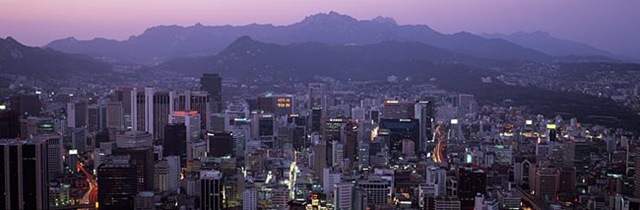
More importantly, Seoul is badly exposed to extreme NK retaliation, even without nuclear weapons. This obvious fact is widely under-remarked. The Seoul National Capital Area (greater Seoul) contains a staggering one-half of SK’s population (25 million), and it lies just 30-40 miles from the DMZ. South Hwanghae, the nearest NK province, has 10-20,000 rocket launchers and artillery tubes pointed southward. It is simply impossible for allied air power to indentify and destroy them all. In a war, Seoul would be, as NK regularly promises, a ‘sea of fire.’ Given high population density, Seoul residents live vertically in high, concentrated apartment blocks. 9/11 demonstrated the potential of explosive projectiles colliding with non-hardened skyscrapers. Imagine a repeat of the World Trade Center collapse dozens of times; NK shelling would kill tens of thousands of civilians in minutes.

No US commander or SK administration is willing to run this risk. NK knows this. And the problem is only worsening. Seoul exercises a role akin to Paris over the rest of France. Paltry decentralization efforts have failed, and neither the national nor municipal government has tried to slow its expansion for national security purposes. Despite Seoul’s enormous size, it is still getting bigger, as everyone seeks to ‘move up’ to Seoul. The next largest metropolitan area is great Busan with 4 million people, but it is contracting due to the out-migration to Seoul. The urban-sprawling (both up and out) national capital is a proximate city-hostage gift to NK negotiators

Third, Lankov generously underplays the low interest in SK for unification. As with West Germans by the 1980s, SK youth increasingly see the internal border as a real one. NK refugees in the South are an invisible and isolated population. As SK has grown into a consumer society and trading state, its population’s willingness to sacrifice for unification, much less war for it, has diminished dramatically.

The three constraints are nearly immovable, and Lankov is right to demand strategies that accept, rather than ignore, them.”

Giving Kim Jong-Il the Nobel Peace Prize would have Done more Good

Greetings%20Earthlings

I agree with just about everybody else in the blogosphere that Obama did not deserve it. As many have noted, he has not done anything really. I also concur with the emerging center and center-left conventional wisdom that he should have declined it. The US Right will certainly pick this up as confirmation that Obama is just a celebrity, more interested in placating Europhilic cosmopolitan elites than defending Sarah Palin’s ‘real America.’ Fox can be counted on to get a week or so out of bashing ‘arugula-eating, latte-sipping, Mapplethorpe-loving bicoastal elites who like to be liked in France.’ You’ve already heard that story from Coulter & Co. for years, but Obama offers them ammunition when he revels in the glow of post-modern euros. He should have ducked this one. More importantly, he should do something.

The other obvious insight is that giving this to Obama does not really promote peace in the future. Maybe the Nobel committee is trying to bind/blackmail him into not bombing Iran or paying the US back dues to the UN. But basically, this is an award for not being George W. Bush. Far more useful to actually improving peace would have been to award it to those struggling to overturn or moderate some of the world’s worst regimes. Andrew Sullivan suggested some of the Iranian dissidents. A friend thought Morgan Tsvangirai. I thought perhaps some of those Russian journalists who get killed for reporting on Chechnya. The point of these choices – besides the obvious fact that they deserve it and O does not – is that the Prize might actually help their causes significantly. These dissidents need resources to press on and international press coverage to make sure they are not killed by the regimes they challenge. Tsvangirai, e.g., is almost certainly only still alive, because he garners so much western attention. The Prize would bring powerful moral credibility to those desperately in need of it.

But you want to know what Kim Jong-Il has to do with it. The Dear Leader’s greatest fear now is execution in post-unification South Korean courts. Survival, not juche, is the real ‘ideology’ of the regime. Kim basically wants to survive to die warm and secure in his bed, like his dad. As Hobbes famously said in the Leviathan, he fears not death, which is inevitable, but a violent death. He does not want to got the way of Mussolini, Ceauşescu, or Saddam Hussein. And before he goes, Kim wants to party for a few more decades. He loves the movies, the booze, and the ‘joy brigades.’

Because of his fear of hanging in a South Korean prison, he holds on to NK as best he can. So why not make a deal with him? The Nobel committee already gave the Peace Prize to Yasir Arafat. How about a secret deal to give it to Kim in exchange for an opening of NK? If Kim had a peace prize in hand, the SK government would certainly never execute him.

If this sounds pretty far-fetched, recall how damaged the Nobel Peace Prize’s credibility already is. If Yasir can get one and Gandhi can’t, who cares if Kim gets one? If it helps convince him he won’t get executed, then so much the better…