Was Kaesong a Hole in the Korean Iron Curtain or a Subsidy to the Kim Monarchy?

kaesong


The following was originally published at the Diplomat here.

So it increasingly looks like the inter-Korean Kaesong industrial zone is closed for good. (The Wikipedia write-up is a pretty good quick history of it if you don’t know the basics.)

The zone was set-up during the Sunshine Policy period (1998-2007). It was to do 3 things: 1) Lead to some liberal-capitalist spill-over in the North, 2) Expose regular North Koreans (the workers in the area) to regular South Koreans (the managers and staff), and 3) Generally provide some inter-Korean cooperation that might hopefully reduce larger tensions. A resort area in North Korea (Mt. Kumgang) was also opened along these lines in the Sunshine period. Broadly the idea was along the lines of liberal explanations for the Soviet Union’s changes in the 1980s: the Helsinki Accords and CSCE opened the USSR to the outside world, and the inflowing liberalism slowly changed attitudes that eventually helped wind-down the Cold War. Unfortunately, none of this seems to working in the NK case.

Continue reading

NK Recap (1): “North Korea is the Boy Who Cried Wolf – There will be No War”

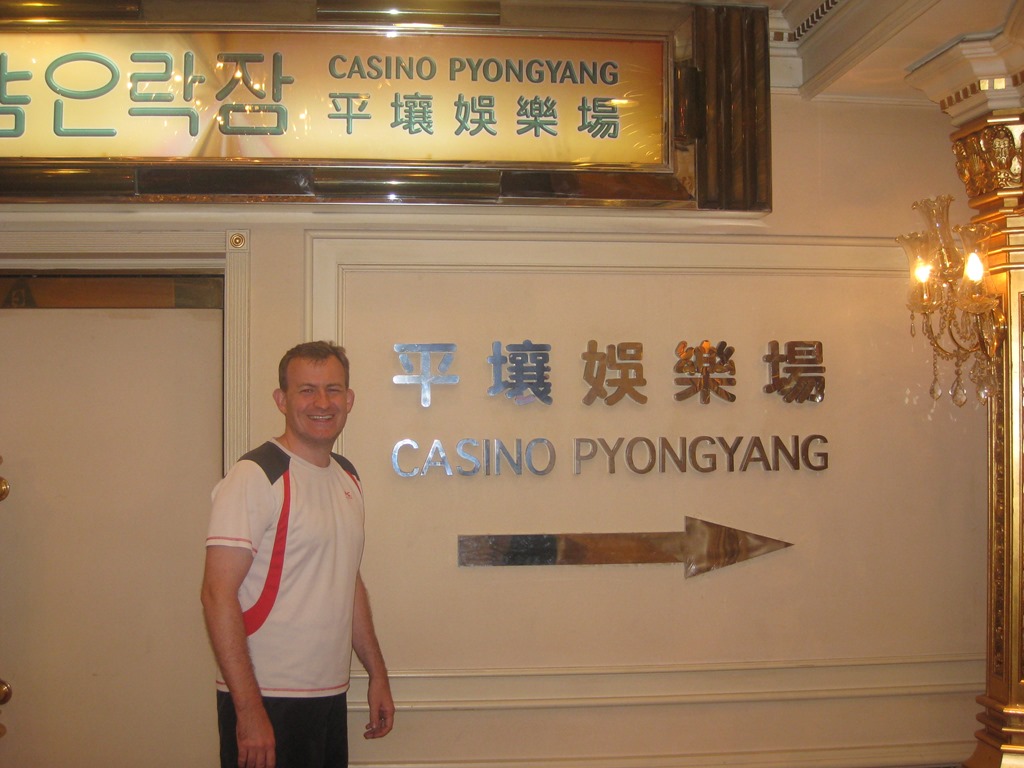
North Korea 2012 131The North Korea flap seems to be calming down, so here I reprint my original essay for the Diplomat a few weeks ago on the crisis. I’d like to thank Diplomat Editor Harry Kazianas for inviting my submission. And yes, that is a picture of me heading off to the Pyongyang Casino last summer, and I am happy to say I won $60 at blackjack against the Chinese dealer. Apparently my gambling problem is ‘pivoting’ to Asia too.

North Korea is a constant enigma, a point made apparent once again in the current crisis. Analysts of every stripe have mispredicted its behavior and longevity for decades, and this time around, it is again very unclear what exactly they want. So rather than make any predictions that will turn out to be laughably wrong next month, here are some observations that help narrow range.

1. Goaded into Conflict?

The North Koreans are experts at bluster. The previous president of South Korea was so disliked, that he was portrayed as a rat being decapitated in the Pyongyang newspapers. So when the North started saying outrageous stuff this time around, the first response of analysts everywhere was cynicism. And in the South Korean media, although it is front-page news, the commentary borders on ridicule. No one believes they mean it. A Korean friend of mine spoke for a lot of South Koreans, I believe, when he said to me that he almost wished NK would pull some stunt so that SK would finally give the NK the beating it richly deserves after so many decades of provocation.

Continue reading

My Comments to al Jazeera TV on Park GH’s Inauguration as SK Prez


Despite the fact that Donald Rumsfeld supposedly wanted to bomb al Jazeera during the Iraq War as a jihadi propaganda machine, I have to say I find it a pretty good news source. It’s got a great documentary hustle that lazy incumbents like CNN don’t, and its Middle East coverage is far more balanced and fair than most Americans think.

Anyway, the vid is my quick thoughts on Park Geun Hye’s inauguration as South Korea’s new president. The quick sum: she can’t follow through on making Korea ‘happier’ unless she takes on the vested interests, especially the chaebol, central to her political coalition. I don’t think she can do that, and, honestly, I’m not even sure she wants to. So I would not expect anything big at home in her term; the right, the elderly, and business in Korea like the status quo, and they’re the ones that put her in office. And certainly, the social democratic policies of ‘economic democratization’ kicked around last year won’t happen meaningfully. That’s my prediction at least. I’ll have more in a few days when my contribution to a foreign ‘Korea analyst’ forum on PGH is published in the Korea Times.

For my previous TV appearances, go here.

USC-CSIS Conference on Korean Unification (3): DPRK ‘Sovereignty’ is a Sino-Russian Fig-Leaf to Slow Unification and Check US Power

New_KSI_Banner_3

Here are part one and part two of this post. I spoke last Tuesday at a USC-CSIS conference on Korean unification. I learned a lot, and it was very good. If you’re interested in unification, start here with the primary report on which the conference was based. The principal investigators said a final wrap-up report will come at some point, and I’ll put up that link when it arrives.

My comments below are on the papers presented on Tuesday about neighboring states’ reactions to Korean unification. These papers aren’t publicly posted yet, so all the comments might not make sense. But in the interest of completism, I’m putting this up to round out my thinking on this excellent unification project. (For my earlier thoughts on dealing with NK, try this; for my travelogue of my trip to the DPRK, try this.)

My big beef with these sorts of conferences on NK – I go to a lot – is that inevitably outsiders, especially Chinese scholars, start laying down all sorts of guidelines, restrictions, parameters, etc. for unification, as if it’s our right to muck around in this thing. I can understand the national interest in doing so. But we shouldn’t have the temerity to try to legitimate our muddying of the waters in what is really an internal family affair. It would also help a lot if the Chinese would stop talking (not so much at this conference, but definitely at others I’ve gone to) about how Korea needs to respect its wishes, because China is big and important now, post-2008 Olympics. I heard one guy once even say that China is now the ‘veto-player’ on unification. That’s true of course in realist sense, but that sorta cockiness infuriates Koreans who’ve really soured on China in the last decade. I see the same kind of emergent Chinese bullying on unification that Southeast Asian littoral states see on the South China Sea. So I try to call that out whenever it seems necessary.

Anyway, here on my thoughts on Japan, Russia, and China’s role in this thing.

USC-CSIS Conference on Korean Unification (2): ‘One Country, Two Systems’ will not happen

CSIS Korea ProjectHere is part one of this post. The following will make more sense if you start there.

I noted that I am participating, today in Seoul (attend if you can), in a USC-CSIS project on Korean unification. This is the final ‘phase’ of their Korea Project on unification.

I thought I would post my thoughts on the USC-CSIS Phase II report (available here) which provided all sorts of suggestions for reconstruction. It’s required reading if your area is Korea and NK, but I actually disagree with a fair number of the analogies to Iraq and Afghanistan. I think Germany is a better model for what will happen here, and I think a ‘one country, two systems’ arrangement like in greater China is nearly impossible given the extraordinary deep ideological divide, which is also existentially necessary for NK to demonstrate why it must be a seperate, poorer Korean state. So it’s either implosion or stalemate.

Anyway, the rest of my thoughts are after the jump. Having read the CSIS report is not a prerequisite to understanding my arguments, but it would help.

Continue reading

USC/CSIS Conference on Korean Unification (1): it will cost WAY more than people think

Cha_Challenges__110The University of Southern California Korean Studies Institute and the Center for Strategic and International Studies are running a joint Korea Project: Planning for the Long Term (pic to the left). CSIS will hold the last of three conferences in this project at the Asan Institute on January 21st next week. If you are in Seoul, you should go. The agenda looks pretty good. (Contact the Asan Institute.) I’d like to thank USC and CSIS for soliciting my participation..

The January 21 conference is actually the last meeting of the Project. The first meeting asked Korea area experts to look at unification; the second meeting asked functional experts to do the same. This upcoming third meeting will look at regional impacts from unification. I will comment on papers from Russia and Japan. I will put up my thoughts on those papers after the Phase III conference, but for now, I thought I would post my comments on the Phase II conference (by the functional experts).

Basically I argue that  Germany is a better model for what will happen here than either the occupations of Iraq or Afghanistan, or LDCs in transition. Also I don’t buy for one second that NK will enter into a meaningful ‘one country, two systems’ arrangement like in greater China. DPRK change meaningful enough to permit a federation would be so far-reaching, that it would inevitably raise the question why the DPRK  exists at all. Ideological change is an existential threat to the regime: why be a poorer version of SK if you’re in a federation with SK? why not just join up? This is the logic that undid the GDR. So it’s either implosion or stalemate IMO.

Here is the final CSIS report on Phase II (a must-read if you want to research unification); my gloss on that follows the jump. (Here is the much shorter Phase I report.)

Continue reading

Abe’s Election, and why Korea should Not Worry (too much)

abe

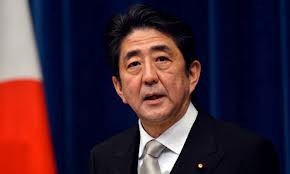
Seoul English radio asked me to speak last month on Shinzo Abe’s return as Japanese prime minister. (Here is the program I speak on several times a month, and I will be on again tonight at 7:45 pm KST.) I didn’t get a chance to put up my thoughts on Abe earlier, so here we go.

Abe is fairly controversial, because he’s a nationalist and made the wrong noises in the past about Japan’s war crimes in WWII. But I also think he is tactically smart enough to avoid openly provoking the Koreas and China on that. Watch for whether or not he moves to alter the Kono Declaration. That is the big benchmark to focus on. Unfortunately Abe has grumbled about changing it, but I don’t think he will. Similarly, while he has visited the Yasukuni Shrine, he did not do so when he prime minister before. So my sense is he’s reasonable intelligent on these issues, even if the Japanese right continues to be disturbingly unreconstructed about the war. But at least Abe’s trying to talk with Korea again after the implosion of relations last year. That’s a big of progress.

Anyway, the interview follows the jump.

Continue reading

Korean Foreign Policy Year in Review 2012: So Many Grievances… (UPDATED in response)

dodko

(I updated/lengthened the last section, after the jump, to respond to some of the criticisms made.)

Daniel Tudor, the Korean correspondent of the Economist (full disclosure: we are friends), just wrote a book on South Korea where he argues that Korea, despite all its success, is a discontented society. This is exactly right. (Here is a good review of the book.) Despite growing rapidly in just a generation, and capturing some global profile with things like ‘Gangnam Style’ or well-known products like Samsung gizmos, Koreans continue to have wildly unrealistic expectations of global interest in their small, linguistically unique (and difficult to learn) country culturally similar to enormous China. This generates constant geopolitical disappointment, per Tudor, and outsized sensitivities over foreign criticism – e.g., the widespread urban legend here that no Korean has yet won a Nobel Prize, because the committee is staffed by anti-Korean racists, or read this.

Four events in 2012 really seemed to capture the chip on the national shoulder, which ideally would serve to recommend a little modesty instead of yet more nationalistic grievance (but that won’t happen):

The Olympics: Some KOC official said on TV that Korea needs to ‘improve its Olympic diplomacy’ (whatever that means), even though it won a huge haul of medals for a country so small. India has more than 1 in 7 of the people on the planet, while Korea has .007%, but I guess the fifth highest pull of golds and ninth highest overall was a conspiracy of the Anti-Korean Olympics or  something. What is it with the endless chip on the shoulder? As Evan Ramstad put it, Korean officials once again had to come off sounding arriviste and aggrieved, rather than balanced and modern:

“Even so, a government sports official could be counted upon to again declare that South Korea was at last among the world’s great nations instead of recognizing that it has been there for awhile now. Second Vice Culture Minister Kim Yong-hwan was quoted in local media saying the performance in London meant that South Korea could “join the ranks of advanced nations in terms of sports and culture” and “has leapt into a higher level not only in the field of sports but also in culture and arts.”

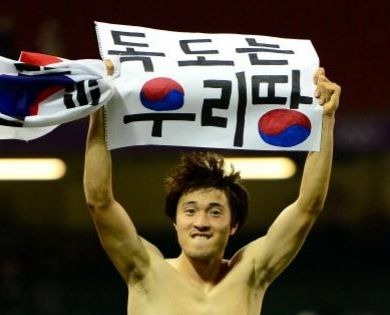
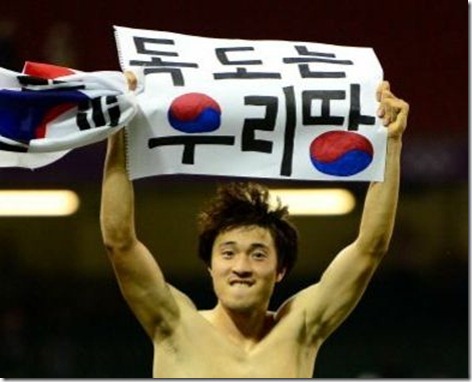
And we had to spoil the Olympics too, with tiresome Dokdo posturing too (pic above).  That the placard violated the apolitical Olympic spirit is obvoious, but no major Korean figure came forward to denounce that action. *Sigh*

Continue reading

My ‘Newsweek Japan’ Cover Story on the Agenda for Korea’s Next Prez

Newsweek cover 2

Newsweek Japan asked me for a long-form essay on the challenges facing the new Korean president-elect for its December 26, 2012 issue (cover story to the left). Here is the link in Japanese, but I thought it would be useful to publish the original, untranslated version as well. (If you actually want the Japanese language version, email me for it please.)

The essay was actually written up before the outcome (a Park Geun-Hye victory) was known, but the argument still applies. In brief, I argue that Korea is drifting leftward. The young in Korea want chaebol reform and less political elitism at home, and abroad they want a foreign policy both less hawkish on North Korea and less influenced by the United States. In fact, if Korea weren’t aging so extremely fast, this agenda would have won. But Korea’s demography is now so skewed that ‘missing’ youth voters due to Korea’s super-low birthrate probably cost Moon Jae-In the election. (Not surprisingly, the Korean news is already reporting on youth action against against free bus fair for the elderly, because they ‘stole’ the election.) Nevertheless, the generational split is real, and the right would be foolish to govern against future voters’ wishes in the name of aging voters who will naturally pass away. Hence my prediction that Park will govern as a centrist not a conservative.

Regular readers of this blog will see themes I have emphasized before. This was intended for their print edition, so there are no hyperlinks included in the text. Here we go:

“On December 19, South Korea will have its sixth democratic election since the end of military rule in 1987. The main candidates are Park Geun-Hye of the conservative New Frontier Party and Moon Jae-In of the liberal Democratic United Party. Park is expected to win, as Moon has run a poorly organized campaign and the Korean left has split. Ahn Chul-Soo, a popular reformist liberal candidate, dropped out late in the race and only weakly endorsed Moon, while a far-left party, the Unified Progressives, has stayed in the race. All this will fragment the left’s vote, likely throwing the election to Park.

Continue reading

My ‘Foreign Affairs’ Piece on the Korean Election – Longer, Fuller Version

Election pics 008

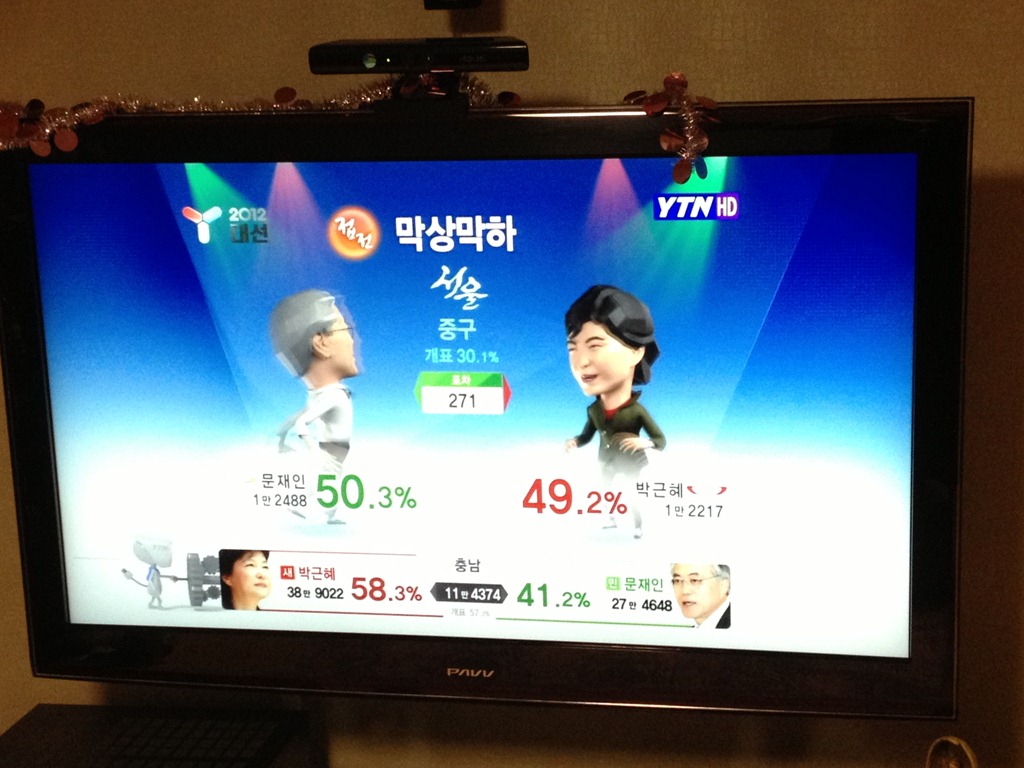
This pic is from the TV election coverage on the Korean version of CNN. That would be the two main candidates (the liberal Moon Jae-In on the left, and conservative Park Geun-Hye, who won, on the right) as dancing electronic cartoon avatars. Yes, they do look like boogying Nintendo Miis, and yes, they are the most bizarre, hysterical election graphics I have ever seen. Who says political science is boring?

So Foreign Affairs solicited me for a ‘snapshot’ essay on the Korean election. Here is the link, but I also thought it might be useful to post my first draft which is fuller:

“South Korea’s next presidential election will occur on December 19. The main candidates are Park Geun-Hye of the conservative New Frontier (Sae Nuri) party and Moon Jae-In of the liberal Democratic United Party (DUP). A third, unaffiliated liberal candidate, Ahn Chul-Soo, dropped out in late November. Ahn had no clear party identification, which was part of his attraction, although he was broadly center-left. A former hi-tech entrepreneur and professor, he was popular with the young who feel alienated by the closed, oligarchic character of Korean politics and for much of the year, he outpolled Moon. Because he and Moon were splitting the anti-Park liberal vote, they tried to merge their campaigns. But Ahn’s hasty, somewhat bitter withdrawal speech implied that old-style, backroom politics by the DUP had pushed him out. Post-withdrawal polls showed Park picked up around one-fifth of Ahn voters, a very strong showing.

Continue reading