
Economist 2012 Conference on Korea: Foreign Ownership in Korea

970x224_v2%20NEW%20date

Each year in September, the Economist holds a conference on the Korea economy (a part of its Bellwether series on Asian economies). They invite me to come, and then I try to write up my thoughts on it in the JoongAng Daily as an op-ed. Each year, unfortunately, we seem to argue about the same things – a proper, untweaked float of the won, and the openness of the Korean economy to foreign products and owners. Here are my thoughts from 2010 and 2011. I was so busy in the last few months on this site with the US election and other stuff, that I didn’t get a chance to reprint the JAI op-ed. But I like it, so here is the link, and here is the text itself:

“Last week the Economist magazine held its annual conference on Korea’s economy. This series is rapidly becoming the most important regular discussion in Korea for Korea’s foreign investors. Last year in these pages, I was critical of the Korean speakers’ response to foreign concerns. This year was an improvement. The finance minister particularly fielded a tough question about foreign investors’ rights in Korea in the wake of the Lone Star debacle. To his credit, he admitted what many already know from that case – that the Korean public is deeply ambivalent about substantial foreign profit-taking and ownership of major Korean assets.
Continue reading

5 Good Things about Korea you should be Thankful for this Thanksgiving


As the great intern-chaser himself once said, ‘I feel your pain.’ One of the things I also miss most about living in Korea is the American holiday season, October – December. There’s a nice feeling of relaxation at the end of a long year, with lots of nice parties, holiday movies and music, culminating in Christmas which was absolutely the center of my life-calendar until maybe high school. Luckily my wife puts up with my nostalgia and makes a huge turkey every year, and we have leftovers for weeks. Awesome. So in that spirit, here are several things you should be thankful here in Hangukistan even though you miss the holidays:

1. There’s very little street crime.

Maybe I say this, because I am an American. But the difference between here and the US is amazing, i.e., fantastic. I remember growing up in the eastern suburbs of Cleveland, and adults telling us explicitly to fill up the gas tank of the car when driving through the city so we wouldn’t have to stop. It was that dangerous. But not here. God, it’s wonderful. Wanna walk home alone, drunk, at 3 am in the middle of the city? It’s perfectly safe.

Samsung, Apple, and Intellectual Property in Korea – UPDATE: Saenuri drops Reform of Chaebol Corporate Governance *sigh*

Korea-Russia-440x293

UPDATE: This story couldn’t be more perfectly timed for argument I make in this post. (H/t to Zach Keck.) This one sentence captures a lot of what is wrong with the political economy in Korea: “Compelling conglomerates to unwind their intricate cross shareholdings would ‘expose companies to hostile foreign takeovers,’ Park Geun Hye told reporters.”

Wow. So globalization is for ‘foreigners’ but not for us. We should be allowed to capture 20% of the US or EU auto market, but we don’t want anything like GM buying Daewoo or Lonestar-KEB ever again on our own turf. Foreigners should be excluded from Korea’s biggest firms, even though those firms are hugely dependent on foreign sales and Korea’s growth generally is dependent on foreigners’ willingness to run near-permanent trade deficits with Korea. Talk about biting the hand that feeds you. The sheer selfishness and xenophobia of that line is shocking. And I don’t believe for a second that that is really Park’s own belief. She used to support greater reform, and Korean conservatives are the most neoliberal element in Korean life (President Lee pushed through the FTAs, e.g.). That sentiment almost certainly reflects pressure from the chaebol families on the hoped-for winner to back-off the ‘economic democratization’ rhetoric. So if you ever wonder why foreigners think Korea is mercantilist or where the ‘Korea discount’ comes from, here you go.

—————————–

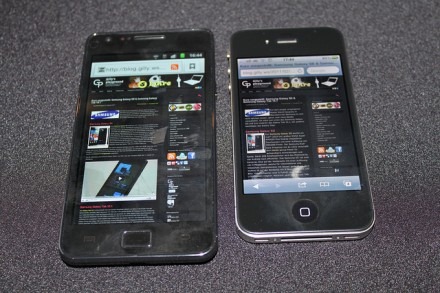
It’s been a few months since the nasty Apple-Samsung battle led to a record lawsuit victory over Samsung in California. The Korean national response was downright vitriolic, but hopefully tempers have cooled enough that some reflections on how Korea can avoid this kind of stuff in the future are useful. I am displeased to say that Korean media turned down the following op-ed, but happy to note that The Diplomat was interested and posted this on Friday. The point of the media is not to flatter and tell us what we want to hear (see: the US media in 2002 on Iraq) but to challenges us to think beyond our prejudices. I am once again grateful to Zachary Keck, the assistant editor at the The Diplomat, for his interest in my work. So here we go:

“The bruising Apple-Samsung fight raises major intellectual property rights (IPR) issues that Korea and Asian economies generally are ill-prepared for. Unless the concerns raised by the Samsung-Apple scrap are resolved, Korea should expect regular trade friction with major partners and regular accusations of copying and cheating. As wealthy countries, including now Korea, move away from manufacturing and further into services and information, the need for innovative Korean firms will only grow. Neither Korea’s corporate structure – dominated by mega-oligopolies with strong disincentives to innovate – nor education system – overwhelmed by rote learning and plagiarism – position Korea well for the future.

Continue reading

What does South Korea Want from the US Election? the Status Quo

Barack-Obama-with-Lee-Myu-008

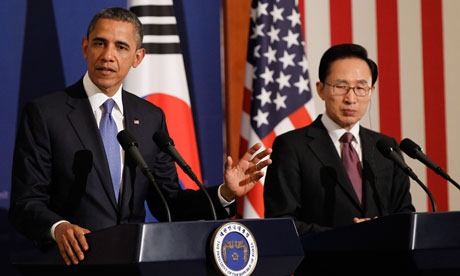
The Diplomat asked me for a short piece on what South Korea would like from the new US president, as part of a general forum – including Shen Dingli from Fudan on China and Adam Lockyer from Sydney on Australia – on Asia and the US election. I have reprinted my essay below, and here is the whole forum. It’s worth a read, and Lockyer’s disbelief at tea party rhetoric should once again be a wake-up call that American global leadership is not an entitlement of our ‘exceptionalism,’ but something we must earn through seriousness and responsibility. I’d like to thank Zachary Keck for soliciting my participation:

1. At the elite level, the ROKG (Republic of Korea government) probably wants a standard reaffirmation of the US- Korea alliance from whomever wins.

My sense from the media and my students and colleagues is that South Koreans are not really paying much attention to the US presidential race. (Neocons take note of such treachery!) Neither Romney nor Obama have much to say except for typical boilerplate on SK – defending freedom, resisting tyranny, close friend of America, yawn. In fact, I am not sure SK’s even been mentioned. And no one likes NK, so that is an easy issue to posture on too. (In fact, I am surprised Romney didn’t take the opportunity in the chest-thumping third presidential debate to accuse Obama of appeasing NK.)

Continue reading

North Korea as ‘Kim-Land’: My Op-Ed on NK in the JoongAng Daily

JoongAng Ilbo

Yesterday, the JoongAng Daily printed an column by me about my trip to NK. Here is the link and column is reprinted after the jump. This condenses my earlier thoughts on my trip and adds some political analysis.

In passing, I should say that I find the JA the best newspaper in Korea – and no, not just because they publish my stuff every couple months (although that helps) Smile.

For readers who don’t know the Korean media scene, the JA is like the Economist in Korea – centrist, neoliberal, intelligently hawkish on foreign policy, sane on social issues. This is why I send my stuff to them. The biggest newspaper in Korea by circulation is to the right, the Chosun Ilbo. The third big paper is to the left, Hankyoreh. I find the Chosun ok, but sometimes it can sound like Fox News, and I dislike its obsessive, Korea’s-status-in-the-world-is-rising!!! nationalism. But the far-too-soft-on-Pyongyang Hankyoreh I frequently find downright disturbing, as it comfortably trafficks in the worst conspiracy theories like poisoned US beef in Korea or a cover-up of the Cheonan sinking. So if you are researching Korea, stick to the JA first, and then CI.

(So yes, my politics are broadly center-right, even though I seem to criticize the US GOP relentlessly on this site. One thing I like about SK is that its conservatives are in fact conservative, not radical, as the Tea Party made the Republicans. Generally speaking, I find the SK right to be responsible and moderate most of the time. That’s so refreshing. Don’t you miss having sane conservatives back home?)

Ok, here’s the op-ed:

Continue reading

Pop Music Brings a Lot More Readers than Social Science: Follow-up on ‘Kangnam Style’

Korea_Seokguram_Buddha

Now THAT is Korean art – the Seokguram Buddha; I’ve been to see it 3 times

The Internet has slapped down my arrogance. I told myself I wouldn’t write about k-pop, but that post on ‘Kangnam Style’ drove so much traffic, even the Daily Beast, to my site and twitter, that here is a response to all the comments. It’s kinda of depressing how my posts on Asian political economy or what-not get little traffic and a lot of yawns, but K-pop brings huge numbers. It’s like those Facebook posts on something you find interesting that no one bothers to look at, but put up a pic of yourself blotto on a beach, and everyone ‘likes’ it.

1. I am not sure K-pop is really ‘family-friendly,’ as one of my commenters argued. I hadn’t really thought about that, but I guess it’s nice to have light, fluffy lyrics instead of gangster rap or Robert Plant screaming that he’s ‘your backdoor man.’ But if you watch the performances and look at the appearance of these ‘bands,’ it is highly sexualized and teasing – and that is obviously far more important the music itself, which just comes from a music machine. These band members can’t play instruments, but they do look like sex symbols and swing around on poles wearing leather boots like strippers. (*sigh* you see why I wanted to avoid writing about k-pop?) Is that what you want the kids watching? What kind of signal does that send?

Continue reading

‘Kangnam Style’s Irony is Missed b/c of the Publicity Wave

yeah, it’s pretty hysterical, especially when you get the underlying social critique

I try to avoid K-pop on this website, because I find far too many foreigner websites in Korea focus on the silliest, shallowest elements of what is around us – probably because the language is so hard, and so Korean pop culture is the easiest for us to understand. But I keep getting asked, and it is huge hit, so here’s a sociological overreading:

1. Thank god ‘Kangnam Style’ shows a level of irony, self-awareness, humor, and creativity that K-pop normally lacks. That alone is enough to value it, given how shallow, idiotic, and pre-packaged most Korean pop is. K-pop is wasteland IMO. Try this or this, and see how long you before you cringe from the sheer mawkish inanity of it all. Then read this and this (that second one is a little raw), if you still don’t get it. And to their credit, I find most Koreans will admit that K-pop is fairly embarassing non-art if you push them about it. It should also be noted that traditional Korean music is often superb, rich, and authentic; we listen to it at home.

Anyway, none of these carbon-copy ‘k-bands’ like the Wonder Girls or Girls Generation or whatever would ever get considered for the Rock and Roll Hall of Fame (I’m from Cleveland, so I thought I’d add that little plug). K-pop slavishly copies from the boy-band/girl-band model that began in the US 20 years ago and crossed-over to Japan. The hair, the synched dance-moves, the gratingly cutesy presentations, the insipid teen love-story lyrics, the spontaneity-crushing over-choreography – it’s awful, corporate faux-art. None of them can play an instrument; they are recruited solely because they’re hot, and the music-machine does the rest. Bleh…

Mix Munedo and the Kardashians in the Korean language, and you get K-pop.  Korea desperately, desperately needs to de-MTV-ize/de-idol-ize its music scene and get some raging, slovenly, wacked-out desperado-rockers like Meatloaf or Janis Joplin who care about music instead of bling. Instead, it’s hideous, so-repetitive-I-can’t-even-tell-the-difference-anymore synth-pop even Duran Duran would be embarrassed to release, all controlled by corporate hacks with no interest in deviation and who are persistently rumored to sexually exploit their young charges. Like almost everything else in the Korean economy, the music industry desperately needs deconcentration and innovation.

Continue reading

MBC brings Multicultural Panic to Korea

Xenophobia so sloppy and racist, Glenn Beck himself would blush…

I came late to this controversy, but it merits some quick comment given just how creepy the above vid is.

This ‘report’ was shown in primetime on Korea’s largest TV network, on a holiday when people would likely be home with family (and was then rebroadcast until the explosion of response halted it). While xenophobia is fairly common in the Korean media, this is so nasty – especially at this very late date in the long, tiresome ‘Korean women dating western men’ discussion – that it has gone viral in the expat blog world of Korea. It even got into the Wall Street Journal.

I rarely blog about this sort of thing. As an IR academic, domestic politics and sociology aren’t really my area, and I don’t really see myself as a ‘k-blogger’ or whatever. I don’t like blogging about identity politics in Korea, as I think it is prone to recycled stereotyping that tells us little. And I have broadly argued against our (foreigners) participation in the Korean multiculturalism debate, because it’s their country and they themselves need to decide what they want from us. It’s their choice.

But this is the nastiest race-baiting – primetime, slap-dash unprofessional, on a major network, for a general audience – I’ve seen in my time here. (Full disclosure: my wife is Korean). Casual racism is a widespread problem in Korea, as any foreigner living here can tell you. Wide-eyed kids shamelessly point at you like you are a martian; people stare at your body hair; grade and high schoolers giggle and smirk; the old ladies glare at you on the subway; average folks on their cell phones will pause their conversations to remark, ‘hey, a foreigner just walked by me!,’ as if it’s some kind of major event in their day (presumably they think I can’t understand that, or maybe they don’t care?). It’s all fairly fatiguing (read this for a good example), and that’s for white westerners. I can’t imagine being from Southeast Asia or an LDC here. In fact, Cambodian import brides have been so badly abused, the Cambodian government made it illegal for its citizens to marry Koreans. (This hugely embarrassing and deeply disturbing restriction was scarecely reported by the Korean media.) And when the Korean race hang-up gets wrapped into sex, it breeds genuinely disturbing levels of xenophobia, especially for an OECD/G-20 country that really ought to know better. Hence this vid.

Continue reading

Would Ron Paul Retrench the US from Korea?

retrenchment

Here is part two, and then a third, given just how much traffic this post has received (h/t to Stephen Walt and Andrew Sullivan).

Here is Steve Walt saying nice things about Ron Paul, and Layne has a nice recent piece in the National Interest, and another at ISQ, about looming US retrenchment.  Earlier I argued that I think lots of people in IR now both expect and want some measure of US pullback. The argument is pretty well-known by now – empirically, the US is doing more than it can afford, like the Iraq war (trillion dollar deficits and ‘overstretch’); normatively, we are violating far too many of our liberal values against a comparatively minor terrorist threat (torture, indefinite detention, unoverseen drone strikes). But I don’t see too much on what specifically could be cut if absolutely necessary. The British retrenchment east of Suez in the 70s is probably our best model, but of course, the Brits had different sets of commitments, so it’s not a great blueprint.

So I try below to compile a list of who would/could/should get the axe and who not. Just like the intense competition over the periodic BRACs, one could imagine US allies making their case for a retention of US bases, troops, aid, etc. In one of his speeches, I heard Ron Paul argue that we have 900 overseas bases, so the field of choice is very wide.

I can think of 3 basic criteria for judgment of whom should be cut loose and who not:

Continue reading

The World Does its Duty & Conforms to Social Science: More on Korea & Japan

Greatest Movie Line Ever on Academia: “How the Social Scientists Brought Our World to the Brink of Chaos” Hah!


If academia’s taught me anything, it’s that the real world is flawed not theory, and that facts should change for me, not the other way around. As Marxists would say, ‘future is certain; it’s the past that keeps changing,’ and Orwell famously quipped that academics would love to get their hands on the lash to force the world fit theory. (I guess Heinlein agreed; check the vid.) So I am pleased to say that the world meet its obligations to abstraction this week a little: Japan and Korea edged a little closer toward a defense agreement (here and here). A little more of this, and I can safely ignore – whoops, I mean  ‘bracket’ – any real case knowledge…

Last week I argued that Korea and Japan seem like they’d be allies according to IR theory, but weren’t. I wrote, “Koreans stubbornly refuse to do what social science tells them;” obviously they don’t realize that abstraction overrules their sovereignty. I thought this was fairly puzzling, but got an earful from the Korean studies crowd about how I was living in the clouds of theory. I also learned that area studies folks really don’t like it when you throw stuff like ‘exogenous’ and ‘epiphenomenal’ at them. Once they figure what ‘nomothetic’ actually means, they think you’re conning them. D’oh!

So for those of you argued I didn’t know anything about Korea but was just blathering on about theory that had no necessary time-space application to this case, I thought I’d put up this bit from Starship Troopers. It’s hysterical – when PhDs rule the world, apparently the military has to step in to prevent us from running it over a cliff. Didn’t Buckley once say he’d rather the first 2000 names of the Boston phone book run the US government than the faculty of Harvard?