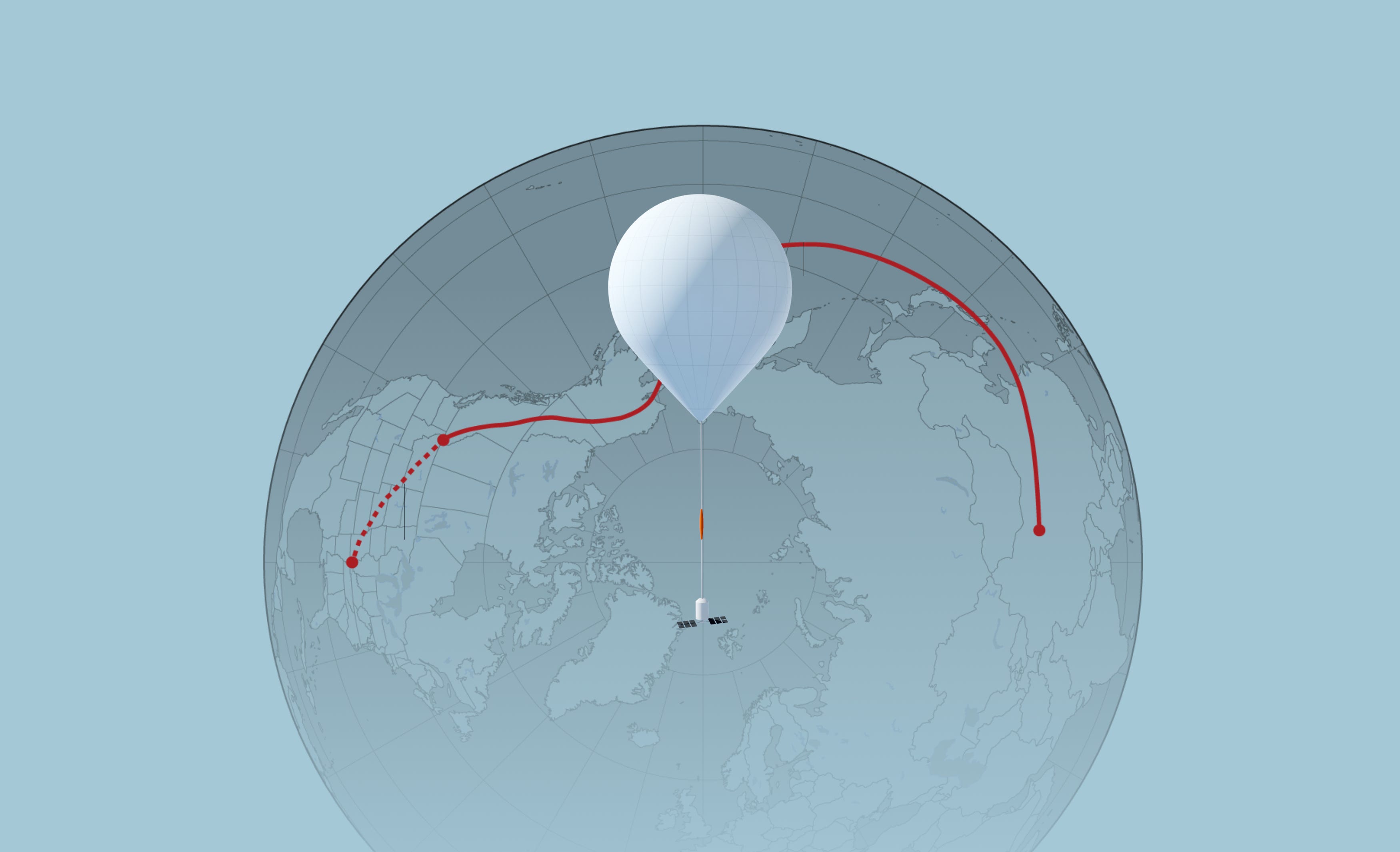
My Comments to the South Korean Navy’s International Seapower Symposium: A Big SK Inter-Service Budget Fight Looms

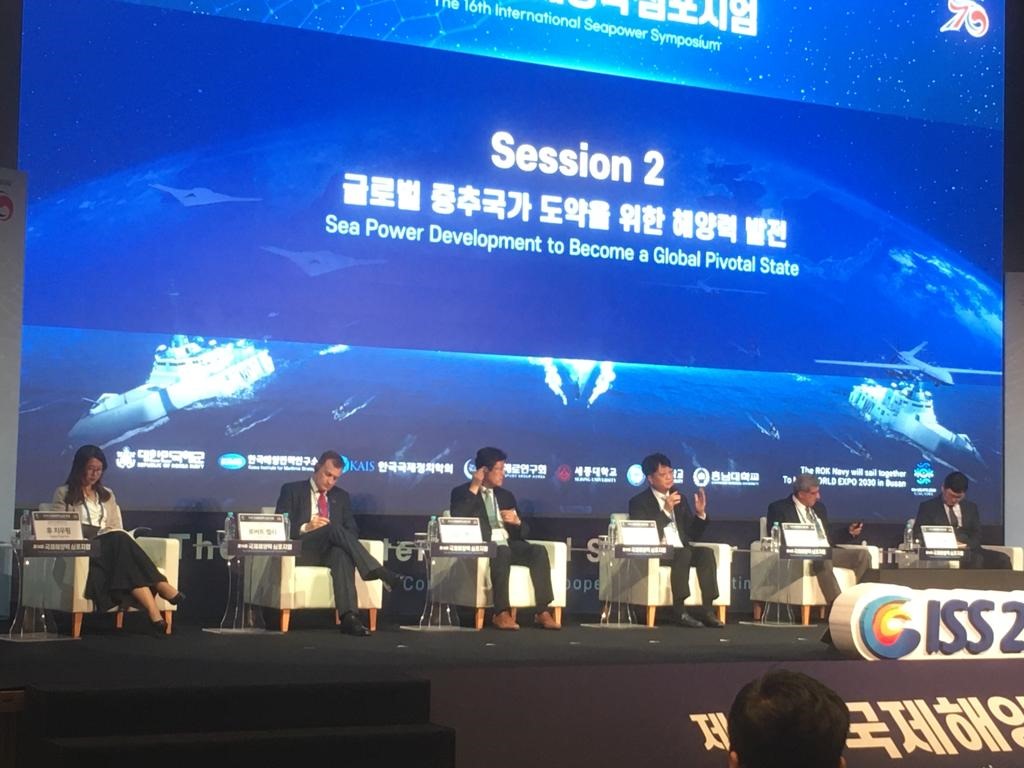
20230608_061928000_iOS 4Without a headline defense budget hike, ROKA, ROKAF, and ROKN are going to collide over the costs of army manpower replacement, missile defense, and an aircraft carrier in the next decade. (I am second from the left in the picture.)

This was the gist of my comments at the South Korean Navy’s 16th Annual International Seapower Symposium here in Busan this month. Here is my Twitter thread on that event with some nice pictures. I also wrote up these ideas in an essay for 1945.com.

To my mind, a big new issue for the SK navy in the next 10-20 years is the Chinese naval threat to SK SLOCs through the South China Sea. Particularly, SK oil shipments from Persian Gulf through the SCS are vulnerable to a PLAN blockade if China gets upset at something South Korea does, like cooperation on missile defense with the US and Japan. China has already bullied SK on missile defense in the past.

China’s creeping control of the SCS will eventually allow it to ‘quarantine’ shipping there to punish SK, Japan, and Taiwan. The odds of this strike me as pretty high once China has de facto control down there. Any embargo will be done informally, first with fishing fleet and coast guard harassment, escalating if necessary. I am surprised more thinking is not given over to this possibility. It seems really obvious to me.

This is one reason why South Korea is thinking about building an aircraft carrier, which I support. Expecting the US to do all the heavy lifting in the SCS is cheap-riding, so SK. Japan, and others should consider maritime bulking up to help.

For SK, the problem is the expense of the carrier at the same time that its army and air force have new, expensive needs too:

    • ROKA is facing a large manpower shortage in the next twenty years bc of SK’s birthrate is super low. ROKA will likely try to fill that gap with tech like drones and armor, which is pricier than conscript infantry.
    • ROKAF faces NK’s spiraling missile program. It will need lots of missile defense and strike fighters (to hit NK missile launch sites). That too will be expensive too given just how costly THAAD and F-35s are.

These army and air force pressures will probably squeeze out the aircraft carrier – an argument I made for the Korean Institute of Maritime Strategy a few years ago (and which has turned out to be correct).

So I figure that MND will see a pretty sharp inter-service budget fight in the next decade or so unless the overall defense budget goes up. All three service branches are looking for pricey, big-ticket platforms.

The US Leak about Ukraine’s Military Troubles Does Not Change Russia’s Inability to Exit the Ukrainian Quagmire with Anything like a ‘Victory’

skynews-ukraine-pentagon_6118871Russia is bogged down in a war it can’t win. A weaker-than-expected Ukrainian spring offensive does not change that. Russia’s still lacks a path to victory which remotely justifies the costs and isolation of the war, even if it manages to hang onto some Ukrainian territory.

The leaks strongly suggest that Ukraine’s offensives this year will be last successful than last year’s. Ukraine lacks the heavy and precise weaponry its needs (shame on us for dragging our feet on that stuff), and it has suffered tremendous casualties. This is unfortunate. I always thought hopes that Ukraine would win by the end of this calendar year were too optimistic. The war will likely last into next year at least.

But this doesn’t get Russia off the hook. It is still tied down in a costly, unwinnable quagmire. Even if the lines do not change much this year, Ukraine will not give up. It will fight a protracted, defense-in-depth, semi-insurgency conflict if necessary, biting at the Russians for years, looking for opportunities to strike; not allowing the Russians to withdraw; not allowing its conquered areas to be developed, exploited, or populate; not allowing Russia to escape from sanctions and isolation. A model here is the failed Japanese invasion of China in 1937. The Imperial Japanese Army could win battles but not the war, and conflict degenerated into a long, unwinnable slog which drained Japanese resources for no clear gain compared to the growing costs, including diplomatic isolation and sanction.

I have some other recent thoughts on the Ukraine war at 1945.com:

1. Russia Probably Can’t Win without Substantial Chinese Assistance. Excerpt:

The Russian spring offensive in Ukraine already appears to be running out of steam. No less than the President of Ukraine himself recently visited the frontlines’ most contested sector – the city of Bakhmut. Volodymyr Zelensky is known for his courage – he stayed in Kiev last February as the Russians marched on it. But visiting Bakhmut, against which the Russians have thrown the weight of their forces this spring, would be remarkably risky if the chances of Russian breakthrough were genuine.

Zelensky also felt secure enough this month to receive the Japanese prime minister in Kiev, at the same time Chinese President Xi Jinping visited Russian President Putin in Moscow. And certainly the frontlines have not moved much. Russia was supposed to come off the winter refreshed and restocked, capable once again of major offensive action. This has not been the case. There have been no armored punches threatening a breakthrough, no wide-front advances threatening to overstretch Ukrainian reserves.

Instead, Russia is doing again what it has done since last summer – targeting a few small cities in the east with massive, human-wave infantry assaults, while randomly terror-shelling Ukrainian cities. The former has resulted in high casualties and small advances, while the latter continues to alienate world opinion for pointlessly killing noncombatants. This is not a winning strategy, and if this is the best Putin has after just a year of war, it is unclear how expects to win if the war drags on as it appears it will.

2. Russian Nukes in Belarus are just another Saber-Rattling Gimmick by Putin. There is No Remotely Cost-Beneficial Scenario for Putin to Use Nukes in Ukraine or Against NATO. Excerpt:

Russian President Vladimir Putin plans to station tactical nuclear weapons in Belarus, Russia’s eastern neighbor. Belarus also borders Ukraine’s north, and Putin wants Minsk to participate more openly in his war against their shared neighbor. Belarusian dictator Alexander Lukashenko has acted warily with respect to Russia’s invasion, but he depends on Russian assistance to stay in power, especially after Putin helped him fight off mass protests in 2020. Lukashenko probably has little choice but to assent to the deployment of Russian nukes on his country’s territory.

Belarus also borders NATO countries. Putin’s emplacement of these weapons is likely meant as an oblique threat to the West. It fits Putin’s regular habit of talking up Russian nuclear weapons to unnerve Ukraine’s Western supporters. The tactic makes sense. Russian conventional power has embarrassed itself in Ukraine. Its army has struggled, and most of the world had expected a quick victory for Russian forces. Putin invokes Russia’s nukes to compensate. He has a long history of such bravado.

Putin’s Western sympathizers, who have talked up the possibility of World War III for over a year, will argue again that this deployment means we are sliding toward a global conflagration. But they are probably wrong. It remains unclear how invoking nukes will help Putin win a limited conventional war.

3. Russia’s Apathetic Response to Finland’s NATO Accession should End the ‘NATO-Expansion-Caused-War’ Argument.

It is widely understood now that Russian President Vladimir Putin blundered badly in his invasion of Ukraine. He planned the war as a fait accompli blitzkrieg. The whole thing would end in a week or two. Putin would re-organize post-Soviet space in one swift stroke. NATO would be caught off guard and scared about further Russian moves. China would be impressed at Putin’s audacity, helping to off-set the unbalanced economic relationship between the two countries. The world would once again be impressed by Putin the master strategist.

Instead, the war has turned into an expensive, embarrassing, debilitating calamity. Russia may still win in the minimal sense of holding onto some conquered territory. But in every other important aspect, the war has been a disaster, and it is getting worse, not better.

Economically, the sanctions placed on Russia because of the war are pummeling its GDP. Politically, Russia is mostly alone. China and India have not supported the sanctions but otherwise kept their distance. Militarily, the war has turned into a stalemate, tilting slowly toward the Ukrainians. Russia has taken no new territory in a year. Ukraine has launched two successful offensives since then, and another is expected later this spring. And now, strategically, Russia has just suffered another set-back. Finland has joined NATO.

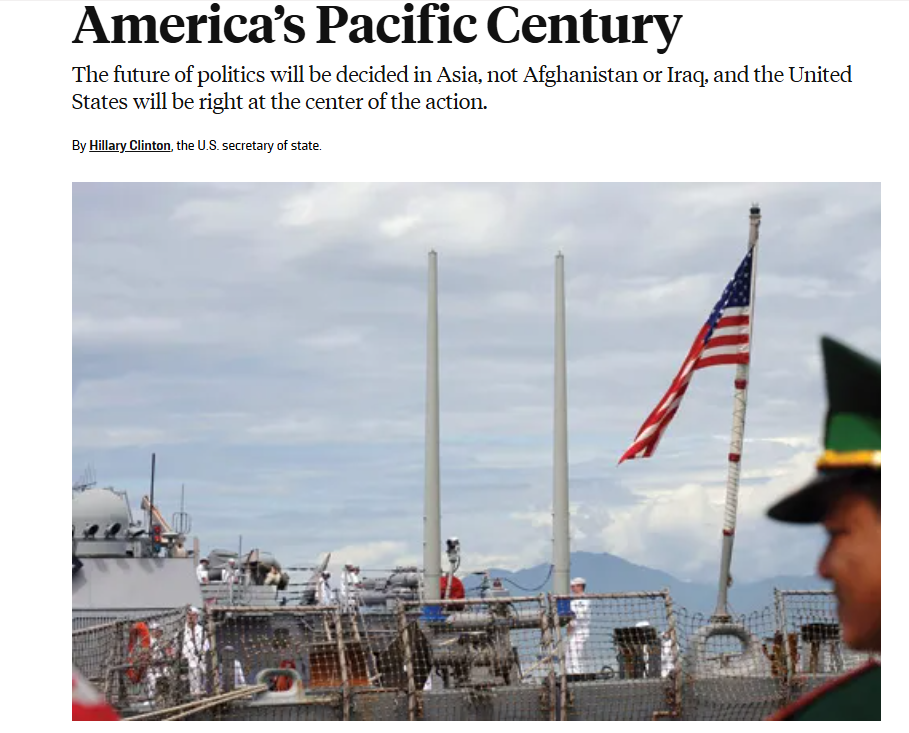
If the GOP and MAGA go Bananas over Every Chinese Spying Attempt, We’ll Fall into a Cold War with China even Faster than We are Now

Chinese spy balloon shot down after drifting across continental USThe GOP’s response was grossly exaggerated and hypocritical. Yes, the balloon was bad, but it did not nearly justify MAGA’s weeks of fear-mongering and alarmism.

We’re already sliding toward a cold war with China. Let’s not charge into it, though, by overreacting to every coming Chinese provocation. There will a lot of these sorts of incidents as Chinese power continues to grow. So we need to learn how to contain and manage them, not over-react every time they happen.

This essay is re-post of an essay I just published with Channel News Asia. I am in the US at the moment, and the hysteria over this on the news here was pretty startling. I am not sure how many Americans realize just how much spying, intelligence-gathering, hacking, satellite coverage, and so on the US government also does.

In fact, the US actually flew spy planes – the U2 – over the Soviet Union until 1960. So everyone should relax. This is the sort of thing great powers do to each other. It is the sort of thing the US would do and then deny if it got caught.

This doesn’t mean it’s unimportant. We should devote resources to detecting these balloons in the future, and ideally shoot them down before the reach US soil and cause a falling-debris problem.

That the Trump administration looked the other way on three past Chinese balloon overflights tells you all you need to know about the hypocrisy of Fox, Ted Cruz, Marco Rubio, and so on. Biden has had a decent presidency, and the GOP is desperate to find something to tar him with for 2024 – this balloon, Hunter Biden, tech ‘shadow-banning,’ etc. Last week’s MAGA freak-out is about 2024, not national security.

After the jump is the essay in its original, pre-edited form:

Continue reading

Russia Won’t Use Nuclear Weapons in Ukraine – Enough with Your Creepy Dr. Strangelove Fantasies

Russia-Nuclear-WarThere is no obvious Ukrainian target worth the massive geopolitical blowback of a nuclear strike, so I think it is extremely unlikely.

This is a re-post of an op-ed I wrote for 1945.com.

So much of the debate around nukes is lurid apocalypticism, what Cheryl Rofer rightly calls ‘nukeporn.’ Nukes fascinate people, in a creepy strangelovian way. We get carried away with dark fantasies of mass death and Mad Max. It’s all very Freudian Thanatos weirdness. So the good news is that Putin probably won’t use them, because they won’t help him win, because:

1. There’s no military or infrastructural target in Ukraine remotely commensurate with that much force.

2. The global backlash would vastly outweigh whatever middling target was chosen.

3. The Russian army in Ukraine would likely be hit by it too.

4. Ukraine wouldn’t give up anyway.

I suppose Putin might drop a strategic nuke on a city and kill 200,000 people. But the global blowback from that nuclear genocide would be even more extreme. NATO would likely enter the war directly; even China might.

Here is the full essay at 1945:

In the last few weeks, there has been widespread speculation that Russian President Vladimir Putin might use a nuclear weapon in his war against Ukraine. This has generated speculation on how the West might react, including the use of nuclear weapons in response. As Cheryl Rofer notes, much of this commentary has been irresponsible, trading on the lurid, apocalyptic possibilities of nuclear weapons to throw out alarmist scenarios. Her trenchant term for this is ‘nukeporn.’ She is almost certainly right.

Putin’s Nuclear War? Not Likely to Happen

Putin is highly unlikely to use nuclear weapons. He even had to say he is not bluffing, because he has been, with nukes, since the start of the war. And given that Putin supporters in the West have been the ones talking up this contingency, one strongly suspects bad faith. That is, Putin’s Western flunkies are hyping nuclear war to scare the West into ceasing aid to Ukraine, in order to help Russia win the war, which is their real goal.

There are at least four major reasons why Russian nuclear escalation is a huge gamble, with such a low upside probability, that use is unlikely:

Read the rest here.

And if you really want to know what NATO would do if Putin did drop a nuke, here are my thoughts on that. But it’s not gonna happen, so relax.

Russian Nuclear Scenarios in the Ukraine War: Unlikely, but if Putin is Facing Strategic Defeat and National & Personal Humiliation, Maybe

_126834848_342d3270-42f1-445b-9b20-3a0f4c541ec2If the Russian reservist mobilization fails to stop Ukrainian counter-offensives, then Putin might consider nuclear escalation.

This is a re-post of an op-ed I wrote for Channel News Asia on possible Russian nuclear use scenarios in the Ukraine war.

I continue to be pretty skeptical of this, at least at the moment. As I argued on Twitter, it is just not clear to me what target in Ukraine is so valuable and big that it merits the huge geopolitical blowback risk of this dramatic step. For example, is the Ukrainian army so massed together that it would be justify this much force? Not that I know of. Is there an infrastructure target in Ukraine which is so large and so strategically significant that a nuke would be worth the risk? Again, I don’t think so. Most of what Ukraine has which is worth striking can be attacked with conventional weapons.

The one possible option is a ‘counter-value’ nuking of a Ukrainian city – to shock Ukraine into surrender, and even wipe out the Ukrainian leadership in one stroke if the target were Kiev. But this would kill so many people that it would look like nuclear genocide. Russia’s friends would all abandon it, and NATO might well openly enter the war.

I cover a lot of this in the CNA essay. Here is the original, pre-edited version:

Russian President Vladimir Putin is in a tight spot. His invasion of Ukraine is flailing. He expected a quick victory when he launched his February attack. A blitzkrieg would allow him to replace Ukrainian President Volodymyr Zelensky with a Russian stooge. This puppet would block Ukraine’s drift toward the West and allow the Russian army to withdraw. Similar to Putin’s rapid absorption of Crimea in 2014, the Ukraine war would be over before the West had a chance to respond.

Instead, the war degenerated into an expensive stalemate. The Russian army took territory in the south and east early on but has been unable to make major gains since then. Putin’s best units have already been committed to the war and are degraded after months of combat. Ukraine has fought back ferociously and launched a counter-offensive earlier this month which retrieved about 20% of Putin’s initial gains.

Putin has panicked, declaring a massive mobilization of Russian reservists. But there is widespread suspicion in the analyst community that these forces will not win the war, just drag it out. Russia does not have the logistical capability to deploy, train, or kit these new forces properly. Stories are already emerging of these newly impressed reservists being sent to Ukraine with no training. The sheer size of Russia’s mobilized army may slow down Ukraine, but it is unlikely to change the long-term outcome – Russian exhaustion and withdrawal.

Please read the rest here.

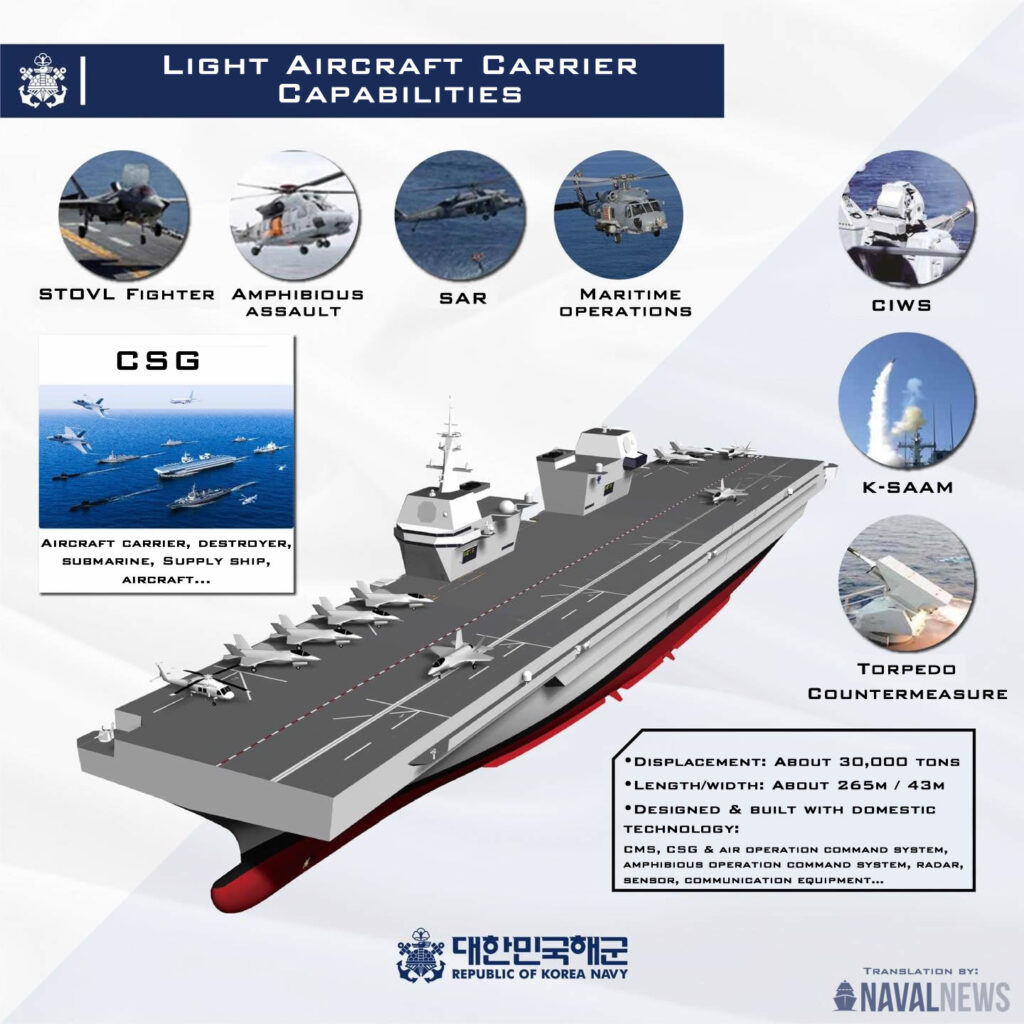
Does South Korea Need a Aircraft Carrier? Creeping Chinese Control of the South China Sea’s Oil Sea Lane is the Best Argument for It

South Korea's new CVX Aircraft Carrier project: An overview - Naval NewsThere has a been a pretty vibrant debate in South Korea over building an indigenous aircraft carrier. That debate has been especially resonant where I live – Busan – because it would probably be built here.
This post is a re-up of an op-ed I wrote for the Japan Times this week. I also wrote on this once before for a ROK navy-adjacent think-tank.

IMO, the best argument for a ROK carrier is China’s creeping, long-term effort to dominate the South China Sea. Oil from the Persian Gulf traverses the SCS on its way to East Asia’s democracies – Japan, South Korea, Taiwan. Chinese control of the SCS oil sea lane would allow the PLAN to embargo carbon imports for whatever bogus reason Beijing could think of.

We can be sure that Chinese bullying in the region will use this tool as soon as China consolidates control of the SCS and puts up enough bases to launch blockades. Indeed, I have long thought that this is the primary reason China wants to control the SCS so badly. It’s not clear that there are a lot of natural resources in the seabed there or that they can be cost-effectively extracted. And all the little islands and sandbars in the SCS aren’t valuable in themselves.

But this would require SK to start seriously thinking about 1) power projection southward, 2) contesting Chinese sea control inside the first island chain, and 3) cooperating with Japan which is also threatened by this and which has a larger navy. That would all be great but is a big ask for a country not used to thinking about foreign policy much beyond the peninsula. And that is my big concern: that the previous Moon administration really wanted to build this because Japan is building an aircraft carrier, and wants to park it next to Dokdo. That is the wrong reason to build one.

Here is the original, pre-edited version of my essay from the Japan Times:

South Korean has considered, in the last year, constructing a light aircraft carrier. This has provoked controversy. The decision to build it or not has swung back and forth. The South Korean navy very much wants it and has made a public push for it. The South Korean legislature, the National Assembly, ultimately decided to fund it last year. But the government of new President Yoon Seok Yeol is apparently re-considering.

South Korea the Land Power

Most countries in the world lean into either land or sea power, as dictated by their geography. Unsurprisingly, island states develop ‘blue water’ (i.e., ocean-going) navies. Japanese modernization, for example, lead to maritime power in the last century and half. Britain too had a large navy at its peak.

South Korea would appear to fit into this box. It is an island of sorts. It has just one land border, but that is tightly sealed. So strategically, South Korea is nearly an island.

But necessity has made South Korean a land power nonetheless. Its border with North Korea is the most militarized place on the planet. The North Korean army numbers over one million active-duty soldiers, with millions more in reserve. North Korea’s air and naval power are small in comparison. A second Korean war, like the first one, would mostly be fought on the ground. Continue reading

After the Donbas Offensive: the Oldie-but-Goodie Putin Playbook of Bogus, Russia-Dependent, Breakaway Statelets

Ukraine ChernihivPutin can’t conquer Ukraine, but taking Donbas, creating another ‘frozen conflict,’ and ending the war before it all gets so much worse for Russia is a pretty good option.
This is a re-post of an essay I wrote for 1945.com.

There was some chatter that Putin would try to end the war by V-E Day (May 9). That would be smart. The war is a disaster for Putin. His military has been revealed as much weaker than expected. China will never see Russia as a equal now. The sanctions are going to reduce Russia’s economy by 10% this year. Oligarchs are losing their assets, and the Russian people will sour on this if it turns into a long grind like Afghanistan in the 80s.

So why not go back Putin’s long-established playbook of ginning up frozen conflicts? Putin got quite good at stirring up local conflicts on Russia’s periphery, getting Russia invited in as peacekeepers, getting local stooges to depend autonomy, and then having the whole mess freeze in place so that Russia could project power into an area and inhibit consolidation of western-leaning states on his border.

It seemed like that was originally the plan with recognition of Donetsk and Luhansk, but then Putin – probably drinking his own kool-aid about Ukraine being a ‘fake country’ – decided to show what a tough guy he was with an invasion he clearly didn’t really prepare for. Now, if the Donbas offensive doesn’t generate a real breakthrough, Putin is stuck either with a war of attrition or establishing a ‘frozen conflict’ in Donbas in order to get out of the war before the costs in material, sanctions, and prestige get any worse. That’s the best way out for him now.

Here is that essay from 1945:

Putin’s Likely Ukraine Goal Now is Breakaway and Pseudo-Republics in Eastern Ukraine – The Battle of Kyiv is over, and Russia has suffered a surprising and significant defeat. A middle power has inflicted a stinging loss on an ostensible great power. Russia’s status as a world power is obviously in question now. Despite its size and weight, it cannot reduce a significantly smaller neighbor.

Russian President Vladimir Putin must now – if only to impress his Chinese backers and justify the war to his own people – win some kind of battlefield victory elsewhere in Ukraine.

It increasingly looks like the Russian effort will be a tank surge in the Donbas. Rumor suggests that Putin is looking to end the war quickly, ideally by May 9, which is VE (Victory in Europe) Day, the day the Nazis finally surrender to the Soviet Union.

This would be a wise choice. Putin pretty clearly cannot take over all of Ukraine at this point. And the sanctions will soon bite deeply into the Russian economy. This war is breaking Russian power and pushing its economy into a major contraction. Putin himself will become persona non grata, unable to travel or access his overseas assets.

Read the rest here.

The Ukraine War is Teaching N Korea that Nukes Can Keep the Americans Out of Your Conflicts

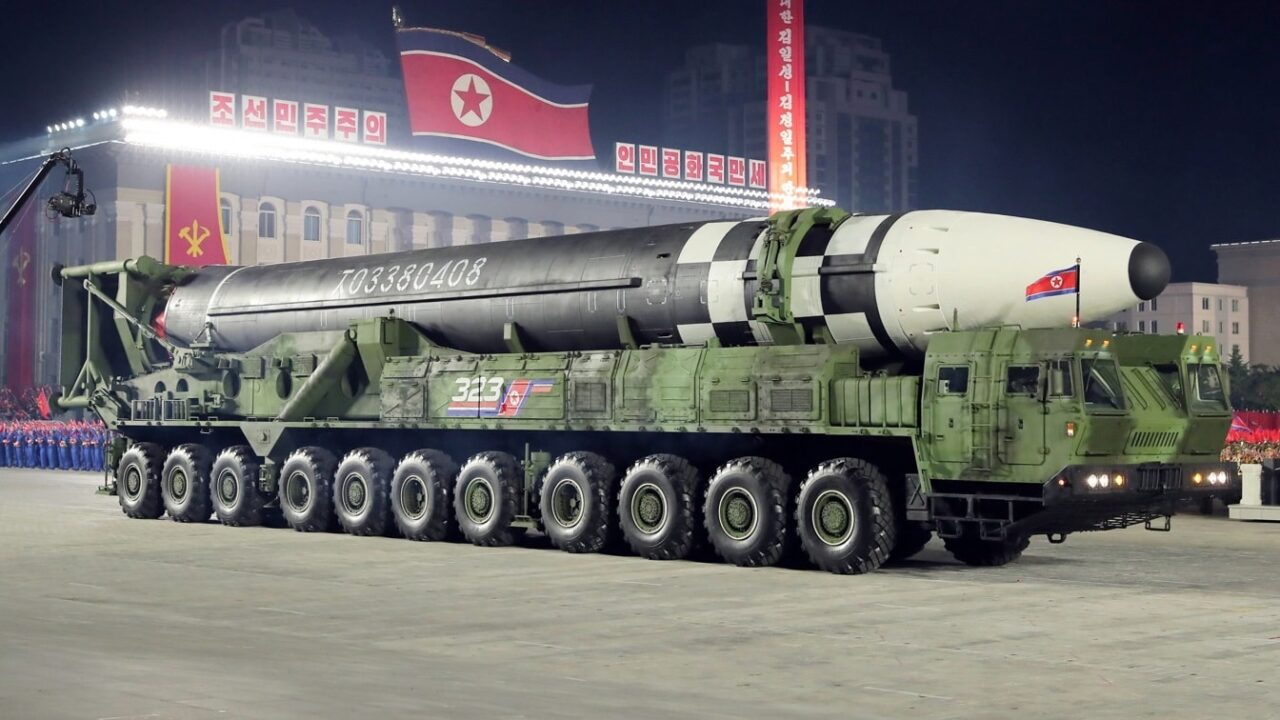
  North Korea ICBMRussia’s success at blocking NATO intervention in the Ukraine war via its nuclear weapons is a huge learning moment for North Korea. This is a re-post of an essay I wrote at 1945.com after the recent missile test.
Usually we say that NK wants nukes on missiles for:

1) Deterrence and Defense: to keep the Americans from ever striking NK, as they threatened in 1994 and 2017

2) Level the Military Playing Field: NK is too poor and technological backward to compete conventionally with SK or the US anymore. So nukes are a great equalizer.

This is true, but as we are all seeing in Ukraine, nukes are also a great way to keep the Americans at bay, to keep them from intervening in your conflict with an American ally. If Russia weren’t nuked up, it’s safe to say that NATO would be more heavily involved. And pundits have been very honest about admitting that we can’t do more, such as a no-fly zone, because we fear escalation with nuclear-armed Russia. I have argued this too.

So if you are NK, nuclear ICBMs, which give you direct deterrence with the US, are a possible way to prevent the Americans from helping SK in a conflict, just as Russian nukes are keeping us out of the Ukraine war. This is to drive wedge between the US and SK. At some point, we are going to have to reckon with this threat, and missile defense is not an answer, because it does not work well enough.

Here is my essay from 1945:

North Korea just tested a new intercontinental ballistic missile. It appears that this is Pyongyang’s longest-range missile yet. The goal, obviously, is to strike the United States if necessary. North Korea has sought, and now likely achieved, the ability to directly threaten the US mainland with substantial nuclear force.

ICBMs normally are designed to deliver a nuclear payload. North Korea first detonated a nuclear weapon in 2006. It is widely assumed that it now has several dozen nuclear warheads. North Korean supreme leader Kim Jong Un has also hinted that he wishes to develop MIRVs (multiple, independently-targetable re-entry vehicles). This would permit each ICBM to carry multiple warheads. So even if only one North Korean ICBM were to survive American missile defense, it could then still devastate multiple American cities.

Read the rest here.

The Lesson of the Ukraine War for China against Taiwan is No Longer a ‘Fait Accompli Land-Grab before the World can Respond.’ Now it’s ‘Bombard Them into Submission First’

UkraineThe lesson of the Ukraine war for China in a Taiwan scenario seemed, at first, to be: go for a quick, fait accompli land-grab before the democracies can respond. Instead, the lesson now is: bombard Taiwan into submission first before trying a huge risky landing.

This is re-post of an article I wrote for 1945.com earlier this month. There’s been lots of writing about what lessons China might draw from Russia’s invasion of Ukraine, because of the parallels. As I write,

Both are treated as dissident territories by a large, belligerent, autocratic neighbor. Both look to the US and other democracies for help but lack formal alliances with them. Further, the position of the democratic world toward them both is ‘strategic ambiguity.’ Neither can be sure the democracies will help them.

Had the Russian war gone well – specifically, had it been the intended quick fait accompli which won before the West could get its act together – this war might have served as a genuine model: grab Taiwan before the US and Japan can come to rescue and then present the new status quo as the end of hostilities and force the US to be the one who looks like it is escalating.

Instead, Russia is losing, and the lessons turned out to be far different:

1. Mobilized, nationalistic populations will fight tenaciously

2. Autocratic militaries suffer from corruption and morale problems

3. Western sanctions will be far more punishing than expected

The asymmetries between China and Taiwan are even greater than between Russia and Ukraine, so China might be able to win by sheer weight. But that’s what Russia expected too, and the geography is much worse for China. A Taiwan invasion would have to cross 100 miles of water. That is a huge logistical hurdle, on par with D-Day 1944.

So if you’re China, the strategic take-away is to pound Taiwan for weeks before invading. That would activate massive global resistance of course, but that is better than marching in and losing as Russia is doing.

Here is that 1945 essay:

The Lesson of Ukraine for China: Grabbing Taiwan would be Harder than it Thinks – There has been much discussion that Russia’s invasion of Ukraine is an encouragement for China to consider its own land-grab – of Taiwan. Taiwan and Ukraine are indeed in similar geopolitical positions. Both are treated as dissident territories by a large, belligerent, autocratic neighbor. Both look to the US and other democracies for help but lack formal alliances with them.

Further, the position of the democratic world toward them both is ‘strategic ambiguity.’ Neither can be sure the democracies will help them. The logic is that this vagueness will discourage direct intervention by China and Russia. Simultaneously though, the democracies have sought to develop robust state capacity and military capability in Ukraine and Taiwan, to improve their ability to defend themselves and, ideally, deter Russia and/or Chinese attack.

Read the rest here.

Mearsheimer, NATO Expansion, and the Ukraine War – M Predicts Russia’s Desire to Dominate Ukraine, but also NATO Expanding to Fill a Vacuum

UkraineEveryone seems to have a take on Mearsheimer and Ukraine, so here’s mine: Mearsheimer’s offensive realism predicts Russian’s desire to dominate its borderlands, but ALSO a NATO effort thwart that via expansion. So its awkward that he blames NATO, because playing international politics toughly is what his offensive realist theory would predict NATO to do.

This is a re-post of an article I wrote a few days ago at 1945.com. I should say to start that I find damning Mearsheimer as some kind of Russian operative or stooge is wrong. He’s been predicting this for years, and he’s an academic with a reputation for integrity. He’s a far cry from embarrassing, pro-Putin hacks like Tulsi Gabbard or Glenn Greenwald.

Still, I think Mearsheimer gets Ukraine wrong, because he only looks at it from Russia’s perspective. His theoretical priors – offensive realism – do predict that Russia will try to control its borderlands. But offensive realism ALSO predicts that

1. those borderlands will try to escape Russian domination (which Ukraine is doing now and Eastern Europe did by joining NATO)

2. Russian competitors will try to help those borderlands escape (which NATO did by accepting Eastern European states)

3. Germany/EU/NATO, for which Eastern Europe is also a borderland, will also try to dominate it (which has indeed been the case historically – Germany and Russia have contested to dominate EE)

4. states with a window of opportunity for gain against an opponent (Russia’s post-Cold War weakness) will take it (which NATO and Eastern Europe did by consolidating expansion when Russian was weak)

In other words, Mearsheimer’s own theory does not predict Russian domination of Eastern Europe as a stable equilibrium but instead predicts a dynamic contest between Russia, the states it seeks to dominate (Ukraine included), and Germany/EU/NATO for whom Eastern Europe is also a borderland.

Here’s that essay on 1945.com:

The debate over the causes of the Ukraine War is intense. In the West, there has been much contention over whether the expansion of NATO after the collapse of the Soviet Union provoked the invasion. The most famous proponent of that claim has been John Mearsheimer, University of Chicago professor of international relations. Mearsheimer’s core argument is made here and here, and he has recently re-stated it here and here. Others have made this argument as well (here, here, here). The Russian government has even deployed Mearsheimer’s talks to defend its war.

Please read the rest here.