
Ok, this has gotta be my last response to the many comments from this sprawling series (one, two, three, four, five) of posts on ranking US allies. Thanks for all the interest. Who knew Canada was so interesting or Canadians so passionate?
I’d like to thank Stephen Walt (whose blog I think is the best in IR) for linking this debate, and Andrew Sullivan for linking me twice. If you aren’t reading Sullivan yet, you’re at the wrong website. Thanks too to all those Canadians who came out of the woodwork to defend its boring relevance. Finally, who could fail to thank a website disturbingly entitled f—-dgaijin.com?! (Yes, that’s the actual name; check it out for yourself; at least these guys know where we resident-foreigners stand in the East Asian racial food-chain – at the bottom.)
So here are some final thoughts on the many comments, but especially Walt and Sullivan:
1. I accept the arguments from several commenters that Turkey should be on the list. So here is a final list, a ‘top 12’ of US allies in order: Canada, Mexico, Saudi Arabia, Taiwan, India, Indonesia, Israel, South Korea, Japan, EU/NATO, Egypt, and Turkey.
2. I was please to see that Sullivan flagged – not necessarily approved, but just noted – my argument for Indonesia as America’s most important bridge to the Muslim world. I realize this is kinda off-beat, given that the ME is what dominates our perceptions of Islam and where Islamist pathologies are worst. (Here is a critic, a neocon perhaps, calling me ‘delusional’ for ranking Indonesia this way.) So here is a quick defense, more or less along the lines of what Secretary Clinton said a few years.
Indonesia is a syncretic model of pluralist Islam and politics; I think this is pretty widely accepted. No, it’s not as modern and liberal as we might like, but by the standards of the region, other developing countries, and the OIC, it is a paragon. Let’s be honest about that. It could easily be far, far worse (think Pakistan), which is why I find it unfortunate that we don’t pay attention much. We should not let the perfect be the enemy of the good, and a friendship with Indonesia doesn’t mean avoiding tough issues, just like engaging China doesn’t mean we should ignore human rights and other similar issues.
So in its own imperfect, struggling way, Indonesia represents the future of political Islam (speaking very broadly to be sure), not the past, which is a lot of what the ME represents and what Arab Spring is trying to break. If the flat-earth religious elites of places like Iran, Pakistan, or Saudi Arabia are allowed to dominate the global conversation on Islam, more conflict is likely. By contrast, Indonesia offers a possible model for Islam to live with both democratic politics and religious pluralism. That we should vigorously support such an effort, through some kind of alignment, strikes me as so self-evident, that I am amazed that we never talk about this.



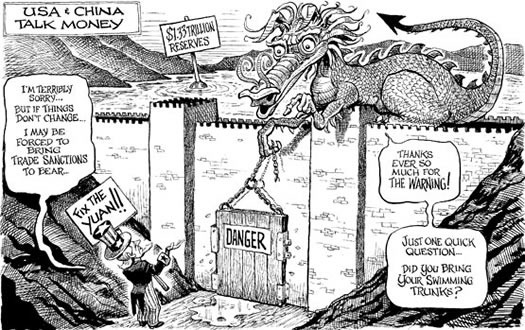
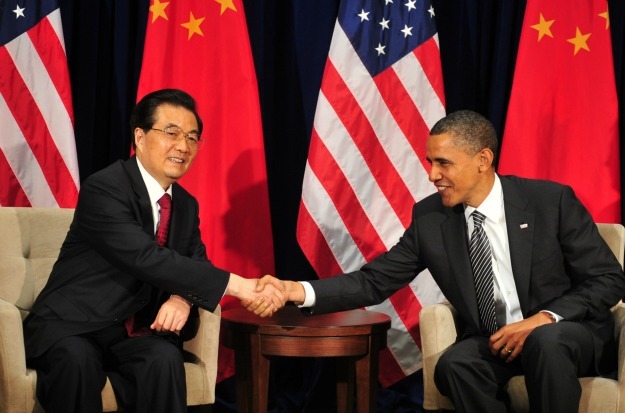
 ). And clearly China’s behavior over the last few years has raised the likelihood of at least soft containment; even the Vietnamese and the Filipinos are asking for US agreements now.
