Foreign Policy of the GOP Debates (1): We couldn’t care less @ Foreigners

The ‘foreign policy’ debate

MEDIA UPDATE: On November 8, I published a brief write-up on the US-Korean alliance with the East Asia Forum. EAF is a good outlet for readers of this site. The piece was based on longer writings here on the blog earlier this fall. Comments are welcome.

——————

There have been lots of these GOP debates (here is the whole schedule), and the one above, from Nov 12, is the most relevant for readers of this site. Here is a decent write-up on that debate, and after months of them, there is enough said to provide something to say on the (otherwise scarcely discussed) foreign policy edge of the primary.

1. Any first foreign policy comment must be, paradoxically, that foreign policy isn’t really much of an issue. No one at the primary stage really cares about foreign policy, beyond Israel, which increasingly isn’t seen as foreign policy at all, at least by the GOP, and a general chest-thumping of American awesomeness. This is not news for Americans. US observers all know that domestic politics, especially the economy, pretty much determines elections. When you are a superpower you have the luxury to disdain and ignore foreigners. But foreigners don’t know this as well, and US allies especially often build-up (self-serving) images of themselves as ‘critical’ to the US, even though monolinguistic, untravelled Americans couldn’t care less about these countries (poor Georgia; the entirely ginned-up Korean belief that K-pop is a ‘wave’ in the US; a self-important German colleague once told me that America should never force Berlin to choose between Washington and Paris – oh please! like we care, dude!). Indeed, Hermann Cain’s rise and his staggering ignorance about the non-US world tells you that disinterest in the world – presumably because we are so exceptional and powerful that we don’t need to care – is almost welcomed by the Tea Partiers who hate IOs, illegal immigrants, and US bargaining with foreigners. Build the fence higher! And electrify it!

2. For all the hype about the US switching its focus to Asia, you wouldn’t know that from the debates. Do you really think that the average tea party white guy voter cares about SK or Japan? The Middle East was far more dominant. Iran, Pakistan, Israel, and the rest of the usual suspects were everywhere. I think I heard Gingrich mention NK once in this debate. The China stuff between Huntsman and Romney was flat. India wasn’t even mentioned, but waterboarding (of GWoT detainees) was a disturbingly hot topic. Again, this isn’t news to US observers who know how many Americans, especially Christians, take a fairly apocalyptic, clash-of-civilizations view of the GWoT. Bachmann even warned of a global nuclear war against Israel (god, she’s a terrifying flake). Elites may want an Asian turn in US focus (as I think would also be a good idea), but the ‘Christianist’ GOP electorate remains focused on the ME, and we should expect that to continue to dominate US time, even if we don’t want it to. Terrorism, oil, and Israel aren’t going anywhere.

Asians are bound to be disappointed, because of the deep-rooted belief (desire, actually), verging on desperation, that the US should pay attention more to them. (Read this and this – apparently India and Southeast Asia are ‘indispensible’ for the US. Oh, and so is Latin America. — Not! Americans just don’t care. Elites aren’t the voters. Build the fence higher!) What this tells you is that the Asia hype is a lot more hollow than Asians want to admit, because it requires US attention to be justified. So America is still the unipole whether you like it or not (natch), and the ‘new Asia’ schtick is more about Asian insecurity and desire for prestige, than it is about empirical shifts. (Yes, the shift is happening, but a lot slower than the ‘Asia is the future’ types I meet here all the time will admit.) I have argued before that Americans just don’t care than much about Asia, no matter how many Asians tell us we should. Israel or even ‘old Europe’ Ireland is a lot more recognizable to Americans than Shanghai or Bangalore. Further, so long as India, Japan, China, and the rest out here are all balancing each other and competing, the US doesn’t really need to get sucked into the maelstroms of the Korean peninsula or the South China Sea anyway. The Asian hype that the US should pay more attention out here is really an effort to get the US to help locals contain China, which bait we should not take, IMO.

3. Cain, Bachmann, and Perry are way out of their depth. By now everyone knows Cain’s ‘U beki beki stan stan’ remark and Bachmann’s off-the-wall assertion that the ‘ACLU runs the CIA.’ (Yes, the same Agency that runs the drone strikes that now kill US citizens.) But even Perry can’t seem to give good answers – that he ‘commands’ the national guard and has friends in the Defense Department are qualifications for the White House. That’s all he’s got after 3 months on the trail? What happened to Perry? He seemed so imposing back in August, and he has just crashed. He comes off more clueless and lost in the woods, after his pre-scripted reply sentences run out, than even Bush. It’s amazing how weak this field is (which is why Romney is running away with this thing, even though no one likes him).

Part two will go up in three days.
Happy Thanksgiving – Some Korean Humor – See You Next Week

I love this special. Enjoy.

For my passing thoughts on western holidays in Korea, try these for Christmas, Halloween, and Thanksgiving. The short answer is that US holidays have made only minor inroads, so we should be skeptical of antiglobalizers’ claims that globalization is really cultural Americanization/homogenization. Despite 5 decades of huge US cultural influence in Korea, local cultural integrity is pretty intact. I don’t see too much homogenization here; it’s more like hybridization.

So here is a little Westerners-lost-in-Asia humor to tide you over for a week.

Among the expat community here, lots of these ‘You know you have been in Korea too long, when…’ lists circulate on email. Here is a mish-mash of the many I have received over the years. Some are a little punchy; just try to laugh a little. They are meant to be fun and exaggerated.

You know you have been in Korea too long, when…

When you no longer wait for the subway on/off pell-mell to clear; instead you plow in and contribute to it.

When you bow to foreigners too.

When you wear high heels to the beach.

When you fear an imminent Japanese invasion of Pusan.

When you demand steel Korean chopsticks even when you eat at Chinese and Japanese restaurants.

When you use chopsticks even when your Korean dinner partners use a knife and fork.

When you tell your far-too-hot-for-you Korean girlfriend that she needs plastic surgery, and she accepts it without complaint.

When you tell your family that Korean food improves your blood circulation.

When Korean directions – ‘make a left turn at the mountain and go straight for awhile’ – are crystal clear.

When normal women from your home country suddenly appear overweight and underdressed.

When you agree that there are too many foreigners in Korea.

When you bring a dictionary on a date.

When you use your fan’s timer at night.

When you no longer pity the live crabs boiling in the pressure cookers at the street market.

When you prefer Korean beef to ‘imports.’

When you put a picture of yourself on your cell phone instead of your loved ones.

When you enjoy watching street vendors decapitating live shellfish.

When you no longer feel embarrassed talking back to the little kids who point and call you ‘foreigner.’

When you’ve mailed pot to yourself (probably from Canada).

When you smoke in your office and don’t worry or care you’ll get caught.

When you drink in your office and don’t worry or care you’ll get caught.

When you eat meals at FamilyMart.

When you know the HomePlus jingle by heart.

When you’ve stayed a love motel.

When you prefer love motels, because they’re cheap.

When you stop being surprised by ‘service-e-e,’ start expecting it, and then get unhappy when you don’t receive it.

When you automatically assume you should buy all your electronics from Samsung, even though you bought Sony at home.

When you find Arirang TV network a realistic portrait of Korea.

When you finally acquiesce to your Korean girlfriends’ insistence that you wear a tie with sparkles.

When you start agreeing that air-drying your clothes is better than your tumble dryer at home.

When you stop caring that your students laugh at your terrible Korean.

When drinking till memory loss on a work night constitutes ‘improving your network.’

When you stop worrying that your apartment security guard sleeps all night and never seems to be at his desk.

When you start to sort your trash in your apartment.

When you own gold formal chopsticks.

When you’re no longer embarrassed to hit the salons after work; instead you egg your Korean friends to take you with them.

When you keep sandal house shoes at your office.

When you no longer find National Assembly riots hysterical.

When you complain about the quality of the kimchi at restaurants.

When you sit out all night at a small food stand and get loaded with the other ajeossis.

When you start speaking Kongrish-e-e instead of English.

When you have a statue of the happy Buddha on your shelf.

When you keep a bottle of liquor in your office.

When your intestines finally make peace with red pepper at every meal.

When you start styling your hair like Rain.

When you start calling other foreigners ‘wae-guks.’

When you start believing in ghosts, spirits, demons, forest gods, the ancestors, and the 4th floor.

When you re-watch ‘Poltergeist’ for home defense instructions against the ghosts.

When you know who Dangun and the Su-ryeong are.

When you believe in Dangun and tell your students to call you Su-ryeong.

When you actually care about the fate of Dokdo.

When you think making out in the DVD bang is a normal part of a date, not a deportable offense.

When you unthinkingly speak of the “East Sea” to non-Koreans.

When you agree that movies like ‘D-War’ are a global cinema event.

When you no longer miss the Halloween-Thanksgiving-Christmas-New Years holiday season.

When you stop holding doors for people.

When you push through a crowd as well as an ajumma does.

When your cell phone danglies outweigh your cell phone.

When you can perform the full Buddhist bow without your knees cracking.

When you accept that kimchi really does ward off SARS/bird flu/Ebola/swine flu/mad cow disease.

When you do mental addition with your one hand on the palm of the other.

When you expect and want kimchi with your breakfast.

When you prefer soju to ‘imported’ liquor.

When you have watched TV on your cell phone.

When you have bought 2 cell phones in less than 1 year.

When you stare back unfazed at school girls smirking at you.

When loudspeakers on fruit trucks add ‘local color’ instead of ‘noise pollution.’

When ‘home’ is one room 40 stories off the ground with no air conditioner.

HAPPY THANKSGIVING.

“Homefront” (2): The Michigan Militia saves America from the ‘Norks’

images

Part one is here, where I noted the game’s high-level of 80s camp hamminess.

To compensate for that gauzy 80s nostalgia, the game throws copious, unnecessary brutality at you to tell you its ‘serious.’ This creates a high moral awkwardness in that NK is an extreme human rights abuser in the real world, but is here used for sadistic entertainment. ‘Highpoints’ include: the opening sequence shows occupation soldiers executing American parents in front of their screaming child. Later your character hides from the NK People’s Army (KPA) by climbing into mass grave, after watching a mass execution, and hiding under the bodies. Survivalist gun-nuts are presented who torture and execute captured North Koreans, with implication that they may eat them too. At another point you are encouraged to not waste your ammunition killing KPA soldiers who are on fire after an air-strike.

If all this doesn’t make the gamer complicit enough in pro-American bloodlust, you get regular ‘kill ’em all’ exhortation in your militia from a one-dimensional, ‘tough-as-nails’ alpha-male stereotype (Milius wrote Conan the Barbarian too) berating his whining female sidekick for her lack of vengeful determination to butcher on behalf of America. As the game website tells us, “Because Rianna is not former military, and not a battle hardened combat vet, cracks in her exterior resolve will show at times. She is a humanitarian, she does have feelings that she needs to deal with and control in the line of duty. She’ll never feel good about everything the Resistance has done and will continue to do, but she’ll also never let those emotional struggles to destroy her and the other’s ruthless resolve to win at all costs. There is no other option.” Yes, the NRA, military-loving, survivalist patriot will triumph over her inner Amnesty International sissie.

So we are back to the tiresome, right-wing GWoT trope that if you really love America, you must be willing to go over to the Cheney’s ‘dark side and beat the hell of out people. I hate this motif, because it says the rules of engagement are for liberals and wusses. All of America’s opponents are unremitting, unrelenting, thoroughly evil, and so cunning, that there is no choice but to blow them away with extreme prejudice at all times. You namby-pamby liberals, with your Geneva Conventions and squeamishness to use a gun, just get in the way, or worse, give aid and comfort to the enemy by according them due-process. Real men just kick a—. As with Michael Bay villains, the ‘evil’ of the Homefront Koreans is so ridiculous and exaggerated, that it is obviously just a narrative fig-leaf to mask the real point of movies and games like this – vengeful, extreme carnage, including torture, executions, and mass killings, as pro-American, nationalistic entertainment.

I want games and films to be edgy too, but I am increasingly disturbed by the Cheney-esque reveling in gratuitous torture and brutality by the good guys in post-9/11 geopolitical action entertainment. There is a willingness to wear it openly, almost proudly, as if it were a badge of honor of one’s seriousness and commitment to defend America that one won’t hesitate to violently break the law. Bay’s Transformers trilogy is filled with executions as entertainment; Modern Warfare 2 included torture and an infamous scene where the gamer actually machine-guns dozens of innocent civilians as part of the plot; 24 is notorious for torture and similar brutality; and Homefront includes a ghastly ‘killing fields’ sequence not narratively necessary, but just thrown-in to raise the extremity level yet higher (shooting parents in front of their kids wasn’t enough I guess).

This doesn’t mean games and films should be neutered, and I concur that mature games that include adult themes enrich it as a medium. But there are games that include moral choice that actually inform the violence and give it some meaning – even if you choose to be harsh. And even the Halo series, arguably the best shooter out there and filled with violence unsuitable for minors, doesn’t present gratuitous brutality just for its own sake.

In sum, the NK invasion environment is interesting, creative, and somewhat engrossing, especially if you know anything Korea. The wacko blend of gun-fetishism, surreal NK agitprop, 80s USSR references, and Hooters and White Castle (another sponsor) generates unintentional and bizarre camp laughter throughout. But Homefront eventually capitulates to the Tea Party/NRA version of US force – armed militia vigilantes rescue America with extreme brutality and righteous vengeance. Terrifying; it’s ‘Michigan Militia – The Game.’ In fact, I got so emotionally jaded after the killing fields sequence, I was surprised that the later implied cannibalism wasn’t actually shown. I can only imagine how uber-bloodthirsty the next Modern Warfare will be this fall. As I have said so many times before, this is why we frighten the rest of the world…

I finally played “Homefront” (1): its more @ Gratuitous Brutality than NK

homefront

Part two is here.

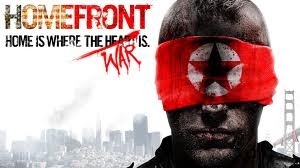
As a part of my regular effort to avoid work yet nonetheless self-justify slacking as ‘work-related,’ I played Homefront this summer at home on vacation. Unfortunately, it has been banned in SK (where it would make millions, I have no doubt). I wrote about it earlier when it was released and there was controversial buzz around it. Readers will recall that it is a first-person shooter in which you play an American resistance guerilla fighting against a North Korean occupation force in the US. Through a (rather ludicrous) series of geopolitical twists, NK manages to reunify with SK under Northern leadership, then pull Japan and Southeast Asia into a ‘Greater Korean Republic,’ and then sail across the Pacific (!) in order to invade the US which has been crippled by a massive oil shock resulting from a Saudi-Iranian war. If you are genuinely interested in the details of this future ‘counterfactual,’ the wiki write-up is good. For the idiot fan-boy, ‘this could really happen, dude!’ version, try here. As a website about Korean security, I thought this would be off-beat to discuss.

As for a review of the game itself, it got 70% from Metacritic. That sounds about right to me. The gameplay is like most other shooters, and I found the long distance between checkpoints had me re-playing too many sequences again and again. The real hook is the apocalyptic, over-the-top environment. In play, it is basically a nastier, crueler version of the already fairly cruel Modern Warfare series. As I said in my commentary on Bay’s Transformers 3, I believe one reason contemporary geopolitical games and films show increasing levels of gleeful brutality and unnecessary cruelty is US disillusionment with the GWoT. After a decade of torture, wounded veterans, and exhaustion with the ‘recalcitrance’ of the Middle East to its ‘liberation,’ the Americans who ‘hoo-rahed’ at bin Laden’s death are ready for geopolitical viciousness as entertainment. So forget Halo’s goofy aliens or having tea with Afghan village elders – let’s get down to kicking the crap out of the axis of evil.

The influences on the game will be immediately apparent to anyone in IR who lived through the 1980s and will provide regular camp laughs of nostalgic recognition. The story is ridiculously cheesy, because it is basically a re-tread of the Red Dawn scenario which feels wildly out of place today. Made during the height of the second cold war, that 1984 film, featuring a Soviet ground invasion of North America in the mid-80s, was already pushing reality enough, but here the story just goes off the rails, because NK is so preposterous in the USSR role. Can anyone really imagine NK helicopters flying air patrol over the ‘American zone’ of occupied Denver? I’m not even sure what means… It’s just too improbable to pull you in. Indeed one wonders why the invader wasn’t the far-more-obvious China, but I guess you can’t annoy the world’s biggest emerging market…

In the wake of 9/11 and given NK’s well-know weakness, the scenario is ludicrous. The ‘Norks’ (a suitably racist replacement for today’s ‘haji’) are shown doing stuff that modern gamers won’t even recognize as Cold War-tropes and motifs (re-education camps, house-to-house round-ups, a stalinist cult of personality). Modern Warfare and 24 have your standard issue, post-9/11 terrorists to give them immediacy and edge (and racism), but how many people will identify with a NK-cum-Soviet invasion of America in 2011? Playing it made me feel like a tween again, worried about whether we needed bomb shelter in our backyard.

(A bonus bizarro addition is the game’s sponsorship by Hooters [wait, what?]. Its restaurants show up in the game, generating even more surrealistically dissonant dialogue like ‘take out the sniper in the Hooters’ lobby.’ Hah!)

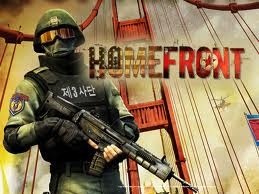
The writer of Red Dawn was John Milius, and he wrote this game as well. He even wrote a book for the game, in case you need more killing in the name of freedom. Homefront has all the traits of campy, right-wing cold war paranoia that Milius is known for and that IR types old enough to remember the 80s will recognize immediately. There are heroic resistance fighters in a masked nod to the mujahideen, contras, and other ‘freedom fighters’ against communism whom the US sponsored back in the day. Pol Pot-style death camps are included (!). The survivalist, NRA (National Rifle Association) gun-culture machismo that informed Red Dawn is back; lots of cut scenes show an ‘armed citizenry’ guarding their homes and lounging with their weapons. The enemy of America is once again communists, and somehow those communists manage to launch an transoceanic invasion of the US homeland. There are commie agit-prop signs up throughout the game, like ‘Praise to the Dear Leader’ and ‘Rejoice at the Korean-American Reeducation Facility.’ These are in proper Korean and provoke great laughs of 80s recognition mixed with sheer campiness for rendering NK agitprop into a surreal US occupation setting. The antagonists even speak in a NK accent. But it all feels like such a weird stalinist throwback in the current age of terror and al Qaeda, that it’s more like watching ‘I Love the 80s’ than a edgy contemporary video game. Someone remind Milius that Brezhnev died 3 decades ago.

Please continue to Part two.

The Iraqis don’t Want Us in Country & We have to Accept that

iraq

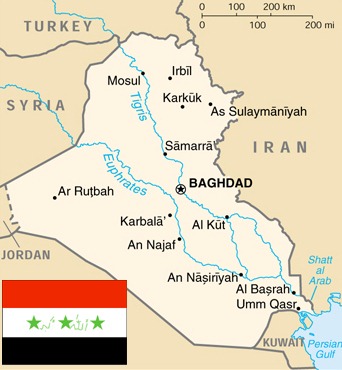
So it’s official now – or at least it really, really looks official this time. We are leaving Iraq at the end of the year. I mentioned this in class, to which I received nearly universal student skepticism. We are covering the Vietnam war now in my US foreign policy class, and we are discussing how America’s involvement there was far longer than the standard images we have from the Vietnam war movies we have all seen. From around the mid-40s to the mid-70s, the US was in Vietnam in one way or another, and most of my students simply assume that the US will be in Iraq even when we aren’t in Iraq. (Hah! Foreigners just expect US semi-imperialism and don’t believe us anyway when we say we are leaving. That in itself says something.)

And indeed it does look like we will leave behind a small army of contractors (armed in some way or other) and a large embassy staff. On top of that are the recently announced plans to beef up the US presence elsewhere in the Gulf – again creating the foggy, ‘we aren’t in Iraq but we still sorta are’ vibe that everyone is wondering about.

But removing easily identifiable, very public combat forces (i.e., warfighters on the ground) from Iraq is obviously a pretty big break. And the Obama administration very publicly wanted to stay beyond the scheduled departure date (end of 2011). But the US wanted immunity for US forces in Iraq under a new Status of Forces Agreement. The Iraqis didn’t want that, so Obama had to give, and the 2011 deadline will be held. It is worth noting that the 2011 deadline was originally set by the Bush administration in 2008 in the wake of the surge, which should dim, IMO, the criticism from the right on this one. But still, there is now the (inevitable I suppose) backlash from neocons. (Here too.)

I supported the Iraq War until around 2008, at which point it became just too clear that we were in over our heads and had drawn too much blood to justify the modest improvements in governance that resulted. (An important part of my change in thinking was this.) Like the neocons, I feel the impulse to ‘solidify’ gains in Iraq by staying. It was such a titanic effort, that if Iraq collapses again (primarily because the surge didn’t resolve the issues of Iraqi division so much as freeze them), the whole thing will look like an even more colossal failure than before. An obvious model for the neocons would be Korea, where the presence of US forces helped keep Korea on track to the point where it is basically a modern liberal democracy today capable of taking care of itself without much help.

But there are some obvious problems that I would like to hear answered about why we should stay. Read this also on why we should leave.

1. The Iraqis want us to leave. Exum’s post on this is spot-on. We may want to stay, but they clearly don’t. In fact, it is increasingly obvious that the really don’t want us there anymore.  This must weigh very heavily in any decision; indeed, it should be a deal-breaker if Iraqi sovereignty is to have any meaning. If we stay when they don’t want us to, then we really are an empire. That really is an occupation. I do wish some kind of bargain could be found. Like everyone else, I worry that Iraq will collapse in civil war, and a minor US presence could be an important brake. But honestly, we turned that place upside down. Iraqbodycount.com estimates that our intervention resulted in over 100,000 deaths, not to mention the millions wounded, internally and externally displaced, disrupted, etc, etc. We don’t really need to start debating the Green Zone or Fiasco again to know that do we? Honestly, we shouldn’t be very surprised they want us to go.

2. Can we afford this? I guess I sound like a nag on this. Like Ron Paul, I keep bringing this up again and again, and no one wants to hear it, and everyone thinks I am a scold or a bore. But it still worth nothing that we spend over a trillion dollars on national security per annum, have a budget deficit around $1.5T and $10T in debt, are cruising toward a 100% debt-GDP ration by 2020, and have an aging population that would really like Medicare and Social Security instead of aircraft carriers and occupations. At some point, we have to make some hard budget choices. Given how badly the Iraq War flew off the rails, and how much the world and Iraqis themselves want us to leave, honestly this is probably one commitment we can afford to cut in the interest of better balancing our obligations with our constraints.

3. Do we really want to stay in Iraq for 50 years, if indeed Korea, Japan, or Germany are the model? It is worth recalling that back in the 50s, Americans worried similarly about a huge, never-ending, super-expensive commitment to a small, far-away, not too important place (Korea). Now, the neocons are right to say that in the end, Korea turned out well, but it took 50 years, it is not clear how to measure if the US commitment and money spent in Korea was ‘worth it’ or not, and whether the US public would support any such long commitment to Iraq. In short, if the US had a reasonable, Korean-style shot at normalizing Iraq, but it would require 50 years of commitment, would the US public support it? Well, given that US support for the Iraq War faded after just a few years, I don’t think that question would survive a referendum. Remember that the war was not sold in 2002 as a 50 year nation-building exercise that would cost trillions of dollars. There is just no way the US voter would have supported that. Wolfowitz even admitted that WMD was the only way to ‘sell’ the war to the public, because the Bush administration knew the public wouldn’t buy a larger, ‘freedom agenda’ mission. And of course, candidate Obama explicitly ran on this plank.

So yes, we should stay involved with Iraq, through diplomacy, aid, and training. We owe them that, but we must in the end, respect both the wishes of the Iraqi and American publics. After so many years of debate on this issue in both countries, it should clear that this is not a fly-by-night poll result. Everyone knows the risks of withdrawal, and they have decided for it nonetheless.

US Decline & Korea (2): What is US National Interest in Korea? UPDATE – Poll: only 40% of Americans want to defend SK, even it is attacked

Here is a bit of President Lee of Korea’s speech to the US Congress

Here is part one of my thoughts on the US-Korea alliance after President Lee’s visit last week.

First, despite the invitation from Congress, Americans know very little about Korea compared to allies like Canada, Britain, or Israel. Americans usually see Korea’s geopolitics through the prism of North Korea and the ‘axis of evil.’ The Tea Party movement especially takes a rigidly ideological-neoconservative view of Korea as the ‘frontline of freedom,’ and Sarah Palin notoriously needed to be taught, as vice-presidential candidate, why there are two Koreas. While this doctrinaire view of Korea as a black-white, good-evil contest may suit South Korean conservatives, a neocon-ideological reflex should not be mistaken for deep local or cultural knowledge of Korea. Far more US congressmen have visited Israel than Korea, and how many Americans have you met who can speak Korean? Previous liberal governments of Korea kept some distance from the US for fear that American neo-cons would instrumentalize South Korea to the ‘freedom agenda,’ pull SK into ideologically-driven conflicts like Iraq, and unnecessarily raise tension with the North. Binding oneself too close to the US in foreign policy carries the risk of getting ‘chain-ganged’ into America’s periodic bouts of ‘democratic imperialism.’

Second, the US is flirting with national bankruptcy. This will have dramatic impacts on all its alliances, not just in Korea. In my teaching and public speaking in Korea, I find Koreans disturbingly unaware of just how bad America’s financial situation really is. The US is now borrowing 40¢ of every dollar it spends. The deficit is $1.5 trillion (160% of SK’s entire GDP); the debt is almost $10 trillion; the IMF predicts America’s debt-to-GDP ratio will exceed 100% by the end of the decade; China owns 1/3 of the US debt; US national security spending tops $1.2 trillion, 25% of the budget and 7% of GDP. These are mind-boggling figures that all but mandate at least some US retrenchment from its current global footprint, including perhaps, by not necessarily limited, to Korea.

Unless the US citizenry is willing to except a noticeably lower standard of living, including major cuts in popular welfare-state programs like Medicare, then the burden of the necessary cuts to fix America’s finances will eventually include defense. By almost any definition, the US is overstretched – fighting too many wars for too long and borrowing far too much money. ‘Empire’ is very expensive, and soon American voters will be forced to choose between it and the welfare-state, between guns and butter.

In this regard, the recent Libyan conflict should be instructive. It is a good example of what war in the age of austerity and US budget constraints will look like. US public opinion was deeply hesitant for yet another conflict, so Obama could only provide air support and quickly abjured leadership to NATO. Former Secretary of Defense Gates said before he left office that ‘any future secretary of defense who recommends sending a big US army into Asia or Africa again should have his head examined.’ These sorts of hints should tell Koreans (and Iraqis, Afghans, Israelis, etc.) that America can’t/won’t fight big land wars in Asia for awhile. Yet NK is a far more capable opponent than Gaddafi or the Taliban; the war on terrorism would pale in comparison to an intra-Korean war. What if America could only provide air power, because US banks are suffering from a slow-motion crisis similar to Europe’s today or the Lehman collapse of 2008? What if China, which funds so much of US borrowing, suddenly pulls the plug as US involvement in a war on its border deepens?

Third, Korea needs the US a lot more than the US needs Korea – which means that resolutely unacknowledged US relative decline is the real backstory to Lee’s triumph in Washington. Unlike the US, middle-power Korea has dismal geopolitics – surrounded by large neighbors who have periodically bullied it, and bordered by an unpredictable rogue. Weak, encircled countries as diverse as Poland, Paraguay, and Zaire have seen themselves plundered and divided, so the US alliance is good way for small Korea to get some leverage in its tight space. But this will fade, not just as American power recedes from Asia under massive budgetary pressure, but because Korea is no longer central to American security. The Cold War is over. Today, a NK defeat of SK, while a local tragedy, would not dramatically impact American security. I don’t mean to sound cold; a NK victory would be a humanitarian catastrophe. But the gap between US and SK security is an important truth not often admitted and behind the deeply disturbing statistic that only 40% of Americans want to fight for SK even if it is attacked by NK (p. 6 here). That number should stop the presses, but everyone ignores it. This ‘asymmetric dependence’ is very obviously the reason behind Lee’s visit, Korea’s willingness to go to Iraq, and the astonishing interest in Korea in English and the US. While American public does in fact obsess over Israeli security, small as it is, the Korean alliance has weaker, more ideological, and less tribal, roots in US popular opinion.

None of this means the alliance will break soon, but the strong elite consensus for it should not be mistaken for a deep American popular commitment (p. 6 here), as there is to, for example, Canada, Britain, or Israel. In the next decade, America’s political and financial dysfunction will force a painful prioritization of US foreign policy. Commitments like Germany, Iraq, Afghanistan, Korea, and others will be deeply scrutinized, and no amount of Korean-American friendship will undo a $10 trillion debt.

———————–

NB: Here is the new SecDef saying we won’t pull out of the Pacific. I hope so, but no one seems to want to talk about the money…

NB2: Here is a far more believable account of America’s future troubles projecting force into Asia, with even worse numbers than I present above.

NB3: If you think Korea can/should help the US contain China, try this. More and more I would expect Korea to market itself to the US in this, especially given those poll numbers on NK.

US Relative Decline and the Korean Alliance (1): Cultural Distance

untitled

Part two is here.

On Monday, I put up the wisecracking version of the problems in the US-Korean alliance. I took some flak in the comments, and not everything I wrote is necessarily my own opinion. My own sense is that the US-Korean alliance is a net gain for liberalism globally, and I therefore support it. It definitely helps Korean security, although its national security benefit to the US is less clear after the Cold War. The alliance helps stabilize Asia at a time of rapid Chinese growth and NK bad behavior. While that most benefits East Asia, it does have some flow-down benefits for the US. I thought President Lee’s decision to visit Detroit and wear a Tiger’s baseball cap was a great, very sensitive move – an unexpected, heartfelt outreach to the part of American most beaten down by trade with Asia. (I’m from Cleveland, so I was genuinely touched; I wonder if a Chinese or Japanese leader would ever do something like that.) I really like Lee more and more.

Broadly speaking, I hope the US can help Korea in its tough security dilemma, while I do think Korea needs to spend a lot more on defense and carry more of the load. (America’s too broke, and it is firstly their war.) I don’t think Koreans realize (or don’t want to realize) though, that Korea is and probably always will be a middle power, that Korean security is not as central to the US as it once was, and that a lot of America’s commitment to Korea is ideological, not substantive or tribal. America’s commitment to Britain, Canada, or Israel is informed not just by national interest, but by a genuinely tribal sense of ‘we-ness.’ We look at them, and we see ourselves in religion, language, history, and race. This is most evident among the tea-partiers; just watch the GOP debates, where fealty to Israel is practically an ideological requirement, because so much of the US Right sees as Israel as a ‘Judeo-Christian’ extension of the US in the struggle against Islamism. I don’t think such a cultural bond exists between the US and Korea. Americans just don’t know that much about Korea (again, language acquisition is a good marker) and don’t obsess about it the way we do the Middle East. Instead, we look at Korea, and we see ideology – a democracy battling the axis of evil. This is why neocons who don’t know anything about Korea or Asia are nonetheless super-hawks on NK. Any US interest in provoking and defeating NK is more about right-wing ideology than any on-the-ground knowledge of Korea; how many Americans do a junior-year aboard here? Again, just listen to the GOP presidential debates. That may conveniently overlap the preferences of the SK right, but that is not cultural knowledge. It is post-9/11 semi-imperial, neocon ideology.

So the original faux-essay was trying to think of what a Korean foreign policy-type might really like to tell the Americans. In my experience here, Koreans, broadly speaking, are quite disappointed at how little the US knows and cares about Korea (neocon ideological commitment to SK is not the same as cultural knowledge), are increasingly worried about US relative decline, convinced the war on terror was a quixotic catastrophe, and crave global respect and attention as a G-20 member. I was trying to capture that.

In passing I would like thank Marmot’s Hole, Koreabridge, BusanHaps, and Ask a Korean for linking/reposting that post. My traffic exploded, and I learned that this essay was “quite possibly the most ridiculous, least informed, and mind-bogglingly ignorant claim ever typed on his hopelessly silly little blog.” Got it, W. So here is a more serious version. In short, while Koreans remain strongly committed, the US ‘pillar’ is showing cracks because the US is so overextended now.

President Lee’s speech before the US Congress represents a high point in the Korean relationship with the US. Foreign heads of state rarely address the US legislature, and a strong bond with the US is an important benchmark in the ‘global Korea’ campaign of the Lee administration. Lee and Obama enjoy a good personal rapport, and Americans appreciate Korean fealty after a decade of turbulence with European and Middle Eastern allies. But there are cracks, primarily on the American side, of which Korea should be aware. Last month, Chung-in Moon aptly lamented “our (Korea’s) cash strapped ally”: Koreans, enamored with learning English and studying in the US, are missing the gradual decline of US power and the debilitating turbulence of its domestic politics.

The remainder will be posted on Tuesday.

——————————

NB: Here is some further response to BusanHaps:

Thank you all for reading. I should note that the essay
above was intended to be as satiric as well as substantive. I was trying to put
myself in the shoes of a Korean policy-maker being very honest with the US
Congress, but these are not all necessarily my own opinion. Instead I tried to
distill what I have heard and learned here teaching students and attending
conferences for a few years. For example, I don’t actually think the GWoT was
about chasing ghosts around the ME, but I’ve heard that critique from Koreans
worried that the US is missing the rise of Asia.

In response to the comments here:


I do think the Tea Party is a global
embarrassment. If you were a non-white, non-Christian ally of the US (Pakistan,
Afghanistan, Korea) and you saw a good chunk of white, Christian middle-America
deride the first black president as a foreign imposter, Muslim, socialist, non-citizen
usurper, etc., what would you think? Please recall just how extreme the
language was – Beck claimed that ObamaCare was the beginning of the Fourth
Reich. And I did in fact have students asking me about this in fairly
incredulous tones.


I don’t think America’s relationship with Israel
is about oil. Our relationship with the GCC and Iraq is, but the tight bond with
Israel is more about the cultural panic on the US right over Islam. Israel has
no oil, and I see no leverage for the US over GCC/OPEC exporters coming from
the alliance. In fact, probably the opposite. Instead, watch the current GOP
debates where any criticism of Israel is simply taboo, and once again the
Middle East and Islamism dominate what little discussion of foreign policy
there is. The relationship with Israel is far beyond interest (oil) or even
values (liberal democracy). It is tribal (religion and fear of Islam).


Finally there is a lot of evidence that the US
in decline, and empirically, it is indisputable that the US is in relative
decline. America’s share of global GDP in 1945 was 52%; today it is 25%. The
data in the essay above still stands: continuous war for a decade, $1.5T budget
deficit, $10T in debt, rapid Chinese growth. I don’t think this means the US is
going to implode, or that the alliance with Korea will break, but it clearly
raises the pressure and reduces America’s ability to dictate terms. At some
point, the US will almost certainly have to cut defense, and commitments to
wealthy allies, like Korea, Japan, Germany, Italy will be tempting choices.

Thank you again for reading.

What SK President Lee should have said to the US Congress – UPDATED: A Response to my Critics this Friday

South Korean President Lee Myung Bak Apologies PQZbJ4V5Fo8l

UPDATE: This post got a mountain of traffic and commentary. The good people at Marmot, Busan Haps, KoreaBridge, and Ask a Korean all linked/reposted it. The post was meant half in jest, half seriously, not so much a “rant” (which I comment I found bizarre), but a psychological displacement into Korean shoes with some wisecracks. I was trying to capture what a Korean policy-maker might really like to say to the Americans. Not everything is my own thinking. Yet, one commenter told me my PhD was bogus, another that I hate America. Yikes. I have to say I am surprised at the explosion of interest, when I feel like a lot of my other posts are richer. Much in this post only tells you what you already know if you’ve been here for awhile. In any case, given the response, I’ll post a more serious take on the US-Korean alliance on Friday and Monday. Blogging is time-consuming. Thank you for reading and for those commenters who were polite.

rek

—————————————————

Regular readers will know that I like President Lee, even if he has a taste for hyper-presidentialization. On October 13 he spoke before the US Congress. It was a good speech that didn’t actually tell you much that you didn’t already know. Because Korea is asymmetrically dependent on the US for exports (Korea’s third biggest market) and for security (the US alliance), Lee couldn’t really level any necessary criticisms.

So here is the speech Lee should have given:

“Thank you for inviting me, but honestly how many of you congressmen know anything about my country? How many of you could name a city in Korea besides Seoul? How many of you recognize Kim Jong-Il’s name but not mine? How many of you think the Choseon Dynasty is the name of a Chinese restaurant in Union Station? So let’s drop the insipid, hollow bonhomie about how this ‘visit will also celebrate the strong bonds of friendship between the American and Korean people.’ Koreans most definitely want that, but for most of you untraveled, monolinguistic congressmen, this relationship is ideological more than real: SK confronts a stalinist rogue onto which Americans project an idealization of democracy vs. the axis of evil. But how many of you congressman have ever travelled to Asia (much less Korea), especially you neo-con hawks who want me to risk nuclear brinksmanship with the North? You’re too busy visiting Israel, and if you learn foreign languages, you bone-headed Americans still go for Spanish or French, because they’re easy with lots of cognates. We learn English like mad, but you couldn’t care less about our languageLots of Koreans resent your projection of the US values and foreign policy preferences onto a country you are startling ignorant about. We are just too polite to tell you, and we really need your markets and military help so we don’t say it.

Next, WTH is wrong with your political system? The world used to look at you as model. Remember the Washington Consensus? Now the rest of the world thinks you are bonkers. The Tea Party particularly has become a global embarrassment. The same Republicans in this chamber who so desperately want me to pick fight with North Korea also think your president is a Muslim socialist. You run a budget deficit in excess of 10% of GDP; your unemployment rate would generate street riots in my country, and the IMF thinks your debt-to-GDP ratio will top 100% by the end of the decade. Koreans are starting to realize that your politics are astonishingly dysfunctional and that we can’t count on you the way we used to. We want you to be an Asia-Pacific power, but we also know you are broke and that you lost your mind over Islamism in the last decade. Now we are all wondering if you are in decline or not. Just telling us that America is ‘exceptional,’ or that declinism is an overhyped myth is not enough. We live next to China (and Russia, and NK) not you. So get your act together, or we’ll start looking elsewhere soon, and if really pressed we might have to go nuclear.

Next, you better get used to Asia. The war on terror was a big mistake, even if a lot of Korean Christians supported if for the same tribal reasons the Tea party does. For a decade you chased around ghosts, built a fearsome national security state that makes it hard for my citizens to get visa into your country (even though the ‘American and South Korean peoples share deep ties rooted in history’), and convinced my fellow citizens that you are a global bully. Instead of focusing on China with a billion-plus people engaged in the fastest, widest modernization in history, you obsessed over the Middle East to the expense of other areas of interest. We even went to Iraq with you to show our goodwill and commitment.

But there’s no way my electorate will let us pull that stunt again. It’s time for you to think a lot more about how you really want to participate in the world’s fastest growing region. Remember, we Asians buy about half your Treasury bonds. You need us a lot more than you think. You think you have social discontent in the US now? Just wait until all those cheap Asian products your voters have come to expect in Walmart jump in price because you congressmen pick trade wars with a region you know almost nothing about. Bluster about ‘America is an Asian power’ is not enough. You people need to start learning Asian languages, sending your students here for junior years abroad, get your trade policy in order, and generally realize that trouble in places like Israel, NATO, and Pakistan pale in importance to the monumental rise of China and India. In security, the world may be unipolar, but in economics it is multipolar.

Finally, thank you for helping Korean security. Most Koreans are genuinely aware of the US commitment and are grateful for it. (We just wish you weren’t so d— arrogant and condescending about it.) Indeed, you should contrast us with your other allies. We are not insolent trouble-makers like Israel, Turkey, Greece, Saudi Arabia, Mexico, or Pakistan. Nor are gleefully exploitative free-riders like Germany, Japan, and Italy. We carry our weight pretty well. What other medium power allies went to Iraq or fights the Somali pirates?

So yes, we are grateful for the alliance. We like America generally, and we all learn English because of that. But we also wonder why you don’t seem to know anything about our country, even though we are 50 million people, in the G-20, and a far more capable yet loyal ally than almost any other you have. Israel has only 7 million people and they live in a lot less danger than we do, but you obsess about them in a way you never have about us. Given that Asia is rising, while the Middle East has a become a sink-hole of American power, we understand your disinterest in Asia even less. How many more books with titles like ‘when China rules the world’ do you need to read before you realize that your Middle East obsession is ridiculously overwrought? We look forward to the day your English teachers, soldiers, and other expats can speak a little Korean, behave better, and know what the Choseon Dynasty was.’

Awlaki was an American Citizen & Entitled to Some Kind of Due Process – Updated

Anwar-al-Awlaki_1555336c

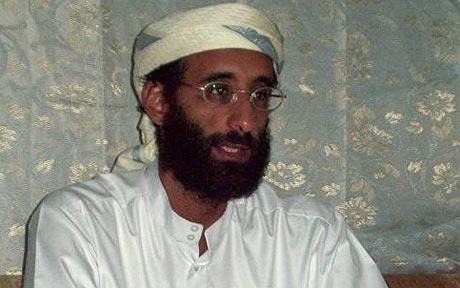
Everyone has an opinion on this; I thought this, this, this, and this were the best on the debate. It does appear that Awlaki was a genuinely dangerous nut-job, but Greenwald makes the obvious point that the government should demonstrate that. That is the whole point of due process, and no one really has any idea what the process was that allowed the president to unilaterally execute a citizen. As nasty as the guy may have been, he was an American (born in New Mexico in 1971). So this is a yet another civil liberties threshold crossed in the global war on terror (GWoT), and a fairly big one to my mind. (I am an American living abroad too. Have my rights just contracted? Can anyone really say?)

Like everyone, I have mixed feelings, because it does look like Awlaki was a huge threat, moving among openly-declared enemies of the US, and committed to attacking the West violently. I imagine this is why the outcry is so minimal. But he was an American citizen, and I can’t think of anything like this ever. Our government is now performing targeted killings of our own citizens? Wow. Where is the legal authority for that? Doesn’t that violate all sorts of basic protections enshrined in the Amendments to the Constitution? I am not a lawyer, but what possible ‘due process’ is there for this the pre-empts the Constitution? Obama and the National Security Council simply decreed him a threat? At the very least, please tell us how these determinations get made, and what processual checks there are so that this doesn’t devolve into a open-ended kill authority.

But even if we see the case file, I find this genuinely scary. The precedent this lays down, especially as it seems to be going uncontested in the US, is very unnerving. I was willing to swallow that the ‘targeted killing’ of OBL was within the pale, but citizenship is a crucial red-line in a world of states. At this point, who exactly can the president not order terminated? And do the Obama people really want to hand over such power to a possible tea-party president in the future?! Can one imagine Sarah Palin with clandestine, ‘targeted assassination’ authority? Isn’t that terrifying?

I find it a heartbreaking paradox of the GWoT that Awlaki’s father tried to sue the US government to stop it from killing his son. More generally, this whole mess shows how protracted warfare corrodes democracy (a lesson going all the way back to Thucydides) and why it is very important to stop the war on terror. American liberties are eroding under the strain of the 10 years of angry, frustrating conflict, and the reliance on drones, with few rules or agreed norms about their use, show the growing disregard for due process that semi-permanent conflict entrains.

This can be included with all the other GWoT misdeeds like torture, warrantless wiretaps, and indefinite detention. The domestic liberty costs of the GWoT now clearly outweigh the benefits. Killing a US citizen in what is basically an assassination is yet another red-line crossed that shows how we are forgetting ourselves and the whole liberal point of the GWoT to begin with. Why would anyone listen to the ‘freedom agenda’ or take Obama’s Nobel Prize seriously at this point? I wonder if the Nobel Committee would like to retract it now. Why even vote for Obama when he feels he has the authority to do even this? Honestly, I am not even sure McCain would have done this. Targeted  assassination, especially of the citizenry itself, is an astonishingly capacious read of executive power, and clearly not a power ever explicitly delegated by Congress. No wonder Cheney wants an apology. Obama is doing stuff not even W would have done.

The US has banned assassination since the 1970s because of misdeeds during the Vietnam war. So not only did the administration violate constitutional rights of a citizen, it also violated another statue. I saw J Toobin on CNN this week say basically that no administration has followed the assassination ban anyway, so that is not a real violation (!). Then Toobin argued that Obama’s likely defense is authority under the post-9/11 ‘Authorization for the Use of Military Force’ (AUMF), but that, with this killing now, no one really knows where that power ends. Toobin, who strikes me as a reasonably serious guy, looked genuinely troubled as he said this. What can a legal correspondent comment if the ‘law’ is this malleable? I had the sense Toobin wanted to protest, but American public opinion is so desensitized to rule-violation in the name of the GWoT, I think Toobin ducked so as not to look like he defended a terrorist. Also, read the AUMF closely; it targets the planners behind 9/11. But Awlaki wasn’t a part of the plot, even though he was sympathetic. If it was just because he was a rabble-rousing anti-American cleric, then a good chunk of clerisy of the Middle East would probably qualify…

So again my question is, what use of force does the Authorization not permit? Can the president order a hit like this on US soil? Bush already detained Jose Padilla unfairly and with no recourse for years. That the Obama administration doesn’t really know how to answer that became very clear in a CNN interview I saw with SecDef Leon Panetta. Asked if he was on firm legal ground, he only repeated, in worst manner of Bush evasiveness, that Awlaki was a threat and we had to take him out. Presumptive threat overthrows process: we’re all Cheneyites now.

Finally, I found it a particularly glaring contrast that Awlaki was assassinated in the same week that the American media got in a terrible huff about due process in Italy (Amanda Knox) and Iran (those two hikers). (Btw, America’s record of giving due process to foreigners arrested in the US is atrocious, so don’t be so indignant.) Knox and the hikers’ experiences were regularly described as brutal ‘ordeals,’ and their homecomings covered in great, chest-thumping detail. Yet here we hellfire our own citizens (another American was killed with Awlaki) without trial or public presentation of a detailed case… and no one says anything. We just believe what the government tells us about him. The government has flim-flammed so much in the GWoT though, that we really should demand more. Congress should lay down a framework as soon as possible for targeted killings in general, and for Americans especially; otherwise this could slide toward widespread, casual use, just as the torture regime spread from Guantanamo initially, into the entire US GWoT-detention system, because no one really knew what the ‘new rules’ were.

——

Read this on the limits of drone warfare.

Transformers 3 (2): America the Bitter & Vengeful after a Decade of War

“In the name of freedom, we will kill them all” – Yikes!!

Part one is here, where I noted the film’s extraordinarily brutality, including battlefield executions by its American-allied protagonists.

The obvious, if unwanted, parallel to such battlefield cruelty is all those conservatives who complained for years that America’s rules of engagement in the GWoT were too strict, or Limbaugh’s flippant defense of Abu Ghraib brutality as ‘hazing on the nightshift.’ Bay’s childish defense, I’m sure, is the throw-away fig-leaf that the Decepticons are ‘evil,’ so it’s ok to just blow them away, decapitate them when they’re defenseless, or draw-and-quarter them. But I can’t imagine such levels of brutality, including multiple executions (!), making their way into a mainstream blockbuster for tweens, produced by family-friendly Spielberg (!!) no less, before the GWoT. We’ve become a harsher people when liberal restraints on force give way to bloodlust.

To see Bay’s regression more clearly, note that first film had no executions-as-entertainment, the second ‘only’ had one (in the first China sequence), but there are four in this one. If this seems unfair, recall that this isn’t an R-rated horror movie, with different standards and genre tropes. Also, Bay has always reached for a certain national security credibility; he’s like the Hollywood version of Tom Clancy. He reverentially celebrates the US military. Bay gets uniquely deep access to actual US hardware from the Pentagon. Armageddon lionized NASA. Pearl Harbor told everyone that America is awesome. In this Transformers film, the Autobots even help derail Iran’s nuclear program. In same way that uber-popular, ultra-violent video game franchises like Modern Warfare obviously channel American attitudes about force, the military, and terrorism, so does Bay. So I don’t think it’s too much to notice how Bay turned Transformers from a toy-movie for tweens into Black Hawk Down meets Saw with robots.

I wrote a review of the Transformers 2, where I argued that Bay fetishizes (US) military hardware and glorifies the US military so much, that he is given unparalleled access to display US weaponry. His simplistic good vs. evil storylines and adultatory portrayal of the US military give his films an ‘establishment,’ rah-rah feel that vastly more interesting but subversive war-films like Apocalypse Now or Platoon could never have. The most sycophantic line of the film is when the ridiculously improbable new ‘Bay girl’ is legitimized before no less than the Director of National Intelligence, because ‘she comes from a good military family.’ There is so much elitism and militarism wrapped up in that statement, that it could have been written by Robert Heinlein.

This is entertainment for WR Mead’s Jacksonians, mixing American exceptionalism, self-righteous violent vengeance, and alpha male strut into the modern Republican party. Pandering to these reactionary sentiments is easy: America battles for good, deploys flashy, high-tech hardware, and, most importantly, wins. In the background are waving flags, boyishly shallow speeches about ‘freedom,’ and Pentagon guys barking dialogue like, ‘failure is not an option,’ or ‘roll out strike package dark star whiskey tango foxtrot…’ If you’re not in the military, you’re probably a wimp or a liberal. And if you can throw in a hot babe wandering around in a bikini or something, so much the better to capture the mix of sexual titillation and self-righteous, militaristic posturing that has made Fox News such success. Indeed, I’ve often thought that Fox News models itself on Bay’s flashy, militaristic, sexualized style.

Hollywood is far more nationalistic than American conservatives, wedded to the trope of ‘liberal Hollywood,’ will admit. And Bay is the leading edge of this. He is bombastic, reactionary, and jingoistic, and people love him for it. His films make ridiculous amounts of money, suggesting a far deeper reservoir for a conservative, pro-military Hollywood than the standard Republican interpretation of Hollywood admits. This is entertainment for men of course, but for the sort of anti-feminist, semi-authoritarian Tea Partier who thought W’s landing on the Abraham Lincoln was a milestone in America’s foreign policy history of ‘kicking a—,’ pines for Sarah Palin (a housewife hottie who wants to bomb foreigners and loves America), and doesn’t understand why the greatest country on earth is losing the GWoT and ceding place to China. As no less than Optimus Prime, the leader of the Autobots says in the clip above, ‘In the name of freedom…we will kill them all.’ That is pretty much all that’s left of the Bush Doctrine for the angry, frustrated, ‘I-don’t-give-a-damn-anymore-about-the-rules-of-engagement,’ tea-partier.

This is where the third Transformers film is revelatory. It is one of the most purposefully, gleefully cruel mainstream geopolitical films I can think of since the Rambo-80s. It displays better than any GWoT-era film the growing American acceptance of war cruelty resultant from ten years of frustrating, inconclusive combat. That normally tempered Spielberg produced the film too shows just how far the bar has fallen. Indeed, Spielberg should be embarrassed after producing morally-nuanced war-films like Saving Private Ryan and Band of Brothers. This is entertainment for an angry, confused, militarily exhausted electorate looking for decisive outcomes and now willing to tolerate cruelty to get them. When people say that 9/11 and the GWoT have made Americans a nastier, angrier, less pleasant people, this is exactly what they mean.