Trump Post-Mortem: My 5 Take-Aways from Trump’s Surprise Victory

1129-thumb-240xauto

This is the English-language version of an article I just published with Newsweek Japan on Trump’s victory. I know there have been a million of these sorts of diagnostic analyses since he won, so this will be my only one. I will get back to East Asia politics next week.

I guess what worries me the most is how Trump toyed with proto-fascist themes, even if he himself doesn’t believe any of it. As I write in the main essay below: “He flirted heavily with race nationalism, illiberalism (attacking the media; winking to the alt-right), anti-democracy (refusal to recognize defeat; insisting the election system is ‘rigged’), and a cult of personality. That is awfully close to a fascist package.” Trump has now demonstrated that there is a constituency for hard-right strong man politics in the US. He ran as an openly misogynistic, racist, cultish candidate, and millions of Americans just didn’t care and voted for him anyway. This is the most important, and terrifying, revelation of the last 18 months. 

No, I am not in hysterics that America is about to collapse. We’ve survived a lot worse in 230 years. I am pretty sure we can survive the Trump administration. He and his family will be epically corrupt, but that won’t bring down the Constitution. There is far too much hyperventilating on the left right now.

But if Trump, or more likely Steven Bannon, can put his stamp on the GOP, the American political landscape will change forever. The Reaganite GOP is disappearing, and in its place will rise a National Front-like nationalist-populist party if Bannon has his way. The US has never seen a blood-and-soil European rightist party. We may look back on Trump as a right-wing turning point even greater than the Goldwater or Reagan presidential campaigns.

The full essay follows the jump.

Continue reading

Who I Voted for and Why, II: Clinton, bc Trump is Grossly Unqualified

Image result for cleon greek

Cleon, demagogue of Athens during the Peloponnesian War and the archetype of democratic demagogue feared by conservatives like Thucydides, Plato, and Aristotle.

The following essay is a re-print of an op-ed I just wrote for the Lowy Institute’s Interpreter blogline.

Conservatives who plan to vote for Trump might want to consider for a moment just how much Trump violates the basic principles capital-C Conservatism cherishes: order; paced, digestible change; caution/pragmatism;  stability and moderation in leadership; robust institutions. It is hard to imagine Burke, Buckley, Kirk, Disraeli, and other Conservatives reading Trump as anything other than the type of demagogue political philosophy has long warned can be spawned by democracies in tumult. Just go read Thucydides if you don’t believe me.

I say this one inclined to such Conservatism. I worked for the GOP on/off throughout the 1990s. I am hardly a liberal, even if I am an academic. But if you can’t see the demagogic potential in Trump – the likelihood that he’ll use the law to pursue his enemies or enrich his family; his demonization of out-groups; his belligerent, apocalyptic tone – then you just haven’t been paying attention. Trump just proved that there is a potential for something like authoritarian, maybe even fascist, politics in the US, and that should scare the hell out of all of us.

Continue reading

Who I Voted for & Why, I: Clinton, bc Trump is a Threat to US Democracy

1108-thumb-240xauto

In the interest of ‘pundit accountability,’ I will post my thoughts about the upcoming US presidential election this week. It is a pretty open-and-shut affair this year. As Foreign Policy put it in an unprecedented presidential endorsement: “A Donald Trump presidency is among the greatest threats facing America, and the Republican standard-bearer is the worst major-party candidate for the job in U.S. history.” Yup.

The following op-ed is the English language re-print of my anti-Trump essay for today’s issue of Newsweek Japan. I’d like to thank my editor at Newsweek for allowing me to wander out of my area of northeast Asia to write about the US election. Normally, I wouldn’t do this, but this is not a normal election. Donald Trump represents an unparalleled threat to US democracy. He must be defeated, and I hope this op-ed helps that outcome in however small a way.

Finally, I don’t write this as partisan hackery. I am a registered Republican and have been my whole life. I worked for a Republican congressman, voted against Bill Clinton twice, gave money to a GOP candidate as late as 2002. I even interned for John Boehner way back in college. My ballot this year was split as I voted Republican in some Ohio races. I suppose I could have voted for Rubio. But not Trump. My god. He’s a terror. He’s not really a Republican as we thought of them at all until recently; he’s more like Marine Le Pen than anyone we know from the tradition of American politics. You think Nixon’s abuse of power was bad, just wait till Trump gets his hands on the Justice Department. 

The essay is after the jump.

The Coming Post-Trump Fight for the Republican Party: Out-of-Touch Reaganites vs Trumpist Insurgents

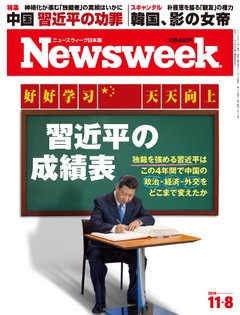
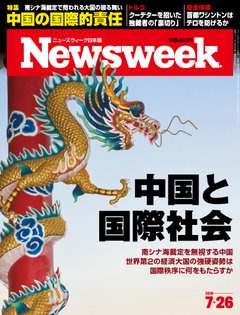
0726-thumb-240xautoIt’s the summer of Trump, so my July  monthly essay for Newsweek Japan (available here) is about him. I figure if everyone else can get on the Trump gravy-train, then I can too. For my specific thoughts on Trump and Asia, go here.

My interest is because I used to work in Republican politics in Ohio in the 1990s. I interned for John Boehner and later worked for a congressman. I’ve never really thought of myself as a Democrat, but the Republicans have gotten progressively more paranoid, anti-intellectual, and belligerent in the last 15-20 years. So now I am a ticket-splitting centrist, I guess – or at least I was until Trump came along. This is the first year I skipped a Republican primary, and I think the health of the republic requires a resounding Trump defeat this fall.

Anyway, this piece for Newsweek lays out what I think is the real impact of Trumpism. Given that Trump himself will likely lose and then disappear, his real impact will be that he opened new, white nationalist pathway to the GOP nomination, while demonstrating that GOP voters don’t actually care for the dated Reaganite agenda of the party’s Washington elite. So Ryan, McConnell, Laffer, and the rest now stand revealed as the emperor with no clothes as the nativists take over. Hence the next 4 years will be civil war between entrenched but unrepresentative Reaganites, and rising, insurgent Trumper nationalists. It is not clear who will win.

What a Trumpish GOP would Mean for Asia: Reduced Trade & Migration, and More Defense Spending


This a re-print of an op-ed I just published with the Lowy Institute.

I’ve argued elsewhere that I don’t think a President Trump would pull the US out of Asia. That would requiring battling a deep Washington consensus of government officials, think-tankers, military, and the rest who strongly support a continued American presence out here. Trump is too lazy and too ill-informed to try that. So don’t worry about that. Nor will Trump win. So don’t freak out yet. 

But I do think Trump has changed the GOP a lot, and that he will have successors. Trump just proved that the median GOP voter doesn’t give a damn about Reaganism. Republican voters are now lower middle class and downscale (whites), and they are not anti-statists who want tax cuts for the rich. Nor are they neocons (it’s their kids that fight the wars), nor are they social conservatives, as their rates of divorce, single parenthood, and substance abuse make clear. What they do want though is a dramatic reduction of immigration in order that the United States remain majority white longer.

In short, Trump has just showed the potential for the US to have a European-style nationalist-rightist party, complete with a whiff of fascism in Trump’s authoritarian posturing.

So my prediction is that: 1) Trump will lose, but 2) post-Trumpers will pop-up and try to use his message to win GOP primaries. This will ignite a serious civil war inside the GOP between the establishment – who are mostly Reaganites like Paul Ryan but who have weak roots among actual GOP voters, as Trump just illustrated – and white nationalist post-Trumpers who actually speak to issues the GOP base cares about. It’s not clear to me who will win, but the post-Trumpers have the votes and the passion.

The full essay follows the jump.
My Take on Trump and Asia for Newsweek Japan: He’s Too Lazy to Push for Real Change, so Don’t Worry

2016.6.14号(6/ 7発売)

I write a monthly column for Newsweek Japan, and below is this month’s English original (on pages 36-37 of the edition pictured).

I haven’t written much about Trump, mostly because he says so little of value in my area, nor do I believe that he really means what he says, because he changes so often and puts so little thought into foreign policy.

So my first comment to Asians who ask is: relax, because even if he wins, he isn’t likely to push through some major geopolitical retrenchment, because of the effort that would take in Washington. Nor is he likely to spark a huge trade war with China for the same reason. The bureaucratic resistance would be massive, and I don’t buy it at all that Trump has the tenacity, focus, intelligence, or interest in any policy issue necessary to undo long-standing precedents such as the decades-old US engagement in Asia.

If Obama can’t get us out of the Middle East, do you really believe Trump will take us out of Asia? Forget it. Perhaps it is the teacher in me, but, like Regan, Bush 2, Palin, and Fox before him, Trump’s defining intellectual feature is laziness, and it will take a helluva lot of work to change the US architecture out here. So forget it. Instead, think about what Trump really cares about – his show-boating, made-for-TV image as manly, tough, a winner, and so on.

President Trump will spend all his time and energy chasing whatever the polls say voters want in a desperate effort to stay popular. What he will really use US government power for, where he will show genuine commitment and focus, is in pursuing his media enemies Nixon-style, and enhancing his business interests. In that sense, he will govern like the CPP or Putin – chasing after journalists, feathering his nest, changing laws and regulations that damage his businesses, and so on.

So don’t worry Asia. Trump is too intellectually lazy to learn, too uniformed to understand, and too narcissistic to care. Trump is a threat to the First Amendment and check-and-balances, not the American architecture in Asia.

My essay follows the jump.

Waiting for China re: N Korea is like Waiting for Godot – My JoongAng Daily op-ed

China-North-Korea

I published an op-ed in the JoongAng Daily today, which this post re-prints.

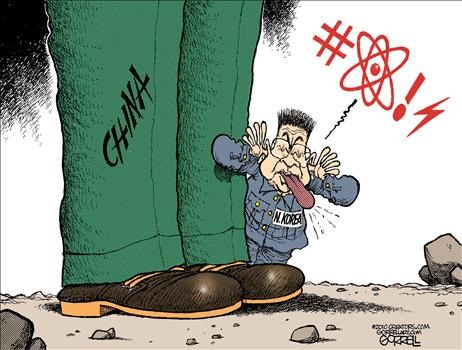
Basically my argument is that China will increasingly be singled out and globally embarrassed for enabling North Korea if the post-comfort women deal cooperation between South Korea, Japan, and the US holds. If the democracies can work as a team on North Korea – finally! – and if we drop Russia from our regional analyses – as we should because Russia plays no role other than occasional spoiler regarding North Korea – then the game basically boils down to China on one side and the democracies (SK, Japan, and the US) on the other, meaning China stands out globally as North Korea’s protector.

All the Chinese obfuscation of the Six Party Talks or ‘regional solutions’ is falling away. It is now painfully obvious that China alone now is what is keeping North Korea afloat, allowing it to escape the worst pressures of all the sanctions piling up, and arguably even preventing it from collapsing by providing so much informal aid to North Korea. And by aid, I don’t just mean direct shipments of rice and fuel; I also mean the access to the outside world that allows Pyongyang to get luxury goods, use dollars, traffic its illicit production, and so on.

So let’s keep the democracies working together in a common front on NK. That is huge progress, and it shines a very clear spotlight on China now as NK’s last, only enabler. The sheer embarrassment of that is bound to impact prestige-conscious Chinese elites going forward.

On this issue of Chinese attitudes towards North Korea, Leif-Eric Easley, a friend from Ewha University in Seoul, just published a nice academic article on this. If I read Leif right, he’s even more pessimistic that China will change on North Korea than I am.

My full op-ed follows the jump.

Continue reading

Abe, the US, and ‘Korea Fatigue’: How Interested is the US in the Korean ‘History Issue’?

That is Wendy Sherman in Korea before the flap over her ‘history’ remarks.

The following essay was originally posted here, at the Lowy Institute.

The idea for this essay came from watching Abe’s successful trip to the US last month and just how much the Korean media wigged out that that was some major set-back for Korea. There were even calls at the time that the Korean foreign minister should resign, as if some how MoFA could have stopped Abe and Obama from sharing a glass of wine or whatever, and that that was some kind of cataclysm for Korea. Really? Jesus. Get some perspective.

Anyway, all the hullaballoo just reinforced that South Korea has an unhealthy obsession with Japan and an ‘enemy image’ of it that really doesn’t fly when you live next to the likes of North Korea, China, and Russia. Are Korea’s historical grievances with Japan legitimate? Yes, they are. Does Abe’s coalition have creepy righties in the shadows? Also, yes. But when you are more willing to talk to the modern day version of Big Brother (Kim Jong Un), than the elected leader of a liberal democracy with a 70-year history of good global citizenship, then something is wrong.

Anyway, I already got lots of hate-mail on this (try here and here if you want to troll me), so please spare me your ‘you-hate-Korea-and-don’t-what-you’re-talking-about’ and ‘Japanese-colonialism-was-good-for-Korea’ emails. I just delete them anyway.

Enjoy. …or maybe not. I don’t really care anymore…

Continue reading

North Korea with SLBMs Scares the Hell Out of Everybody

Kim Jong Un North Korea

Am I the only one who is amazed at how good North Korea seems to be at developing new military technology? They got to nukes despite all sorts of international efforts to block them. They’ve got an apparently pretty successful missile program. They beat South Korea to drones last year. And now they’ve got submarines, and ones that can launch missiles to boot! Wow. We seem to consistently underestimate the Norks – probably because everyone loathes them so much that we keep telling ourselves that the place is falling apart and will implode any day now. Alas, it doesn’t look like it.

I wrote the following essay, below the jump, for the Lowy Institute a few days ago on the SLBM test. My primary fear is that all these nuclear and missile advances raise the temptation for South Korea to preemptively strike before the Northern program really gets out of control in the next decade with hundreds of warheads and missiles. The Israelis did that in Iraq and Syria, and I could see the South Koreans mulling it too.

Increasingly it is impossible to see how this ends well. Where are we going? What is the exit from a North Korea seriously threatening the entire region? Jees…

Continue reading

Enough Dithering, South Korea. It’s Time to Deploy THAAD Missile Defense

The debate on missile defense in South Korea is accelerating. Increasingly it looks like there will be some kind of stationing of ‘Terminal High Altitude Area Defense’ (THAAD, pictured). This is almost certainly a good thing, because North Korea’s programs keep going and going; no one would really trust Pyongyang to adhere to a deal at this point anymore anyway; and North Korea is not in a nuclear rule-system, like the IAEA or NPT, so we really have no idea what’s happening in much detail. Remember that their HEU program was kept hidden pretty well and then suddenly revealed.

Given all this uncertainty, and North Korea’s established history of lying, especially about its nuclear program, missile defense strikes me as a no-brainer. It is clearly a defensive weapon too, so it does not add to South Korea’s ability to offensively strike North Korea. The North won’t really be able to credibly criticize the system as a ‘tool of imperialism’ or something (although they will certainly say that anyway). Also, in passing for IR theorists, I’d say this debate nicely illustrates both the security dilemma and the offense-defense balance debate.

The full essay follows the jump; it was first published in The Diplomat here earlier this month.

Continue reading