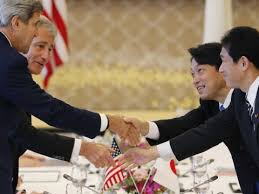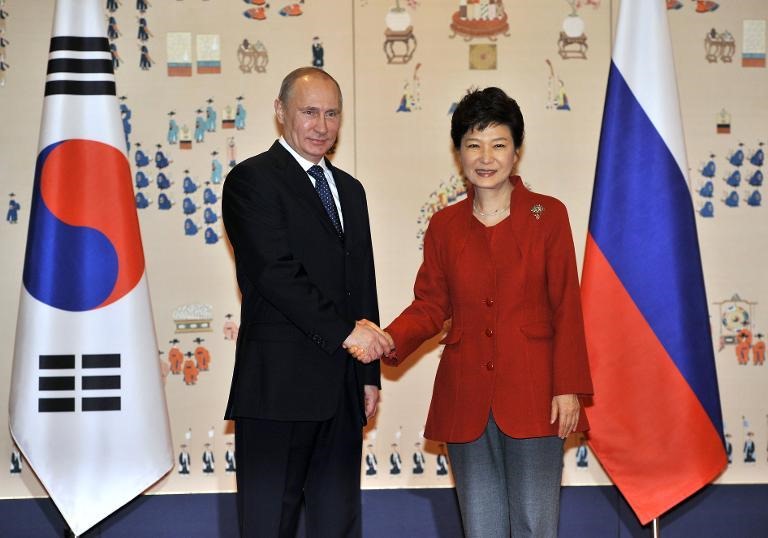
My November Diplomat Essay: China & Russia are Not Displacing the US bc of the Syria Deal

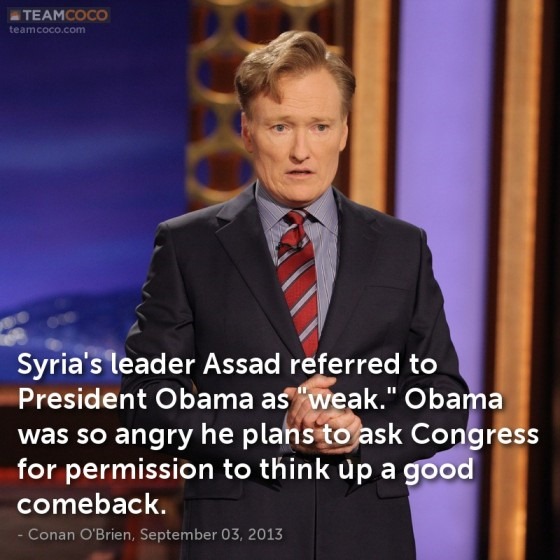
sep-3-2013-syria-s-leader-assad

This is a re-up of my monthly column for The Diplomat for November. Here is the original. I must say I don’t find the comments to be particularly helpful over there, so please give me your thoughts.

My primary argument is that the media is far too shallow in judging “US decline” on passing issues of minor relevance to the lineaments of American power. Remember two months ago, when Obama ‘had’ to act in Syria, even against Congress? That his very presidency was in peril, that American would be perceived as weak and lacking credibility? And now, no one is talking about that. Or then there was the idea that Obama missing APEC amounted to handing Asia to a bullying one-party state with a bad human rights record and no allies ‘rising China’? Good grief. Enough alarmism. Only the vanity of elites who think the very fate of the world hangs on their choices would lead one to believe that some missed meetings and airstrikes will change the balance of power. It won’t.

Always remember that Asian states need the US a lot more than the US needs them. US regional allies need us to hold back China, and even China needs us to buy all their exports and provide a savings safe haven. Sure, we benefit from cheap Asian exports and lending, but that’s a lot less important. The relationship is very asymmetric, and those who tell you otherwise are trying to cover the weakness of many Asian states and their desperation for US attention with bravado that America ‘needs’ Asia. That’s bunk. As I have been trying to argue on this blog for awhile, if they don’t want us in Asia, it’s no big deal for US security, and it’s an economic blow far worse for them than it is for us. And this is getting even more asymmetric as the US becomes energy independent because of fracking – so have fun fixing the Middle East, China! The US Founders identified the luxury of US distance from Eurasia long ago, so forgot all these hyperventilating Asian columnists (Kishore Mahbubani being the most obvious) who resent that America can be a lot more insouciant about Asia than vice versa. *natch Smile

Here’s that essay:

Continue reading

My Latest Japanese Hate-Mail: Apparently I am a ‘S— Kimchi Propagandist’ Hah!

jpnThis is what happens when you write in the area of Japanese-Korean relations. Pretty much everybody hates you, because you don’t tell them what they want to hear.

The other day I posted how the Korean government leaned on me to alter the nomenclature in my writing – which, at this point, I wouldn’t do if only to oppose the highly inappropriate arm-twisting of academics by the state.

So obviously, I had to get some ken-kan from across the strait. Symmetric loathing of this blog is required!:

From: ——— [shitkimchi1@———.—]
Sent: Wednesday, November 13, 2013 6:19 PM
To: robertkelly260@hotmail.com
Subject: shameless and failed propagandist !

spread these videos, you failed idiot ! you kimchis are finished…

http://www.youtube.com/watch?v=5zPhBFEizzA

http://www.youtube.com/watch?v=JLyKJsbw4G4

Needless to say, I didn’t write back.

I can’t access those videos. They are blocked in Korea, but judging from the comments, it’s pretty rank stuff, back to creepy comfort women-denialism and all that.

If I had to guess, that email was a response to this post where I criticized the creepy nationalists in the corners of the Abe coalition denying the comfort women. I don’t think Abe is as bad as Koreans do; there’s been a lot of irresponsible exaggeration in the Korea media, which seems to be finally dawning on the far-too-alarmist Chosun Ilbo. But I do broadly agree with the moral case Korea makes against Japan on the comfort women and Yasukuni. For as much as I think Koreans flies off the handle way too much on Japan, they are generally right on these two core issues. So I guess that makes me a ken-kan failed idiot or something.

I’ve been called a lot of things over the years in the comments and in hate-emails – a Muslim, a Sinophile, a traitor (to America and/or Korea), every variation of idiot you can think, an orientalist, an American imperialist, a racist (but that’s so de rigeur at this point in this area that it’s meaningless now), a mouthpiece of the IMF/USFK/the American national security state, and so on. But I gotta give this guy credit – a ‘kimchi propagandist’ is a pretty creative. Gotta laugh out of that one.

A Little Korean Government Arm-Twisting of my Blog on the ‘Sea of Japan/East Sea’ Spat – How Unintentionally Flattering Actually

sea of japan


Did anyone else get this email below? Who wouldn’t be persuaded by some PR firm hack with no idea about East Asia giving suggestions she doesn’t understand by robo-email? Yuck. Maybe I’m reading it the wrong way – maybe getting yelled at by the Korean government about nomenclature means someone actually reads my blog. Hah!


“Dear Robert,

I came across your Asian Security Blog and read your post, “Why don’t Korea & Japan Align?”. Because of your interest in current affairs and issues in Asia, our communications firm is reaching out, on behalf of the Korean Consulate General, to inform you about an issue that you and your readers need to know about. 

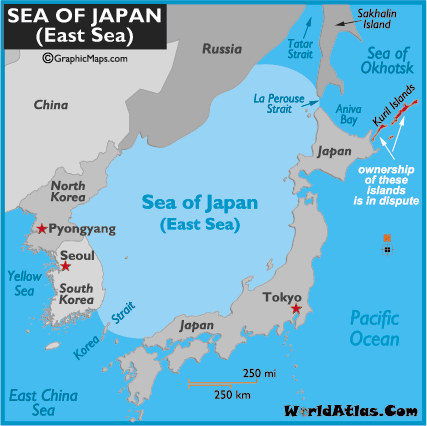
The Republic of Korea is asking the US government and map publishers to use the name “East Sea” together with the “Sea of Japan” when referring to the body of water located between the Korean Peninsula and the Japanese Archipelago, over which both Japan and Korea have jurisdiction.  This body of water has been called East Sea for over 2,000 years – you can read the historical background here: http://bit.ly/EastSeaMaps

Why is this important and why should this issue matter to your readers?

* When dealing with matters of diplomacy, a name reflects how a country is viewed.

* Support for Korea’s position is gaining momentum among many internationally respected cartographers and the media. National Geographic, Rand McNally, The Economist, CNN, The Wall Street Journal, and Le Monde have all begun using both names concurrently.

* Other evidence of growing support for Korea’s position includes a vox populi petition to the White House with more than 100,000 signatures, and a vote at an international organization’s recent conference that denied Japan’s proposal to use only the Sea of Japan name.

Will you consider posting about this on your blog? Links to videos can be found at the bottom of this message, plus you can find additional information here: http://bit.ly/EastSea Please feel free to use any of this information found here in your postings.

Thanks, Robert! If you have any questions or need additional information, please feel free to contact me.

Best,

K—————-
Parter International/Tuvel Communications Team
on behalf of Korean Consulate General in New York
——@tuvel.com
—————————-
Video: The Name, “East Sea” – http://bit.ly/Lu5puJ
Video: The World Map is Changing: Korea’s East Sea – http://bit.ly/JJSYIF

——————

I find this ridiculous. Has anyone noticed how non-descriptive ‘East Sea’ is? At least the ‘Sea of Japan’ actually provides some basic geographic information (ie, a sea near Japan), while the ‘East Sea’ could be any sea east of anything else. To demand that the world use that term insists that the rest of the planet view bodies of water from a Korean perspective, which is a preposterous request. The name itself implies absolutely nothing. This is the US Government’s position also.

Should Israel demand the Arabian Sea be changed? Should Pakistan lobby the world to change the name of the Indian Ocean?  I have no idea if I have used the name ‘East Sea’ or not on my blog, but using an internationally accepted name is standard. I find this faux-controversy a fatiguing Koreanism, just like when Koreans insist on telling foreigners how old they are by their ‘Korean age.’ The ensuing confusion does little but gratify Korean insistence on uniqueness. Please, can we just stick to international standards and avoid self-flattering particularisms no one else cares about? Finally, it’s worth noting that there’s also the ‘Korea Strait.’ Should that be re-named the South Strait or something?Because this whole conversation will inevitably provoke a Japanese move on that name in response. Can’t we just drop this?

No More Neocon Faux-Cassandra Posturing: American Defense is not “in Decline”

Two pieces got emailed to me in the last few days that nicely illustrate just how entrenched semi-imperial thinking has become in Washington, how wildly disconnected from the reality of US security our foreign policy community’s threat assessments have become, and the hysteria that greets serious debate on DoD’s size in this post-Great Recession era of high unemployment and large deficits. This, by good-journalist-turned-disturbing-militarist Robert Kaplan, and this, by the ‘Iraq was a victory’ crowd at AEI. Here’s Kaplan:

“The bottom may be starting to fall out of the U.S. defense budget. I do not refer to numbers when I say this. I am not interested in numbers. I am only interested in public support for those numbers…. Actually, we might need a big army for an occupation of part of North Korea… The public, in short, wants protection on the cheap. It may not necessarily be willing to police the world with a big navy and a big air force at least to the degree that it has in the past — that is, unless a clear and demonstrable conventional threat can be identified.”

The rest basically follows the depressing neocon pattern: the (invariably hawkish and hegemony-loving) Washington foreign policy community know America’s interests, while the public is annoyingly ‘isolationist.’ If only they believed in the US globocop, (cue grave headshaking at our ignorance), then we wouldn’t have to write these sanctimonious, tsk-tsk op-eds. The AEI brief is even more predictable: throwaway boilerplate about the need for a strong defense in a world of unpredictable and diverse threats and all that. Got it already. Neocons and DC hawks have been saying that sorta stuff now for so long, that I really don’t even need to read this stuff anymore. And of course, any cuts automatically ‘reduce our readiness,’ the all-time favorite cliché of hawks everywhere as if somehow ‘only’ $680+ billion would leave us unable to defend ourselves. Come on, neocons! I thought you were supposed to be intellectuals. Stop recycling 1990s ‘indispensible nation’ bromides, and try a little harder.

Zack Beauchamp and Daniel Drezner’s correctives are very useful here. But here’s mine:

Continue reading

My Essay for Newsweek Korea on the Current Korean Strategy Debate in the Media: K Caught b/t the US and China

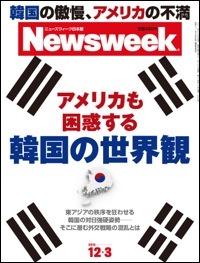
newsweek-1028_페이지_1 (3)This is a lengthy piece I just wrote for this week’s edition of Newsweek Korea. Here is the link for the Korean version; below is the English translation. The Korean version is unfortunately gated after page 1, so if you want the whole thing in Korean, email for the PDF. That is the edition’s cover to the left.

The short, IR theory version is that: a) S  Korea is a middle power that risks ‘overplaying its hand’ against Japan, as a think-tanker friend put it, because of the ‘moral hazard’ facilitated by the American alliance (as Katzenstein noted, Japan is the US anchor state in Asia, and Koreans can’t change that no matter how much they resent that special relationship); b) the Americans believe in the democratic peace and simply don’t accept that Japan is some kind of proto-fascist state (this is a real breakpoint with the Americans); and c) Korean geography basically traps it in a Waltian ‘balance of threat’ quandary: even though it is small, its proximity means it will get pulled into the Sino-US/Japan stand-off whether it likes it or not. The only possible way out I can think of for Korea is unilateral nuclearization (yikes). Also, my continuing skepticism of the pivot pops up. I still don’t think Americans actually care enough about Asia to really get pulled into a major competition with China. Here’s that essay:

Continue reading

So What do you think of Open Access Journals? Ever Submit to One?

openaccess

I get these mailers from Sage and other academic presses a lot asking me to submit to open access journals. I have never done so, because SSCI peer-review is so absolutely central to what we do. But I feel really bad about that actually, because I absolutely detest paywalls.

I am a big supporter of open access. Like most academics, I think, I find it absolutely preposterous that journal publishers charge $30 to get to an article. It goes without saying that most students have limited means and will not pay that (nor should they). Such an ridiculous fee also punishes people in LDCs who don’t get access to JSTOR and the rest.

Barring some strong countervailing reason, like clearly defined national security concerns, knowledge should be open; it is a public good. While academics want to get paid like everyone else, no one joined this profession to get rich. We do it, because we enjoy the life of the mind and want to share ideas with others. I’m sure you’re rolling your eyes right now, but it’s true. Academics would rather win an argument and have you read their work than get paid. And they will willingly drain the fun out of everything to just convince you they’re correct about something. If we get paid along the way for that, that’s great. But most of are not doing this for the money. In fact, that is probably one reason we get no royalties on our articles. We don’t do it for that, and we probably don’t care enough to organize to push for it.

In sum, publishers simultaneously wildly overcharge end users while paying zippo to providers – all while violating a central academic tenet – that knowledge-production is not primarily about money. Yuck. This has to stop.

But we do of course need tenure and promotion, and the SSCI, especially the very top ones, are just about the excusive road to that. You may like blogging and teaching and mentoring, but peer-review is gold. Hence I never submitted to an open access journal. I don’t really like that, but I wonder what the answer is. Does anyone know?

My Website is blocked in China – Hah! I’m flattered

greatfirewallofchina

I was just in China for a work thing, when I checked the Duck of Minerva (the IR blog where I also write) for something. Turns out the Duck is screened out by the Great Firewall. Even if you go to Google Search Hong Kong, it’s still blocked.

Wow. Who knew even nerdy IR theory and pop culture references posed a threat to CCP rule? Lame. Even more lame – my own website, which gets way less traffic, is blocked too. For sites as small as mine, that’s almost a complement – hah. If only I had readers similarly interested enough to even bother…

Great Video on Getting a PhD in Political Science – Very Funny

certainly sounds like my 20s…

My Diplomat Interview on North Korea, Syria, and China’s Rise

the-diplomat_logo_en

Frequent readers know that I am regular contributor to the Diplomat web-magazine. On October 10, Editor James Pach interviewed me, mostly about Northeast Asia. Jim is a great guy, and I think these questions helpfully expand on some ideas I have put on the blog recently, especially my recent piece on reining in US presidential wars powers. The original interview is here.

JP: North Korea has put its troops on high alert, restarted its reactor at Yongbyon and called South Korean President Park Geun-hye an “imbecile.” We’re accustomed to the pendulum of ratcheting up and then easing tensions, but this year Pyongyang seems especially schizophrenic. Is this the new leader Kim Jong-un settling in, or are there other factors at play?

REK: This is a tough question given how opaque North Korean leadership decisions are. My own sense is that this is typical North Korean game playing. I made a similar argument at the Diplomat during the spring war crisis. It is true that Kim Jong Un is likely still finding his way. He is too young and too inexperienced in the old boys networks that run NK to easily step into his father’s shoes. But his period of greatest vulnerability was last year. The regime seems to be settling in around him comfortably – to many people’s surprise – so my sense is that this is the Korean People’s Army going through its usual hijinks to justify its massive and massively expensive role in NK life. I thought this too was the reason for the spring crisis, because NK does not actually want a war which they will lose, badly.

Continue reading

My October Diplomat Essay: Was Syria a Bridge-Too-Far for Untrammeled Executive War-Powers? (yes)

Jump to 1:13: That’s best question asked during the GOP debates last year

This is my monthly essay for the Diplomat web-magazine. The original can be found here. I will say upfront that I am not a lawyer, but a political scientist, so I am aware that the legal argument about presidential war powers independent of Congress is fierce. But that interests me less than the absolute (or moral or philosophical) argument for unconstrained presidentialism on the use of force. That is, whether or not presidential unilateralism in the use of force is ‘constitutional,’ as the lawyers would say, is something a dodge. That does not mean it’s right. The Constitution is not perfect and has been amended for things like slavery, women’s enfranchisement, and Prohibition. So ultimately the president should justify ignoring Congress in war-time by some argument consonant with liberal democratic values, rather than an ex cathedra appeal to authority. And I don’t really think it is possible to coherently argue that presidential free-lancing with minimal Congressional oversight and consent is good for democracy. In fact, that strikes me as self-evident, which is why I love that Ron Paul quote in the video (1:13 mark) above. The essay follows the jump and is written in an op-ed style.

Continue reading