Was Kaesong a Hole in the Korean Iron Curtain or a Subsidy to the Kim Monarchy?

kaesong


The following was originally published at the Diplomat here.

So it increasingly looks like the inter-Korean Kaesong industrial zone is closed for good. (The Wikipedia write-up is a pretty good quick history of it if you don’t know the basics.)

The zone was set-up during the Sunshine Policy period (1998-2007). It was to do 3 things: 1) Lead to some liberal-capitalist spill-over in the North, 2) Expose regular North Koreans (the workers in the area) to regular South Koreans (the managers and staff), and 3) Generally provide some inter-Korean cooperation that might hopefully reduce larger tensions. A resort area in North Korea (Mt. Kumgang) was also opened along these lines in the Sunshine period. Broadly the idea was along the lines of liberal explanations for the Soviet Union’s changes in the 1980s: the Helsinki Accords and CSCE opened the USSR to the outside world, and the inflowing liberalism slowly changed attitudes that eventually helped wind-down the Cold War. Unfortunately, none of this seems to working in the NK case.

Continue reading

NK Recap (1): “North Korea is the Boy Who Cried Wolf – There will be No War”

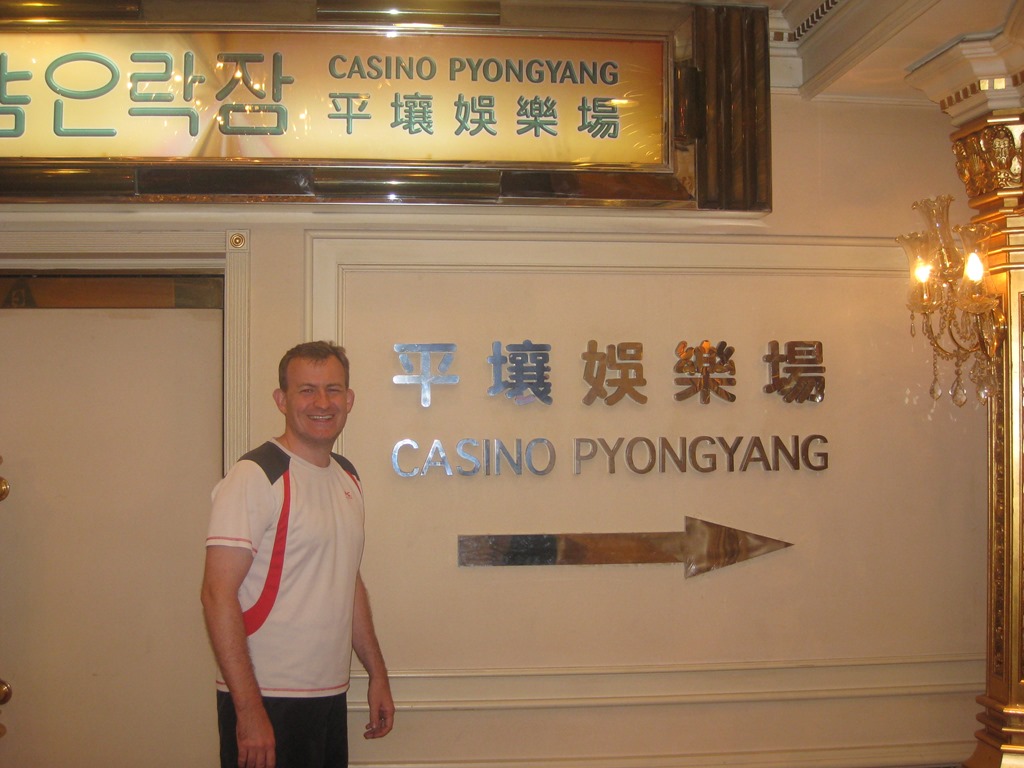
North Korea 2012 131The North Korea flap seems to be calming down, so here I reprint my original essay for the Diplomat a few weeks ago on the crisis. I’d like to thank Diplomat Editor Harry Kazianas for inviting my submission. And yes, that is a picture of me heading off to the Pyongyang Casino last summer, and I am happy to say I won $60 at blackjack against the Chinese dealer. Apparently my gambling problem is ‘pivoting’ to Asia too.

North Korea is a constant enigma, a point made apparent once again in the current crisis. Analysts of every stripe have mispredicted its behavior and longevity for decades, and this time around, it is again very unclear what exactly they want. So rather than make any predictions that will turn out to be laughably wrong next month, here are some observations that help narrow range.

1. Goaded into Conflict?

The North Koreans are experts at bluster. The previous president of South Korea was so disliked, that he was portrayed as a rat being decapitated in the Pyongyang newspapers. So when the North started saying outrageous stuff this time around, the first response of analysts everywhere was cynicism. And in the South Korean media, although it is front-page news, the commentary borders on ridicule. No one believes they mean it. A Korean friend of mine spoke for a lot of South Koreans, I believe, when he said to me that he almost wished NK would pull some stunt so that SK would finally give the NK the beating it richly deserves after so many decades of provocation.

Continue reading

The First Casualty of the National Science Foundation Funding Cut for Political Science

217px-Tom_Coburn_official_portrait_112th_Congress

If you belong to the American Political Science Association, you probably got the email announcing the last-minute closure of the Ralph Bunche Summer Institute because of the Coburn (left) amendment removing political science funding from the National Science Foundation (US). Undergraduate programming like this is obviously pretty vulnerable. It doesn’t have the cachet of high-profile, ‘big think’ research. But it does obviously endanger the discipline in the long-term by cutting into our future replacements (almost certainly one purpose of the amendment). It would be no surprise if some of this summer’s bright students got turned off our discipline because of these shenanigans, or missed a seminar or session this summer that might have helped them nail-down a good research question and so on. In brief, this cut is the real deal after years of GOP threats to our discipline, and that sucks.

Continue reading

What if US/Japan Try to Shoot Down a North Korean Missile & They Miss?

Is our BMD better today than it was in 1985?…If they take out MTV though, that’d still be ok


So my prediction that the North Koreans would launch a  test missile on the ‘Day of the Sun’ – that would be Kim Il Sung’s birthday for you imperialist running-dogs yet lacking in proper ideological orientation – was wrong. Hmm. The North Koreans sure are good at keeping us guessing. Maybe they’re dragging this thing out, because they’re enjoying the time in the limelight. My friend Chico Harlan wrote in the Washington Post, ‘North Korea’s gone viral,’ and they gotta be lovin’ it. When else do we listen to them otherwise? (Here’s a collection of some of the NK humor.)

I still think there will be a missile launch, but I remain pretty positive there won’t be much escalation. I sketched an escalation path a few days ago. But despite being the most likely possible path to a conflict, I still don’t think it is in fact likely. Some comments, both on that post and privately made some good further points why escalation is unlikely.

Continue reading

Escalation in the Korean Crisis: What will the NK Military do if Japan Shoots Down the Missile Launch?

Jpn Patriots

A few days ago, I predicted there would be no war, probably because I’m lazy and predicting the future will be the same as the present is an easy way to protect my credibility. However, I also noted that NK could get entrapped by its own belligerent rhetoric and be forced to escalate even if it doesn’t want to. I think this is why Kaesong was closed, for example.

I also noted how sanguine South Koreans are about NK, but foolishly, I didn’t really think about the Japanese. Then came the story about a mistweet by the city of Yokohama that apparently created local panic.The Japanese seem far more nervous about this than South Koreans, and NK did launch a missile once over Japan. The Japanese have also been talking a lot tougher, and Abe is clearly a hawk on NK. So here is the most likely escalation pathway I can see, despite my firm conviction the North Koreans do not want a war, because they will lose badly and quickly, and then face the executioner in Southern prisons:

Continue reading

The Awful State of US Punditry on the North Korea Crisis: Bill Richardson called Kim Il Sung ‘Kim Yun Sum,’ or something like that, on CNN Yesterday

North Korea 2012 279I know what you’re thinking, I’m being a show-off area specialist, Asian language names can be hard for anglophones (and vice versa), and who cares about KIS anyway, because this crisis is about Kim Jong Un? All of that is true of course, especially the first one, but come on…

Richardson isn’t just any old hack like me on North Korea. (Here’s my take on the crisis.) He has been a regular point man for the  US on NK for more than a decade and markets himself as such on the talk-shows. And if you study NK in even the most basic way (here’s a good place to start), you know who KIS is. He’s everywhere. He founded the state in 1948 and ruled it until 1994 as his own personal fiefdom. The whole country is built around his personality cult. The regime even started calling its ideology ‘Kimilsungism,’ giving up the fictions of Marxism, communism, etc. KJU has called NK ‘KIS country’ and explicitly models himself after KIS in his clothing, hairstyle, and girth. Statues of KIS are everywhere, and Richardson has been there apparently eight times. I went there just once, and I’ve got my propaganda down pat about the Great Korean Leader, Comrade KIS’ heroic construction of socialism in our style under the revolutionary guidance of the Korean People’s Army defending the peasant and workers against the bourgeois imperialist Yankee Colony..… (I could keep going like that for a few more sentences if you like).

Continue reading

Guest Post, part 2 – Dave Kang: Yes, the Media Coverage of the Korean Crisis is Inflammatory

Kim-Jong-Snickers-249x300Yeah, I know what you’re thinking, two guest posts in a row? Christ, Kelly, you’re lazy as hell. In the midst of the biggest North Korea flap in years, you’re at the bar playing Xbox or something.

While that is true, I did get up that piece on the Diplomat. It summarizes my thinking on this current crisis-that’s-not-really-a-crisis and got me promptly accused of being an air-head liberal in the comments. Lovely. I was also pleased to respond to Kim Jong Un’s threat that I should leave the country. And I managed not to explode laughing when a reporter asked me point blank on live TV if Kim Jong Un was ‘just bonkers.’ Was itching to say yes to that one actually. Good times… Never waste a missile crisis, right?

Anyway, here’s my good friend Dave Kang agreeing with yesterday’s guest post query on whether the cable and satellite news services are overhyping this thing. Regular readers will know that Dave is my good friend, and a far better Korea/Asia hand than I’ll ever be. A professor of international relations and business at the University of Southern California and director of its Korean Studies Institute, you really should be reading him if you aren’t already. Here is his Amazon page; here and here are his previous guest posts on this site.

The non-crisis on the Korean Peninsula

In a poll released by Donga Ilbo last week, 4.5 percent of South Koreans think North Korea means to start a war.

In contrast, a CNN poll reveals that 51 percent of Americans think the latest round of name-calling will only end in war, and 41 percent think North Korea is an “immediate threat” to the U.S.

So – either South Koreans are incredibly naïve, or Americans over-reacting. Hmmm…I wonder which it is.

A few comments:

Reading the entire statements by the KCNA would actually give a fairly clear view of North Korea’s position. Most North Korean statements are reported in the Western press with the first clause missing. That is, almost all North Korean rhetoric is of the form “IF you attack us first, we will hit you back.” (Incidentally, that’s what we’re telling the North Koreans, too). If you can ignore the hilarious Communist-style rhetoric about capitalist running dogs and the like, the situation is actually quite stable, because despite their bluster, the North Korean rhetoric is also cast almost entirely in deterrent terms. For example, although widely reported as a threat to preemptively attack the U.S. with nuclear weapons, the full quote from the KCNA April 4 reads: “We will take second and third countermeasures of greater intensity against the reckless hostilities of the United States and all the other enemies… Now that the U.S. imperialists seek to attack the DPRK with nuclear weapons, it will counter them with diversified precision nuclear strike means of Korean style…The army and people of the DPRK have everything including lighter and smaller nukes unlike what they had in the past.” Clearly intended to deter, clearly saying that North Korea will respond if attacked first.

Second – why are we playing this game? North Korean rhetoric should be ignored as the empty threats that they are. Perhaps there could be one or two mild statements from the U.S. reminding North Korea that we can crush them like a grape whenever want. But after that, why are we allowing North Korea to set the tone? Why do we let them make us react? I may be missing something here about this all being an indirect show of force for China, or something clever like that, but still. This is getting ridiculous.

Third, I remain mystified why this is a crisis. I was quite surprised a few weeks ago when everybody got upset. After all, North Korea is only talking – they haven’t actually done anything yet. There has been no attack on the U.S., not even engage in a skirmish over the NLL. So why are we reacting this way now?

Finally, you can never, ever, go wrong being a pessimistic realist. [This is really good theoretical insight, because it allows realism to be nearly unfalsifiable yet sound ‘clear-eyed’ – REK]  I.e., “I don’t know, the situation looks dangerous…power is all that matters in international relations…things can get really bad, nuclear war is just one hair-trigger, slight miscalculation away.” You could be 100% wrong, but nobody will ever accuse you of being naïve. But I want to point out that while it’s important to be careful around the peninsula, deterrence has been extraordinarily stable for the past sixty years. Why? Because we believe what they say – that they will fight back and destroy Seoul; and I am quite sure they believe us when we say we will fight back and end the regime. Far from being one mistake away from the 2nd Korean War, we have experienced numerous shooting incidents in which people died but no all-out war occurred….

Guest Post – Is the Media Coverage of the North Korea Crisis Inflammatory?

I’m going to put something on the Diplomat about this preposterous faux-crisis in a few days, and I’ll re-post that here. In the meantime, go here for the many posts I’ve written about North Korea beforehand. And go here for my recent TV appearances where I ague that a war is really unlikely, because North Korea will lose unequivocally, and its elites will wind up in SK jails and then before the hangman like Saddam. (SK still has capital punishment.)

Given my fatigue with NK, I am happy to invite a guest-post on North Korea from John Corrado. John’s a Korea studies graduate student at Seoul National University. Here is his website, on issues similar to those I cover here. And I do like his basic observation that the news media can get carried away with all the talk about nuclear war in Korea. You’ve probably noticed a point I will develop in the Diplomat: the cleavage between the analyst community and the international media regarding the current peninsular crisis. The analysts say it’s a lot of bluster, while reporters react rather incredulously when we say that. Maybe they know something we don’t; in their own way, reporters are closer to decision-makers than we are. But I also have the sense that all this media coverage is one of the things NK wants from this faux-crisis. No would care one bit about crappy, backward, dysfunctional little NK (it is; I’ve been there) if they didn’t make endless trouble. No one likes to be ignored and consigned to the kiddie table, so NK pulls these shenanigans just so we’ll all pay attention. *sigh* It’s all so inane… Anyway, here’s that guest-post. REK

Continue reading

Final Iraq Post – from the Archives: My 2007 Essay in Support of the Iraq Surge

iraq_multiple_fatality_bombings_by_type

Back when I was at Ohio State University in graduate school, I was solicited by a friend to write for a start-up journal in political science, the OSU Journal of Politics and International Affairs. My essay is no longer findable through their website – their archive doesn’t go back to the first issue – but my essay at the time was on the surge debate. Given that I’ve been talking about Iraq for the last month here, I thought I’d put this up; it’s not available elsewhere anymore. This is the unaltered text from the spring 2007. I feel like I did pretty well actually. I still agree with most of what I wrote 6 years ago in the midst of the war’s worst days:

One Last Chance in Iraq for a Sustainable War on Terror

The sense that the United States is losing the war (or more precisely, the peace) in Iraq is palpable. The cable news networks are filled with images of burning cars and markets. The Bush administration seems almost paralyzed – reciting only bromides about freedom and democracy as the long-predicted post-sovereignty civil war seems already to have begun. New York Times pundits like Paul Krugman and Thomas Friedman increasing see a negotiated, half-and-half, ‘at-least-its-better-than-Saddam’ outcome as the most likely scenario. Centrist/liberal supporters of the war, like the Economist and the New Republic are publishing a flurry of criticism that we are ‘losing the peace’ despite having won the war. Even conservatives like the Wall Street Journal and the Weekly Standard, stalwart defenders of the war, have backed away from higher hopes of a democratic, liberal Iraq which the President outlined.

But the growing Iraqi withdrawal debate is wrong-headed. The pullout mooted by such diverse figures as Senator Charles Hagel, Jon Stewart, and Cindy Sheehan would be catastrophic, and our growing national fantasy with its imminence is hazardous. It creates an unreal expectation that ignores the probable post-withdrawal bloodbath, emboldens the insurgents to hang tough, gives false comfort to military families especially, and tempts the Democrats to abdicate responsible policy input for cheap political shots.

Continue reading

Guest Post – Tom Nichols: “Bob Kelly was Wrong (and Right) about the Iraq War”

imagesCAI6BD5TI am happy to invite my friend Tom Nichols to guest-post about the continuing Iraq War debate. Tom responded so substantially to my original post series on the war (one, two, three), that I invited him to provide a longer write-up. Tom is a professor of National Security Affairs at the U.S. Naval War College and an adjunct professor in the Harvard Extension School. His blog can be found here, his twitter here. His opinions of course are his own, so whenever he says I’m wrong, you probably shouldn’t listen… REK

I’ve been reading Bob’s thoughts – cogent as always – on the 10th anniversary of Iraq. I reject Bob’s exploration of the “culpability” of the IR field for providing any kind of intellectual infrastructure for the war, mostly because I don’t think anyone in Washington, then or now, listens to us, and for good reason. Joe Nye long ago lamented that lack of influence elsewhere, and others agree (by “others” I mean “me”). So I won’t rehearse it here.

Bob and I sort of agree that the outcome of the war doesn’t say much about the prescience of at least some of the war’s opponents: there were people whose default position was almost any exercise of U.S. power is likely to be bad, and they don’t get points for being right by accident.

Continue reading